Changes to the U.S. Ryder Cup Team Must Start with the Captain
With regards to Ryder Cup captains, the PGA of America needs to decide whether their ultimate goal is to give everyone a chance, or to win.
If its ultimate goal is to give every former player that is deserving of a captaincy a chance, well, the PGA of America can continue right on down the same path it has been travelling for the past three decades.
Between 1987 and 2014 only one man—Tom Watson—has captained more than one U.S. Ryder Cup team.
.jpg?w=2560 "NFL Paris Football")

.jpg?w=2560 "Seahawks Chiefs Football")
However, if the PGA of America’s ultimate goal is to actually win Ryder Cup matches, then it cannot be afraid to stick with a successful captain.
Paul Azinger is the only American captain to have won a Ryder Cup in the past 15 years.
Success didn’t just fall from the sky and happen to strike Azinger on the back of his head. Azinger went out and created his own successful strategy back in 2008, which began with a complete overhaul of the qualification and selection process.
Azinger changed the automatic qualification process to apply more weight to the majors and players' performance during the year leading up to the Ryder Cup.
During 2007 players earned points only for their performance at the majors, while from January 1, 2008, players were awarded one point for every $1,000 earned at official PGA Tour events and two points for every $1,000 earned at the four majors.
Azinger also recognized that the FedEx Cup Playoffs were going to change the structure of the PGA Tour season. Whereas prior to 2008, captain’s selections were made immediately following the PGA Championship, Azinger moved the date of his captain’s selections back several weeks into the middle of the FedEx Cup Playoffs. And in addition to changing the date of the captain’s picks, Azinger also increased the number of captain’s selections from two to four in order to give him the best chance at selecting the hottest players heading into the matches.
Azinger then based his management style off of a POD system that he had come across while watching a television program about Navy SEALs, as he explained in his book Cracking the Code, per golf.com:
"Years before the PGA of America asked me to be 2008 Ryder Cup captain, I was considering how I might build and lead the team. Lying on my couch with my shoes off, I sipped sweet iced tea and watched a show about Gibson guitars on the Discovery Channel. When the show ended, I was too lazy to hunt for the remote, so I started watching a documentary on how the Navy turns raw recruits into SEALs, the most effective and feared fighting force ever assembled. Between segments on special weapons and tactics training and "drown proofing" the troops, one of the officers explained the strength of these Special Operations Forces. "We break the men into small groups," he said. "That's the core. Those guys eat, sleep, and train together until they know what the others are thinking."
Interesting concept, I thought. Small groups. Tight bonds.
I sat up as the officer continued, "Every man knows what his fellow SEAL is going to do before he does it. They bond with each other in a way you can't understand if you've never been there."
"Hmm, that might work," I thought out loud.
"
Besides successfully implementing the POD system, which the American players clearly bought into, Azinger did an outstanding job of motivating both his team and the local fans, whom he referred to as the United States’ 13th man throughout the event.
Azinger’s formula, which led to a 16.5 to 11.5 victory for the United States, was praised by players, fans and PGA of America executives.
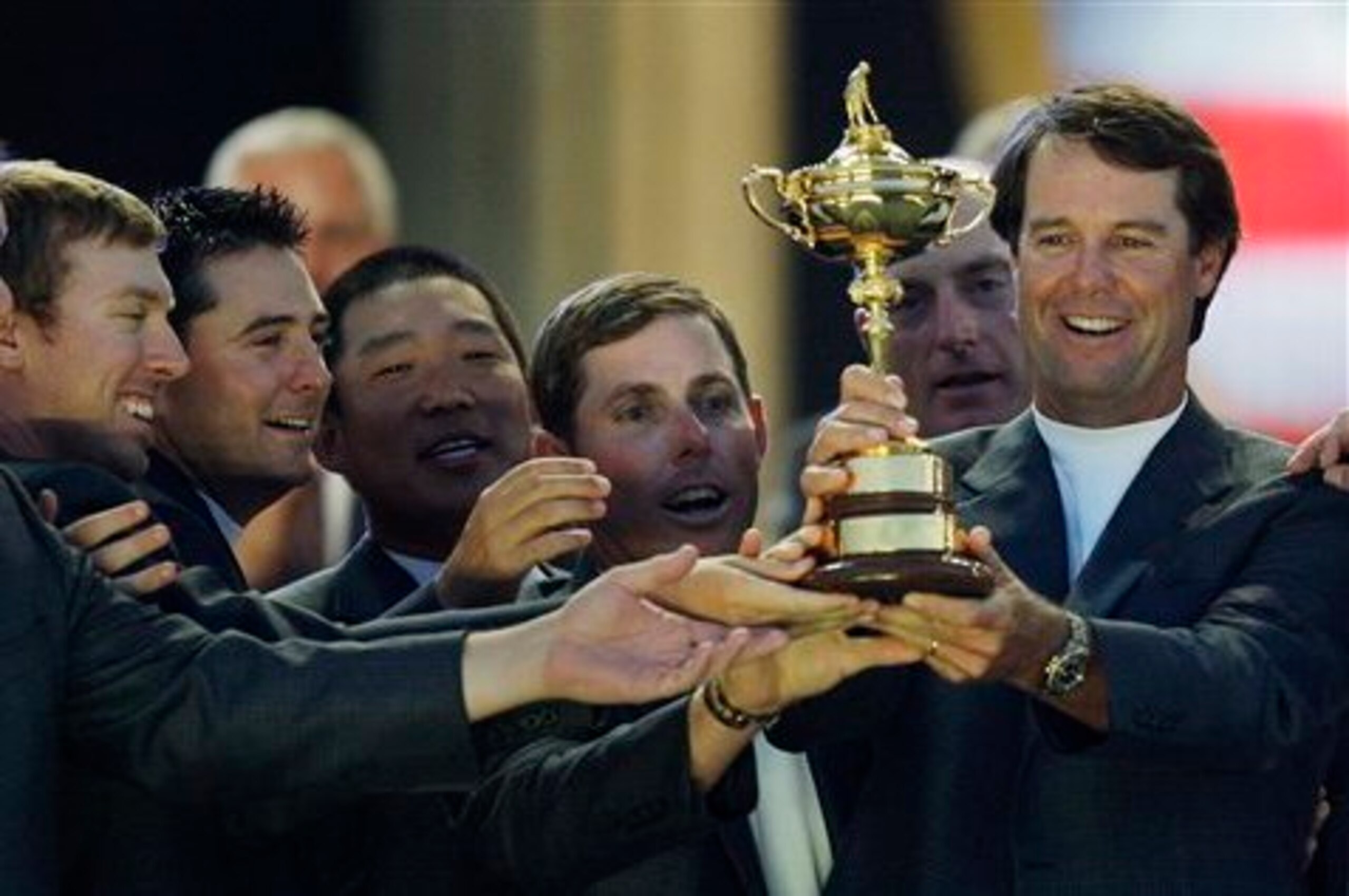
For the first time since 1999, a winning formula had been instilled within the American side and it appeared as if the tides of defeat were finally receding.
So what happened next?
Well, the PGA of America quickly moved on from Azinger and selected Corey Pavin to captain the 2010 U.S. Ryder Cup team in Wales.
At the time, the PGA of America’s decision to move on from Azinger seemed quite normal as this one-and-done strategy was something most had become accustomed to over the years.
It was virtually understood that each qualified individual would get his one shot and then the PGA of America would select a new captain.
But when taking a step back and analyzing the past 20 years of European dominance at the Ryder Cup, it becomes clear that the decision to move on from Azinger back in 2008 was quite senseless.
Removing Azinger as the U.S. Ryder Cup captain after his win at Valhalla would be equivalent to the New England Patriots winning the Super Bowl and then deciding to fire Bill Belichick during the offseason.
Insanity would be the first word to come to mind if the Patriots were to ever make such a move, and needless to say, there would be a massive uproar amongst the players, fans and local media.
But this is how the PGA of America has been conducting its business with regards to its Ryder Cup team for several decades now.
And it is this warm and fuzzy everyone-gets-their-turn strategy that needs to change immediately.
It is very difficult to implement a winning strategy or general atmosphere of success when the team’s leadership is changing every two years.
How successful would a football or basketball team be if their head coach was changed each offseason with no regard for whether that team had a winning season or not?
Every two years the American team, which typically consists of the same group of core players, has had to adjust to a new leader.
And it’s not like the American Ryder Cup team has a spring training period to acclimate to a new captain’s leadership style and philosophy; they typically have about three days to adjust to a new captain once they arrive at the venue for Ryder Cup week.
Now, the European Ryder Cup team has been quite successful while changing captains every two years. However, they have also created a winning strategy that future captains learn while serving as assistants. It is also quite common to see former European captains serving as assistant captains at future matches in order to impart their wisdom and help keep the European's winning system in place.
That is not the case for the American side.
Tom Watson had not had anything to do with a Ryder Cup since serving as the team’s winning captain back in 1991.
And aside from Steve Stricker, none of Watson’s other assistants will have even a remote chance of serving as Ryder Cup captain at some point in the future.
If the PGA of America wants to continue with its warm and fuzzy, everyone-gets-their-turn strategy for selecting Ryder Cup captains, that is fine. Just don’t expect the outcome of the matches to change anytime soon.
But if the PGA of America is serious about winning a Ryder Cup some time this decade, it needs to begin treating its team in a manner similar to any other professional sports organization.
If a captain/coach is successful, is respected by his team and has implemented a winning strategy, for goodness sake, keep him in that position at all costs.
Why toss a golden goose out to the wolves when you don’t have to?
Azinger should have held his captaincy through 2010 and beyond depending upon his level of success.
Future captains that experience success should also have the opportunity to remain in their position, just as successful coaches are typically given contract extensions.
Should things change at some point in the future, as they inevitably do, then the necessary adjustments can be made at that time.
But let’s give our captains a chance to truly install a winning strategy.
And let’s give our team members a chance to get comfortable with their captains and buy into that winning strategy.
Because it is quite difficult for any team to thrive when even a small amount of success is shot down before it ever has a chance to evolve into something greater.
It is abundantly obvious that if the PGA of America has aspirations of winning a Ryder Cup any time soon it will need to make a number of changes.
All change must start somewhere, and in the case of the U.S. Ryder Cup team, it would be prudent to start with the single person responsible for virtually all major decisions made during the matches—the captain.