


I'm sitting on a couch in a dimly lit hotel room on the Kentucky side of the Ohio River near Cincinnati. The man sitting next to me is asleep. The man is Muhammad Ali.
How I got here is less about the efforts of a young, intrepid sports reporter than about the generous spirit of one of the most famous men on the planet. The one-on-one interview with Ali, conducted over three hours one summer morning in 1988, remains the single most profound experience of my 32-year journalistic career.
My interview came back to mind recently after I saw a documentary titled I Am Ali, which explores the three-time heavyweight champion through the use of audio tapes he recorded with family and friends. The documentary gives an intimate glimpse of Ali that many people have never had a chance to see. It is scheduled to be released in theaters on Oct. 10.
TOP NEWS
Later: Emanuel Navarrete vs. O'Shaquie Foster
.jpg?w=2560 "NFL Paris Football")
NFL House in Paris Closes for Protests

Yaxel: Luka Not MJ 🗣️
I was just a kid when I first became aware of Muhammad Ali in 1970. He became big news in my home state of Georgia when it was announced that his first match following his three-year ban from boxing would be against Jerry Quarry and would take place at the Atlanta Civic Center.
I was enthralled by his story. It was all the grownups talked about. I read everything I could about Ali and watched the news for any reports of the upcoming fight. After Ali stopped Quarry in three rounds on cuts, I became a fan of the man more than a fan of the sport.
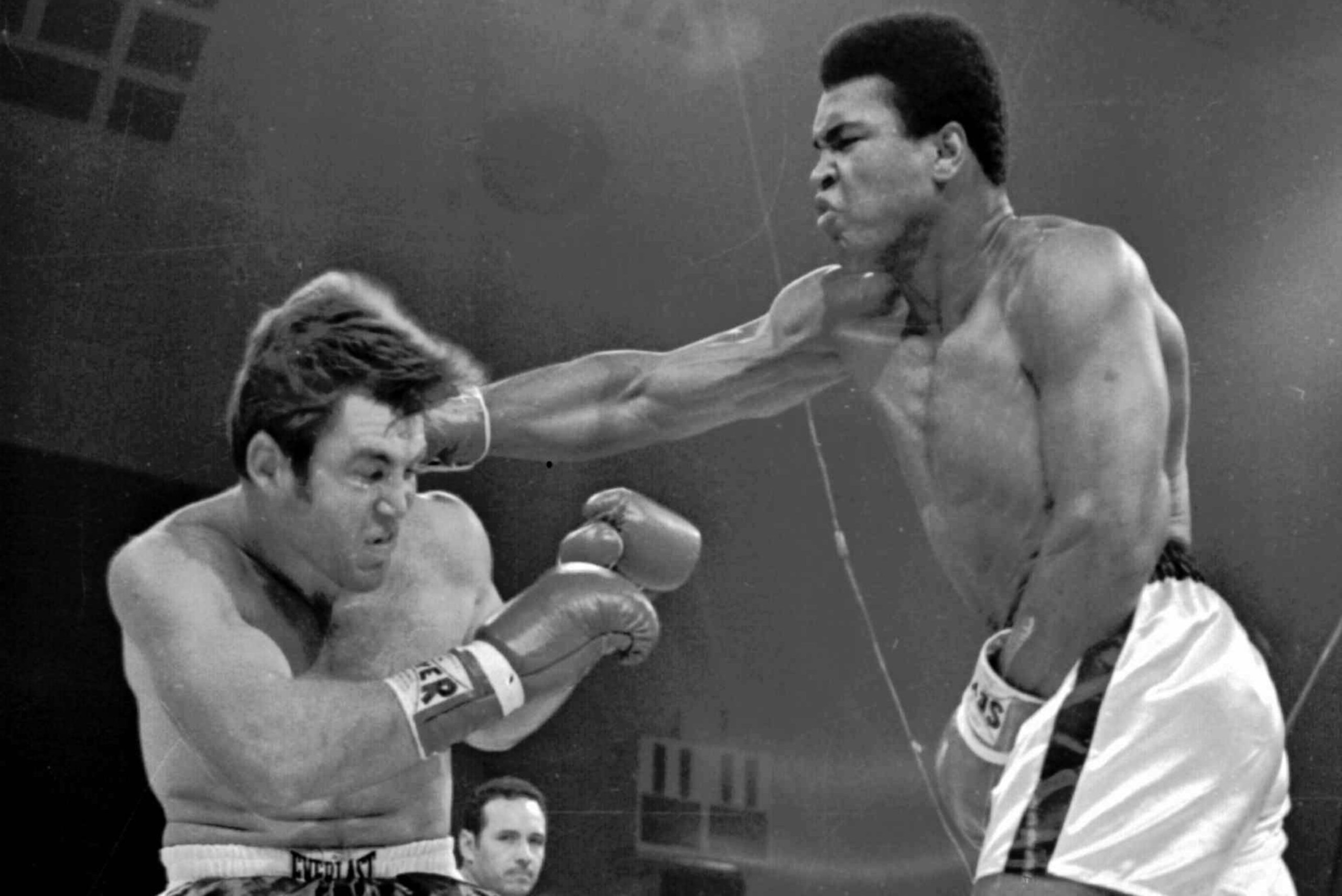
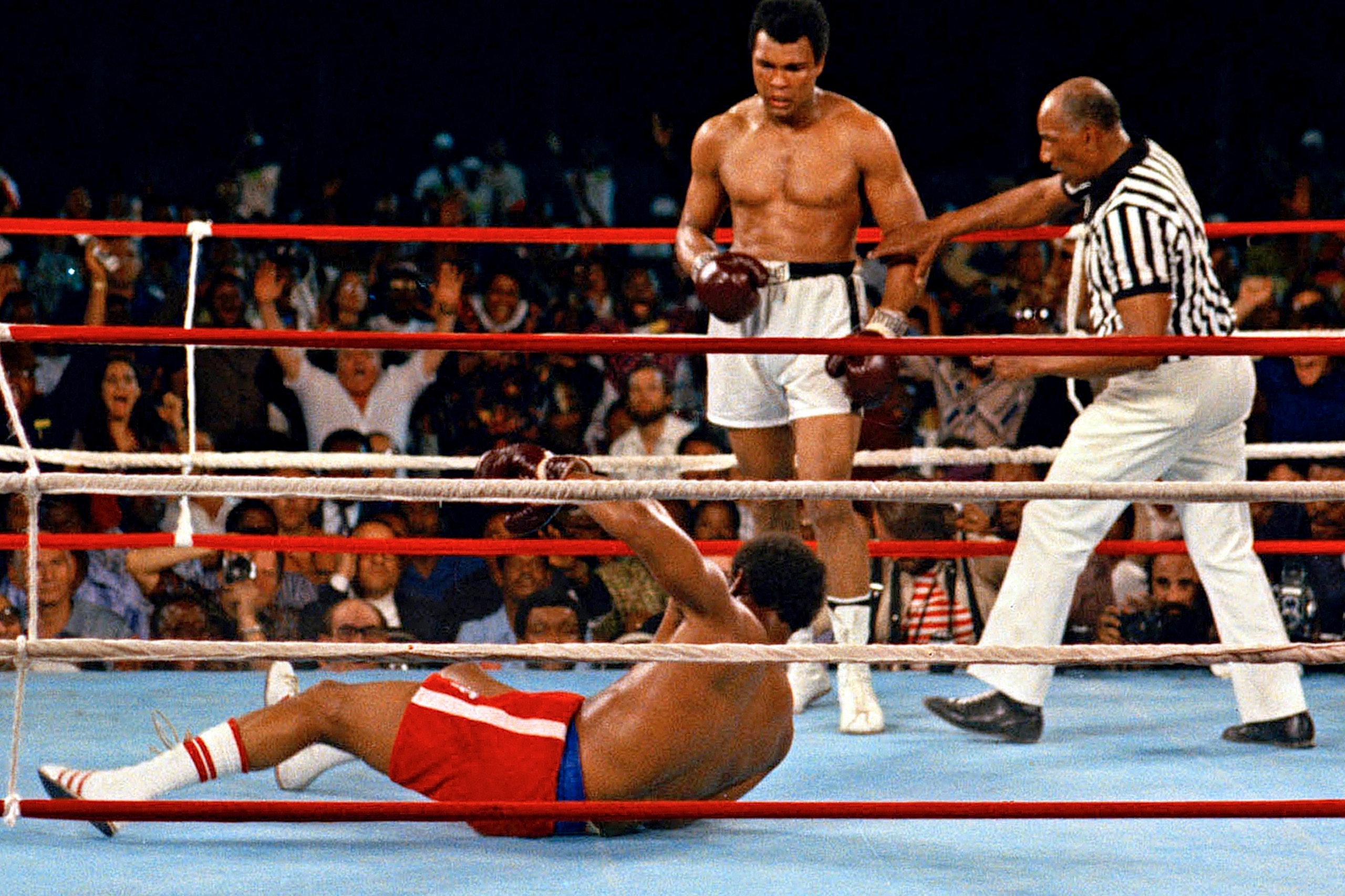
The Rumble in the Jungle and the Thrilla in Manila were high drama, lifting Ali to legendary status. Those matches in far-flung locations made him a citizen of the world and endeared him to millions.
So when my sports editor at the Cincinnati Enquirer asked me to interview Ali for a story while he was in town for an autograph show, I leaped at the opportunity. The editor wanted to know how Ali was doing since he had been diagnosed with Parkinson's disease in 1985.
As I made my way to Music Hall where the autograph show was being held, I was nervous but excited. Would he be receptive to my interview request? Would he give me enough time to ask all the questions I wanted?
There were other sports stars at the autograph session. The only other one I remember was Billy Martin, the ex-New York Yankees manager. I homed in on Ali, who was sitting at a table alone with a line formed in front of him. He was signing gloves, posters, shirts—anything anyone wanted him to sign.
I went around to the side of the table and introduced myself and asked if I could speak with him.
"I really can't talk to you here, because I'm working," Ali said politely, his voice just above a library whisper. "It wouldn't be fair to the people who are paying me to be here."
My heart sank to the pit of my stomach. I wasn't getting the interview and I had no story.
Before I could walk away, Ali stopped me.
"If you come by my hotel at 7:30 tomorrow morning, I'll give you all the time you need," he said.
I happily agreed. But the skeptic that lurks inside every journalist soon surfaced. I thought the champ might be pulling another rope-a-dope on me. What if I showed up at the hotel and he wasn't there? He wouldn't do that, would he?
I woke up early the next day and drove to the hotel. I called from the house phone in the lobby and asked the operator to connect me to Ali's room. She did.
The voice coming through the house phone was barely audible.
"So what do you want to talk about?" he whispered.
"Boxing and what you're doing now."
"Where are you now?" he mumbled.
"Downstairs in the lobby."
"Room 251. Come on up," he whispered.
I don't know what I expected when I knocked on the door. But I didn't expect Ali to answer dressed in a beige khaki shirt and slacks, looking like he was going on a safari. He greeted me warmly and invited me in. It was a sitting room that adjoined another room. He told me that his children were still sleeping in the other room.
The curtains were drawn, and the room was dimly lit by a lamp that emitted a yellow glow. He sat on one end of a couch and I sat at the other end.
The only sign of Parkinson's was Ali's speech. His voice was raspy, and it never rose above that library whisper. You had to lean in close to hear him. He said the disease had not slowed down his schedule. He still traveled extensively, making appearances and doing at least three autograph shows a year.
I tried to set aside my esteem for Ali and be a serious sports journalist. I figured out a way not to fawn over him while asking all the questions fans would want to ask if they had Ali sitting next to them.
How difficult was his exile from boxing in the prime of his career? (Extremely tough, but he'd do it all over again because he was doing it for something he believed in.)
How did he come up with the rope-a-dope strategy? (He developed it while training in the strength-zapping humidity in Zaire and laid a trap by telling George Foreman he'd beat him with speed.)
How grueling was the Thrilla in Manila? (He was ready to quit before he saw that Frazier was not coming out for the 15th round. Yes, he said it was the closest he ever felt to death in the ring.)
Would he have beaten Mike Tyson? (Yes. He thought Tyson was an incomplete boxer who relied too much on his power.)
Soon the interview became more of a conversation. Ali talked about his religion, the Nation of Islam, and tried to convert me. He even autographed a pamphlet, which extolled the virtues of Islam for the black man.
It turned out I wasn't the only one who knew Ali was staying at the hotel. Occasionally, there would be a knock at the door and a fan would ask Ali for an autograph. Ali was always gracious and obliging.
"I enjoy the people," he said. "I remember what it was like when I was growing up to see the people I admired—Joe Louis, Jack Johnson. People want to be a part of that. They enjoy meeting people that inspire them. If I can make someone happy, that's what I enjoy."

And there were the magic tricks. He made the cricket sound with his fingers and projected it to make it appear to come from another part of the room. He made coins disappear in his hand. And the one that really tripped me out was his levitating trick. He actually came off the floor.
While he was standing up, he asked me to take a sheet of paper and put it under his feet.
"Slide it from the heel to the toe so you don't think I'm standing on my tiptoes," he said.
I did. And he wasn't.
I asked him why he liked magic tricks.
"I started doing magic when I was 18," he said. "I did it to deceive people. Now I do it to show people how easy it is to be deceived."
I had spent about two hours with Ali when he nodded off to sleep. A friend later joked that my line of questioning had been so boring that it did something that even Foreman couldn't do—knock out "The Greatest."
And thus my dilemma arose. Did I wake up Ali? Did I let him sleep and leave a note thanking him for his time? Or did I wait it out, not knowing how long he'd sleep?
I decided to wait it out, because I wanted to say a proper goodbye. Watching Ali sleep wasn't as creepy as it sounds. I could tell that Parkinson's had zapped him of his vigor and wondered just how bad it would get for him. He wasn't manifesting any signs of tremors yet. But you knew there wasn't a cure and there was no turning back.
He slept for about 10 minutes and woke up refreshed and energized. We continued the interview. After three hours, and a few interruptions by his children, who were no longer sleeping next door, I thanked him for his time and left. It had been a memorable morning for me, an experience that I still treasure.
I never would have thought it made any difference to Ali, who must have met thousands of people a year. But apparently it did.
Occasionally, we'd run into each other in airports around the country, and he'd always greet me by calling me "Cincinnati."
Ali is still The Greatest in my book. There won't be another athlete as endearing as him. And after my experience interviewing him in 1988, I came to understand why he is so beloved by millions of people around the world.
Timothy Smith is a former sportswriter for The New York Times and the New York Daily News. He is currently a freelance writer based in New Jersey.
.jpg?w=2560 "Seahawks Chiefs Football")






