Will Laura Robson, Heather Watson Take the Next Step in Their Careers in 2015?
Heather Watson suffered a fourth successive first-round tournament exit at the hands of 34-year-old Venus Williams at the China Open last Sunday.
Laura Robson, meanwhile, has not played since January due to a wrist injury.
This—along with Andy Murray’s dip in form throughout 2014—has seen the buzz around British tennis all but vanish.
.jpg?w=2560 "NFL Paris Football")

.jpg?w=2560 "Seahawks Chiefs Football")
It’s a far cry from last year, let alone the summer of 1977, when home fans were only one match away from an all-British Wimbledon women’s final.
That was cruelly denied when Sue Barker—winner of the 1976 French Open—suffered a shock semi-final defeat to Betty Stove of Belgium, but Virginia Wade subsequently compensated the blow by lifting her third Grand Slam.
Incredibly, it remains the last time a British female won a Slam.
Only former world No. 5 Jo Durie has gone beyond a fourth-round since 1978, in fact, with her two semi-finals in 1983.
Annabel Croft looked likely to match such achievements having reached the third-round of Wimbledon at the age of 17 in 1984, but less than four years later she had retired, in part to embark on a successful media career.
Samantha Smith, Anne Keothavong and the sadly deceased Elena Baltacha all notably tried and failed to reach a Slam quarter-final or beyond, too, during a barren period for British women’s tennis.
It was a breath of fresh air, then, when—a little like buses in the capital—two young, genuine British talents arrived almost simultaneously.
Robson, the first British winner of a Wimbledon junior title since Croft, and Watson both won their first Grand Slam matches in 2011.
It was 2012, however, when they managed to find more consistency.
Watson carried British hopes at Wimbledon before losing in the third round to eventual runner-up Agnieszka Radwanska, while Robson won a silver medal at the Olympics after reaching the mixed doubles final with Andy Murray.
Six weeks later she became the first British woman since Smith in 1998 to reach the fourth round of a Slam at the U.S. Open, a feat she replicated at Wimbledon last year.
By January 2013, both females sat in the top 50 of the WTA rankings—the first time Britain had enjoyed such a feat since 1987—before reaching the third round of the Australian Open.
Robson, generally regarded as the finer prospect of the two, even reached 27 in the world after her Wimbledon exploits and was subsequently named by Tennis Magazine as one of the finest young WTA talents.
Fast-forward less than 12 months, however, and the left-hander lies deep in the depths at a murky 377 after missing almost the entirety of the year.
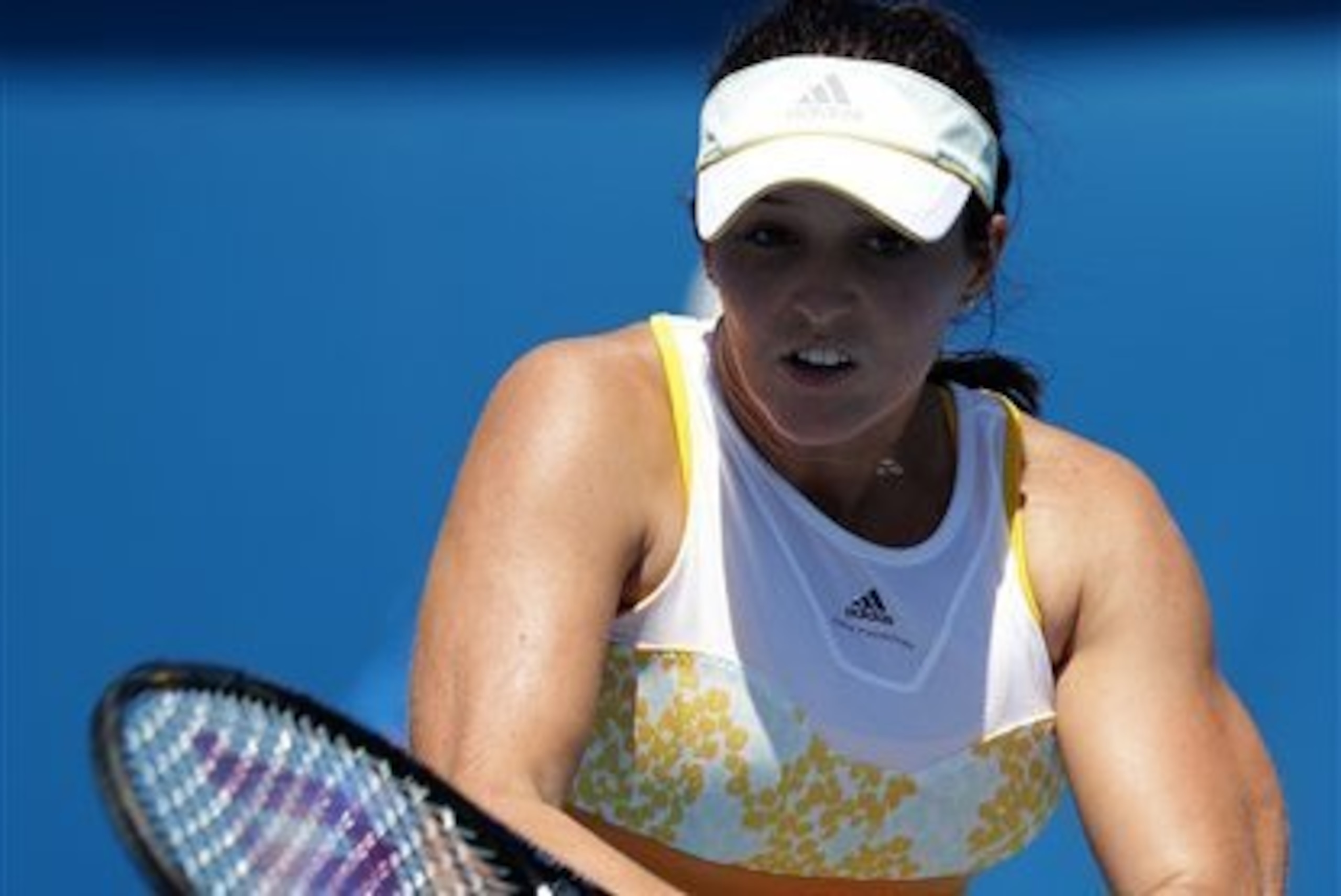
Eugenie Bouchard—a month younger than Robson—has reached two semi-finals and a final in this year’s Slams, all since the Brit last competitively hit a ball.
Robson has admitted looking on with envy at all active tennis players while sidelined, as per ESPN, but Bouchard’s rise in her absence must particularly hurt after the pair’s falling out, as reported in The Guardian.
Watson, meanwhile, ended 2013 as No. 119 in the world after suffering from glandular fever and a loss of form, but it is credit to her that she managed to battle—as she does so well—back into the top 50 in August.
Robson must do the same when she returns; she has time and talent on her side, but whether she has the dedication—which was questioned by one of her many former coaches, Zeljko Krajan, as per The Independent—or mobility to succeed at the highest level remains to be seen.
To her credit, as her quotes in June for Sky Sports illustrate, she has largely remained upbeat about her prospects:
"In a way it's like starting from scratch, starting all over again.
But I do have the experience of four or five years behind me which is a big help.
It is going to be a new start because I'll virtually have no ranking by that point, but I'm looking forward to it, it should be a good experience.
"
Clearly, it is still an experience she could have done without, especially when Serena Williams, 33, and Maria Sharapova, 27, are entering their later years, leaving a potential power vacuum lying underneath the surface of women’s tennis.
During 2014, multiple children of the 1990s have proven themselves better placed to fill it than Watson, 22, and Robson, 20.
Two-time Wimbledon winner Petra Kvitova, 24, and French Open finalist Simona Halep, 23, are already top-four players with Williams and Sharapova.
They appear to share Bouchard’s talent and intensity, if not marketability, to boast the necessary “staying power," which Rick Macci (a former coach of the Williams sisters) referred to in The Wall Street Journal in order to undoubtedly head the list.
In Sloane Stephens, 21, Madison Keys, 19, and Taylor Townsend, 18, meanwhile, America does not look short of emerging talent to soften the looming retirements of Macci’s former famous pupils.
And that is without mentioning the likes of rising European talent such as Garbine Muguruza, 20, and Belinda Bencic, 17.
Bencic, a Swiss starlet inevitably billed as the next Martina Hingis, beat sixth-seeded Angelique Kerber and ninth-seeded Jelena Jankovic on the way to the quarter-final of the U.S. Open last month.
Watson has only twice beaten a top-20 player in her entire career to date.
Robson fares better in this respect, having beaten three top-10 players in 2013 alone, and there is little doubt she has the bigger game to reach greater heights than her compatriot.
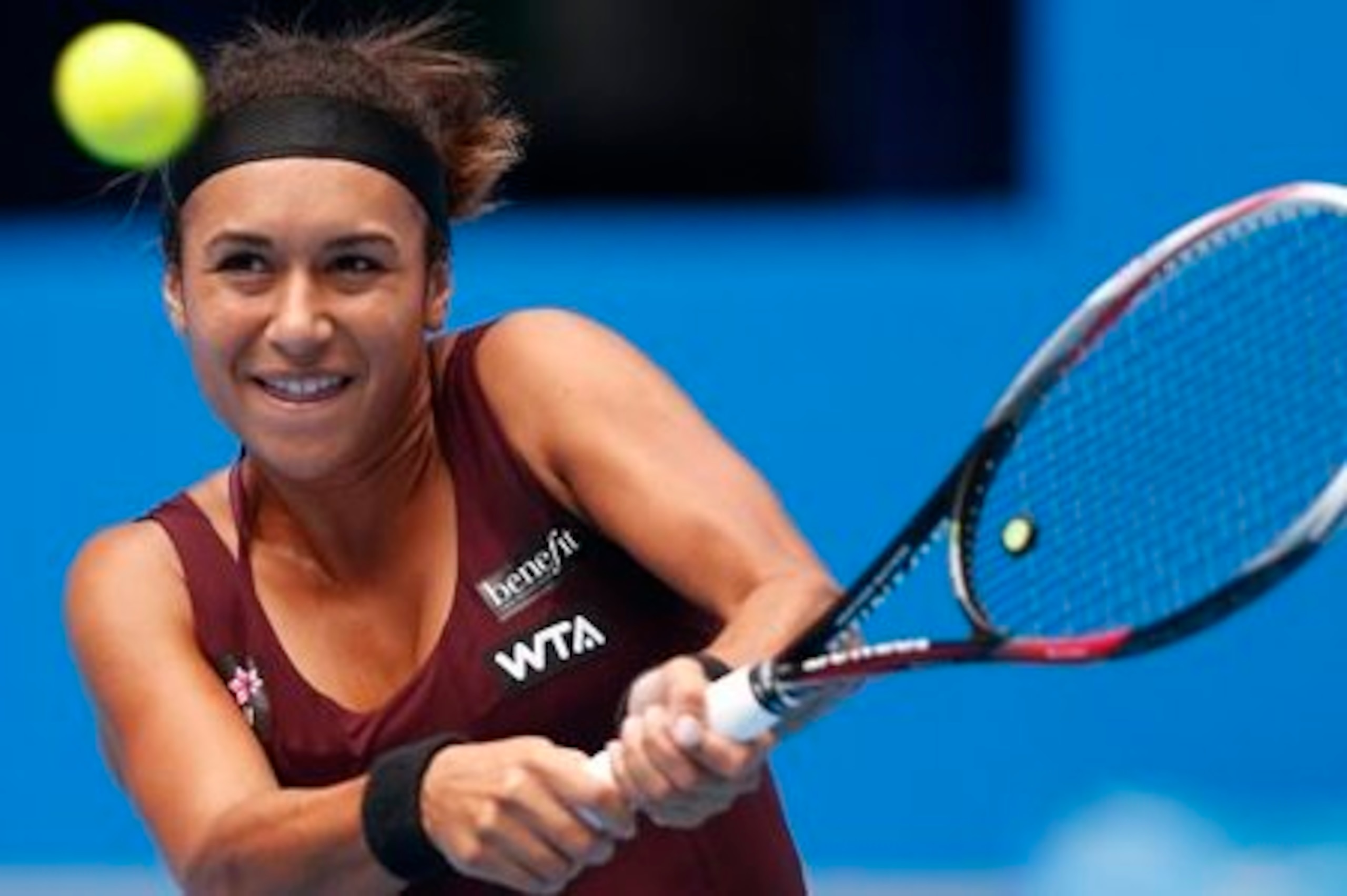
And yet it is currently Watson with three WTA titles to Robson’s nil.
Still, as Merlisa Lawrence Corbett brilliantly remarked in her piece for Bleacher Report on emerging superstars, “Who's hot and who's not can change so quickly in women's tennis.”
There is no better example right now than Robson.
After ending 2013 hot—on par with the likes of Bouchard, Keys and Stephens (as evidenced by the aforementioned Tennis Magazine article)—she will end 2014 not, as something of a forgotten talent, on the court at least. Indeed, those parallels with Croft are ominously moving closer.
Watson, as always, remains more quietly somewhere in the middle.
Where either player will end 2015 is up for debate.
What surely isn't up for debate is that we will know much more about both players’ prospects, particularly Robson's, of one day emulating Murray in ending another British drought by that time.
Ah, time.
As the brilliant artist Andy Warhol reflected in The Philosophy of Andy Warhol, “They always say time changes things, but you actually have to change them yourself.”