Making F1 Cars Harder to Drive Just Another Artificial Trick
For someone who hasn't even made his grand prix debut yet, Max Verstappen is causing quite the stir in Formula One.
The announcement in August that the 16-year-old Dutchman would replace Jean-Eric Vergne at the Toro Rosso team for the 2015 season was more significant than your average driver announcement—it was a tipping point.

.jpg?w=2560 "NFL Paris Football")
.jpg?w=2560 "Seahawks Chiefs Football")
The notion that someone could almost instantly swap their school uniform for a set of fireproof overalls to compete in the highest form of motor racing, after all, seems completely and utterly wrong.
To reach the top in any walk of life, it is generally thought that people should be subject to the most stringent procedures and tests to not only prove that they deserve a privileged opportunity, but to protect the credibility of their chosen profession.
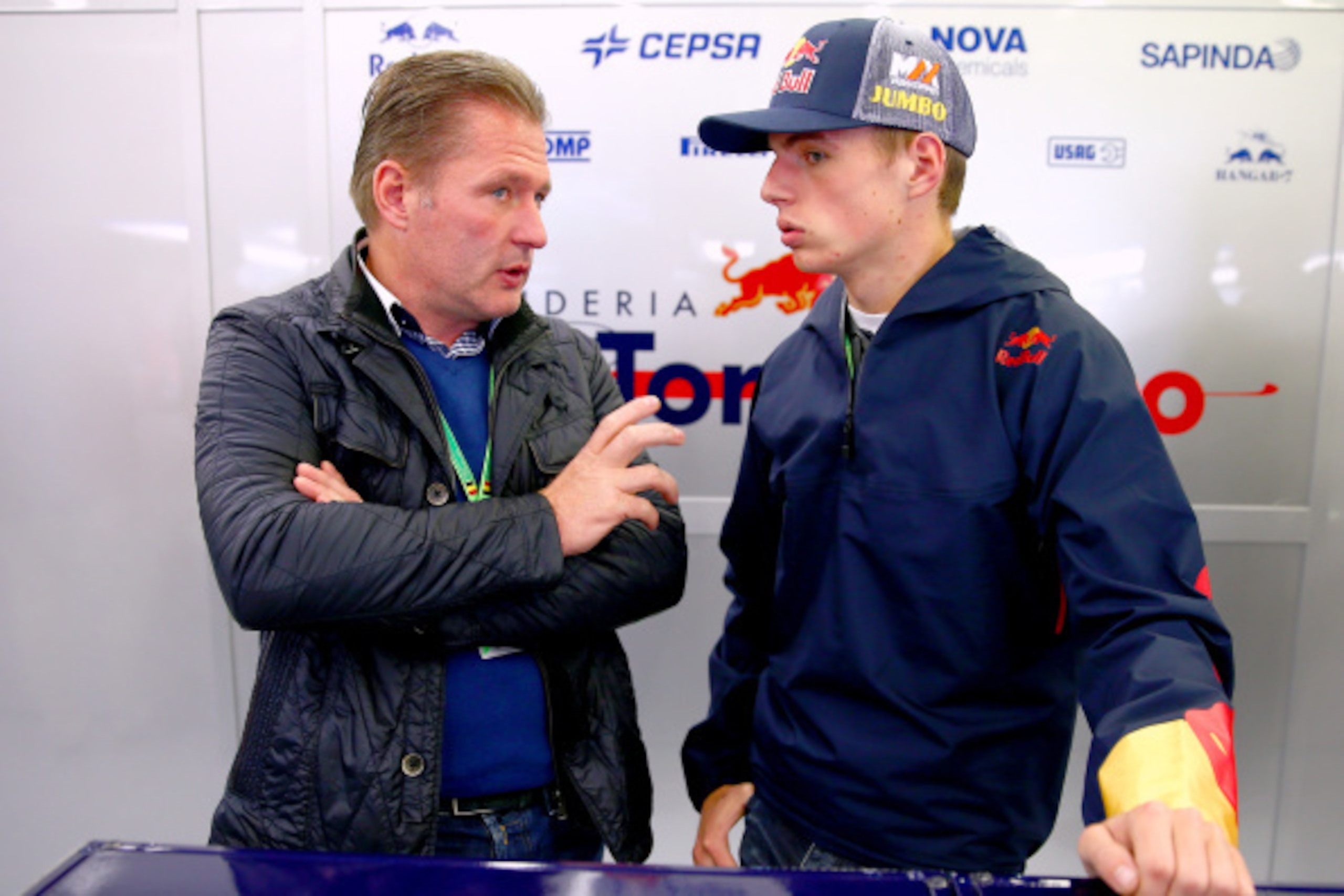
And although Verstappen has the perfect DNA for a racing driver—his father, Jos, made over 100 grand prix starts, while his mother, Sophie, has beaten a number of F1 drivers in karting events, according to Red Bull—the fact that he should leap into the self-appointed pinnacle of motor sport after only one season of car racing is as uncomfortable as it is damaging for Formula One.
We have seen the likes of Verstappen before, of course—Kimi Raikkonen had famously participated in just 23 cars races before Sauber plunged him into a race seat in 2001—but his tender age, which will see him become the youngest driver to race in F1 history by quite a margin at next year's Australian Grand Prix, is a cause for concern over just where the sport is heading.
And as always when there is concern in Formula One, there is self-consciousness, there is soul-searching and there are usually a couple of knee-jerk reactions.
As a result, it has emerged that F1 is now searching for ways to make cars harder to drive, with a desire to force whippersnappers like Verstappen to take the long way around—a spell in Formula Renault 3.5, a year or two in GP2—being one of the motives behind the push.
A report by Autosport's Jonathan Noble read:
"Following discussions in recent Strategy Group meetings, the FIA will evaluate potential rule changes that could make the cars tougher to drive.
The investigation, which will include input from teams, will be completed over the next few months and it is possible changes could be implemented as early as 2016.
It is understood that the main areas that will be investigated are tyre grip, car dimension, and aerodynamic performance.
"
Although one of the reasons why the 2014 campaign has been one of the more delightful in recent memory is due to the loss of downforce that came with the new regulations—leaving drivers more susceptible to errors—the idea of making the cars harder to drive is at odds with another mission on F1's to-do list.
"Formula One needs to be about the drivers being the heroes," said Christian Horner to ESPN F1 following July's Hungarian Grand Prix, with his widely shared view leading to the partial ban on pit-to-car radio ahead of last month's Singapore Grand Prix, a move designed to make drivers in control of their own destinies.

If the plans to make the cars harder to drive become a reality, however, how will that affect the way the competitors—especially the likes of Fernando Alonso, Sebastian Vettel and Lewis Hamilton, who are widely regarded as the three elite stars on the current grid—are perceived?
Do we want to see these icons hanging on for dear life through a challenging complex of corners? Or do we want to see them attacking the tarmac with confidence and driving on the absolute limit?
The nature of the racing, and the thrill of the spectacle, may also suffer in a similar way to when Pirelli's delicate tyre compounds in 2012 and 2013 led to drivers conserving their rubber over a race distance.
The winner of a race might be the driver who plays it safe and makes the fewest mistakes over a grand prix, rather than the one who sets the fastest lap times in the fastest car.
Meanwhile, the very fact that F1 is willing to overhaul its machinery highlights its habit of shrouding itself in self-produced negativity.
Until this year, a Belgian Grand Prix, for example, could not pass by without the paddock bemoaning how a corner as spectacular as Spa Francorchamps' Eau Rouge—arguably the most recognisable bend in the sport—was not as challenging as it was in the good old days, with drivers able to take the uphill turn with the throttle pedal planted to the floor.
Instead of complaining how Eau Rouge has supposedly lost its appeal, however, should we have not marveled and rejoiced at how modern engineering—coupled with a degree of bravado on the driver's part—permitted cars to tackle the corner at the fastest possible speed?
There is a certain sophistication about the current-spec cars that risks being at least partially lost for the sake of a few more spins and heart-in-mouth moments, with it unclear just how long it would take for drivers to adapt to any changes and, perhaps more significantly, how soon it would be before teams develop systems to counteract the effects of more challenging machinery.
On paper, the basic idea of making Formula One cars harder to drive is inspired. But if the plans ever do become a reality, they would have to be introduced and implemented in a cautious fashion to ensure that the sport itself, rather than the drivers, is not the biggest loser.
And as Verstappen should find out this weekend when he participates in the first free practice session of the Japanese Grand Prix at Suzuka, one of the most challenging circuits on the calendar, taming the current cars isn't exactly a doddle.