
Why the Atlanta Braves Need to Make a Managerial Change for 2015
The Atlanta Braves have already acted swiftly to change the makeup of their front office. The day after the team was eliminated from playoff contention, they fired general manager Frank Wren and assistant general manager Bruce Manno.
If that was Step 1 in the Braves’ plan to reshape the team this offseason, then Step 2 should be the search for a new manager.
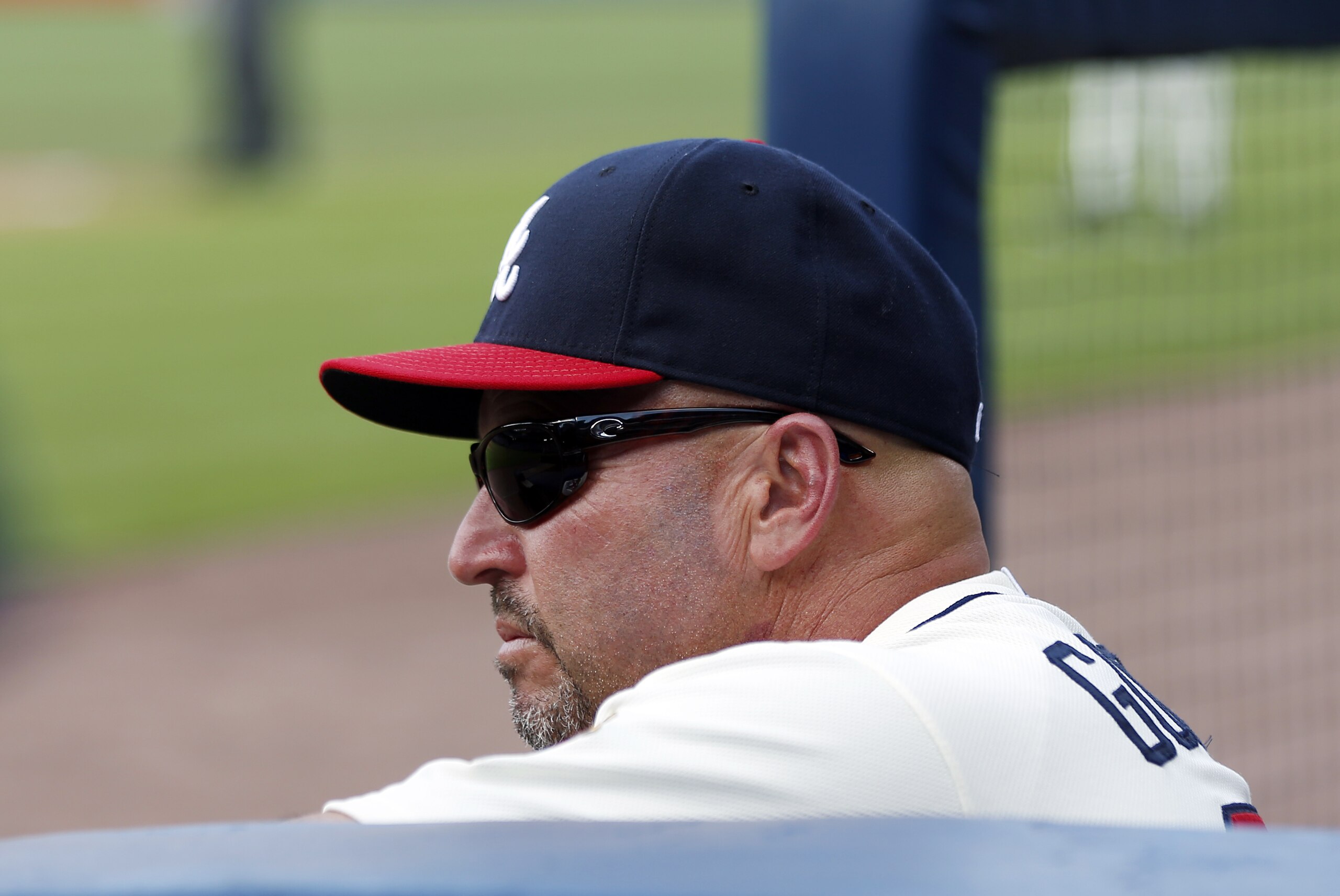
The Braves need to relieve Fredi Gonzalez of his managerial duties and bring in a new face and a new attitude to manage the team. Let’s take a look at why the Braves need to make a managerial change for 2015.
TOP NEWS

MLB Commissioner Defends Salary Cap
Miz Sets WS Record Already ⛽
Brewers Get 1st WS Win Since 1982 💪
Two Collapses
In four seasons as Braves manager, Fredi Gonzalez has presided over two epic late-season failures, both punctuated by offensive ineptitude. Perhaps one such collapse could be excused as a fluke of baseball. After all, the historically bad 2011 collapse coincided with Boston’s historically worse collapse.
The scapegoat that season was the hitting coach, Larry Parrish, a newcomer to the team who didn’t jell with many hitters. The slumps of some hitters, especially Jason Heyward, were blamed on Parrish, and Gonzalez was largely absolved of any responsibility.
But Gonzalez was not blameless in Atlanta’s 2011 collapse, and many of the same symptoms of that September swoon were present in the team’s most recent disaster.
During both seasons the hitting in September evaporated, and in both meltdowns there were no answers from the manager. As he looked for reasons to explain the failures, he was left with hollow shrugs, according to The Associated Press:
"If you look at our offense for the whole year, it never clicked for whatever reason. It never hit on all cylinders. The pitching covered it up for five months."
That quote was after the 2011 debacle. After this season’s debacle, this is what he said, according to the Atlanta Journal-Constitution's David O'Brien: "Collectively, we didn’t produce offensively. I think our pitching was good the whole year. But offensively we just didn’t do the same thing we did last year. […] For whatever reason, we didn’t produce."
What was that “thing” they did last year that they didn’t do this year? Clearly Gonzalez doesn’t know. His only explanation—the same from 2011 to 2014—is that the Braves offense didn’t click “for whatever reason.”
Maybe Gonzalez does know what happened and he just can’t convey that with words that make sense. Maybe he wants to blame the players, but his Bobby Cox-like devotion to his guys will not let him verbalize those complaints to the media. Nevertheless, he’s had three years to come up with a more coherent reason than “whatever reason,” and he hasn’t come up with one.
If the guy at the helm of the day-to-day goings-on with the team is that clueless about the reasons for the team’s failures, then how could he be responsible for their success? More importantly, how could he be the guy who can lead the team back to success year after year?
Even when the team made the playoffs in 2013, did Gonzalez’s moves in critical moments of postseason games lead to success? No. His critical decision not to use closer Craig Kimbrel to get more than three outs in Game 4 of the 2013 National League Division Series against the Los Angeles Dodgers turned out to be a decision that cost the Braves the game and sent them to yet another early playoff exit.
Bad Lineups
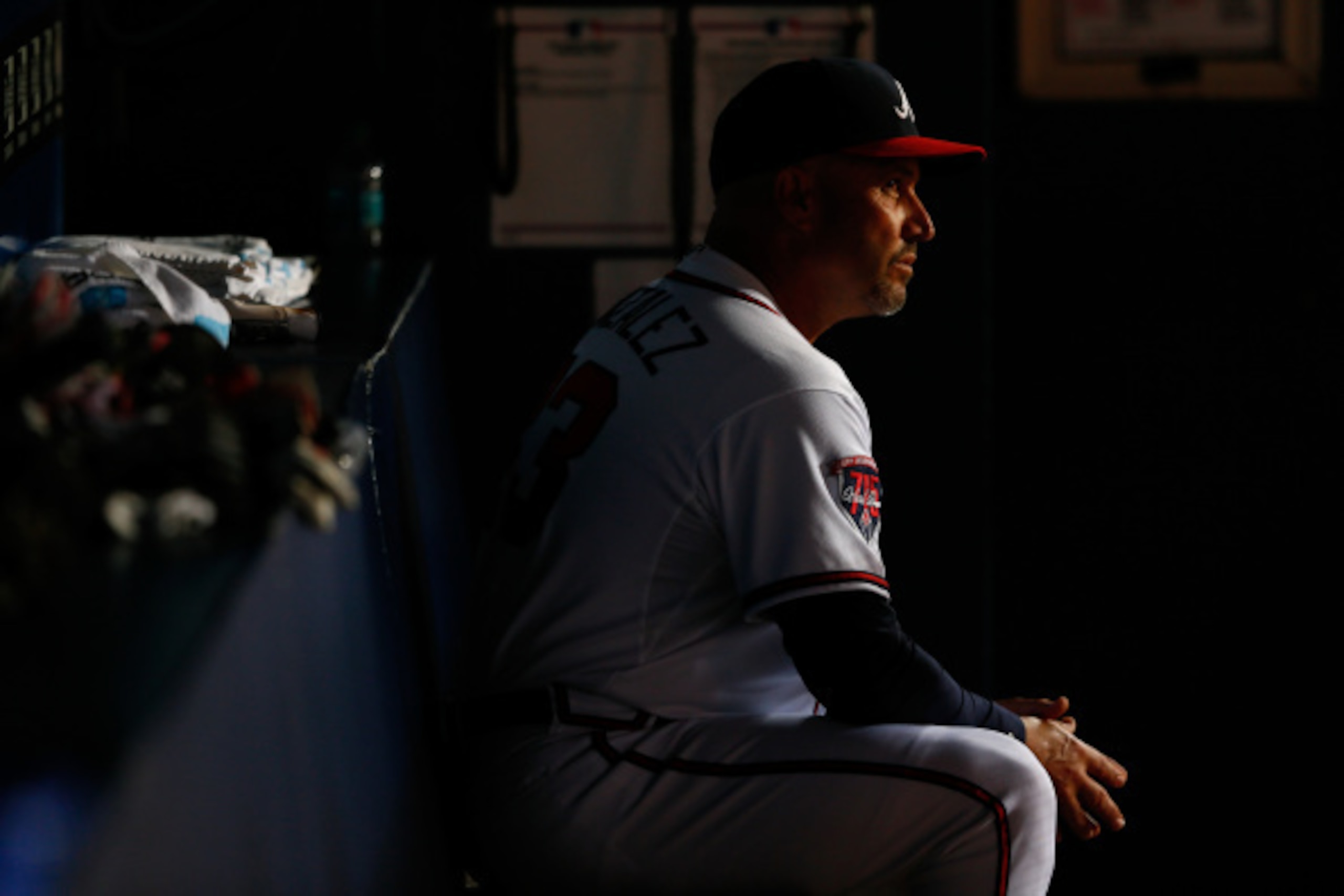
One of the more visible functions of this year’s collapse were the lineups that Fredi Gonzalez put together each game. B.J. Upton, who hasn’t posted an on-base percentage higher than .298 in three years, was written in as the leadoff man 36 times and as the No. 2 hitter 55 times.
Andrelton Simmons, who has a career on-base percentage under .300, was listed second in Gonzalez’s lineups 35 times. These players’ inability to get on base is in part responsible for the lowest runs per game total for any Braves team since 1989.
It shouldn’t take a Society for American Baseball Research genius, or even a SABR novice, to figure out that a player who does not get on base should not be in a position in the lineup to get more at-bats than other players who do get on base. This is especially important at the top of the order, where a team needs players on base in front of their run-producers.
The Braves need a manager who at least understands this basic concept.
Clubhouse Lost
In a recent YouTube video, Braves insider Bill Shanks, a radio host in Macon, Georgia, alluded to a lack of leadership in the Braves clubhouse that he says led to lackluster individual performances. He attributed this to the team Frank Wren had built, but did not ascribe any blame to the guy who was in the clubhouse every day, the guy responsible for turning a roster of 25 players into a winning team—the manager.
While Wren’s construction of the team may have had some flaws, can he really be held responsible for a team that lacked motivation and hustle as they slipped further and further away from postseason consideration?
If those allegations are true, then the manager should shoulder a large part of the blame for the teamwide ennui.
The players too should be held accountable, and one way of doing that is by holding the manager accountable. If the Braves players like playing for Fredi Gonzalez, then perhaps they need more encouragement that their poor performance will cost someone their job.
It may sound a little passive-aggressive to threaten a team by taking away someone they like playing for, but losing has consequences. Collapses have consequences. Two collapses in the past four years should have a negative consequence for the manager who presided over both of them.
Who else but their manager is there to blame for a team that does not seem to be properly motivated?
Presiding over two late-season collapses, filling out lineup cards that do not account for on-base ability and being unable to inspire a locker room, those three things should be reason enough to find a new manager for 2015.
Of course, sometimes you just need to make a change at the top for “whatever reason.”
.png?w=2560)


.jpg?w=2560 "NFL House in Paris Closes for Protests")
.jpg?w=2560 "Trevon Diggs Cut by Seahawks")