

Serie A Must Start the Season Earlier to Improve in European Competition
Serie A has a fantastic track record in the European Cup and its successor tournament, the UEFA Champions League.
Italian clubs have won the title more times than any European country save Spain (who lead with 14) and England (tied with the Italians with 12). Given that they have produced more runners-up than their English counterparts, a convincing argument can be made to call Italy the second-most successful country in the history of European club football's biggest tournament.
But that success has waned in recent years. Italy fell off the pace in the UEFA coefficient rankings and lost their top-three position several years ago. This fall has been caused by a combination of factors.
TOP NEWS
Highlights and Viral Moments 🍿

Final Men's Ballon d'Or Rankings 📊

Carrick Replacement Options 📝
One is the contempt with which the Europa League—which is weighted the same as the Champions League in the coefficient formula—is treated by Italian clubs. Another is the impact of the Calciopoli match-fixing scandal, which can still be felt at times. The most important is likely the Italian financial crisis, which has caused even Italy's biggest teams to curtail spending on both transfers and, more critically, wages.
As a result, Serie A—once the destination of the world's absolute best—is struggling to hold on to its best players. Indeed, many have pointed not to big-name purchases but the fact that big-name players like Juan Cuadrado, Paul Pogba and Arturo Vidal remained in the league as the best pieces of transfer business the league's teams made this summer.
This talent drain on Serie A has highlighted a largely ignored but increasingly important factor in Italy's lack of success in recent years.
Traditionally, Serie A is the last of the five major European leagues—the others being the top flights of England, Spain, Germany and France—to begin play. Consequently, they start training later, and their form is not as full as some of their counterparts when European play begins.
In years past, there was enough of a talent gap between Italy and most of the rest of Europe that this didn't become a problem. But as Italian teams flounder in Europe, particularly early on in competitions, the disparity in fitness is becoming a deciding factor.

Since the preliminary rounds of the Champions League took their current format in the 2009-10 season, four of the six Italian teams to play in the playoff round have failed to qualify for the group stage.
None of those teams had played a league game. All of their opponents had at least one competitive match under their belt by the time the second leg kicked off.
Among the four ties in question there was a common theme: All of the Italian clubs involved suffered from key lapses in the late stages of games—particularly second legs—that dropped them into the Europa League.
In the 2010-11 season, Sampdoria had staged a magnificent second-leg comeback. Trailing 3-1 coming in, the Blucerchiati had a 3-0 lead after 85 minutes and looked ready to dismiss Werder Bremen—who had started their season in between the two legs—from the competition.
Then disaster struck. Markus Rosenberg struck for the German club three minutes into stoppage time to put the aggregate in a flat-footed tie. Ten minutes into extra time, Claudio Pizarro scored the goal that put Bremen through 5-4 on aggregate.
The next year, Udinese took their turn in the playoff.
The draw was unkind, pairing the Friuli outfit with Arsenal. It was a double whammy—Arsenal was the toughest opponent they could have faced and were due to start their season before the tie even began.
The Serie A season wasn't supposed to start until three days after the second leg—and that was delayed further by a player strike.
After performing well in a 1-0 loss at the Emirates, the tie came back to the Stadio Friuli, and Udinese leveled the aggregate score six minutes before the half. But the team faded in the second half, and goals from Robin van Persie and Theo Walcott sent the Gunners through.
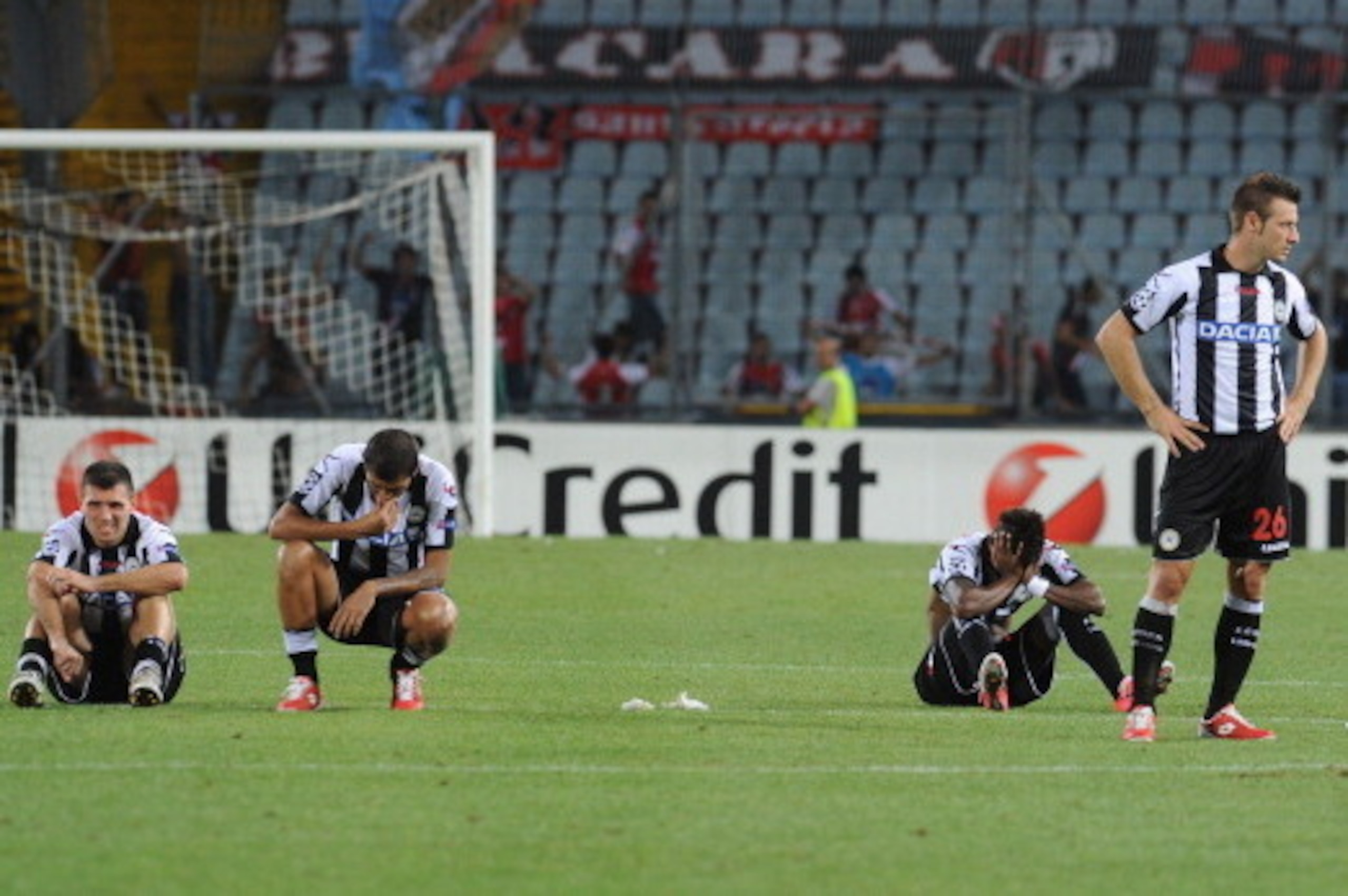
Udinese were back at the same stage the next year, paired with much easier opposition in Portuguese side Braga. For once, the Italians had started their season before the playoff round ended, but the Primeira Liga had started even earlier.
In both legs, Udinese took the early lead only to surrender an equalizer with around 20 minutes remaining. The tie went to penalties, where a badly attempted Panenka doomed Udinese to defeat.
The most recent—and most glaring—example of the fitness gap in the Champions League playoff came last month, when Napoli took on Athletic Bilbao.
Again, Serie A wasn't slated to start until the playoff round ended. The FIGC even moved the Supercoppa Italiana to December in an effort to allow the team to focus on the Champions League. Bilbao, on the other hand, started the season between legs and had been training longer.
It was immediately apparent that the Partenopei were not sharp. They couldn't string two passes together. Even in their home fortress at the San Paolo, they were unable to put together a sustained attack. Their opponents were cohesive and fit.
After a 1-1 draw in the first leg, Napoli was assailed in the second leg at the new San Mames. They scored the opener against the run of play but were eviscerated in the last half-hour and run out of the park 4-2 on aggregate.
Of the four matchups, the only one with a distinct disparity in talent was Udinese vs. Arsenal—and even then Udinese played the Gunners close. The other three paired up teams on similar levels.
This year the Italian representative was considered one of the country's current elite. The major factor in all of them appears to be fitness. In all cases the team whose league started earlier—the fitter team—advanced to the group stage.
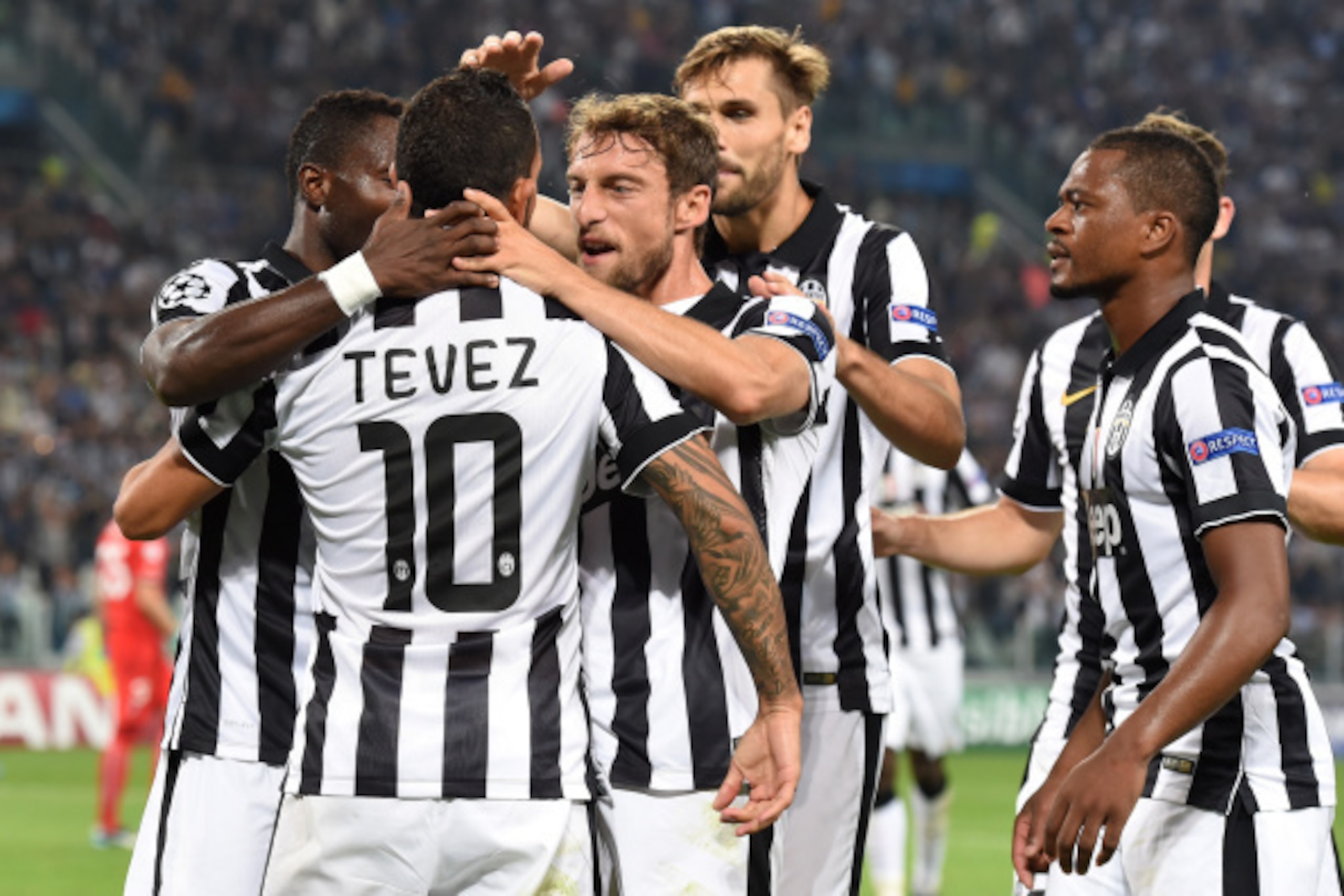
The disparity in fitness even showed last week when Juventus played Malmo. The Swedes play their season from March to November, so for them the season is already two-thirds over. Yes, the Bianconeri won 2-0, but their passing could at times be charitably described as wayward.
For long stretches of the game Malmo's defense looked far more cohesive than Juve's attack. Had Juventus been in midseason form, they arguably could have scored several more goals.
In the past, the talent gap between Italy and most of the rest of Europe was enough to allow Serie A to get away with putting their teams at a fitness disadvantage. Since the collapse of the Italian economy and subsequent drain on the talent in Serie A, they can no longer afford to send their teams into European competition with such a handicap.
Someday—and hopefully that day will be soon, for reasons both sporting and non-sporting—Italy's economy will rebound. But until then, Italian clubs will have to do things differently if they are going to succeed in Europe. There is fairly convincing evidence that the lack of competitive matches for Italian clubs in the run-up to European competition is putting them at a disadvantage.
The league's organizing body, Lega Serie A, needs to recognize that trend and take action. The Italian season needs to start earlier.

.jpg?w=2560 "Steelers Saints Football")
.jpg?w=2560 "Raiders Could Start Mendoza")
.jpg?w=2560 "🚨 Week 8 AP Top 25 Poll")
.jpg?w=2560 "Mahomes Told Teammate to Leave Meeting")


.jpg?w=2560 "Lamar Being Out Shocked Ravens")
.jpg?w=2560 "Packers Safety Slams Refs 🤬")