

Wembley's Euro 2020 Final Success Unsurprising as Money Talks for UEFA and FA
The news, announced on Friday, that Wembley Stadium will host the semi-finals and final of the 2020 European Championships should not come as a significant surprise.
Wembley is one of the biggest and best modern stadiums in Europe, if not the world. Its combination of capacity, infrastructure and travel links made it an almost unrivalled candidate for the showpiece as soon as UEFA, the competition organisers, revealed it would be spreading the 2020 and 2024 tournaments across a variety of European cities.
Almost unrivalled, certainly, but not entirely without them. But what conclusively separates Wembley from the pack is the same thing that saw the London venue host the 2011 Champions League final and then, in an almost unprecedented move, the 2013 tournament as well: money.


.jpg?w=2560)
No stadium offers the opportunities for maximising revenue quite the way Wembley does, with its vast range of corporate and public seating that can be sold for larger and larger sums to a wider fanbase that will find getting to London far easier than many other European cities.
Not only that, but recently amended tax laws mean that those involved in the event, UEFA among them, can leave the country without being responsible for exorbitant tax bills. In 2010, UEFA said London’s tax rules were too prohibitive to host the Champions League final; a year later, that had all changed—to such an extent that hosting the showpiece again at the next possible opportunity was immediately on the agenda, with the Football Association’s 150th anniversary a convenient reason to explain it.
“On behalf of everyone at the FA and our President HRH The Duke of Cambridge, I am delighted Wembley Stadium and London have been awarded the right to stage the semi-finals and Final of UEFA EURO 2020,” FA chairman Greg Dyke said in a statement. “It will be a great honour to be part of what will surely be a superb celebration of 60 years of the UEFA European Championship.”
| Dublin (Republic of Ireland) | Baku (Azerbaijan) |
| Glasgow (Scotland) | Munich (Germany) |
| Copenhagen (Denmark) | Rome (Italy) |
| Bucharest (Romania) | St Petersburg (Russia) |
| Amsterdam (Holland) | |
| Bilbao (Spain) | |
| Budapest (Hungary) | |
| Brussels (Belgium) | |
| Semi-final and final: | LONDON |
Ultimately, only Munich’s Allianz Arena stood between Wembley and the honour of hosting the competition final—that is, until the German bid for the “finals package” was officially withdrawn on the eve of the vote. London’s candidacy was duly approved by a unanimous 17-0 vote. Speculation is already rife that an agreement was made in advance, with the Allianz—smaller than Wembley and not free of corporate branding in the same—now considered a virtual certainty to perform final-hosting duties in 2024.
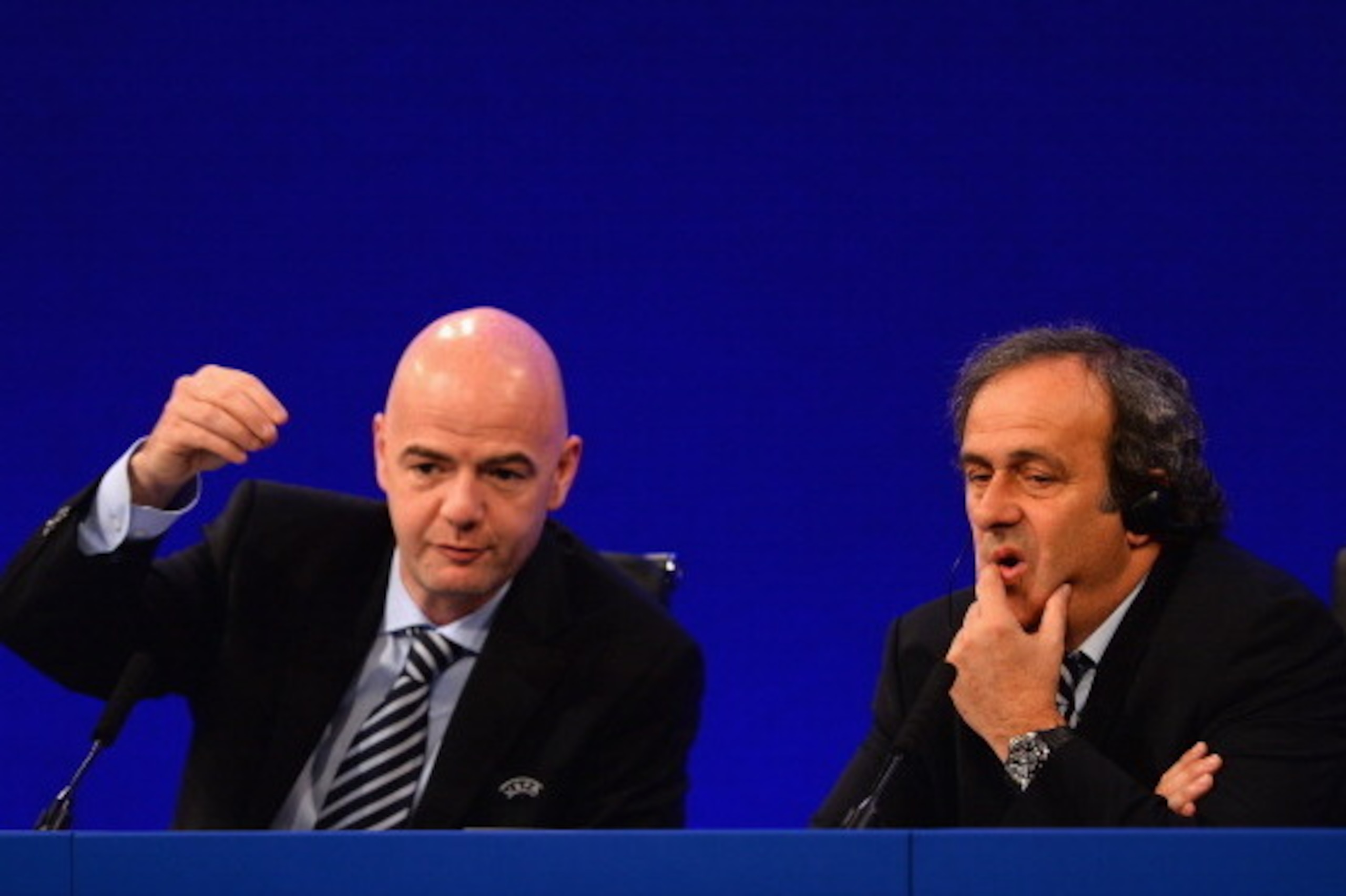
“London was voted in unanimously, after Munich decided to withdraw its candidature just before the final vote,” Gianni Infantino confirmed in a press conference.
“I don’t know if there was an agreement with England,” UEFA president Michel Platini, speaking in French, added. “England was the best bid for this tournament.”
Germany’s second city will instead host three group games and a quarter-final match, joining 11 other cities that will host three group fixtures and one knockout game.
When asked about a potential Anglo-German "deal," Dyke added:
"In terms of a deal there is no deal. We had discussions with the German FA but there is no agreement. It is quite clear whoever won the finals for 2020 would not be in the bidding for 2024, so we knew if we won this we would not be involved in 2024, and would decide to support at the time.
I thought the World Cup in Germany was one of the most brilliantly organised World Cups. But we made it clear there was no agreement.
"
Nevertheless, FIFA might today be wondering if all the criticism they have received in recent times from UEFA and the English FA over their practices was not a little bit rich.
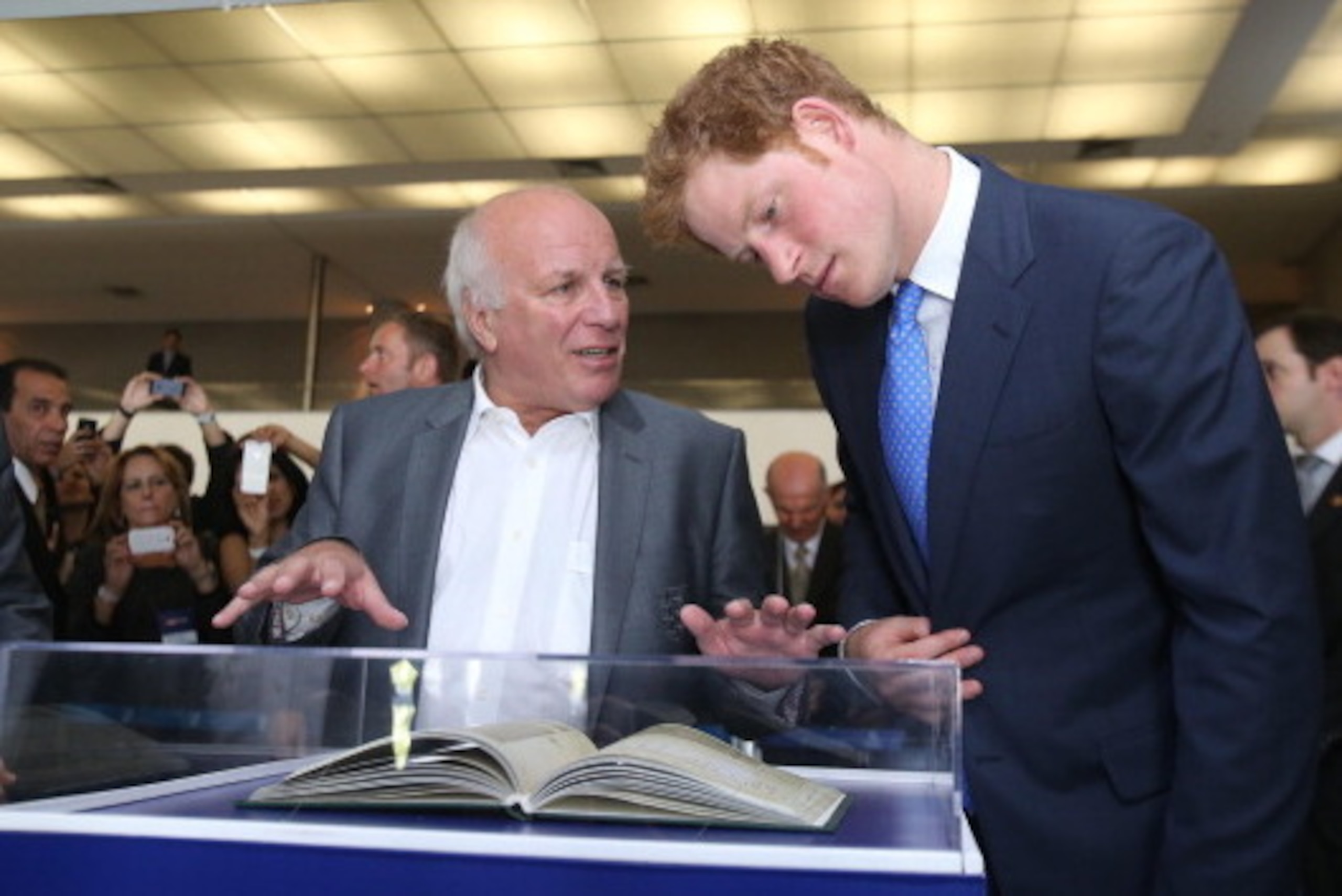
Dyke, unsurprisingly, did not refer to the economic advantages of Wembley hosting the final, instead citing a similar “legacy” rhetoric that was used before and after the 2012 London Olympics as one part of its appeal.
“The bid was about working with UEFA to celebrate young people, develop our grassroots volunteers and demonstrate the determination for all England teams, men’s and women’s, to compete at the top level,” Dyke said in the statement, adding in the subsequent press conference, “We have a good young side at the moment, some of them will still be around in six years’ time. It can be a great ambition for them to take us to Wembley in 2020.
“It’s a brave man who predicts who is going to get to the semi-finals and final of a tournament, but obviously it is an incentive.”
Elsewhere, there was widespread delight at some of the results, with Scotland beating Wales to one package of games by a single point (22-21), on the same day the country voted not to secede from Great Britain. Bilbao (Spain), Bucharest (Hungary) and Copenhagen (Denmark) were all celebrating on Friday, although the awarding of a package of games to Baku (in oil-rich, human rights-poor Azerbaijan) is perhaps the clearest indication that UEFA has not been entirely altruistic about its selections.
The route to Friday’s decision may have been less than transparent, but that is not to say the final outcome will not be a spectacular success.
Wembley has already proven countless times that it has the wherewithal to stage the very biggest events in the world, and London is a worthy city to host a tournament that, at the very least, promises to be a ground-breaking experiment. Perhaps that is part of the reason why Munich withdrew—they knew that London, above and beyond what they could offer, guaranteed UEFA a profitable and successful conclusion to what is otherwise a hugely risky endeavour.
How the logistics of the other host cities are worked out, and which group games they get, is the next step. That might be the most complex issue of all: With nearly 4,000 miles between some of the host cities, it would seem that group games will surely have to be grouped around host stadiums in the same geographical area. It also remains to be seen how many of the 24 participating countries are awarded “home” fixtures in the group stages—or indeed how many host countries even reach the final tournament and what impact that might have on interest and atmosphere.
“Any of the 12 cities that have three group stages matches will host their own national team for two matches at least,” Infantino confirmed. “The Euros go to the fans, and 12 countries will get the chance to see their own team, if they qualify, for two matches.”
As for the rest, Infantino acknowledged "the details of the draw still need to be defined", although it remains possible that England's route back to London could see them play all their games in Baku and Bucharest.
While that is an oddity, a reminder of how new and different this format is, going on to now arrange the entire group stage and knockout rounds in a way that does not invite accusations of bias, or unfairness, from the 24 participating teams is surely going to be problematic.
In the meantime, London is a safe and proven host of the conclusion.
“London is absolutely honoured to have been selected to host the semi-finals and Final of UEFA EURO 2020,” as the city’s major, Boris Johnson, concluded. “This prestigious victory further underlines London’s status as an international power house for big sporting events with the iconic venues, city infrastructure and a warm welcome that’s world-beating.”
.jpg?w=2560 "Rams Eagles Football")
.jpg?w=2560 "Texans-Mixon Released Football")

.jpg?w=2560 "2 NFL Officials Suspended")

.jpg?w=2560 "Mahomes' Wife Trolls Kubiak 💀")
