Scotland's 'No' Vote in Referendum Keeps Celtic's Premier League Avenue Alive
As every recognisable British footballing name the establishment could think of urged Scottish voters to say “no” to independence last week—David Beckham being the most high profile of them, following in the footsteps of his former manager Sir Alex Ferguson—it became increasingly notable how little Scottish football had actually been involved in the debate about the country’s future direction.
At Parkhead, home of Celtic, the weekend’s game against Aberdeen was briefly availed by a chant of “Stand up, if you’re voting Yes.”
The effect was more impromptu YouGov poll than nationalistic statement of intent; some fans got to their feet, others stayed resolutely in their seats, and in the aftermath there was plenty of message-board debate about whether the chant had even been appropriate at all.
TOP NEWS

Final Men's Ballon d'Or Rankings 📊
Highlights and Viral Moments 🍿

J-Dub Suffers Gruesome Injury
It was an interesting debate. It is often said that sports and politics should never mix, but the reality is that one often becomes a potent crucible of debate and rabble-rousing for the other—especially in times of nationalistic fervour. A referendum about a nation’s future would seem to fit into that category.
Perhaps Scottish football took such a backseat in the discussion because it was one of the few sectors that stood to be left relatively unaffected by the final outcome, whichever way it went.
Football already operates in almost completely separate spheres in England and Scotland, an existence the “Yes” campaigners were hoping to replicate among wider society.
Scotland, like all the Home Nations, competes in international matches as its own entity, and its clubs play in UEFA competitions in the same way. A vote for independence would not have changed that arrangement—which is why, even among groups where sport and politics mixed, it was the political angle that was the only one highlighted.
Rangers, for example, is often characterised as a Unionist club, yet at times its fans were polled as being narrowly in favour of independence.
“It’s a pleasant surprise to see more Rangers supporters voting Yes than No,” a spokesman for the group Yes Rangers told the Daily Record in May, following one particular poll (Glasgow would ultimately be one of the few councils to vote yes). “We’re seen as the traditional British club and our supporters Unionist by default. But we’re affected as much as everyone else by the poor decisions of successive Westminster governments.
“We have a once in a generation chance to change things for the better and I think more of our supporters are realising this.”

Scottish football would scarcely have been affected by secession, which is perhaps why the council with its two most prominent clubs eventually voted "Yes". It may have changed the competitive balance of Scottish football, but again that is attempting to predict something few experts have seemingly managed to find any agreement about.
In the run-up to the referendum, many experts warned of the economic cost of the move, with many prominent businesses moving back south of the border to protect its status.
In theory any economic drain could have a trickle-down effect on Scottish clubs, with less money available to them in benefactors, corporate partnerships or ticket sales (if unemployment rises or wages drop). That would feasibly impact on the standard of football and thus its competitiveness on a European scale—although the more unfair among us might suggest that things are hardly going brilliantly right now anyway.
Indeed, secession was perhaps always likely to have a greater effect in European football than the Scottish domestic game.
As the debate went on, experts in the media suggested that it could cause a “domino effect” among similar states throughout Europe, with the likes of Catalonia and the Basque region in Spain likely to pursue a similar date for self-determination, among many others.
"Europe will in all likelihood be infected by Scottish independence, if the Scottish independence referendum due to be held next Thursday is successful and the divorce really does happen,” as the Hungarian economic website Portfolio (translated by the BBC) wrote last week. “Catalonia, the Basque Country, Flanders and even Venice are keeping a close eye on developments, which may once and for all justify their own aspirations of autonomy."
If that eventuality had arisen—and it is not to say those regions will not still push for their own chance to secure independence—then the effect on football could be significant. Clubs including Barcelona, Espanyol, Athletic Bilbao, Real Sociedad, Gent and Club Brugge would all be affected by any independence for those regions mentioned and may no longer be permitted to play in the leagues they have long competed in.
La Liga without Barcelona? Unthinkable, but suddenly far from impossible.
The likelihood is that workarounds and agreements would be made to preserve the status quo at domestic level, but perhaps we will never know whether UEFA—and the European courts—would agree to recognise that arrangement on a permanent basis.
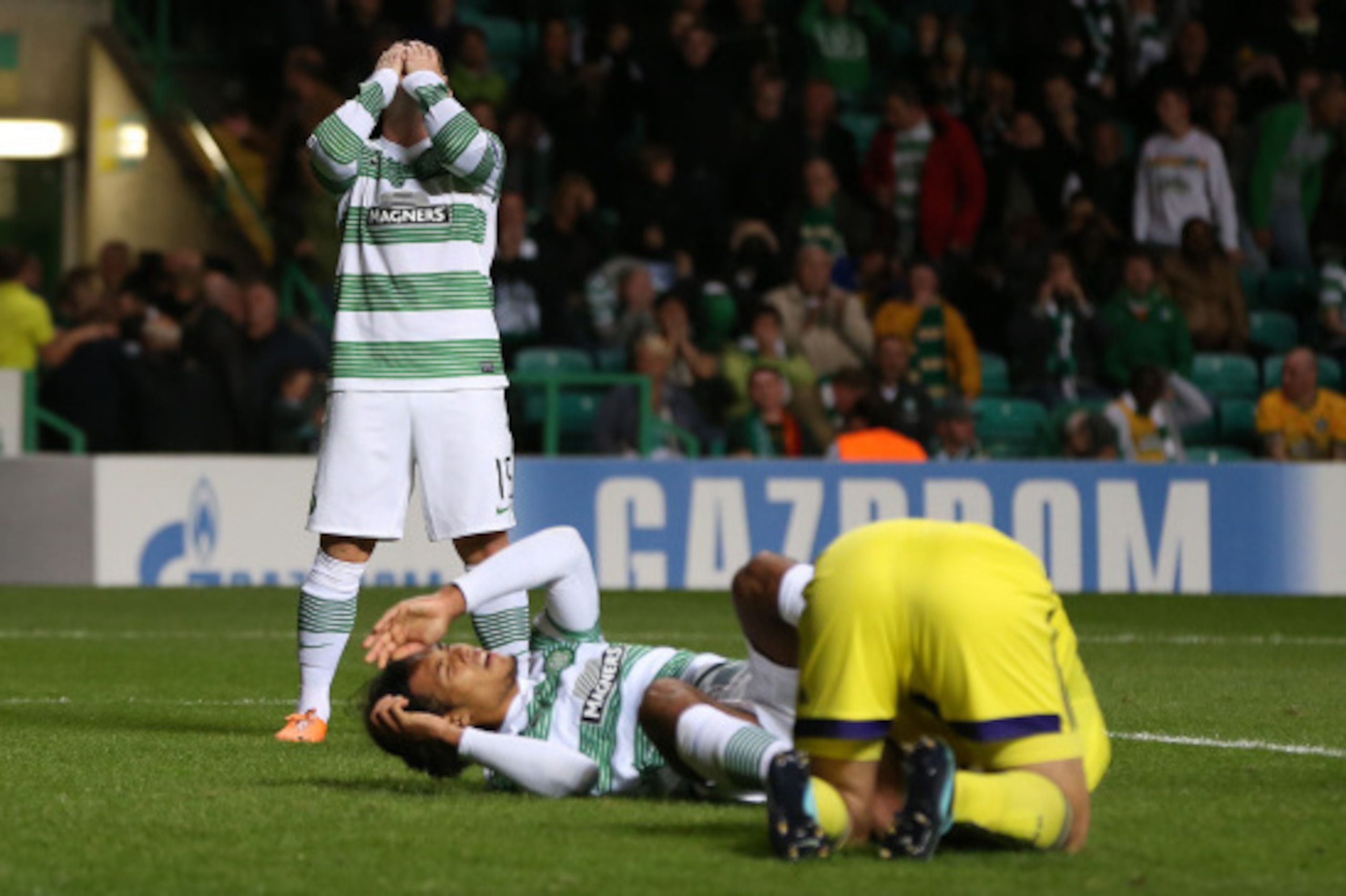
Voting “no” does leave one interesting possibility open, however. With England and Scotland still united politically and socially, it is not impossible that Celtic (or, indeed, Rangers) could yet join the English football pyramid, and eventually play in the Premier League. Secession would have removed the slim window for that transfer.
It is an option that has long been speculated about—and it would doubtless provide a further economic and competitive boost to a league that continues to thrive—even if it is one that would face widespread opposition from a number of angles.
It would also be problematic to implement, with Celtic likely to have to start way down the pyramid—perhaps even below the Conference—and eschew years of television revenues (and potential Champions League participation) in order to fight their way up to a league that many similar-sized clubs (Leeds United, Nottingham Forest, Birmingham City) have struggled to return to in the last few years.
Voting to stay in the union probably puts that prospect further on the backburner for now (especially considering Glasgow voted yes). But it remains a long-term possibility, just as it always was.
The referendum decision was never likely to have a huge impact on Scottish football—but it remains to be seen whether the eventual “No” vote will lead to even greater co-operation in football, if not elsewhere.
.jpg?w=2560 "Rams Raiders Football")


.jpg?w=2560 "Rodgers Iced Out on Plane 💎")

.jpg?w=2560 "Packers Safety Slams Refs 🤬")
.jpg?w=2560 "🚨 Week 8 AP Top 25 Poll")