
Shrunken Salary Cap Forcing Teams to Put Away Wallets
Teams such as the New York Knicks and New Jersey Nets have been doing all they can to save coveted cap space for when superstars such as LeBron James, Chris Bosh, and Dwayne Wade hit the open market.
Not only would a team have to save cap space for these superstars, but they must save for a supporting cast as well. No superstar is going to want to carry the stressful load of winning a championship on his own.
It seems like every free agent over the last few summers has acknowledged this, as the league has seen bloated over-paid contracts given to undeserving players, just to make sure a team can secure its wanted goods.
TOP NEWS

1 Word To Describe Hornets' Offseason 🗣️
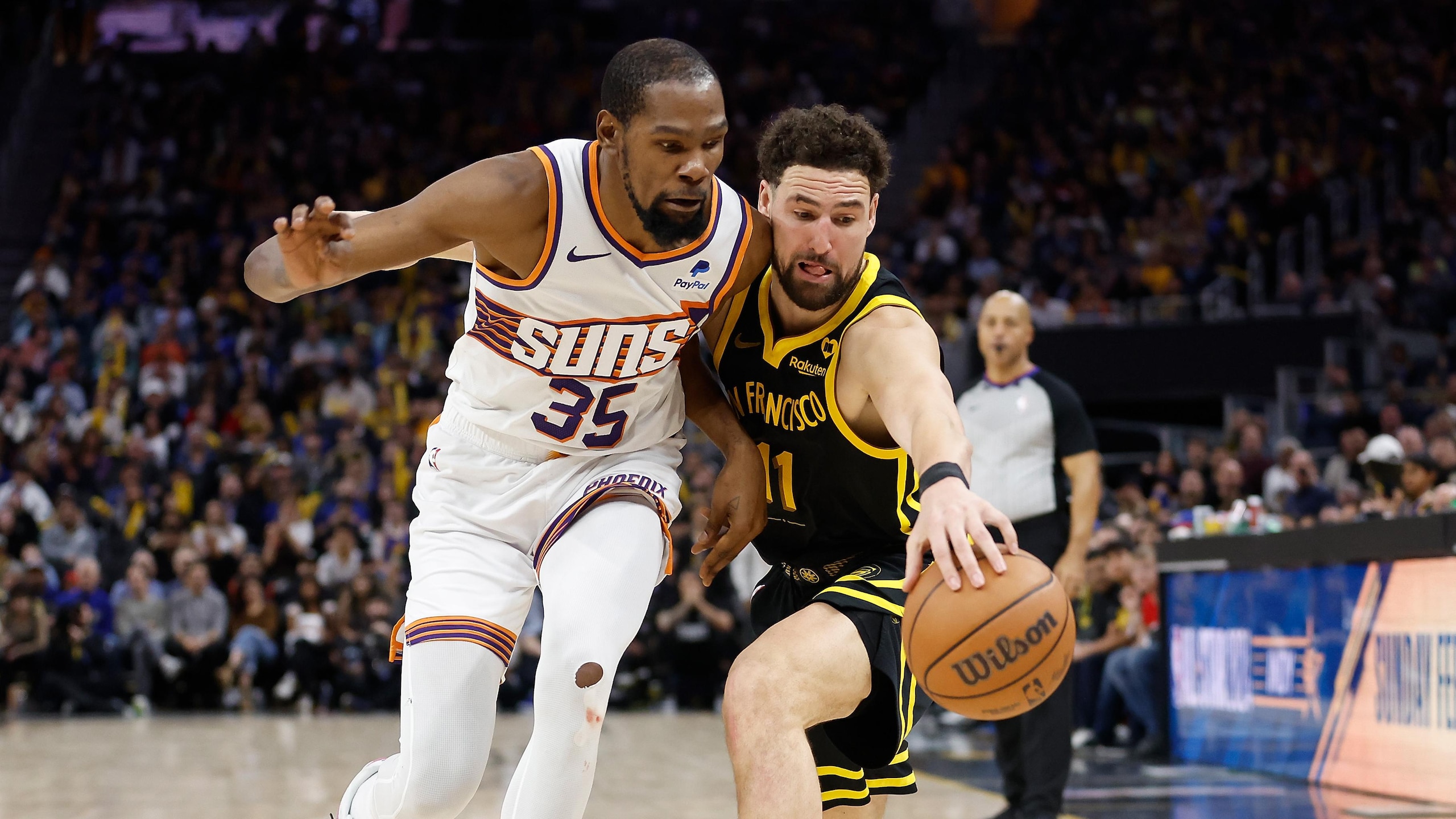
Klay Thompson calls out Kevin Durant

Dray Disagrees with KD's 76ers Take
As outrageous as this may be, players cannot be blamed for cashing in. The simple concept of supply and demand applies here. The demand is certainly present, as many franchises aim to build their rosters to attract the big stars. Therefore, the price of the supply is going to see a massive increase.
So, the supply is ripe and ready, and the demand is going through the roof, but there is just one problem: The prospective buyers’ funds are about to become depleted.
On July 7, the NBA announced that it would be lowering its current salary cap of $58.68 million to $57.7 million in 2009.
Now, why an issue in regard to 2010? The NBA, like many businesses in this economy, is struggling. With ticket sales and overall revenues down, the league is projecting a 2.5-5 percent drop in the cap.
That means the salary cap in 2010 could be as low at $50.4 million.
With many teams ready to spend, expecting the salary cap to increase as the recent trend has suggested, this comes as a huge disappointment.
The decrease should alert teams to be prepared to alter their game plans.
NBA Salary Cap guru Larry Coon said it best, “This is a warning to teams saying you’re responsible for the decisions you make and don’t say you haven’t been warned.”
As an example, based on the Knicks’ current salaries and the league’s projections for the future, the team would only have enough cap space to offer one superstar a maximum contract, not two, as originally planned.
Numerous rumors have the Knicks gunning to sign James and Bosh next summer.
The shrunken salary cap presents a big obstacle in that plan, as even if the team were to sign James to a maximum contract, it would then only have roughly $6.4 million to offer to another player.
“This summer, that will get you Trevor Ariza,” Coon said.
In a best case scenario in which the Knicks do sign James, the team could hope that former Mike D’Antoni point guard Steve Nash, who makes his offseason home in Soho, N.Y., takes some sort of hometown discount to finish his career with his former coach.
However, the shrunken cap could also mean more free agents will opt to re-sign with their current teams, as they would be able to sign a contract for more money staying put rather than with a new team.
Nets GM Kiki Vandweghe still is not worried, “"If the free agent that we want isn't there for us, then you can use your cap space in other ways,” meaning the Nets could absorb salary in a trade instead.
Vandweghe’s statement implies that not even second tier free agents will benefit by getting the money that superstars may be very well turning down from other teams.
In part, this proves that teams will start to become more fiscally responsible. If “plan A” to sign “player X” does not work out, then better luck next time. “Plan B” should not be to overpay “player Y,” simply because a team is doing damage control.
Free agents in the NBA’s thus far bloated market have provoked bidding wars, forcing teams to overspend.
If an executive tends to overspend on his players, chances are (unless he is Mark Cuban) that he will be seen attempting to shift other salaries around via trade, just to compensate for the money he just committed to another player.
If they then have to make an additional move to compensate for a move they just made, chances are, the latter was not a good choice at all.
If others can follow Vandweghe’s suit, they may finally understand there are certainly other ways around it than digging themselves a hole.
Whether the NBA is ready or not, economic times have changed. How teams are built is going to change. Free agency as we know it, bidding wars and all, is no more.
Unfortunately for the big spenders, all the hype concerning summer 2010 could all be for nothing.


.jpg?w=2560 "Buzz: Donald Eyeing Media Future")



.jpg?w=2560 "🔴 Live: WWE NXT 👊")