

Mugs and Millionaires: Inside the Murky World of Professional Football Gambling
Kick-off is close. The fanatic takes his bucket seat among his brethren and raises a roar from the craw. Or he tunes the radio to "full match commentary," fingers tingling.
Perhaps he is in the pub, standing beneath the big screen, gulping at a pint to ease a lumpy, anxious swallow. The rest, obsessed, will follow the action online.
These are the rituals of football supporters. Those who, every Saturday (or Sunday), will sweat and shout and scream and sing. And after 90 minutes, plus added time, they will either celebrate or sulk. If it’s a really big game, some may even shed a tear.
TOP NEWS

Live UCL Goals and Viral Moments 🤩

Ronaldo Ripped by Former Manager

First NBA Power Rankings 📊
Regardless of a win, loss or draw, they will swear that in the cacophony of the contest, their team, that result or that referee’s decision is the most important thing in their life.
It isn’t, of course. They will go back to work on Monday...finish off that report for the boss...earn a crust...get the mortgage paid. Only during downtime at the water cooler will thoughts turn back to their passion. But for an infinitesimal section of society, it is far more than that. Football is their livelihood.

It’s not a matter of life or death. But if that team, that result or that referee’s decision goes against them, the lives of their wives and their children are affected. The mortgage does not get paid. Holidays are cancelled. They are not players or managers. They are football’s professional gamblers.
It is their full-time job to win money betting on the game. There are not many successful enough to survive. It is estimated, by the gamblers interviewed here, that fewer than 3 percent of gamblers who have what it takes to "go pro" can earn a living from betting.
No wonder they are a secretive, paranoid bunch. Never do they reveal exactly how they win their money or how much. Their greatest secret is what is known as "the edge." That nugget of information which tells them that the odds on the football betting market is wrong. Only then do they hand over their hard-won dough.
It takes hours of eye-bleeding research to find "the edge." Most pros spend hours, and thousands of pounds, building statistical models. Others will employ specialists—analysts and statisticians—to build a complex algorithm for them. If successful enough, they will attract wealthy investors who will hand over thousands, sometimes millions, to bet for them and be promised a healthy return.
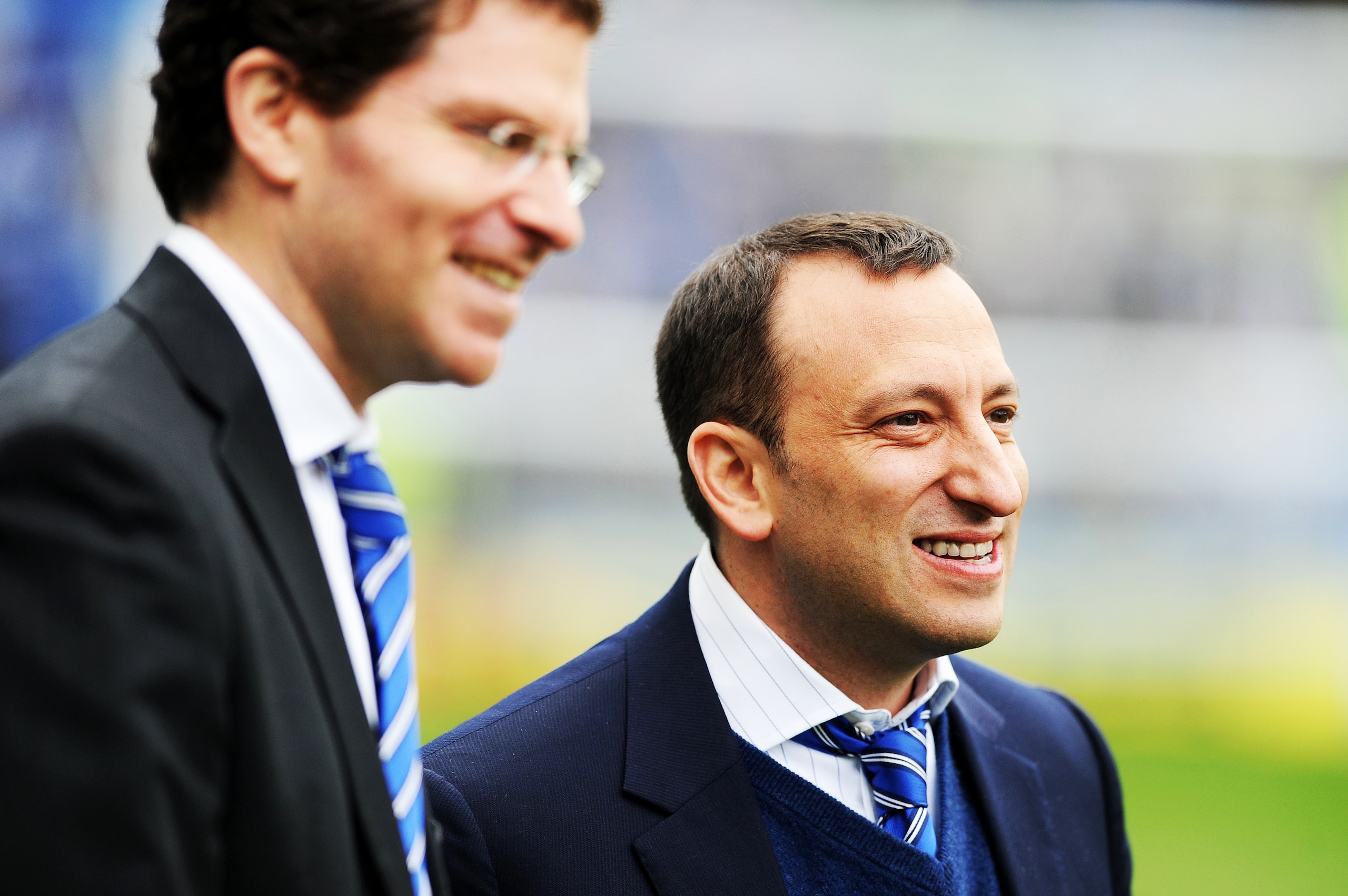
Tony Bloom, a legendary gambler known as "The Lizard," is one such operator. So revered, Bloom runs Star Lizard, a company that employs a raft of people to analyse football matches for his millionaire-only investors. Bloom is rumoured to be worth more than £1 billion and owns Brighton, the Premier League wannabes.
Scott Ferguson, a no-nonsense Aussie, who has worked in the gambling industry for 16 years and was once a pro himself, says Bloom’s operation is far from the norm.
"There is nothing glamorous about the job. You’re in front of a computer screen for seven or eight hours a day and at unsociable hours. You’ll barely see any family, let alone friends. Bloom pays a workforce to do it all for him. Star Lizard is like pro gambling meets capitalism. For the individual punter, slaving away on his own, it can be a soulless, thankless task."
Pro betting offers a unique challenge which sees gamblers pit their wits and statistical research against bookmakers and their very own emotions. They are cold, hard-eyed analysts who reject the outdated notion that you might bet because Team A has a dodgy full-back and Team B has an outstanding winger.
The geeks are chic. They live or die by rules and regulations learnt on the stock exchange, working for hedge funds or bookmakers. Complex mathematical equations are their daily bread. They devour statistics for a snack. The vagaries of the 4-4-2 or the notion that the manager has "lost the dressing room" are irrelevant.
The sums are huge. To earn the average annual UK salary of £26,500, one would need a bankroll of around £150,000. That is because the best most punters can hope for is a return of investment between 3-4 percent. The more you gamble, the more you win. It is not unusual for a pro to turn over millions per season and place £50,000 single wagers on the result of, say, Newcastle United versus Crystal Palace.
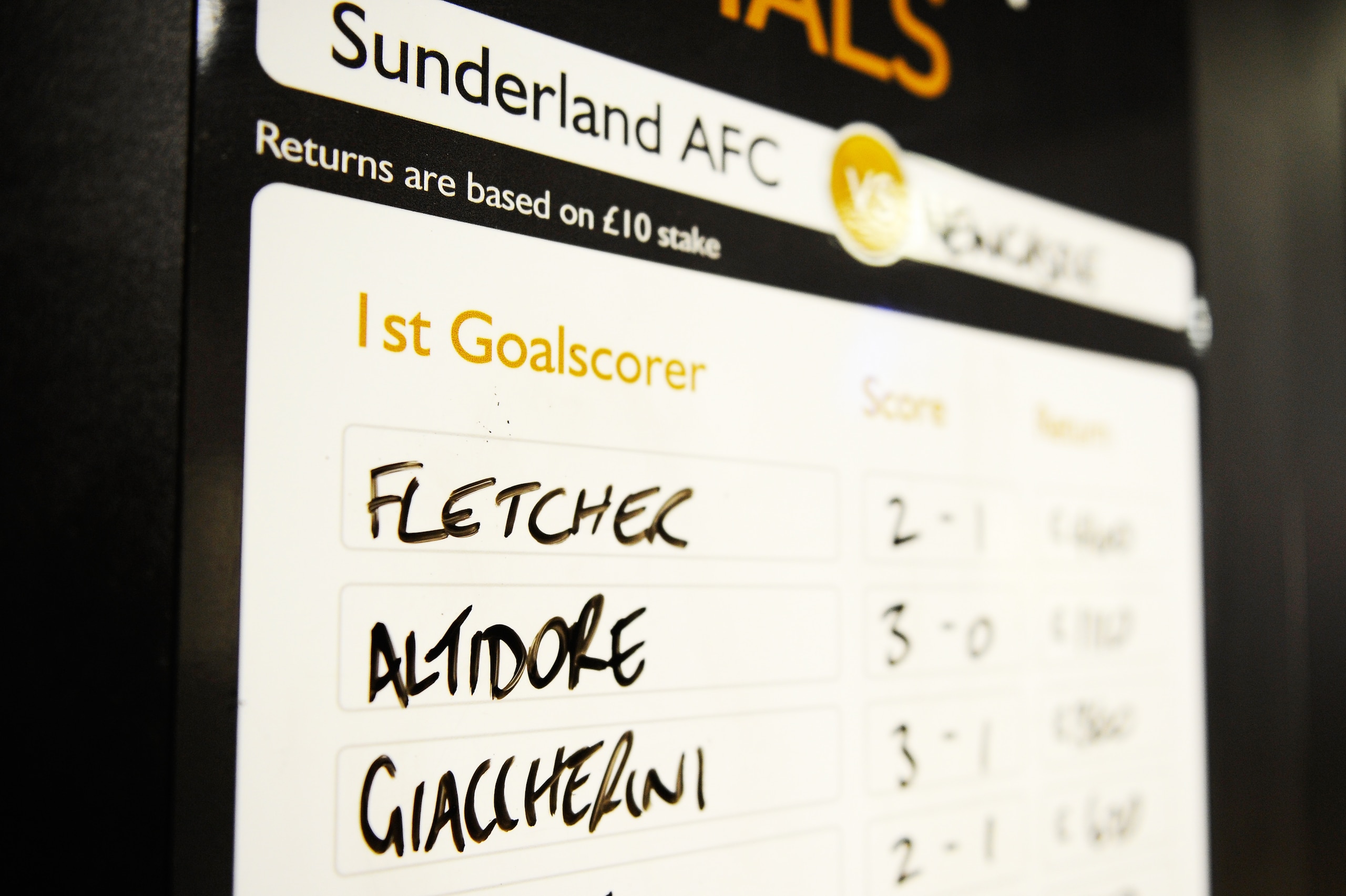
They bet on all leagues around the world, and they place their bets, not with the traditional high-street bookmakers—they would never accept such massive wagers—but in the vast Asian betting market which can attract up to $120 million on a single Premier League game.
About 90 percent of money wagered will be on the Asian handicap, a market that allows the team expected to win a "head start" of a quarter of a goal or more to the opposition. The rest of the money staked will go on a market for over or under a certain number of goals and the match-result market.
The Asian industry has a grubby reputation, thanks to a questionable past. The punter wanting to bet a few years ago in the streets of Jakarta or Hanoi would need a password for access to the bookies who had set up in the backroom of a karaoke bar. Or there was the mansion in the middle of the Malaysian jungle with a giant satellite dish on its roof beaming in football matches from around the world.

Now it has gone corporate with bookies housed in gleaming office blocks with websites and 24-hour call centres enabling gamblers to get their bet on. Firms such as Pinnacle, IBC Bet and SBO Bet, which used to sponsor West Ham United’s shirts, are some of the biggest bookies.
Closer to home, gamblers will use a betting exchange like Betfair, where they can act as the bookmaker, offering odds to other punters. An average televised Premier League match will attract more than £20 million.
So the money is there to be made. Now meet the pros who go to extraordinary lengths to get their hands on it. They lose more than £30,000 on one bet, have been barred from betting shops, don’t care if a team signs Mario Balotelli and sometimes don’t even watch the game.
The Lizard
A few yards from the student nirvana of cheap street food, leather traders and tattoo parlours at Camden Town’s grungy market is a building called the Iceworks. It is as austere as the name would suggest.
The windows are covered by reflective glass so no one can see in. There is no company name above the door and no hint of what goes on behind its doors. And it's not that those who work there would be able to tell you anyway.
The Iceworks house Tony Bloom’s Star Lizard. It is, according to the company website, a "specialised consultancy service to clients in the world of sports gambling." In short, Star Lizard works out who will win football matches and places millions of their investors’ money on the Asian betting markets.
Star Lizard’s operation confirms Bloom as one of the most successful professional gamblers alive today. His wealth is unknown—he does not appear on any rich lists—but those close to him have estimated he is worth more than £1 billion.
There are more clues than that as to how deep his pockets are.
In 2009 he bought Brighton and Hove Albion with the ambition to take them to the Premier League. Thanks to him, Brighton were able to build the £96 million American Express Community Stadium. When asked by The Times (£) if he had invested £100 million in the club, he replied "maybe slightly more."
Indeed, his investment now appears to be closer to double that, in the form of interest-free loans and shares. Brighton fans, who call him the "international man of mystery," often speculate about where the money comes from. Although he has a vast portfolio of investments—he holds 15 directorships—some of it might come from Star Lizard.

Bloom, now 44, studied maths at Manchester University, but he always had a love of gambling, pumping pennies into the slot machines on Brighton’s West Street as a kid. When he had finished his degree, he set off on a career trajectory which would take him to the very top.
He worked in the City as a trader before leaving for Victor Chandler, the UK bookmaker, in Bangkok, where he learned the tricks behind the Asian market. Then he struck out on his own, launching his own bookmakers, Premierbet. He sold it in 2005 for £1 million.
All the while he was earning the moniker "The Lizard" for his cold-blooded style at the poker table. He has trousered more than £2 million playing "for fun" and now divides his time watching Brighton and playing poker in Australia.
"Poker gives you a good grounding in lots of things, including reading situations and reading people and making tough decisions," Bloom said in a rare interview in 2011 (£). "Those skills can be used in business and certainly in running a football club."
Bloom, who refused an interview with Bleacher Report, epitomises the change in the pro gambling "industry." if one can use such a word. The abolition of betting tax in 2001 and the growth of Internet gambling allowed shrewd individuals with a brilliant mathematical mind, trading experience and an interest in sports to become career gamblers. Bloom, however, has gone beyond. He is the Godfather of gambling.
Star Lizard, it is understood, only accepts investors who can pump in a minimum of £2 million. And what they do with that money is known only to a handful of people behind the doors at the Iceworks.
One insider, who works in the industry and has friends at Star Lizard, said:

"They employ mathematicians to build algorithms, statisticians, football trend analysts and bet placers. But the left hand doesn’t know what the right hand is doing. That would be too risky. Only three or four people will get to see the whole data and decide where the money goes. If I was working as a stats man there, I wouldn’t have a clue which teams were being bet on.
"They have so many people working for them, they do their analysis on a team-by-team basis. They record every stat you can imagine and have a lot of programmers working out what price they should be betting on. They’ll be betting at least six figures on every bet."
The insider said even the employees "can’t get any information on how to invest," which is very strange. The argument I’ve always got back is they’re making too much money. They don’t want people to know how much they’re making or learning about how they do it. Is that true? I don’t know because it’s so secretive.
"No one will talk about what goes on there. They are not allowed to have a betting account. They are not allowed to have a Twitter account. But Tony looks after them all very, very well. At the canteen you can order any food you can think of, and every year he takes the whole staff and their partners on a cruise. There’s only one rule: leave your wallets and passports in the ship safe."
Star Lizard trades under the name Blue Lizard Consulting Ltd; the office is registered in Brighton. It currently has a net worth of £3.4 million, which would only just about cover three of their weekend wagers on the Premier League.
The Boffin
Most people might bristle when accused of being a "boffin" (or "braniac" for the American audience). Not Will Wilde. It’s a badge he wears with pride.
"Yes, I suppose I am (proud of being a boffin)," he says matter of factly. "I think you have to be. Most people say to me 'Do you watch football all week?' Well, it’s on every week, but it doesn’t matter if I watch it or not. It’s all about the algorithm."
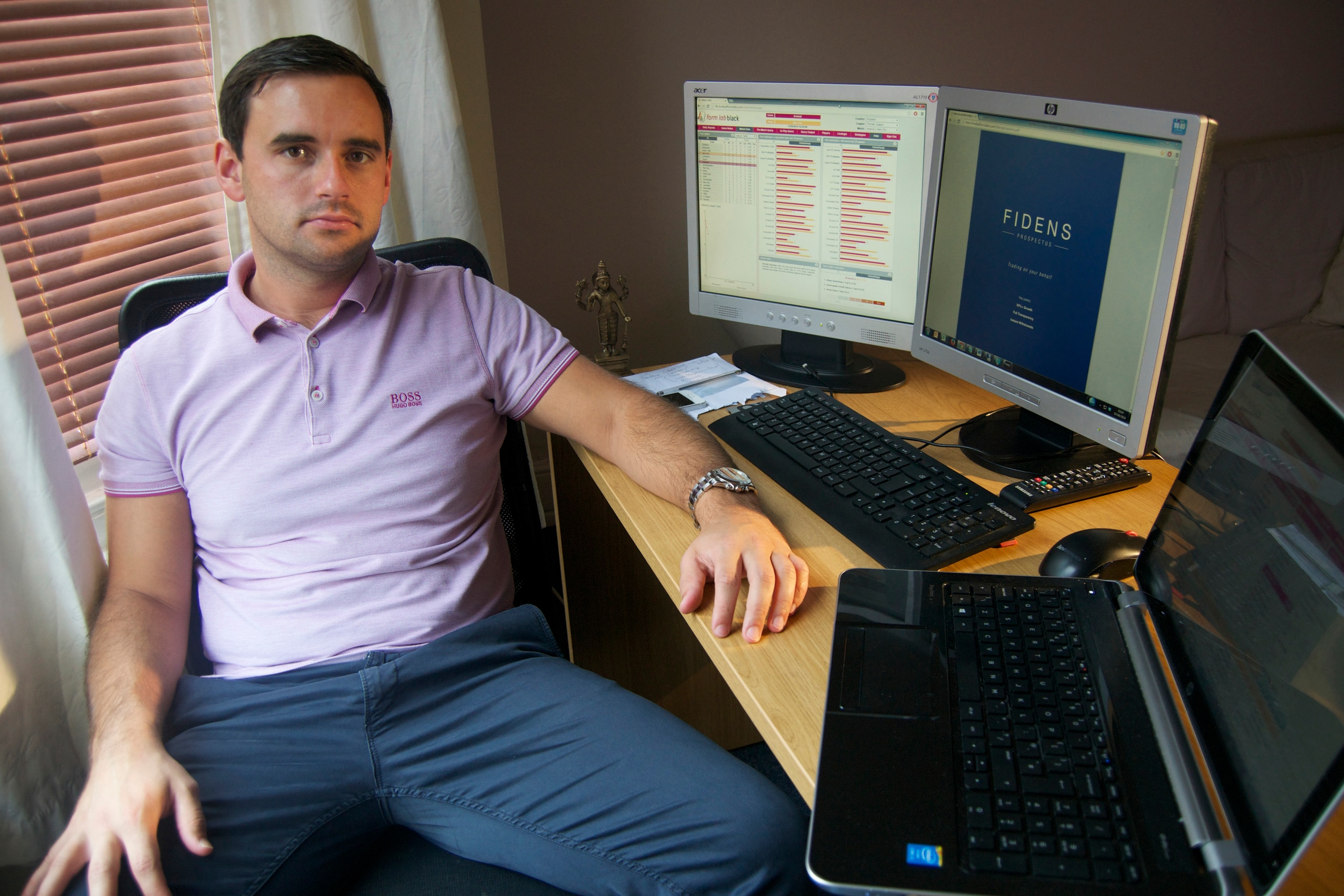
Wilde is the brains behind Fidens, a tax-free syndicate betting on football. If Wilde is the next Tony Bloom, Fidens is the next Star Lizard. “That’s where we’d like to be in 10 years’ time,” he says. At just 26, he is leading the way for the new breed.
Wilde is another math graduate. He joined Fidens six years ago, and it was his job to build an algorithm that would turn a huge database of football statistics into a winning betting formula. Today, thanks to his sums, Fidens manages more than £2 million in investment. They bet on 29 leagues throughout the world.
"Our average stake is about £10,000 a bet, and there’s 3,000 of those a year. If we turn over £30 million, we expect to make £900,000 profit," says Wilde.
Only he and one other at Fidens know how the algorithm works, which means that when they have to travel abroad to visit a potential investor, they have to fly on separate planes, such is the fear that the secret will be lost. In the beginning, a mind-boggling array of team-by-team data was no guarantee of success, as Wilde explains.
"We had all this data for all leagues around the world, and we made 0.5 percent of an edge. We were looking at a 7.5 percent return per year. Better than a bank but not glamorous enough for investment. So we scrapped the whole team data analysis.
"Why? Because if Man United play one week, they could have a different team the next week. So we looked at individual players. That increased the size of the database by 30 percent overnight, so it took another year and a half. The great thing was it increased our yield to about 3 percent. And with that 3 percent we can make about 50 percent gross product per year for investors."
Wilde said the problem was that player data would be utterly useless if you had no idea who was playing for Man United.
"The squads are huge. So we had to get a team of scouts around the world. We have two in every league. So six hours before the game, they give us a predicted XI and predicted bench. Our algorithm has an individual player rating, and with that we calculate what the odds should be. Then we look at what the odds are in Asia and bet accordingly."
Wilde, who takes a cut of the year’s profits, and Fidens are the perfect examples of the revolution taking place in pro gambling. Not so long ago, Wilde would probably have been set up in his home office, working seven hours a day on a statistical model and hoping that he had a big-enough bankroll to make a living. Now he works in Wimbledon Park, leading a team of analysts while others find the investment.
"It’s gone corporate, completely," he says. "A lot of people out there are experts on one league. I’m betting on 29. They’ll say 'Do you know this left winger in Spanish League Two? He’s a great player, he’ll have a huge impact.'
"But these experts have a yield of 7 or 8 percent, but you can’t develop that into making a lot of money without risking a lot of your bankroll, especially on football because there are so many variables. So much luck is involved, even if you have an edge, you can lose huge sums.”

Despite his job, Wilde still bets his own money. He can’t remember his first football bet or his favourite winner. But curiously his eyes light up when talking about his "favourite loser."
"The last three years I’d been backing Argentina to win the World Cup, every week putting a bit more on, a bit more and a bit more. It was the biggest-ever position I’d had on a football bet. Argentina were just over 5-1. When they got to the final, I could have cashed out a guaranteed profit of £30,000. But I didn’t.
"I let the bet run and I remember the [Lionel] Messi chance. In my head I saw that shot go in, curl inside the post rather than outside. I saw the net bulge, and I was celebrating. But I don’t regret it. I would let the bet run 99 times out of 100. It’s a rule of betting that you only take a wrong price. And I thought Argentina were still a wrong price, or in other words, a good bet."
That doesn't mean he didn't take losing hard.
"It’s hard to deal with losers emotionally. I’ve smashed television screens, sure. But you can’t lose your discipline. That’s why I think, with it getting harder and harder for the individual pro, can they withstand losing runs? You can’t build a business on that. It’s a short-lived career now."
The Pro
Alan Thompson is a survivor. "You’ve got to be on your toes in this game," he says. "Every year I have to change, do something different. If you stand still, then you’re not going to get the bills paid."
It's not that Thompson is ever really going to struggle with that. With annual turnover of £16 million a year on Betfair alone, he is comfortably in the top three of individual pros in the country.
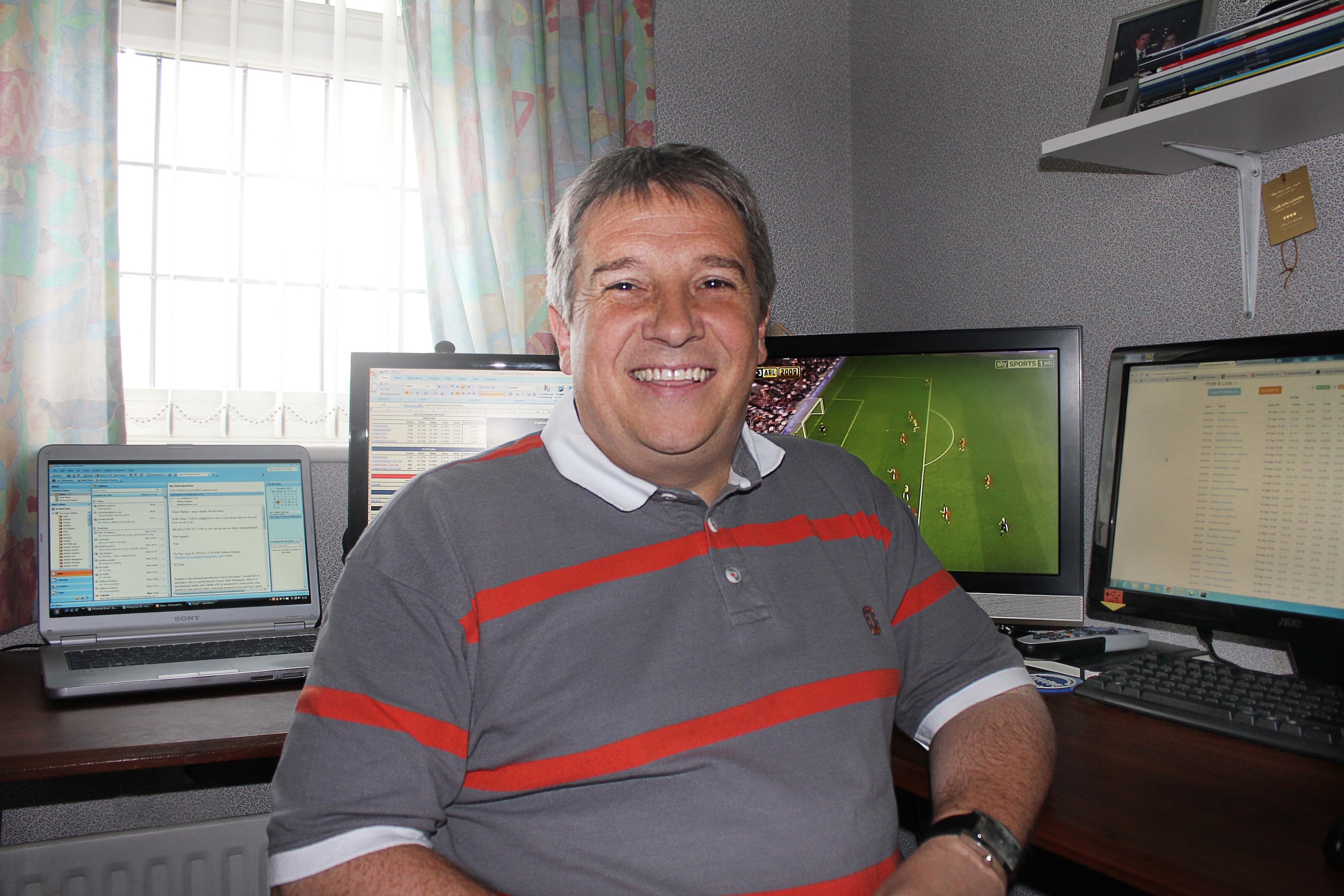
On the fledgling, ever-evolving world of the pro gambler, Thompson is as close as you can get to "old school". He is 47 now, and if his Geordie lilt hints heavily at a man who has been there and done it, that’s because he has.
He first caught the gambling bug as a schoolboy when his father would take him horse racing. "When the other kids were going on holidays to Alton Towers, I was at Catterick or Pontefract races with Dad. I learnt more going racing with him and his mates in the car on the way to some track than three years of maths at school. Probability, percentage chance, all that sort of stuff."
After leaving college, Thompson worked as a croupier at 18 in a casino before becoming a programmer. Despite his wealth of experience, he employs a software developer to manage his "poisson algorithm." This runs 24 hours a day, seven days a week to provide the average goal expectancy per team for the top six leagues in Europe. Thompson is then able to calculate what he thinks each team’s odd should be.
"We apply weekly adjustments to the model, like new signings, managerial changes and things like that, and we weight it one way or another. Once we’ve got our prices, we lay those—bet against a team winning—on Betfair, turning ourselves into a bookie and a market-maker.
"So what we do...let’s have a quick look on the server...I’ve got 1,245 footy lays on Betfair at the moment. We’re laying Maccabi Tel Aviv versus Asteras Tripolis, kick-off at half six tonight..."
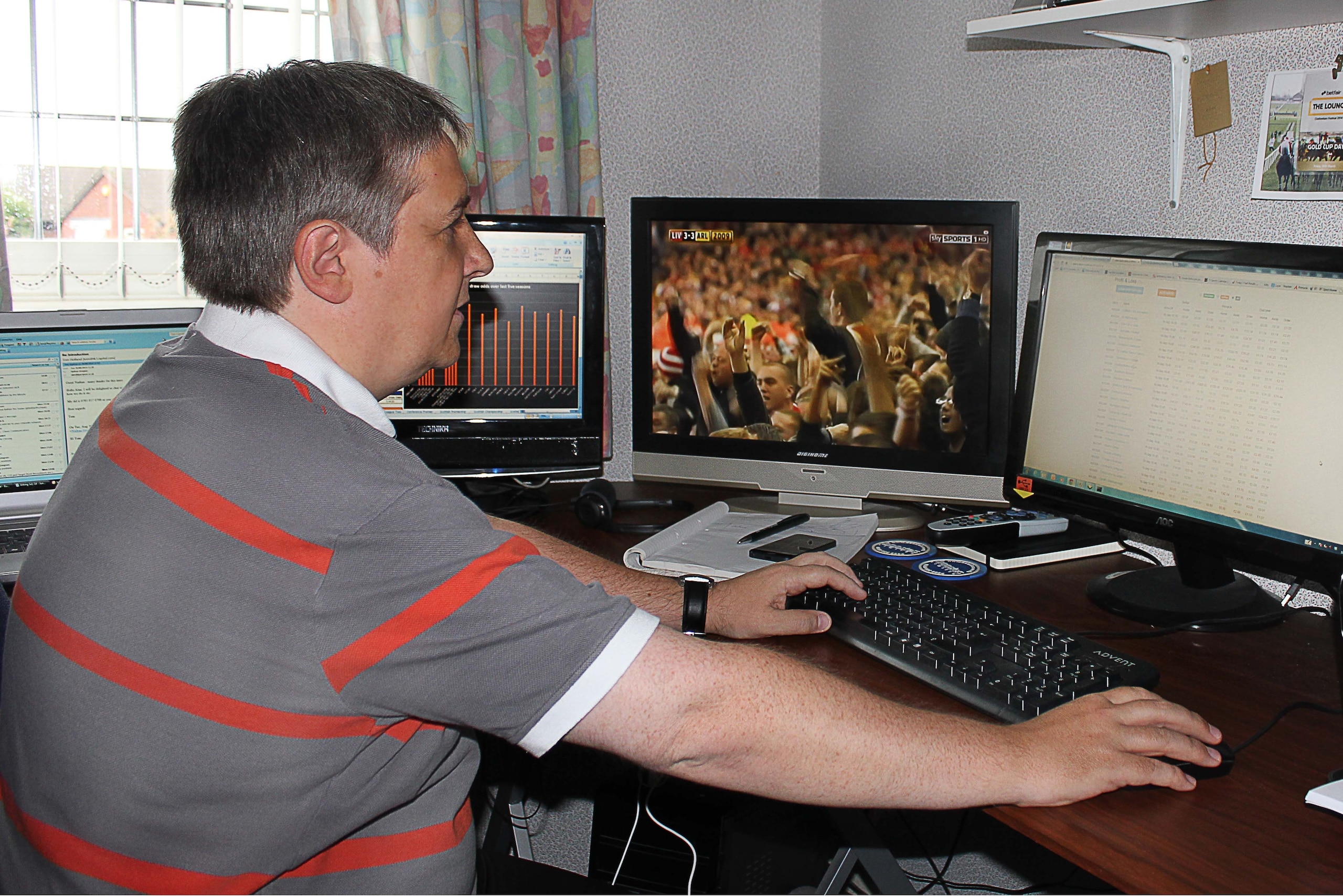
It wasn’t always this way. Thompson used to bet with the traditional bookmakers whom you will see every time you take a stroll to the shops—Corals, Ladbrokes and William Hill. Then he had to reinvent himself. "They stopped taking the £200 bets," he says. "That was a gold mine. Now you’ll be lucky to get £50 on."
Four years ago Thompson had a team of runners around the country who would place his football wagers in betting shops.
"At our peak, we would have on a busy football weekend about 10 people running, in London, Manchester, up here...all over. We wouldn’t be far shy of £30,000 in circulation. But it was tough. The money management was difficult.
"I had a runner who I’d know since we were both at school, 16 we were. He went down to Leeds, did some business for me, and we had a big win of £3,500. I’ve never seen or heard from him since. Had known the kid since we were 16. Now I think he had other financial problems, and I don’t think his marriage was going too well. He got this cash, and he thought 'that would do me.'"
Thompson is now barred from every betting shop in the north-east of England. "There’s one manager in a local betting shop up here. He hates me, despises me. It’s as if I’m taking money out of his pocket. I go in the shop, and he tries to throw me out. He abuses me from the other side of the counter. 'Get him out of here. You’re not allowed to be in here!'"
The big threat to Thompson’s status quo is companies like Star Lizard. He believes with their weight of investment behind them, they take all the best odds before the individual pros can get their wager on.
"Tony Bloom is putting the rest of us out of business," he says. "Well, those who are slow to adapt. I learn from Star Lizard, though. I hear bits and pieces about what they’re up to, what they want to do next and how they’ll do it. That’s how I’ve built my empire."
The Family Man
Vasu Shan is what they call a ratings man. He spends eight hours a day working on equations to give a team a rating. Chelsea, for example, are "one-and-a-half goals better than your average side." If he gets those ratings wrong, Vasu knows his family could suffer.
He has a 13-year-old girl, two boys aged six and five and another boy on the way. Vasu is well aware of the responsibility to not only win money but also to not lose his nerve. It is the greatest menace to a pro’s sustainability: the battle to keep emotions in check.

"If you’re on a bad run, you have to maintain faith in your system," Vasu says. "You have to accept that bad run and work harder and not chase. Chasing is the deathknell for a punter. It’s when he loses his courage, worrying about hitting his target, so he starts increasing his stakes out of proportion."
"Well, I can remember a time when..."
Our conversation is interrupted. Vasu’s youngest comes rushing in. "Daddy, I need a poo-poo."
"Daddy’s busy, go and find Mummy...You see, there’s the glamorous lifestyle of the pro gambler right there. It’s not about yachts in Monaco or private jets. It’s hard graft, juggling a family life in suburban Northampton."
He laughs.
Vasu, who worked in the gambling industry in Australia and Hong Kong, turned pro at 35. He will place 100 bets a week at around £10,000 each. Over the course of the season, it is in his plan—as his ratings become more mature—to be betting £50,000 a pop by its close. He admits that such numbers could destabilise a family.
"When I started I opened up with a tough six months, and I thought 'what have I done?' But it worked out OK in the end," he says. "I try not to let it affect me, and hopefully my family will never know if it’s going good or bad."

He continues.
"At the moment I’m trying to go cold turkey on checking the scores every three or four minutes on the weekend. It’s a waste of time, watching and waiting for goals that go for me and against me. You can’t control it. Now I’ll just play with the kids. Sometimes I’ll watch a game, most of the time I won’t. And if I’m watching a game, I’ll just cheer for whoever the kids want to win. It’s easier that way.
"Actually, I remember when I started, my wife watched a game with me, and she said 'So, who do we need to win?' And the result went against me. She got really upset, so now I just keep it completely separate. The kids don’t know what daddy does up here. In fact, they’re pretty disappointed he’s not a lorry driver."
No, he’s not. He’s a number-cruncher. And after this conversation ends, he will return to his spreadsheets to tweak his ratings after the weekend results. And in a few days he will have to tweak them again after the flurry of transfer-window activity. Players can make a difference but not as much as you would think, according to Vasu.
"The transfer window is interesting because every fan thinks it’s pivotal, and the fortunes of their team will suddenly change with the signing of one standout player. In reality, very rarely does one player improve a team."
But what about the signing of £59.7 million Angel Di Maria for Manchester United? Or Mario Balotelli to Liverpool?

"When Di Maria signed for United, I rated them up slightly. But then they drew at Burnley, so they had to come down to the same level. Balotelli’s a good player, but he doesn’t change Liverpool’s ratings. He increases their options in the squad. He doesn’t make goals more likely. The numbers clearly tell me that.
"You can overreact to the signing of a new player. And gamblers don’t, by and large. It’s back to keeping away from the emotion of it all. Fans get themselves in a state about the transfer window now."
Indeed. The pro football punters are not fans. They are completely different beasts. The fan believes anything is possible and against the odds, their team can, at any moment, produce a life-enhancing win. The punter stakes his life, every weekend, that they won’t.
Ed Hawkins has won the Sports Journalists' Association Betting Writer of the Year award for the last three years and the Wisden Almanack Book of the Year for Bookie Gambler Fixer Spy, his book on cricket-betting corruption. It was also shortlisted for the William Hill Sports Book of the Year.

.jpg?w=2560 "Report: Giants Releasing Najee")


.jpg?w=2560 "Vet FAs Who Can Help Contenders")