Biggest Takeaways from Week 24's MLB Action
While baseball didn't take a beating over the past week like the NFL did (thankfully), it wasn't exactly a banner seven-day period for America's pastime.
Incidents involving player safety and banned substances overshadowed some terrific action on the field, as teams continue to battle for positioning in heated division and wild-card races in both leagues. We've seen some teams rise to the occasion, taking control of their own destiny, while others have faltered and now need help if they're going to be playing meaningful baseball in October.
Let's take a look at what we've learned, shall we?
Baseball Still Has a Trust Problem
1 of 5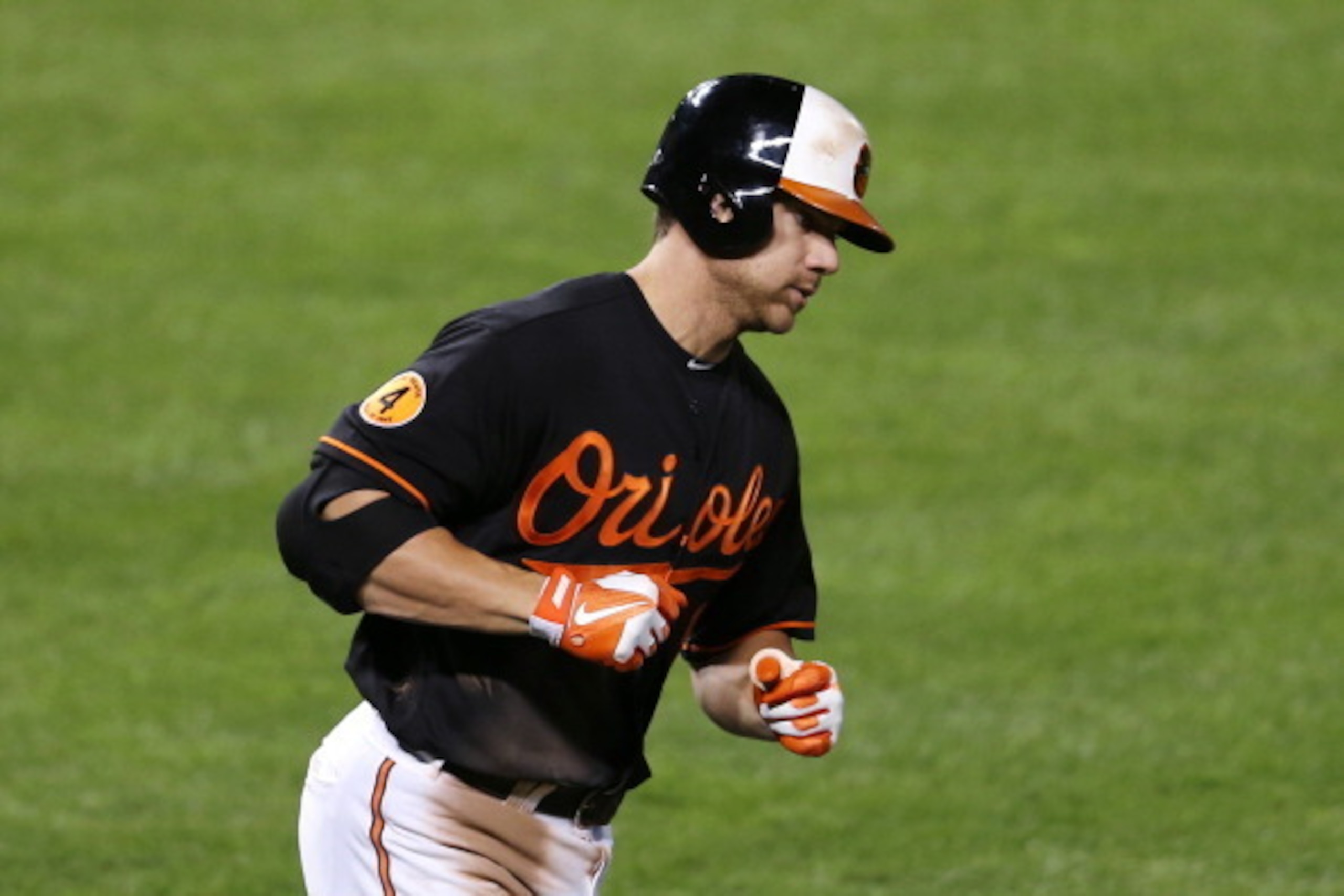
Just when you thought it was safe to trust the numbers being put up by baseball's biggest stars, along comes Baltimore's Chris Davis.
Suspended for 25 games (including the postseason) for a second failed test for amphetamines (Adderall), Davis has sent all the goodwill generated by MLB's tough PED penalties out the window.
Bleacher Report's Scott Miller is absolutely correct when he says that Davis' remarkable 2013 campaign, when he led baseball in home runs (53), RBI (138) and total bases (370) and finished third in the American League MVP voting, has now been thrown into question:
"What we do know for certain today, beyond the shadow of a reasonable doubt, is that another Popeye home run hitter has landed on the suspended list. And while chicks may dig the long ball, we still can't trust the long ball.
"
Adderall is not a steroid. It's nothing like HGH (human growth hormone), and it doesn't help a player get stronger, swing the bat faster or hit the ball farther. But it does help with concentration and focus, two things that are just as important when it comes to hitting a baseball as brute strength and athletic ability.
As Miller notes about MLB's drug policy: "Here, though, is where things remain murky: steroids versus stimulants. No comparison, you say? Fine, then Davis' suspension is a misdemeanor, not a felony."
The worst part is that Davis had previously received an exception from MLB to take the drug in-season, yet he decided for whatever reason that he no longer needed the game's approval.
As I'm writing this, these lyrics from Depeche Mode's "A Question of Lust," off their 1986 album Black Celebration, seem quite appropriate:
"It's a question of trust
"
It's a question of not letting
What we've built up crumble to dust
An' it is all of these things and more
That keep us together
Whether you believe that the 112 home runs Davis has hit since the beginning of the 2012 season are legitimate or not is largely irrelevant. There are now some fans out there who question everything all over again, just as they did in the aftermath of the steroid era and PED scandals.
The damage has been done. The trust is gone. How baseball gets it back is unclear.
Kansas City Is Its Own Worst Enemy
2 of 5
Back in August, Pat Borzi (The New York Times, Sports on Earth), in a special piece for USA Today, asked a simple question: "Will (Ned) Yost find a way to screw this up again?"
After watching Yost's Kansas City Royals squad over the past week, the answer to that question is looking more and more like a resounding yes.
Kansas City entered play Saturday, Sept. 6 with a 1.5-game lead over the Detroit Tigers in the race for the American League Central. Heading into play Saturday, Sept. 13, Kansas City trails Detroit by half a game, having dropped five of its last seven games—including two of three to the Tigers.
“I want them to toughen up and get back in first place,” Yost told Blair Kerkhoff of The Kansas City Star. “I want them to look at it and say, ‘Let’s go, we've got to get ourselves back into first.' It’s not time to sit and feel sorry for yourself because you’re not in first place anymore."
Yost has seen this story before—twice—while serving as manager of the Milwaukee Brewers in 2007 and 2008, as Borzi recounts:
"The first year, a Brewers team with emerging stars Ryan Braun, Prince Fielder and J.J. Hardy led the NL Central by 8 1/2 games in June before collapsing. Yost handled it poorly, getting ejected from four games in September, three in the last eight days.
Then in '08, with a wild card berth at stake and the team floundering, general manager Doug Melvin fired Yost with 12 games to go. The Brewers rallied to go 7-5 for interim manager Dale Sveum and make the playoffs for the first time since 1982.
"
While Yost hasn't done anything (like receive multiple ejections) to fuel the Royals' slide, his club finds its playoff hopes in significant peril, currently tied with the Seattle Mariners for the AL's second wild-card berth.
It could all come down to a three-game set between the Royals and Tigers that gets underway at Kauffman Stadium on Friday, Sept. 19.
But for that series to matter, Kansas City is going to have to take care of business against the Boston Red Sox (two games) and division-rival Chicago White Sox (three games), two teams that it's gone a combined 8-9 against (0-5 vs. Boston).
With his team scuffling, getting outscored by 10 runs over the past week, Yost told Kerkhoff that he's at a loss as to what to do next.
“If you had two or three guys who were really swinging the bat well you could get them up to the top of the lineup," he said. "We might switch it up some (Saturday) but you really try to stay away from it and let it work itself out, but we’re kind of running out of time.”
If his club can't turn things around, Yost might be running out of time on his Royals career as well.
Lance Lynn and Chris Tillman Belong in the Cy Young Award Conversation
3 of 5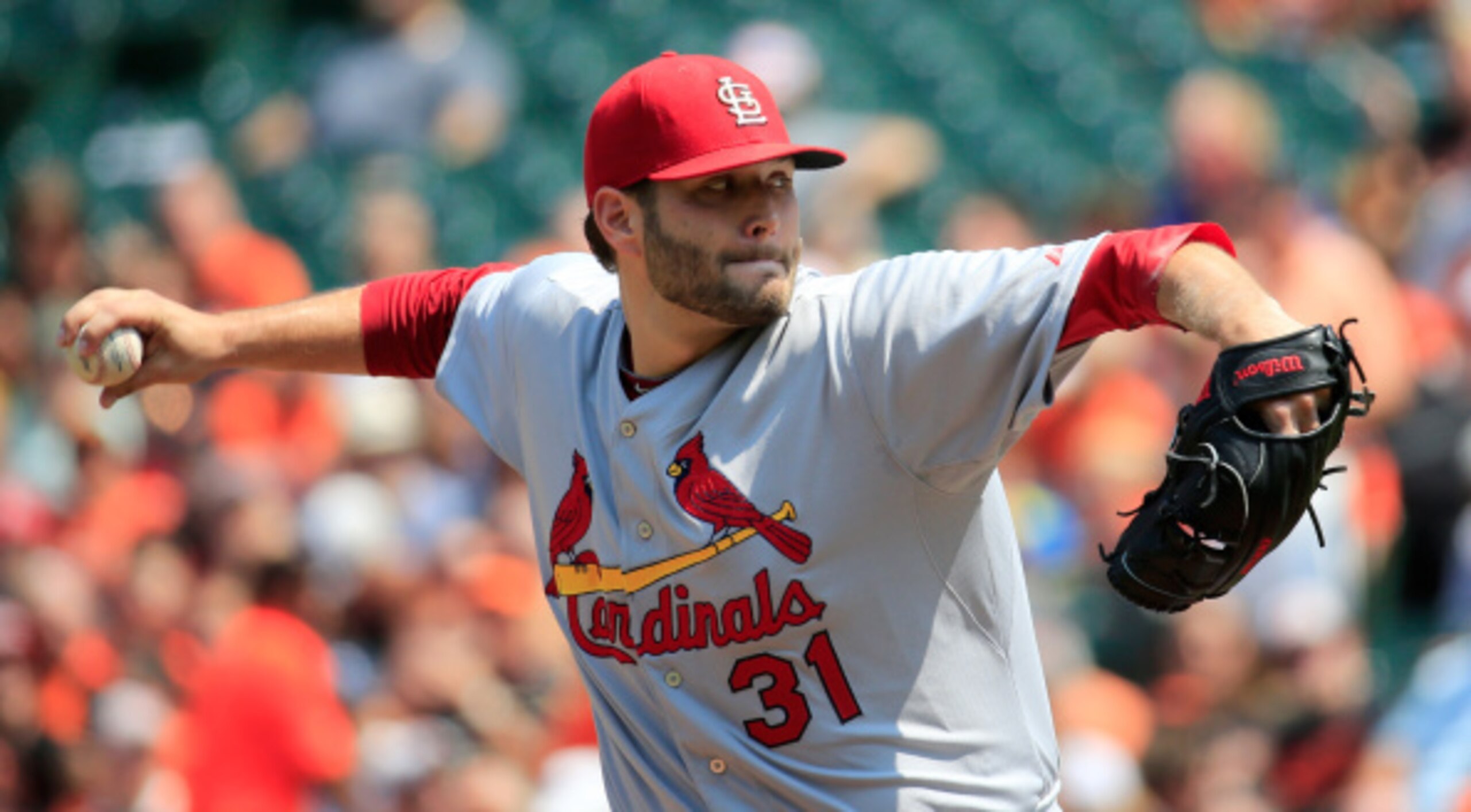
The St. Louis Cardinals' Lance Lynn and Baltimore Orioles' Chris Tillman have absolutely no chance of winning their respective league's Cy Young Awards.
None. Nada. Zip. Zero point zero.
The Los Angeles Dodgers' Clayton Kershaw is going to take home his third National League Cy Young Award in the past four years (and perhaps his first MVP award as well), while the Seattle Mariners' Felix Hernandez remains the overwhelming favorite to win for the second time in the American League.
But that doesn't mean that the pair should be excluded from the conversation altogether.
This past week saw Tillman throw five innings of one-run ball in a victory over Boston, while Lynn was a hard-luck loser, tossing a complete-game gem against Cincinnati, allowing one run and three hits over eight innings of work.
Those performances put them among the game's elite:
| Felix Hernandez | SEA | 28 |
| Johnny Cueto | CIN | 28 |
| Corey Kluber | CLE | 27 |
| Chris Tillman | BAL | 27 |
| Jon Lester | BOS/OAK | 26 |
| Lance Lynn | STL | 26 |
Tillman hasn't allowed more than three earned runs in a start since June 5, a stretch of 18 starts. Lynn's streak isn't quite as long, sitting at 13 starts, dating back to July 4.
Their overall numbers on the season—15-9 with a 2.73 ERA for Lynn, 12-5 with a 3.36 ERA for Tillman—might not put them atop the list of candidates, but the numbers, along with the streaks, should be enough to get them past the bouncer at the door checking IDs and into that exclusive club of those receiving votes.


Pitchers and Catchers Aren't the Only Ones Who Need Protection
4 of 5
Warning: If you've not seen the videos linked below, they are not for the squeamish and I strongly suggest you pass on watching.
The season-ending injury suffered by the San Francisco Giants' Buster Posey in 2011 led to the new (and still-evolving) rules on collisions at home plate.
A slew of pitchers taking line drives to the head, including the Oakland A's Brandon McCarthy in 2012, led to the development of a padded cap that pitchers have the option of wearing.
When the Miami Marlins' Giancarlo Stanton was hit in the face by a pitch that got away from the Milwaukee Brewers' Mike Fiers, everyone's first thought was, "My god, I hope he's OK." But for some, the next thought was this: "How is MLB going to react?"
The technology already exists—face flaps attached to batting helmets. The Atlanta Braves' Jason Heyward has been wearing once ever since he was hit in the face by the New York Mets' Jon Niese last season, which raises the question: Will MLB make it a requirement that all batters step to the plate with added protection?
As ESPN's Buster Olney (subscription required) notes in his latest Insider-only column, there's really no legitimate argument to be made against such a move:
"Face flaps for helmets are like safety belts in cars in the '70s -- they are available, they could prevent serious injury, and as Heyward and others have demonstrated, there is really no downside to wearing one, just as there was no strong counterargument to wearing a helmet, beyond personal comfort.
"
With such an emphasis on player safety these days, it's a guarantee that incoming MLB commissioner Rob Manfred will at least broach the subject with Tony Clark, head of the player's association and a former player who was hit by 21 pitches over his 15-year career.
As Philadelphia manager Ryne Sandberg explained to Stephen Gross of The Morning Call, it's a different game today than it was when he was playing:
"In my day there weren't too many games where I didn't either have to hit the dirt or get down on a pitch or turn my back because the game was played differently. In some regards, the hitters do get pretty comfortable standing in there, not even thinking it is a possibility any more. If I was a hot hitter even more soft on my feet almost expecting to get brushed back and go in the dirt. Today is a different game.
"
Sandberg is right: Today's players dig into the box and crowd the plate more than ever before, which, as noted by Bill Baer of NBC's Hardball Talk, has led to a higher rate of hit batsmen than ever before.
While change may not be instantaneous, there's no doubt that dialogue about how best to protect batters is going to pick up significantly once the season comes to an end.
Pittsburgh Controls Its Playoff Destiny
5 of 5
The Pittsburgh Pirates picked the right time to get hot.
Winners of six of their last seven games, the Pirates have moved to within 2.5 games of St. Louis in the National League Central and currently have the NL's second wild-card berth all to themselves.
The team's biggest competition for the wild-card spot—Milwaukee (1.5 games back) and Atlanta (3 games back)—both happen to be on Pittsburgh's remaining schedule. Beginning Friday, Sept. 19, the Pirates host the Brewers for three games at PNC Park before heading to Atlanta for a four-game set at Turner Field.
While the Pirates haven't fared well against either club this season (a combined 6-13 record), neither the Braves nor the Brewers have been playing world-class baseball in September, going a combined 7-15, despite the Brew Crew's current three-game winning streak.
After missing the playoffs for two decades, Pittsburgh finds itself sitting in familiar territory for the second consecutive season: Win down the stretch and it's in.
That's a nice position to be in—and bad news for those chasing the Bucs in the standings.
Unless otherwise noted/linked, all statistics courtesy of Baseball-Reference and are current through games of Sept. 12.
Want to talk baseball? Hit me up on Twitter: @RickWeinerBR

.jpg?w=2560 "2 NFL Officials Suspended")


.jpg?w=2560 "Mahomes' Wife Trolls Kubiak 💀")

.jpg?w=2560 "Love's Body Already 'Tired'")