Ranking the Best Performances at the 2014 Grand Slams
Kei Nishikori's famous win over Novak Djokovic in the U.S. Open semi-finals Saturday served as a reminder that there have been some incredible performances at the 2014 Grand Slams.
Nick Kyrgios stole the limelight and the hearts of the Wimbledon crowd when he beat Rafael Nadal in the fourth round. The exuberant Australian engineered some stupendous tennis in order to bring the Spaniard down to Earth after Nadal won his ninth title at Roland Garros.
CiCi Bellis proved the age-old adage that if you're good enough, you're old enough. She sent shockwaves through Flushing Meadows in the first round as she ousted Dominika Cibulkova. A second-round exit couldn't take away the plaudits she had deservedly earned.
The following slides will analyse the five best of the Grand Slam performances from the past nine months, ranking them in relation to their significance and drama to one another.
At least one match from each Grand Slam has been selected, allowing for candidates from the green grass of Wimbledon to the hard courts of the U.S. Open to contend.
Honourable Mention
1 of 6
In a stellar year of Grand Slams, there were many candidates whose performances were worthy of acknowledgement.
Stanislas Wawrinka's Australian Open win over Rafael Nadal kicked the year off with a bang. Although carrying an injury that at times rendered him almost unable to hit the ball, Nadal's defeat wasn't entirely due to his physical condition.
Wawrinka played excellent tennis, with U.S. Open winner Marin Cilic believing that "Wawrinka opened the doors" for other players to believe they could crack the established order, per BBC Sport.
Aleksandra Krunic's straight-sets win over Petra Kvitova also made waves on the circuit, as the Serbian qualifier earned her way into the fourth round of the U.S. Open.
Alize Cornet also put in an excellent performance to beat Serena Williams at Wimbledon. The world No. 1's poor year in Grand Slams continued until she won at Flushing Meadows Sunday.
5. Eugenie Bouchard vs. Ana Ivanovic (Australian Open, Quarter-Final)
2 of 6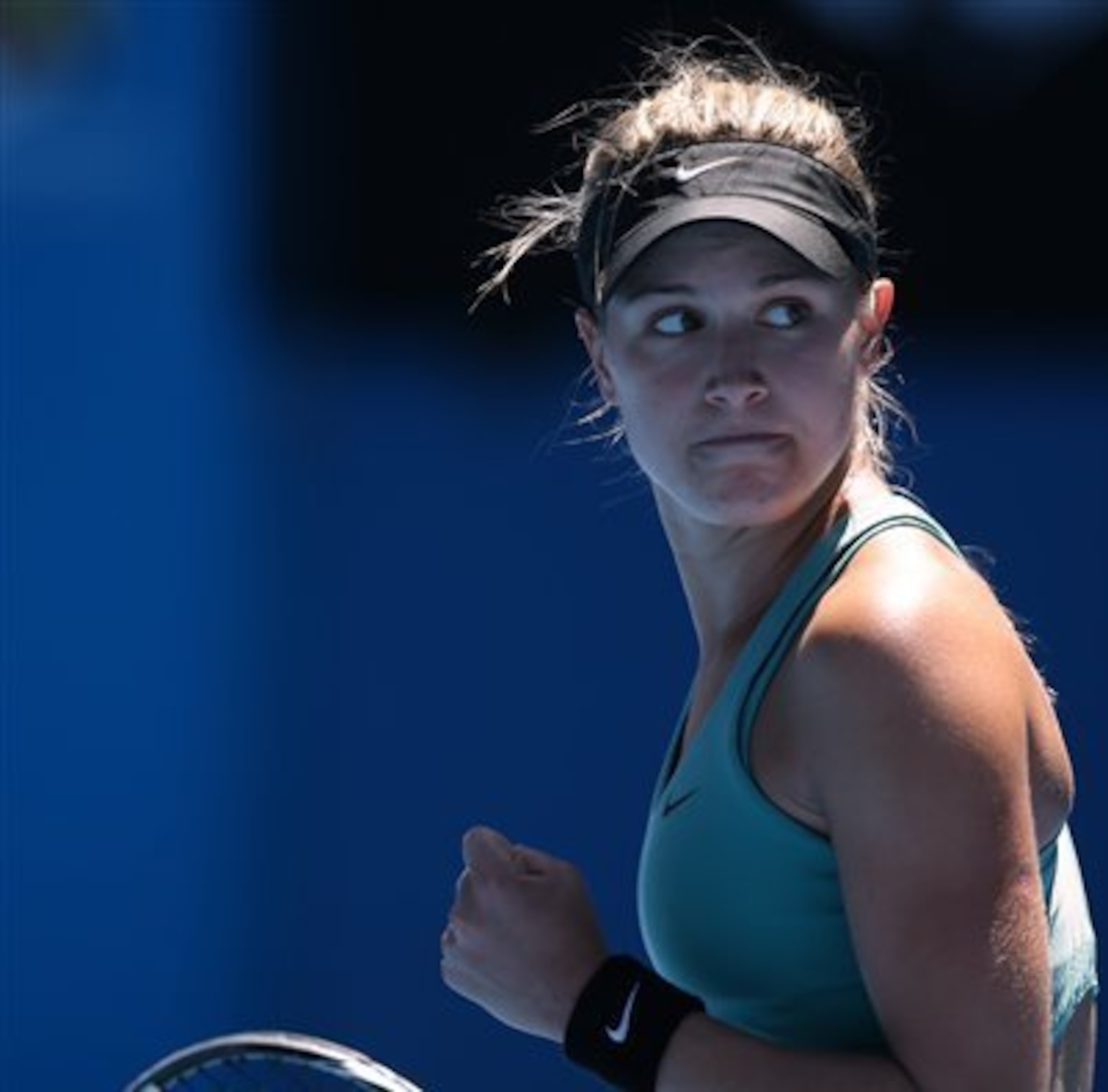
The laws of probability would almost certainly have dictated that the woman who conquered world No. 1 Serena Williams in the last round would beat a teenager who failed to qualify for last year's tournament.
Pleasingly for Eugenie Bouchard, tennis has no time for such foolish assumptions.
Bouchard would need the steely confidence that Paul Newman referred to for The Independent if she was to recover from conceding the opening set 5-7.
The Canadian, who beat Ivanovic at Wimbledon in 2013, surrendered her serve at a crucial moment. At 5-5, Ivanovic took a love game and held her nerve to close out the set.
Bouchard seemed nonplussed and took it in her stride. She broke Ivanovic at 2-1 in the second set to lead 3-1. A terrific backhand flashed across court, drawing only a small fist-pump from the 19-year-old.
As Ivanovic struggled with a leg problem, Bouchard showed little mercy.
Despite her movement seeming unaffected in the closing stages of the second set, Ivanovic was beaten by a well-executed smash and powerful forehand from Bouchard that she returned into the net.
Bouchard began the third set with intent, sending a clever forehand down the line that Ivanovic couldn't reach.
She was stretching Ivanovic at will, displaying all the nous of a seasoned campaigner. While Bouchard's forehands were forcing the match in her direction, a brilliant backhand with Ivanovic closing toward the net typified her increasing belief.
After Bouchard raced into a 4-1 lead, Ivanovic's vociferous reaction to claiming the game at 4-2 proved to be the last time Bouchard would allow her any satisfaction.
Ivanovic did push Bouchard all the way in the deciding game, even reaching 30-40 before Bouchard crashed two forehand winners home to cap an excellent performance.
The inclusion of this particular win for Bouchard, in what has been a wonderful season for her, stems from the fact that this catapulted her towards her first semi-final of a Grand Slam.
It was an experienced performance, capitalising on her more distinguished opponent's weakness.
4. Rafael Nadal vs. Novak Djokovic (French Open, Final)
3 of 6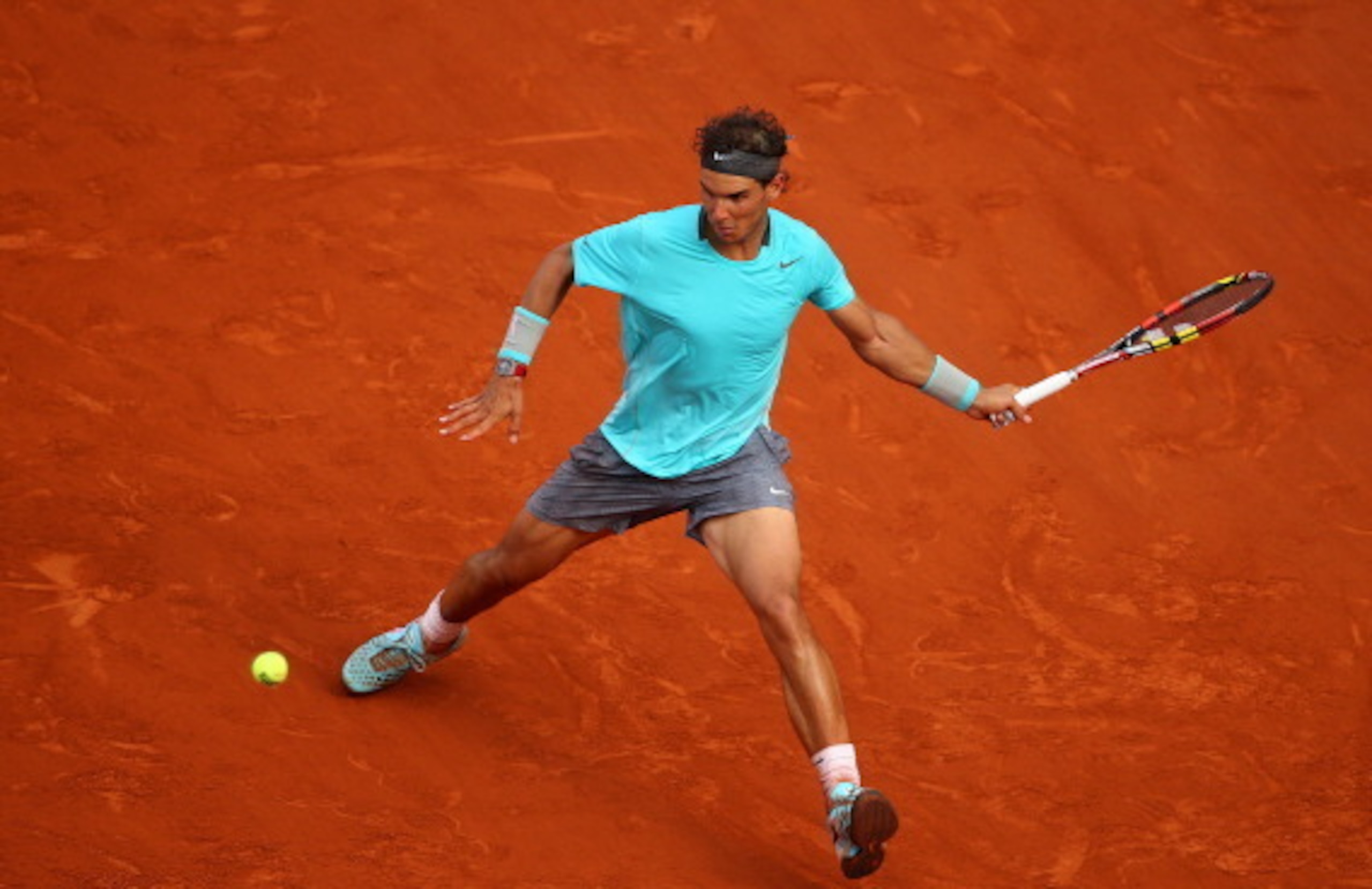
Inevitable? Perhaps. Any less impressive? Not at all.
That Rafael Nadal should win his ninth French Open title is a testament to one of the game's most prominent forces, from both this era and ones gone by.
A formidable opponent in Novak Djokovic, though, was not likely to adhere to any script willingly.
The Serbian took the first set 3-6, playing shots, such as a cracking deep forehand both cross court and down the line, that few are able to make count on clay against the Spaniard.
From that point onwards, Court Philippe Chatrier witnessed the Nadal Show.
Although Djokovic didn't let his opponent's clay-caked footsteps walk all over him in the second set, the third and fourth were vintage Nadal.
The 14-time major winner was feeling his way into the second set when he concluded a long rally with an unreachable backhand down the line. After a tight set, Nadal then broke Djokovic, thumping a winner and taking it 7-5.
Djokovic was broken early in the third, hitting the net from point-blank range after an attempted serve and volley. Handing the reigning champion the initiative at such an early stage proved costly as Nadal clinched the set 6-2.
The Serbian was still playing his part, displaying fantastic movement in some long rallies. He even hauled himself back into the fourth set with Nadal up 4-2. Two games later, the favourite had been caught at 4-4.
However, Djokovic wouldn't win another game.
Nadal repelled everything in Djokovic's armoury to take the set 6-4, breaking his opponent in the final game. Djokovic made one of his three double faults to hand Nadal his 14th Grand Slam.
To achieve such longevity in one tournament is impressive in itself. However, to beat such a distinguished opponent as Djokovic in style means that Nadal has rightly earned his place in the rankings for best performance of the year.


3.Nick Kyrgios vs. Rafael Nadal (Wimbledon, 4th Round)
4 of 6
Not many wild cards make the most of their opportunities at Grand Slams like a certain teenager from Australia did at Wimbledon.
Nick Kyrgios, ranked No. 144 when he stepped onto Centre Court, took on Rafael Nadal, fresh from his annual victory at Roland Garros.
If Nadal brought the power and aggression, Kyrgios brought the tricks as Wimbledon saw one of its favourite sons humbled.
On his way to a 7-6 (7-5), 5-7, 7-6 (7-5), 6-3 win, Kyrgios dazzled SW19 with an occasional burst of expression.
In the second set, with Nadal trailing 1-0, Kyrgios unleashed an audacious shot through his legs. The ball teased its way over the net with Nadal unable to react. Wimbledon rose to commend what BBC Sport labelled "shot of the day".
That was merely a bonus for Kyrgios, as he landed a colossal 37 aces.
Nadal, on the receiving end of something magical from Kyrgios, celebrated a victorious second set with a double fist pump. It was well and truly game on at that point.
However, Nadal just couldn't contend with Kyrgios' 70 winners, in spite of the young Australian making 13 more errors than him.
Kyrgios sealed the third set when he thumped a forehand across Nadal on the baseline. It was all the Spaniard could do to at least attempt to return such a thunderous effort.
As the return drifted into the tramlines, Kyrgios knew he was one set away from history.
It would have been only right for Kyrgios to clinch the victory with a winner of his own, but instead Nadal went long to hand the 19-year-old a place in the quarter-finals.
Although Nadal's wonderful achievement against Djokovic at Roland Garros displayed all the qualities required of an all-time great, Kyrgios' win at Wimbledon was a classic example of the underdog triumphing.
Not only did he defy odds, but Kyrgios also won it in style. His flashiness was balanced out by his ability to set the game to his tempo and ultimately come out on top.
2. CiCi Bellis vs. Dominika Cibulkova (US Open, 1st Round)
5 of 6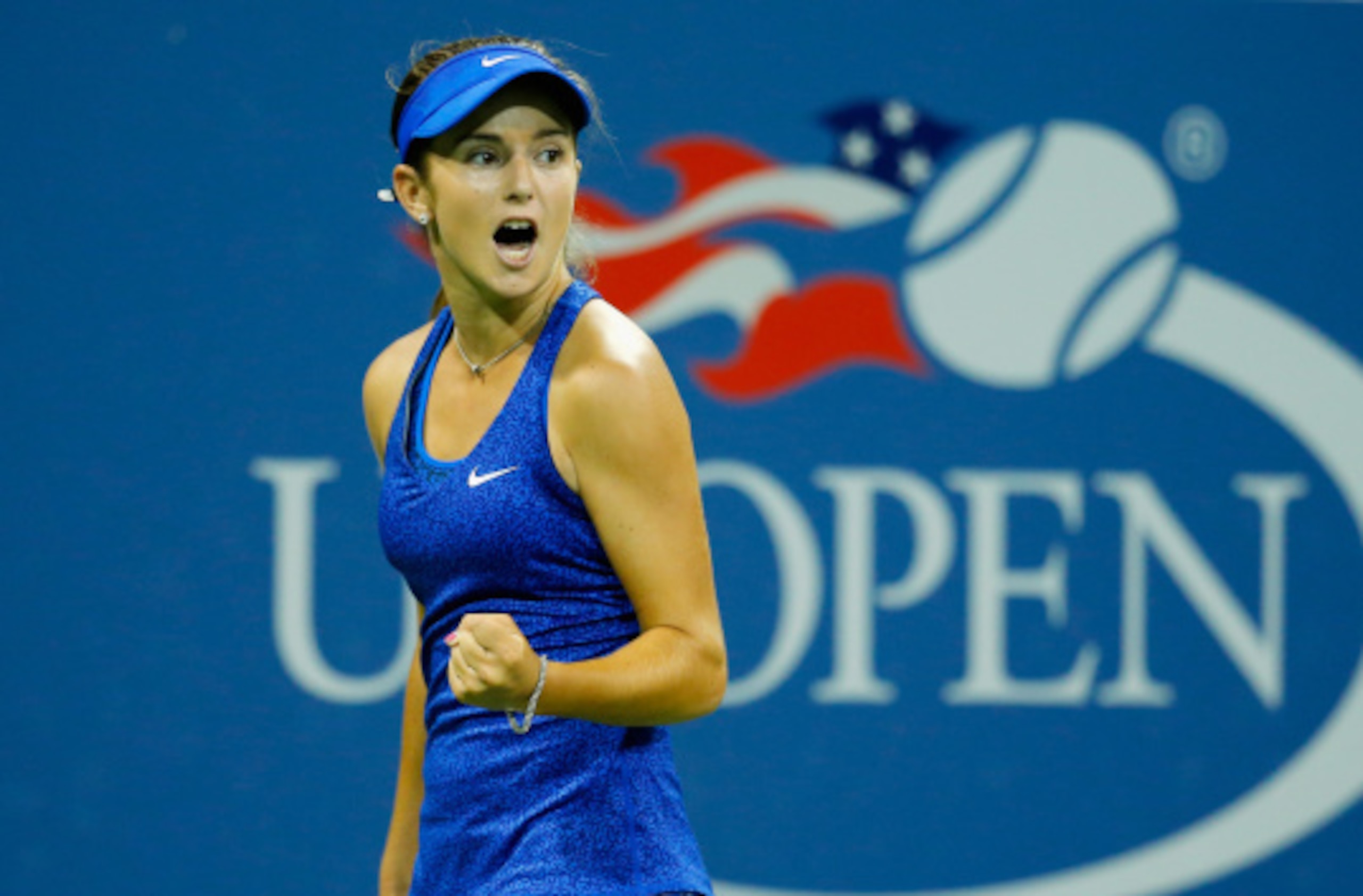
At 15 years old, an opponent hitting the decisive shot into the net may mean that you've progressed through one of the junior matches but little else. Very rarely does it mean you've just beaten the 12th seed at the U.S. Open.
CiCi Bellis achieved that most staggering of feats. The surroundings were modest, to say the least—perhaps an indication of how likely an upset seemed.
Yet those watching on Court 6 can lay claim to having witnessed one of the wins of the tournament. Bellis' excellent performance was sealed with a 6-1, 4-6, 6-4 win.
Dominika Cibulkova, a runner-up at the Australian Open in January, would be left to rue the fine margins as she exited the court amid wild celebrations.
Although more of her first serves were in, per the U.S. Open website, she didn't win as many points on them as Bellis did on hers.
The teenager from San Francisco also recorded more aces on her way to victory, including two in the deciding set.
She may have crashed out in the next round to Zarina Diyas, but Bellis can comfortably claim to have put in one of the most significant of all the women's results. Not only was her opponent vastly experienced, with four WTA singles titles, but Bellis also has laid down the gauntlet for young wild cards next year.
It can be done.
1. Kei Nishikori vs. Novak Djokovic (US Open, Semi-Final)
6 of 6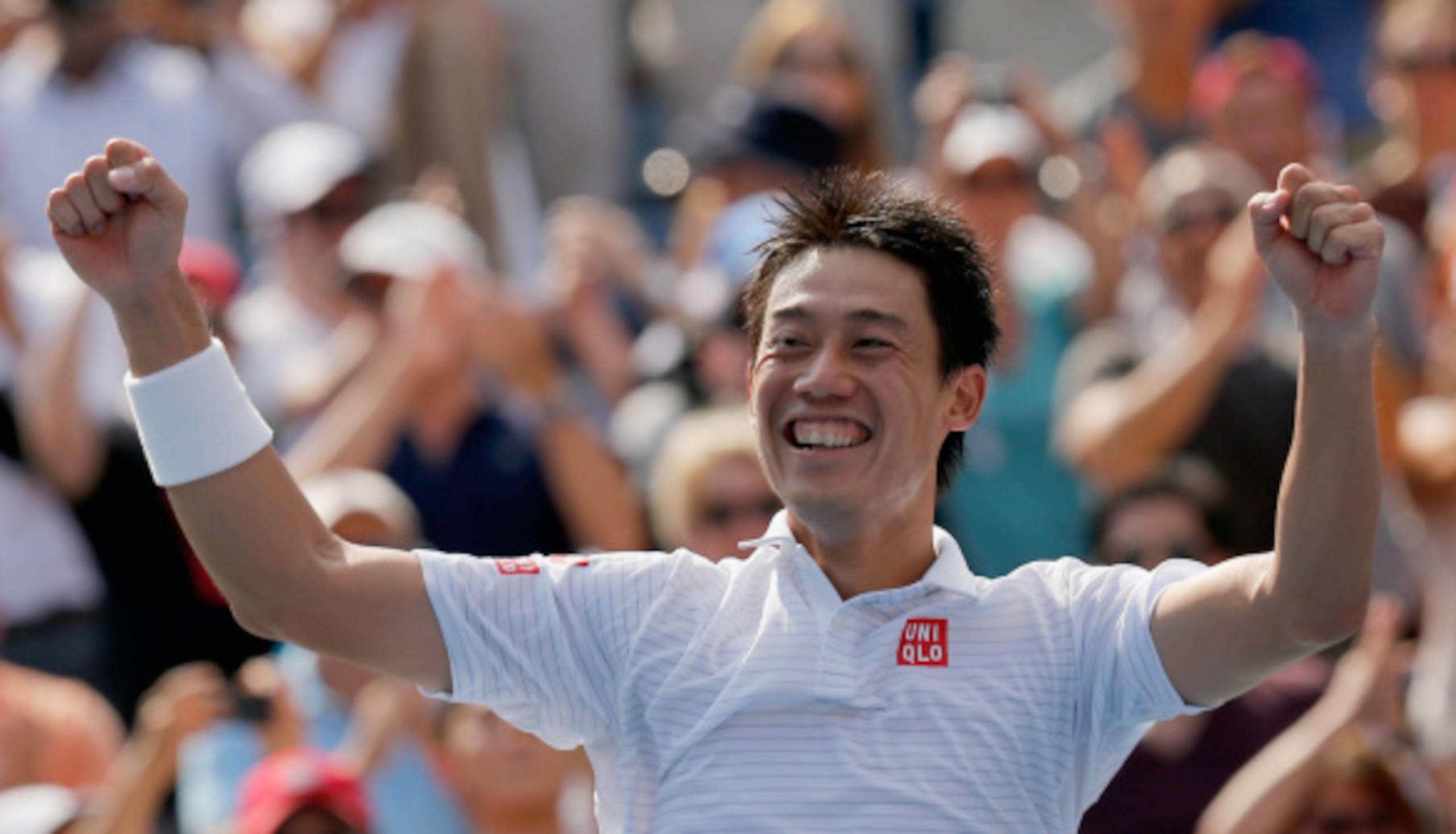
Kei Nishikori's 2014 form suggested that a run at a Grand Slam wasn't too fantastical a thought.
Having won in Barcelona and Memphis and progressed to at least the semi-finals in Miami, Madrid and Halle, the Japanese right-hander had shown plenty of promise prior to his match with Novak Djokovic.
However, playing a seven-time major winner has its perils.
Djokovic, fresh off victory at Wimbledon, was the favourite to win the tournament, let alone beat a player who had never progressed beyond the fourth round at Flushing Meadows.
As the previous slides have shown, a favourites tag is often a heavy burden to bear.
Nishikori broke Djokovic twice in the opening set as he seized the early initiative 6-4.
However, normal service appeared to have resumed when the Serbian cruised into the third set following a 1-6 win. He took 3 aces and won 80 percent of his first-serve points, per the U.S. Open website.
A tiebreak was needed to decide the third set, with Nishikori edging out in front 7-4. Djokovic, though, had his chances to make life easier for himself, but he converted only one of five break points.
Despite the advantage held by the 10th seed, it would have surprised few if Djokovic had come back to take the match to five sets.
Nishikori, though, was unforgiving in the final set. He took 75 percent of his second-serve points, with Djokovic taking just 11 percent of his. As Djokovic sent a forehand clear of the baseline, Nishikori took the set 6-3 and with it a place in the final.
Christopher Clarey wrote for The New York Times that Nishikori's win will "allow him to transcend what remains a minor sport" in Japan.
Whether that will be the case, what seems certain is that the result will at least break the boundaries that appear to guard the entrance to Grand Slam finals.
With Nishikori's win and ultimately Marin Cilic's in the final, it seems conceivable that more than two of the Grand Slams next year could be won by players outside of the established order.
Roll on, 2015.
.jpg?w=2560 "Texans-Mixon Released Football")
.jpg?w=2560 "Commanders Eagles Football")


.jpg?w=2560 "Mahomes' Wife Trolls Kubiak 💀")

.jpg?w=2560 "Viral Rams Coach Vid 🖕")