
Tale of the Tape for NFL Week 1
Throughout the 2014 regular season, former defensive back Matt Bowen will bring you an X’s and O’s look at the pro game. Here are his five key plays from the Week 1 Sunday NFL schedule.
Darren Sproles Displays His Big-Play Ability vs. Jaguars
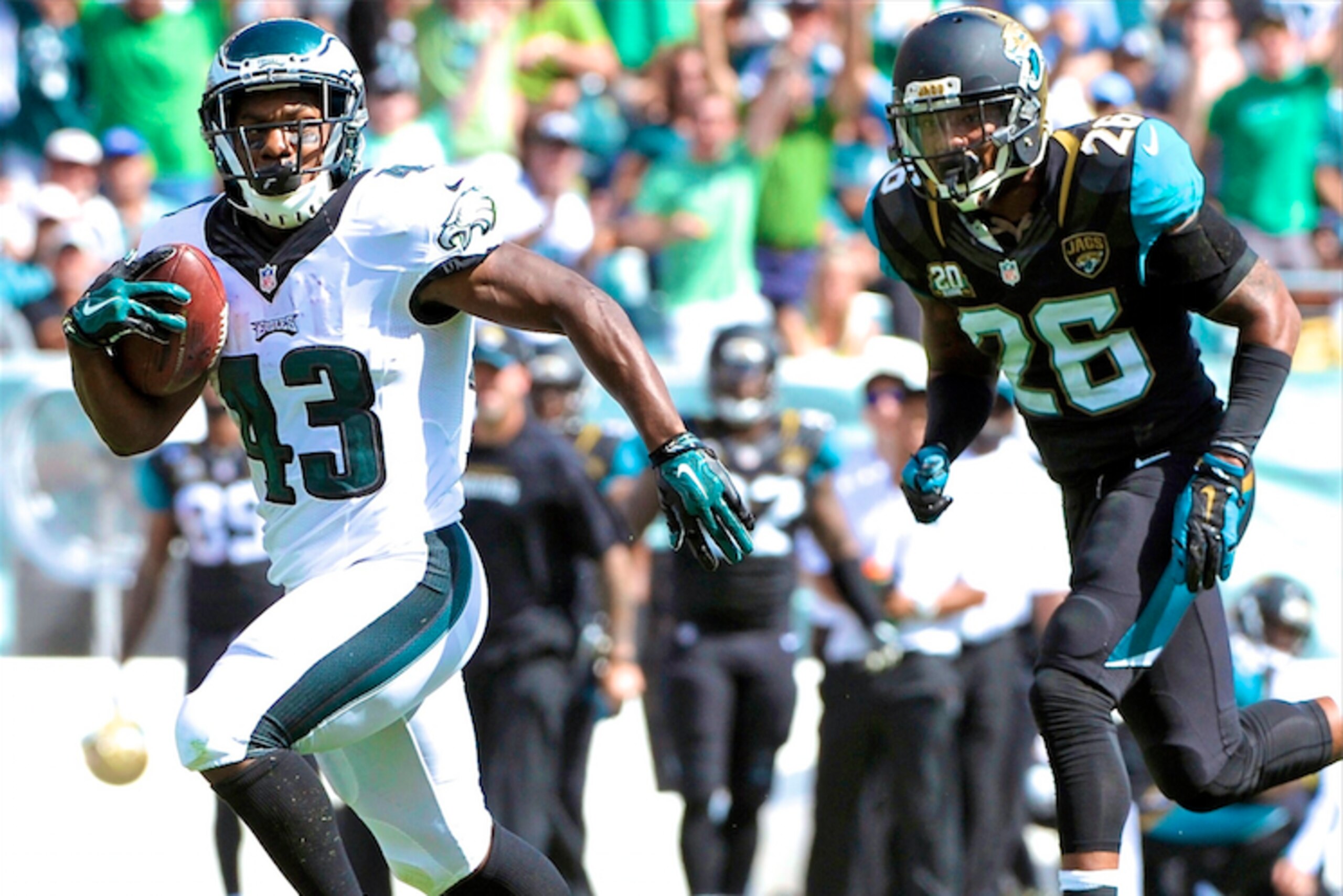
With the Eagles trailing 17-0 in a 4th-and-1 situation, Chip Kelly’s offense executed the zone read versus a “light” Jaguars run front (seven-man box) that resulted in a 49-yard touchdown for Sproles on the inside dive.
.jpg?w=2560 "Commanders Eagles Football")


Let’s break down the zone scheme, the second-level blocking and discuss why the Eagles' offensive tempo created an adverse situation for the Jaguars defense/secondary.
Personnel: Posse/11 (3WR-1TE-1RB)
Formation: Doubles Gun Near
Offensive Concept: Zone Read
Defensive Scheme: Cover 1 (Bust)

This is the same zone-read scheme we saw from Kelly’s offense in 2013, with quarterback Nick Foles riding Sproles through the mesh point while reading the closed- (strong-) side defensive end.
With the defensive end sliding at the snap (“slow play”), and the tight end releasing to the second level, Foles gives to Sproles on the inside dive.
Looking at the interior of the offensive line, the center is uncovered and can release immediately to block the “Mike” linebacker with the closed-side guard in a position to work up to the “Sam” linebacker using the zone-blocking technique (zone step means block an area).
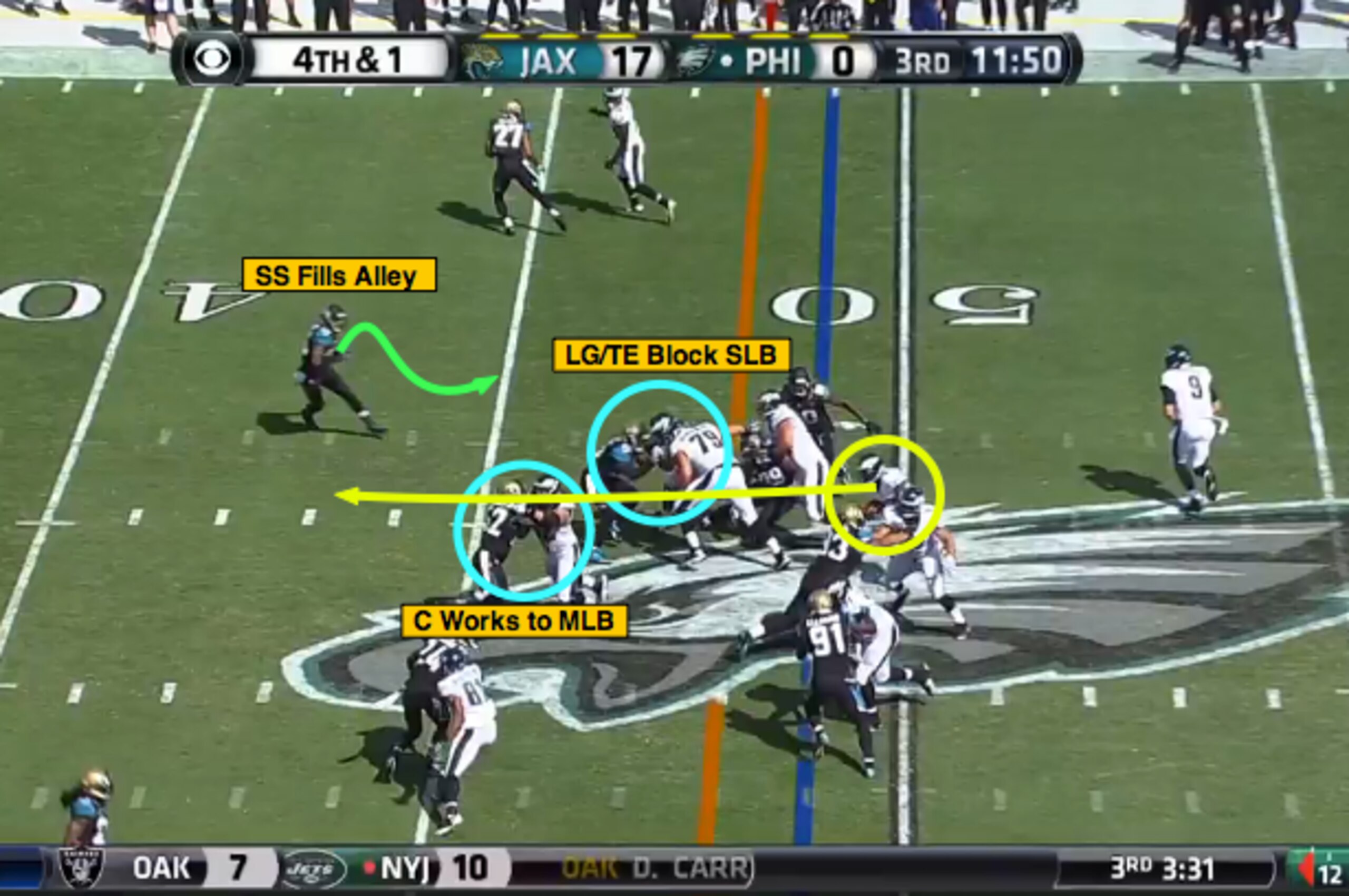
Because of the Eagles' quick tempo at the line of scrimmage, the Jaguars bust in the secondary and are caught rolling their safeties at the snap.
As you can see here, the strong safety begins to fill downhill to the closed side “alley” (between the cornerback and core of the formation), while both the center and guard fit up versus the second-level linebackers (Mike and Sam).
That creates a clear, inside running lane for Sproles to attack downhill off the mesh point, square his pads and accelerate through the hole with no middle-of-the-field defender (free safety).

Here, we get to see Sproles’ burst to the second level and his straight-line speed as he splits the linebackers into the open field before the strong safety can fold back into the hole.
This was a crucial play in Sunday’s game given the situation, the score and the Eagles' desperate need to produce an explosive play before running off 34 unanswered points in the comeback win over the Jaguars.

Broncos Create a One-on-One Matchup for Julius Thomas
The Colts didn’t have an answer for Thomas (seven receptions, 104 yards, three touchdowns) when the Broncos created one-on-one situations for the tight end based on alignment and scheme.
Let’s go back to Peyton Manning’s touchdown pass to Thomas on the deep over route that allowed the Broncos to occupy the free safety and exploit the inside matchup versus linebacker D’Qwell Jackson.
Personnel: Ace/12 (2WR-2TE-1RB)
Formation: Unit Wing Slot
Offensive Concept: Speedo Route
Defensive Scheme: Cover 1

The Broncos clear out the open (weak) side of the formation (9-route) and run slot receiver Emmanuel Sanders up the field on the post to occupy the free safety.
That creates an opportunity for Thomas (matched up versus Jackson) to win on the release, stack on top of the linebacker and stem to the deep over route (crossing route) away from the defender’s leverage.
With the Broncos using six-man protection (off play action), Manning will have time for this route to develop.
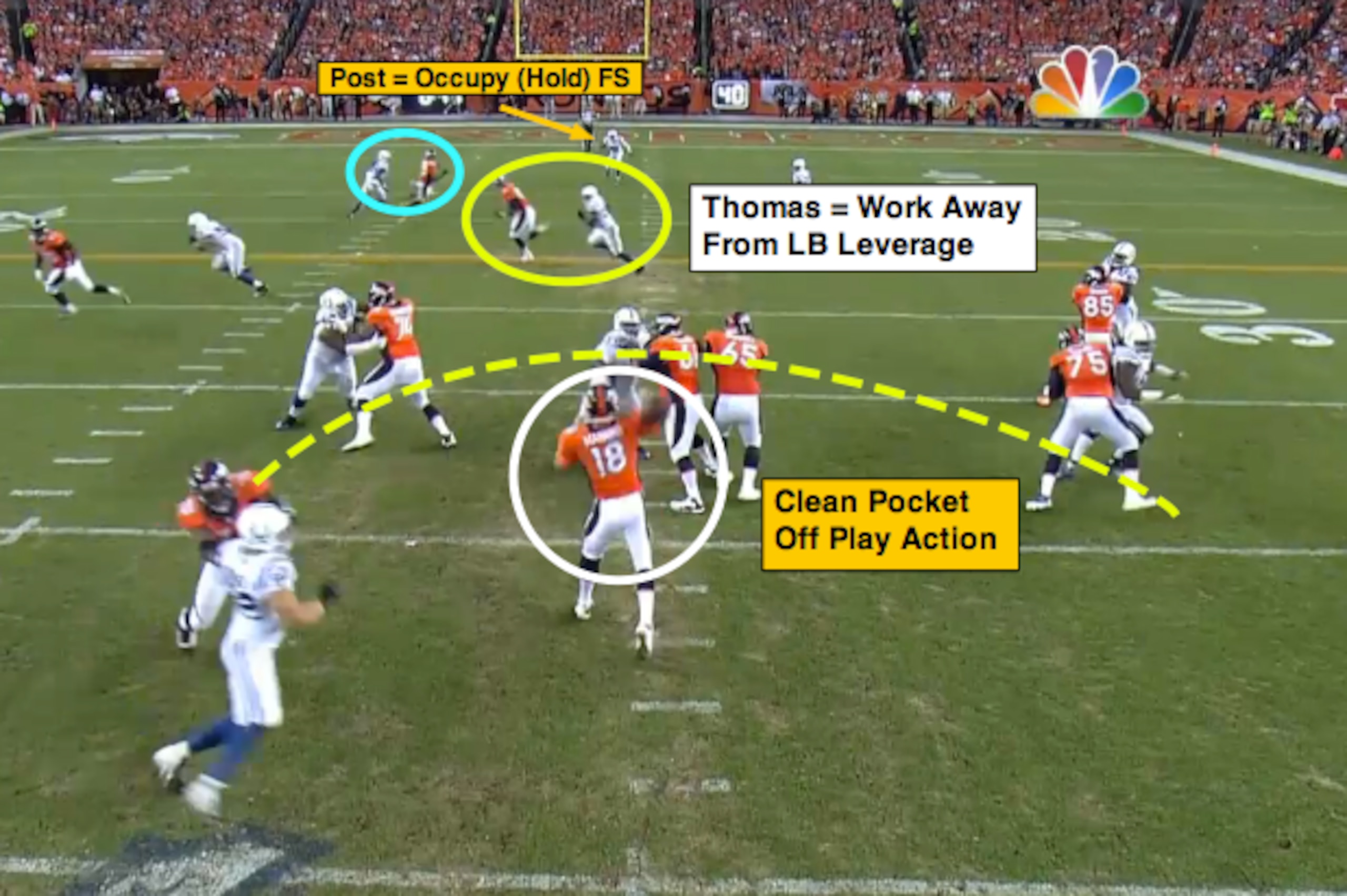
I like this angle as it shows the clean pocket Manning has to throw from along with the route combination down the field.
Check out Sanders on the post. This occupies (holds) the free safety in the deep middle of the field, while Thomas can use his speed to separate from Jackson on the deep over route.
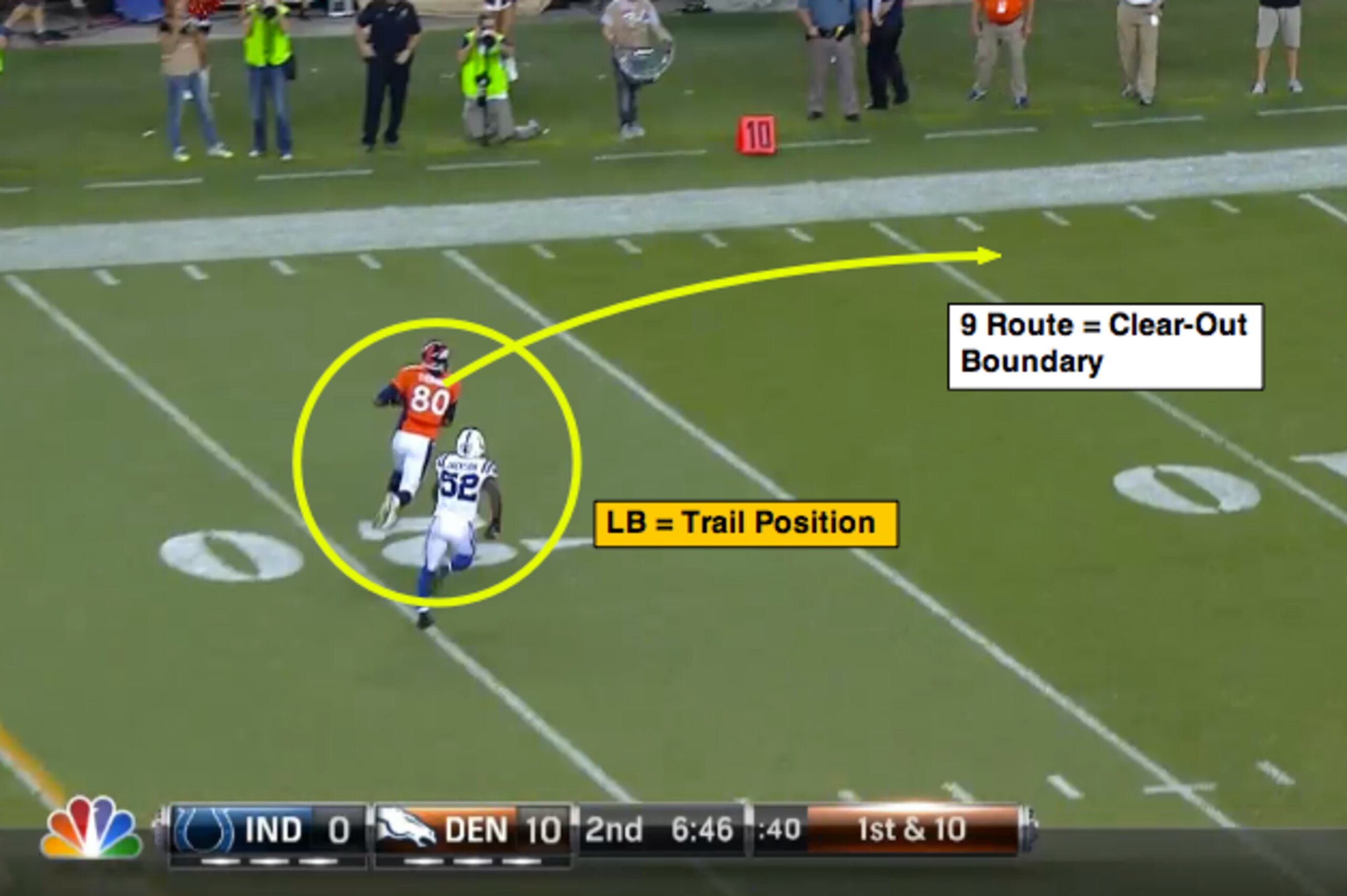
Here’s the finish from Thomas, with Jackson stuck trailing from that outside leverage position.
And because the open-side cornerback is removed versus the clear-out 9-route, Thomas can secure the catch, turn up the field and put the ball in the end zone for six points.
Cordarrelle Patterson Showcases His Open-Field Ability vs. Rams
During the Vikings' 34-6 win over the Rams, Mike Zimmer’s team utilized the versatility of Patterson when it aligned the wide receiver in the backfield to run the toss scheme.
Here’s a look at how the Vikings created a running lane for Patterson that allowed the second-year pro to showcase his open-field ability on a 67-yard score.
Personnel: Ace/12 (2WR-2TE-1RB)
Formation: I Tight Wing
Offensive Concept: Toss (G)
Defensive Scheme: Cover 1

The Vikings shift/motion Patterson to the backfield to create an “I” formation with both tight ends in a wing alignment to the closed side of the formation.
This forces the cornerback to “travel” (or match to his coverage) with the strong safety now becoming the contain player to the closed side of the formation.
Looking at the blocking scheme, this is called a Toss “G” (G means Guard) with the tight end blocking down on the edge, the closed-side guard pulling to kick out the edge support (strong safety) and the fullback leading up through the hole to fit on the cornerback.

With the strong safety coming straight downhill (instead of taking a hard, 45-degree angle) and widening the edge of the formation, the guard can kick out at the point of attack.
This allows the fullback to get up on the cornerback quickly, while the tight end accounts for the linebacker to create a vertical running lane for Patterson to push the ball upfield.
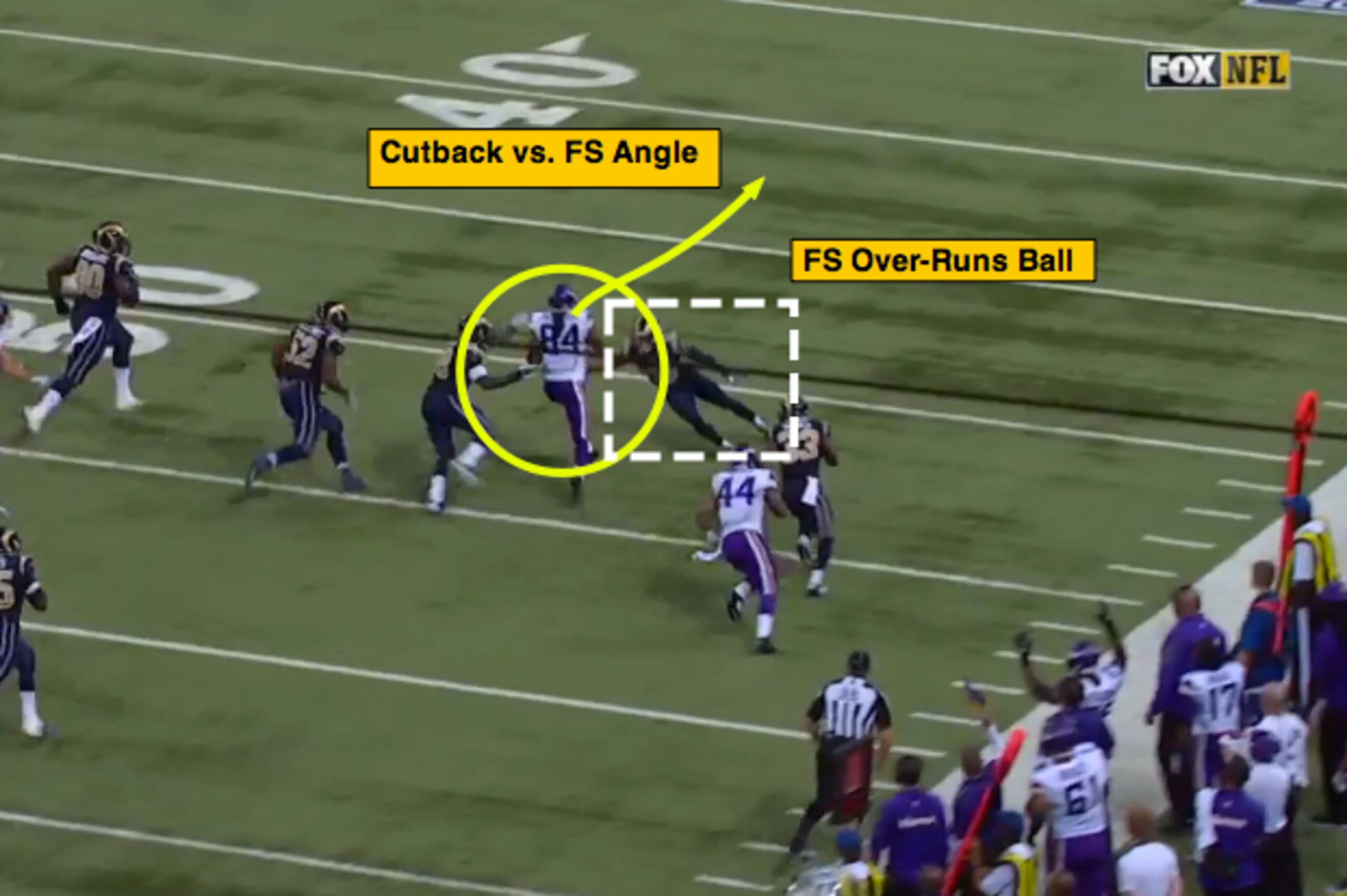
Once Patterson cuts back to expose a poor angle from the free safety (overruns the ball), the Vikings wide receiver showcases his top-tier open-field ability on his way to the end zone.
Matt Ryan and Julio Jones Beat the Saints' Zero Pressure
Ryan was excellent Sunday versus both coverage and pressure looks as the quarterback threw for 448 yards and three touchdowns during the Falcons' 37-34 overtime victory.
Let’s check out Ryan’s ability to identify pressure, step into the throw and deliver a ball to the upfield shoulder of Jones to set up a scoring opportunity for Atlanta.
Personnel: Jet/10 (4WR-1RB)
Formation: Empty
Offensive Concept: Bang 8 (Skinny Post)
Defensive Scheme: Cover 0

The Saints are showing zero pressure (six-man blitz) at the snap with the defensive backs playing off and to the inside (blitz-man technique).
This allows Ryan to identify the pressure look and target Jones on the skinny post versus Patrick Robinson.
However, because the Falcons are in an empty alignment (running back removed from the core of the formation), the Saints have numbers up front (six-on-five).
That means the ball has to come out quickly, as there is no running back in protection to “scan” versus interior pressure.

Jones pushes this route vertically up the field to eat up Robinson’s cushion (distance between defensive back and wide receiver) before stemming inside at the break point to the post.
However, look at Ryan in this situation.
The quarterback sets his feet and throws the ball before Jones makes his break at the top of the stem.
This allows the quarterback to get the ball out and gives Jones an opportunity to create leverage inside versus Robinson.
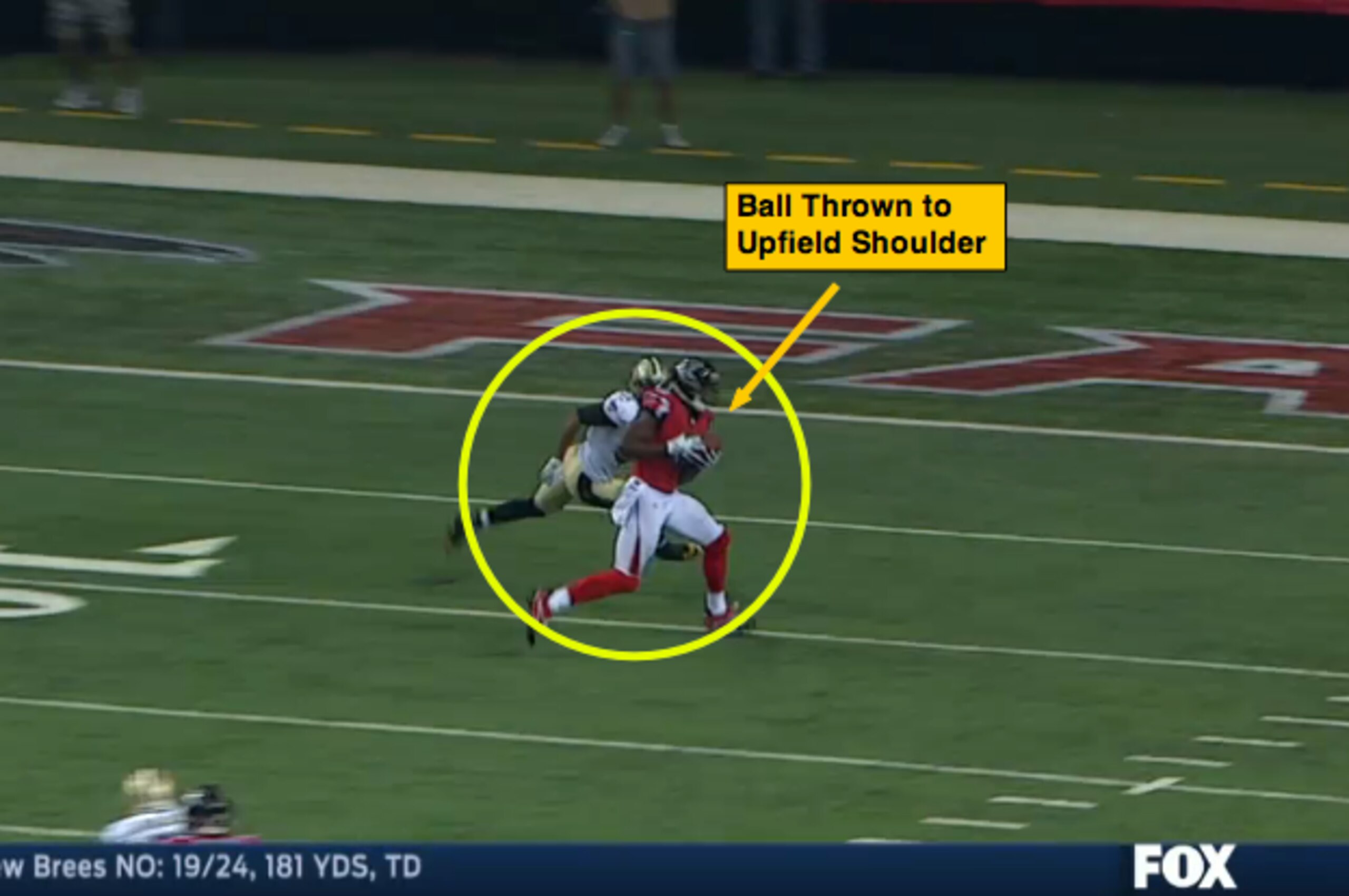
With Jones pressing Robinson up the field, the Saints cornerback has to open his hips and use a “closed angle” technique (baseball turn) to get back in phase versus the receiver.
However, because of the timing from Ryan—and the ball placement on the throw to the upfield shoulder—Jones wins to the inside and finishes this catch.
This is just one example of Ryan’s productive day versus the Saints, but it shows us his ability to handle pressure and find the proper matchup.

EJ Manuel, Bills Execute the Swap Boot vs. Bears' Cover 1
The Bills used the zone read and the boot action in the red zone Sunday to produce two touchdowns during their 23-20 overtime win in Chicago.
Let’s go back to the boot and break down how the backfield action (“swap”) created an opportunity for Manuel to target C.J. Spiller for a score.
Personnel: Regular/21 (2WR-1TE-2RB)
Formation: Pro Strong I
Offensive Concept: Swap Boot (X Spot)
Defensive Scheme: Cover 1
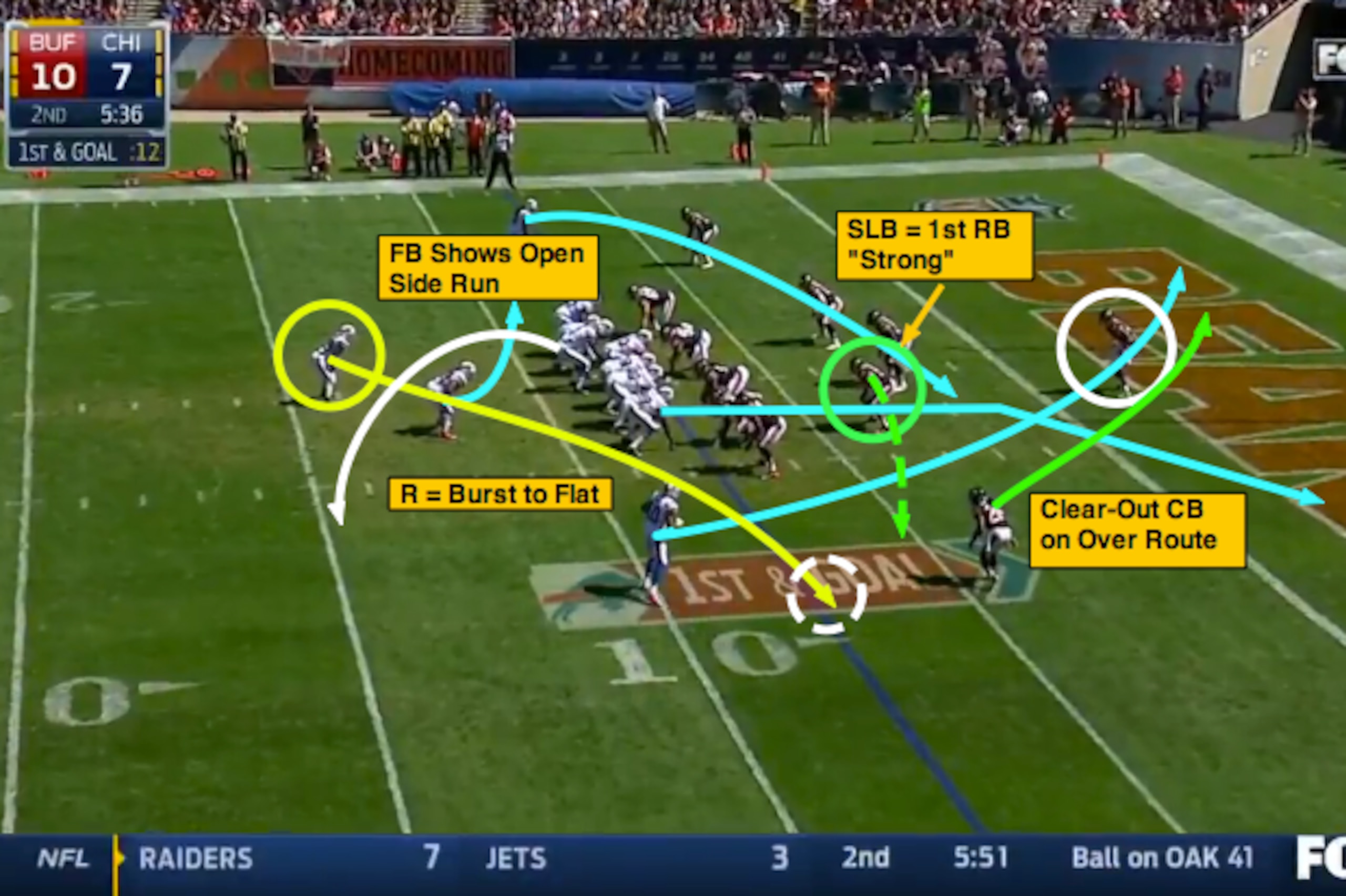
At the snap, the “Z” receiver pushes up the field on the deep over route (removes the cornerback) with the tight end running the 7-cut (corner), the “X” on the shallow drive (“spot”) and Spiller bursting to the flat.
However, check out the fullback.
This backfield action (called a “swap”) forces the Sam 'backer (Lance Briggs) to step to the open side of the formation.
Remember, in Cover 1, the Sam 'backer is responsible for the first back “strong” and has to match to Spiller in the flat.
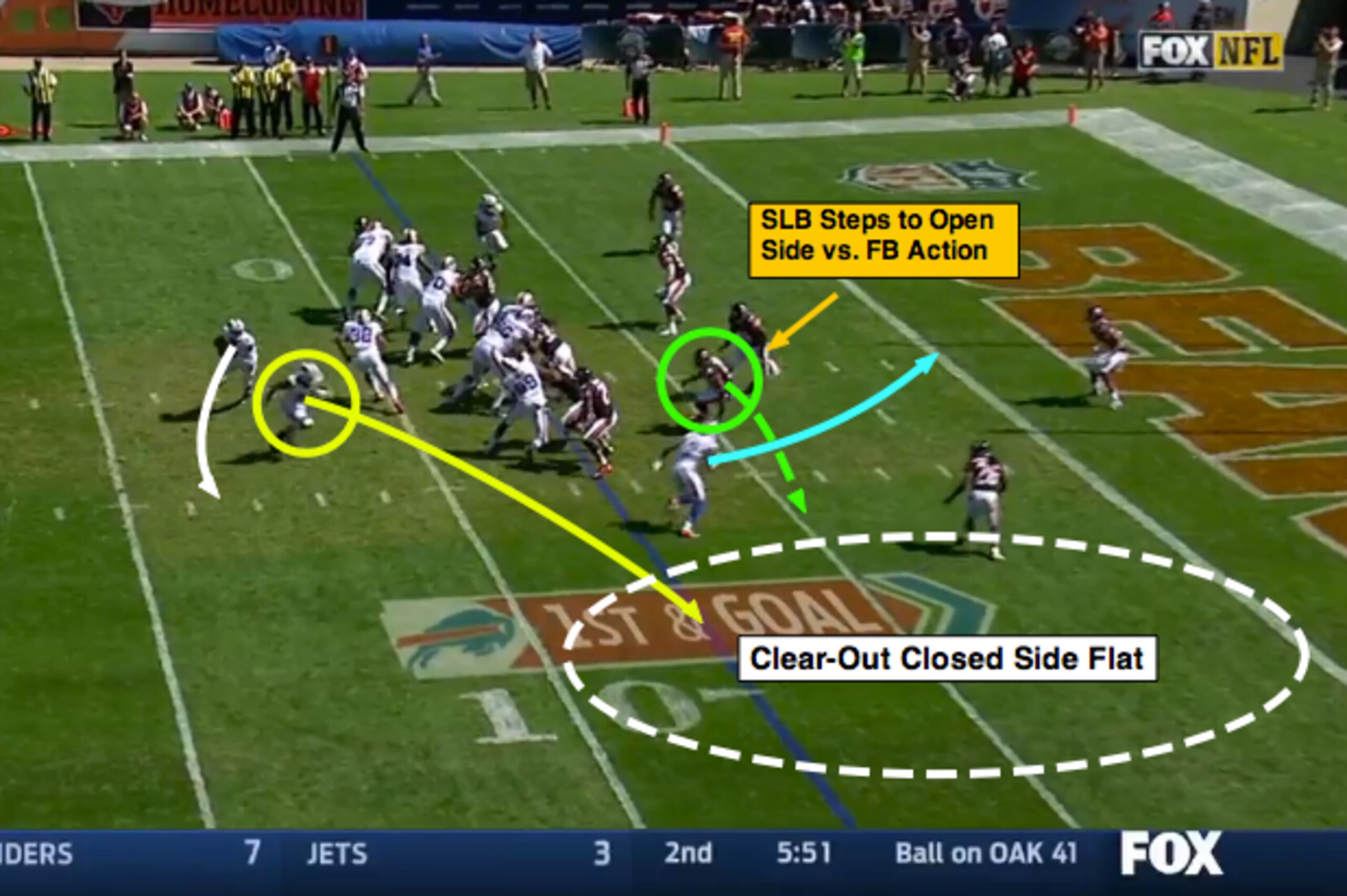
With Manuel showing the ball, and moving to the edge of the pocket off the boot action, Briggs steps to the open side of the formation (fullback “swap”).
This forces Briggs to now redirect and fight through the inside traffic to match Spiller on the flat.
However, with no help outside (cornerback removed versus the deep over route), Spiller can work to the flat and get his head around quickly to find the ball.
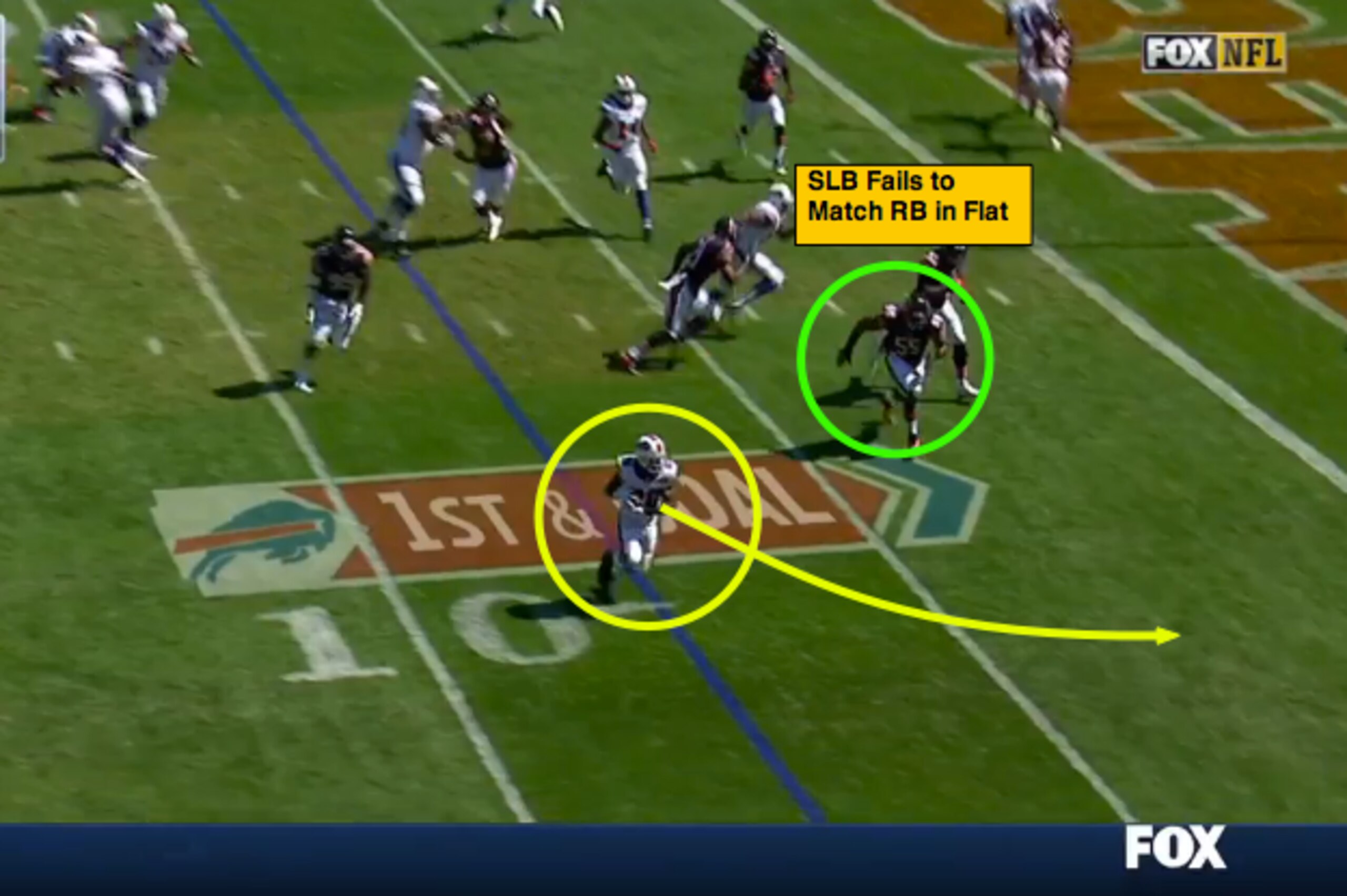
Because of the initial backfield action, Manuel can dump the ball to Spiller in the flat and take advantage of the poor execution from the Bears defense.
This was a smart call from the Bills given the field position and the Bears' tendency to play Cover 1 in the red zone.

Seven-year NFL veteran Matt Bowen is an NFL National Lead Writer for Bleacher Report.
.jpg?w=2560 "Chiefs Dolphins Football")
.jpg?w=2560 "Cardinals Giants Football")


.jpg?w=2560 "Injury-stricken Seahawks signing veteran RB")