
Ranking the Top 5 Men's Finals in US Open History
From a Swiss to an Argentine, the Arthur Ashe court has proved to be a cornerstone for many a glittering career. The U.S. Open men's final has the ability to be a panacea for the year just gone, one last chance to clinch a life-defining moment.
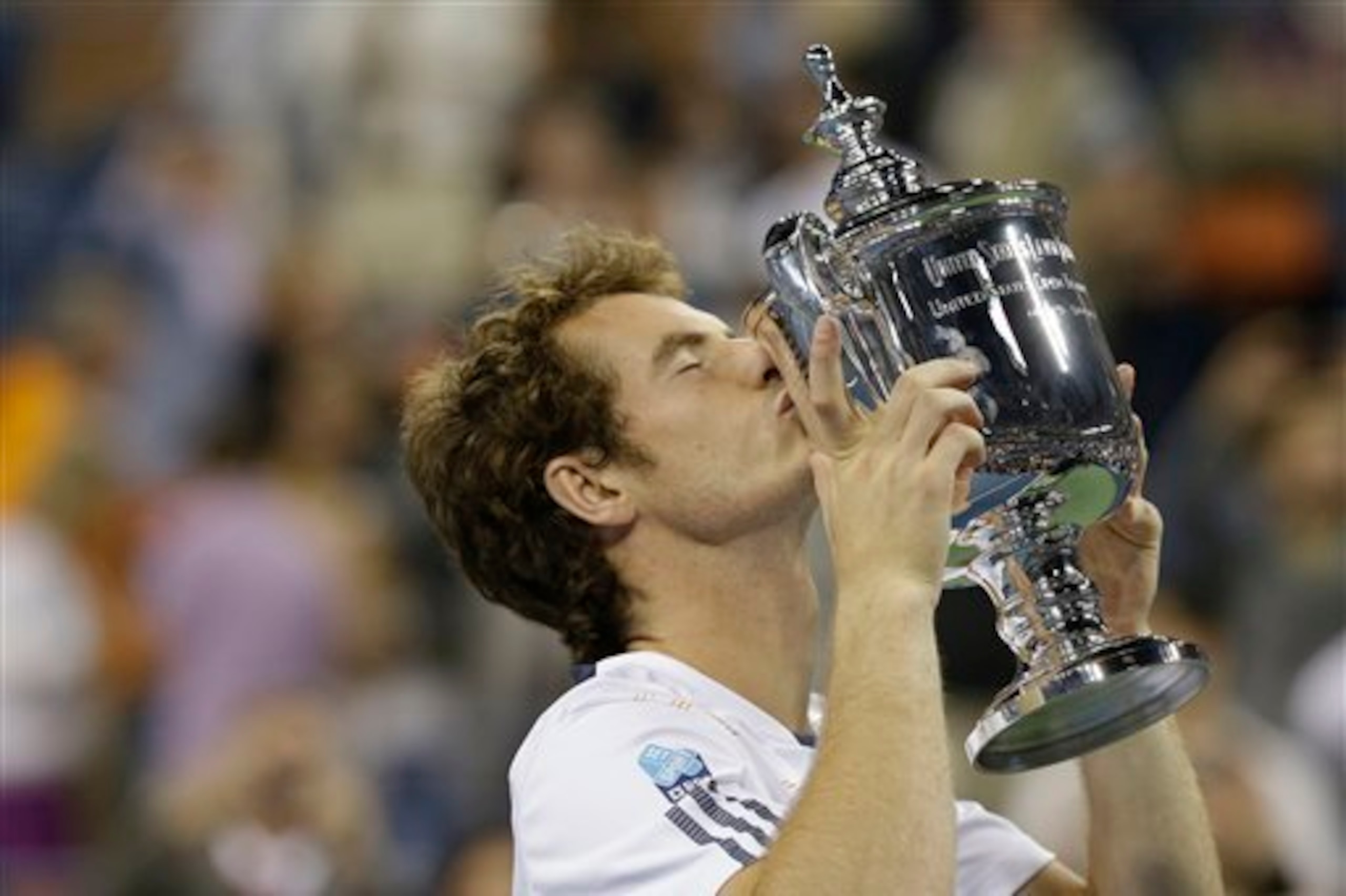
Just ask Andy Murray. Having tasted defeat for the fourth Grand Slam final in a row at Wimbledon, Murray needed his faceoff with Novak Djokovic to be a catalyst for greater things at the end of 2012.
Perhaps Juan Martin Del Potro would concur, too. The Argentine broke Roger Federer's five-year dominance of the tournament in the process of claiming his first major in 2009.
Epic clashes dominate the pages of the illustrious history books at Flushing Meadows. The 1980 clash between John McEnroe and Bjorn Borg can safely assume such a title, with the American clinching the honours in a titanic match.
The following slides will rank the U.S. Open's men's finals according to their significance and drama. Unfortunate exclusions are likely, but many will be acknowledged nonetheless for their contribution to the tournament.
Honourable Mentions
1 of 6
Of course, it is difficult to encapsulate the history of such a prestigious tournament in just five slides. The following finals were close to making the cut but ultimately just fell short.
Pete Sampras' 6-1, 6-4, 7-6 win over Michael Chang in 1996 may sound fairly routine, but the American had battled genuine adversity over the previous four months. In May 1996, Sampras' friend and coach, Tim Gullikson, passed away after a long illness.
The significance of a major win for Sampras in such challenging times cannot be underestimated.
Sampras' win over Andre Agassi in 1995 was also close to inclusion, while maiden wins for Rafael Nadal and Novak Djokovic in 2010 and 2011, respectively, should both be acknowledged.
Finally, in 1968, Arthur Ashe took an incredible first set against Tom Okker 14-12 in a five-set classic.
The following matches needed to be special to oust some of the aforementioned.
5. Mats Wilander vs. Ivan Lendl (1988)
2 of 6
Longevity is key in tennis. No one could argue that Ivan Lendl didn't understand that heading in to the 1988 final against Sweden's Mats Wilander.
His 156 weeks spent as the No. 1 was only half of the story for Lendl. The Czechoslovakian had reached the final six years in a row prior to the showpiece at Flushing Meadows. He was a beaten finalist for three years running before clinching the title on each occasion in the following three years.
The path to the final had Lendl's footsteps ingrained in it.
However, Wilander was one of those already familiar with the Czech's ruthless streak. A beaten finalist in 1987, Wilander returned but not for a repeat performance.
The Swede started in commanding fashion and clinched the opening set 6-4 when Lendl sent a backhand down the line that cleared the baseline.
Lendl took the second set, but there was hope for Wilander. After a sustained rally in which the Swede was pulled from one side of the court to the other, Lendl wasted the opportunity to put him away, sending a drop shot too deep.
Peter Alfano wrote for The New York Times that Lendl produced "83 unforced errors, compared with 36 for Wilander."
The duo each claimed a set more as the game headed to a fifth and final set.
Wilander gravitated toward the net, drawing mistakes from Lendl, most notably a wayward backhand that had the previously fist-pumping fighter looking suddenly jaded.
As Lendl found the net on Wilander's second match point, the three-year run was over. Wilander had beaten the world No. 1 in a five-set match for the ages. The significance of Wilander becoming the first Swede to win the Open and the nature of his conquering win over Lendl secures it place in the top five.
4. Roger Federer vs. Andre Agassi (2005)
3 of 6
Before a ball was struck in anger by two titans of the game, it seemed a matchup almost written by script. However, there was no Hollywood ending for Andre Agassi.
The poster boy for tennis' extravagant side in the 1990s was now the second oldest man to contest a final at Flushing Meadows since Ken Rosewall in 1974. His opponent in the 2005 final was enduring a rapid ascension that included five major wins in just under three years.
Step forward, Roger Federer.
The Swiss struck some ferocious forehands, leaving Agassi chasing air or rooted to the spot. Eight set points later and the recently crowned Wimbledon champion had 35-year-old Agassi finally put to bed in the first set, taking it 6-3.
This strapping force of a man, both powerful and graceful in equal measure, was treating the crowd to some sumptuous tennis, particularly when letting rip with his devastating forehands.
Yet, any growing complacency on the crowd's part would soon be vanquished as Agassi hit back to win the second set 2-6. Suddenly, Federer was chasing, and Agassi was dictating. A 0-3 lead in the second set was punctuated by glimpses of Agassi from his prime, including a cute drop shot after Federer had rescued a shot on the baseline.
As the third began, Federer used age to his advantage, scampering forward after the ball had kissed the net to return, only for Agassi to slam a passing shot across court. This was truly a wonderful encounter.
The tide appeared to be turning the way of the veteran when he lead 5-4 on Federer's serve, only for the 24-year-old to haul himself back and take the set to a tie-break that he closed out 7-1.
Federer found another gear and raced into a 5-0 lead in the fourth, fittingly arriving at match point with a forehand beyond Agassi's reach.
"I think Roger is the best I've played against. To watch him evolve has been amazing, " Agassi said after succumbing to Federer's attempt to win back-to-back U.S. Opens, via Stephen Bierley of The Guardian.
The matchup between the seasoned major-winner and the rising star was a joy to behold, rich in significance and saturated in drama thanks to Agassi's temporary comeback in the second set.


3. Juan Martin Del Potro vs. Roger Federer (2009)
4 of 6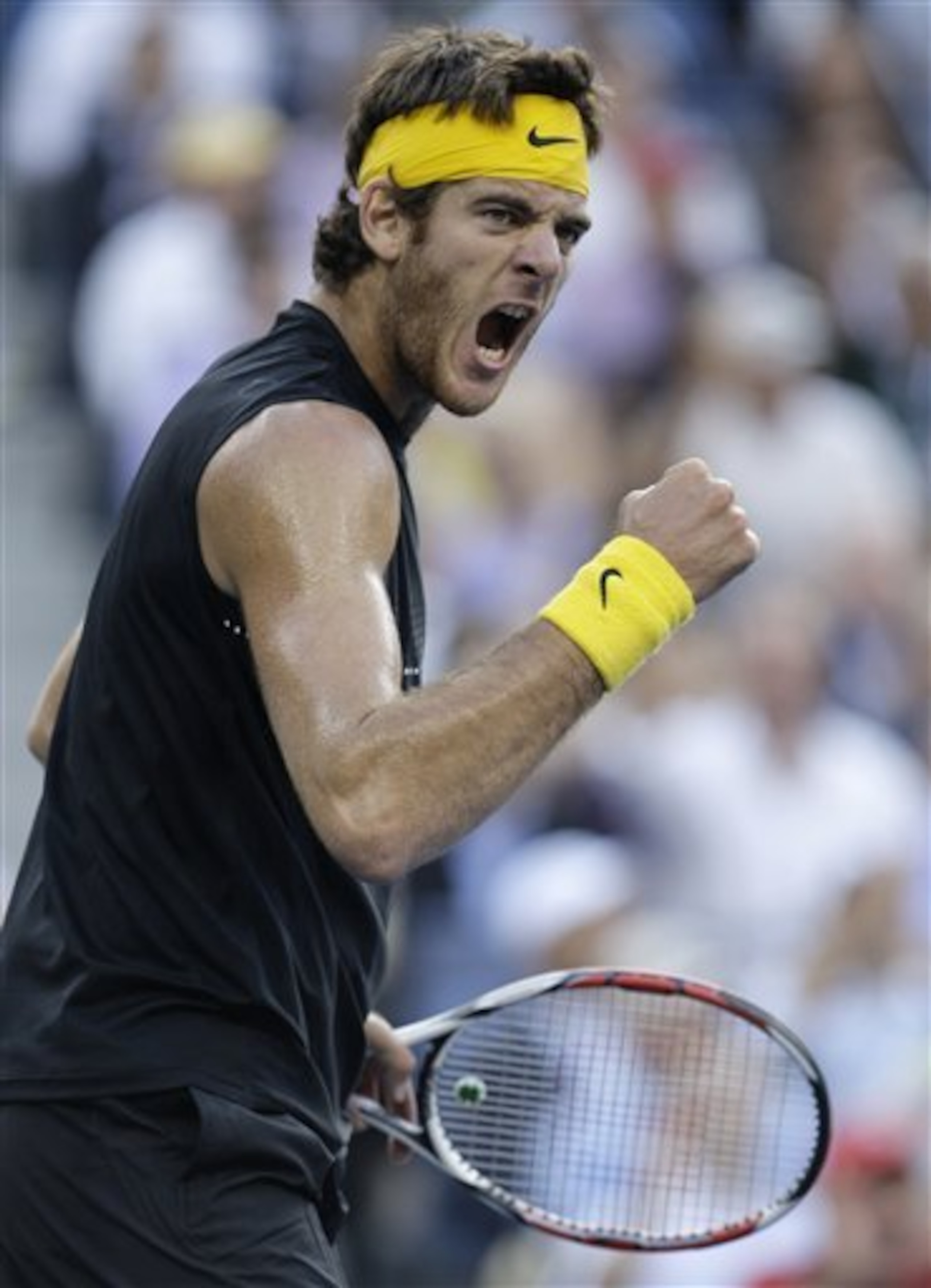
The scene was set. A modern day David and Goliath played out in the gladiatorial-like setting of the Arthur Ashe hard court. The reigning champion had won the prize at stake five years in a row. The pretender was a 20-year-old Argentine who had seen off the prince of the game, Rafael Nadal, in the semi-finals.
Next up, he faced the king.
Federer's favourites tag was only strengthened when he broke Del Potro instantly in the first, striking a glorious passing shot to the corner.
The Swiss was utilising all of the tools in his arsenal, using a deft drop shot and a thunderous ace on his way to winning the first set 3-6.
However, seemingly at set point in the second, Federer was foiled by Hawk-Eye, as Del Potro challenged a superb shot that had appeared out. Technology ruled as Del Potro was then adjudged to have got his angles all right, incensing the champion.
Del Potro then tied the set at 5-5 with another brilliant forehand down the tightest of gaps as Federer moved to the net. A tie-break was needed, which Del Potro claimed, unsettling Federer.
Or so it seemed.
At 4-3 down in the third, Federer recovered in remarkable fashion to take the set when Del Potro went long with his second serve.
Another tie-break was needed to conclude the fourth as Del Potro hit back to tie the sets at 2-2. From this point onward, it was all about the 20-year-old.
Federer was broken almost immediately in the fifth set, with Del Potro hitting the type of forehands that Federer subjected Agassi to in 2005, as referred to in the previous slide.
As Federer went long on Del Potro's third championship point of the set, the Argentine collapsed, strung out on the floor in disbelief. The king's run was over. Flushing Meadows had a new victor.
Mark Hodgkinson of the Telegraph believed the match hinged on the Hawk-Eye ruling, writing "Del Potro was a different player, suddenly he was swinging at his forehands."
This win has earned its place in the rankings because of the level of upset caused by Del Potro and the significance of another player breaking into the list of major candidates as a result.
2. Andy Murray vs. Novak Djokovic (2012)
5 of 6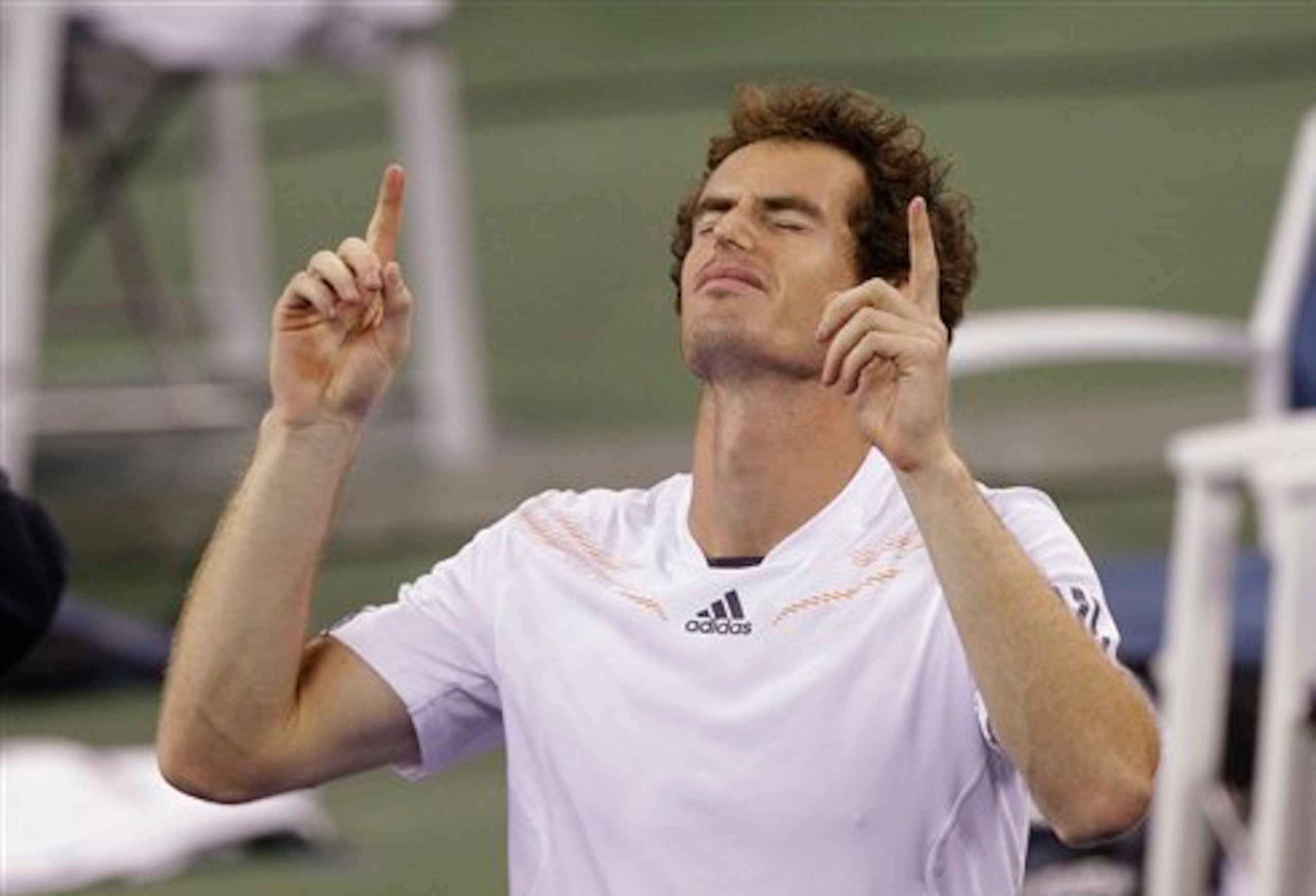
Andy Murray knew all of the numbers. Not only was it 76 years since a male Briton had won a Grand Slam, but it was four major final appearances in a row that had ended in defeat.
By the time he was finished with Novak Djokovic in 2012, those numbers would need revising.
Tom Fordyce of BBC Sport argued that the contest between Murray and Djokovic should be remembered as an all-time classic: "Andy Murray's nerve-mangling, history-making US Open triumph over Novak Djokovic was many things: one of the great finals of the modern era, a late-night thriller from the city that never sleeps, a breath-taking demonstration of physical strength and mental fortitude."
What Murray's encounter with Djokovic had that Del Potro's win didn't was an inordinate amount of pressure. Four Grand Slam finals and no wins meant that Murray was in danger of letting another golden ticket slip through his fingers.
An incredible 54-shot rally encapsulated a tight opening set, with Murray eventually claiming victory in the tie-break after Djokovic went long with a forehand.
Murray then assumed a position of control in the second, going 4-0 up before the Serbian responded with interest. At 5-2, Murray failed to finish the set and a wonderful lob from Djokovic at the net drew the games level at 5-5.
Murray was able to see the set out before Djokovic went in search of redemption.
An emphatic 2-6 win in the third set for Djokovic was followed by a 3-6 win in the fourth, with Murray's long backhand levelling the match at 2-2.
Murray broke Djokovic immediately and went 3-0 up in the fifth. The Scot could sense victory as he pulled Djokovic from left to right, with two unforced errors from the Serbian at 4-2 and 5-2 handing Murray a piece of history.
While Federer's win over Agassi was a thrilling spectacle between players at either end of their careers, the match between Murray and Djokovic was just one riveting chapter in the careers of players that seem set to rival each other for years to come.
1. Bjorn Borg vs. John McEnroe (1980)
6 of 6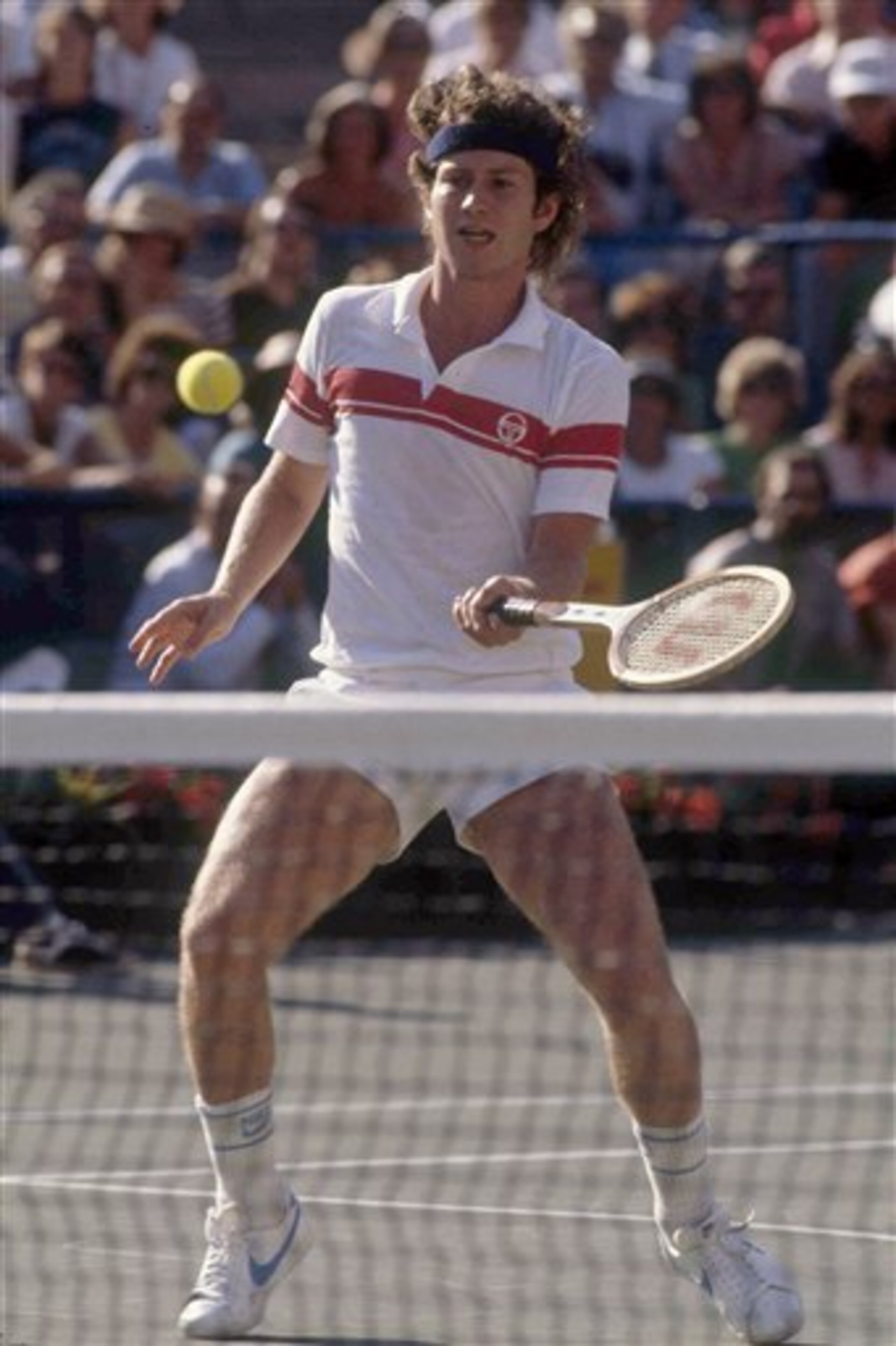
As Steven Pye wrote for the Guardian, the 1980 U.S. Open clash between John McEnroe and Bjorn Borg tends not to "receive the same plaudits and recognition" as the final between the two at Wimbledon did just a couple of months previously.
However, McEnroe, winner of the U.S. Open in 1979, was desperate to make amends for his defeat to Borg, who had also won at Roland Garros in 1980.
The American, backed by home support, began well, moving in to the net and dictating the tempo against Borg. As the Swede tried to emulate his opponent, McEnroe struck a sweet forehand down the line in response.
However, the home favourite did not have it all his own way at the net. A clever passing shot from Borg sent a warning to those backing McEnroe for a second straight championship at Flushing Meadows.
The first set required a tie-break, but McEnroe profited from more good work at the net to take the early advantage.
A commanding second appeared to put McEnroe in the driving seat, but, as with Andy Murray's final against Novak Djokovic in 2012, it was not enough to deter his steely opponent.
Borg came to the net on his way to breaking McEnroe 4-3 in the third set, playing some sublime tennis in the process that suggested the comeback was on.
Another tie-break was needed, and Borg pulled through, taking it 5-7.
McEnroe could have been forgiven for thinking that Borg was going to deny him a second Grand Slam, particularly as the Swede continued to reel off the winners with aplomb.
Indeed, Borg took the fourth set 5-7, planting a forehand across McEnroe to clinch it. He showed little emotion in spite of the remarkable comeback he had staged on McEnroe's court.
As the tension racketed up a notch, McEnroe showed signs of frustration. Having hopped up and down on the spot earlier in the match, he swiped at the floor when Borg bypassed him at the net.
Just as it seemed as though McEnroe might let it slip, he broke Borg to take a 4-3 lead in the fifth. This was his moment.
McEnroe found his touch at the net once more as he closed the set out 6-4 and thus concluded a truly wonderful spectacle.
It was a landmark moment. McEnroe would win five more majors, but Borg, having already won 10, would land only one more. As Pye poignantly puts it, "one would go from strength to strength, while the other would never be the same again."
.jpg?w=2560 "Rams Eagles Football")
.jpg?w=2560 "Texans-Mixon Released Football")
.jpg?w=2560 "2 NFL Officials Suspended")

.jpg?w=2560 "Grading WWE Raw 🔠")
.jpg?w=2560 "Mahomes' Wife Trolls Kubiak 💀")

