

World Football Notebook Heading into the International Weekend
If winning the World Cup is the pinnacle of the game, at least at international level, then once that summit has been ascended, what exactly is the incentive to continue, to pursue further glory?
As a player, of course, there is always another game to play, another competition to win. Trophies are there to be won, then defended, then won again until age will not permit you to do it anymore.
For managers, however, the dynamic is slightly different. Once you have led your country to World Cup glory, what more is there really to prove?

.jpg?w=2560)
An instant national hero, surely all that can happen is the slow erosion of the goodwill from that historic achievement as results (inevitably) fall off in the aftermath or, as a marginally preferable alternative, your past achievements keep you stumbling along in the job longer than is perhaps best for the team.
Despite that, however, the last two World Cup-winning coaches have all continued on in the post after tasting the very peak of their profession.
Joachim Low, fresh off leading Germany to glory in Brazil, has already turned his attention to the 2016 European Championships, which is also the target for Spain boss Vicente del Bosque. Qualification begins this weekend.
Del Bosque might be the blueprint for Low; after winning the World Cup with Spain in 2010, he successfully orchestrated the defence of their European crown two years later. Brazil, however, was far from a success for La Roja.
After that disappointment, Spain now enter a new cycle with a new wave of players. The personnel are changing, but the man in charge remains the same.

"We are beginning a new stage with eight new players who weren't at the World Cup," Del Bosque said this week at a news conference. "I hope we make the same correct decisions as on other occasions.
“Before we had to manage success, and now we must manage a defeat like that in Brazil. We must support ourselves with the spirit of the past as we move into the future. That of Xavi, Xabi Alonso, [David] Villa and company."
It is Germany who now have to find a way to “manage success.” That did not start so well on Wednesday, as they lost 4-2 in a repeat of the World Cup final against Argentina. Perhaps the players’ minds were not on the match, however, with a final celebration of the summer success held the same night.
"It's nice to come together one last time to say farewell to all the players who are not with us anymore," Low said, per Eurosport. "It wasn't really possible to do that after the World Cup in Berlin. But after tonight's gathering that is going to be the end of the World Cup [celebrations]."
The likes of Philipp Lahm and Per Mertesacker might have retired from the international stage, but this Germany squad remains intimidatingly strong. Most of the World Cup winners are young players still entering their prime (including the goalscorer in the final, Mario Gotze), while the likes of Marco Reus and Lars Bender are also returning to availability after missing Brazil through injury.
Low's side start the process as favourites, and with good reason.
Other coaches, of course, would love to be in Low or Del Bosque's shoes. They would love to have already won a major international tournament. Instead, they have to deal with the pressure of trying to achieve that lofty goal for the first time—and, for many nations, for the first time in a long while.
With the final tournament now expanded to 24 teams, qualification should prove no issue for any country even vaguely considered contenders to win it all. That comes with its own issues; however, with qualification matches now played to far lower stakes, the media will be tempted to judge matters as much on performances as results.
For some coaches, like England's Roy Hodgson, that might prove an unfavourable prospect.

Selected European Championship qualification fixtures
Sunday
Germany vs. Scotland (Group D)
Portugal vs. Albania (Group I)
Monday
Spain vs. Macedonia (Group C)
Switzerland vs. England (Group E)
Tuesday
Czech Republic vs. Netherlands (Group A)
Israel vs. Belgium (Group B)
Norway vs. Italy (Group A)
1. What to watch out for this weekend
Qualification for all
For the first time in its history, the 2016 European Championships will involve 24 teams at the final tournament. This decision has already been widely discussed (and generally criticised), but it is worth making this point nonetheless.
With 52 teams involved in qualifying, three teams from most groups will qualify for the main event in France. To give you an idea, that means the likes of Norway, Slovakia, Israel and Slovenia all have strong chances of qualifying—while the likes of Scotland, Latvia and Wales would only have to play slightly above expectations to put themselves in with a good chance.
The standard of the final tournament will be the final proof in the pudding, but at this stage one wonders if the changes will only harm the overall standard of the product—all for a few extra pounds.
An opportunity not to be missed
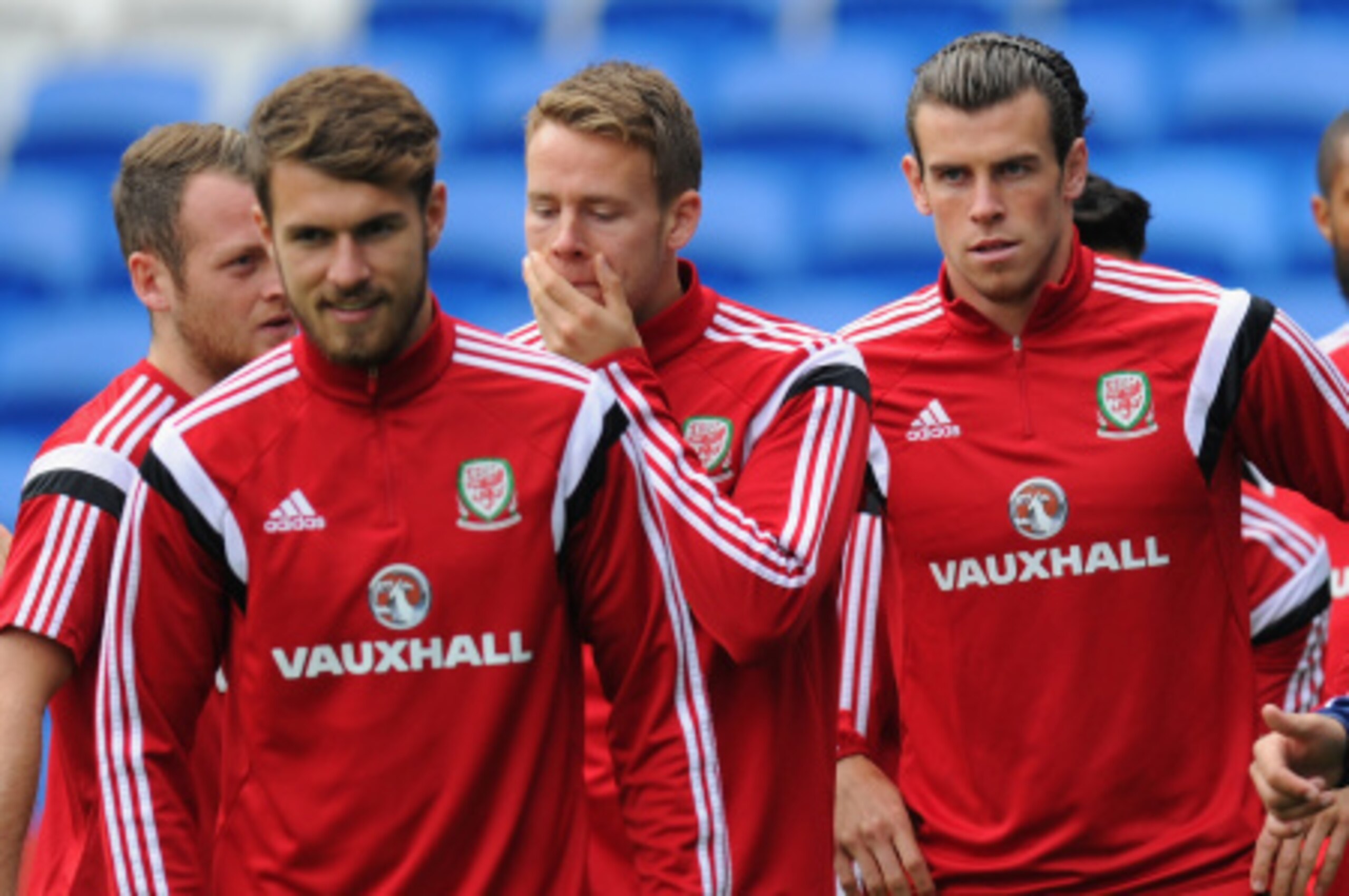
On that subject, this competition might be the best opportunity for Gareth Bale and Aaron Ramsey to avoid the “George Best-Ryan Giggs paradigm”—two all-time great players who never represented their country at an international tournament.
In a group with Belgium, Bosnia-Herzegovina and Israel, Wales know getting the better of one of those (and dealing clinically with Cyprus and Andorra) could well see them into the main tournament. It will be interesting to see if that incentive is enough.
This "best-chance" notion might also apply to Slovakia, Belarus, Scotland, Slovenia, Finland, Austria, Montenegro, Norway and Bulgaria. Good luck to all.
Sit back and relax
One team that does not have to qualify for this tournament, of course, is France—who get in automatically as hosts.
That means two years without a competitive fixture but, then again, when you are winning games with goals like this one in Thursday's friendly with Spain, that might be blessed relief for a number of other countries.
France may not be involved in the qualification process, but they will surely be strong, strong contenders when the final tournament rolls around.
He's got that ambition, look in his eyes
As the qualification campaign gets underway, we think we’ve found the most confident (misguided?) coach involved. Presenting Gibraltar’s coach, Allen Bula, when asked about his country’s chances of qualification from Group D:
"We know that the Germans are the favourites. But, after the Germans, every other team is going to start nicking points off one another.
So, if we can get a good run in the first half of the qualifiers, I genuinely think we can make it to the play-offs.
"
We shall see.
2. Video of the week
Inserting a video of the writer in one of his own articles must be somewhere close to the height of arrogance—but then again, it is a video that fits well with the subject matter of this article.
Well that’s my excuse anyway, and I’m sticking to it.
3. Around the globe
Amid the excitement in Europe, it should not be forgotten that there are a few other games going on around the world. Least of all Friday evening's friendly between Brazil and Colombia, a rematch of the summer's memorable World Cup quarter-final.
Not only is it a chance for Colombia to gain a measure of revenge, it will be a chance for Manchester United fans to watch new boy Radamel Falcao in action. It should be an exciting game.
4. Player to watch
Marco Reus
Surely few things in professional football can be more painful (literally and figuratively) than missing out on an international tournament due to injury—especially when your country goes on to win that tournament in your absence.
That is exactly what happened to Marco Reus, who figured to be Germany's main attacking threat until he picked up a knee injury in the final warm-up game before the side flew out to Brazil.
Now back and playing again, Reus will surely have a burning desire to grab his own taste of international glory. The European Championships give him a first shot at that; beating Scotland on Sunday is the first step on that path.
5. Game of the week
Ukraine vs. Slovakia
In terms of quality of play, of course, this is unlikely to be the week's best contest. In terms of its eventual significance, however, that might be a different matter.
Seeded second and third in Group C, behind Spain, that second guaranteed qualification spot looks to be a straight fight between these two countries (with Belarus potentially throwing a spanner in the works).
After missing out on the World Cup after a play-off, Ukraine will be hungry to avoid the same outcome again. Slovakia, meanwhile, have never qualified for the Euros—getting something from this opening game would start on the road to correcting that in the right way.

.jpg?w=2560 "Rams Eagles Football")
.jpg?w=2560 "Bijan's INSANE 1st Half 🤩")

.jpg?w=2560 "Injury-stricken Seahawks signing veteran RB")

.jpg?w=2560 "2 NFL Officials Suspended")
