
Ranking the Top Breakout Players in College Basketball in 2014-15
It's time to unveil this season's Deshaun Thomas breakout All-Stars.
Thomas, as college basketball fans know, was a great scorer a few years back for Ohio State. But before he was putting up double-digit numbers, Thomas was an efficient scorer in limited minutes as a freshman who was more than willing to shoot when he was on the floor.
That production was a sign that he had the chance to be a star once he got the opportunity. Last year's team had varying degrees of success. Eight of the 10 selections went from single-digit scorers the previous season to double-digit scorers this past year. Another Buckeye, LaQuinton Ross, turned out to be my best pick.
Now let's get to this year's picks. To make the list, each player must meet three criteria:
- Had to take at least 20 percent of his team's shots when he was on the floor.
- Double-digit scorers from this past season are not eligible.
- Has to be room for that player to evolve into a bigger role.
10. Cullen Neal, New Mexico
1 of 10
2013-14 Stats: 7.1 points per game, 1.9 assists per game, 19.9 minutes per game, took 22.1 percent of shots when on the floor
After losing Cameron Bairstow, Alex Kirk and Kendall Williams, New Mexico needs someone to do the scoring. It might as well be the coach's son.
Cullen Neal was a good spot-up shooter as a freshman but struggled with turnovers. The potential is there, however, to be much more than a spot-up shooter.
Neal has a crafty handle and the ability to hit shots off the dribble. It takes some time to get used to the speed and physicality of the college game. He should be better prepared as a sophomore in what could be a rebuilding year for New Mexico.
9. Mike Tobey, Virginia
2 of 10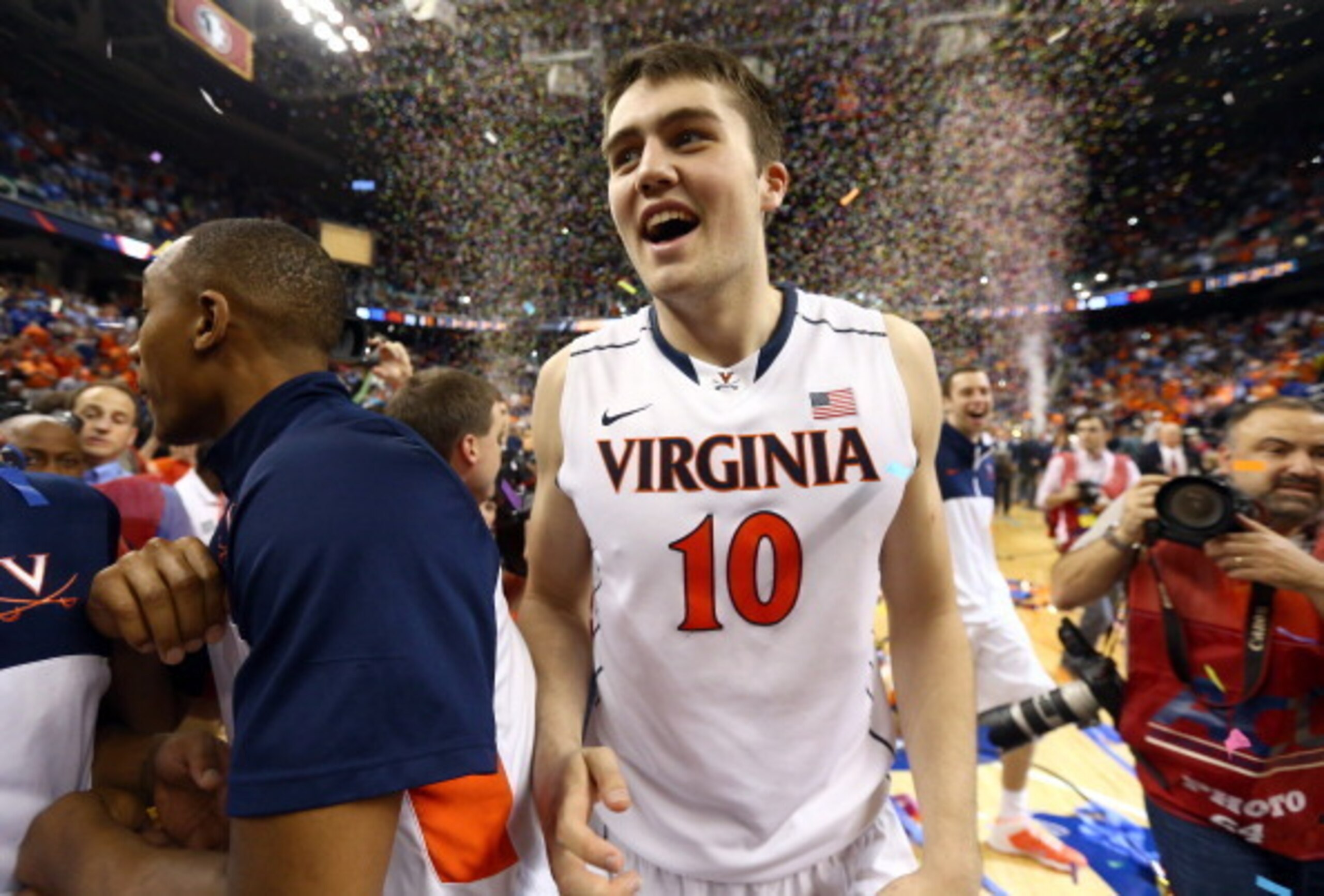
2013-14 Stats: 6.4 points per game, 3.8 rebounds per game, 18.1 minutes per game, took 24.3 percent of shots when on the floor
Mike Tobey was on this list a year ago with the caveat that he might have a hard time seeing his minutes increase.
Tobey did see his minutes go up—from 13.9 to 18.1 per game—but his scoring actually dropped from 6.8 to 6.4 points per game.
It wasn't that Tobey regressed. Virginia just had more options emerge. Now that Joe Harris has graduated, the Cavaliers need another go-to scorer to go along with Malcolm Brogdon. Tobey could be that guy.
Of course, he'll be competing with Anthony Gill and Justin Anderson, who both averaged more points than he did last year. But with Tobey's size (6'11") and fundamental post game, he's one of the rare true back-to-the-basket players in the game and is a tough matchup. And unlike last season, the frontcourt is less crowded without Akil Mitchell. Tobey should see his minutes increase.
8. Darius Carter, Wichita State
3 of 10
2013-14 Stats: 7.9 points per game, 4.5 rebounds per game, 18.3 minutes per game, took 21.6 percent of shots when on the floor
The heart of Wichita State and the guys who will receive most of the preseason love will be guards Fred VanVleet, Ron Baker and Tekele Cotton. You know the Shockers are going to be good again because of those three guys. But to be great, they need someone to step up as an interior scorer after losing Cleanthony Early. Darius Carter is the leading candidate to be that guy.
Carter is nothing like Early, but his role could be similar to what Carl Hall did for the 2013 Final Four team. Like Hall, Carter mostly lives on the blocks. He has a nice turnaround jumper and is one of the better athletes in the Missouri Valley.
Hall put up 12.6 points per game as a senior. There's an opportunity for someone outside of the three guards to put up similar scoring numbers. Carter should get that chance.
.jpg?w=2560 "Chargers Mack")
.jpg?w=2560 "Green Bay Steelers Football")
7. Deonte Burton, Marquette
4 of 10
2013-14 Stats: 6.9 points per game, 2.2 rebounds per game, 12.6 minutes per game, took 33.2 percent of shots when on the floor
Deonte Burton is an undersized power forward at 6'4" who reminds me of a mini Julius Randle. Like Randle, Burton is a lefty, can overpower most college players and he can play facing up or with his back to the basket. He's also a really good finisher at the rim.
Marquette had a crowded frontcourt last season, but when Burton got a chance to play as a freshman he was assertive.
Burton finally got an opportunity to play consistent minutes late in the season and he showed his potential, even earning a start in the Big East tournament. He averaged 14 points in 17.8 minutes per game over Marquette's final four games and scored a season-high 23 points against Xavier in the Big East tourney.
The Golden Eagles graduated their three inside players who played the most minutes, so there's an opportunity for Burton to get a lot of minutes for new coach Steve Wojciechowski, the former Duke assistant. Mike Krzyzewski has always liked versatile 4s who can play inside and out, and Burton fits the prototype. Don't be surprised to see a pair of lefties lead Marquette in scoring—Burton and BYU transfer Matt Carlino.
6. Nigel Hayes, Wisconsin
5 of 10
2013-14 Stats: 7.7 points per game, 2.8 rebounds per game, 17.4 minutes per game, took 21.9 percent of shots when on the floor
How well Nigel Hayes progresses from his freshman year to his sophomore year could have a lot to do with how his teammates acclimate around him.
Last season, Wisconsin's starting lineup had five shooters on the floor. Ben Brust, who Hayes will replace, led the team in three-point attempts.
Replacing Brust with someone like Hayes is going to be a much different look. Eventually, Bo Ryan could decide with this group that Hayes just fits better as a sixth man and go with guard Bronson Koenig as the fifth starter instead.
So not all of whether Hayes' numbers go up or not is on him. Either way, he'll be one of the team's top options in two years after Frank Kaminsky graduates. The reason Hayes is here is his ability was obvious as a freshman. Hayes was a solid post-up option in Wisconsin's offense and was crafty enough to get to the free-throw line often—he attempted 9.9 free throws per 40 minutes. He had a high usage rate (26.7 percent of possessions) and with more minutes should produce.
As long as Sam Dekker works as the small forward, Hayes fits nicely at the 4 in Wisconsin's swing offense.
5. Austin Nichols, Memphis
6 of 10
2013-14 Stats: 9.3 points per game, 4.3 rebounds per game, 22.8 minutes per game, took 20.8 percent of shots when on the floor
Austin Nichols is an obvious candidate for this list, almost too obvious to include. Nichols started as a freshman for the Tigers and is one of only two starters returning along with Shaq Goodwin.
Goodwin is the leading returning scorer and the front-runner to lead the team in scoring this coming season, but I'm going to go out on a limb and say Nichols passes him by.
The Tigers graduated four senior guards and that's not necessarily a bad thing for Nichols' production. Those guards liked to shoot and weren't always looking for the big man.
This season the emphasis will be on getting Goodwin and Nichols the ball in the post, and Nichols is more of a natural from the blocks than Goodwin. Nichols has a great feel for where to position himself to seal his man and get easy buckets. He also has great hands and can score with either hand. That helped him to a very efficient 1.098 points per possessions on post-ups last season, per Synergy Sports Technology (subscription required).
The key to Nichols' success will be how well the guards are able to get him the ball. Passing the ball into the post is a lost art. Luckily for the Memphis guards, Nichols does a good job at making himself a big target. And with more minutes and more touches, his numbers should shoot up.
4. Terry Rozier, Louisville
7 of 10
2013-14 Stats: 7.0 points per game, 1.8 assists per game, 18.9 minutes per game, took 22.0 percent of shots when on the floor
Last season Terry Rozier was willing to just be a complementary piece and not make mistakes playing alongside the more aggressive Russ Smith and Chris Jones. Rozier did quite well in his role, providing some decent outside shooting (37.1 percentage from distance), reliable ball-handling (averaging only 0.6 turnovers per game) and playing solid defense.
With Smith gone, Rozier will be asked to do more, as Rick Pitino always leans heavily on his backcourt. Replacing Smith is going to be a monumental task for Louisville. Smith did so much for the Cardinals and could create offense out of sheer will.
It helps that Louisville returns big man Montrezl Harrell to be one of the go-to guys and Jones is more than a willing shooter, but someone else will need to step into a scoring role. That someone else that Pitino trusts is likely Rozier.
One area where Rozier will need to improve is using ball screens. That is something that Smith did quite well and Rozier has the skill set to also be strong in that area, but he did struggle last season. He scored 29 points on 57 opportunities as the primary handler in the pick-and-roll, according to Synergy Sports Technology. Oftentimes experience helps in that area of the game, and Rozier should be more comfortable next season.
Can he be Smith? Probably not. But he has the right combination of talent, opportunity and system to be an all-league caliber guard.
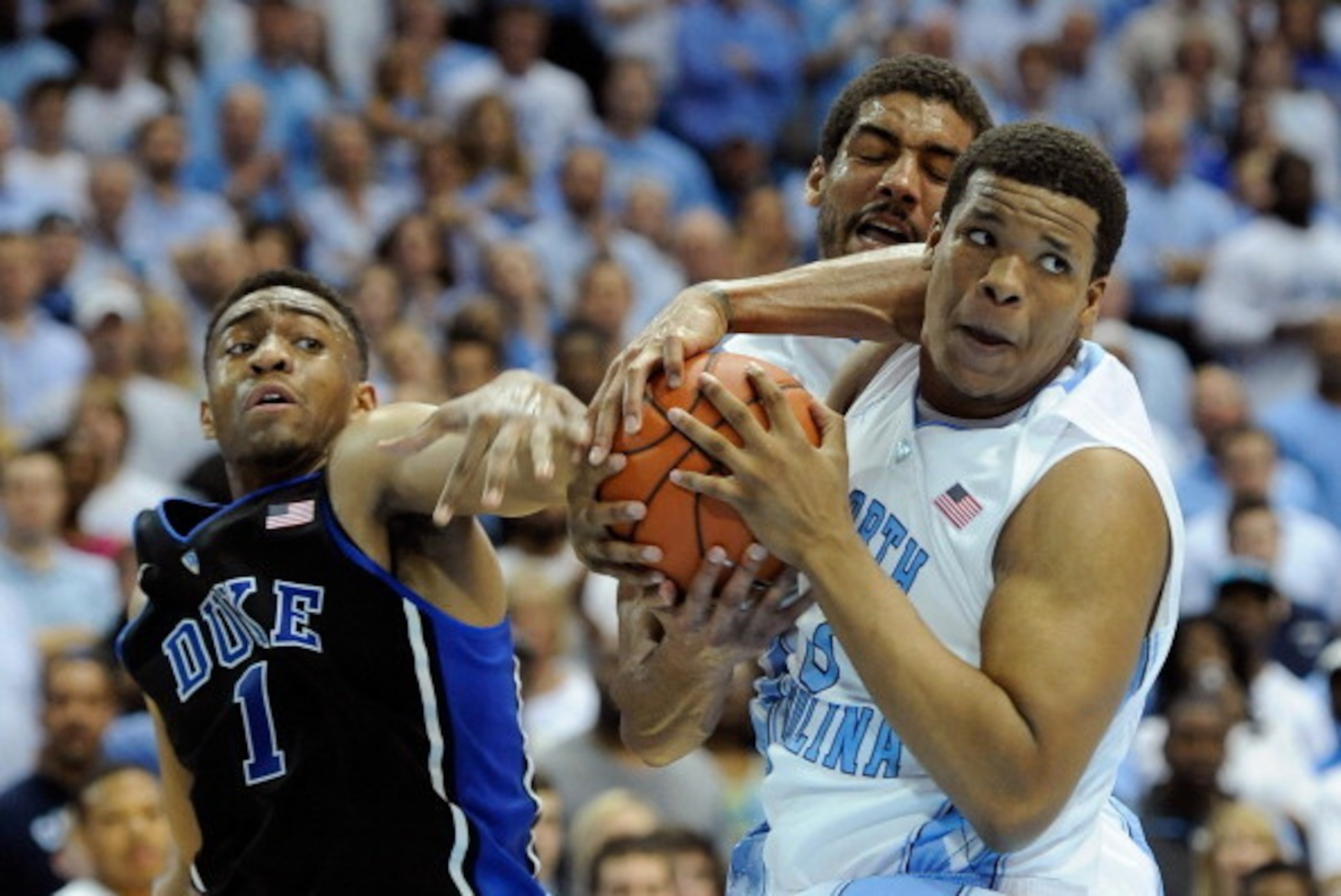
3. Kennedy Meeks, North Carolina
8 of 10
2013-14 Stats: 7.6 points per game, 6.1 rebounds per game, 16.3 minutes per game, took 22.6 percent of shots when on the floor
The obvious Carolina comparison for Kennedy Meeks is Sean May. May put up better freshman numbers (11.4 points per game), but he also had less competition in the frontcourt than Meeks had last season.
Meeks was mostly hit or miss late in the season, but his hits allowed UNC fans to dream big. He had a season-high 23 points against Florida State in mid-February and averaged 13.5 points per game in two NCAA tourney games. The inconsistency was perplexing, however, as his 23 points were sandwiched between two points and four points, and he scored one point total in the final two ACC tourney games before the NCAAs.
That wasn't exactly all Meeks. He saw his minutes fluctuate based on opponent and matchups. With James Michael McAdoo gone, Meeks should see a significant bump in playing time. He could also be the difference between UNC competing for a title or being a streaky team like last year's.
The Tar Heels upgraded at the wing position with the addition of freshmen Justin Jackson and Theo Pinson, they return a great perimeter scorer in Marcus Paige and the one piece they need to be the typical great Carolina team is a low-post threat. Someone like, say, May.
Meeks' low-post moves were not up to May standards as a freshman, but he has good feet, soft hands and is an elite offensive rebounder—he ranked 10th in offensive rebounding percentage nationally—and that's why the comps are valid. May put up 15.2 points per game as a sophomore. If Meeks could give his team anything close to that kind of production, the Heels will be in good shape.
2. Dwayne Polee, San Diego State
9 of 10
2013-14 Stats: 8.5 points per game, 17.9 minutes per game, took 25.3 percent of shots when on the floor
San Diego State needs someone to step up to be the go-to guy after losing do-everything point guard Xavier Thames.
Dwayne Polee, who averaged 15 points over SDSU's final five games, showed late in the season that he's both willing and capable to be that guy. The fifth-year senior has taken some time to develop in his career but he's got a ton of ability. He's a 6'7" wing with a really quick first step and the ability to knock down the three.
Last season, Polee's role in the offense was to spot up and either make open jumpers or make a straight-line drive when the defense closed out. He was also a great finisher in transition. To be the go-to guy, he'll need to be able to create his own shot and have a more diverse role in the offense. You would think he has the ability. It's just a question of whether he'll be comfortable in that role.
1. Zak Irvin, Michigan
10 of 10
2013-14 Stats: 6.7 points per game, 15.4 minutes per game, took 25.9 percent of shots when on the floor
Zak Irvin gives Michigan the versatility that Glenn Robinson III provided with the ability to play both the 3 and the 4. You could argue that the Wolverines were even better off last season with Irvin at the 4 than Robinson because Irvin was a more consistent shooter. Granted, his minutes were limited, but look at some comps between the two.
- Robinson: 16.0 points per 40 minutes, 30.6 three-point percentage, 113.7 offensive rating
- Irvin: 17.0 points per 40 minutes, 42.5 three-point percentage, 117.8 offensive rating
Talented wings have also made big leaps in John Beilein's system from their freshman to sophomore years. Take a look at the improved numbers of Nik Stauskas and Caris LeVert last year compared to their freshman seasons.
- Stauskas (freshman/sophomore): 11.0/17.5 points per game, 1.3/3.3 assists per game, 30.5/35.6 minutes per game
- LeVert (freshman/sophomore): 2.3/12.9 points per game, 0.8/2.9 assists per game, 10.7/34.0 minutes per game
Similar to LeVert after Tim Hardaway Jr. left, Irvin has opportunity on his side with both Stauskas and Robinson leaving for the NBA draft.
Like Robinson, the one question mark with Irvin is whether he'll be able to create for himself. That's what made Stauskas so valuable—he could go get his own shot or create for others. Irvin didn't show a lot of that his freshman season, and LeVert and Derrick Walton will likely be the primary creators.
Even if Irvin's niche is just a shooter and finisher, he should still see his numbers go way up simply because of the opportunity to play big minutes.
C.J. Moore covers college basketball for Bleacher Report. You can follow him on Twitter @CJMooreBR.

.jpg?w=2560 "Top NFL Trade Targets")