Statistically Ranking the World's Top 10 Football Leagues
Claims that one league is better than another have become ever more common in the social media-dominated world of football fandom, so here at Bleacher Report we have decided to take a statistics-based look at the topic.
Rather than look at simply "which has the best players," the hope is to look at a range of factors that will help demonstrate how appealing a division is to the spectator. Does it offer goals, good football, high levels of competition etc.?
Over the next eight pages, we take initial strides into what could be a massively in-depth area of research, comparing 10 of the world's best leagues over a number of factors.
The results are, at times, somewhat surprising.
How It Works
1 of 8
The leagues nominally chosen by B/R to represent the top 10 in world football, while open for debate in itself have been ranked according to the following statistical methods:
1. Goals per game
Which league has the most free-scoring football. While not necessarily an indicator of quality, it gives us an impression of which leagues give the fans best entertainment on a regular basis.
2. Disciplinary records
By ranking each league by the number of yellow and red cards received per game, with red cards counting as three times the value, we can compare competitions by their concepts of "fair play." Of course, it is a statistic that relies heavily on refereeing consistency, which cannot be in any way guaranteed.
3. Average pass accuracy
Which leagues boast the best levels of accuracy with their passing? In theory, this statistic should enable us to see which competitions try to play passing-based football and possess the best technical players. Differing styles of defending and attack-building, though, affect this method of judgement.
4. Average shot accuracy
Which competition boasts the sharpest shooters? By comparing the percentage of shots on target in each competition, we get a good impression of striking ability and the quality of chance created. In that respect, it can also be seen as an indication of slack defensive standards.
It is interesting to note that the Pearson Product-Moment correlation coefficient between the rankings of leagues with the best shot accuracy and number of goals scored is just 0.33, indicating a negligible correlation. More goals scored does not, then, necessarily mean more clinical finishing, merely more chances created.
5. Standard Deviation of points totals
Just how spread-out are the points totals of sides within the division? The standard deviation gives us a clear indication of which leagues are more balanced in level than others. The larger the coefficient, the bigger the gulf in points totals.
6. Attendance figures
Just how many people bother to show up to the stadiums and watch each competition? After all, good football is fairly pointless if nobody is watching.
Note: All data collected is for the 2013-14 season, with the exception of the Campeonato Brasileiro and MLS for which 2013 data is used. All statistics are compiled from WhoScored.com data, with the exception of attendance figures, for which transfer market was used.
Card data for the Portuguese Primeira Liga is also taken from Transfermarkt, while reliable figures for some categories were not available for the division.
Goals Per Game: Eredivisie Leads the Way for Goals
2 of 8
It is perhaps of little surprise to anybody who has tracked the remarkable scoring figures amassed by strikers in the Netherlands over the years that the Eredivisie is the highest scoring of our monitored leagues.
| League | Goals per Game | Rank |
| Eredivisie | 3.18 | 1 |
| Bundesliga | 3.14 | 2 |
| Serie A | 2.81 | 3 |
| La Liga | 2.78 | 4 |
| Premier League | 2.76 | 5 |
| MLS | 2.62 | 6 |
| Russian PL | 2.53 | 7 |
| Brasileirao | 2.46 | 8 |
| Ligue 1 | 2.42 | 9 |
| Primeira Liga | 2.41 | 10 |
The Dutch top-flight averages well in excess of three goals per game this season, placing it and the Bundesliga well ahead of all other divisions analysed.
Perhaps the most surprising result of the sample is that the stereotypically defensive Italian Serie A comes in third statistically, while the Premier League averages less goals than both Spain and Italy. Perhaps English defences are not quite as bad as reports suggest.
There is, though, little difference between the three traditionally strong leagues.
Ligue 1 and the Brasileirao are well known for their frequency of low-scoring games and do not disappoint, as two of just three leagues to average under 2.5 goals per game.
Bottom of the pile, though, is the Portuguese Primeira Liga, stealing the title of least entertaining league from Ligue 1 by just one decimal point.
Discipline: Premier League Leads the Way in Fair Play
3 of 8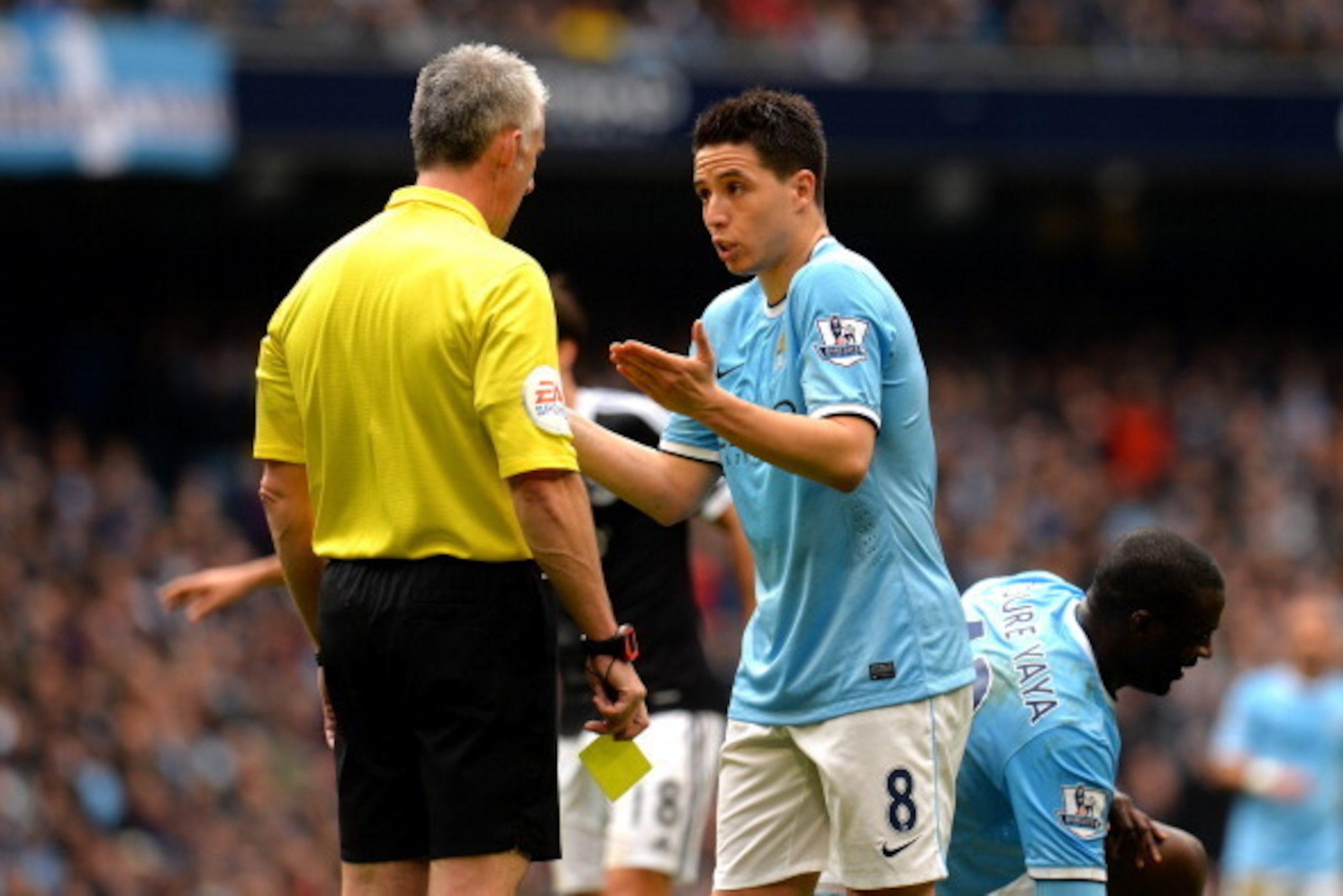
It is a statistic that can be interpreted in one of two ways. Either some leagues simply have a better concept of fair play than others and rely less on physical, high-risk defending. Or, simply, referees have vastly different standards of what constitutes a booking from country to country.
Interestingly, it is the Premier League which leads the way in this category with comfortably the least red cards shown and a below-average track record for cautions. Many would suggest it is refereeing leniency which influences the result on this occasion.
| League | YC/G | RC/G | Discipline Coefficient | Rank |
| Premier League | 3.24 | 0.14 | 3.67 | 1 |
| MLS | 3.04 | 0.24 | 3.76 | 2 |
| Eredivisie | 3.17 | 0.24 | 3.89 | 3 |
| Ligue 1 | 3.27 | 0.23 | 3.96 | 4 |
| Bundesliga | 3.61 | 0.19 | 4.18 | 5 |
| Russian PL | 3.79 | 0.24 | 4.51 | 6 |
| Brasileirao | 4.29 | 0.28 | 5.13 | 7 |
| Serie A | 4.67 | 0.27 | 5.48 | 8 |
| La Liga | 4.93 | 0.27 | 5.74 | 9 |
| Primeira Liga | 5.22 | 0.41 | 6.45 | 10 |
Portugal, meanwhile, once more scores badly. The Primeira Liga's red card statistics, per Transfermarkt, are comfortably the highest, while the league also boasts the most cautions per game of the 10 divisions.
Are Portuguese referees operating by a different rule book, or is the league in need of a fair play revolution?
The Bundesliga performs notably well in terms of disciplinary record, with the least red cards per game of the remaining leagues. La Liga and Serie A, meanwhile, are near the bottom of the rankings, with high levels of cautions in each game.


Average Pass Completion: Italy Boasts Europe's Most Successful Distributors
4 of 8
Spain is often seen as the modern home of passing football, but it is the Italians and Serie A that leads the way in terms of percentages of passes completed this season.
Italy's famous slower pace of playing and more tactically-minded defending may contribute, but the frantic Premier League's second-place ranking indicates that pace of play is not the only factor.
| League | Average Club Pass Accuracy (%) | Rank |
| Serie A | 80.89 | 1 |
| Premier League | 79.62 | 2 |
| Eredivisie | 78.79 | 3 |
| Brasileirao | 78.4 | 4 |
| Ligue 1 | 77.95 | 5 |
| Bundesliga | 77.53 | 6 |
| La Liga | 77.13 | 7 |
| MLS | 76.92 | 8 |
| Russian PL | 75.86 | 9 |
Russia and the MLS score poorly in terms of pass completion, indicating that both tend to opt for a more direct style that raises risk. Further analysis regarding average pass length would be the next stage of investigation.
What mitigating factors could Spanish and German football offer for their poor performance? The gulf in class between clubs no doubt ensures that many sides near the bottom of the table have much poorer passing figures.
A more extensive way of measuring the statistic would be to use the total number of passes, rather than each team's average, which would bolster Spanish and German figures. It would, though, hide the number of sides with poor completion percentages and take a substantially increased time period to calculate.
Average Shot Accuracy: Eredivsie Strikers on Target Most Often
5 of 8
As revealed earlier on, there is little correlation between goals scored per game and average shot accuracy, as confirmed by a Pearsons coefficient of 0.33. The Eredivisie, though, tops the charts for both.
What the lack of correlation would suggest, then, is that goals scored is almost entirely linked to the number of chances created rather than the ability to hit the target.
| League | Shot Accuracy (%) | Rank |
| Eredivisie | 37.56 | 1 |
| Bundesliga | 36.94 | 2 |
| La Liga | 35.34 | 3 |
| Ligue 1 | 34.98 | 4 |
| Russian PL | 34.38 | 5 |
| Brasileirao | 33.83 | 6 |
| MLS | 33.81 | 7 |
| Premier League | 33.26 | 8 |
| Serie A | 32.98 | 9 |
That the Serie A is bottom of our ranking in terms of percentage of shots on target, yet third in terms of goals per game would suggest that Italian defences are conceding far more chances than they ever did.
That the Eredivisie is top of both, meanwhile, would indicate that the quality of chance created is high, once more casting aspersions on defensive quality.
Ligue 1 and the Russian Premier League, meanwhile, were two of the bottom three leagues in terms of scoring goals. Both, though, see their strikers hit the target with a reasonable amount of their chances.
Shooting opportunities, then, are not created as often as they could be in either country.
To further the analysis, the next step would be to analyse the location and quantity of shots and then attempt to correlate those figures with the percentages. Only then would it be truly clear as to what is caused by striking ability and what is caused by slack defending.
Variation of Points Totals: MLS Leads the Way
6 of 8
In terms of equality within divisions, it is the MLS and the Brasileirao that provide the most competitive leagues of those analysed.
Across 34 and 38 matches respectively, the two divisions both boast standard deviation coefficients of less than 12. The implication, then, is that the mean number of points between a team and the league's average (mean) points total is just 11-12 points.
| League | Variation | Rank |
| MLS | 11.43 | 1 |
| Brasileirao | 11.65 | 2 |
| Eredivisie | 12.15 | 3 |
| Russian PL | 12.19 | 4 |
| Ligue 1 | 14.03 | 5 |
| Bundesliga | 14.15 | 6 |
| Primeira Liga | 14.51 | 7 |
| Premier League | 16.89 | 8 |
| La Liga | 17.34 | 9 |
| Serie A | 17.59 | 10 |
At the other end of the scale, meanwhile, are Europe's powerhouse leagues. Italy, Spain and England all perform badly in terms of competitiveness in what is an indication of the financial imbalance within the leagues.
The Bundesliga performs relatively well for a division with several sides acknowledged to be of a very high standard, with a standard deviation of just over 14.
Portugal and France, meanwhile, see their figures altered by the presence of two or three clubs that are substantially better than the rest. The other sides, though, are relatively competitive.
Despite all the criticism of La Liga's imbalance, it is Serie A that performs the worst this season in terms of competitive balance.
Average Attendance: Bundesliga and Premier League
7 of 8
Unsurprisingly, the best-supported leagues in world football are in England and Germany, where spectators flock in their tens of thousands to watch games each weekend.
What the figures do highlight, though, is the relative poverty of the attendances in Brazil, Portugal and Russia, despite long-standing football cultures.
| League | Av. Attendance | Rank |
| Bundesliga | 43221 | 1 |
| Premier League | 36304 | 2 |
| La Liga | 26814 | 3 |
| Serie A | 23094 | 4 |
| Ligue 1 | 20663 | 5 |
| Eredivisie | 19464 | 6 |
| MLS | 18014 | 7 |
| Brasileirao | 14951 | 8 |
| Russian PL | 11626 | 9 |
| Primeira Liga | 7818 | 10 |
Serie A and La Liga also perform far below what one would expect of such esteemed footballing countries, with economic realities and the lack of stadium development both major influencing factors.
In Brazil, meanwhile, the lack of spectators is often put down to the lack of middle-class attendance, with crumbling stadiums and frequent fan violence off-putting to those from middle class backgrounds.
England and Germany have struck by far the best balance and, in general, boast the best facilities in which to showcase their respective leagues. Attending fixtures is a major part of the culture in both countries.
Overall Ranking: Eredivisie, Bundesliga and Premier League Most Enticing
8 of 8
Personally, I am not a fan of ranking leagues and making comparisons regarding general quality between competitions. It is difficult to do and, to be accurate, would require many more factors than analysed here.
Based on the number of goals, best discipline, best pass-completion rates, most accurate finishing, competitive balance and attendance figures, though, it is the Eredivisie that comes out of our rough experiment as the best performing competition.
It is worth reiterating that the aim of the investigation was not to find which league boasts the highest standard of player, but which is the best competition for spectators.
| League | Rank |
| Eredivisie | 1 |
| Bundesliga | 2 |
| Premier League | 3 |
| MLS | 4 |
| Ligue 1 | 5 |
| Serie A | 6= |
| Brasileirao | 6= |
| La Liga | 8 |
| Russian PL | 9 |
Spain, meanwhile, suffers in comparison. The sizeable spread in quality distorts several of our parameters, and the league also performs badly in terms of cards awarded and attendances. With better analysis of more areas, it would be little surprise to see La Liga perform better.
Much less surprising, meanwhile, is that the Bundesliga and Premier League also perform very well compared to their rivals. Both are well managed competitions on many levels.
The rankings above are simply based upon the areas chosen for comparison and are by no means a comprehensive study. Even within those areas, there is room for further research.
They do, though, offer some indication of how various leagues perform in different facets and how some competitions could look to improve. In a world where spontaneous judgements are increasingly common, further evidence-based analysis and cross-comparison is a must.
Note: Portugal has been omitted due to an incomplete statistical data set.
.jpg?w=2560)

.jpg?w=2560 "Tennis Player Gets 24-Year Ban for Match Fixing (AP)")

.jpg?w=2560 "Jalen Hurts Out Sunday")