
NCAA Bracket 2014: Potential Cinderellas to Keep Your Eye on
It's that time of year again when everyone hates Cinderella.
For 11 months out of the year, the fairy-tale princess represents a nice, heart-warming story about fairy godmothers, pumpkins, optimism, good over evil and all that junk. But during March, that nasty witch stands for nothing more than a busted bracket.
Last season, it was Florida Gulf Coast going from No. 15 seed to Dunk City phenomenon and giant killer in a matter of days, forcing millions across the country to crumple up their brackets—or the modern version, throw their laptops out the window.
.jpg?w=2560)
.png?w=2560)

Let's take a look at the mid-majors primed to follow in those footsteps in 2014.
Delaware Fightin' Blue Hens

Guard play, guard play and more guard play. The first ingredient in mixing up an NCAA tournament Cinderella is finding a team with experienced, talented guards, and the Blue Hens have that in droves.
Much like last year's La Salle squad that advanced to the Sweet 16 as a No. 13 seed, Monte Ross employs four guards around a physical big man—and the trio of Devon Saddler, Davon Usher and Jarvis Threatt make up one of best backcourts in America.
Saddler and Usher are more capable of filling it up from the outside, while Threatt is a distributor who gets to the rack relentlessly. The latter recently returned from a month-long suspension and has quickly proven his importance, as CBS Sports' Jeff Borzello pointed out:
Although they aren't always the most efficient bunch, any one of the trio is capable of dropping 30 on any given night.
| Devon Saddler | 20.2 | 3.4 | 4.5 | 0.8 |
| Davon Usher | 19.4 | 1.7 | 6.0 | 1.8 |
| Jarvis Threatt | 17.9 | 5.7 | 5.6 | 2.5 |
Now, those impressive per-game numbers are large in part to the fact that this team loves to run. But here's the most impressive stat. Despite playing the seventh-fastest tempo in the nation, per kenpom.com (subscription needed), the Blue Hens have the sixth-lowest turnover percentage in the country.
They play fast, but they play under control—a testament to their guards—and when everything is clicking, they are a scintillating joy to watch.
Delaware's battle-tested, too. Although it doesn't sport any major out-of-conference wins, it has gone on the road and fought Richmond (two-point loss), Villanova (four-point loss), Notre Dame (five-point less) and Ohio State (12-point loss) closely.
The Blue Hens are undersized and aren't always invested defensively, but with three legitimate studs in the backcourt, they are nightmare matchup for almost any team.
Harvard Crimson

While Delaware gets it done with a fast-paced, relentless attack, Harvard will beat opponents with a slow pace, stingy defense and efficient offense.
According to kenpom.com, the Crimson boast the 262nd-slowest pace in America and 24th-best adjusted defensive efficiency. That comes not only from holding teams to a 46.2 percent effective field-goal percentage, but also from forcing turnovers on 22.1 percent of defensive possessions.
That last number, which is 17th-best in the country, is due largely in part to the ball-hawking backcourt duo of Siyani Chambers and Wesley Saunders, who combine for over 3.0 steals per game despite the slow pace.
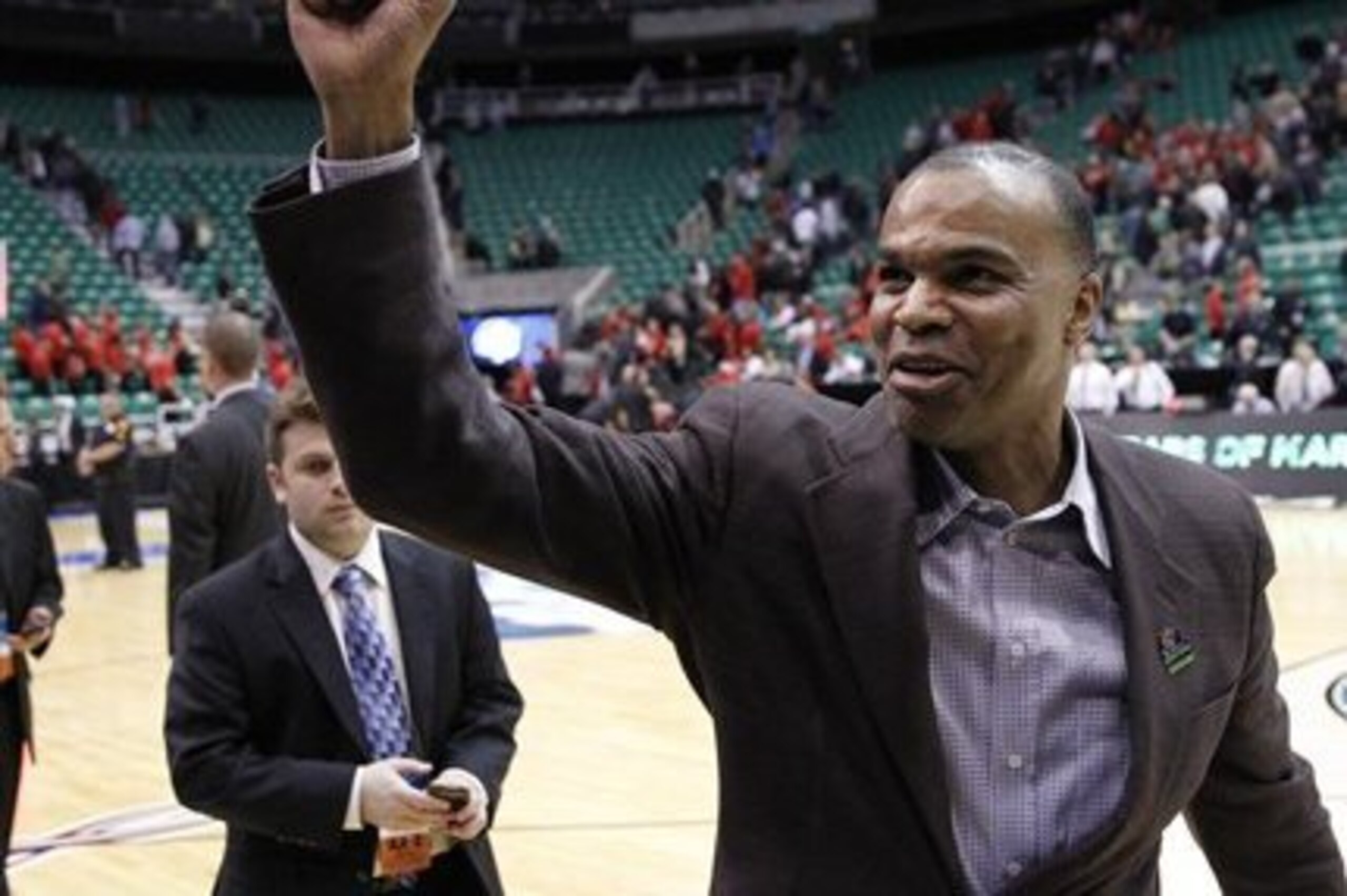
Saunders also leads the team with 14.0 points per contest, but Chambers is the team's point guard and calm, poised leader, as head coach Tommy Amaker told the Boston Globe's Julian Benbow:
"Even when [Chambers is] high-strung or he’s wired, there are a lot of guys that can be like that and not be under control at the same time. He is. He can show emotion, but rarely is he — we use a phrase here — he’s never emotionally drunk.
He’s well-schooled beyond his years when it comes to that. He can have the emotion and the enthusiasm and all the rah-rah-rah things that come with being wired, while at the same time having a semblance of control and understanding and responsibility. I think that comes with that position.
"
From a strong backcourt to experience throughout the lineup to a healthy balance of offense and defense, the Crimson have legitimate Sweet 16 potential.
Wisconsin-Green Bay Phoenix

You want an inside-outside combo? You won't find one more unique than the duo of Alec Brown and Keifer Sykes in Green Bay.
The 7'1" Brown averages 3.3 blocks per game, leading a massive frontline (power forward Greg Mays is 6'9" and small forward Jordan Fouse is 6'7") that is second in America in block percentage and allows teams to shoot just 44.0 percent from inside the arc.
On the outside, you have the diminutive 5'1" point guard in Sykes who averages 20.4 points, 5.0 assists and 1.2 steals per contest. He can shoot the ball, but the lighting quick leader is more apt at penetrating and either dishing, drawing the foul or doing things like this:
Green Bay had Wisconsin on the ropes in the second half before losing by three in November, beat Virginia—yes, the same Virginia rolling through the ACC—in December and has mostly dominated a strong Horizon League.
The Phoenix haven't gone dancing since 1996, and haven't won since 1994, but this is the year they'll finally rise from the ashes.
.jpg?w=2560 "Aaron Donald Fights Bills OL😳")