Chris Young Can Make or Break the New York Mets' 2014 Playoff Hopes
Heading into the 2014 season, the New York Mets need a number of factors to work out in their favor if they want to compete for a playoff spot, with few more important than the success of newly signed outfielder Chris Young.
Chris Young, now 30 years old, has been an impact major leaguer in the past, but has declined over the last two seasons. Young hit 32 home runs in his rookie season in 2007 and was an All Star in 2010 while playing with the Arizona Diamondbacks, but his fWAR has declined by two each of the past two seasons.
The Mets went into last season with a joke of an outfield that turned out to be better than expected. Marlon Byrd was exceptional and Juan Lagares and Eric Young Jr. shined in their roles. However, the Mets still finished under .500, and if they want to compete now, they will need their outfield to perform at an even higher level.
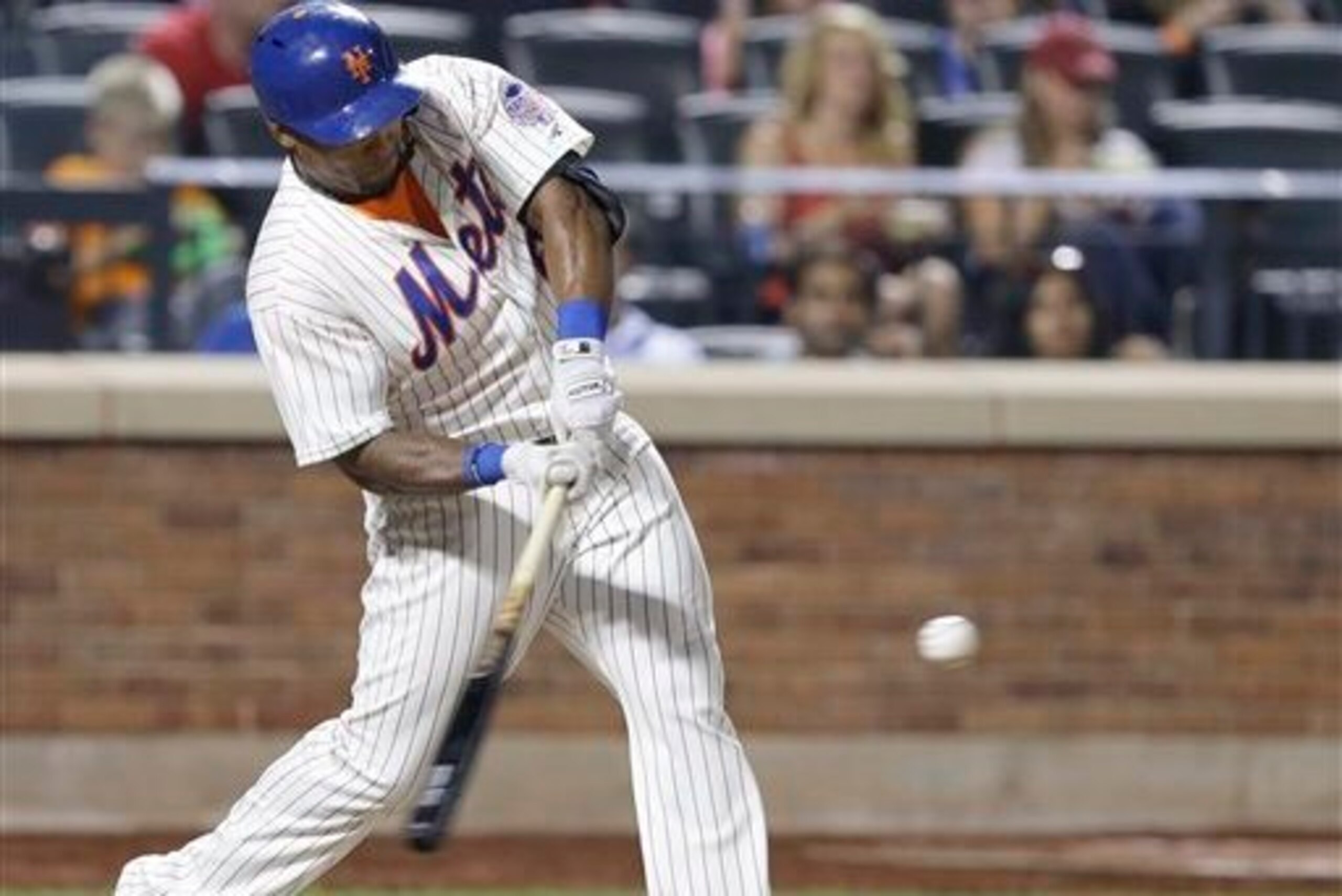
Signing Curtis Granderson was the easiest way to upgrade the outfield and should help replace (if not exceed) Marlon Byrd’s production. But if the Mets plan on competing for a playoff spot, they need to significantly exceed last year’s outfield performance.
The Mets have nice outfield depth with role players such as Eric Young Jr., Matt den Dekker and Andrew Brown, but they will need a superior player in their lineup if they want to contend. Chris Young hasn’t been that player for the past two seasons, but he has the physical skills to change the outlook of a lineup.
Young’s career has been up and down since he entered the majors, and there’s reason to believe he could turn it around again this season, despite Baseball Prospectus' humorous take on his hitting prowess (subscription required):
"Hard cheeses have better shots against graters than Young does against right-handed pitchers, and it's fair to wonder whether a player with less cachet would be labeled as an extra outfielder by now.
"
Even when Young posted big numbers in his rookie season (32 home runs and 27 stolen bases), he still had an fWAR of just 0.5. His fWAR increased to 2.3 in 2008 before declining again to 0.2 in 2009.
In 2010, Young’s career trend shifted drastically again, as he posted fWARs of 4.1 and 4.5 in 2010 and 2011, respectively. In 2012, he declined again to a 2.5 fWAR and once again last season to a 0.5 fWAR.
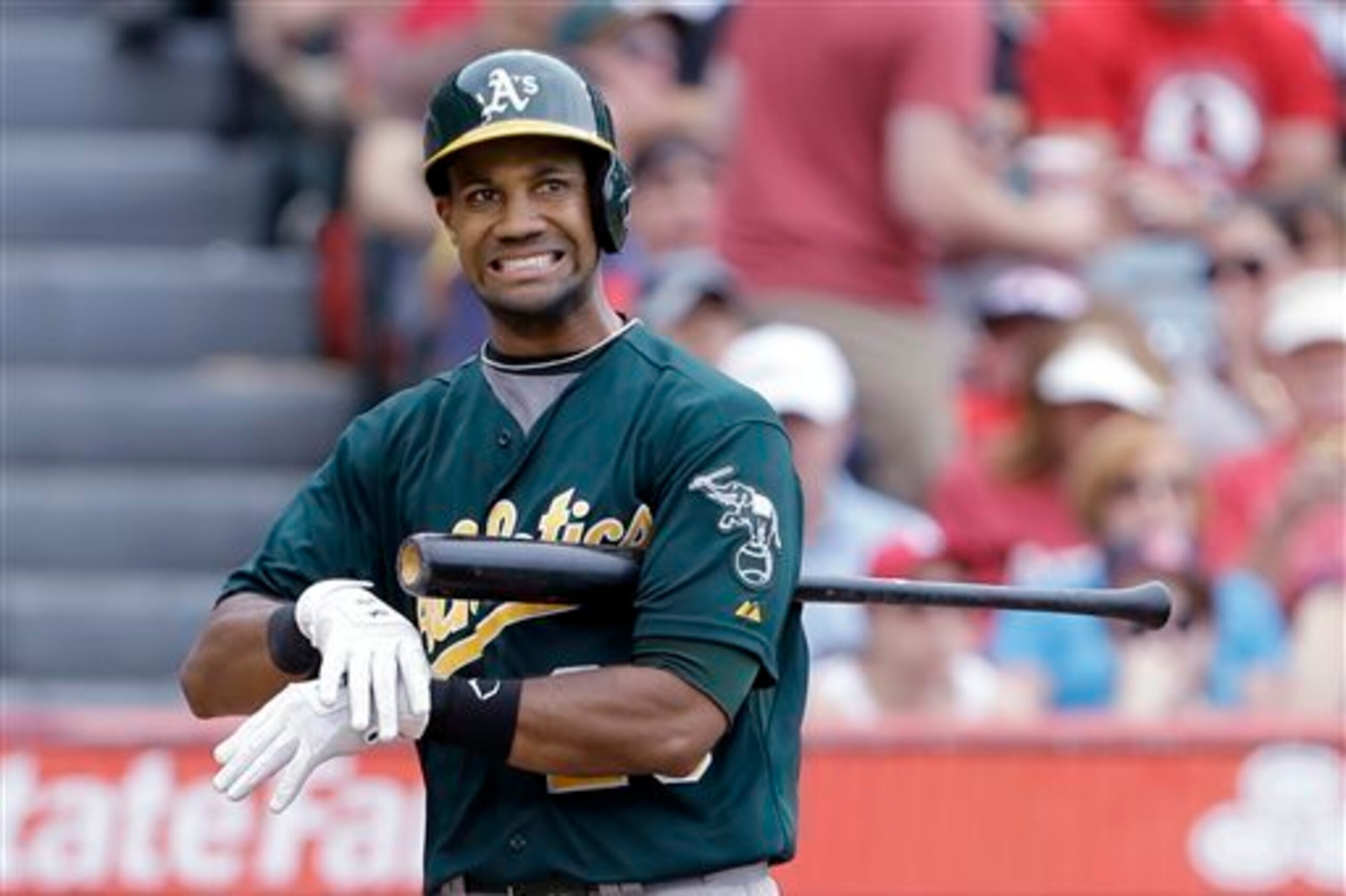
Basically, what all this means is that Young’s performance in 2014 is nearly impossible to predict. It also means that Young’s decline is not likely due to a decline in physical skills due to age. As this tweet by the New York Post's Mike Puma states, Young has always had the physical gifts to succeed but they just haven't translated onto the field the past two years.
In fact, according to Mark Simon of ESPN, Hittrackeronline.com records six of Young’s 12 home runs were “no doubters,” meaning they cleared the fence by 20 feet vertically and 50 feet horizontally. To put that in perspective, Yoenis Cespedes, who made Citi Field look like a little league park during last summer’s Home Run Derby, hit just three home runs of that variety.
It is clear that Young still has game-changing power, but he has just been unable to harness it the past two seasons. He attributed his loss of power production to legitimate reasons, which he explained to Adam Rubin of ESPN. Young felt a shoulder injury suffered in 2012 and inconsistent playing time in 2013 kept him from getting going offensively. Young explained:
"In Oakland I wasn’t able to fall into that streak or fall into that comfortable phase of my game. So going to New York and getting the opportunity to do that again (play regularly) was the biggest thing that intrigued me and what I’m most excited for.
"
Young also has a skill that is coveted by the Mets in his ability to get on base. Despite sometimes being labeled as a free-swinger due to his high strikeout totals, Young has always exhibited a patient approach at the plate, posting a career 10 percent walk rate. This is especially impressive because of his career strikeout rate of 22.9 percent, a remarkably high total.
Young’s ability to get on base should be especially helpful to the Mets, as the team’s aggressive baserunning philosophy should take advantage of his speed. Young hasn’t stolen over 20 bases since 2011, but he still has well above-average speed and could be a factor in games even if he isn’t stealing bases.
Defensively, Young should help the Mets outfield be one of the best in baseball. According to Simon, Young combined for 38 defensive runs saved between 2010 and 2011, ranking second in baseball among center fielders, only behind Austin Jackson of the Detroit Tigers. Young has never had an exceptional arm, but playing a corner outfield spot alongside Juan Lagares and Curtis Granderson should make the Mets pitching staff very happy.

While Young still wants to play center field (and is capable of doing so), Lagares should be the Opening Day center fielder. If the team decides to put Eric Young Jr. in the outfield instead, the Mets outfield will still have plenty of speed with Young in center field.
Young’s defense shouldn’t be too much of a concern to Mets fans, but there is cause to be optimistic about Young turning it around offensively, outside of his insistence that this is the most motivated he has ever been.
The New York Post’s Ken Davidoff wrote a story earlier this month about how Chris Young sought to work with Hall of Famer Rod Carew to try and find consistency in his swing. These stories are often fruitless, meant to bring optimism during a long offseason. The article even acknowledges how different Carew and Young are as players, as Young is a strikeout-heavy power hitter while Carew was a patient slap hitter.
However, the article is significant because it shows that Young realizes his biggest problem at the plate. He has always sacrificed average for power, evidenced by the fact that he has hit the ball in the air at the highest rate in all of baseball at 70 percent (via ESPN's Mark Simon).
By working with Carew, Young can change his mental approach at the plate, where he should be looking to square up the ball rather than getting under it and driving it out of the park. It is too late for Young to completely change as a hitter, but the fact that he recognizes he needs to stop trying to hit home runs could lead to more consistent production this season.
With Young’s up-and-down performance throughout his career, playing everyday in New York could give new life to both his career and the Mets' playoff chances. The Mets took a calculated risk when they signed Young to a one-year contract, hoping that they could take advantage of Young building up his value in New York.
The Mets have no long-term commitment to Young and can move on if he fails to perform. But, if he succeeds, he could propel the Mets into contention, and if that fails they could flip him for a prospect at the trade deadline. There was little negative in signing Young, as he is another component of the Mets roster that could improve the franchise’s fortunes by turning around his career.
All statistics courtesy of Baseball-Reference or FanGraphs.

.jpg?w=2560 "Grading WWE Raw 🔠")