

Cincinnati Reds: 5 Key Offseason Moves That Need to Happen by Opening Day
For, now, the fourth consecutive season, the Cincinnati Reds will begin the year as a team "on the brink." They'll by no means be a dark horse by mere disqualification—everyone knows about the Reds because they're a team that has the talent to win a World Series; right now, they just haven't done it.
At least that was the case before Shin-Soo Choo denied his qualifying offer. Now, it's officially offseason. Now, it's go-time for Walt Jocketty. If you were to define the Reds, you'd define them by the team's No. 3 starting rotation ERA. The offense, while extremely mediocre at times, was No. 3 in the NL. It's a team built on its pitching. Yet, the team routinely fails to advance.
Significant injuries have had more to do with the lack of postseason success than Dusty Baker or any Red. You can rattle off teams that all overcame injuries, but there's no team you can name that advanced in the playoffs following the loss of its ace. If that was a healthy Johnny Cueto last October, then I'm Buster Olney.
But the fact remains; unlike the other teams, the Reds did not have the depth to address their biggest losses, at least on offense. To address these concerns and to ensure that last October isn't repeated, these five moves need to happen before the parade next April.
Sign Shin-Soo Choo
1 of 5
Can the Reds afford a deal worth more than $126 million? Agent Scott Boras says that's the aim, which of course isn't happening, at least not in Cincinnati. But, assuming no team is bold enough to replicate Washington's pricey acquisition of Jayson Werth, Shin-Soo Choo needs to be the focal point of this Reds offseason.
The fact that he's 31 isn't as relevant as you may initially think because the Reds aren't signing him to slug 30-plus home runs and drive in 100-plus runs—they'd be paying him to get on base, which, as we've seen from previous older MLB players, is actually sustainable.
Kenny Lofton did it until he was 40. Omar Vizquel, David Ortiz (who does a little more than get on base), Marco Scutaro—all guys 36 and older whose careers stayed or remain alive because of the ability to hit for average and/or reach base.
Why couldn't that be Choo in five years?
He hit 21 home runs and drove in 54 RBI—and yet, the next contract he inks will more than likely exceed $100 million. Baseball is catching up on what statistics really matter, and the market may become egregious for routine base-occupiers.
The bottom line is, if you thought this offense was mediocre in a year it finished No. 3 in the NL, No. 12 in baseball, what do you think it becomes when the Reds lose one of their two top-four OBP guys who were scoring the mediocre amount of runs they did?
Trade Brandon Phillips
2 of 5
It's been beaten to death beyond recognition. But it's the right move. The Reds need to trade Phillips. Yes, the mid-summer interview where he pretty much called Castellini a liar and called his contract a slap in the face was bad. The on-air circus with the The Cincinnati Enquirer's C. Trent Rosecrans was frankly insidious.
But, more important than any of that is the unfortunate reality that Brandon Phillips is statistically declining, and it's been happening for the last three seasons. Since the 2011 season, Phillips has witnessed his batting average, OBP, slugging percentage and OPS all decrease.
He's 32. His contract is for $72.5 million. And, he's spiraling faster than the NASDAQ circa 2008. Face of the franchise or not, it's a move that needs to be made. Because as John Fay reports, after ten years of service, Phillips can decline any trade. He's just over nine.
Trade Aroldis Chapman
3 of 5
The Chapman experiment may officially be remembered as a failed one. Chapman was secured to become a high-profile MLB starter, which never came to fruition. Maybe it was Baker. Perhaps it was Chapman, who was quoted in the summer before 2012 saying he wants to start, only to be quoted the following year saying he wants to close.
The Reds are not in need of a Broadway closer who demands $3 million in 2014 and $5 million in 2015. It's just not the right market; those guys belong in Philly, New York, Chicago and California where noses are wiped with $5 million. With important decisions coming up regarding the very core of this Reds team, its No. 3 starting rotation ERA and the guys on it who will be arbitration eligible, every allocated dollar is going to matter.
Besides, Chapman finished the season with a save conversion rate of 88.4 percent. Francisco Cordero finished at 86 percent his last season in Cincinnati, when he was extra beloved by fans. Is this a conversion rate you pay $3 million for? Craig Kimbrell, who tied for No. 1 in saves last year, made $655,000. KC's Greg Holland (No. 2) made just over $500k. Both had more saves and a higher conversion rate than Chapman.
The Reds bullpen is capable of surviving without the ninth inning superstar (No. 7 bullpen ERA in baseball), it's time to get the most out of Aroldis Chapman, one way or another. I don't think he'll be able to get his innings count to where it needs to be to start for this team. Deal him to help bolster an offense in need of playing add-on. Even if you move Chapman for prospects, it's money that can be better spent elsewhere.


Assemble a Competent Bench
4 of 5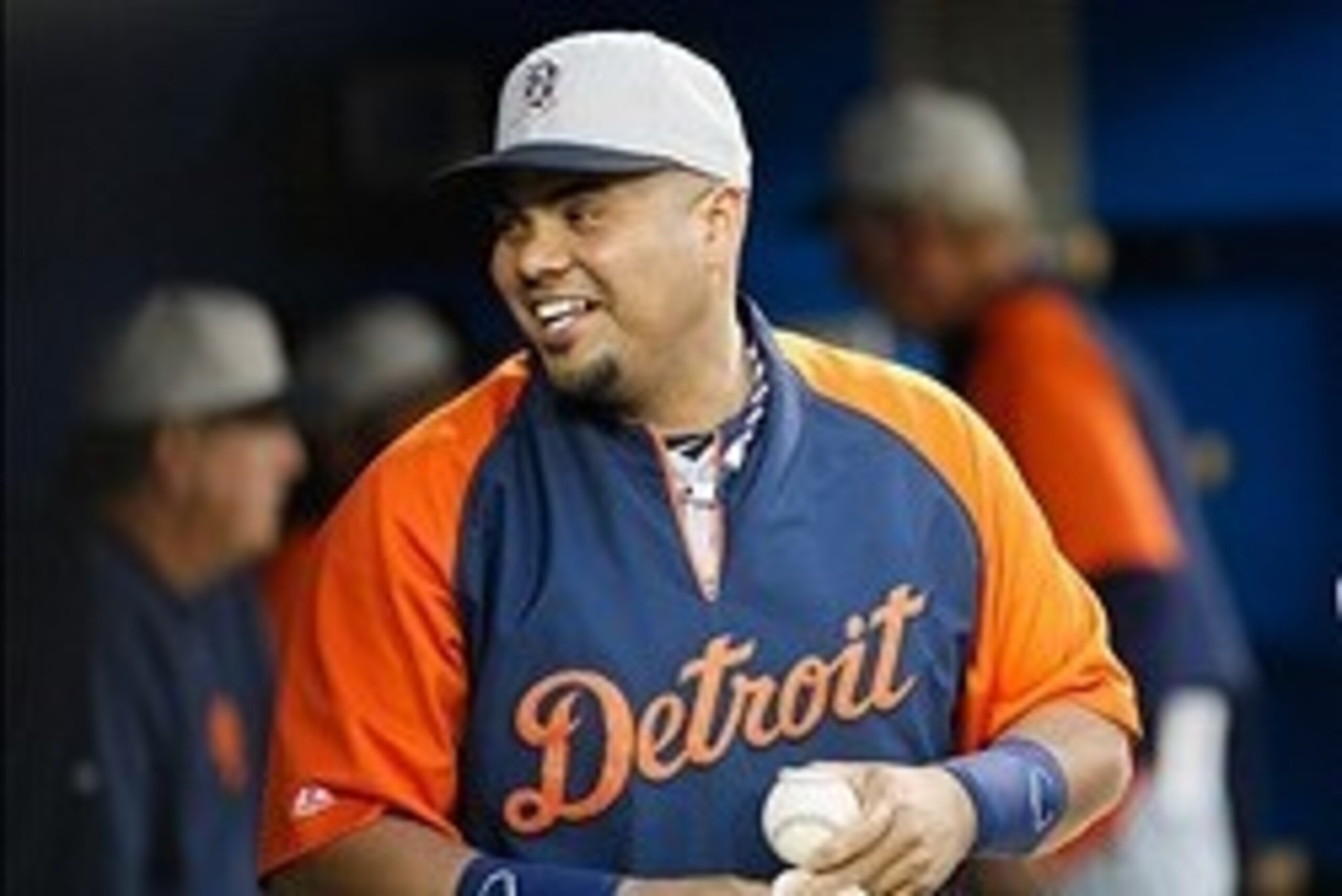
One major hole from the abomination that was 2011 in Cincinnati was the desolate bench, a curious cast of characters that were ultimately about as reliable as enrolling at healthcare.gov. The bench has plagued the Reds for years and it was common knowledge that it had been adequately addressed before 2013.
Sadly, the new guys helped make Walt Jocketty look like Jonny Gomes swinging at a curve ball. Cesar Izturis finished just above the Mendoza line, and Jack Hannahan managed to hit .214. Chris Heisey registered a disappointing .237 with an OBP of .279. Anyone ready to concede Baker was right about him starting yet?
The above numbers are just crippling, especially when your third baseman is zero for his last 31, it's tough to validate starting a guy who statistically hits once every five at-bats. It means Zack Cozart could seldom afford a day off if the Reds expected production from shortstop. And, these were guys specifically secured to not have these problems.
Acquiring Brayan Pena is a great start. Assuming Devin Mesoraco becomes the starter, Pena should be a reliable bat off the bench. He hit .297 in 71 games for the Tigers with four homers and 22 RBI last season.
The team needs more depth to deal with season-crippling injuries and long, familiar slumps. Willie Bloomquist hit .317 in 139 ABs last season with Arizona. He made $1.9 million in 2013. There are definitely options.
Aqcuire Omar Infante
5 of 5
Sure the article took a radical jump. But since moving Brandon Phillips is a must, and is most assuredly happening, then replacing him becomes just as pivotal. And, I believe a .261 average and a .310 OBP are replaceable. His 100-plus RBI were excellent, but considering it was his first and only year driving that many in, it probably had more to do with the two top-four OBP guys batting in front of him.
Omar Infante simply out-hit Phillips in 2013. He hit .318, finished with an OBP of .343 and totaled 117 wRC+ to Phillips' 91 wRC+. That's particularly important for a Cincinnati team coming off of a campaign where the lineup experienced painfully long droughts at a time. Would the .318 batting average and .343 OBP fit into the top half of the Reds lineup?
Infante made $4 million last year. But, considering it's a pretty tight market for second basemen this offseason, it's likely he'll command a greater sum. Though if it's less than $11 million, the Reds win this move in every respect possible.
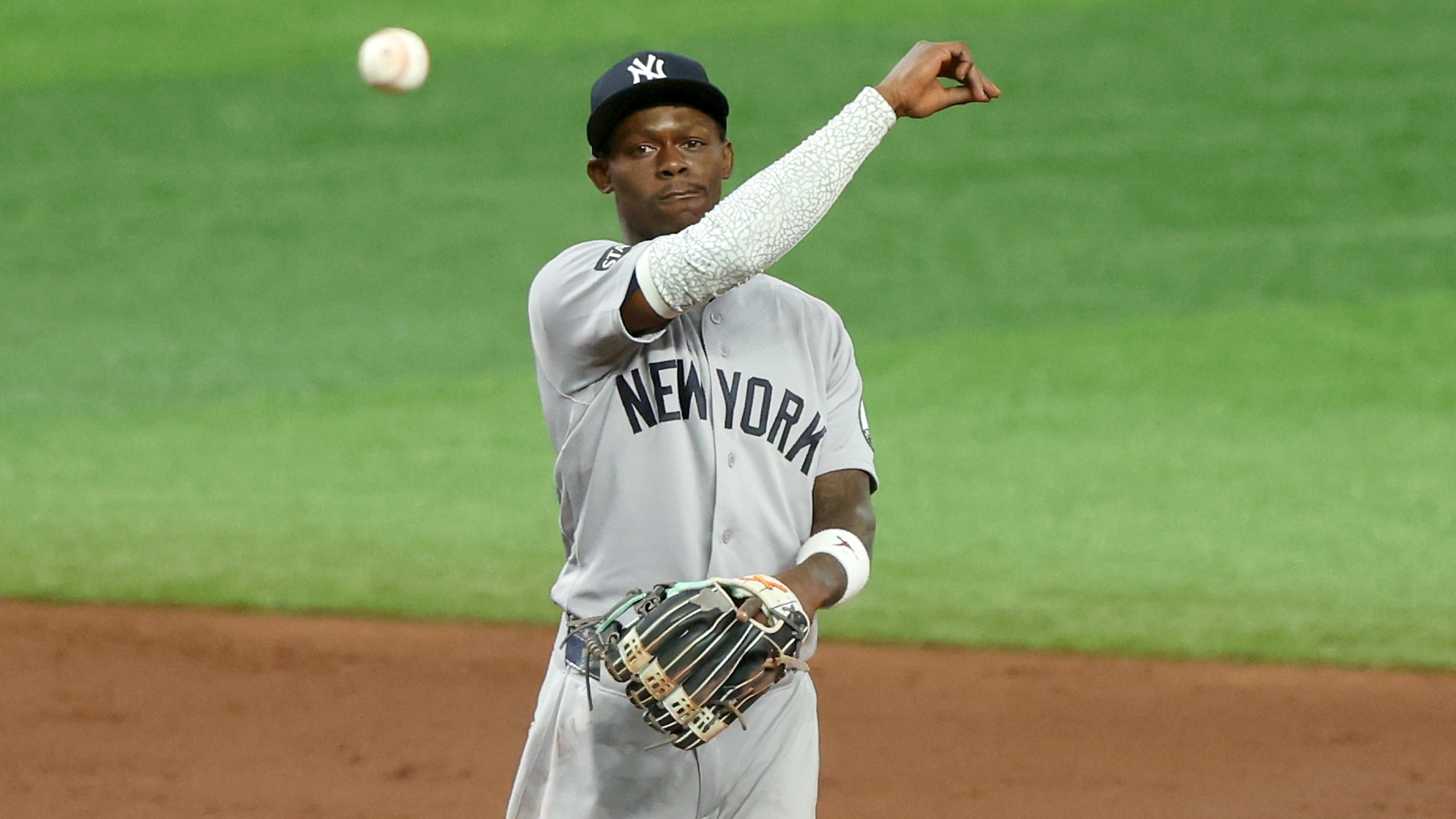
Detroit will reportedly try to sign him, as well as the Yankees, who are reportedly looking for options in case they fail to retain the services of Robinson Cano.




.jpg?w=2560 "Grading WWE Raw 🔠")


.jpg?w=2560 "Viral Rams Coach Vid 🖕")
