Roger Federer and the Coach Question
Tennis experts are unified on the subject: The current coaching situation of the Swiss tennis player, Roger Federer, can no longer continue. Roger Federer needs help, advice, something to make his game pop against all the top players.
However, finding the correct coach is proving extremely difficult—mainly because of Federer's personality and character.
Notoriously stubborn in his professional life, Federer, perhaps correctly, believes that few coaches would be able to assist him further in his tennis game. Having played on the tour for now over 10 years, he believes he knows the nuances, skills, and weaknesses of practically each of his opponents.
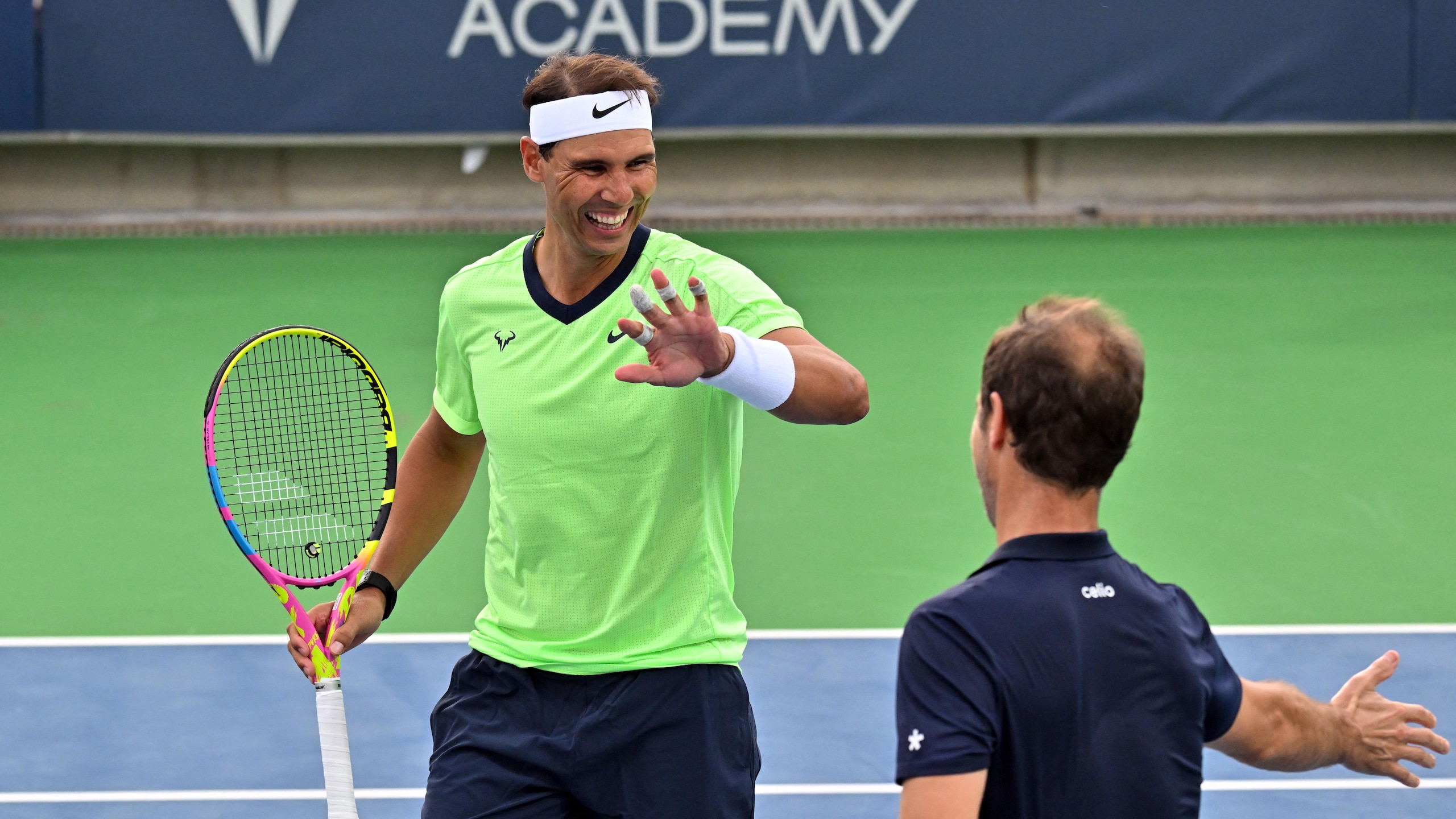

This may be true, for a given period, but players' styles and tactics continuously evolve.
Federer is being left behind.
Simultaneously, the competition on the tennis court is becoming greater for Federer, making the coach question seem to be more urgent to solve.
Of course, beating Nadal on clay has been a key concern for many years; but now it is proving difficult to achieve this feat on grass and hard court too.
Last year, during the 'epic' Wimbledon final, many could argue that it was first the lasting effects of Federer's mononucleosis, then the impending shadows and darkness on Centre Court, that ultimately caused the shocking loss.
Equally, with hindsight, many put Federer's loss to Nadal in the Australian Open final in January down to his poor serving and serve percentages, due to his recurring bad back. Nevertheless, these two defeats—on the greatest and most meaningful stages—prove that it is becoming more and more difficult to truly conquer the Nadal question.
Likewise the recent 6-3, 4-6, 6-1 defeat against Andy Murray in Indian Wells during the BNP Paribas Open Masters 1000 Series strengthens the point—whether it be Nadal or Murray (or even, on occasion, the likes of Djokovic and Simon), many top players have learnt a lot about how to play, and beat, Roger Federer.
This fact is a double-edged sword. Federer has now lost the last five duels against the Murray-Nadal troublesome twosome—and he has not won a Masters 1000 tournament since the Western and Southern Financial Masters in Cincinnati in August 2007 (although, of course, he masterfully triumphed at the 2007 Tennis Masters Cup).
Before the recent Australian Open defeat, a Federer supporter could argue that Federer was 'saving' his energy for the most important matches, e.g. the Grand Slams.
Expending huge amounts of energy in semi-finals and finals of 500 or even 1000 series tournaments in order to beat Nadal and Murray is not worth the risk of over-exertion or tiredness in Grand Slams at this stage in Federer's career, when Grand Slams will ultimately determine the interpretation of Federer's legacy.
Yet, the possible back problems notwithstanding, Federer was still not able to pull out the crucial win in Melbourne.
There is discussion over whether the recent Indian Wells defeat against Murray falls into this 'second-rank' category.
However, the Indian Wells tournament has historically been viewed as one of the most important Masters 1000 events, with its 128-player draw system and two week scheduling layout; Federer has triumphed there three times, in 2004, 2005 and 2006.
Federer agreed he felt physically better than last year in Indian Wells; in spite of this, the defeat against Murray did indeed come. Also, it is clear Federer was truly unhappy with the manner in which he gave away the third set 'it was shockingly bad.' He really was motivated to beat Murray in this tournament.
So, the coach question rises its ugly head again.
Evidently Roger needs an accomplished coach, someone who can bring a new insight into the way others are exploiting Federer's weaknesses and counteracting his strengths.
With nothing against Severin Luethi, who is arguably (and at the moment, importantly) filling a gaping hole in Federer's private cavalry and indeed offering sound advice during the tennis season, he is really more of a friend than a challenging trainer.
It is arguable that Federer needs better words of encouragement and evaluation and more active advice from a more experienced and esteemed coach in order to beat his adversaries.
Insiders have the opinion that Darren Cahill would have been the perfect man for Federer.
Having coached Agassi back to the upper echelons of the tennis stratosphere, he seemed to be the necessary link for Federer to find new ways to beat the likes of Nadal and Murray and to bring new insight into his game and tactical awareness.
The Australian gave familial excuses for not joining Federer's team, which is naturally an acceptable excuse; but why did he not think of this, or at least determine potential terms of employment, before travelling to Dubai to trial a partnership with Federer?
Equally he has now signed an official agreement with Adidas, together with fitness trainer Gil Reyes, to act as coach and mentor for their sponsored players. Where, in Cahill's contractual time-line, did Federer's offer occur? Was this Adidas partnership to transpire all along?
So, who can help Federer to overcome the misery and drama against Nadal and Murray? Some think of Brad Gilbert, or Paul Annacone, although the personal dynamics of such partnerships may be difficult to synthesize.
One thing is for certain: Federer will want the ultimate control. He should seek an experienced coach—but given Federer's character, one too strong will not work.

.jpg?w=2560 "Latest Peyton-Colts Rumors")