
The 6 Most Pointless Moves of the MLB Offseason
This offseason, 32 MLB general managers are scouring the market to find the next piece that propels their club to a championship, but every move can’t be a winner.
Big names attract the headlines, but much of the free-agent frenzy is occupied by low-cost, low-reward deals. Some moves work handsomely to address a need for teams that can’t just hand Zack Greinke $147 million.
Others, however, seem like a waste of time and money for teams thinking in the past, acting on their gut, hoping for a Hollywood-scripted comeback or simply failing to properly analyze a player’s true overall value.
And in one instance, a normally active team sitting on the sidelines raises eyebrows.
Here are six illogical moves from an MLB offseason that is quickly gaining steam.
6. Michael Young (traded to Philadelphia Phillies)
1 of 6Formerly the class of the National League, a battered Philadelphia Phillies squad aged before everyone’s eyes en route to an 81-81 season.
Injuries to Ryan Howard and Chase Utley exposed an elderly offense with a weighted average batters’ age of 31.1 years, as calculated by Baseball Reference. As their National League East competitors continue to stock up on young talent, Philadelphia should start planning ahead for their future which will eventually see Howard, Utley, Roy Halladay and Cliff Lee fall from grace.
Or trade for a 36-year-old third baseman fresh off producing a .370 slugging percentage.
The Phillies shipped reliever Josh Lindblom and pitching prospect Lisalverto Bonilla to obtain Michael Young from the Texas Rangers. Anything seems like an upgrade considering Philadelphia’s helpless batch of third basemen, but Young won’t help out as much as the team anticipates.
Young’s home run totals have dipped during each of the past four seasons, falling to eight in 2012. While Young receives constant praise for selflessly shifting positions, he’s a poor defender across the diamond.
According to FanGraphs, Young earned a minus-4.8 ultimate zone rating (UZR) in limited time at third base last season, which suggests that he cost his team nearly five runs with his glove.
FanGraphs presents some more unflattering data, appraising Young’s 2012 WAR at minus-1.4.
Those expecting a significant bounce-back campaign from Young might be disappointed, especially now that Young no longer gets to play in Texas, where he hit .320/.368/.479 throughout his career.
5. Jeff Francis (retained by Colorado Rockies)
2 of 6The Colorado Rockies just can’t quit Jeff Francis.
Long ago, Colorado envisioned Francis morphing into their future ace, but he never materialized as expected.
He delivered decent innings during 2006 and 2007, but a torn labrum cost him the entirety of 2009 and a portion of 2010. Picking up right where he left off, Francis followed a 5.01 ERA from 2008 with a 5.00 ERA in 2010 before departing to Kansas City for a year.
Even during his prime, Francis never pitched very well. Although he netted 17 victories in 2007, the high win total came with a pedestrian 4.22 ERA, 1.38 WHIP and 2.63 K/BB ratio.
Francis returned home last year, where he registered a 5.58 ERA and 1.48 WHIP in Colorado. Apparently, that’s good enough to earn $1.5 million. Lefty pitchers sure live the good life.
Other than feeling loyalty to a long-time Rockie, why did Colorado keep a below-average pitcher who turns 32 before Opening Day?
Colorado, which ranked worst in MLB by a significant margin with a 5.22 team ERA, will take any help it can get to boost a catastrophically bad pitching staff. While they perceive Francis as a steady veteran force, he’s another piece bringing their team down.
It’s time for the Rockies to realize that Francis cannot help solve their pitching woes and seek a quality (or simply not awful) arm elsewhere.
4. Mark Reynolds (signed by Cleveland Indians)
3 of 6Mark Reynolds hits home runs. Unfortunately, that’s all he does.
The Cleveland Indians signed the corner infielder to a one-year, $6 million deal (plus incentives) to serve as their starting first baseman. While inking a hitter with a career .475 slugging percentage makes sense under most circumstances, Reynolds is a one-dimensional player who hurts the team in every other facet of the game.
Reynolds whiffs in a ridiculous 32.6 percent of his at-bats, already exceeding 200 strikeouts three times. This is a career .235 hitter, and Cleveland actually hopes he can maintain that mark and avoid matching his .198 average from 2010.
Defensively, Reynolds is a mess. According to FanGraphs, he recorded a minus-5.1 UZR last year, although some of that damage occurred at third base.
A young Cleveland squad still distant from becoming contenders should have saved its money and given prospect Lars Anderson a shot at a major league gig. Or if they really want a flawed power hitter at first base, why not stay in-house and give Matt LaPorta one last shot?

3. Kevin Correia (signed by Minnesota Twins)
4 of 6The Minnesota Twins made a splash on Monday night. Well, more like a minor waft from the lazy river.
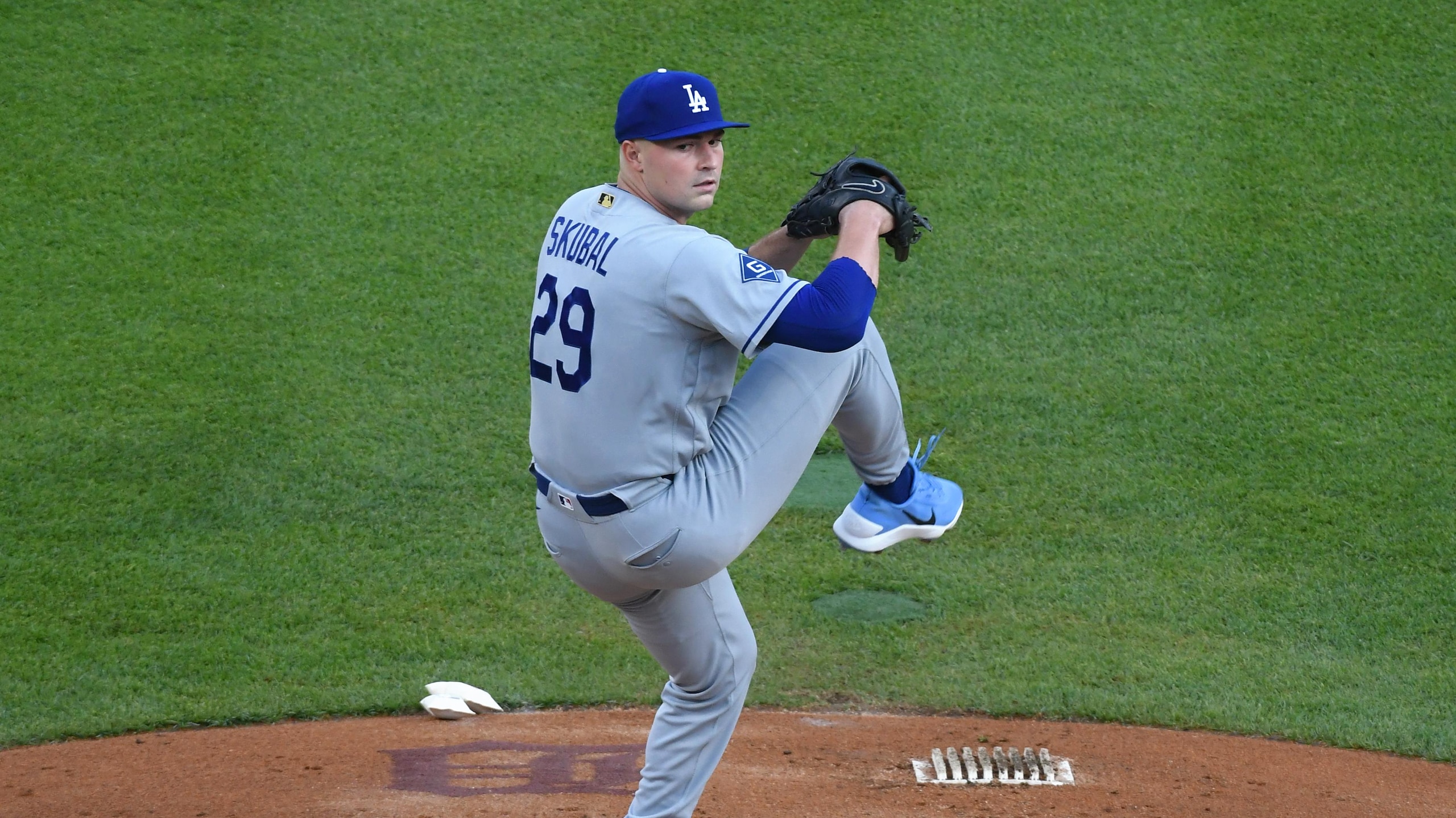
Needing some arms for their starting rotation, the Twins signed Kevin Correia to a two-year, $10 million deal, according to ESPN.com's Jerry Crasnick.
I get that they wanted someone to eat innings in a bleak pitching market, but they gave Kevin Correia $10 million?
During his premier season as a starter, Correia tallied a 3.90 ERA and 1.30 WHIP. This came three years ago with the San Diego Padres, so he needed Petco Park to diminish his ERA below four.
As a member of the Pittsburgh Pirates, Correia netted a 4.21 ERA last year, but he also surrendered 176 hits in 171 innings while striking out just 89 batters.
That abysmal 4.68 K/9 ratio actually represents an improvement from his 4.50 rate in 2011. Over the last two seasons combined, he amassed the worst strikeout rate in baseball.
For Twins fans unfamiliar with Correia, picture Nick Blackburn. Hitters are more likely to whiff in a batting cage than on a Correia fastball.
Minnesota is devoting a portion of its severely limited payroll to a soft-tossing 32-year-old with a career 4.54 ERA and 6.01 K/9 ratio. Surely someone from their farm system paid $9 million less could replicate those numbers.
2. Jason Bay (signed by Seattle Mariners)
5 of 6The clichéd narrative tells us that Jason Bay will flourish with a change of scenery. Leaving behind his horrid years with the New York Mets to take a one-year, $1 million deal with the Seattle Mariners cleans his slate and allows the former All-Star to start over.
The numbers, however, show that Bay makes Casper Wells and Eric Thames look like decent options.
Last season, Bay plummeted to new depths of ineptitude. The Mets tried desperately to get him going, but a .165/.237/.299 line forced them to finally sit the struggling veteran.
After hitting 36 home runs in 2009, Bay totaled 26 round-trippers during his three-year tenure in New York. His slash-line dropped across the board in each season, and he missed time with multiple concussions.
And sure, the same thing happened to fellow Mets failure Oliver Perez. The erratic lefty posted a 2.12 ERA through 29.2 innings pitched last year for Seattle. No longer battling the pressure of living up to a massive contract could put Bay at ease; but come on, he hit .165 last year.
While a revitalized Bay would make a great story, logic and reason suggests that he’s not worth the investment.
1. New York Yankees: The Frugal Empire
6 of 6In an effort to keep their payroll under the $189 million threshold by 2014, which allows them to avoid paying a luxury tax, the New York Yankees have stayed relatively quiet so far. Reluctant to offer any multi-year deals, the Bronx Bombers were never in play for Greinke and don’t figure to be in the mix for Josh Hamilton either.
Heck, they couldn’t even sign Eric Chavez or Jeff Keppinger.
After years of complaining about the Evil Empire tossing money at all their problems, this new-found sense of stinginess should be a welcome sign for most baseball fans.
Instead, the Miami Marlins showed that the small-market team isn't always an innocent bystander to the league’s free-market format when they shipped away all their highly-priced talent a year removed from duping Florida into handing them a new stadium through taxpayer money.
And then the Los Angeles Dodgers emerged as an even more evil version of the Yankees (Yahoo’s Jeff Passan referred to them as the Death Star), signing Greinke to a record deal for a pitcher in terms of per-year salary.
A year after declaring bankruptcy, the Dodgers are carelessly spending away with revenue earned from a lucrative new television contract, and they might not stop anytime soon.
The Yankees are not healing their wounds by throwing piles of cash on the problem, and they don’t have the farm system to fix their woes.
With Alex Rodriguez undergoing hip surgery, Derek Jeter possibly missing the start to 2013 and Nick Swisher likely to skip town, New York actually might suffer from a lack of offense because they don’t want to fall victim to a luxury tax that they could easily afford.
To make their timing worse, the Toronto Blue Jays impersonated their divisional foe's old habits by obtaining Jose Reyes, Josh Johnson, Mark Buehrle and Melky Cabrera.
Then the Tampa Bay Rays bolstered an already loaded young nucleus by snatching Wil Myers and Jake Odorizzi from the Kansas City Royals.
Watching the Evil Empire crumble should taste sweet, but it instead leaves a sour flavor since it’s only a matter of time before they return to their normal ways.
Soon enough, once they escape the payroll penalty in 2014, the Yankees will remember that they’re the fricken' Yankees and resume buying wins. Until then, their annual postseason bid is in grave jeopardy.

.png?w=2560)

.jpg?w=2560 "Raiders Could Start Mendoza")

.jpg?w=2560 "Rodgers Iced Out on Plane 💎")


.jpg?w=2560 "🚨 Week 8 AP Top 25 Poll")