In the Driver's Seat: The Undisputed Leader of Every MLB Team
Strong leadership drives every Major League Baseball team.
On all 30 rosters, there is a player—or in several instances, a manager or executive—who is particularly influential.
The following men contrast in terms of age, baseball experience, contractual situation and temperament. And yet each of their various styles is effective nonetheless. Here's a breakdown of every MLB team's clubhouse leader.
Arizona Diamondbacks: Miguel Montero
1 of 30The Arizona Diamondbacks evidently love their starting catcher, Miguel Montero. They locked him up with a five-year contract extension before he could test free agency this winter.
Since the start of his MLB career, he has worked feverishly to become a better defensive player.
His power-throwing arm and skills as a game-caller were invaluable in 2011, as Arizona captured the NL West crown behind excellent pitching performances. Josh Collmenter and Ian Kennedy, for example, had more success than anybody thought possible, and it's no coincidence that Miggy was the receiver for the bulk of their outings.
Through 2009, his caught stealing percentage was always below the league average. Entering June 19, he is leading the league in that statistic for the second straight season.
Atlanta Braves: Chipper Jones
2 of 30Larry Wayne "Chipper" Jones has made his intentions crystal clear—2012 will be his 19th and final summer as a major leaguer.
Jones is unanimously viewed as one of the greatest players of his generation. Also, his sense of humor is among the best in baseball (he named his son Shea to commemorate the old New York Mets venue where he slugged 19 home runs).
His switch-hitting accomplishments rival those of MLB immortal Mickey Mantle, but Chipper is too humble to compare himself to Hall of Famers, even though he'll inevitably be inducted into Cooperstown when eligible in 2018.
Above all, his Atlanta Braves teammates respect Jones for starting and finishing with the same organization.
Baltimore Orioles: Buck Showalter
3 of 30Buck Showalter crashed this leadership list because of the extraordinary job he has done with the Baltimore Orioles in 2012.
He is a master at separating players from their egos. He emphasizes that during games—they are one team, not a collection of individuals.
Guys buy into his system. Robert Andino, Steve Pearce and a handful of O's fielders have learned new defensive positions, all for the club's sake.
Showalter is very meticulous. No skipper prepares as thoroughly.


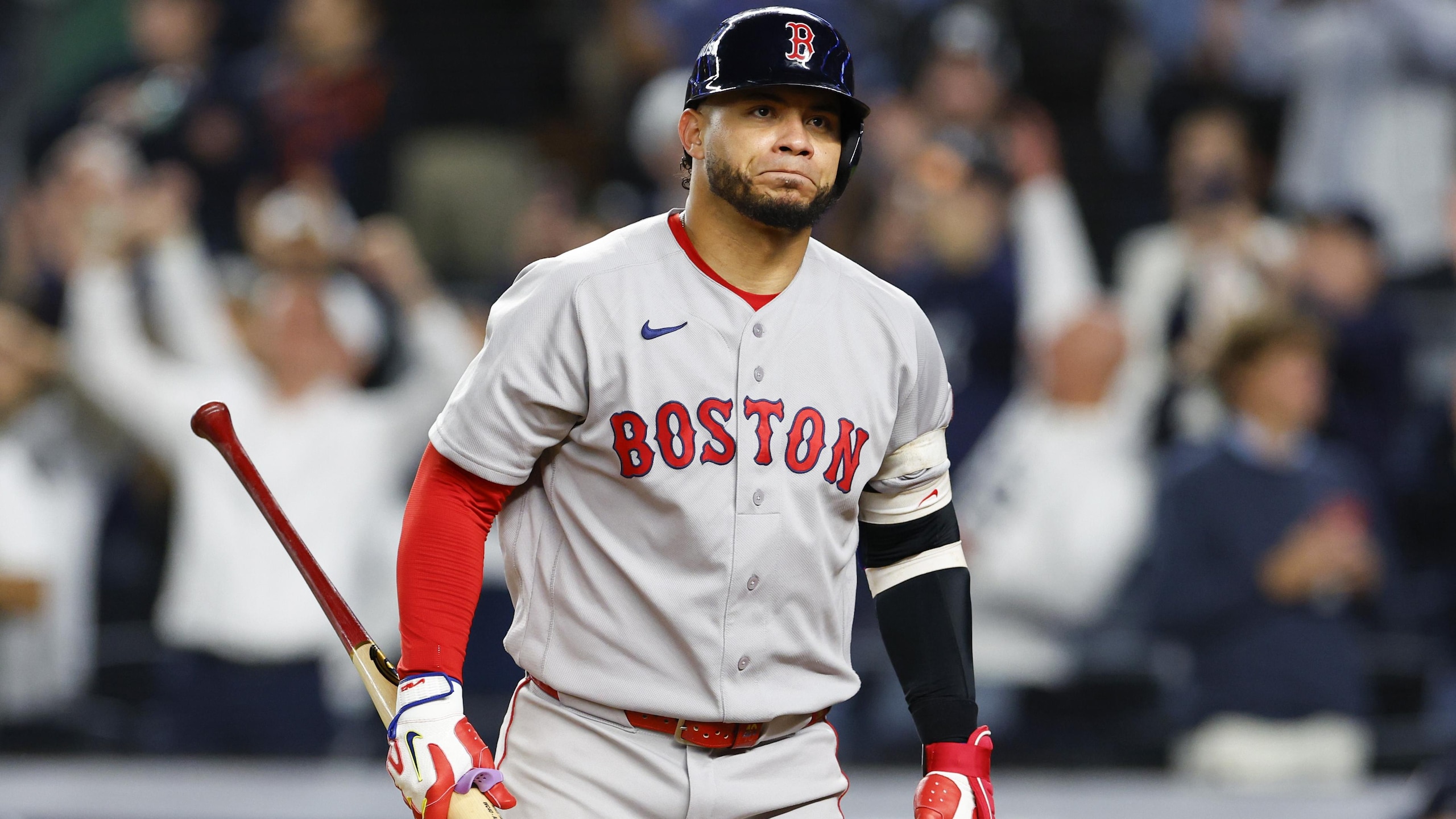
Boston Red Sox: Dustin Pedroia
4 of 30Already this season, the Boston Red Sox have lost many of their key contributors for extended periods of time.
Four All-Star-caliber players are currently sidelined with injuries.
Second baseman Dustin Pedroia isn't among them, even though a torn thumb muscle is clearly limiting his effectiveness. There's a consensus that the Red Sox would crumble in his absence.
Pedroia is an inspiration to all.
Skeptics always doubted that such a tiny guy could be a difference-maker. As a rookie, his offensive deficiencies were met with derision.
From that inauspicious beginning, he has become indispensable.
Chicago Cubs: Ryan Dempster
5 of 30Because Ryan Dempster is an impending free agent amid an extraordinary campaign on a non-contending team (the Chicago Cubs), he is probably going to be traded. Even a case of latissimus dorsi tightness won't deter suitors.
For the past eight years, Dempster has endeared himself to teammates and fans.
His easygoing personality and charitable contributions complement his solid pitching.
In 2006, 2008 and 2011, he was selected as the Cubs' nominee for the Roberto Clemente award. According to MLB.com, it is given annually to a player who demonstrates a commitment to the community and understands the value of helping others.
Chicago White Sox: Paul Konerko
6 of 30Paul Konerko and another player (to be identified later in this slideshow) are the only official team captains in Major League Baseball.
Konerko's past contract negotiations confirm one thing—he prefers wins to dollars.
Following the 2005 and 2010 seasons, he was free to leave the Chicago White Sox. He re-signed the first time because the team had just won a championship, and two winters ago, he jumped at the opportunity to join forces with Adam Dunn. In both instances, he declined better salaries from other organizations.
He continues to be an elite offensive producer with his prime years in the rearview mirror.
Cincinnati Reds: Brandon Phillips
7 of 30Second baseman Brandon Phillips cherishes every opportunity to play. Perhaps that's why he always looks like the happiest person at the ballpark.
Phillips makes dazzling defensive plays in the field (try this), some of which border on hot-dogging. However, he only goes into crowd-pleasing mode when he's positive that it won't cost the team.
Hardly anyone matches his year-to-year consistency.
Cleveland Indians: Chris Perez
8 of 30Eccentric closer Chris Perez is the voice of the Cleveland Indians.
In 2011, he invented the "Bullpen Mafia" hashtag to raise awareness about his team's hot start. Then, this season, when the Tribe was again struggling with fan support, he spoke up.
Perez has accepted the challenge of pitching the pressure-filled ninth inning. Since April 5, he has converted every save opportunity.
Undisputed leader of the 'pen. Undisputed leader of the Indians.
Colorado Rockies: Todd Helton
9 of 30"I'd rather talk to someone one-on-one," Todd Helton admitted in a 2004 interview with Troy E. Renck of Baseball Digest.
Helton is not loud or energetic (never has been), but eight years later, he's still the most respected individual on the Colorado Rockies.
He resolves disputes without causing a stir, although I doubt there are many in that clubhouse. His teammates follow his lead and use their games—not their salaries—as motivation.
Detroit Tigers: Justin Verlander
10 of 30In the later innings, when starting pitchers typically grow weary, Justin Verlander rears back for extra velocity. He's the most talented hurler in the American League and also the most dominant.
Verlander can carry the Detroit Tigers to victory in any given outing. His AL-leading 14 complete games since 2009 attest to that.
In 2012, the pitching staff has been compromised by injuries and underachievement, but Verlander has kept them afloat.
Houston Astros: Carlos Lee
11 of 30Carlos Lee is one of few veterans yet to be removed from the rebuilding Houston Astros.
Though he understands that the team will not be competitive, he desperately wants to stay.
His ability to hit for contact is praised by his teammates. Moreover, Lee works diligently to improve his defense at first base after many years as an outfielder.
Kansas City Royals: Bruce Chen
12 of 30Bruce Chen pitched terribly for a number of teams before re-establishing himself with the Kansas City Royals.
An interview posted by Jeremy Deckard of the Topeka Capital-Journal makes it clear why the journeyman southpaw is so beloved in K.C.
Off the mound, he is a hilarious person, according to Deckard, and someone who lightens the mood in the Royals clubhouse. He exudes cheerfulness regardless of personal performance.
Chen explained to Deckard that he believes it's important to make young players comfortable when they join the team.
"I can lead by example," he continued, "and show them how I prepare and dedicate myself."
Los Angeles Angels of Anaheim: Albert Pujols
13 of 30Not many players can assert themselves as leaders in their first season with a team. Then again, few in the game today have accomplished as much as Albert Pujols.
The future Hall of Famer exhibited great composure this past April. Both he and the Los Angeles Angels of Anaheim as a unit were slumping despite lofty preseason expectations. Immune to the criticism, Pujols spoke confidently about himself and his Angels teammates.
The club's climb in the standings coincided with a personal hot streak. Entering June 19, L.A. is four games above .500.
Pujols selflessly sets aside time to improve living conditions in his native Dominican Republic and fight for people inflicted with terminal illnesses.
Through proactivity, he evokes change as a baseball player and humanitarian.
Los Angeles Dodgers: Matt Kemp
14 of 30Matt Kemp has always reeked of talent.
However, the center fielder didn't always embrace it like he does today. He hasn't always been focused.
Consider the 2010 regular season. His indifference manifested itself at the plate (career-low .249 batting average), on the basepaths (15 times caught stealing) and in the field (only three outfield assists).
Kemp changed his game—changed himself, really—and that's something his teammates can admire.
Even during his darkest days, Kemp maintained an insatiable desire to play. He owned the league's longest consecutive games streak until going on the shelf with hamstring issues.
You know he's itching to get healthy.
Miami Marlins: Ozzie Guillen
15 of 30Miami Marlins manager Ozzie Guillen is very chatty. On occasion, he has let detestable opinions escape his mouth (the Castro comments were out of bounds).
Admittedly, Guillen is not a role model, but he certainly is in command of the Fish.
He's refreshingly honest with his players and the media.
Though South Florida distractions may have tempted free agents Mark Buehrle and Heath Bell to sign multi-year deals, they also gravitated towards Guillen.
Milwaukee Brewers: Rickie Weeks
16 of 30The man on the right is Ryan Braun, reigning National League MVP and a likely starter in the 2012 All-Star Game.
Meanwhile, Rickie Weeks (left)—who has the lowest batting average among qualifying MLB batters—is more leadership material.
Back in January, Milwaukee Brewers teammate Corey Hart described Weeks as "strong-hearted" and someone who was viewed as a father figure by the younger players.
A two-month slump didn't change anything about the second baseman. He stayed true to his approach at the plate, and finally, his numbers are trending in the right direction.
Strong-hearted, indeed.
Minnesota Twins: Ron Gardenhire
17 of 30Just like his predecessor, Tom Kelly, Ron Gardenhire has kept the small-market Minnesota Twins competitive.
The last couple seasons have been exceptions, but his decisions during the tough times only bolster his reputation as a leader.
Gardenhire has needed to rely on prospects and undesired veterans to cope with a rash of injuries. Still, he doesn't let panic set in. Ever.
He is quick to yank players if they aren't contributing, which inspires them to address weaknesses immediately.
New York Mets: David Wright
18 of 30There are millions of people in the Big Apple, and everyone is a critic. It's virtually impossible to be noncontroversial.
New York Mets third baseman David Wright upset lots of fans with his bloated strikeout totals and vanishing power in the first few seasons at Citi Field.
This summer, though, the 29-year-old's play is back on par with his personality.
Wright is a genuine guy who puts everything he has into the game.
New York Yankees: Derek Jeter
19 of 30Ultimately, results legitimize a leader. In sports, that means championships and personal achievements, and Derek Jeter has plenty of both.
A less angelic person would have been caught bragging about the endless winning or impressive dating history.
Not Jeter. Throughout his career, he has rarely made a false move when dealing with the media.
The world-renowned shortstop has five World Series rings, one since officially being named New York Yankees team captain in 2003.
Jeter is the perfect representative for his team, his league and all professional athletes.
Oakland Athletics: Billy Beane
20 of 30Oakland Athletics GM Billy Beane isn't afraid to use his own formula.
His revolutionary player evaluation methods were famously described in the book Moneyball, which was later adapted into a feature film of the same name.
Beane has worked for the A's in various capacities since 1989. That relationship will potentially last through the 2019 season under the terms of his latest contract extension.
Perhaps Beane's greatest accomplishment is still coming, as he is determined to move the franchise to San Jose.
Philadelphia Phillies: Chase Utley
21 of 30The Philadelphia Phillies have been without their leader all summer, and look where they've fallen in the NL East hierarchy!
Chase Utley is a true competitor. The 33-year-old is attempting to play through chronic knee soreness and reprise his role as Philly's everyday second baseman.
Utley values camaraderie and inspires others with his work ethic.
Pittsburgh Pirates: Andrew McCutchen
22 of 30The Pittsburgh Pirates have had a one-man offense for much of 2012, but you won't hear any complaints from Andrew McCutchen.
Of course, the center fielder has license to be frustrated. His numbers would be better across the board if there were other legitimate bats in the lineup. And it's clear that ownership won't spend the money to acquire such pieces.
The Buccos are winning, and McCutchen doesn't care that they're doing it entirely with pitching and defense. Now that's being a team player.
San Diego Padres: Chase Headley
23 of 30Chase Headley is stuck in the only lineup that produces less than Andrew McCutchen's. He, however, has a couple additional reasons to be peeved.
The San Diego Padres are already helplessly out of the playoff race and preparing to sell big-name players like Carlos Quentin and Huston Street.
In spite of all that, Headley shows great promise with both the glove and the bat.
San Francisco Giants: Matt Cain
24 of 30Before his perfect game, Matt Cain may have been the most underrated player in baseball.
But with Tim Lincecum's command still inexplicably absent, Cain is getting due credit for his steadiness. He stays composed on the mound regardless of the situation.
The San Francisco Giants saw greatness in him back in 2009. Following that season, they presented him with the Willie Mac Award, which recognizes spirit and leadership.
Seattle Mariners: Eric Wedge
25 of 30Probably not who you expected, right?
Ichiro Suzuki is commonly presumed to be a leader in the Seattle Mariners organization, but that role has never suited him.
Meet manager Eric Wedge, a remarkably impatient man.
He experimented with 58 distinct batting orders through the first 69 games. Even Suzuki has moved around since Opening Day.
Wedge has redefined the roles of many of his players, notably by taking responsibilities away from Chone Figgins and Brandon League.
He makes adjustments, and that's evidence of his investment in the M's.
St. Louis Cardinals: Chris Carpenter
26 of 30The 2011 season was anything but smooth sailing for St. Louis Cardinals ace Chris Carpenter. His first five months were unacceptable—by NL Cy Young standards, at least—and he began September with a 8-9 record and 3.74 ERA.
Heroically, he righted the ship and went undefeated in his final 12 starts (postseason included) to clinch the World Series for the Cards.
They really miss him.
Carpenter is close to facing hitters as he rehabs his ailing right shoulder and aims to make his 2012 debut in July.
He was sidelined for most of 2007 and 2008 and returned to form, so resiliency isn't new for him.
Tampa Bay Rays: Joe Maddon
27 of 30Before Joe Maddon, Tampa Bay had never seen third place in the AL East.
Oh, how the culture has changed.
The Tampa Bay Rays have qualified for three of the past four postseasons despite payroll restrictions. Crowds aren't huge, but on average, Tropicana Field has attracted thousands more fans per game in the Maddon era than it did under any previous manager.
He is notorious for his defensive schemes. It only took a few years for other MLB teams to adopt Maddon's alignment against left-handed pull hitters.
He loves his players and participates in their crazes (e.g. "Ray-Hawks"). In turn, they give his ideas a chance (photos of their road trip attire).
In 2012, the Rays are in contention yet again.
Texas Rangers: Michael Young
28 of 30The Texas Rangers have been completely retooled over the past decade. Formerly a perennial cellar-dweller that revolved around Alex Rodriguez, they are now one of Major League Baseball's dominant organizations.
Mainstay Michael Young endured everything in the middle.
For the good of the team, he morphed from a second baseman to a shortstop to a third baseman. With one more complete game at the hot corner, he'll have totaled more than 3,000 innings at each position.
Now, he mentors Elvis Andrus and Ian Kinsler, the very players who were groomed to replace him.
He kicked and screamed in February 2011 when the Adrian Beltre signing relegated him to a utility role, but who wouldn't have?
In his storied MLB career, Young has played through countless aches and pains. Only once—in 2009—did he resign himself to the disabled list.
Toronto Blue Jays: Jose Bautista
29 of 30At 31, Jose Bautista is considered a graybeard on the young Toronto Blue Jays. But teammates could care less about his age—they respect his journey.
Bautista was selected by the Pittsburgh Pirates in the 20th round of the 2000 amateur draft. Not much was expected of him. In his MLB debut season of 2004, he played for four different teams.
Stardom hasn't affected his courteous demeanor. He is a humble individual who just values being a regular.
"Joey Bats" leads the Jays in many statistical categories, including home runs, runs batted in and on-base percentage.
Washington Nationals: Ryan Zimmerman
30 of 30By contrast, Ryan Zimmerman was a stud from an early age. He needed merely 67 games in the minor leagues to prove that he belonged at the highest level.
Zimmerman was the first draft pick in the history of the Washington Nationals franchise, and he's been very loyal. After signing a five-year contract extension that covered his arbitration years, the third baseman recently committed to the Nats for an additional six seasons.
The All-Star is a soft-spoken, upstanding citizen. He constantly hustles and appreciates fans for their support.
Though he isn't the most talented player on the roster, he is definitely the most irreplaceable.



.jpg?w=2560 "Love's Body Already 'Tired'")
.jpg?w=2560 "2 NFL Officials Suspended")
.jpg?w=2560 "Mahomes' Wife Trolls Kubiak 💀")