

After one season, Jack Cust is still a bit of a vagary to Oakland fans. The unruly statistics from his first full season offer a pungent picture of a player hardwired to do one of three things—walk, strikeout, or put the ball on the other side of the fence, which he did an eyepopping fifty-eight percent of the time.
But his sometimes labyrinthine past has the air of the lonesome traveler one stop away from washing out, with a whiff of the dubious creeping in from the shadows.
Jack Cust was a mythic power hitter who for eleven seasons toiled in the proverbial bushes of the minor leagues.
TOP NEWS
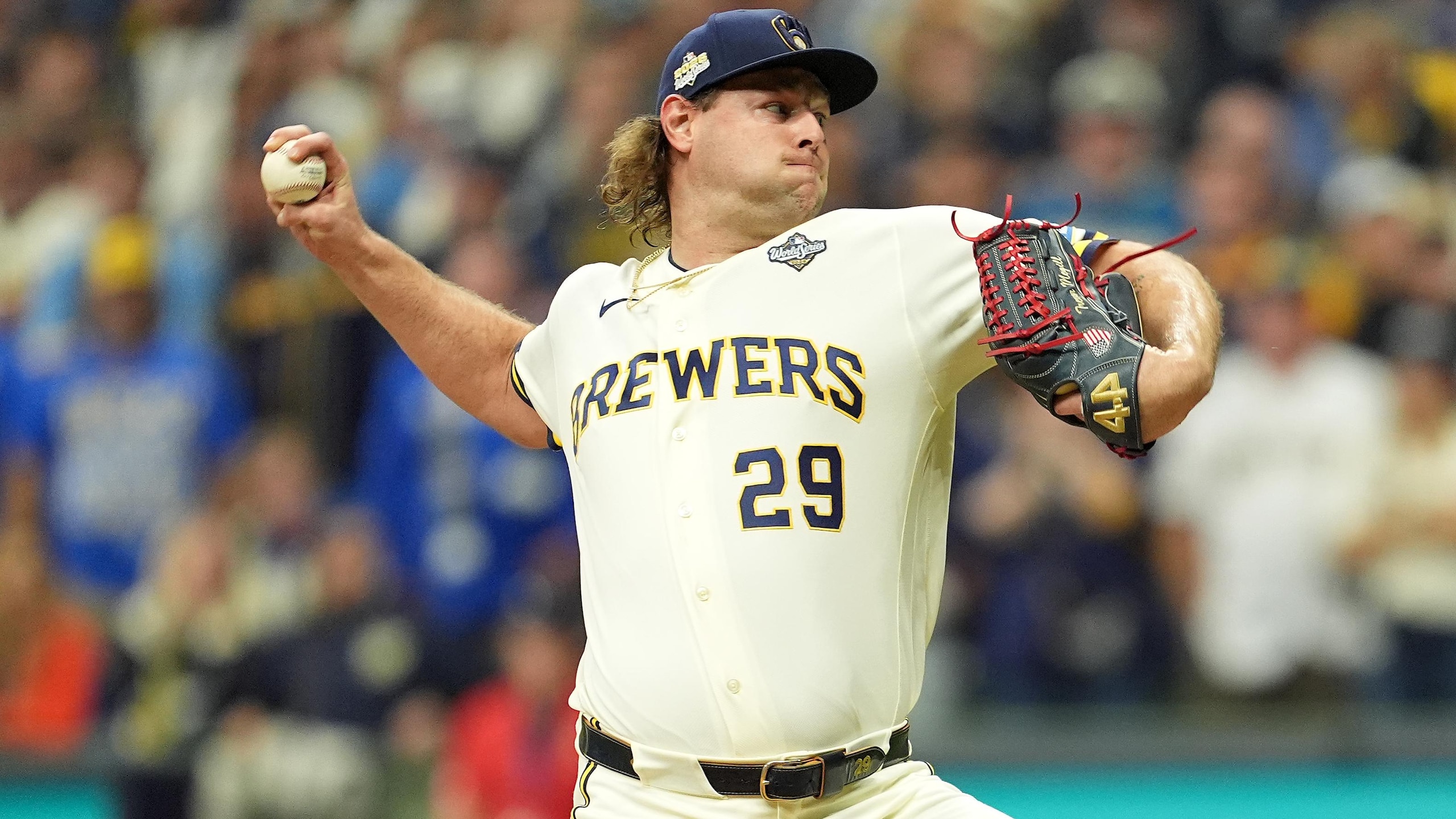
Brewers Closer Blasts Tropicana Field Roof

Latest MLB Trade Rumors 👂
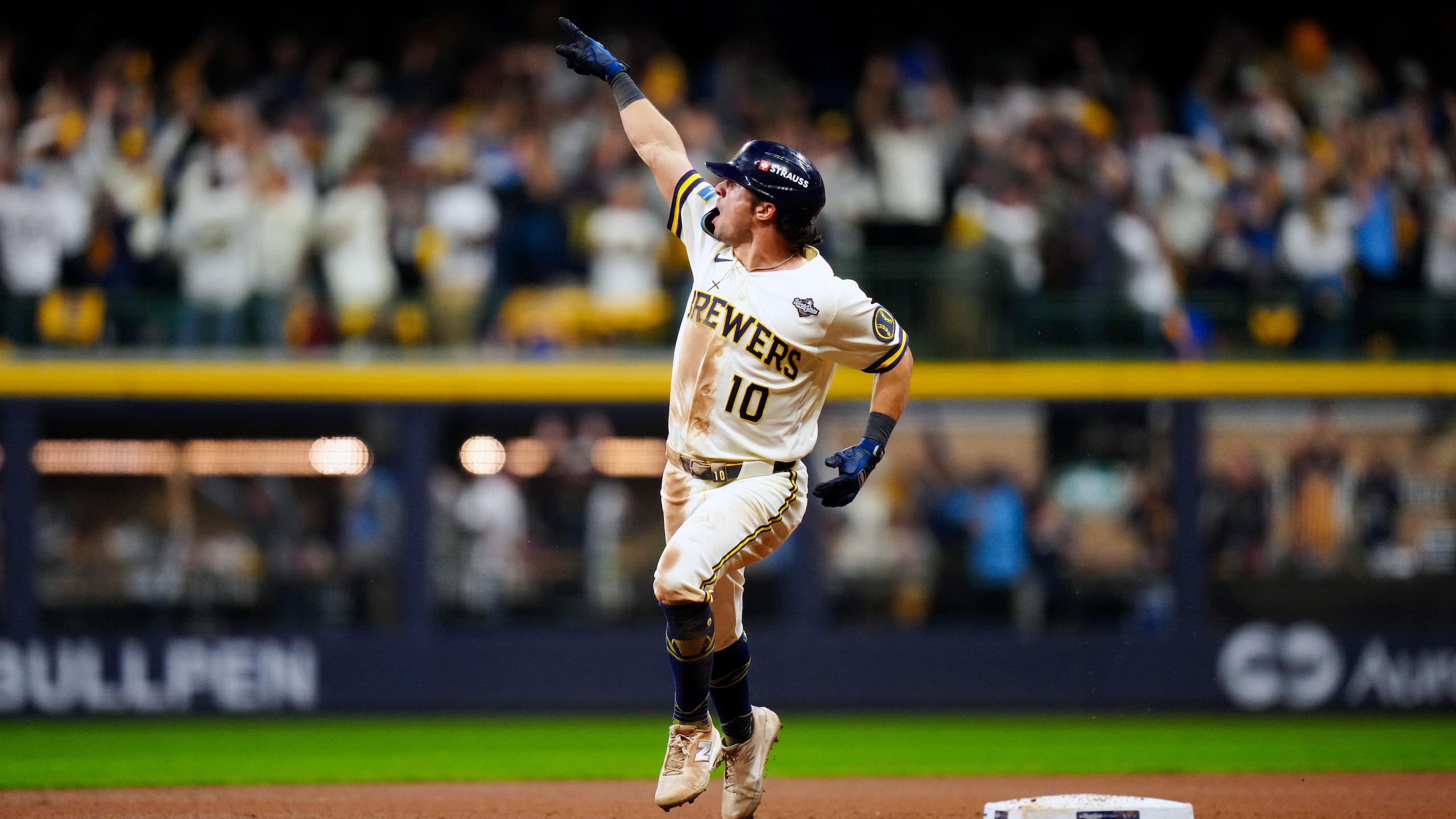
Tying HR Had Bauers Emotional
In 1998, his first year in professional ball, he hit 11 home runs in 285 at bats for the mighty Lethbridge Black Diamonds and the South Bend Silver Hawks, both affiliates of the Arizona Diamondbacks, the team that drafted him in the first round a year before.
He went on to the High Desert Mavericks and the El Paso Diablos, hitting 52 home runs in two seasons before settling into Arizona’s Triple-A affiliate, the Tucson Sidewinders, in 2001.
The Diamondbacks slayed the Yankee beast that year in the World Series, and Cust hammered 27 home runs for the Sidewinders.
That championship season, he was up for his first cup of coffee—going one for two with a walk. Just a few months after Arizona’s triumph though, he was traded to the division rival Rockies, along with a middling catcher named J.D. Closser for a veteran reliever in Mike Myers.
The odyssey of Jack Cust was in full swing.
Cust bounced from the Colorado Springs club of the PCL, to the Ottawa Lynx of the InternationalLeague; from the organizations of the Orioles, to the A’s, to the Padres, and finally back to the A’s, traded for “a player to be named later.”
The ultra-thrifty Oakland GM, Billy Beane, was reunited with a soul mate—a patient, dead cheap power hitter who could make A’s fans forget about the defection of Frank Thomas—and countless others. Cust, for his part, has gone way beyond the Erubiel Durazo paradigm.
Unfortunately, the myth of the strapping busher making good in the big leagues was touched by the taint of the modern game—the Mitchell Report.
In 2003, Cust and fellow Oriole prospect, Larry Bigbie, played together on the Ottawa Lynx. Subsequently, during the investigation for the Mitchell Report, Bigbie implicated Cust as a user of Human Growth Hormone, which Cust has vehemently denied.
Cust had a statistically boffo 2007 as a hitter. He was the fourth-best home run hitter in the American League among regulars (those with at least 490 plate appearances), with a home run every 15.2 at bats. Only Jim Thome (12.3), Alex Rodriguez (10.8), and Carlos Pena (10.7) were better in the AL. The man he replaced in Oakland, Frank Thomas, ranked twelfth (20.4).
Every season I rank each regular player by their performance in five categories—out average, OPS, runs created, run production average, and run scoring average—and using this matrix, Cust was the twenty-first most efficient hitter in the American League last year out of 93 regulars from Alex Rodriguez (best, barely) to Nick Punto (worst).
Home runs were a key aspect of Cust’s success, but power—his chief asset—cannot be viewed by home runs alone.
Cust, unlike some power hitters, is a patient hitter prone to walks—105 in just 507 plate appearances—but also strikeouts—164. As I mentioned earlier, Cust either struck out, walked, or hit a home run fifty-eight percent of the time, which was tops in baseball. He was trailed by Ryan Howard (.545), Jim Thome (.545), Adam Dunn (.493), and Carlos Pena (.475).
One should be very careful in not making too much out of his strikeouts. Looked at in conjunction with his walks, Cust is an above average judge of pitches.
A statistic I call, for obvious reasons, EYE, is a quite simple way to detect if someone has struck out too much: n = walks / (walks + strikeouts). If n is less than .300, the strikeouts may—not always—but probably are a problem.
Cust’s EYE was .390, better than other more well-liked and seemingly more discerning hitters like say, Ichiro Suzuki (.389), Derek Jeter (.388), and Curtis Granderson (.269).
The point is Cust—like all great power hitters—offsets his strikeouts with his walks.
Cust is by no means perfect–he has the kind of brawny build that lends itself to home run hitting, but has also the kind of inert thickness that simply does not move well on the basepaths or in the field.
In general, he seems to lack dimension as a player, or, in the parlance of scouts, he is a one-tool player. Perhaps two tools if you count patience.
Walking and hitting home runs are pretty much the only positive things Cust does. But if you are going to pick only two, those aren’t bad.




.jpg?w=2560 "Rodgers Iced Out on Plane 💎")
.jpg?w=2560 "Raiders Could Start Mendoza")
.jpg?w=2560 "Packers Safety Slams Refs 🤬")

.jpg?w=2560 "🚨 Week 8 AP Top 25 Poll")

