
Fantasy Baseball 2012: Developing a Draft Strategy
Going into a fantasy draft expecting to wing it is not a solid draft strategy. Neither is taking the top-ranked player on the board or the top-ranked player at a position of need every round.
These are the types of moves that show someone who didn't come prepared to a draft and creates a foundation for a losing season.
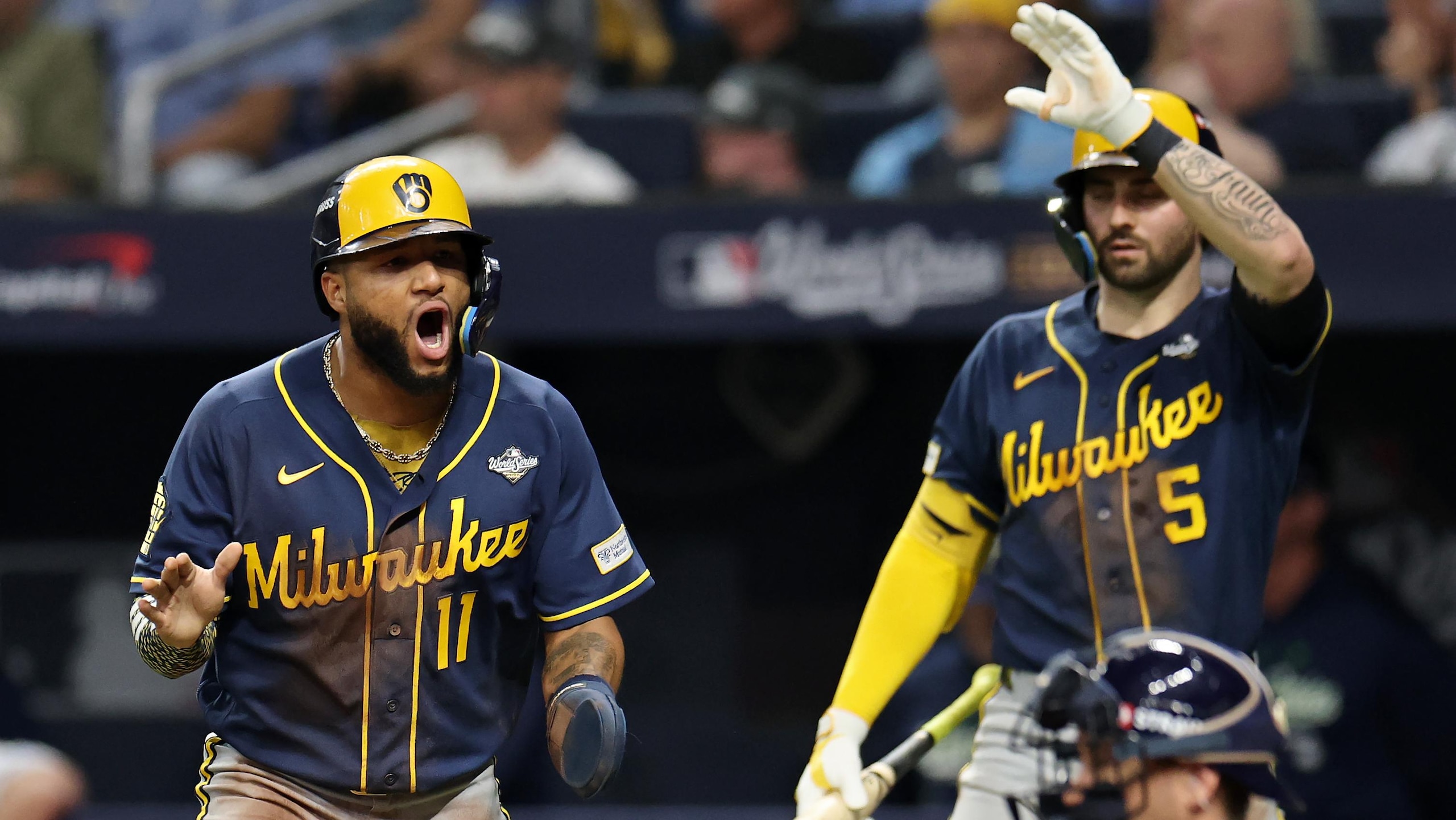
When deciding how to approach the fantasy draft, it is important to determine what type of roster you hope to achieve. Do you want a hitter-heavy lineup that wins all the batting categories each week? Or a power-arm lineup that will dominate the pitching categories? Maybe a balanced lineup—one that has the chance to compete in every category.
_0.jpg?w=2560 "MLB playoffs")


All three of these lineups have their advantages, but they all come with negatives as well. The simplest way to break down what type of lineup one should hope to achieve in the draft is this: draft hitters.
Pitchers don't play enough to always have an impact. Depending on how the off days fall, a team's ace might not pitch certain weeks of the season. If you commit a top pick to that ace, it was a mistake.
Justin Verlander, Clayton Kershaw, Roy Halladay, Cliff Lee and every other pitcher who is averaging a draft pick before the fifth round is being drafted too early. The idea is that an everyday player must be drafted in the first through fourth round.
Closers are even more risky than starting pitchers. With so many factors that go into a closer getting the chance for a save, there is no reason to touch a closer until at least the 10th round. You can smile to yourself when Craig Kimbrel comes off the board in the fifth and you just added super utility man Michael Young instead of panicking and adding a closer.
Those are the basics for a good foundation of drafting. Take hitters, don't touch starters until the fifth round and forget about closers until the 10th round.
Moving a little further in depth, the discussion needs to turn to not drafting the top-ranked player every round. In theory, this sounds like a great idea because you can trade away all these top talent players to fill needs later, but it doesn't usually work that way.
Once the draft is over, the value of the top players changes. Every player ranked one through 10 in the pre-draft rankings is essentially even as soon as the draft is over.
The first key to draft strategy is know when it is time to fill a need. Drafting for pure talent is the right thing to do for a few rounds, but if you find yourself in the fifth round with four outfielders already drafted, it is probably time to look at the needs of the team instead of following rankings alone.
Continuing along those lines, though, don't get trapped into taking players just to fill a need. If you need a second basemen but there isn't one on the board that wouldn't be considered a big reach, draft for talent.
That is the second key to a draft strategy: Don't get trapped into drafting for needs. It seems counterintuitive, considering the first key is know when it is time to fill a need, but trust in the system.
With those two keys being explained, it is time to get into the actual draft strategy itself.
1. Know Who You Want
If you know what draft pick you have, you can have a pretty good idea of who you are going to be able to get. If you have the sixth pick, you can cross Miguel Cabrera off your list, but players like Jose Bautista, Robinson Cano and Joey Votto are all viable options.
Which one is going to be the foundation of your draft? Of those three, I like Bautista because of the multiple-position eligibility, but any of the them will be solid.
2. Plan Ahead
This was briefly covered in my last draft keys article, but it is so important it needs to be gone over again. And again. And then probably one more time.
As soon as you make a pick, start planning. Count how many picks there are between your picks and look at who might be available. If you can decide on three or four players who should be available, it makes the job of drafting that much easier. Going over 10 players who are on the board is much more time consuming and daunting than going over the four who fit your roster, so you must narrow down the choice as soon as possible.
There are a few ways to do it, but the best advice I have ever gotten is to get your four-person pick list down to two needs and two top talents for every pick. Obviously, this strategy won't work if you are in the ninth round and a need is at second base, as taking any of the second basemen who should be left on the board at that point would be a huge stretch.
Remember, though, at this point starting pitchers are important, so there should be viable needs to fill. Just know which ones aren't going to be a reach.
3. Take The Bats, Pitching Staffs Aren't Consistent Enough
If you are presented with a guy who might have a breakout season and a solid pitcher who can give you one or two categories, take the hitter. When in doubt, take the hitter.
When you don't know who to take, take the hitter. Take the hitter.
4. Piece Together a Pitching Staff
Getting big-name, four-category pitchers is great, but they tend to come off the draft board way too early. If you don't get one, it isn't a big deal. There are other ways to cover your needs for pitching. Instead of trying to win every pitching category every week, you can try to win two every week and still win your matchup if you focused on hitting correctly.
Focus on the pitching categories that are considered consistent, such as ERA, WHIP and strikeouts. Saves and wins are dependent on the team and the situation, so in reality these are two pitching categories that one can avoid, unless of course two great closers fall to you in the 10th and 11th round.
Pitchers that can be drafted in the 10th round or later that can greatly help a team includes players like Matt Garza, Josh Johnson, Mat Latos and Ricky Romero.
As you can see, there is plenty of later-round talent at the pitcher position to fill out your pitching staff.
5. Never Panic
It is the 15th round and you realize you have all your starting positions except for one. Say it is second base; it isn't a big deal.
Every roster is going to have a weak position, it's just the nature of the way it breaks down. The plus side is that one weak position won't kill your team. So don't panic and start thinking about how to trade to cover that spot.
A lot of people start thinking about trades during the draft and it is one of the worst things you can do. It will distract you from trying to pick out those sleepers.
Conclusion
Drafting well is an absolute must. A terrible draft is something that every fantasy owner dreads because they know what it means: a losing season. The more prepared you are for a draft, the more likely it will be to have a good draft. Following these simple tips will make it even easier to have a good draft.
Always remember that pitching is extremely risky and the best teams are built on hitting, so that should be your focus.
.jpg?w=2560 "WWE Raw Live Grades 🔠")

.jpg?w=2560 "Chiefs, Steelers Eye WR Trades")
.jpg?w=2560 "🚨Jay-Z Headlining Super Bowl")
.jpg?w=2560 "Multiple NFL Trades Predicted")

.jpg?w=2560 "JT's Projected Trade Cost")