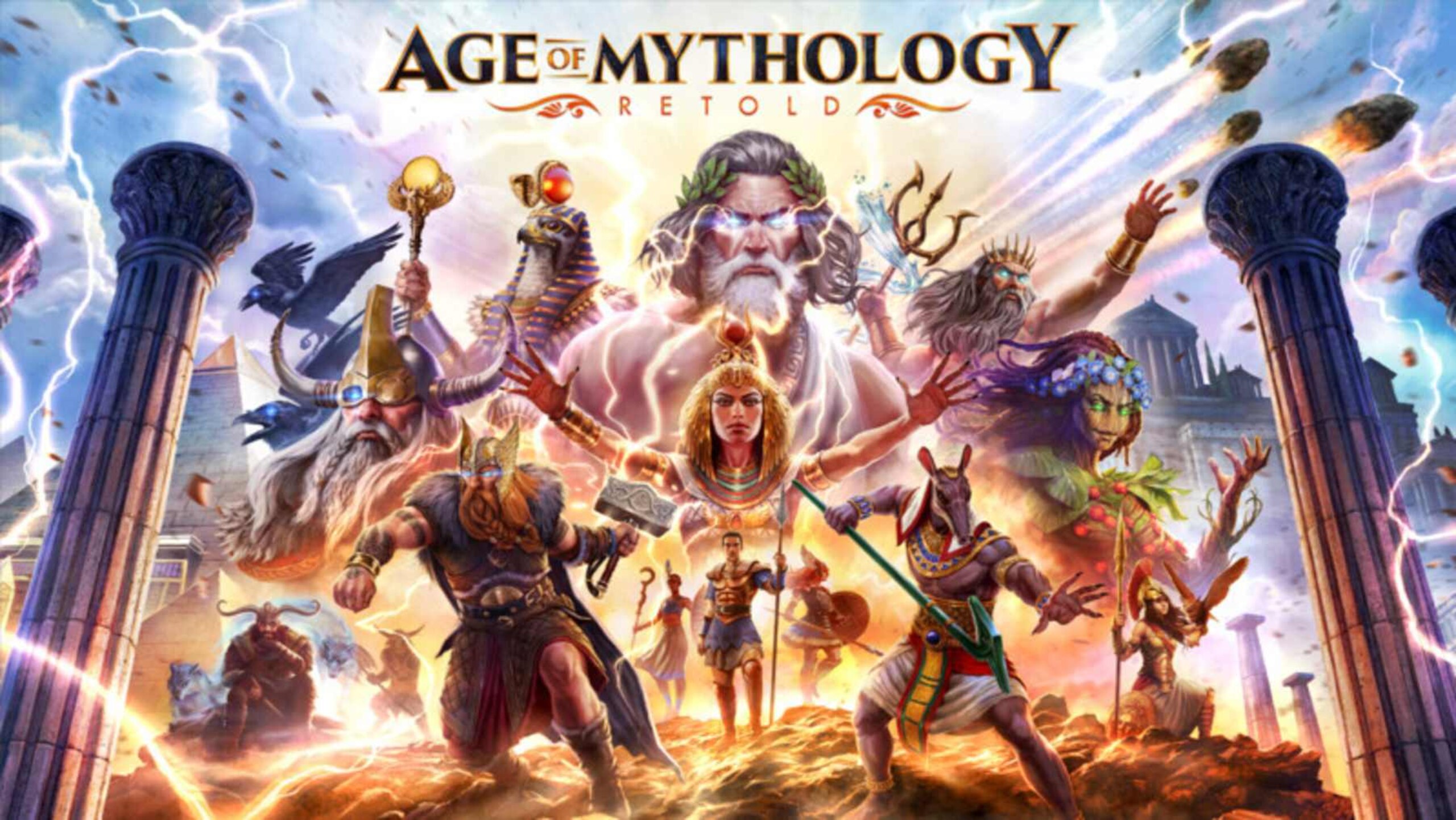

Age of Mythology Retold Review: Gameplay Impressions, Videos and Top Features
Age of Mythology: Retold from developers World's Edge and Forgotten Empires is the latest real-time strategy (RTS) revival effort for a beloved classic.
Like Age of Empires updates before it, Age of Mythology is a sweeping upgrade and modernization of the original, first released in 2002.
Beyond obvious upgrades to graphics and sound design across the board, the game loops in much-needed genre staples from more recent offerings. These range from simple ease-of-use additions to complete reimaginings of key power functions that change up the pacing and competitiveness of matches.
TOP NEWS
10 Most Expensive Sports Jersey Sales of All Time

Pro athletes we'd want to see play other sports

MLB Lays Out Lockout Plans
Tack on some smart, automated options to appeal to as many players as possible, and Age of Mythology looks like it will follow the trend of other remasters and/or remakes in the genre that experienced successful booms.
Graphics and Gameplay
The side-by-side comparisons between the 2002 version and this new Age of Mythology effort will make older gamers feel, well, old, and everyone appreciate the differences.
All units and animations received an overhaul while fitting into the same engine from Age of Empires III: Definitive Edition. The result is a stunning scale to big battles with hundreds of units on the screen and all kinds of status effects going on, from meteor storms ravaging the colorful, varied lands to earthquakes upending everything. Despite this, it's easier than ever to glance quickly and know exactly what each type of unit is, even from afar.
But zooming in provides an eyebrow-raising amount of detail, too. The destruction of buildings looks much better than the simple progression of fire before collapse from the original. And little things like a pot of water actually being frozen over outside a building in an Arctic area impress.
Other expected modernizations on latest-generation hardware, such as big population increases, pepper the experience on the presentation side. This includes redone voice acting and an overhauled soundtrack. These are subjective things that seem to have the community split, but they feel fitting within the overall package.
As longtime RTS players would come to expect, actual cutscenes don't look nearly as great, but they still manage to fit the art style, and the real attention should be on the zoomed-out look of a battlefield.
Players even slightly familiar with RTS games and/or the Age of Empires gameplay loop will find themselves right at home. There is early resource gathering, base building and NPC management while strategizing how to tackle an objective.
The biggest difference from Age of Empires is that players wage war via pantheons stemming from Greek, Norse, Egyptian and Atlantean mythologies, weaponizing literal gods to perform magic and summing creatures.
These God powers can range from big attacks like earthquakes to buffs such as rains that boost production. Not only does this game make favor cap changes to match the new, quicker pace, god powers now have a cooldown. In the past, these were one-use, game-swinging abilities. Now, triggering them again eats into a player's stockpile of favor. Players now also have control over myth unit abilities, adding another layer of strategy, in a good way.,
Like in the past, players will advance through the ages during a round, create a titan(s) and then a Wonder, which generates favor and lessens the cost of certain things. The result is typically an intense late-game showdown after impressive power scaling that feels like it fits the mythical vibe.
Also new and fitting the theme incredibly well is a Wonder Age, where God powers are usable for a cheaper cost, again making that late game feel amazing.
Moment-to-moment gameplay modernizations such as auto-economy and automated task assignment to some units improve the experience for all ranges of players, too.
That latter point is one of the game's biggest features. The Villager Priority System lets players strictly assign what villagers prioritize via custom or preset behaviors with a few simple button presses. It can dramatically reduce the actions per minute (APM) that has defined the genre over the years, making it more accessible to a broader range of players.
Other welcome automation found within the menus includes auto-training villagers at a game's start and in newly built Town Centers.
To top it all off, the user interface (UI) has received a much-needed updating pass and now displays loads of expected information, such as multipliers, hotkey buttons and more.
Story and More
Age of Mythology is heavy on game modes, providing a little bit of everything for every type of player.
There are three campaigns, each of which, at its most basic, features civilizations joining the fray aligned with one of the four warring pantheons. Like the original, the narrative does a good job of explaining the reasoning behind gameplay skirmishes, and there are some heartfelt character performances along the way—and the story's runtime isn't short.
Beyond those campaigns, there is a Skirmish mode, co-op mode, Scenario Editor and a PvP ranked ladder. The number of choices feels just right and thankfully ranges from relaxed co-op to high-end ranked play where APM tallies and long-term strategy swing matches on a dime.
Perhaps one of the most interesting things to watch on ranked ladders, especially on the high end, is whether players actually engage with the multi-use god powers. Given the favor cost of using a power a second time, players might veer away and still rely on a single, potentially game-swinging usage.
Tucked into the menus, hotkeys are one of the game's quietest, biggest upgrades. Combing through those and making the desired adjustments on a keyboard can change the feel of the game in a hurry.
Beyond that, there is crossplay and the game runs well, even in online matches with hundreds of units on screen and god powers impacting the entire landscape. A robust accessibility suite seems to hit on a wide range of must-haves, including overhauling character colors.
Looking ahead, there are already plans for further additions to the game, too, so it's good to know the already impressive suite will receive an infusion down the road.
Conclusion
Given the track record of recent big-name remasters in the genre, it isn't a shocker to see Age of Mythology given this fantastic modernization.
Like a masterful stroke of in-game planning that leads to a rout of a match, Age of Mythology exceptionally walks the tightrope between casual and hardcore. Some of the automation tweaks to make the game more appealing to new players is hard-countered by the modernization of something like multi-use God powers to make the viewing experience and gameplay more interesting—while creating new urgency on the ranked ladder via skill gaps.
The result is easily the most definitive way to experience the game, which, if it trends like those before it, should mean a huge revival online, even in competitive scenes.
Given the unique flair Age of Mythology offers compared to counterparts, this one has 20-plus-year legs on it too, if necessary.

.jpg?w=2560 "Vikings Football")





.jpg?w=2560 "NFL Won't Fine 'Beverage' Celebrations")