We're now in the middle of the 2024 Olympics, and the basketball tournament is fully fired up.
As the 12 participating nations work their way through group play and the knockout round, let's take a look back at the history of the tournament through the lens of the NBA teams its players have represented.
The criteria here is subjective, in part because of how sparse statistical analysis of these games are, but it's also simple.
Considering basic numbers and team success, we'll identify each NBA organization's best Olympics star. As for which NBA team each player represents, that criteria is pretty loose, too. Playing for that squad at any point works. Even being drafted by a team qualifies.
But for the most part, we'll try to match players and NBA teams that have at least a little history with each other (with at least one notable exception).
The only other note is that we're limiting each player to just one team. So, while there would be an argument to list someone like Charles Barkley for both the Phoenix Suns and Philadelphia 76ers, you'll only see him once.
Atlanta Hawks: Toni Kukoč
1 of 30
Toni Kukoč is probably best known as a Chicago Bull, but he did play a season and change for the Atlanta Hawks. And he had plenty of success on the international stage.
Playing first for Yugoslavia in 1988 and then Croatia in the two following tournaments, Kukoč secured two silver medals. And his point forward abilities were on vivid display, especially in his last two Olympic runs.
In 1992, he averaged 11.5 points, 6.0 assists and 2.6 steals. Four years later, he went for 16.1 points, 7.3 rebounds and 7.0 assists.
Being able to create and distribute from any position is a Slavic basketball tradition that lives on today, and Kukoč was undoubtedly one of its pioneers.
Boston Celtics: Bill Russell
2 of 30
He only played in one Olympic Games, but Bill Russell led the Americans to gold in 1956.
Throughout his NBA career, Russell was obviously known more (or at least as much) for his defense, but he led the 1956 Olympic team in scoring at 14.1 points.
And his leadership in that tournament proved prognostic. The summer of 1956 was Russell's last before joining the ranks of the NBA, where he won 11 championships.
Brooklyn Nets: Oscar Schmidt
3 of 30
As foreshadowed in the intro, this is the team-and-player connection that depends entirely on the draft.
Oscar Schmidt never played a second in the NBA, but he was drafted by the Brooklyn Nets (who were then in New Jersey) in 1984, and it's hard to pen a story on Olympic basketball history without mentioning him.
Schmidt appeared in five different Olympic tournaments. He averaged a whopping 28.8 points in his 38 games. In the 1988 tournament alone, he averaged 42.3 points. Yes, you read that right. 42.3.
He never medaled, but it's hard to fault Schmidt for that. He's arguably the best and most prolific individual player in the history of Olympic basketball.



Charlotte Hornets: Alonzo Mourning
4 of 30
The Charlotte Hornets don't have the most robust Olympics history, but one of the best centers in team history won a gold medal with Team USA in 2000.
That year, on a team that included high-profile scorers like Vince Carter, Kevin Garnett, Ray Allen and Allan Houston, Mourning was third on the team in points per game at 10.2. He also led the team in minutes per game.
A longtime NBA veteran by that point of his career, Mourning's leadership and interior presence on both ends of the floor were critical in winning the tournament.
Chicago Bulls: Michael Jordan
5 of 30
The bulk of Michael Jordan's Olympics lore understandably comes from his 1992 run, but he wasn't even the Dream Team's leading scorer.
The 14.9 points, 4.8 assists and 4.1 steals (!!) he averaged in that tournament are nothing to sneeze at, but it's worth discussing his other run in this context.
Back before Team USA started sending professionals to the Olympics, Jordan led the 1984 squad to gold with a team-high 17.1 points.
As with Russell, his exploits on the international stage served as something of a preview of the dominant career that was to come.
Cleveland Cavaliers: LeBron James
6 of 30
LeBron James is obviously one of those players who could be attached to multiple organizations, but we'll settle on his hometown Cleveland Cavaliers and keep the Miami Heat and Los Angeles Lakers' spots open.
LeBron was part of the ill-fated 2004 Team USA that finished in third place in Athens, Greece, but he only averaged 11.5 minutes in that tournament and was crucial in getting this program back on track.
On the 2008 Redeem Team, LeBron was second among Americans in both points (15.5) and assists (3.8) per game, led the way in steals (2.4) and shot 67.3 percent on twos and 46.4 percent from deep.
Four years later, he put up 13.3 points and a team-high 5.6 assists, while shooting an absurd 71.7 percent on twos.
And if his early performances in 2024's group phase, LeBron's career Olympic numbers are on their way up.
If the betting favorite Team USA wins gold, LeBron will be a four-time medalist and three-time gold medalist.
Dallas Mavericks: Luka Dončić
7 of 30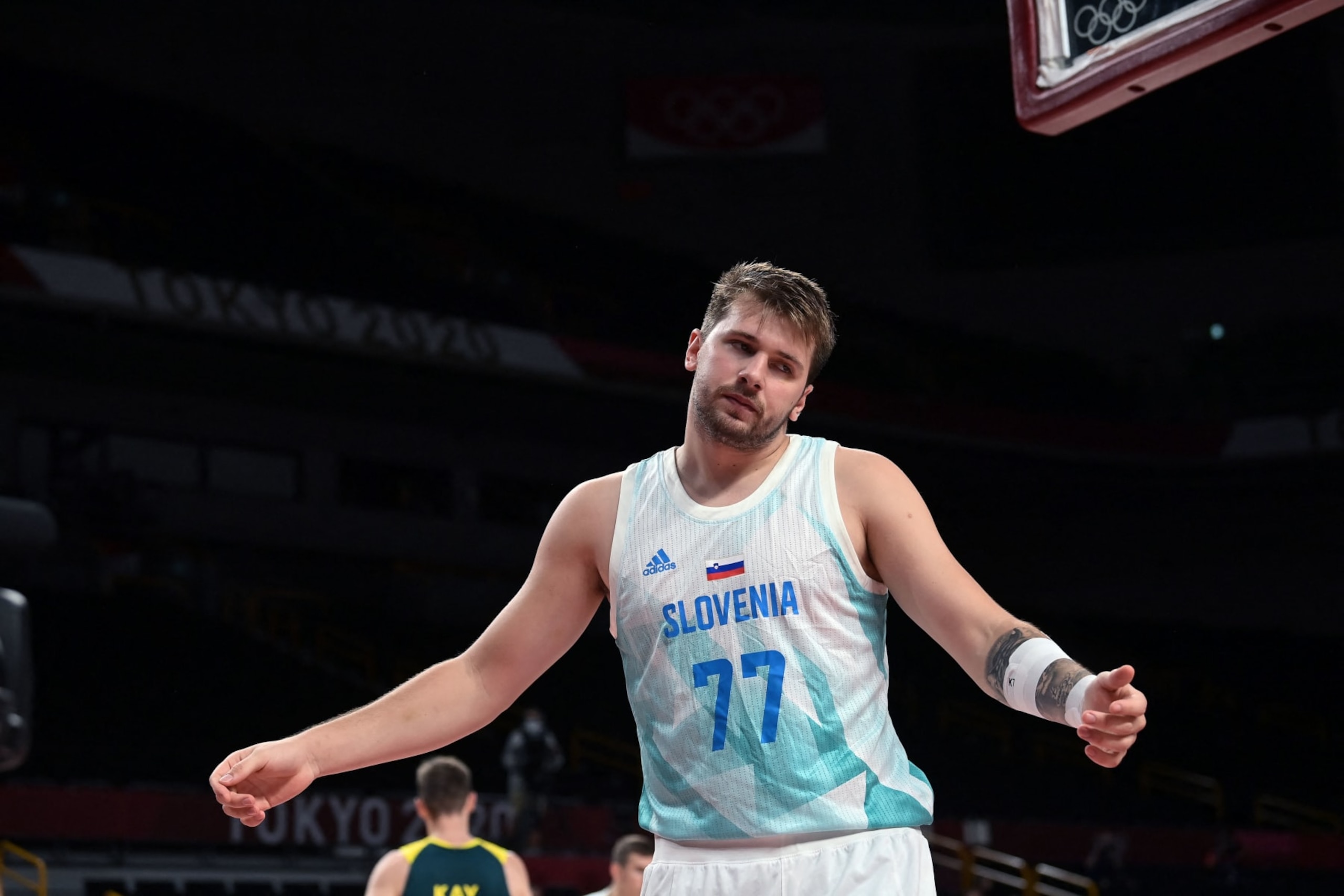
There's a bit of forecasting at work here. Luka Dončić has only appeared in three individual Olympic contests, but he more than left his mark in them.
In Japan, he averaged a whopping 28.3 points, 10.7 rebounds, 7.0 assists, 3.3 threes, 1.7 blocks and 1.0 steals, while shooting 75.0 percent on twos and 37.0 percent from three.
And if his performance in previous senior team events like EuroBasket and the FIBA World Cup are any indication, he'll put up more absurd numbers in future Olympic runs.
Slovenia failed to make the games in Paris, but Dončić is good enough to assume he'll be back in the Olympics at some point.
Denver Nuggets: Carmelo Anthony
8 of 30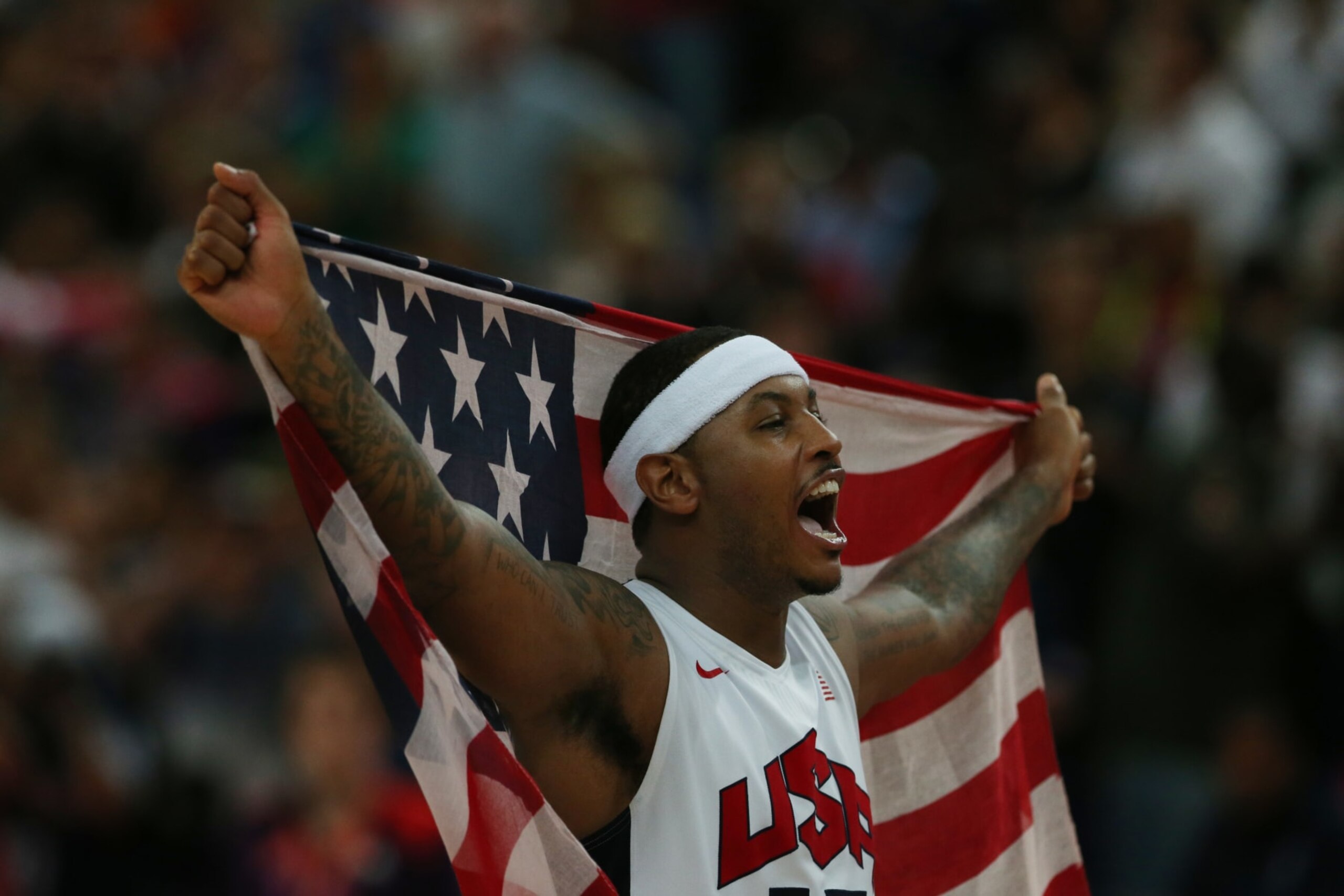
Carmelo Anthony's entire Olympic resume is impressive. He has three gold medals, one bronze and career averages of 10.8 points, 4.0 rebounds and 1.8 threes. He's also hit 41.0 percent of his three-point attempts.
But in 2012, specifically, he was completely unstoppable on the way to earning his "Olympic Melo" moniker.
For the entire tournament, Anthony averaged 16.3 points in just 17.8 minutes, while shooting 50.0 percent from deep.
In a group game against Nigeria, he scored 37 points on 16 shots in 14 minutes.
At some point in the future (maybe even after this tournament), Nikola Jokić may have enough of a resume to compete for this spot. But for now, the sweet-shooting Melo is undeniable.
Detroit Pistons: Grant Hill
9 of 30
Isiah Thomas was rather infamously omitted from the 1992 Dream Team. He and Joe Dumars have no Olympic experience between them.
In fact, most of the Detroit Pistons' most productive players never played in basketball's biggest international tournament. Grant Hill almost wins by default, but that doesn't mean his case is weak.
On a loaded Team USA in 1996 that included Charles Barkley, David Robinson, and Shaquille O'Neal, Hill averaged 9.7 points, 3.5 assists and a team-high 3.0 steals, while making 66.7 percent of his two-point attempts.
And while the 1992 team is certainly the more famous, the follow-up was every bit as dominant on its way to the gold medal.
Golden State Warriors: Chris Mullin
10 of 30
There's a very real argument for Šarūnas Marčiulionis here. He appeared in three Olympic tournaments, medaled all three times (including a gold in 1988) and averaged 18.1 points. And he played the bulk of his NBA games for the Golden State Warriors, where he averaged 14.7 points.
But we're going to go with Chris Mullin, who won two golds with Team USA, including one that came before the Americans started sending professionals to the Olympics.
On the famously stacked Dream Team, Mullin was fourth in both points (12.9) and assists (3.6) per game, while making 67.6 percent of his twos and 53.8 percent of his triples. And in 1984, on that pre-professionals team, his 11.6 points trailed only MJ.
Houston Rockets: Luis Scola
11 of 30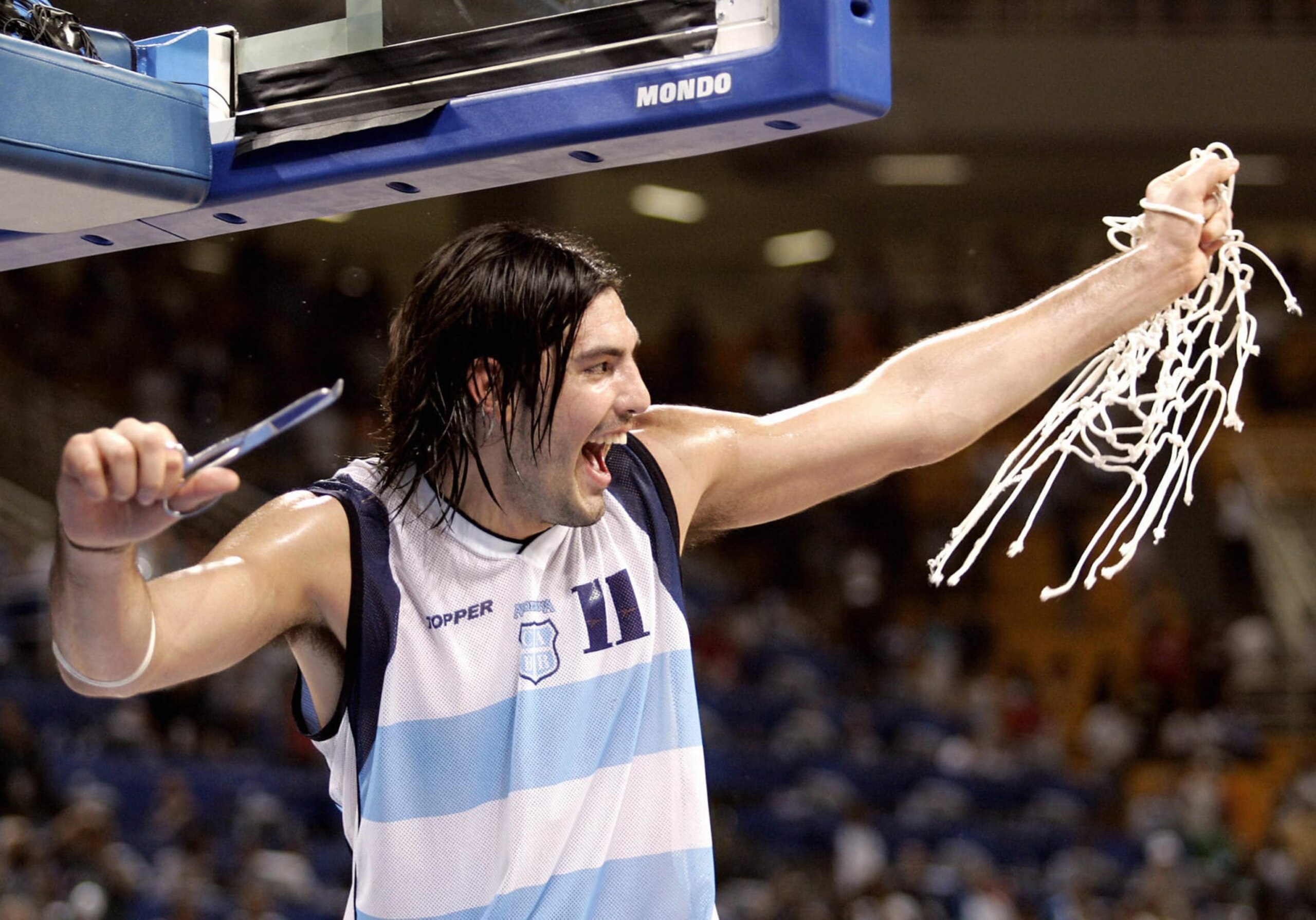
We have to start by mentioning Yao Ming here. Over three different Olympic runs, the towering Chinese center averaged 16.9 points and 7.9 rebounds, but he finished his career without a medal from that tournament.
Luis Scola, meanwhile, appeared in five different Olympics and averaged 18.6 points and 5.6 rebounds, while shooting 60.6 percent on twos and 42.9 percent from deep.
And most importantly, one of his two medals was the 2004 gold. That year, Scola averaged 19.4 points and scored in double-figures in the semifinal in which Argentina famously beat Team USA.
Indiana Pacers: Detlef Schrempf
12 of 30
There are several Indiana Pacers who have an argument for this spot. Reggie Miller and Paul George both have gold medals from their lone Olympic runs. Šarūnas Jasikevičius has four Olympics and a bronze medal.
But Detlef Schrempf, despite playing in only two Olympic tournaments and failing to medal both times, gets the nod thanks to his individual dominance.
In 1984, the 21-year-old Schrempf led West Germany in points (18.9), rebounds (8.0), assists (3.1) and blocks (0.8). No one else on his team had a double-figure scoring average.
Eight years later, he put up an absurd line of 23.1 points, 10.4 rebounds, 3.4 assists and 2.1 steals.
Long before the proliferation of international talent in the NBA, Schrempf made it clear he belonged on the game's highest level.
Los Angeles Clippers: Chris Paul
13 of 30
Chris Paul never put up huge scoring numbers as a member of Team USA, but that shouldn't come as much of a surprise. He's always been a pass-first player, and that was certainly true of his time alongside some of the game's best scorers in red, white and blue.
In 2008, he averaged 8.0 points, a team-high 4.1 assists and 2.3 steals, while making 62.5 percent of his two-pointers. Four years later, he averaged 8.3 points, 5.1 assists, 2.5 steals and 1.6 threes, while shooting 46.4 percent from deep.
And of course, both of those runs ended with gold medals, including one with the Redeem Team.
Los Angeles Lakers: Kobe Bryant
14 of 30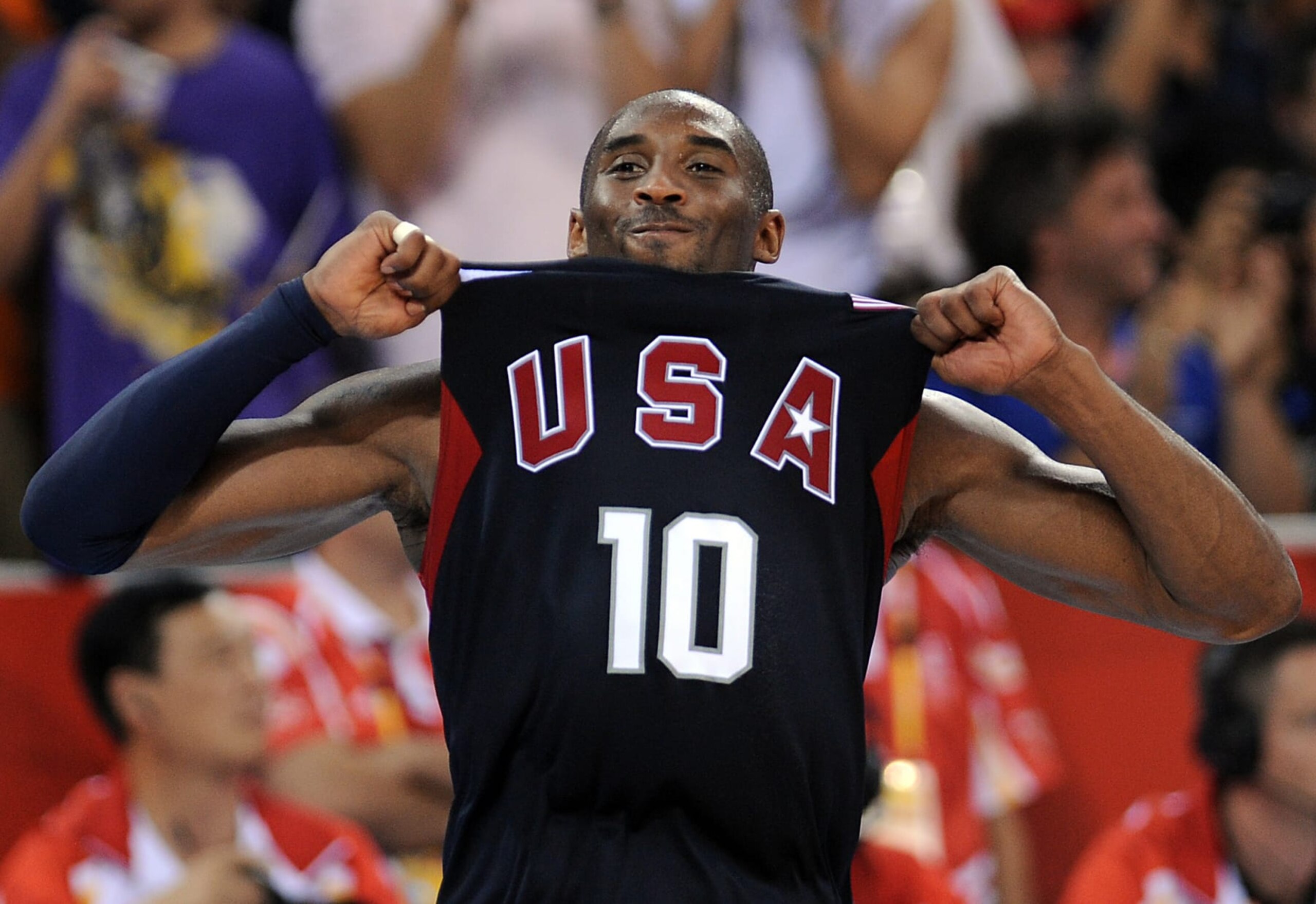
Speaking of which, the most important factor in Team USA bouncing back from 2004's loss may well have been the commitment of Kobe Bryant.
In his first Olympics, Kobe averaged 15.0 points, 2.1 assists and 2.1 threes, but his impact went well beyond the numbers.
"Kobe was less known to many of his teammates when he joined Team USA," Redeem Team director Jon Weinbach said (via The Guardian). "So the model he set was the work ethic. It's encapsulated in the story of him being up at 4:35 in the morning and working out as these guys were coming back from the club. It was an undeniable example."
Behind that example, the 2008 team won gold. And four years later, Kobe was an integral part of a second straight gold with 12.1 points, 2.1 threes and a 43.6 three-point percentage.
Memphis Grizzlies: Pau Gasol
15 of 30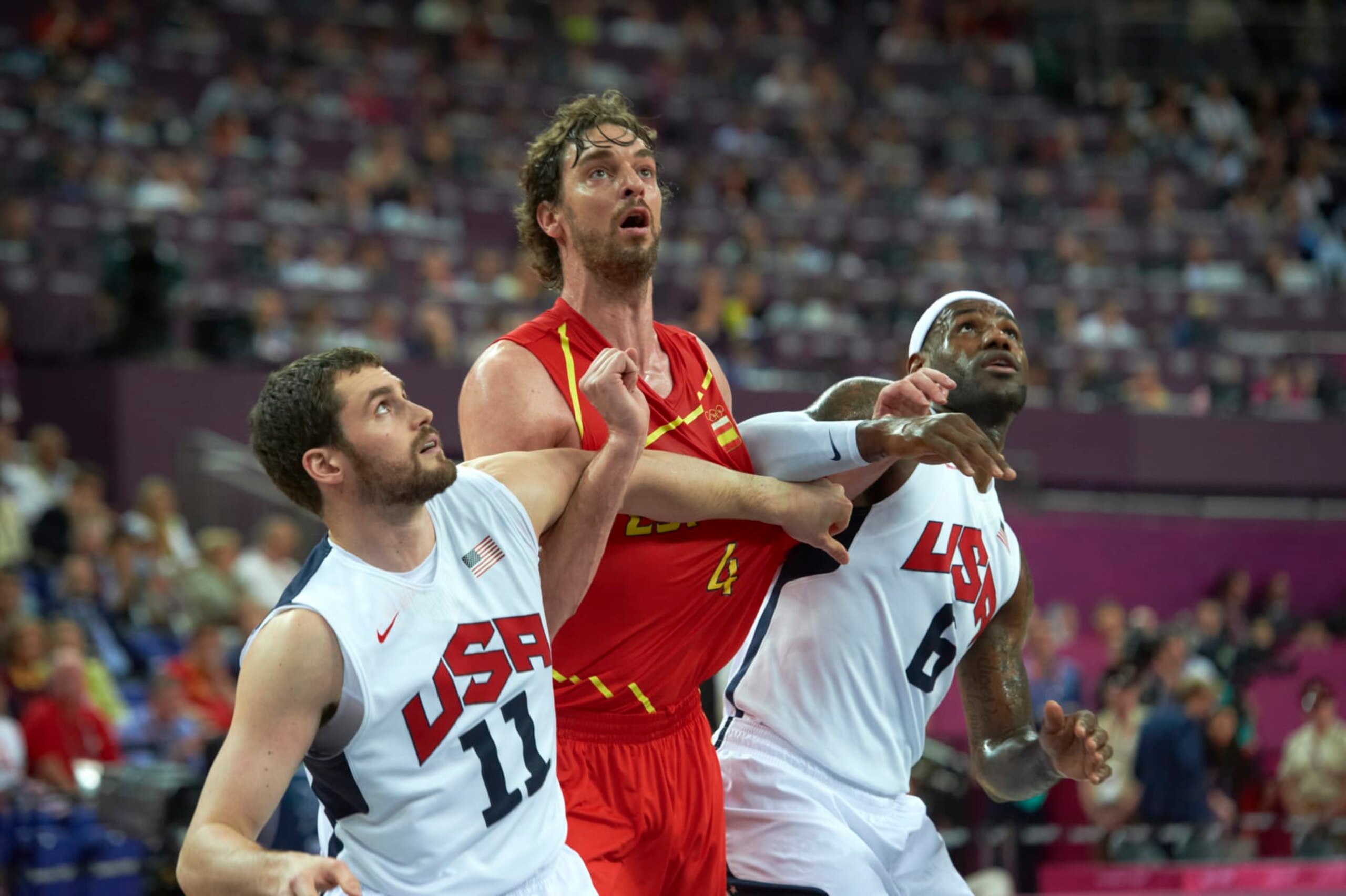
Pau Gasol made appearances in five different Olympic games and posted career averages of 18.0 points, 7.1 rebounds and 1.6 blocks, while shooting 61.4 percent on two-pointers and 47.4 percent from three.
And even if he never won a gold medal for Spain, he and his teammates deserve credit for pushing Team USA about as well as anyone post-2004.
In the 2008 gold medal game, he had 21 points and six rebounds. In 2012, in a gold medal rematch against USA, he had 24 points, eight rebounds and seven assists.
Both of those tournaments resulted in silver medals for Spain, and Gasol collected one more in 2020 when he won bronze.
Miami Heat: Dwyane Wade
16 of 30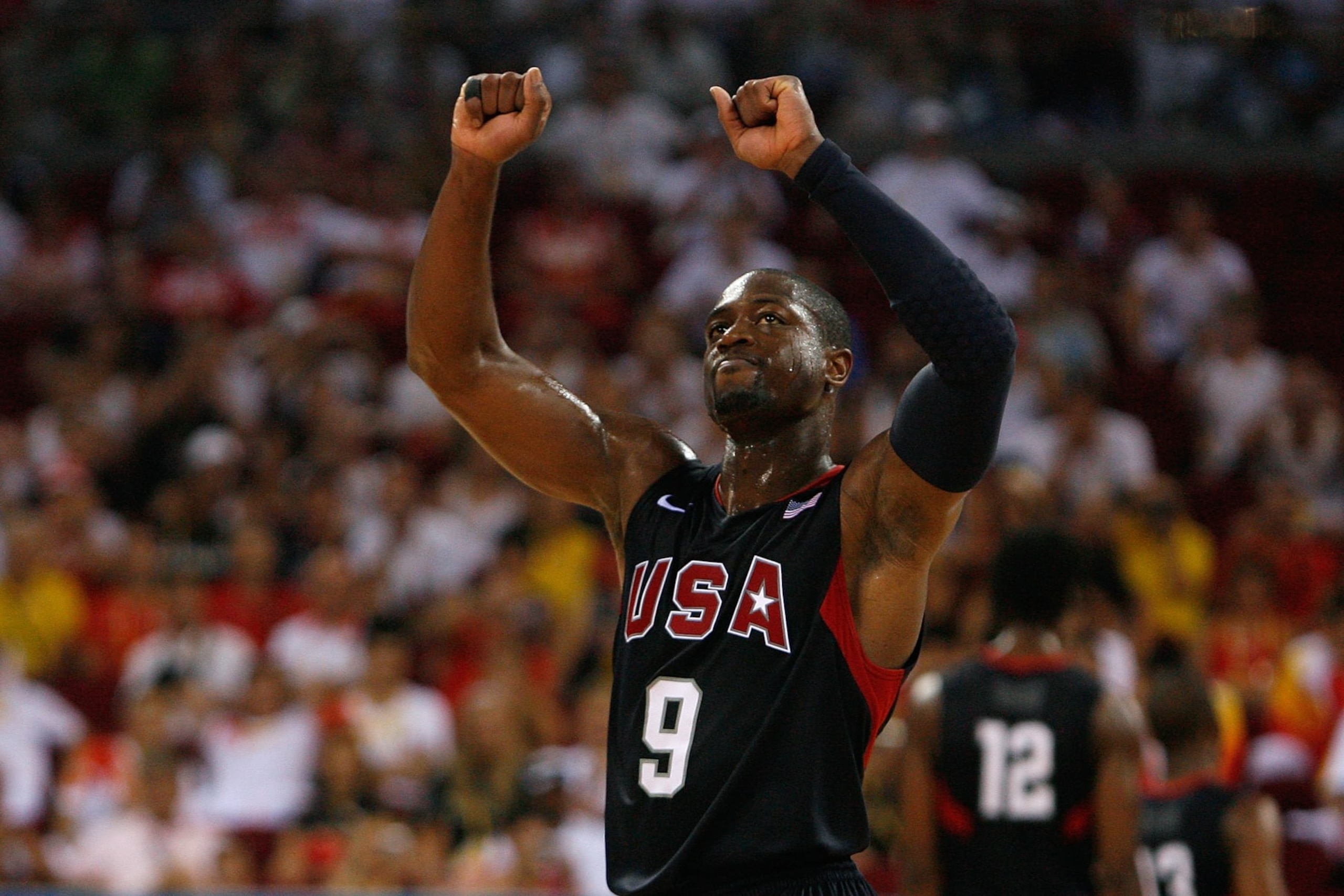
Dwyane Wade was a member of the 2004 Team USA that failed to secure gold in Athens. But, like a lot of the other future stars on that roster, his role was pretty limited.
Among the trio of Wade, LeBron and Melo, his 17.6 minutes per game was the highest average.
Fortunately, their failure that year didn't take those three out of the running for spots in 2008, when Wade led the team in scoring at 16.0 points and pitched in 2.3 steals to boot.
That team, of course, won gold, thanks in large part to Wade's contributions as both a scorer and perimeter defender.
Milwaukee Bucks: Oscar Robertson
17 of 30
Like Russell, Oscar Robertson only appeared in one Olympic tournament, but he also made the most of his time.
Four years after Russell won gold, Robertson was tied with Jerry Lucas for the team lead in points per game for the 1960 team at 17.0.
Like Denver with Jokić, the Milwaukee Bucks have a current player in Giannis Antetokounmpo who may soon overtake Robertson, but 2024 is his first Olympic games. For now, the spot still belongs to The Big O.
Minnesota Timberwolves: Kevin Love
18 of 30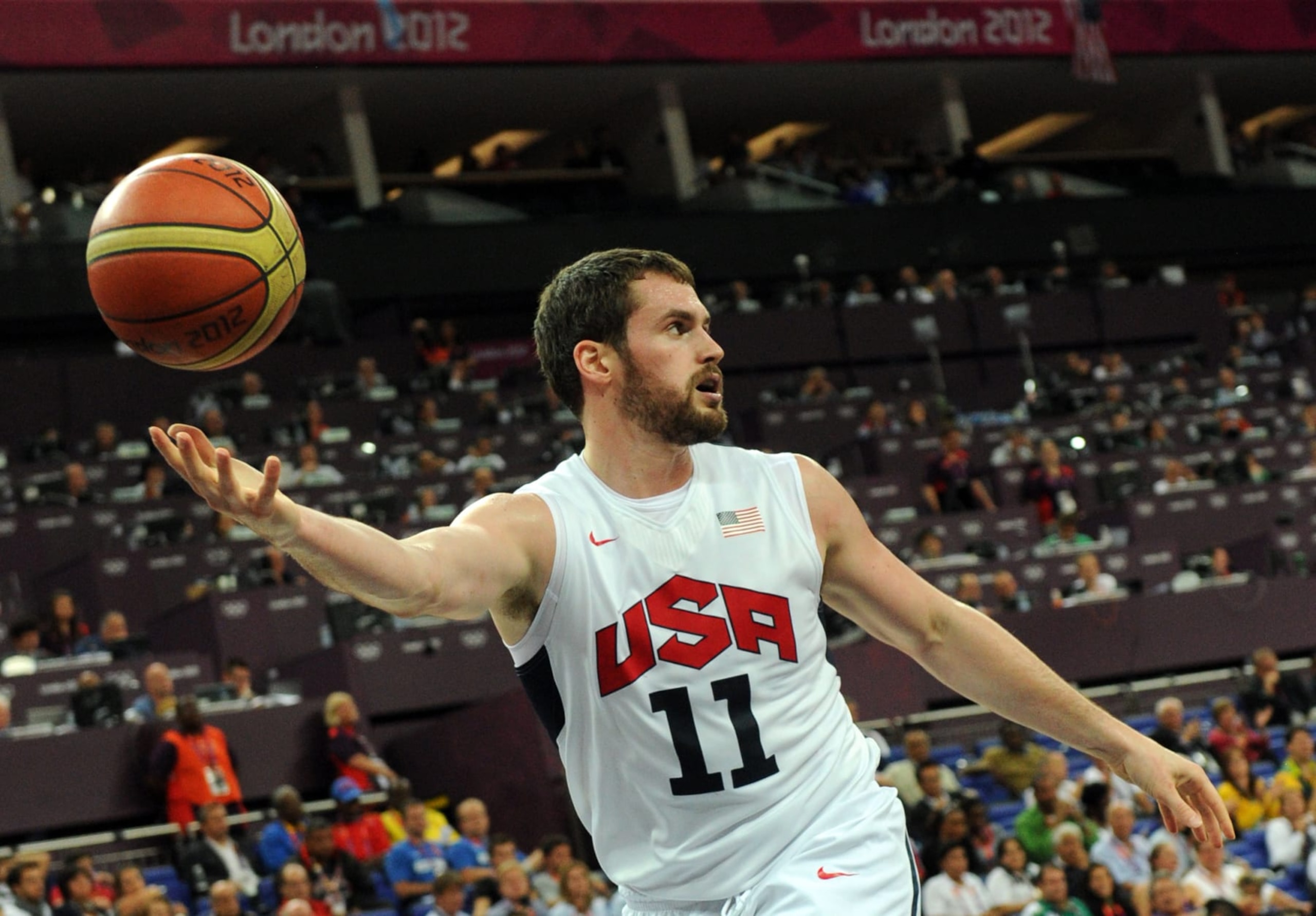
This one may come as a bit of a surprise. There's obviously an argument for Kevin Garnett, too. And 4-8 years from now, it might be Anthony Edwards.
But for now, Kevin Love's 2012 run puts him in the lead for the Minnesota Timberwolves.
That summer, Love averaged 11.6 points, a team-high 7.6 rebounds and 1.0 threes, while shooting 36.4 percent from deep.
New Orleans Pelicans: Jrue Holiday
19 of 30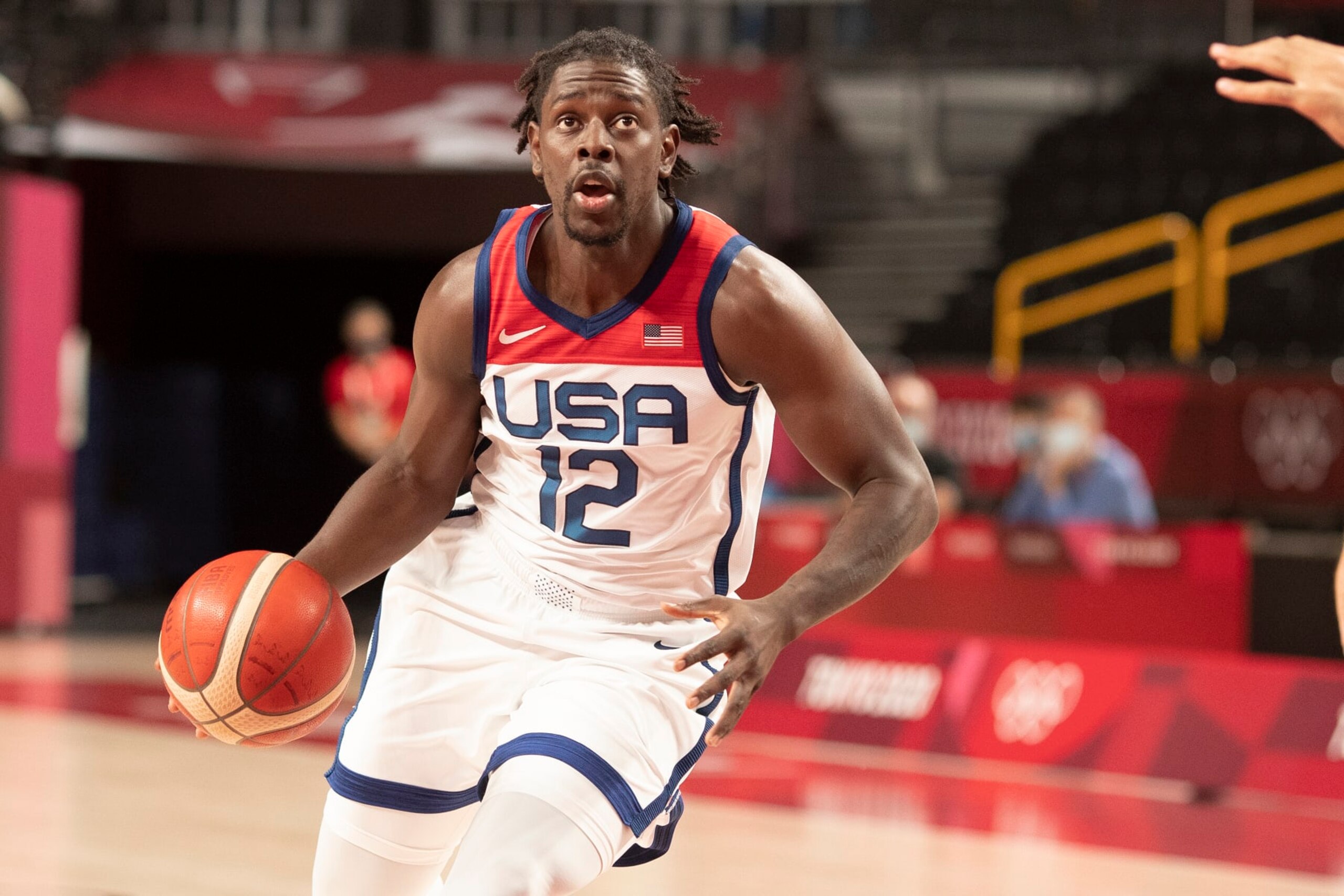
Another potential surprise, Jrue Holiday was a key member of the 2020 Team USA that won gold in Japan, thanks to his timely shotmaking and stout perimeter defense.
In that tournament, Holiday's 11.8 points ranked third among Americans, and he led the team in both assists (3.8) and steals (1.7) per game.
Depending on how 2024 goes, Anthony Davis may assume this spot, but he averaged just 7.4 minutes in his only Olympic tournament prior to this one.
New York Knicks: Patrick Ewing
20 of 30
Like Mullin, Patrick Ewing competed in both the pre-professionals Olympics in 1984 and in the 1992 games as a member of the Dream Team.
And on both teams, Ewing was Team USA's most productive true center. Over the course of both tournaments, he averaged 10.3 points and 5.4 rebounds, while shooting 62.3 percent from the field.
And of course, both of those runs ended with gold medals for the Americans.
Oklahoma City Thunder: Kevin Durant
21 of 30
Kevin Durant is arguably the greatest basketball player in the history of the Olympics. Not just Team USA. The entire history of the Olympics.
Prior to 2024, Durant had appeared in three Olympics and averaged 19.8 points, 5.4 rebounds, 3.4 threes and 3.2 assists, while shooting 56.3 percent on twos and 50.0 percent from three.
He was on typically stacked American teams for each of those runs, led all three of them in scoring and won three gold medals.
With his length, versatility and one of the smoothest jump shots in the history of basketball, KD is an ideal fit in the FIBA game, with its shorter three-point line and emphasis on skill at every position.
Orlando Magic: Anfernee Hardaway
22 of 30
Like CP3 with the 2008 and 2012 teams, Anfernee Hardaway was much more of a distributor than scorer when he played for Team USA.
And in 1996, Penny's lone Olympics, his playmaking was a big part of a dominant run that ended with gold.
Hardaway averaged 9.0 points, 4.4 assists (a mark that trailed only Gary Payton's 4.5 dimes) and 1.4 steals, while making 67.7 percent of his two-point attempts.
Philadelphia 76ers: Charles Barkley
23 of 30
As mentioned, Barkley could've paired with a couple teams, but we'll go with the Philadelphia 76ers.
Fresh off his final season with Philly, Barkley made his Olympic debut for the 1992 Dream Team. That summer, he averaged a team-high 18.0 points, 4.1 rebounds, 2.6 steals and 2.4 assists. He shot 52-of-75 (69.3 percent) on twos and 7-of-8 at the shorter three-point line.
And his unique combination of athleticism and competitiveness, Barkley was a huge part of how the Americans were able to both dominate opponents on the floor and intimidate them throughout each game.
That run alone probably would've been enough to land Barkley here, but he was among the few Dream Teamers to come back for 1996, and he led the team in scoring again.
Phoenix Suns: Steve Nash
24 of 30
He only played in the 2000 Olympics—a tournament in which Canada failed to medal—but Steve Nash is another inclusion on this list who foreshadowed a legendary NBA career with some dominant play on the international stage.
That year, the Canadians even qualifying for the tournament was an accomplishment. Its roster was mostly filled with players you've never heard of. And yet, it escaped group play and made it to the knockout round, thanks in large part to Nash.
In that tournament, he averaged 13.7 points, 6.9 assists and 1.6 threes, while shooting 45.8 percent from deep.
Portland Trail Blazers: Arvydas Sabonis
25 of 30
Prior to the Soviet Union's split, Arvydas Sabonis helped lead a stacked team to gold in 1988.
That summer, he averaged 13.3 points, 11.1 rebounds and 1.7 blocks. In the championship game alone, he had 20 points, 15 rebounds and three blocks against Yugoslavia.
And, as if that wasn't enough, Sabonis helped Lithuania win back-to-back bronze medals in 1992 and 1996 in the post-Soviet era of Olympic basketball.
Overall, through three different Olympic runs, Sabonis won three medals and averaged 18.2 points, 11.3 rebounds, 2.3 assists, 1.6 steals and 1.5 blocks.
Sacramento Kings: Vlade Divac
26 of 30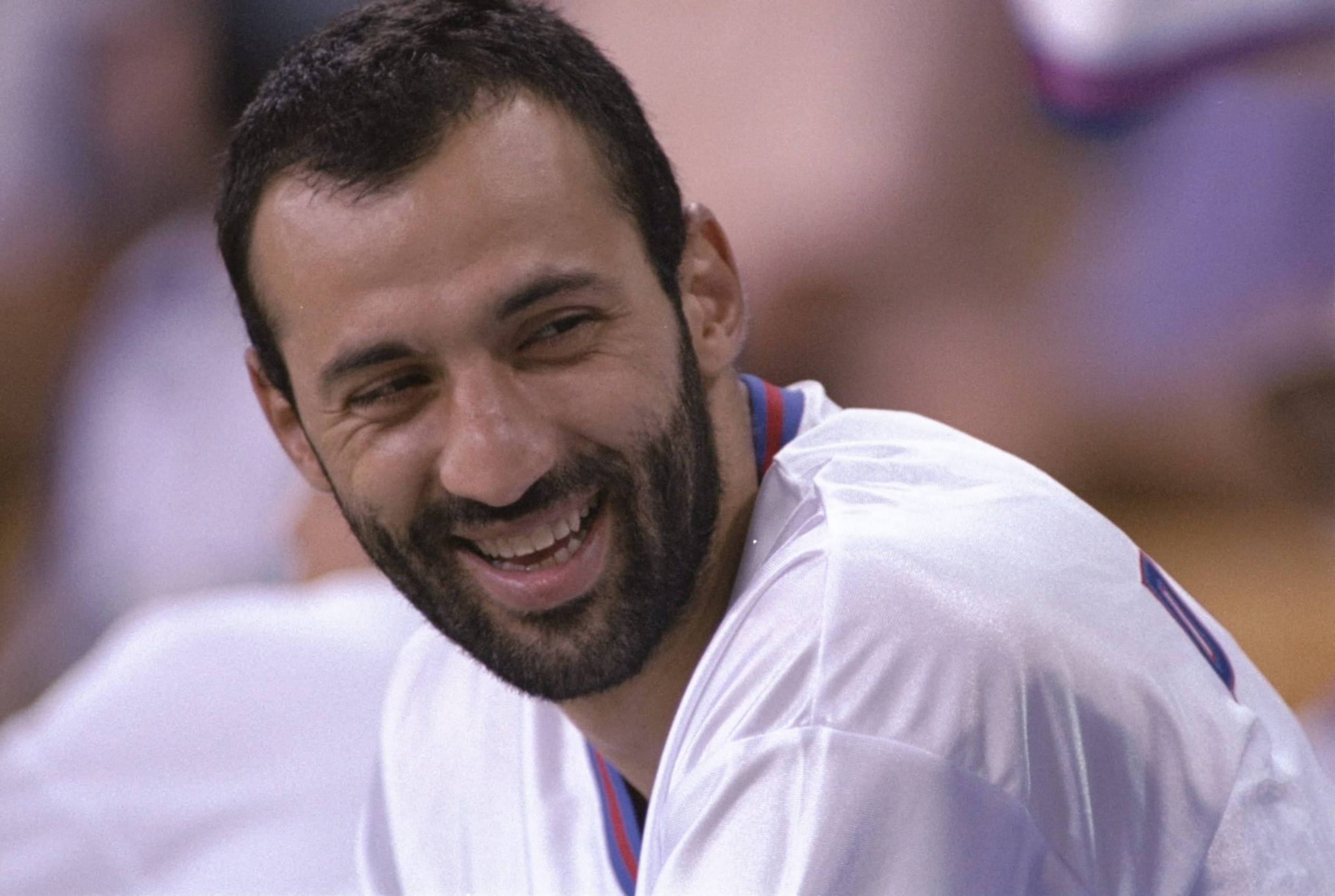
A member of the 1988 Yugoslavian team that won silver, Vlade Divac averaged 12.0 points, 7.0 rebounds, 1.6 steals and 1.1 blocks during those Olympics.
Eight years later, playing for Serbia and Montenegro, he gave the world a better taste of the point center game that he helped popularize in the NBA.
That year (1996), Vlade won another silver with averages of 6.6 points, 6.3 rebounds and 2.4 assists.
San Antonio Spurs: Manu Ginóbili
27 of 30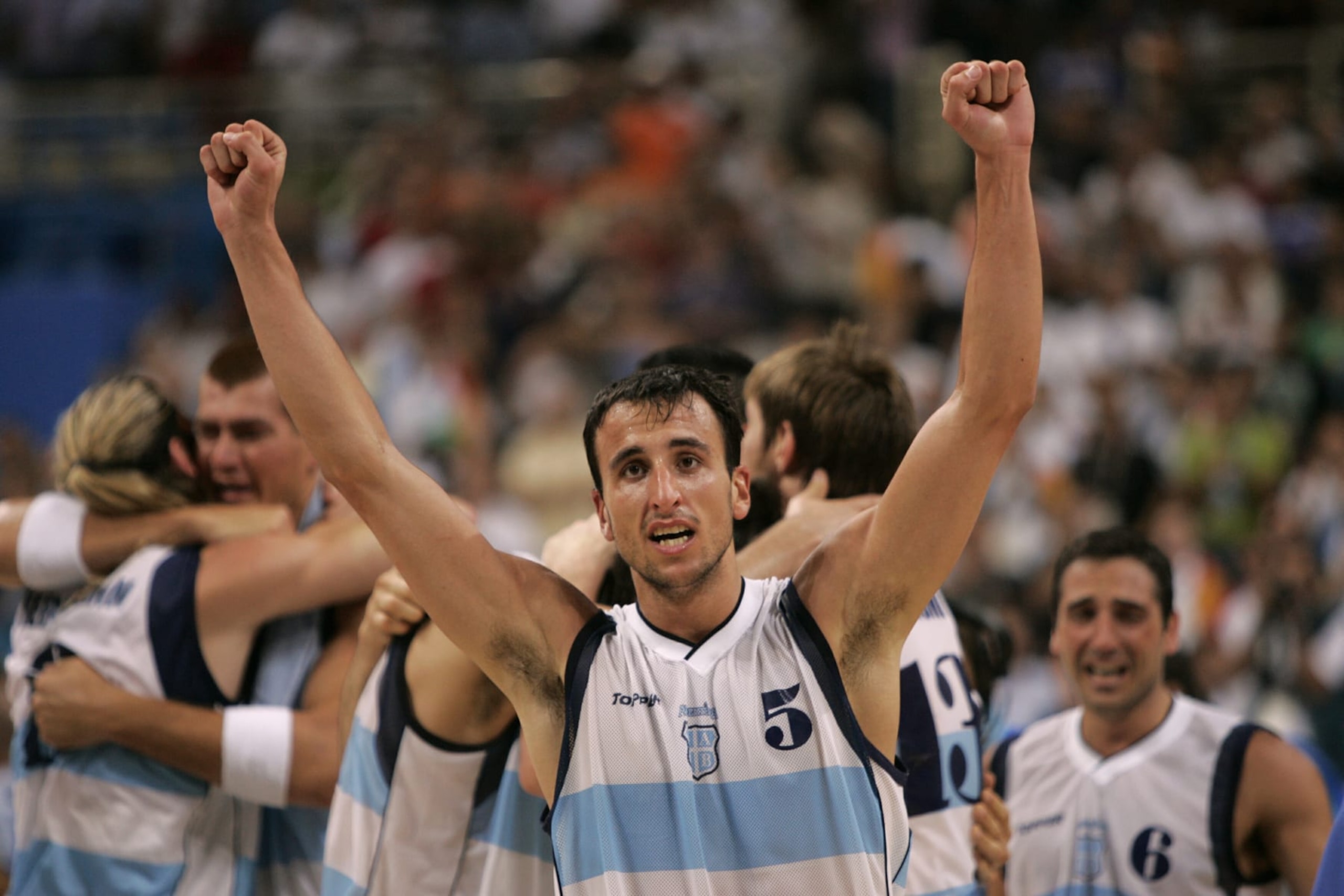
The San Antonio Spurs were certainly ahead of most other NBA teams when it came to finding talent outside the United States. So, it should come as no surprise that they have multiple Olympic stars, including Tony Parker and Boris Diaw.
But none of their resumes, including those of Americans Tim Duncan and David Robinson, quite stack up to Manu Ginóbili's.
Manu appeared in four different Olympics. Over those 29 games, he averaged 18.0 points, 3.7 assists and 2.1 threes, while shooting 59.0 percent on twos and 39.2 percent from deep.
He won two medals, and of course, was one of the leaders of Argentina's golden generation. In 2004, Manu's country was the last one standing, thanks largely to his 19.3 points and 40.5 three-point percentage.
Toronto Raptors: Vince Carter
28 of 30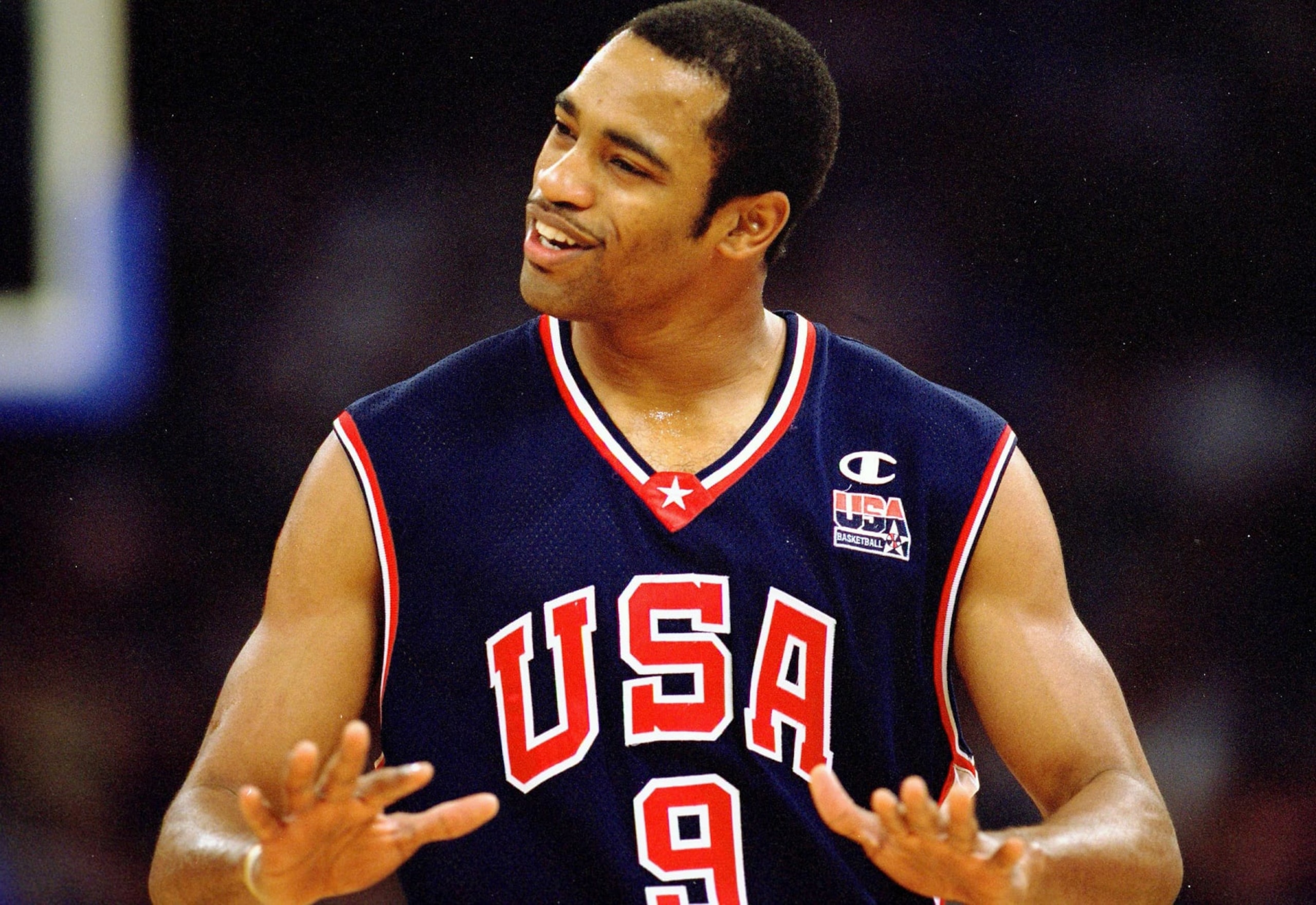
By 2000, Team USA's grip on international basketball seemed to be loosening a bit. In those Olympic games, the Americans went undefeated, but they faced real challenges from Lithuania and France.
They played each of those countries twice, snuck by Lithuania in the semifinals by just two points and then beat France in the gold medal game by 10.
They looked, at the very least, mortal, though that definition may not have applied to Vince Carter, individually.
In that tournament, Carter averaged a team-high 14.8 points while hitting 40.7 percent of his three-point attempts.
And in one of those games against France, he authored one of the greatest highlights in Olympic basketball history when he cleared 7'2" Frédéric Weis for a transition slam.
Utah Jazz: Andrei Kirilenko
29 of 30
Karl Malone and John Stockton each have two gold medals from the 1992 and 1996 games, but they weren't the stars among stars on either team (especially Stockton, who averaged just 10.3 minutes in his 12 individual Olympic outings).
Rudy Gobert is also starting to put together a pretty interesting international resume for France, but none of the above were quite as prolific on an individual level as Andrei Kirilenko.
As a member of the Russian national team, Kirilenko appeared in three Olympics and averaged a well-rounded 14.3 points, 6.4 rebounds, 2.2 steals, 1.8 assists and 1.3 blocks.
And in 2012, when Russia won Bronze (Kirilenko's lone medal), he put up a team-high 17.5 points.
Washington Wizards: Andrew Gaze
30 of 30
Despite a history (especially recently) of sending talent to the NBA, Australian men's basketball hadn't medaled in the Olympics until the 2020 games in Japan, but it's hard to blame Andrew Gaze for that.
He appeared in five different Olympic tournaments for the Aussies, averaged at least 20 points in three of them and is second only to Schmidt in career points scored in the Olympics.
The sharpshooter finished his Olympic career with averages of 19.7 points, 2.2 assists and 2.2 threes, a 41.5 three-point percentage and an 83.4 free-throw percentage.
And while Gaze didn't spend a ton of time in the NBA, he did play seven games as a 28-year-old rookie for the Washington Bullets in 1993-94, and it just would've felt wrong to not have the tournament's second leading scorer off the list (with apologies to Dražen Petrović).

.jpg?w=2560 "Raiders Could Start Mendoza")

.jpg?w=2560 "Rodgers Iced Out on Plane 💎")
.jpg?w=2560 "Packers Safety Slams Refs 🤬")
.jpg?w=2560 "🚨 Week 8 AP Top 25 Poll")