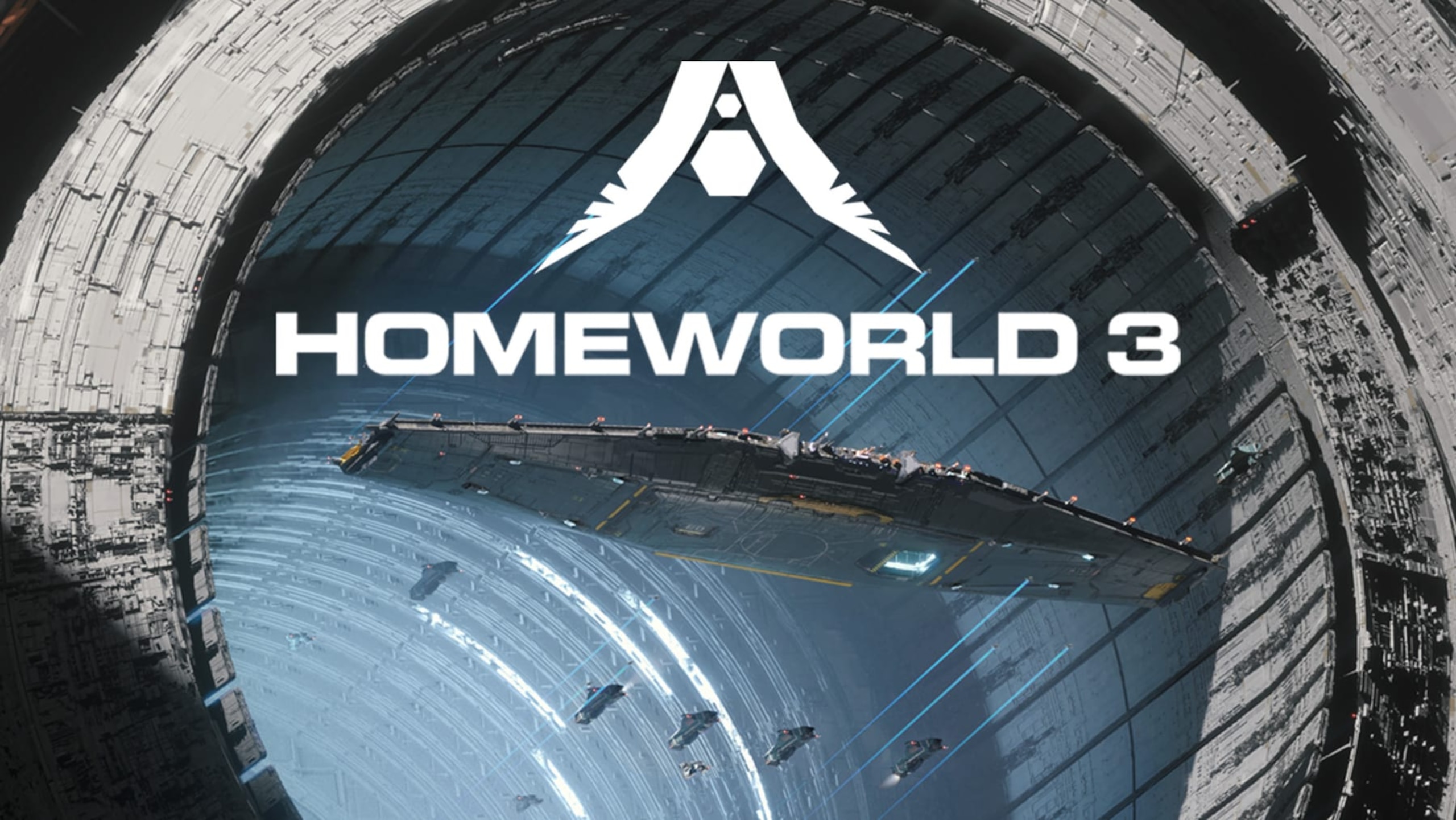

Homeworld 3 Review: Gameplay Impressions, Videos and Top Features
Homeworld 3 from developer Blackbird Interactive arrives as a landmark moment for the RTS (real-time strategy) video game genre.
The third major installment in one of the genre's biggest names since 1999, the game offers itself up as much more than a simple tech upgrade. Not that it should go understated that Homeworld 2 technically launched in 2003.
But Homeworld 3 places a big emphasis on single-player campaign experiences in addition to the usual genre staples. And as if that weren't enough, a new co-op mode with an out-of-genre roguelike structure that could become a live-service success sounds promising.
.jpg?w=2560 "Cardinals Giants Football")
.jpg?w=2560 "Raiders Chargers Football")
.jpg?w=2560 "Bengals Steelers Football")
If Homeworld 3 can blend its stellar past with the best aspects of the future, it could be a Game of the Year contender on a stacked 2024 calendar.
Graphics and Gameplay
As expected, Homeworld 3 doesn't have any issue leaning into the power of new tech to wow in an expansive way.
Fittingly, the scope of open spaces and the skyboxes are some of the most visually-pleasing things found in video games, bordering on distracting, which is a compliment. It isn't just the flashy visuals so much as it is the sense of scale—this is the perhaps the best marriage of sheer size and graphical power to grace a space opera-oriented setting yet.
Zooming on the action is a treat in its own right though. Given the meticulous detail found on each of the game's ships, it almost feels like taking a magnifying glass to someone's carefully hand-sculpted models, flashing lights and propulsion tails and all.
Explosives are jaw-dropping and understandably satisfying or distressing, depending on whether it's the enemy or a player's unit. And the use of lighting is a stunner, especially when say, a ship's shadow flits across the surface of an asteroid mid-fight.
The attention to detail that has made the series such a resounding success returns in other ways too—amplified by the horsepower of new tech. A good example is the persistent damage appearing on the hulls of ships that survive to see the next battle.
Or, in a highlight of the excellent sound design, the highly informative radio chatter that players who pay attention to can benefit greatly.
The gameplay itself fittingly matches the expansiveness of its space setting. Yes, the normal RTS gameplay loop of acquiring resources and fleshing out a fleet is there. But that fleet offers up roughly 60 different craft for players to use.
The resource gathering mentioned isn't intensive at all. In fact, it is almost a passive background activity, which is great—combat strategy itself in a 3D space requires 99 percent of a player's attention.
Micromanagement is a word that will often appear in impressions of the game. But it doesn't need to carry negative connotations. There's always something to do and a few steps ahead to consider. When the inverse would be issuing commands and waiting around, it's pretty hard to complain about.
One of the new core gameplay staples is the massive megaliths and trenches that players will use and/or navigate, in the case of the latter. These huge structures function as additional 3D cover for smaller ships in a way that opens up new layers of strategy to the tried-and-true experience.
For those unfamiliar with the series, this is a bigger deal than it seems. The Homeworld series leans heavily into fully simulated ballistic patterns and behavior as a core gameplay element, so new cover and line of sight to manage deepens the experience.
"Dynamic weather" is a flashy term used in other games, and it sort of pops up here—in the form of dynamic galactic events like particle storms or even asteroid fields. Navigating these in real-time atop the dance with enemy forces only strengthens the immersion and strategy required.
Players can also control speed of gameplay, all the way down to slow-mo while they take in the stunning visuals or carefully go over strategy. Having outright control over the percentage of speed of gameplay is both a genre staple and would be a huge negative if absent.
There are modern and classic camera control schemes, and both might take some getting used to because, frankly, navigating a 3D space in an RTS is a little overwhelming at times. But it's safe to presume that one of the settings will eventually fit most players.
It helps that the user interface (UI) is modern and sleek, presenting players with plenty of important information while not obstructing the view.
Overall, Homeworld 3 is a resounding success of an RTS in its presentation and engrossing gameplay, with something as simple as a cover mechanic greatly expanding the depth of play. There's a measured pace to gameplay that deliberately slows down compared to other RTS frenzies and it captures the scale and cinematic of battle in a can't-miss way.
Story and More
Homeworld 3 does throw out a pretty enticing narrative for those who seek it.
To keep it light, the narrative backdrop is a golden age spurred by the events of the first two games that comes to a screeching halt as a system-ruining entity dubbed "The Anomaly" spreads.
As a sci-fi backdrop, it's pretty standard fare, but it's compelling enough. For players who just want to get into the nitty-gritty of the gameplay, it sure doesn't hurt, either.
The real standout mode that Homeworld 3 bases much of its success on is the War Games co-op (smartly narrative-explained as combat simulations for trainees) effort.
This is the rougelike mode, where up to three players tackle random combat challenges. Like any good rougelike, success means unlocking ship upgrades and, in turn, new challenges.
At launch, it sure doesn't feel like War Games will wear out its welcome early, even if some of the mission designs repeat often. Beyond the mentioned 60ish craft, the slow unrolling of new factions and a huge list of "artifacts" to lean into—some of which open up new strategies alongside teammates—will keep things fresh.
Notably, players can explore this mode solo, and the difficulty seems to scale really well to party size. It's going to be much better with friends and those who communicate well, undoubtedly, but the careful attention paid to making sure solos can enjoy it, too, only works in the game's favor.
For those fearing the "live service" mentioned earlier, it's important to note that there is a "Year One Pass" that promises to add new factions, specifically for War Games. But like most games attempting to pull this off, it can be a boon to the experience rather than a bust if the quality and speed of the post-launch support is up to the task.
Of course, Homeworld 3 also offers PvP against other players, too, in the form of a one-on-one, free-for-all or team-based battles. It's certainly not a live-service-or-bust model and those who only seek PvP can most find it.
As a primarily PC experience, the game also gets some points for its acceptance of player-created mods. Even if players don't want to create, they will still be able to browse mods created by other players and download those to their own experience.
This extends to the options, where players will find details like rebindable shortcuts at the top of the list of notables. Rounding out an extensive features list, there's even an in-game compendium of artifacts within War Games
Performance is good too, with the game never really seeming to struggle despite some of the impressive detail and number of units on screen at once.
Conclusion
Homeworld 3 could have played it safe within its own tried-and-true trappings and been content to put out one of the best RTS games in years.
Instead, the game's rougelike mode is perhaps the first true success story of a combination that should help further the genre as a whole. It's a blast to evolve within high-stakes gameplay, as opposed to not just mindlessly replaying against the AI like back in the old days.
As always, there's a wait-and-see attitude players must take with any game promising post-launch support these days. But the foundation laid atop the long-running success of the base franchise makes Homeworld 3 look quite promising, indeed.
Like the game's staggering monoliths, the task in front of Homeworld 3 was gargantuan. Yet the game matches the hype of a sequel roughly two decades in the making and exceeds them with calculated risks that have paid off big time.