

2024 NFL Free Agents Who Signed With the Wrong Team
The 2024 NFL offseason has reached a lull following the initial wave of free agency. With most of the top talent now off the market and the draft still more than a month away, it's a good time to take stock of the vast amount of player movement that has taken place.
While a good number of free agents boosted their value by signing with clubs that will maximize their potential and help them reach new heights, others weren't as fortunate.
These players may have been swayed by an above-market contract or simply didn't have any better offers on the table, ultimately landing in spots where they are projected to struggle.
Whether they aren't a schematic fit, have stiff competition for touches or have gotten in over their heads in terms of the workload they are set to take on, these are five players who stick out for signing with the wrong team this offseason.
WR Gabe Davis, Jacksonville Jaguars
1 of 5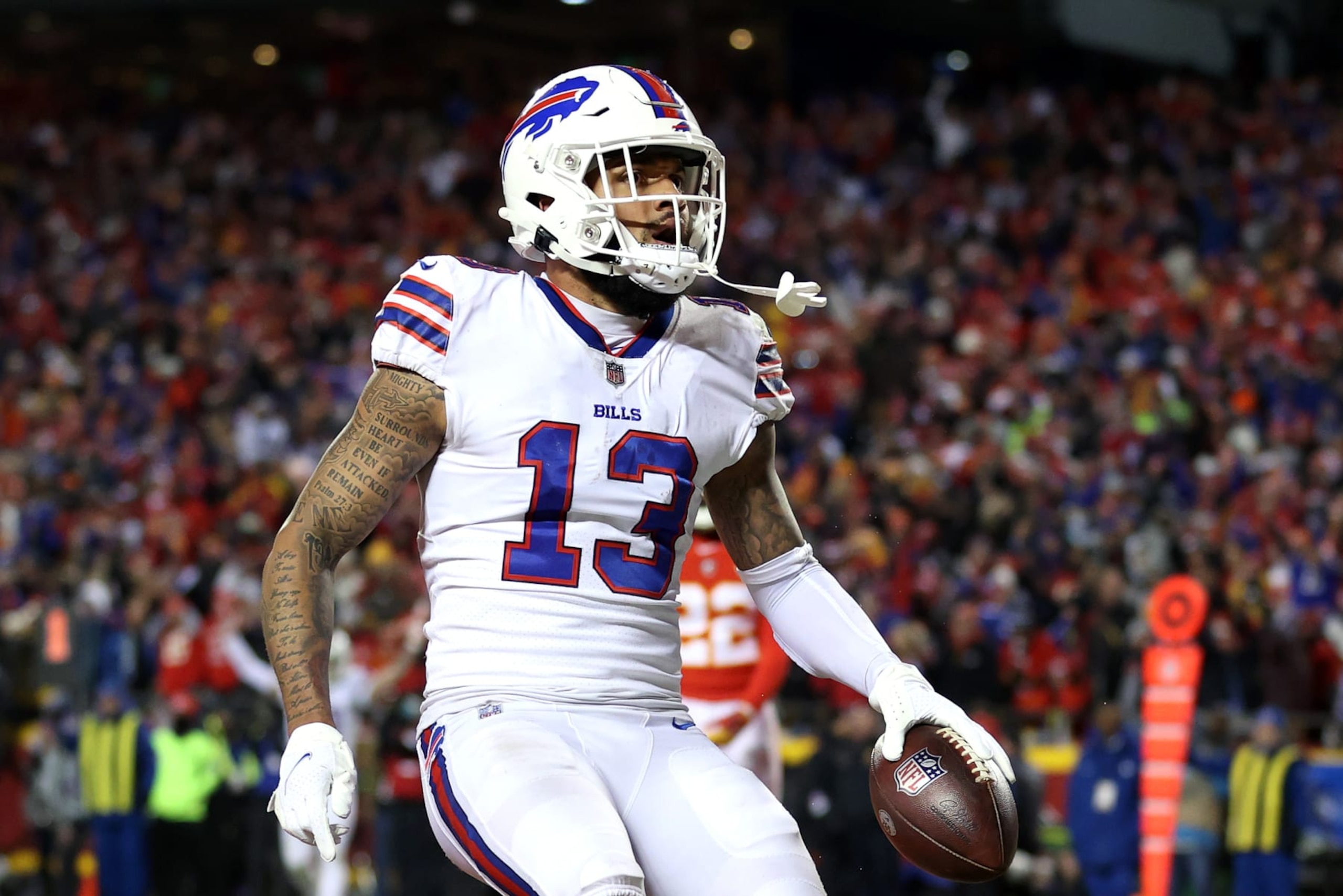
Gabe Davis spent the first four years of his NFL career working as a No. 2 receiver and big-play specialist in the Buffalo Bills' high-powered offense. He's now heading to the Jacksonville Jaguars, a team that will need him to assume a much more expansive role during the 2024 season.
The 24-year-old is set to work as Jacksonville's No. 1 wideout next season after signing a three-year, $39 million deal.
While the Jags' brass may have originally envisioned him assuming similar duties to those he provided Buffalo, the departure of Calvin Ridley has left a gaping hole in the receiving corps that Davis must step up and fill.
A good chunk of his success in Buffalo can be credited to the defensive attention commanded by Stefon Diggs, who earned a Pro Bowl nod in all four seasons Davis was with the organization, allowed his fellow wideout to flourish against single coverage and lesser defensive backs.
While Davis hasn't been the most consistent pass-catcher, he has recorded 163 catches on 299 targets for 2,730 yards and 27 scores since entering the league as a fourth-round pick.
While the UCF product won't be the only talented receiver on Jacksonville's roster—Christian Kirk has amassed 1,895 yards and 11 touchdowns on 141 receptions since signing with the club two seasons ago—he's likely to see far more of the opposition's top cornerbacks than he has in the past.
Zay Jones, who missed eight games with injury last season, and fellow free-agent pickup Devin Duvernay are set to round out Jacksonville's receiving corps this year and neither is equipped to take over Ridley's workload.
It would not be a shock to see Davis struggle while transitioning into a No. 1 role. He hasn't been a high-volume receiver since his collegiate days and his inconsistent, boom-or-bust play in the pros should have the Jags worried about allocating a good portion of the 136 targets Ridley has vacated his way.
RB AJ Dillon, Green Bay Packers
2 of 5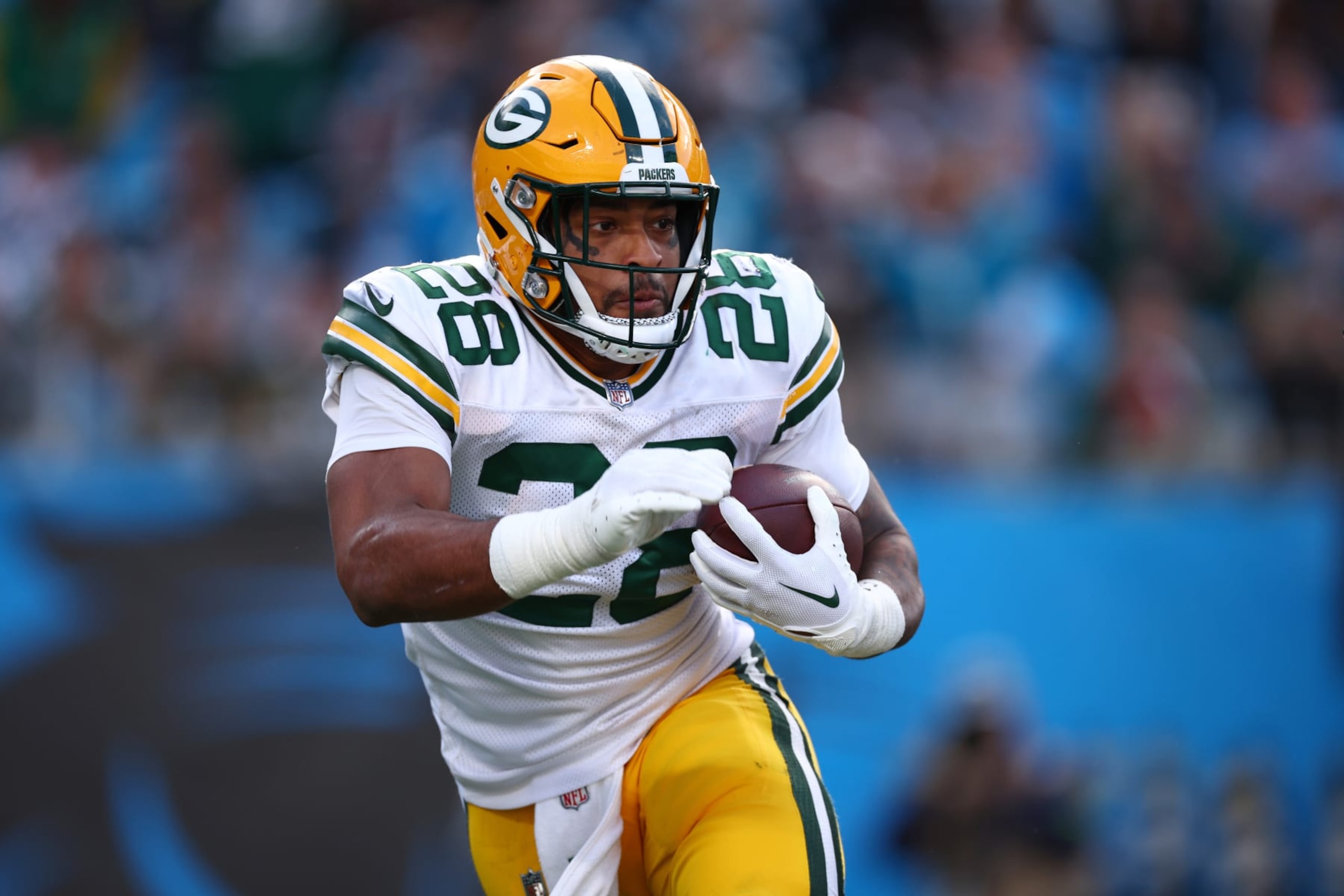
AJ Dillon was a major disappointment for the Green Bay Packers last season. The team's backup running back had several chances to prove his chops during the six games that Aaron Jones was sidelined for but underwhelmed in all of them.
The 25-year-old never totaled more than 76 rushing yards in any of his starts and finished 2023 with a meager 613 yards and two touchdowns on 178 carries over 15 total games.
Despite the poor showings, Green Bay opted to bring the four-year veteran back for another season.
While the decision won't cost the team much—he signed for just $2.7 million—he isn't an ideal fit with this unit as either a change-of-pace option or fill-in starter.
The Packers appeared to be revamping their middling rushing attack by coming to terms with Josh Jacobs in free agency. The decision, which coincided with Jones being released, gave Green Bay a new lead back for the first time in over a half-decade.
The team is still stuck with the same insurance option in place, though; one that clearly didn't work out last year.
It's an especially concerning signing given Jacobs missed four games at the end of last season and has racked up 1,502 touches since entering the league just five years ago. If he ends up sidelined for a stretch, Green Bay will again have to turn to Dillon. Considering he averaged just 3.4 yards per carry in 2023, it's a situation the team should be hoping to avoid.
Dillon would have been better off using his time on the open market to procure a fresh start, and the Packers should have been happy to let him get one.
This arrangement hasn't panned out the way Green Bay hoped when it drafted Dillon in the second round in 2020, and that isn't going to change now he's returning for a fifth season.
WR K.J. Osborn, New England Patriots
3 of 5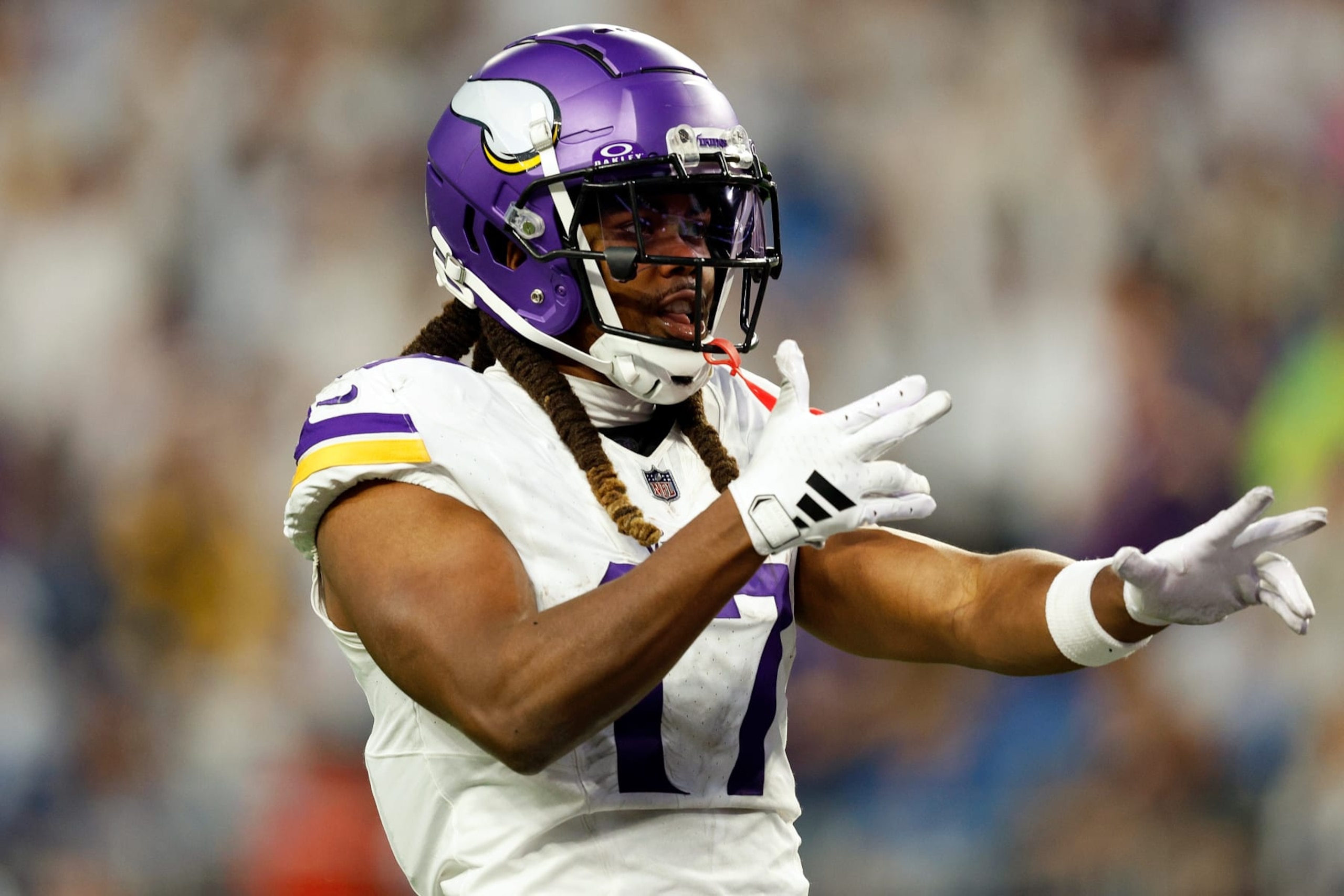
K.J. Osborn picked the wrong team to bet on himself with.
The 2020 fifth-rounder entered free agency off an up-and-down tenure with the Minnesota Vikings. He only played special teams as a rookie but emerged as a regular in their receiving corps in 2021, finishing with a decent 158 receptions for 1,845 yards and 15 touchdowns over his last 50 games.
Osborn took a clear step back last season, posting career lows in targets (75), receptions (48), receiving yardage (540) and touchdowns (three). He settled for signing with the New England Patriots on a one-year, $4 million "prove it" style deal on the heels of that down campaign.
Unfortunately for Osborn, he will find it exceedingly difficult to prove himself in New England.
With the Patriots entering a state of transition and massive rebuild following the departure of longtime head coach Bill Belichick, it's unlikely this offense improves much upon the already concerning 180.5 passing yards per game it generated in 2023.
While the competition for touches won't be too fierce—DeMario Douglas is the top returning wideout and had just 49 receptions for 561 yards and zero touchdowns as a rookie—the offense is set to be run by whichever quarterback New England drafts at No. 3 overall or veteran journeyman Jacoby Brissett.
Neither option projects to be a boon for a wideout who needs a quality campaign before hitting the open market again next spring.
Expect the Patriots to rely heavily on their rushing attack and finish near the bottom of the NFL in passing offense yet again next season, setting up Osborn for another low-value deal in 2024.
.jpg?w=2560 "Rams Eagles Football")
.jpg?w=2560 "Cardinals Giants Football")
RB Tony Pollard, Tennessee Titans
4 of 5
The Dallas Cowboys gave Tony Pollard a chance to be the lone star in their backfield last season. He failed to capitalize on the promotion to RB1, though, and entered free agency following a relatively disappointing run as a starter.
That down year—which saw Pollard post fewer yards from scrimmage on 75 more touches than he garnered during his Pro Bowl campaign in 2022—didn't deter the Tennessee Titans from tendering the back a three-year, $21.75 million deal.
While there is still a decent chance Pollard returns to form in Nashville, the move doesn't make a ton of sense for either party.
Pollard has made it clear he's best utilized in a platoon approach. He's a shifty, dynamic back who thrives in change-of-pace and pass-catching situations and had his best years complementing a more bruising, downhill back in Ezekiel Elliott.
Had the Titans kept Derrick Henry around, Pollard could have been a strong "lightning" to his "thunder."
Instead, Tennessee's backfield now features two players with relatively similar skill sets in Pollard and Tyjae Spears. It's a confusing situation, one that the organization may struggle to sort out as it tries to find its footing without Henry for the first time since 2015.
Spears appeared to be in line to take on a much bigger role following a solid rookie season in 2023. His presence allowed Tennessee to scale back Henry's usage, with the 22-year-old logging over 50 percent of the offensive snaps and rushing for 453 yards and two touchdowns on 100 totes. He also served as the team's primary pass-catching running back, reeling in 52 receptions for 385 yards and a score.
New Tennessee head coach Brian Callahan will have his work cut out attempting to sort out an equitable timeshare for this backfield pairing. There's a decent chance the waters are further muddied if the Titans come away from the 2024 draft with a much-needed power back to round out the platoon.
It's far from an ideal situation for these backs to find themselves in. This pairing lowers each of their ceilings and isn't conducive to their chances at putting together a Pro Bowl-caliber season.
Edge Chase Young, New Orleans Saints
5 of 5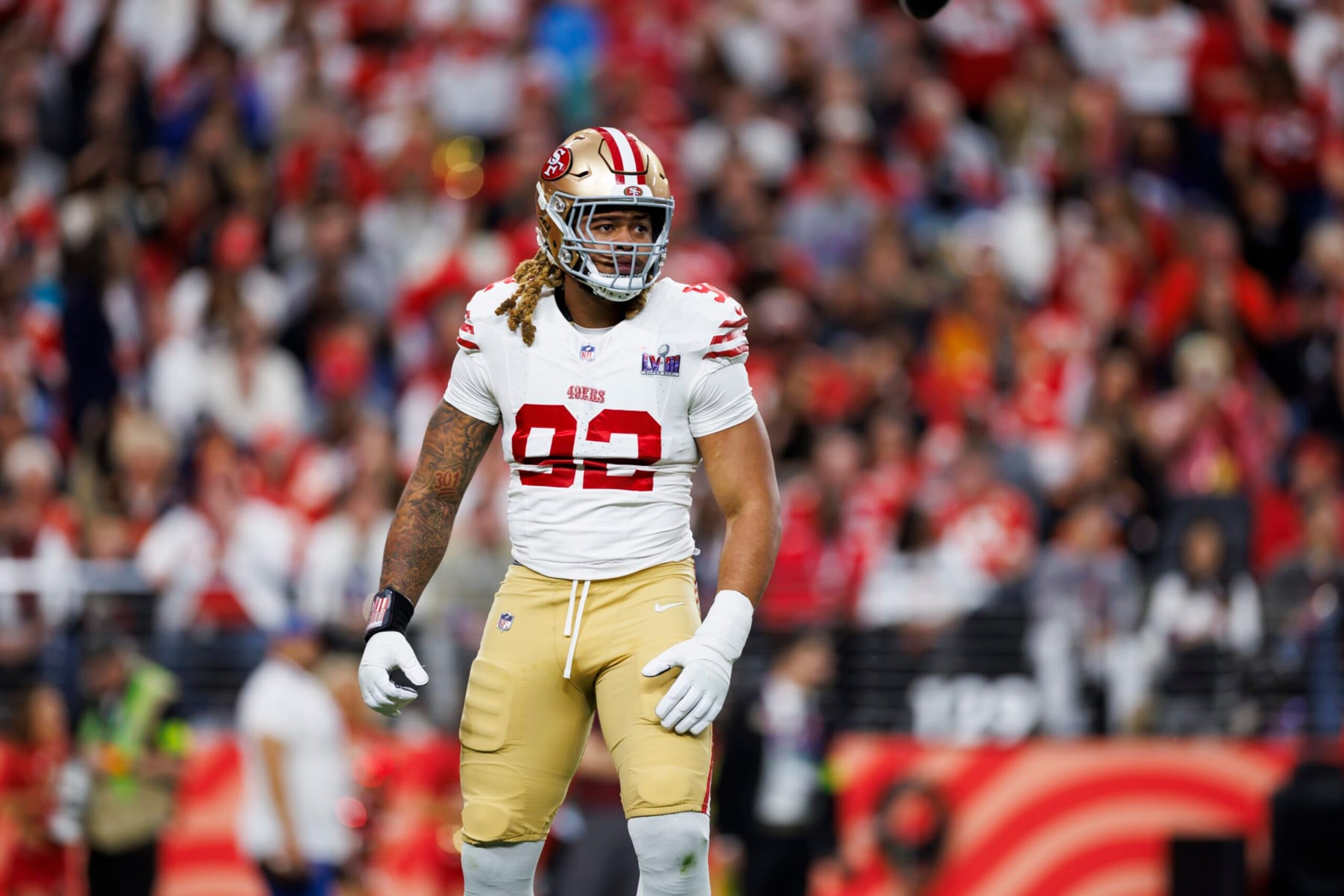
Chase Young was one of the more intriguing pass-rushers available on the open market this year.
While the 24-year-old has shown flashes of greatness since being picked No. 2 overall in 2020, including earning Defensive Rookie of the Year honors, he has tallied a meager nine sacks over his last 28 regular-season appearances.
The New Orleans Saints weren't deterred by that inconsistency and finally grabbed the young edge-rusher they had been coveting. After missing out on the top options in last year's draft, they elected not to take any chances this offseason by securing Young on a one-year contract worth $13 million.
Unfortunately for both Young and the Saints, this isn't a great fit.
New Orleans is overpaying for his services. His fully guaranteed deal is equal to the average annual value that fellow Saints defensive lineman Carl Granderson—who had 8.5 sacks last year alone—earned on his recent contract extension.
While it's not quite top pass-rusher cash, Young is still being paid like a top-30 talent at his position despite failing to consistently perform at that lofty level over his first four seasons.
The deal looks especially concerning after Young didn't elevate his game despite joining Nick Bosa and the rest of the San Francisco 49ers' elite defensive line following a midseason trade last year. He only mustered 2.5 sacks in nine regular season games with the club and managed just one quarterback takedown over three playoff contests.
Injuries have been a big part of the Ohio State product's NFL story thus far and are already derailing the start of his tenure in the Big Easy. While he may have recovered from a career-altering ACL and patellar tendon tear he suffered in 2021, he recently underwent a neck procedure that will keep him sidelined during the leadup to the 2024 season.
Even if New Orleans felt Young is still capable of taking a leap this year, it likely wouldn't be able to reap the benefits beyond the upcoming season and would struggle to afford his next contract.
The Saints are already projected to be a whopping $69 million over the 2025 salary cap and would be hard-pressed to fit a market-value deal in for Young if he performs at or above a level commensurate with his current pay.
Considering the team isn't exactly a contender right now—especially with the NFC South race looking much tougher following Kirk Cousins' decision to join the Atlanta Falcons—this signing doesn't make sense and doesn't really benefit either party.
.jpg?w=2560)
.jpg?w=2560 "Saints Lions Football")

.png?w=2560 "Money In The Bank Ends In Shocker 💼")
.png?w=2560 "Shocking CFB Top 25 Shakeup 🔢")
.jpg?w=2560 "Lane to Stay on Eagles' Roster")