
3 Alternative Plays Eagles, Teams Can Consider If NFL Bans Controversial 'Tush Push'
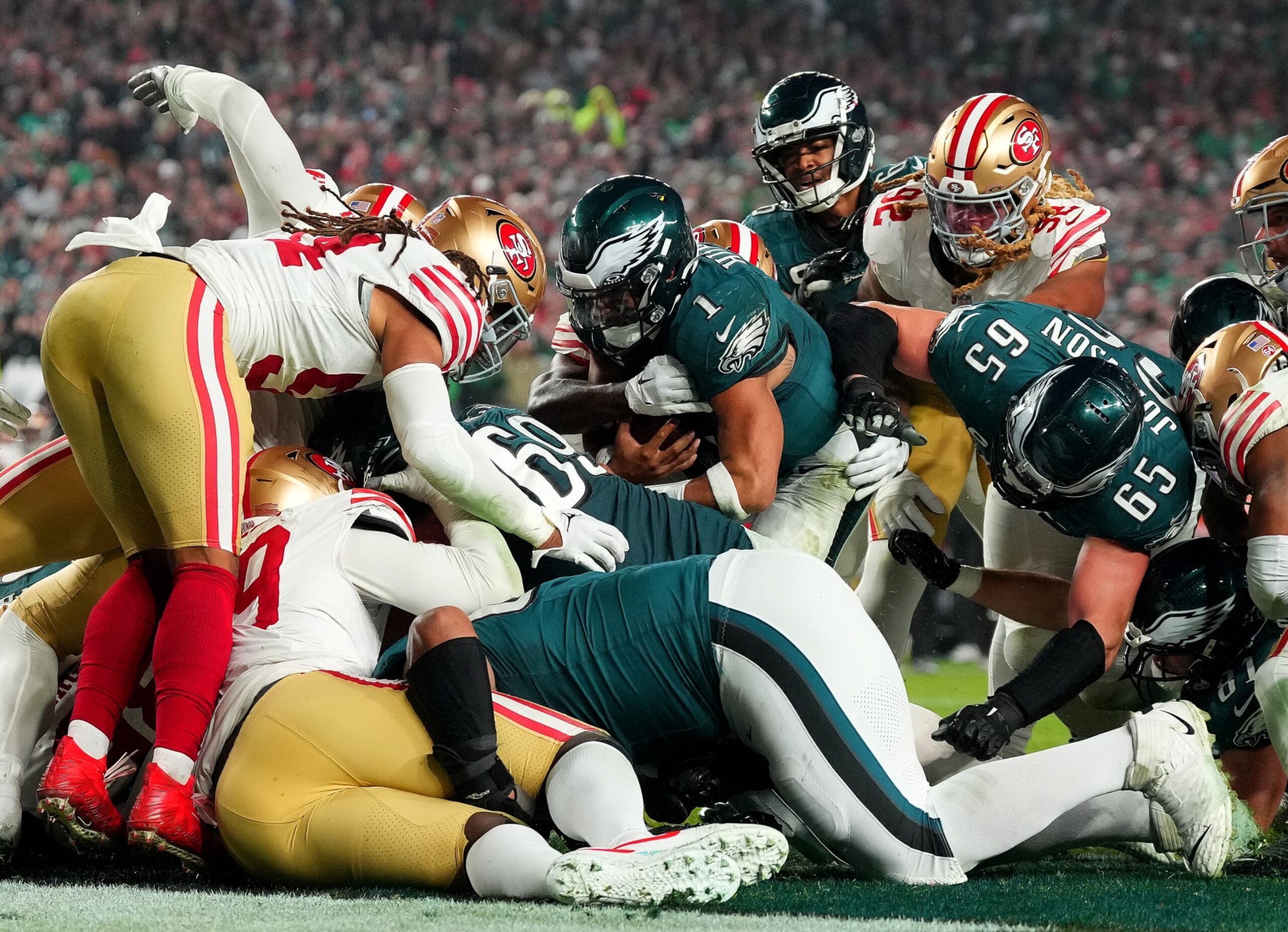
Their beloved "tush push" couldn't help the Philadelphia Eagles overcome the San Francisco 49ers in Week 13, but Philadelphia's most ubiquitous play has helped it often over the last couple of years.
A virtually automatic play for the Eagles in short-yardage situations, the tush push—or "Brotherly Shove"—has helped Philly convert a league-high 73.7 percent of its fourth-down attempts. The Eagles also rank third in third-down conversion percentage and sixth in red-zone touchdown conversions.
Other teams have tried to emulate the maneuver with varying degrees of success, but no one executes it quite like Philadelphia. The Eagles have essentially found a way to turn 1st-and-10 into 1st-and-9 on every series, giving them a decided advantage. That edge, though, could soon be a thing of the past.
According to The Athletic's Dianna Russini, NFL Commissioner Roger Goodell wants to see the play banned "permanently."
Here, we'll examine three short-yardage alternatives that the Eagles and other teams could consider utilizing moving forward. First, though, let's take a deeper look at the history of the controversial play and where it could be headed.
A Look Inside the 'Tush Push'
1 of 4
Even casual NFL fans are familiar with the tush push by now. In Philadelphia, the play involves quarterback Jalen Hurts lining up under center Jason Kelce with two players behind him. Hurts and the offensive line surge forward as one—not wholly unlike a traditional quarterback sneak—but the aforementioned players push Hurts from behind.
Resembling a rugby scrum more than a typical NFL play, the maneuver is extremely difficult to defend, and for a long time, was actually banned in the NFL.
In 2005, the NFL removed a stipulation in the rule book that prevented offensive players from pushing ball-carriers to gain yardage—pulling the ball-carrier in any direction remains illegal under Rule 12, Article 4.
While push plays aren't only advantageous for quarterback runs—we saw the Cleveland Browns push running back Jerome Ford for a 12-yard gain back in Week 10—that's where it has become most problematic.
If executed improperly, it can lead to injuries. The New York Giants learned this when they tried to execute their own version of the tush push earlier in the year, only to see both John Michael Schmitz and Daniel Bellinger go down. If executed properly, it nearly nullifies the risk of going for it on 4th-and-short.
The latter aspect seems to be the bigger issue.
"From everything I have been told by multiple league sources, injuries aren't happening as much despite big bodies ramming into each other every week when the play is used," Russini wrote.
If the push play is banned, preventing teams like Philadelphia will likely be the reason behind it—along with the fact that it's not exactly aesthetically pleasing. As Russini noted, the Eagles don't have a representative on the NFL competition committee, but the Dallas Cowboys, New York Giants and Washington Commanders do.
If the tush push does become a thing of the past, teams like Philadelphia will have to innovate, or perhaps revert to more traditional plays, to replace it.
The Fullback Dive
2 of 4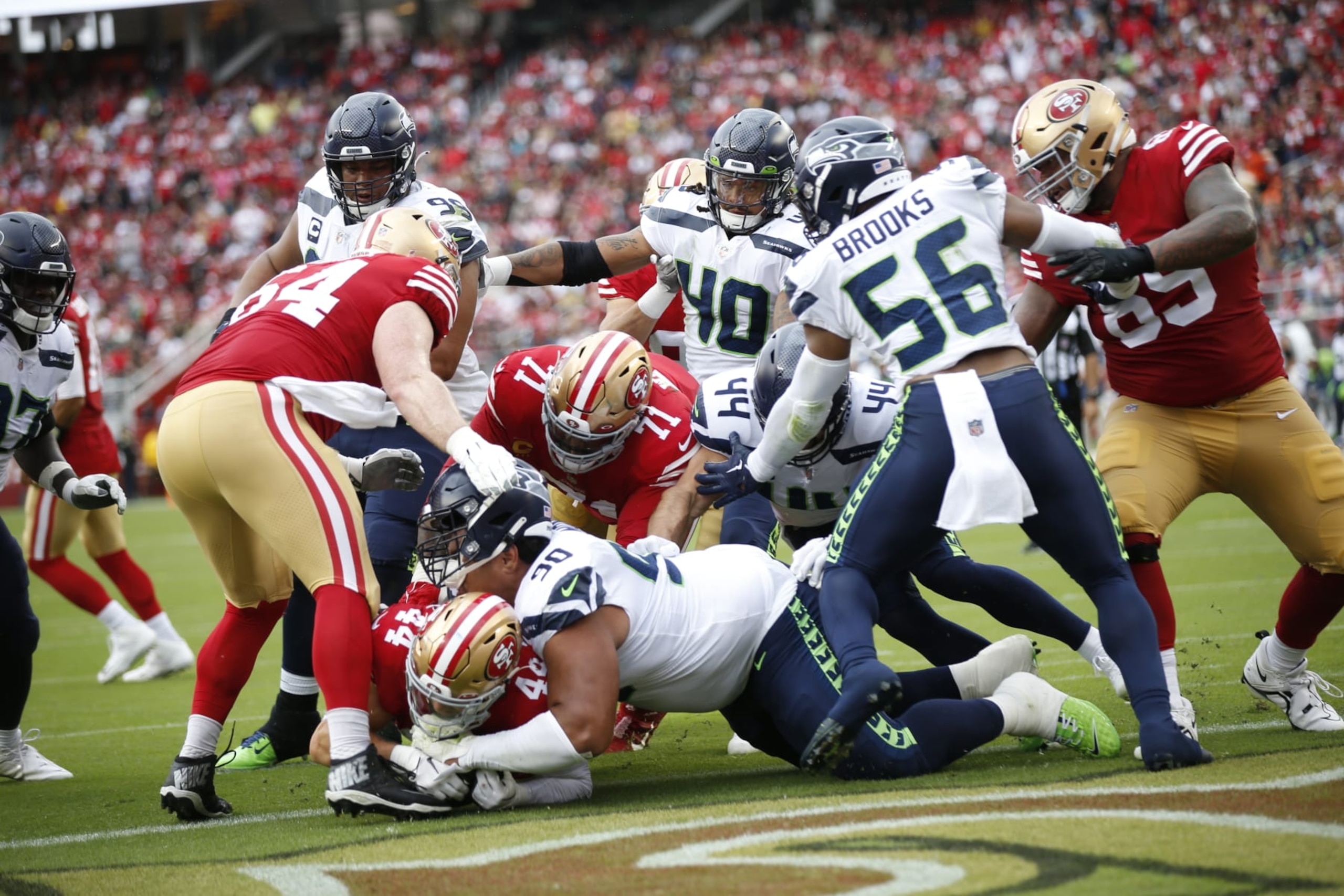
There's a big reason the push play works for the Eagles more than other teams, and it has little to do with the actual pushing. Hurts is a powerful 223-pound quarterback with tremendous lower-body strength—videos of him squatting 600 pounds in college aren't hard to find on the internet.
Whether he's pushed or not, Hurts can generate enough momentum to drive would-be tacklers backward, which already gives him an edge in short-yardage situations. Add in the fact that Philadelphia's interior offensive line is strong enough to move the line of scrimmage, and you have a recipe for success even without the added effort.
Not every team has a quarterback who can power-run like Hurts can. For those teams, swapping out the quarterback run for a fullback dive could be the answer.
There are two advantages to running a quick-hitting fullback dive. For one, the fullback is typically closer to the line of scrimmage than the halfback, meaning he often has a chance to hit the line before the defense is fully set. This video of San Francisco 49ers fullback Kyle Juszczyk running the fullback dive is a great example.
Secondly. fullbacks are generally bigger and stronger than their tailback brethren, giving them a chance to carry defenders or burst through arm tackles.
Having a fast, athletic fullback is ideal, but size and power can compensate in short yardage. Alternatively, teams could reintroduce the idea of utilizing an athletic tight end, offensive lineman or defensive lineman on dive plays—a la William "Refrigerator" Perry. Adding a direct snap to the mix could further keep opposing defenses off-balance.
With NFL defenders getting lighter to counter the league's growing emphasis on offensive speed, bringing size and power back into the equation could be advantageous. And while many NFL teams no longer employ a traditional fullback, if someone finds consistent success with fullback runs, it could bring the position back into vogue.
The Jet Sweep
3 of 4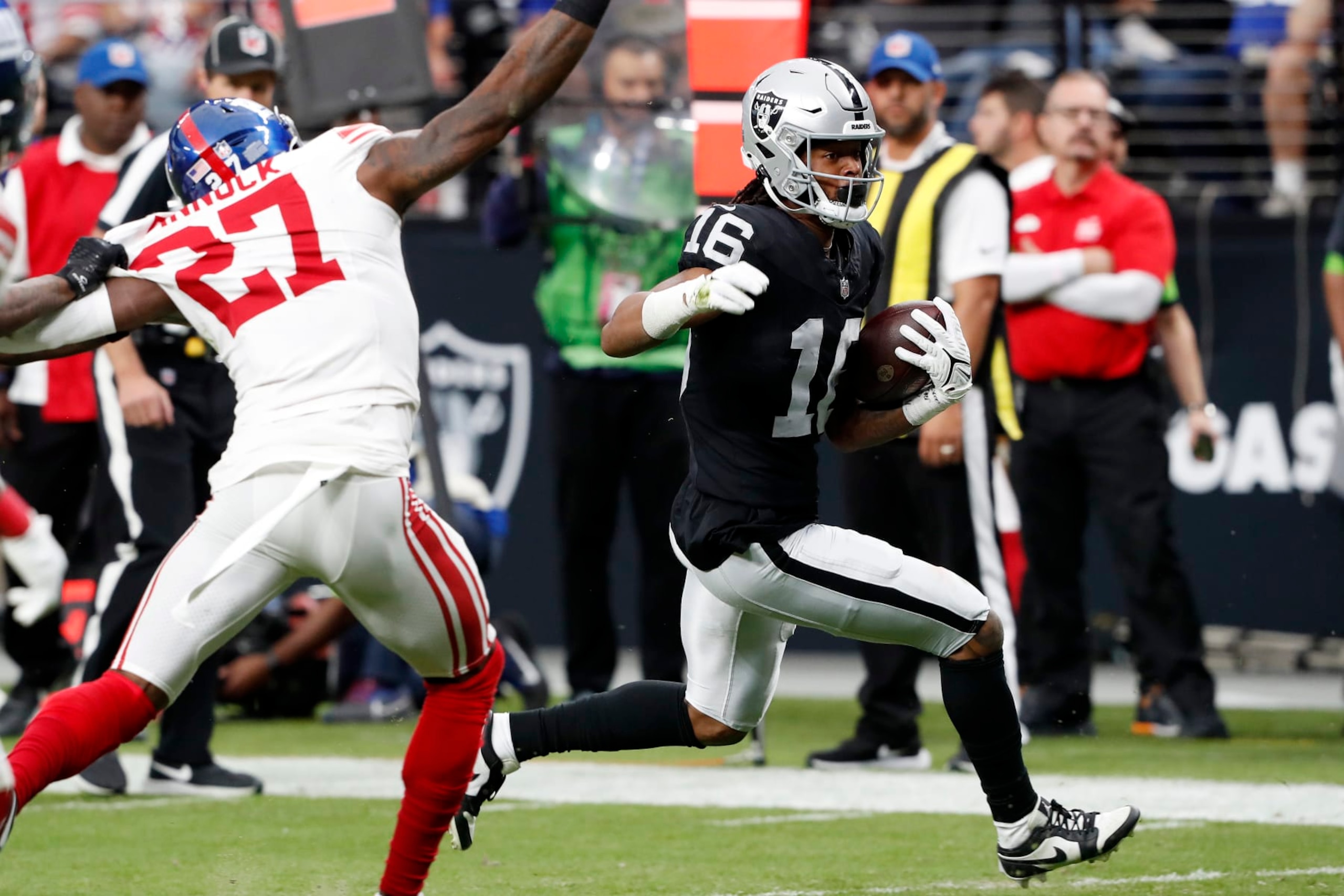
Whether it's a quarterback sneak, a fullback dive or a direct snap to a tight end, successful inside running in short yardage requires a powerful interior offensive line. The push play wouldn't work so consistently for Philadelphia if the offensive line was regularly being knocked back at the snap.
Teams without an elite interior could consider utilizing the jet sweep and its many branching iterations.
The play usually involves one of the offense's fastest players (usually a wide receiver) running at full speed horizontally toward the sideline pre-snap, taking a handoff or direct snap and trying to beat the defense to the edge—often with another receiver or tight end prepared to block out wide. It can be an effective short-yardage play because it spaces out the opposition.
While defenses usually try to crowd the line of scrimmage in short-yardage situations, they can't just let a potential ball-carrier run free toward the perimeter. This keeps the defense a step behind the offense, which has options.
Depending on how the defense is aligned, the offense can allow the sweeping player to try breaking a one-on-one tackle on the outside or switch to an inside run against a lighter box.—this video of Las Vegas Raiders wideout Jakobi Meyers scoring on a jet sweep is a great example of the first option.
Teams can also incorporate quarterback runs, reverses and passes off jet motion to further keep defenses off-balance.
While the jet sweep is a bit of a throwback design, now often more associated with high school and college football than the NFL, it can be successful if executed well.
In October, Alex Vigderman and James Weaver of Sports Info Solutions, writing for The 33rd Team, examined short-yardage plays from the 2022 and (to that point) 2023 seasons. They found that while not utilized frequently, the jet sweep had the second-highest short-yardage success rate (80 percent) behind the quarterback sneak (84 percent).


.jpg?w=2560 "Cardinals Giants Football")
The Traditional QB Sneak
4 of 4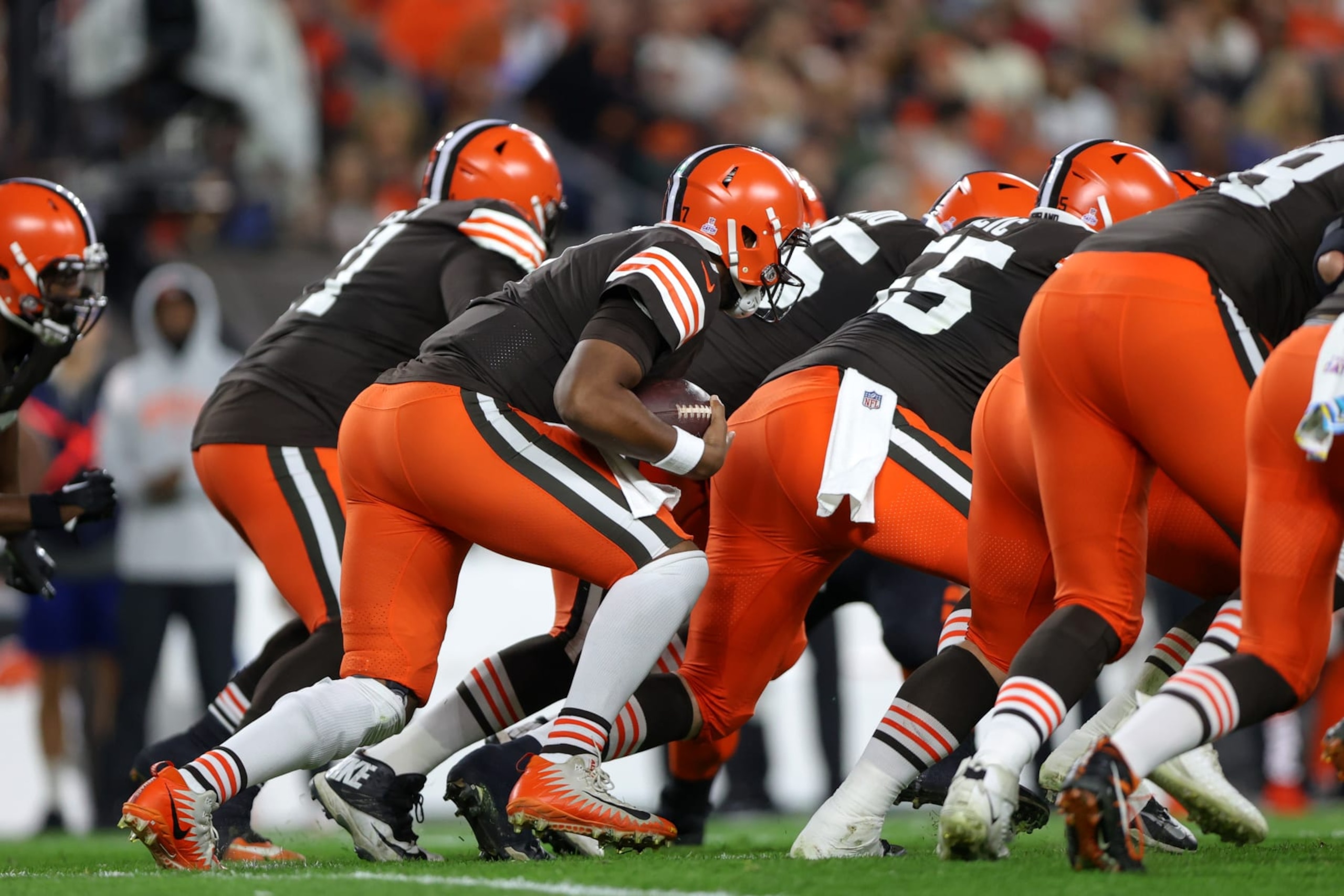
If the tush push is ultimately banned again, teams like the Eagles will likely turn back to the traditional quarterback sneak in short-yardage situations.
A fairly straightforward concept—there's nothing "sneaky" about it—the quarterback sneak involves the signal-caller lining up directly behind the center and close to the line of scrimmage. The offense then hopes to get a strong surge up front, with the quarterback then pushing himself behind the line for a short gain.
While the quarterback doesn't have the advantage of being pushed from behind, he does have options. He can push/fall forward behind the line, as Cincinnati Bengals quarterback Jake Browning did for a touchdown on Monday night. He can also try stretching the ball over the top, as Jacksonville Jaguars quarterback Trevor Lawrence did in that same game.
The latter approach is riskier because it's easier for a defender to dislodge the ball, and it's best reserved for the goal line—where fumbling after the ball crosses the outer edge of the goal line is inconsequential.
The beauty of the quarterback sneak is in its simplicity, and it doesn't require a size-strength outlier at quarterback to execute. Tom Brady was never one of the biggest, fastest or strongest quarterbacks in the NFL, but he finished his career with 28 rushing touchdowns due to his ability to successfully run the sneak.
It certainly does help, though, to have a quarterback with length and enough strength to fight for those extra inches in the scrum.
That's why it wouldn't be a shock to see some teams keeping a "sneak specialist" on their quarterback depth chart specifically for short-yardage situations—and to mitigate the risk of injury to the starter. We've seen multiple teams bring in backup quarterback Jacoby Brissett for that role over the years.
"I'm 6'4", so I'll get one yard laying down," Brissett said, per Tom Withers of the Associated Press.
Theoretically, the emergence of quarterbacks who specialize in short yardage would add an interesting new dynamic to roster building while potentially allowing a few more signal-callers to stick in the NFL and develop.
Of course, if one franchise uncovers a sneak specialist who is head and shoulders above the rest, we could be right back where we currently are with the tush push.
*Advanced statistics from Pro Football Reference.
.jpg?w=2560 "Jets Dolphins Football")

.jpg?w=2560 "Ward Nearly Walks Out of Presser ▶️")