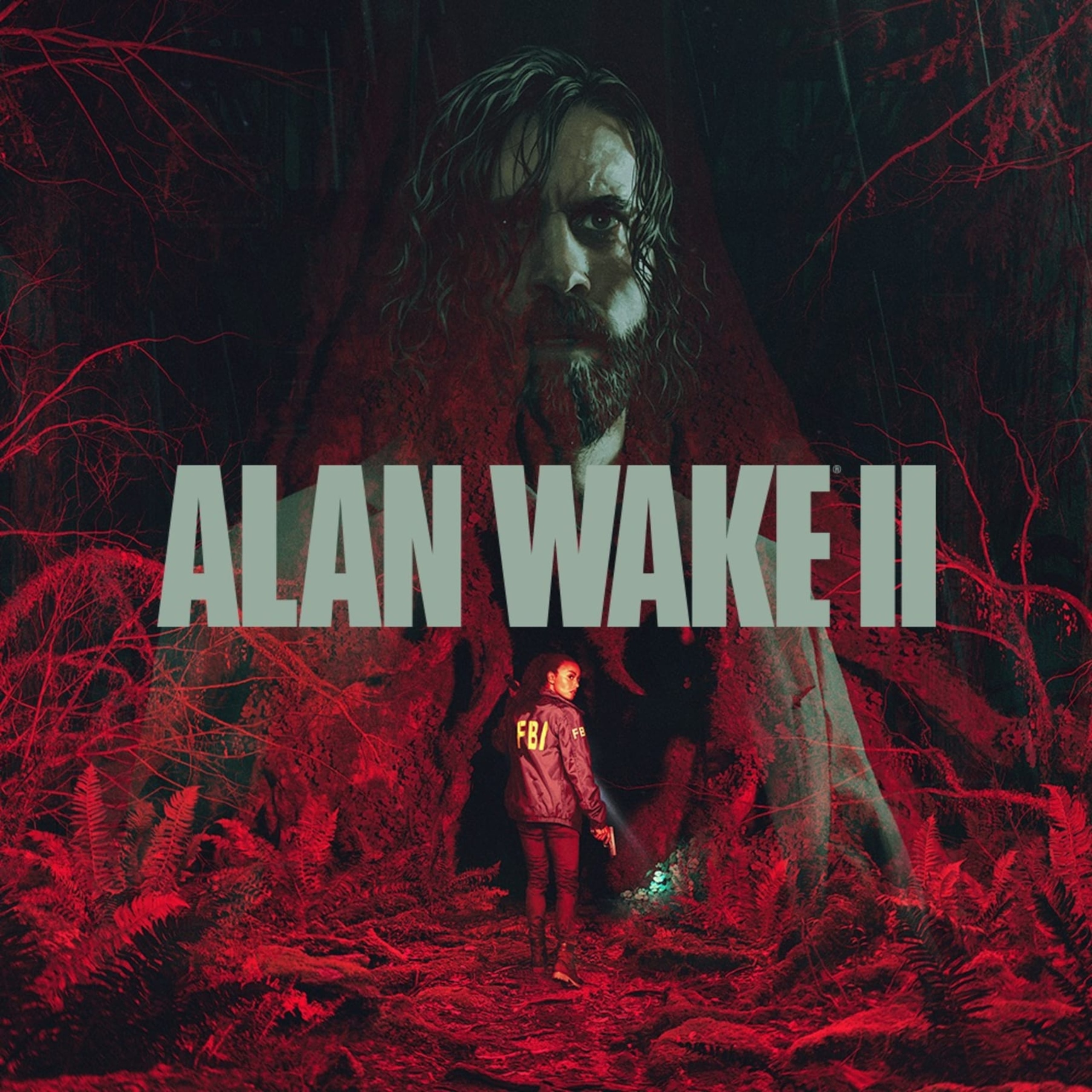

Alan Wake II from developer Remedy Entertainment arrives as one of the most unique video game experiences of the modern era.
This is no surprise to those who played the first game 13 years ago and has experience with other fantastic Remedy properties over the years.
As a sequel, the game does hit on the expected upgrades—but adds its own flavor. Alan Wake himself is still trapped in the Dark Place all these years later and he's accompanied by a new second protagonist.
TOP NEWS

Malachi Toney Sets ANOTHER Record
.jpg?w=2560 "NBA Gambling Charges")
Malik Beasley Negotiating Plea Deal (AP)
🚨 Volkanovski Retains UFC Title
Along the way, the single-player experience twists and turns like gripping fiction the likes of its protagonist writes, zipping from action to psychological terror to survival horror in ways no games have attempted.
Supremely polished and boldly experimental, Alan Wake II arrives looking like it has the ability to challenge the biggest hitters from a stacked 2023 Game of the Year race.
Graphics and Gameplay
Alan Wake II is one of the most captivatingly immersive experiences in gaming, which works to its advantage as it whisks the player away on a wild, tension-filled ride of suspense, outright horror and sudden emotional changes.
From a very basic video game stance, the game is a jaw-dropper that flexes at every turn after leaving last-generation consoles behind. Environments are packed with details, the physics of items and hair rarely experience a hiccup and the lighting and shadow work is a critical part of the package.
Advanced details further the immersion in a way most games can't dream of achieving. Reflections in water are stunning, foliage moves accurately when brushed aside and the coastal side of things feels, in a word, natural, if not dense, while even grimy papers flip off into the air mid-combat in the more urban New York side of the game's settings.
We often write that a game's visuals are so good it could, at first, fool onlookers into thinking they're watching a television show or movie. That's actually the case here, given how the game leaps from in-game graphics to live-action cutscenes on a whim, sometimes leaving players initially not realizing the change even happened.
None of this works without superb sound design too. Given Remedy's history, great voice-acting is a given. But the dynamic directional audio and bone-chilling sounds, be it the patter of rain on different surfaces during a lonely forest jaunt or the screams of possibly real people while slinking along tight corridors is a frighteningly good, tension-inducing experience.
Alan himself is stuck in the Dark Place, which creates some interesting gameplay wrinkles that marry to the presentation incredibly well. The morose author has a wand-like gadget that lets him redirect light from a source and push it elsewhere, which opens up new parts of levels in a jarring-but-engrossing level of interactivity with the world.
Wake isn't assembling evidence this time so much as he's uncovering pieces of stories he's written and arranging them in a way that alters his world and outcomes.
More traditional is someone he's written and the player controls, the FBI's Saga Anderson. It's fun to wield her weapons and engage in a more typical combat experience while trying to unravel the mysteries of Bright Falls and how they relate to Wake.
Along the way, Saga uses detective abilities that aren't totally unfamiliar either, creating a nice gameplay loop that feels like a nod to the last game while Wake himself gets to offer up something newer.
The game just toys with players by mixing the presentation and gameplay to uncomfortable degrees. Many of the people-like shadows the characters encounter will just wisp away—until one of them doesn't and attacks. It's just another one of those little things that keep players on edge throughout the entire game's runtime.
Combat itself exists in this weird space where it is exceedingly fun and players will be drawn to seeking out as much of it as possible. Even after all these years, hitting an enemy with a flashlight beam and then pumping them full of lead—or pulling off the quick-swap to a shotgun—feels so good. That's especially true when players can skillfully hit new critical spots that inflict more damage and therefore save ammo.
And yet, those who seek it out won't really get it because, fittingly, this isn't a combat-based narrative. Ammo isn't easy to come by and non-engaging moves like dodges are so responsive, so fluid, that it's clear the game is more about evasion. Alan and Saga are not super soldiers, after all. But they do, at least, come with a sprint button this time, so no more huffing-and-puffing Alan like in the first game.
Actual enemies vary in the best way possible, too. Normal shadowed enemies persist, but the characters will often encounter big plodding guys with weapons, quick little animals and horrific monsters fit for a Stephen King novel, each requiring careful management from players to survive. This is especially the case for each of the game's memorable boss fights.
And look, for veterans of Remedy games, one of the criticisms was that all of this immersive world-building goodness was sometimes bogged down by excessive fighting in the first game, and even Remedy Entertainment's Control from 2019, so it's nice to see the sequel so bold as to turn it down and really play to its unique strengths.
The actual grid inventory, where players juggle med packs and other items, feels solid despite it sounding archaic. Expanding that inventory with supplies comes from careful exploration of the environments, giving players reason enough to get uncomfortable turning over every nook and cranny of each space.
One thing bound to pop up in critiques of the game is the manner of roadblocks thrown in each character's way. Another oh the power went out right as you arrived moment to block a door does get a little exhausting. While this sort of narrative technique works well on the written page, it gets a little lost in translation in a video game landscape and therefore feels a little outdated.
Even that's a small gripe though because once the game in all of its stellar aspects gets its grips on a player, it's near-impossible to put down.
Story and More
There's no sense in potentially spoiling even a little bit of what turns out to be an endlessly captivating story here.
Right out of the gates, certain set pieces grip the player and toy with expectations in a way most games wouldn't dare attempt. It feels like a product of being comfortable with the risk and having done it so well for so long.
Taking place 13 years after the original, Wake is again trying to find the right words to save the day, or so to speak. Meanwhile, Saga's tale is very interesting, even if the just figures things out vibe she gives off sometimes is a letdown for video game players who desire a bigger role in being a part of the problem-solving process. Even this is a minor nitpick though—she's clearly got some supernatural things going on, too.
Bright Falls itself is again a fantastic character in its own right. Things aren't always what they seem and this is a master class in environmental storytelling that rewards a player for paying close attention. Even the fact its locals act like they have always known Saga despite her being a new arrival falls into the unsettling column.
The game weaves a very complex tale, which the game thankfully massages over via Saga's well-done case board, where players must tack on and organize every single piece of, well, everything they come across.
It all ends up feeling more worth it this time, too, considering the first game ended on a cliffhanger and the American Nightmare follow-up didn't do much to resolve it.
It's not a surprise that Remedy crushes it with the writing, whether it's depressed detective Max Payne shooting off cheesy one-liners ("I had a hole in my second favorite drinking arm...") or even fourth-wall moments that will leave players grinning.
This sequel even thankfully shares some cohesive feeling with Control, which shares the same supernatural-but-grounded world. In some cases, characters from that game are, wildly enough, present in the world of Bright Falls for those who pay attention. And in some cases, like Alan's lamp/wand that redirects light and changes the world around him, it's almost the same thing as flicking the light switch in the Oceanview Hotel to Oldest House and vice versa.
Progression beyond the storyline is basic, albeit in a good way with skill trees. It becomes pretty apparent that careful decisions will be much more important on the hardest difficulty.
Those trees do feel a little unbalanced in favor of Alan, which makes some sense given he's the game's namesake and Saga is new. Still, he's got 20-plus skills that are upgradeable multiple times, while Saga has just a handful of things to upgrade and level.
This game is technically impressive in that it runs well and switching between the worlds and the Mind Place is a seamless jump each time. By now, gamers have probably heard that mileage will vary greatly on PC given the heavy requirements, but even medium settings looks and feels good on older hardware.
DualSense support and haptic feedback makes it in too and three difficulty levels let players of all ranges enjoy the immersion, whether it's a straight story experience or a brutal grind.
Conclusion
It almost feels like the technical horsepower has finally caught up to the grand vision of Remedy's world. Not that the first Alan Wake was a slouch, but this is a whole different must-experience beast entirely.
Alan Wake 2 remains a step ahead of the entire industry just figuring out how to effectively tell interactive stories by subverting them in uncomfortable ways with an almost gleeful, malicious stroke of intent.
In that way, it does much more than hit the expected upgrades for a sequel to an Xbox 360 game from 2010.
So much so, it's safe to classify Alan Wake 2 as an instant classic. Maybe it doesn't reel in GOTY in a stacked 2023 lineup, but the fact it's shoving others aside and standing on its own—with serious staying power—is an incredible accomplishment that rewards all involved after such a lengthy wait.

.jpg?w=2560 "Jonathan Taylor Landing Spots")

.jpg?w=2560 "Aikman Blasts Cowboys WR 🫣")