
Every NBA Team's Top 3 Trade Assets
With rosters set and the regular season mere days away, most NBA teams are focused on what they've got. But it won't be long until the ups and downs of the early season shift their attention to what they need...and what they can give up to get it.
Here, Bleacher Report NBA staff writers Grant Hughes and Dan Favale will run down each team's top trade assets ahead of the 2023-24 campaign.
This is a situation-specific exercise, so we won't often feature premium draft picks among the top assets for rebuilding organizations. Similarly, we'll keep pricey veteran stars off the table for squads trying to contend.
The San Antonio Spurs could get an unprecedented return for Victor Wembanyama, and one would imagine Nikola Jokić would fetch a handsome price if the Denver Nuggets put him on the block. But neither franchise would dream of parting with either of them. Those are extreme examples, but you get the idea.
We're limiting the lists to picks and/or players who could reasonably be available and that the team in question could justify moving in service of some overarching plan.
Games haven't even started yet, but #TradeSZN never stops.
Atlanta Hawks
1 of 30
Top Assets
- AJ Griffin
- De'Andre Hunter
- 2029 first-round pick
Rookie-scale wings are always coveted, and Griffin has real scoring chops, both as a complementary shooter and on-ball creator. His defense needs to tick up, but with three years of cost-controlled money left on his deal, he's critical to any blockbuster trade the Atlanta Hawks might pursue.
Hunter isn't necessarily in the same camp. His shot has proved come-and-go, he's solid-yet-unspectacular on defense, and the four-year, $90 million extension he signed last year kicks in this season. Even so, he fills the three-and-D archetype. The money might be a tad steep, but it also may never take up 15 percent of the salary cap.
Rounding out the asset trio is a distant first-rounder. Short-circuiting the long-term future of an aggressively unexceptional team is never a bad idea. This pick, which stretches to 2029 because of Atlanta's 2027 obligation to San Antonio, holds more appeal than Kobe Bufkin, the soon-to-be-more-expensive Onyeka Okongwu, Jalen Johnson, Saddiq Bey (extension-eligible), Bogdan Bogdanović or Clint Capela.
Include Dejounte Murray (trade-eligible after Jan. 8) or Trae Young if you're so inclined. Barring disaster, the Hawks profile as buyers. Improving your title chances while moving either of them is unlikely.
-Favale
Boston Celtics
2 of 30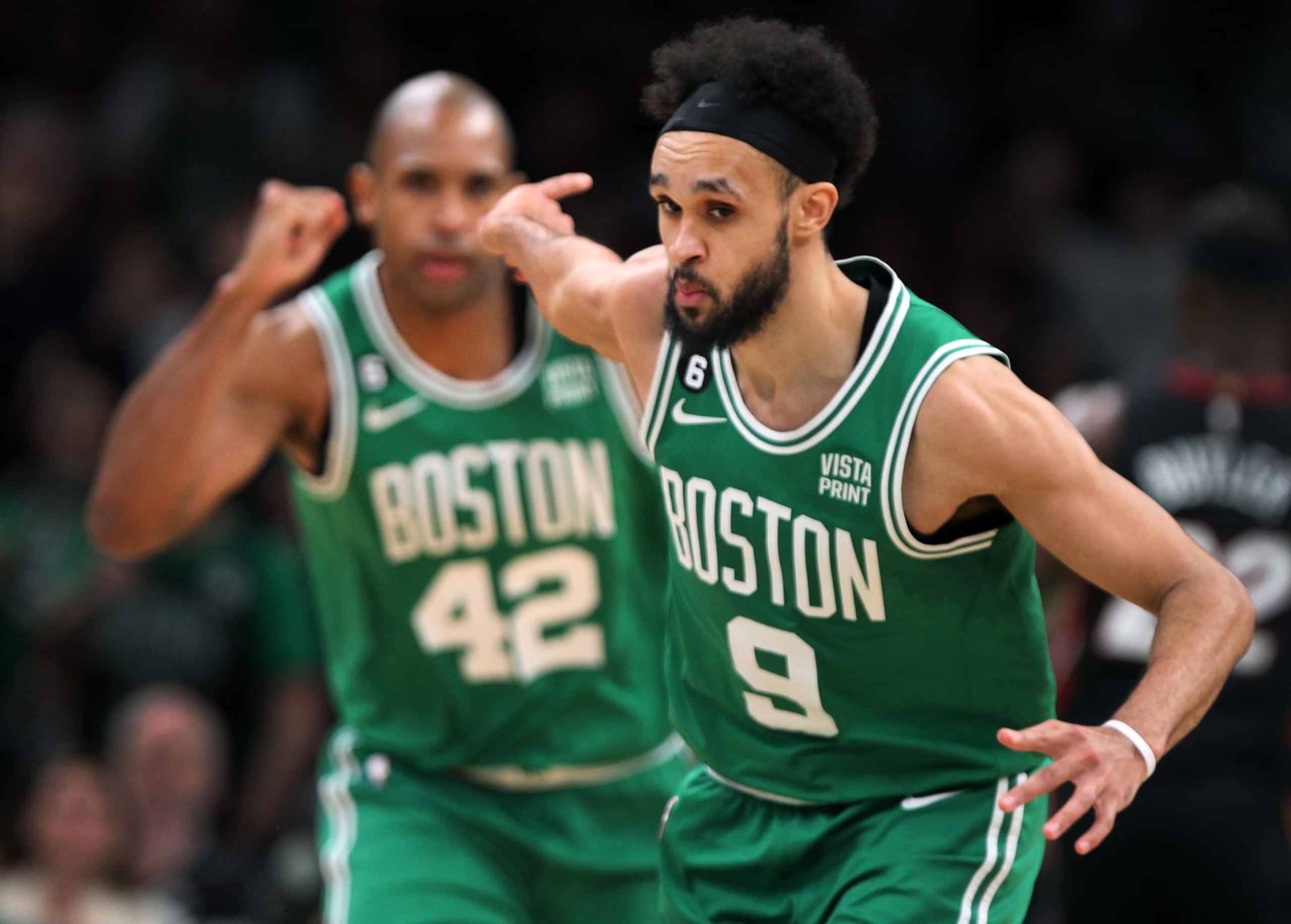
Top Assets
- Derrick White
- 2025 first-round pick
- 2027 first-round pick
White is basically the only option for the Boston Celtics when considering actual players. Jaylen Brown (can't be traded until next July) and Jayson Tatum are untouchable. Not all teams will consider Kristaps Porziņģis an asset on his new deal, and Boston only just bagged him and Jrue Holiday.
Al Horford and Payton Pritchard (just extended) deserve consideration. Neither earns enough to serve as a salary anchor. White's $18.4 million take-home is the cleanest matching tool, and 26 to 29 teams would pounce at the opportunity to land his All-Defense malleability and offensive connectivity.
Granted, the Celtics should only be looking to move White in yet another mega trade. Hence the inclusion of 2025 and 2027 first-rounders.
In all likelihood, the Celtics will wind up futzing and fiddling on the margins, if they do anything at all. Breaking up their league-best top six would be a massive risk after taking a series of others this past offseason.
At the same time, it's a little wild that they acquired Holiday and Porziņģis while moving Marcus Smart and Robert Williams III and still have the asset ammo to make a biggish-or-larger move.
-Favale
Brooklyn Nets
3 of 30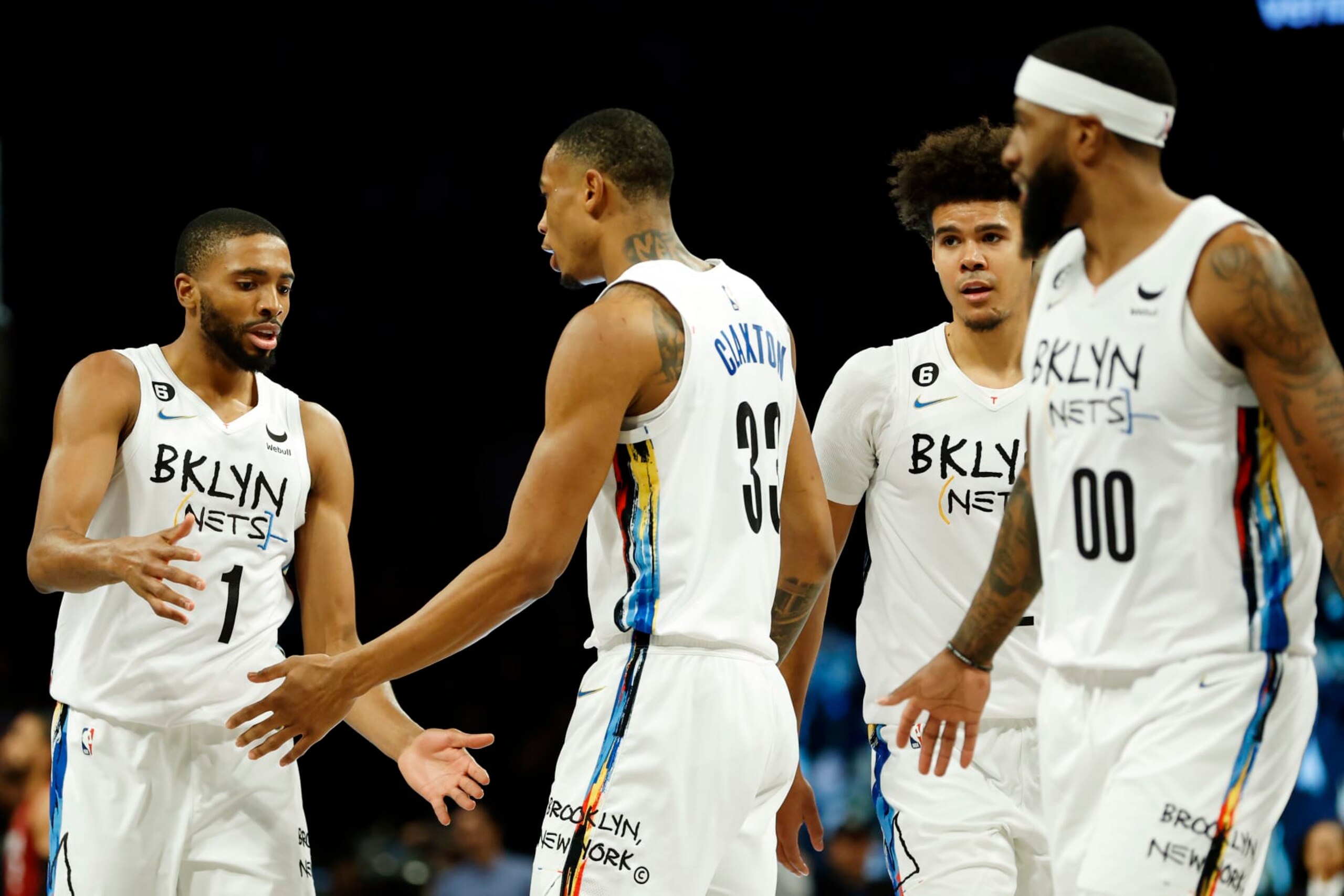
Top Assets
- Phoenix Suns 2027 first-round pick
- Dallas Mavericks 2029 first-round pick
- Phoenix Suns 2029 first-round pick
Rolling exclusively with draft picks for the Brooklyn Nets makes one massive assumption: They will function as buyers rather than potential sellers.
If that logic crumbles, then Mikal Bridges and Nicolas Claxton absolutely belong here. (Though, to be fair, Claxton's impending 2024 free agency detracts from his value.)
Throwing one of Brooklyn's complementary wings or larger salary-matching contracts onto the table is fair game. But sellers won't treat Ben Simmons (two years, $78.2 million) or Spencer Dinwiddie (expiring at $18.9 million) as value adds beyond potential cap flexibility. Dorian Finney-Smith (three years, $44.2 million; 2026-27 player option) and Royce O'Neale (expiring at $9.5 million) will pique the most interest from contenders who most likely won't be sending out impact talent.
And so…picks!
Shorting the futures of Dallas and Phoenix will make certain sellers swoon. Kevin Durant's age and the roster's wild-card depth almost immediately renders the Suns combustible. The Mavericks are still trying to actively not give Luka Dončić reasons to window shop. Gleaning unprotected firsts from both franchises that are at least four drafts away is a worthwhile home-run swing.
-Favale
.jpg?w=2560 "NBA Gambling Charges")

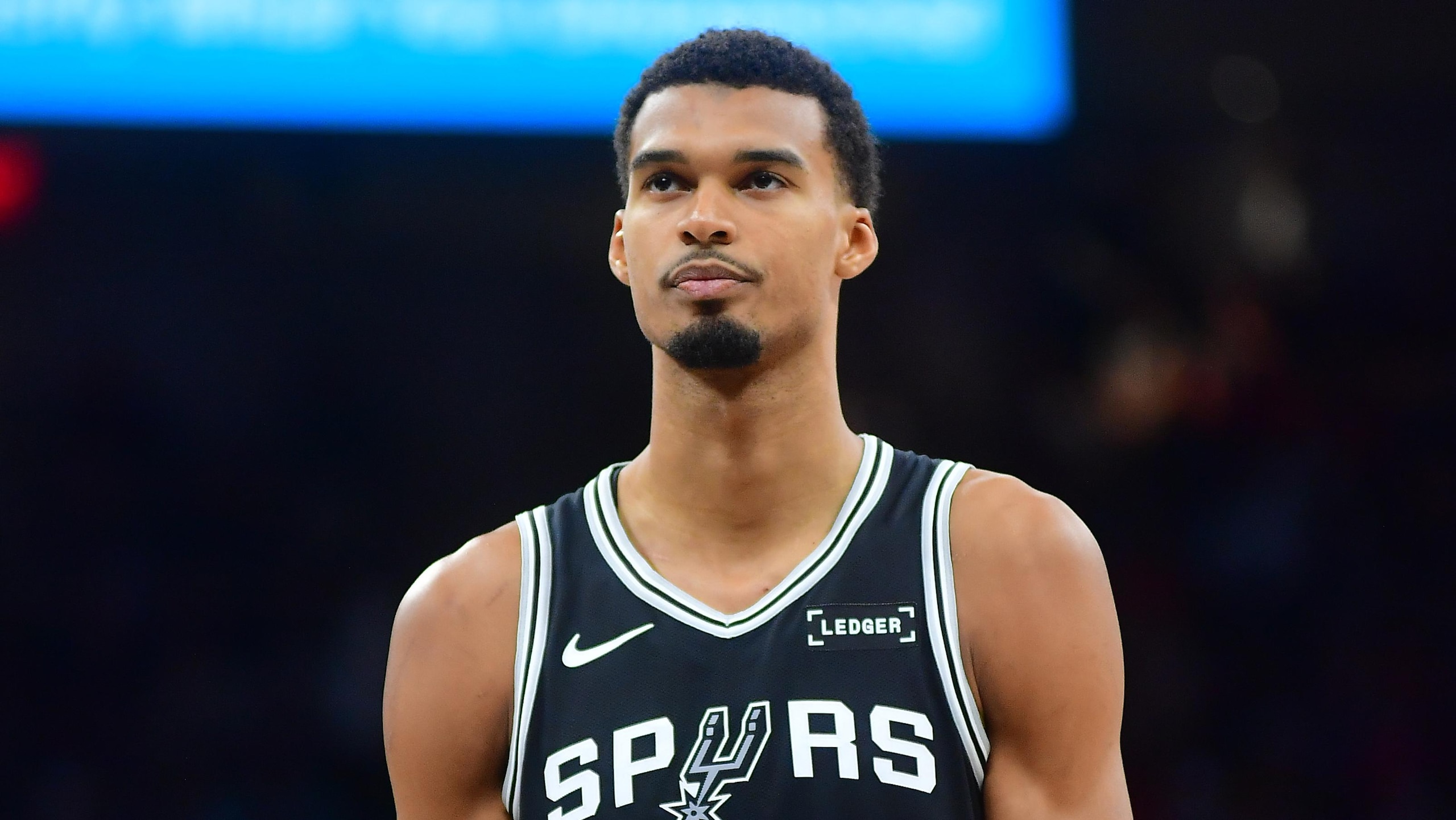
Charlotte Hornets
4 of 30
Top Assets
- Gordon Hayward (expiring)
- Cody Martin
- Terry Rozier
This is my mega-shrug team. I could see the Charlotte Hornets attempting to (rather inexplicably) consolidate into a star after giving LaMelo Ball a max extension and ushering in new majority ownership. But I'm choosing to believe they're not that shortsighted.
LaMelo and Brandon Miller should be non-starters. Ditto for any of Charlotte's own first-round picks. Let's go ahead and throw Mark Williams into this group, too. His burgeoning perimeter touch and appetite for blocked jumpers are worth retaining when taking the gradual approach.
Excluding P.J. Washington is a tough call. He's not quite cornerstone material. But his contract is a freaking steal (three years, $46.5 million), and the Hornets clearly don't have a 4 of the future on the roster aside from him.
That leaves the money owed to Hayward and Rozier (three years, $74.7 million). They can be used to bring back less-savory deals attached to pick or prospect equity.
And then there's Martin. Ankle and knee issues derailed his 2022-23 campaign, but he's the consummate low-usage two-way gap filler who's under team control at sub-$9 million per year through 2025-26.
-Favale
Chicago Bulls
5 of 30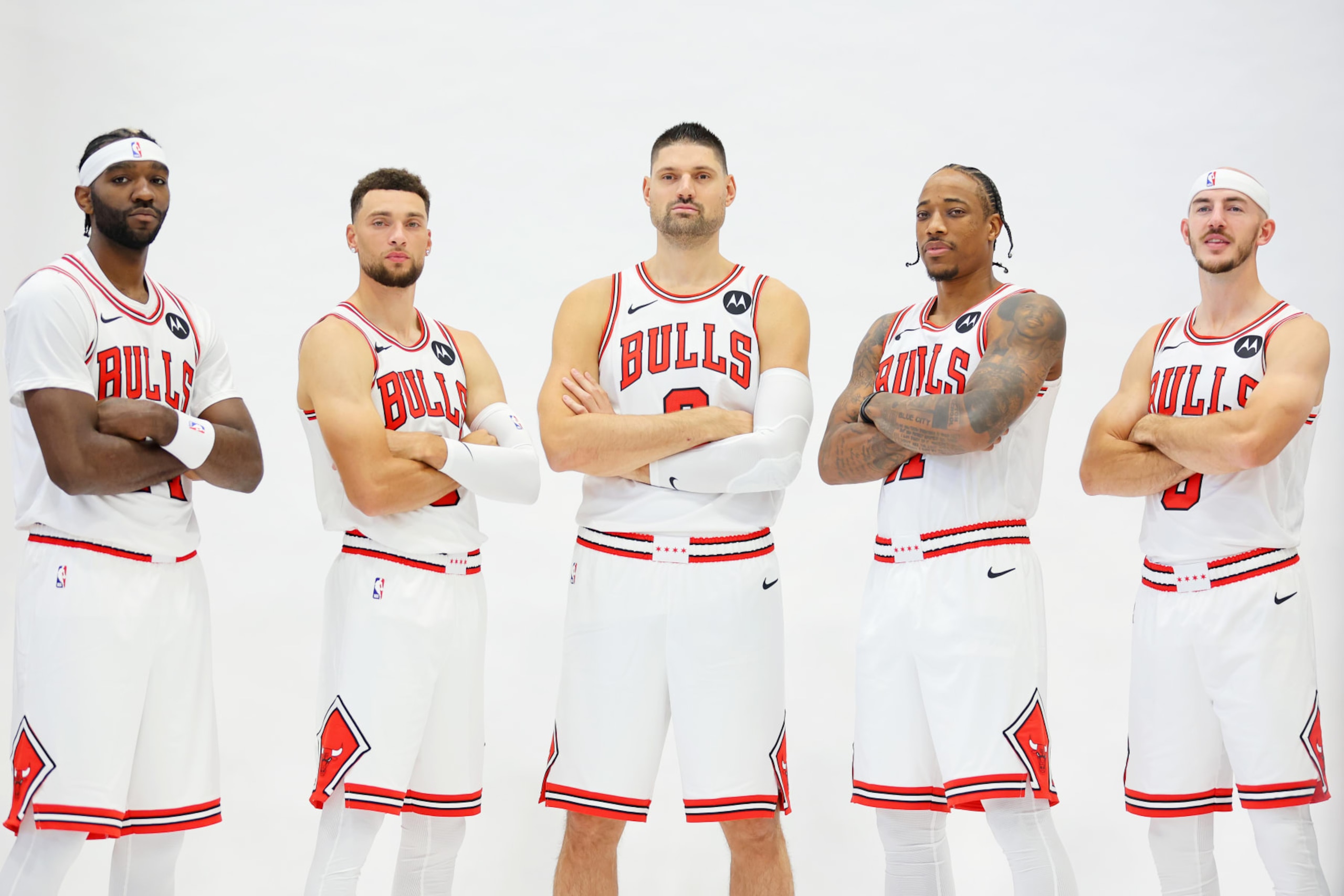
Top Assets
- Alex Caruso
- Patrick Williams
- 2027 first-round pick (first allowable, through 2030)
Everything the Chicago Bulls did over the offseason telegraphed that they remain a team concerned with the here and now. That automatically removes DeMar DeRozan and Zach LaVine from the chopping block.
In their absence, we turn to, well, Chi Town's next most attractive assets: Alex Caruso's filthy-cheap contract (two years, $19.4 million) and defensive ball pressure; the enduring intrigue of the extension-eligible Patrick Williams, who improved his defensive rotations a great deal last season; and the earliest first-rounder the Bulls can move, pending their 2025 obligation to San Antonio (top-10 protection in 2025, then top-eight protection through 2027).
First-rounders probably have more individual value than anything else. Caruso is on the older and non-starry side for rebuilding teams jettisoning impact players. Williams could seize the crown if his next deal leans more team-friendly.
Prospective alternatives, meanwhile, are tough to come by. The Portland pick that Chicago owns is lottery protected until the end of time, Lonzo Ball's knee issues torpedo his value, and nobody's prioritizing Coby White (trade-eligible after Dec. 14) and Ayo Dosunmu (trade-eligible after Jan. 14) once their restrictions are lifted.
-Favale
Cleveland Cavaliers
6 of 30
Top Assets
- Jarrett Allen
- Isaac Okoro
- Caris LeVert (after Dec. 14)
Looping in Allen will probably seem controversial. It's not. The Cleveland Cavaliers aren't touching the trio of Darius Garland, Donovan Mitchell and Evan Mobley, and their dual-big setup could still pose spatial issues even after adding Max Strus.
Make no mistake, Allen is a terrific defensive player with a slightly deeper offensive armory than credited who's on a bargain-bin contract (three years, $60 million). He's also the core player easiest to functionally approximate.
Absent any movable first-round picks, Cleveland's timeline is immediate enough that Allen cannot be considered untouchable if the ideal wing becomes available and said wing's team has interest in and needs a young big.
The final two inclusions are pretty straightforward. Okoro is extension-eligible, but a useful flier for his defense alone. He's a possible diamond in the rough if you believe in his lower volume three-point shooting last season and his capacity to get moving off the ball.
LeVert's creation will speak to some teams. Really, though, his two-year, $32 million deal is the equivalent of a tidy human trade exception—not unlike D'Angelo Russell in Los Angeles.
-Favale
Dallas Mavericks
7 of 30
Top Assets
- 2027 first-round pick
- Jaden Hardy
- Tim Hardaway Jr.
The Dallas Mavericks are firmly in win-now mode with Luka Dončić in his early prime and Kyrie Irving recently inked to a three-year extension.
The deal to get Irving cost the Mavericks their 2029 first-rounder, and their ability to trade other first-round picks is somewhat out of their control.
Dallas owes a top-10 protected selection to the New York Knicks from the 2019 Kristas Porziņģis trade. It'd actually be a bad sign if the Mavs kept and used their pick in either 2024 or 2025. Doing so would mean their record was bad enough to select in the top 10, someplace they surely don't want to be with the clock ticking on Dončić.
Dallas could also dangle the promising Jaden Hardy. He's shown flashes of lead-guard potential, and his cheap rookie deal offers cost control all the way through restricted free agency in 2025.
Practically speaking, the Mavericks can't make an impact move without matching salary to attach to Hardy or their pick. So, while Jalen Green, Maxi Kleber, recently signed Grant Williams and rookies Derrick Lively II and Olivier Maxence-Prosper have more objective value, Tim Hardaway Jr.'s $17.9 million is, ironically, the most important trade chip Dallas has. No deal of consequence will get done without it.
-Hughes
Denver Nuggets
8 of 30
Top Assets
- Christian Braun
- Peyton Watson
- Michael Porter Jr.
The Denver Nuggets are fresh out of future first-rounders to trade, a reflection of their all-in status. Though they could send away first-round selections in 2024 and 2026 after picking the player on draft night, they can't move those picks in advance. So, we can't count them among their current trade assets.
That leaves second-year players Christian Braun and Peyton Watson, though Denver is unlikely to move either of them.
Braun played a meaningful role during the 2023 title run, and he'll see an expanded rotation gig with Bruce Brown Jr. gone. Watson, a high-wire athlete and rangy defender with breakout potential, could also be too important to Denver's short-term plans to consider moving.
Michael Porter Jr. is a vital floor-spacing piece in the Nuggets machine and would juice the offense of any team acquiring him. But Denver seems unlikely to move a 6'10" 25-year-old who has hit over 41.0 percent of his triples in each of his last three healthy seasons, especially one making strides on defense.
It should also be noted that MPJ's history of back surgeries could make potential suitors balk at the remaining four years and $148.4 million left on his contract.
Still, in the unlikely event the Nuggets make a move, Porter would fetch the largest return among big-ticket names they'd actually consider trading.
-Hughes
Detroit Pistons
9 of 30
Top Assets
- Bojan Bogdanović ($2 million guaranteed in 2024-25)
- Alec Burks (expiring)
- Monte Morris (expiring)
This exercise gets absurdly interesting if you think the Detroit Pistons have any inkling to make a consolidation trade. They clearly don't. Signing head coach Monty Williams to a five-year deal infers a devotion to graduality.
Veteran trade bait, come on down!
Bogdanović is essentially on an expiring deal ($2 million guaranteed in 2024-25) and has been the apple of trade speculation's affection since arriving in Detroit. His scoring package alone should net the Pistons more than a first-rounder, even at the age of 34.
Burks (shooting, scoring, a dab of ball-handling) and Morris (game management, nifty mid-ranger, very plug-and-play) will be sought after by contenders in the market for mid-end finishing touches.
If Detroit wishes, it can probably flip all three of these players and return the equivalent of two first-round picks plus other stuff. And that "other stuff" might just be a third first (or young-player equivalent).
-Favale
Golden State Warriors
10 of 30
Top Assets
- 2028 first-round pick
- Jonathan Kuminga
- Chris Paul
The Golden State Warriors have a surprising number of moveable assets for a team that chased titles over the last decade. And just imagine how much more they'd have to offer if they'd gone with LaMelo Ball over James Wiseman in the 2020 draft.
Golden State's 2024 first-rounder has changed hands several times. It is top-four protected and should go to the Portland Trail Blazers after this season, which means the Dubs could conditionally deal a first in 2026, contingent on the 2024 selection conveying. The only premium first they can trade without restriction is 2028, which could have major value with the Warriors' aging core sure to be done competing by then.
Jonathan Kuminga is among the most overwhelmingly athletic players in the league, and he still has superstar, first-option upside—even if two years of struggling to fulfill a much smaller role makes it a bit harder to imagine him reaching his full potential. Still, there simply aren't many 6'9" players who can attack and out-jump Anthony Davis at the rim.
Chris Paul is the ultimate salary-matching tool, toting a non-guaranteed $30 million cap hit for 2024-25. The Warriors could pair that salary with their draft capital and/or Kuminga to form a package that no trade partner could ignore.
-Hughes
Houston Rockets
11 of 30
Top Assets
- Jalen Green
- Fred VanVleet
- First-round picks in 2028, 2029, 2030
The Houston Rockets are a tricky squad to evaluate when it comes to trade assets.
Normally, a rebuilder with multiple recent high lottery picks wouldn't consider dealing its young pieces. But Houston's offseason featured multiple costly veteran signings, it owes its own 2024 first-rounder (top-four protected) to the Oklahoma City Thunder and financial realities under the new CBA mean it may not be realistic to keep and extend all of its current players on rookie-scale deals.
So, while understanding that the Rockets probably won't (and definitely shouldn't) move on from their 20-something upside types, we have to at least include them in the analysis.
Jalen Green, picked second in 2021, is more likely to be a cornerstone than a trade chip. But the Rockets could get a major return for him—even if his career 54.2 true shooting percentage leaves plenty to be desired.
In the more plausible scenario that sees Houston retain youth and flip vets, Fred VanVleet's short max deal would fetch the best return. He'd fit on most contenders, and his 2025-26 player option means the financial commitment wouldn't extend long enough to be too painful for an acquiring team.
Lastly, with its obligations to OKC limiting its short-term options, Houston could still generate some interest in its picks at the end of the decade. All the youth on the roster suggests more success (and worst draft slots) by 2028, but rebuilds fail all the time. Trade partners could do a lot worse than betting against the Rockets' five-year plan.
-Hughes
Indiana Pacers
12 of 30
Top Assets
- Bruce Brown (2024-25 team option)
- Jarace Walker
- 2024 first-round pick
Part of me is tempted to play it safe with the Indiana Pacers. However, their reported offseason interest in Pascal Siakam implies they might be ready to accelerate the timeline. And if that's the case, these selections feel oh-so right.
Brown is a no-brainer. Functionally, he's an expiring contract, making it easy for the Pacers to match incoming salary and even easier for possible partners to unload long-term money. Another youngster or pick could go in his place, but championship players on human-trade-exception deals who just turned 27 are hard to find.
Walker gets the nod because he retains mystery-box appeal. Shooting concerns persist, but so, too, do his defensive versatility and on-the-move passing. He could be anything.
Settling on a 2024 first-rounder isn't my attempt to galaxy-brain this exercise. The Pacers are historically risk-averse. They're unlikely to put distant firsts on the table.
And given how far away they are from title contention, blockbuster-trade buddies should prefer an unprotected first from this season over Bennedict Mathurin, whose scoring arsenal also comes with questions about his passing, defense and decision-making.
-Favale
Los Angeles Clippers
13 of 30
Top Assets
- 2028 first-round pick
- 2030 first-round pick
- Terance Mann
Terance Mann's inclusion here reflects the Los Angeles Clippers' own high appraisal of his value. Multiple reports agree that they have long been reluctant to include him in a deal for Philadelphia 76ers guard James Harden, per Kyle Neubeck of Philly Voice and Chris Mannix of Sports Illustrated.
From a salary-matching perspective, Marcus Morris' expiring $17.1 million is L.A.'s most intriguing option. But it's not like we've seen multiple reports of the Clippers holding him out of deals, which suggests Mann is the hotter commodity.
The Clippers' draft-pick obligations to the Thunder conclude in 2026, which allows them to move a pair of future firsts in 2028 and 2030. Considering Paul George and Kawhi Leonard are both likely to play this season without extensions, and adding in the way those OKC obligations prevent L.A. from onboarding young talent, those distant selections could be hugely valuable.
Don't sleep on Leonard or George morphing from untouchable to available at some point this season. If the Clippers get off to a slow start and their stars struggle to stay on the floor yet again, the franchise could start to consider trading those two to kick-start a rebuild. We're just not quite there yet.
-Hughes
Los Angeles Lakers
14 of 30
Top Assets
- 2029 or 2030 first-round pick
- D'Angelo Russell
- Max Christie
The New Orleans Pelicans will decide whether the Los Angeles Lakers surrender their 2024 or 2025 first-round pick, as the Anthony Davis trade featured a provision that allowed the Pels to defer conveyance of said future first until 2025 if they don't like where the 2024 selection lands.
That obligation, combined with the top-four protected 2027 first-rounder owed to the Utah Jazz, means L.A. can only trade one of its 2029 or 2030 first-rounders this season.
If either pick heads out, it'll need some matching salary to bring back a win-now contributor.
The Lakers got D'Angelo Russell to waive the implicit no-trade clause that came with his new two-year deal (player option for 2024-25), which suggests they're keeping their options open.
Russell is a low-end starter who can juice an offense, but the Lakers relegated him to bench duties as the playoffs rolled on. One could imagine them including him in a deal more realistically than someone like Rui Hachimura, whose three-year, $51 million contract might not be viewed around the league as a positive value.
If the Lakers go looking for short-term help at the deadline and don't want to part with that distant first-rounder, they could try to swap in Max Christie.
The 2022 second-rounder didn't get much of a chance last season, but he shot 41.9 percent from deep and looked impressive during summer league—especially as an on-ball creator.
If the 20-year-old breaks out early in the year, the Lakers might have to pivot to rookie Jalen Hood-Schifino as their hypothetical sweetener.
-Hughes
Memphis Grizzlies
15 of 30
Top Assets
- Up to four first-round picks between 2024 and 2030
- Luke Kennard
- Santi Aldama
HoopsHype's Michael Scotto reported in February that the Memphis Grizzlies offered four first-round picks for Mikal Bridges.
While we don't know the details on pick protections, their willingness to part with so much draft capital for the right player shouldn't be diminished now.
So, it's certainly worth noting that Memphis has control over all of its future firsts between 2025 and 2029, plus swap rights with the Phoenix Suns on first-rounders in 2024 and 2030.
If the Grizz don't want to sell off their entire future by dealing tons of firsts, they could pair one of them with expiring salary to complete a smaller deal. Of the non-core players they'd actually consider moving, Luke Kennard probably has to be the pick.
The 27-year-old will make $14.8 million this season with a team option for that same amount in 2024-25. A lights-out three-point shooter who's always had a little more pick-and-roll verve than many give him credit for, he and a future first could fetch a starter from a rebuilding or cost-conscious team.
Aldama, 22, is a popular breakout pick, so moving him while he's still on a cheap rookie deal could become a nonstarter if he delivers as expected. Then again, if he plays at the level of a first-unit power forward, even the win-now Grizzlies might have to see what his market looks like.
This team already has major cash committed to Ja Morant, Desmond Bane and Jaren Jackson Jr. Rather than deal with extending Aldama next summer, Memphis could use him to bring back a high-end rental who won't eat up the cap down the road.
-Hughes
Miami Heat
16 of 30
Top Assets
- Tyler Herro
- 2028 first-round pick
- 2030 first-round pick
Please don't overthink this just because the Herro discourse veered into the bowels of galaxy-braindom during the offseason. The Portland Trail Blazers didn't need him, and Jrue Holiday had more value on the secondary market. Neither is an indictment on Herro.
Nor is his current contract. Paying him between $120 and $130 million over the next four years may never amount to 20 percent of the salary cap. And, uh, he hasn't turned 24 yet. He can still improve.
Herro is also pretty valuable on offense right now. He has advanced his playmaking and can operate as the point man in certain units. His shot-making may be underrated at this point to boot. Here's every player from last season who made as many pull-up threes (96) while knocking them down at an identical or better clip (36.9 percent): Stephen Curry, Tyrese Haliburton, James Harden, Kyrie Irving, Damian Lillard, Jamal Murray and Donovan Mitchell.
Fleshing out this list with distant first-rounders is the right call, even if you're a Jaime Jaquez Jr., Caleb Martin or Nikola Jović sicko. Jimmy Butler and team president Pat Riley aren't getting any younger. The bigger picture is hazy at best.
-Favale
Milwaukee Bucks
17 of 30
Top Assets
- MarJon Beauchamp
- 2028 first-round swap (Portland has initial swap rights, with top-15 protection)
- 2030 first-round swap (Portland has initial swap rights)
Acquiring Damian Lillard bankrupted the Milwaukee Bucks' first-round pick stash, and they weren't especially teeming with expendable names even before moving Jrue Holiday. MarJon Beauchamp appears here by default, as a 23-year-old blank-ish canvas that doesn't shrink the floor and gets up and down the court.
After him, others will gravitate toward Pat Connaughton, Bobby Portis or one of Milwaukee's lower-salaried youngsters or veterans. I can't get there. Connaughton and/or Portis will appear in any meaningful trade because the Bucks lack other dispensable salary-matching tools. Neither is bringing back better value without picks. (Including Brook Lopez makes zero sense.)
Dangling swaps could make things interesting. Portland holds the initial rights in 2028 and 2030 but is early enough into its rebuild that exercising them may be a long shot.
The 2028 swap, in particular, could be intriguing to the right suitor. It's protected for the first 15 picks. A team might be more inclined to ascribe value to whatever money-matchers the Bucks send out if it gains the right to swap picks inside the top 15 of a draft that currently post-dates the contracts of Lillard, Lopez, Giannis Antetokounmpo and Khris Middleton.
-Favale
Minnesota Timberwolves
18 of 30
Top Assets
- Karl-Anthony Towns
- Jaden McDaniels
- Mike Conley
With first-rounders going to the Utah Jazz in 2025, 2027 and 2029, the Minnesota Timberwolves can't trade their 2024, 2028 or 2030 selections.
Gobert, who was acquired in the 2022 offseason blockbuster that cost the Wolves all those picks, isn't a positive-value asset. With rising superstar Anthony Edwards off the table entirely, that leaves Karl-Anthony Towns as the team's most movable high-end commodity.
Of course, KAT's four-year, $224 million extension doesn't even kick in until 2024-25. In light of that high cost, his postseason struggles and his dubious ability to anchor a defense, some teams might not view him as the caliber of player worth surrendering multiple firsts to acquire. A fully healthy season in which he showcases his elite floor-stretching prowess while contributing on defense could change that calculus.
Because the Wolves have such hefty financial obligations spread between KAT, Gobert and Edwards, Jaden McDaniels may play this season without an extension. His defense and developing outside shooting make him a fit anywhere, and one could imagine a young team targeting him with an eye toward matching any offer he receives in restricted free agency. The Lakers' acquisition of Rui Hachimura last season provides a blueprint for exactly that type of trade.
Minnesota certainly doesn't want to lose McDaniels, but it might have to consider getting value for the 23-year-old if it can't justify adding a fourth nine-figure contract to its books.
Finally, if things go poorly this year, Mike Conley's expiring $24.4 million could bring back longer-term salary with a pick attached.
-Hughes
New Orleans Pelicans
19 of 30
Top Assets
- Brandon Ingram
- CJ McCollum
- Incoming Picks
If we assume Zion Williamson is off the board for now, that leaves Brandon Ingram as the biggest asset with an actual chance to be moved.
The one-time All-Star showed up in rumors involving a Scoot Henderson deal around the draft, which indicates New Orleans isn't totally committed to Ingram as Zion's top running mate.
Ingram will earn $33.8 million this year and $36 million in 2024-25, right around market value for a 26-year-old who's averaged at least 22.7 points per game in each of the last four years.
Like Ingram, McCollum's fit with Zion is also questionable. The Pelicans might prefer a purer point guard who can defend, though the 32-year-old's pedigree as a shooter at least makes him an offensive complement to Williamson.
McCollum is under contract for three years and $99.8 million, but his deal declines every season, bottoming out at $30.7 million in 2025-26.
If New Orleans needs to sweeten up a package sending out Ingram, McCollum, Jonas Valančiūnas or any other starter deemed nonessential, it has the picks to do it. The Pelicans own their 2025, 2027, 2028, 2029 and 2030 selections, and they've also got plenty of extras coming from the Lakers and Bucks. New Orleans can take Los Angeles' 2024 or 2025 first-rounder and could collect firsts from the Bucks in 2025 (top-four protected), 2026 (swap) and 2027 (unprotected).
-Hughes
New York Knicks
20 of 30
Top Assets
- Quentin Grimes
- 2028 first-round pick
- 2030 first-round pick
Let's start with who and what isn't here.
RJ Barrett is currently on the "Hasn't Improved Enough for Teams to Fall in Love with His Nine-Figure Deal" treadmill. Immanuel Quickley is due for a substantial pay raise ahead of 2024-25, which rips away some of his appeal.
Julius Randle's value is complicated. He's made two All-NBA teams over the past three seasons, but his brand of offense can be a thorny fit inside a pecking order that displaces him from first- or second-option status. Jalen Brunson is not a trade asset. He's #thatdude you want to pair with another star.
Quentin Grimes' inclusion is a must. He is 23, knocks down threes, can guard up and has two years left on his rookie deal. Beyond him, it's all about draft picks.
Settling on which first-rounders is hard. The Knicks' own selections shouldn't have much value when the front office isn't short-circuiting itself left and right. But 2028 and 2030 firsts are far enough out to jack up their mystique.
Pivoting to Detroit's and Washington's 2024 first-rounders are the only viable contingencies. But the protections on them aren't quite loose enough into the future to guarantee they convey.
-Favale
Oklahoma City Thunder
21 of 30
Top Assets
- Unprotected 2026 first-round pick via LA Clippers
- All the other picks
- Luguentz Dort
The Oklahoma City Thunder aren't going to trade Shai Gilgeous-Alexander, Jalen Williams, Chet Holmgren or any of their other core pieces as they continue to ramp up this rebuild.
Josh Giddey may need to prove he can do enough off the ball to fit with this group, but he can't hit free agency until 2025, so there's no rush to make a decision on him.
Luguentz Dort is also an integral piece here, as his on-ball defense can help shield OKC's other key players from the toughest opposing matchups. His five-year, $82 million deal will max out at 11.6 percent of the cap in 2024-25—a bargain for an elite stopper.
That brings us to the league's largest stockpile of future first-round picks. Oklahoma City could have as many as 15 first-rounders over the next seven years, plus over 20 seconds, depending on how various protections shake out. Of those, the unprotected 2026 first from the Clippers has the highest upside. Kawhi Leonard and Paul George are aging and constantly unavailable, and their departures or continuing decline could result in L.A. bottoming out a couple of years from now.
Don't forget about the top-four protected first-rounder coming from the Rockets in 2024, another unprotected Clippers pick in that same draft and first-round swap rights with the Clippers, Nets and Rockets in 2025.
No team is better positioned to add major talent by sending out picks. If OKC wants to take a swing, the only question is which asset to choose from its overflowing war chest.
-Hughes
Orlando Magic
22 of 30
Top Assets
- Wendell Carter Jr.
- Jalen Suggs
- 2024 first-round pick
Paolo Banchero and Franz Wagner are the Orlando Magic franchise and thus no-gos. Rookies Anthony Black and Jett Howard will draw interest, but they suffer from drove-the-car-off-the-lot dips. Options wear thin from here.
Suggs has incited draft-bust undertones. That is, unequivocally, egregious. He is a pesky defender who holds up against ridiculously tough assignments, and his set three-pointer turned a corner by the end of last season. At 22, with two years left on his rookie deal, he is an asset. Period.
Wendell Carter Jr. might be on the league's best contract. The three years and $35.9 million he's owed are a joke. He'll never account for 10 percent of the salary cap. That's bonkers considering he's young enough, at 24, to fit any timeline and among the NBA's most versatile bigs on both ends.
Draft-pick equity gets a tad complicated. Distant firsts hold more value, but are the Magic likely to take on that much risk so soon? Probably not. And anyway, the dual-star trajectories of Banchero and Wagner safeguard them against long-term downside.
Their 2024 first-rounder will likely, if not inevitably, yield a better draft spot than any pick from 2027 through 2030.
-Favale
Philadelphia 76ers
23 of 30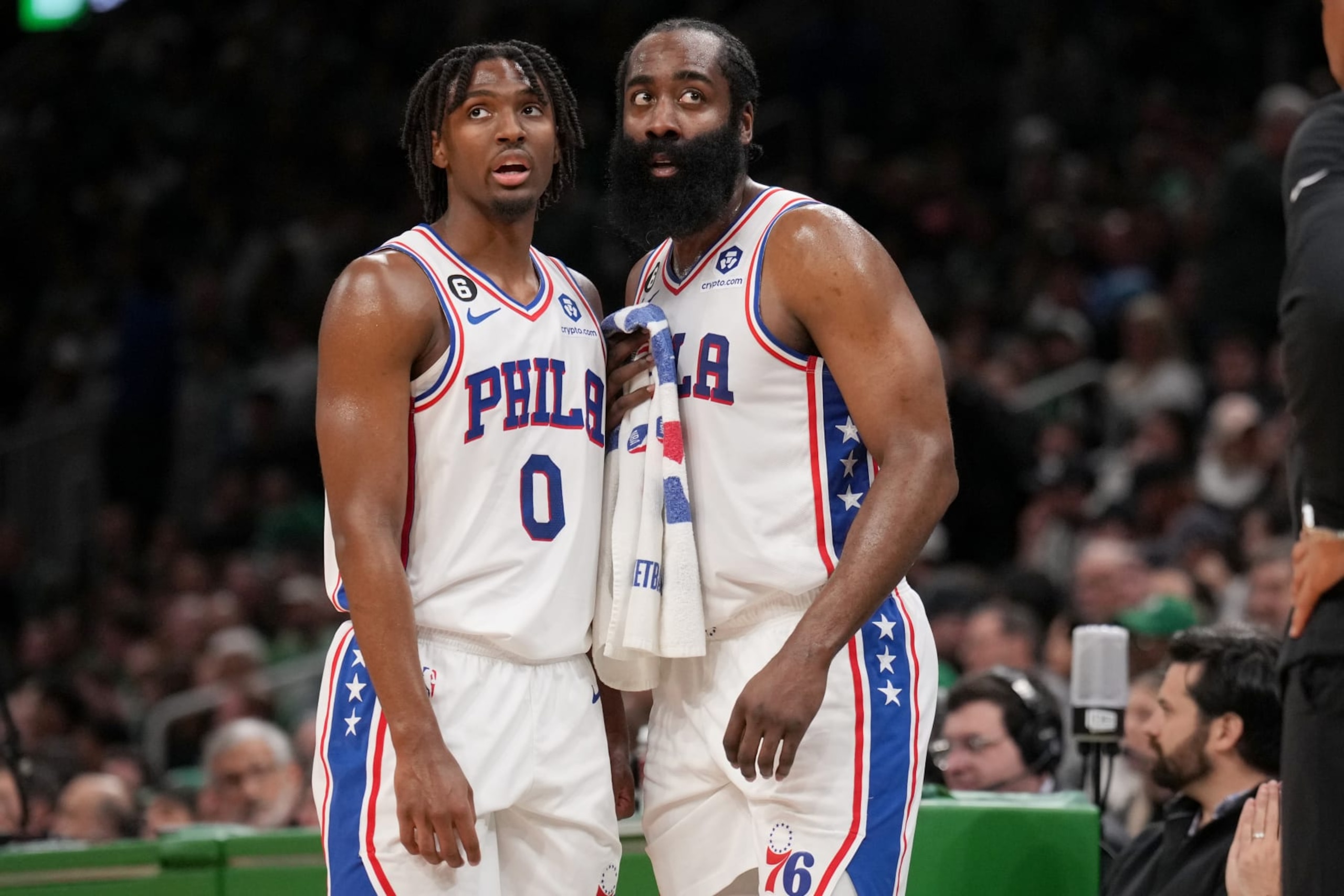
Top Assets
- James Harden
- Tyrese Maxey
- 2029 first-round pick (pending 2027 obligation to Brooklyn)
Is Harden here because the Philadelphia 76ers remain barren of assets that aren't role players, expiring contracts or role players on expiring contracts? I'm not saying yes. I'm also not saying no.
Seriously, though, Harden is still good. Like, really good. He just averaged 21.0 points and an NBA-leading 10.7 assists on 60.7 true shooting while crushing the advanced-metrics game. His age (34), various postseason no-shows and one-team trade demand no doubt complicate his market value, but All-NBA-level stars on expiring contracts can't be considered non-assets.
Some of Maxey's shine might wear off with a looming max payday in restricted free agency next summer, but his speed, straight-line handle and battle-tested outside touch ensure he'll leave other teams smitten even at a soon-to-be $35-plus-million-per-year price point.
Finally, Philadelphia can only trade one first-round pick. You're free to pencil in 2030 instead of 2029, but you don't want to give the Sixers too much time between the end of Joel Embiid's current contract (2026-27 player option) and your acquisition of said first-rounder.
Defaulting to 2029 also gives you one year's margin for error if Philly insists on protections.
-Favale
Phoenix Suns
24 of 30
Top Assets
- Grayson Allen
- Nassir Little
- Jusuf Nurkić
It's possible none of the listed Phoenix Suns' trade assets would actually return positive value. That's the predictable result of the team undertaking a level of win-now future-mortgaging unparalleled anywhere else in the league.
Trades for Kevin Durant and Bradley Beal cost Phoenix control of every first-rounder it had, and while the deal that sent Deandre Ayton to the Portland Trail Blazers brought back Allen plus Little and Nurkić's more manageable contracts, the Suns won't find it easy to move any of them with only second-round picks to add as sweeteners.
Little has the best chance to fetch a solid return. He's only 23 and just starting the four-year, $28 million extension he originally signed in Portland.
The combo forward has struggled to stay healthy, compiling over 50 games in just one of his four seasons, but he's shown flashes of reliable three-point shooting (36.7 percent last season) and plays with high energy on defense.
Of course, for a Phoenix team short on reliable depth, those are all qualities that should make keeping Little a priority.
-Hughes
Portland Trail Blazers
25 of 30
Top Assets
- 2029 first-round pick via Milwaukee Bucks
- 2029 first-round pick via Boston Celtics
- Malcolm Brogdon
If we can agree (which we should) that the Blazers won't trade away any of their young talent so early in the post-Damian Lillard era, that leaves some of the distant picks they acquired by trading Dame and Jrue Holiday as their most valuable bargaining chips.
Of that asset class, which includes an unprotected 2029 first-rounder from the Boston Celtics, the unprotected 2029 first-rounder from the Bucks stands out.
Milwaukee is an aging team. By 2029, Lillard, Khris Middleton and Brook Lopez could all be out of the league entirely. Lillard's contract runs the longest, and even that expires in 2027. Assuming the Bucks are done contending after their current two- to three-year window shuts, which means Giannis Antetokounmpo may also be gone, that distant first could help Portland capitalize in a big way.
Scoot Henderson and Shaedon Sharpe are probably the Blazers' only "hands off" players, but it's also tough to imagine them dumping Deandre Ayton, Robert Williams III or Anfernee Simons until they get a feel for how the new core fits together.
Malcolm Brogdon stands out as a veteran who'd have appeal to multiple teams, and he plays a position occupied by several guards Portland values more highly.
-Hughes
Sacramento Kings
26 of 30
Top Assets
- 2028 first-round pick
- Harrison Barnes
- Davion Mitchell
The Sacramento Kings sent a first-rounder to the Atlanta Hawks for Kevin Huerter last offseason, and the rollover protections it carries means the earliest first-round pick the Kings can trade is in 2028. That will change if if the top-14 protected selection goes to Atlanta in the 2024 draft.
Though last year's long-awaited return to the playoffs puts the Kings firmly in win-now mode, they're not about to go flipping a key piece like All-Rookie first-teamer Keegan Murray. His potential ascent could make it easier to deal Harrison Barnes, who is perennially on a movable contract.
The 31-year-old will average just $18 million in salary over the next three seasons and still plays a valuable combo forward spot. But if Murray takes a leap and import Sasha Vezenkov stripes it from three, Barnes could be expendable.
Davion Mitchell is still on his cost-controlled rookie-scale deal, and his suspect shooting means he may not be a reliable postseason contributor. He's an elite on-ball defensive guard, though, and teams that don't already have All-NBA point guards, which Sacramento does in De'Aaron Fox, should have interest.
-Hughes
San Antonio Spurs
27 of 30
Top Assets
- Unprotected first-round picks in 2025 and 2027 via the Atlanta Hawks
- Keldon Johnson
- Doug McDermott
None of the San Antonio Spurs' core pieces are going anywhere, but we need to establish who's in that inner circle before we can start populating the trade block.
Obviously, Victor Wembanyama and Devin Vassell are off limits. But other than Jeremy Sochan, just about everyone else could be gettable.
Keldon Johnson is right on the borderline of the core/non-core argument. If the Spurs made him available, there'd be a line out the door to acquire a 24-year-old who averaged 22.0 points per game last year and hit 39.8 percent of his threes the season before. That's a lot of production for someone who'll only make $74 million over the next four years.
San Antonio probably won't part with either of the firsts it has coming from the Hawks, but unprotected picks are juicy enough to warrant mention on a team with relatively few hot commodities it would consider trading.
Doug McDermott is a classic rotation-caliber veteran on an expiring deal. He could give a contender 15 good minutes and might return a couple of solid seconds or a heavily protected first-rounder.
-Hughes
Toronto Raptors
28 of 30
Top Assets
- OG Anunoby
- 2026 first-round pick (pending 2024 obligation to San Antonio)
- 2028 first-round pick
Scottie Barnes has been left out of too many reported Toronto Raptors trade pursuits to appear on this list. Pascal Siakam's awkward no-extension-talks limbo renders him eligible if team president Masai Ujiri tilts toward selling. I'm betting he won't. Toronto surrendered a top-six-protected 2024 first for Jakob Poeltl. This team wants for a discernible direction, but it must be viewed as a buyer until it proves otherwise.
Anunoby could fall under the same have-to-keep-him umbrella, but the Raptors already paid Poeltl and have to start thinking about the next deals for Barnes (extension-eligible next summer) and Siakam. They're not keeping everyone.
Even on an expiring contract (2024-25 player option), Anunoby will engender gobs of interest. He is a universal fit across any roster, though the peak of his value will vary depending on how much he's asked to dribble and facilitate.
With apologies to Precious Achiuwa, Gradey Dick is the only player left who will rival the value of future Raptors firsts. Give me the picks anyway. Toronto is emanating all sorts of awkward stenches following last season's spiritless clunker and a summer that saw them let Fred VanVleet depart for absolutely nothing.
Ujiri is smart enough to pearl-clutch a 2030 first. That's fine. Targeting first allowable selections beginning in 2026 allows protections to stretch out for more years anyway.
-Favale
Utah Jazz
29 of 30
Top Assets
- 2027 first-round pick via Minnesota Timberwolves
- 2027 first-round pick via Cleveland Cavaliers
- Lauri Markkanen
It feels a little galaxy-brained to include Lauri Markkanen, the Utah Jazz's All-Star forward on a team-friendly deal, among their top assets. But Danny Ainge has never met a deal he wouldn't consider, and the Finn's combination of production and cost would command a hefty price.
A cynic might look at Markkanen's 25.6 points per game and 39.1 percent three-point shooting last season and see a sell-high opportunity. And while Utah exceeded expectations by winning 37 games during his breakout year, this is still a rebuild.
A couple of future firsts might ultimately have more value to the Jazz than a 26-year-old All-Star who might not be able to sustain what he accomplished last year.
Speaking of which, we have to at least mention the Jazz's pick haul from the Donovan Mitchell and Rudy Gobert trades. Even if we just made the case that Utah ought to be in pick-hoarding mode, all the firsts it collected—especially the more distant ones—could be immensely valuable.
Of those, the 2027 first from Minnesota holds the most appeal. The Wolves may have traded Karl-Anthony Towns by then, Gobert will almost certainly be gone and who knows what'll happen with Anthony Edwards? He'll be extension-eligible after 2026-27, and if things go badly between now and then, maybe noise about him asking out will have already started.
-Hughes
Washington Wizards
30 of 30
Top Assets
- Deni Avdija
- Tyus Jones
- Kyle Kuzma
As the NBA's project manager for Operation Tank, the Washington Wizards will not be putting any of their own first-rounders or Bilal Coulibaly on the table. (Their 2024 draft obligation to New York is also protected until, approximately, forever.)
Veterans who don't factor into the ultra-distant timeline are Washington's asset du jour. Kuzma's contract (four years, $90 million guaranteed, declining scale) should net value that exceeds a singular first-round pick. In other words: He will be on another team by Jan. 15.
Jones' on-ball poise is nearly unparalleled, and he's downing almost 37 percent of his threes, albeit on modest volume, over the past four years. He may not secure a first-rounder on his own, but his $14 million expiring price point can facilitate the arrival of unwanted money that drives up inbound pick equity.
Avdija is the more valuable chip. He's an underrated on-ball defender, and if he consistently drains standstill threes or follows through on his drives, he'll be an impact player for a long time. Not yet 23, he shouldn't technically be here. But the prospect of bankrolling his next contract may not jibe with the infancy of this rebuild.
-Favale
Unless otherwise noted, stats courtesy of NBA.com, Basketball Reference, Stathead or Cleaning the Glass. Salary information via Spotrac. Subscribe to Dan and Grant's NBA podcast, Hardwood Knocks.



.jpg?w=2560 "Aikman Blasts Cowboys WR 🫣")
.jpg?w=2560 "Jonathan Taylor Landing Spots")