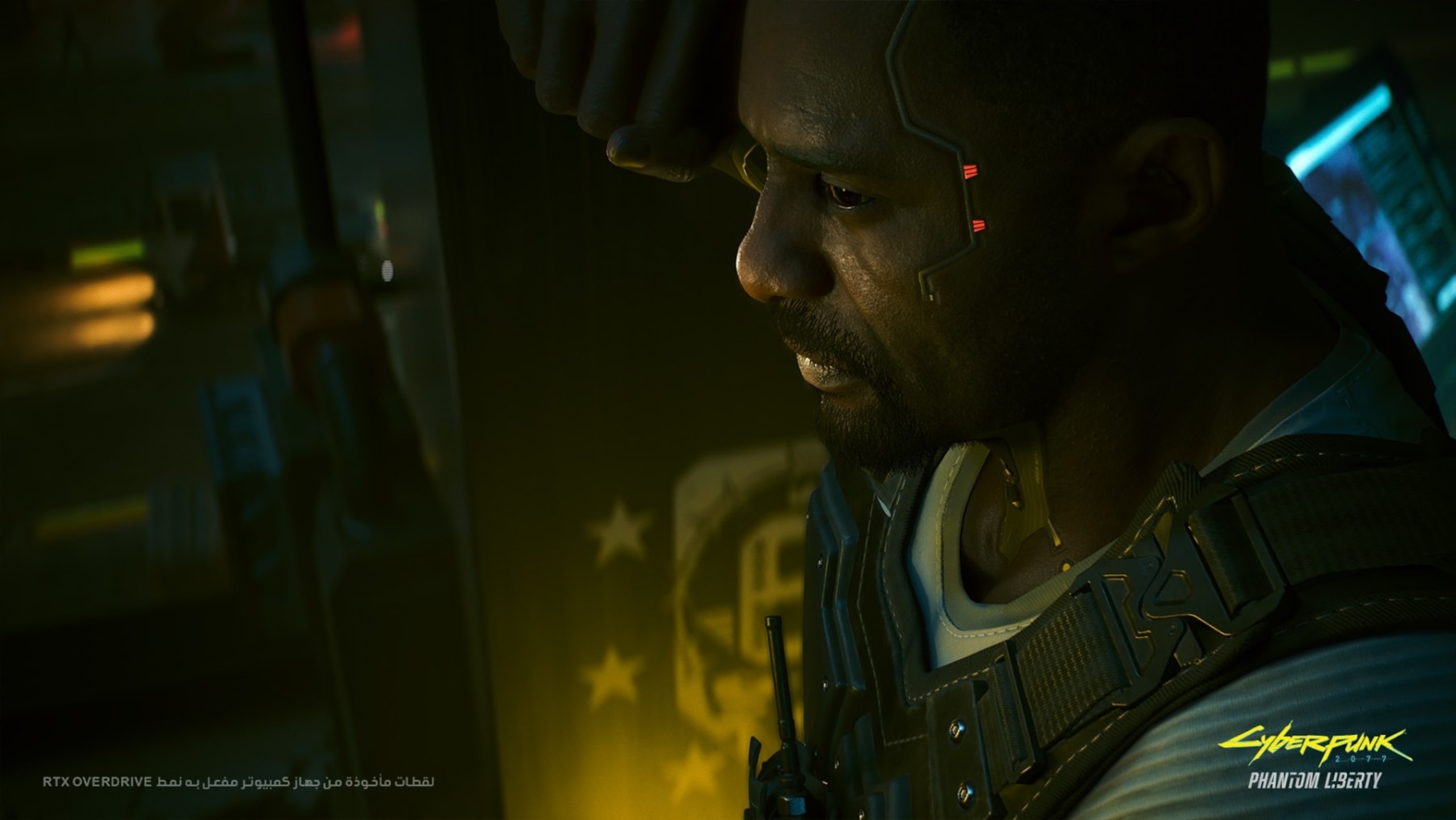


Phantom Liberty, Cyberpunk 2077's first and only DLC pack launched alongside the massive 2.0 update doesn't arrive with nearly the hype of the base game from 2020.
It's hard to fault gamers who approach the expansion with a sense of cautious optimism that Phantom Liberty is something of a rehab project that brings the original vision closer to what was promised. Cyberpunk 2077's huge potential that was mired in refunds, a store delisting and waves of bugs and issues is familiar to most onlookers in video gaming lore by now, after all.
Developer CD Projekt Red has gradually improved the game since the jarring launch, culminating in what it describes as a big DLC with a spy-thriller theme that coincides with the main story and an exhaustive 2.0 update that overhauls a laundry list of mechanics.

.jpg?w=2560 "Patriots 49ers Football")
.jpg?w=2560 "Saints Cowboys Football")
Some of these items, such as improved police systems, user interface (UI) upgrades and redesigned skill trees and perks are free to players via the 2.0 update. But since they dramatically shape the experience players will find in this one-and-done DLC pack for Cyberpunk 2077, we've included them as part of the review.
Graphics and Gameplay
Cyberpunk's Night City was and remains one of the most jaw-dropping locales in gaming history.
There has yet to really be a more immersive setting in a game given the sheer amount of detail in the vertical, varied environments as the player and NPCs go about their daily business, including organic set pieces such as unfolding crimes, banter and the always-overwhelming sense of advertisements barraging a person.
One could even be forgiven for thinking the visuals have been souped up even further. The drop-dead gorgeous environments excel in part because they did a near-frighteningly good job of illustrating the differences between the richer and poorer areas of a cyberpunk-near-apocalypse setting.
Phantom Liberty takes place in Dogtown, within a Pacifica area that leans toward the more chaotic side of the city. The walled-off area goes its own direction, feeling almost always like a war-torn city in a cyberpunk setting. Even finding entry at all, be it through checkpoints or other means, is an immersive, gripping time.
This release features arguably the best-ever lighting in a video game, powering just all of the little surreal things that make the setting tick, like a light misting of rain pattering on the pavement as smoke belches from a line of mufflers in traffic and NPCs on the sidewalk duck for cover.
That rain sounds great and realistic coming off metallic surfaces or otherwise because the game remains a chef's kiss in sound design, too, be it punchy weapons or varied dialogue.
Keanu Reeves again aces his part as Johnny Silverhand in the DLC. But the real star of the show this time out is new arrival Idris Elba, with his character boasting that screen-dominating presence Elba himself does.
Enhancing the experience are new radio stations and soundtrack additions that deepen the array of options available and even freshen things up for those with hundreds of hours invested already.
Even player requests for further immersion are no better expressed than in the reworked animations and user interface (UI) while visiting a Ripperdoc. That same too-busy UI bathed in neons still makes it harder than necessary to see where damage is coming from, though.
One of the bigger questions facing Phantom Liberty was if the up-and-down gameplay would see any improvements and it's something of a mixed bag in that regard again. The punchy, nice-feeling FPS action is still there and enemy A.I. seems a little smarter, but they're still prone to getting stuck on cover and not reacting to getting pumped full of lead or single-filing into a hallway of death if goaded into it. The floaty-feeling driving mechanics have improved some, but the implementation of being able to fire while driving vehicles is both nice and cumbersome. Melee combat and stealth feels improved and remains fun, but with some inconsistencies in detection and hit registration.
The base game had a lot of content to keep players engaged for a long time and Phanton Liberty makes sure to add new enemies and world events that are fun the first few times out, if nothing else.
New airdrops feature the player intercepting cargo drops meant for others and creating a handful of different scenarios, including a shootout, ambush or others.
And new courier missions are also randomly generated endlessly and, like the name, asks the player to pick up vehicles with messy disputes as to ownership, which creates fun scenarios. Both of these new features, courier and airdrops, are infinite though, so only mainlining those isn't advised.
But those are small items in comparison to the major gameplay overhauls.
One is the reworked police system. This was one of the bigger missteps of the game at launch, with police randomly spawning in near the scene of a crime, vehicle-less, which earned the game some rightful ridicule as they would just up and appear in places like say, atop a skyscraper.
Now the game boasts different wanted levels similar to games like Grand Theft Auto, with police response (via various vehicles!) more pronounced and fast for say, richer areas of town. Police will set up barricades along the routes players use to escape and, when pushing things far enough, players will have to encounter the MaxTac units so longed for but largely absent from the game's initial release.
Right next to that in terms of importance is the stamina change. It depletes when firing guns instead of running, or when slashing melee weapons, deflecting and dashing. This means a much bigger emphasis on player strategy and planning in the moment, which is a nice, rather dramatic change compared to the initial launch's free-for-all that had players feeling overpowered quickly, especially against lackluster A.I. enemies. It's better for melee-based builds than it is general gunplay, though, as accuracy becoming more erratic despite true aim because a meter ran out never feels good.
Along with these changes, the game adds in new weapons, tech, vehicles and clothes, hitting some expected marks that long-time players will appreciate.
Upon release, Cyberpunk was extremely disappointing for those who hoped it would scratch an in-depth RPG itch. An overarching perks system that didn't mesh well, with some nodes not working at all, served as one of the bigger letdowns of the package.
This time, the revamp to these areas has created a much deeper RPG experience. It's not the best on the market or anything and the game is very much an action game first and foremost, but those initially hoping to role-play with different builds and characters finally get it here.
Armor is now subjected to cyberware, not what the player's wearing, creating a big needed tonal shift too. Meaning, players can freely wear whatever cosmetics they desire because the actual armor stat is handled elsewhere.
From the gameplay side, Phanton Libety and 2.0 combine to move Cyberpunk closer to the original promised vision. It's hard to not appreciate the lofty goals it set and how it inches closer to them and if nothing else, Night City itself is undeniable.
Story and More
Phantom Liberty takes place within Cyberpunk's original story. Based on where it places new players if choosing a certain option upon beginning, it takes place roughly after Act 1.
In this expansive side content boasting 13 missions and seven side quests, the president's shuttle gets shot down over Night City's Dogtown and "V" abruptly gets swept up into the ensuing drama.
Much of this walled-off area of the city and the story itself runs through Colonel Kurt Hansen and his Barghest, not typical Night City authorities. That changes the dynamic and feel of a rapid, thrilling story with some neat twists and potential for decisions that create different outcomes, including a new possible ending for the entire game.
Along the way, V is their usual abrasive self, while Silverhand takes a much bigger role in the story than most probably would have predicted. That's a nice surprise—he's an A-tier character with depth, well-acted and it only makes sense, seeing as how he's in V's head and all.
The story doesn't do away with some of the original's critiques, such as some of the most memorable moments occurring in supposed "side" content and the very best lore and worldbuilding requiring some heavy side reading. But the fact those things are there at all is important in its own right, too.
When off the intended path, there are nice little side offerings such as a new minigame in arcades. It's not Gwent from CD Projekt Red's The Witcher franchise by any means, but something is better than nothing. There are new Gigs, such as helping behind-enemy-lines NCPD officers, which offer more reasons to remain immersed.
One of the ways Phantom Libery/2.0 works to address RPG-styled complaints is through revamped progression, now with a level cap up to 60.
A Relic skill tree is new and based around cyberware, which has its own currency used to level up and unlock perks, especially related to Dogtown. These include better stealth perks, real-time enemy analysis and other fun features.
As a whole, the reworked perks system, with highlights such as the brilliantly fun ability to deflect projectiles with a melee weapon, is a big success. It's not perfect, but it's droves better than the filler-feeling offering from launch that felt present just to create the illusion of build diversity.
And while this will register as a tad cliche, there is a ton of build diversity now that enables two players to interact with the game and its scenarios completely differently—also fueling it with major replayability.
The refreshing emphasis on cyberware means the arrival of a capacity system for its usage too. The result is a give-and-take that feels like it makes sense and is fun to figure out.
Upon initial boot, players can choose different ways to approach the DLC. They can start the game as normal with an old save file (perks and other things will reset due to the 2.0 update) or start from the beginning. Or, players can choose to skip right to the DLC itself, picking lifepath and doing character creation, with the game picking up at level 20 after Act 1 of the story.
Out of the box for new and old players alike, it feels like the best option is to start from scratch, simply because it's worth enjoying the base game again with all of these upgrades improving the experience.
So...how does it run?
One of the bigger complaints with the initial release was bugs and general playability on a variety of hardware. It feels like there is less of the former and the game appears to run smoother. But it certainly isn't bug-free. Within moments of launching, an NPC's cigarette floated mid-air and a vehicle got stuck clipped through the road, setting off a chain of explosions.
And that's just sort of the bargain with Cyberpunk as a whole right now, in the same vein as say, Bethesda titles usually come with a lot of charming glitches and/or jank. Phantom Liberty and 2.0 never stood a chance at eliminating every single grievance everyone had with the base game or the gradual upgrades it has received over the last few years. Glitches and big warts remain.
Conclusion
Phantom Liberty moves Cyberpunk closer to its promised heights.
This, despite Cyberpunk's brutal launch and industry-wide implications, isn't all that big of a shocker—CD Projekt Red drops amazing expansions for base games, such as Hearts of Stone and especially Blood and Wine for The Witcher 3.
Still, Phantom Liberty/2.0 is a little conflicting in the sense it is admirable the rehab project is a big success while trying to shake off the feeling the original game should have launched in this state originally.
As a whole, Phantom Liberty is a fantastic return trip to the best setting in gaming. The story is indeed a fun thriller with stunning set pieces, boss fights, memorable characters and a surprisingly long runtime. It's not Blood and Wine (what could be?), but it's impressively close.
Combined with 2.0, this is Cyberpunk at its best and a fitting last hoo-rah, if this is really it.

.jpg?w=2560 "Jets Bears Football")
.jpg?w=2560 "Josh Jacobs Can Play in Week 7")
.jpg?w=2560 "Grading SmackDown 🔠")