One thing we're guaranteed to hear a lot about this season (and every season, really) is the salary cap and how close teams are to the upper limit.
Relatedly, we're also going to hear a lot about the players whose deals are most responsible for that and whether they're living up to that price tag or not. It's all fun and games on the ice, but off of it, the business of hockey can't help but be analyzed with an electron microscope.
With the new season approaching, we're taking a closer look at the books and pointing out one player from each team whose contract is going to make life a bit more difficult for their general manager and resident capologist.
As a caveat, there are some teams that are in prudent financial shape in terms of their contracts, so we had to make some tough decisions regarding the "worst" contract on the roster. No one said this job was easy.
Let's get to it.
Anaheim Ducks - John Gibson
1 of 32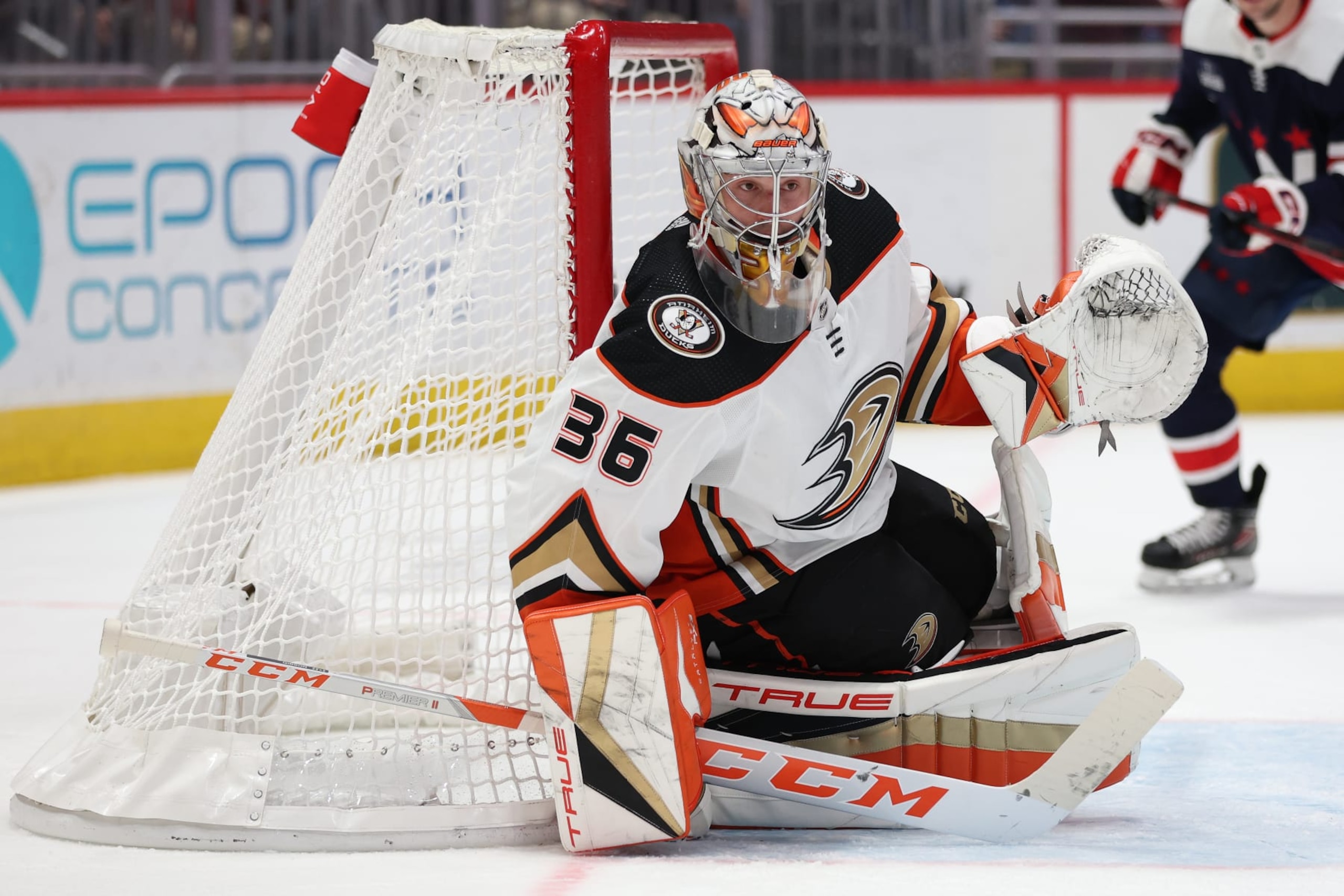
Anaheim is one of many teams that don't have a contract that sticks out and screams, "BAD" on their books. It was the Ducks' performance on the ice that did that well enough last season, but financially, they're in a really good spot.
There is a bit of a snag though, because goalie John Gibson has been on the market for a trade but without any takers. That's partially due to his numbers being down the past couple of seasons but that also has to do with his contract that has four more years left on it with a $6.4 million cap hit.
The 30-year-old from near Pittsburgh would be an ideal candidate for a team in need of goaltending help of some kind (Buffalo? Los Angeles? Detroit? Pittsburgh?) but the raw financial cost apart from what it would take in prospects and picks to get him in a trade makes it really tough for teams to take the plunge. The best thing for his trade value is for the Ducks to play better in front of him and for Gibson to stay healthy.
The cap is going to go up in the coming years, but investing a lot of money in a goalie can be a gamble for teams. While the Ducks haven't gone in the direction they thought they were headed, Gibson's contract sticks out as a small reminder of why it can go poorly.
Arizona Coyotes - Clayton Keller
2 of 32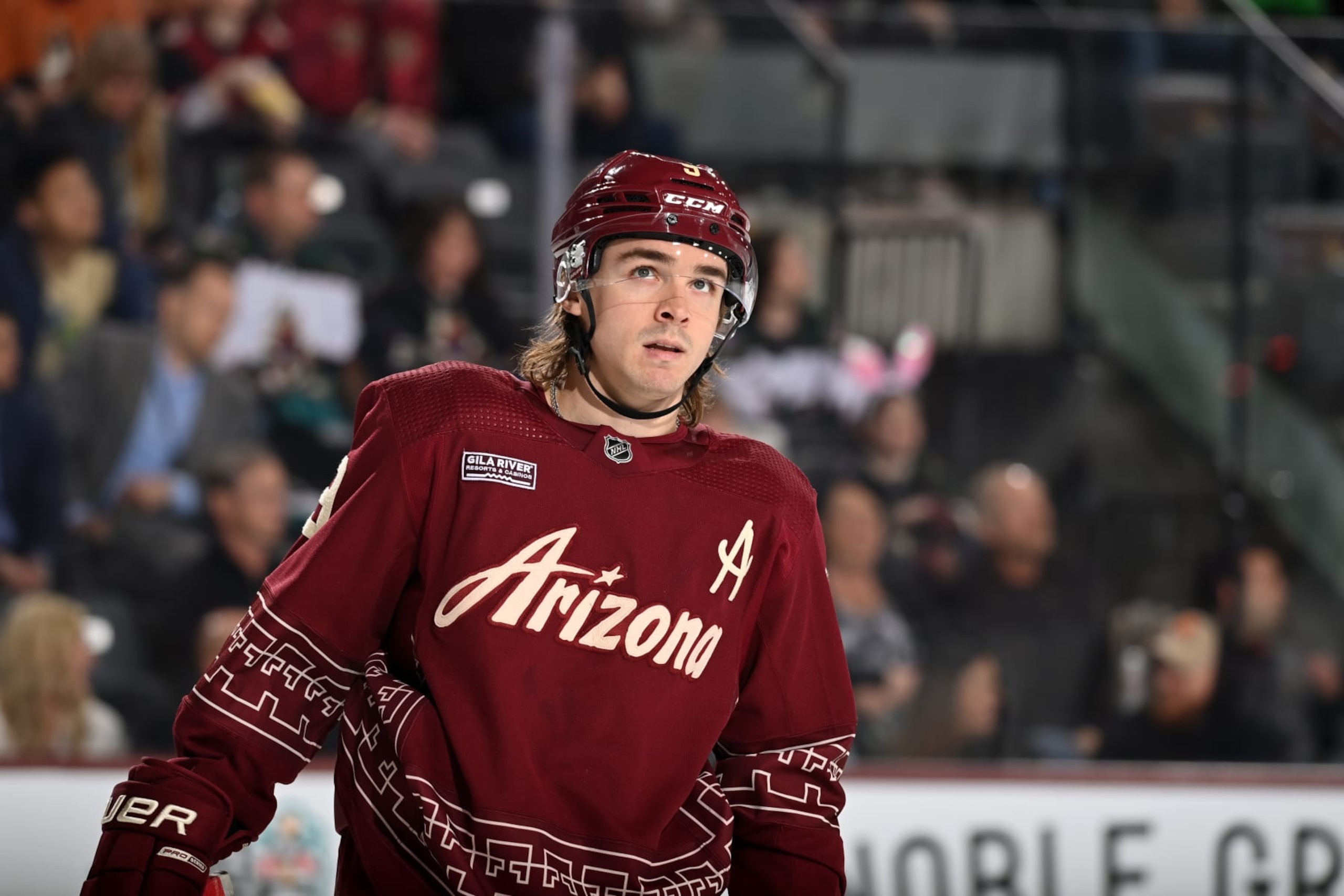
The idea that the Coyotes would have a terrible contract on the books is funny, isn't it?
Of all of their active players, Clayton Keller is paid the most and has the most years committed. He's smack in the middle of an eight-year, $57.2 million contract he signed back in 2019 that expires in 2028. He's their top scorer and top player and the only other active players with extended contracts are Nick Schmaltz, Lawson Crouse and Matias Maccelli. By default, Keller has the "worst" contract because it has the highest cap hit for the longest time.
But Arizona's books need that kind of action because they need to get to the salary minimum. They're well above the floor this season and the dead cap money to Jakub Voracek, Shea Weber, Bryan Little and Travis Dermott (worth more than $22 million combined) helped make that happen. Because those contracts help them stay above the salary floor they're naturally "good" even if it does feel a little grungy, they serve a purpose and other teams are happy they're willing to do it.
Boston Bruins - Brandon Carlo
3 of 32
The Bruins are in a tough spot.
They're up against the cap and their top two centers, Patrice Bergeron and David Krejčí, retired this summer. David Pastrňák's monster extension kicks in this season at more than $11 million a year and since he scored 61 goals last season, it's hard to argue it's too much money, so we're not going to do that.
Outside of Pastrňák's eight-year, $90 million deal, the Bruins' long-term commitments are few. Charlie McAvoy's eight-year $76 million extension began last season as did Hampus Lindholm's eight-year, $52 million deal. But there's one other defenseman whose deal stands out not-so-well.
Brandon Carlo's six-year, $24.6 million deal in its totality isn't a backbreaker. A $4.1 million cap hit isn't too big of a deal, but Carlo's possession numbers have been average and dropped each season (apart from the COVID-19-shortened 2020-2021 season) and his point output is minimal at best (his career-high is 19 points set back in 2019-2020). All of that for $4 million a year when a team is pressed against the upper limit casts a sharper eye on where the money is being spent.
You could pick on Pavel Zacha or Charlie Coyle for the same reasons, but their duties are about to increase greatly in the wake of Bergeron's and Krejčí's retirements. If their offensive output grows from the greater responsibility, their contracts will be virtual steals.
-(1)_0.jpg?w=2560 "Bleacher Report")

Buffalo Sabres - Mattias Samuelsson
4 of 32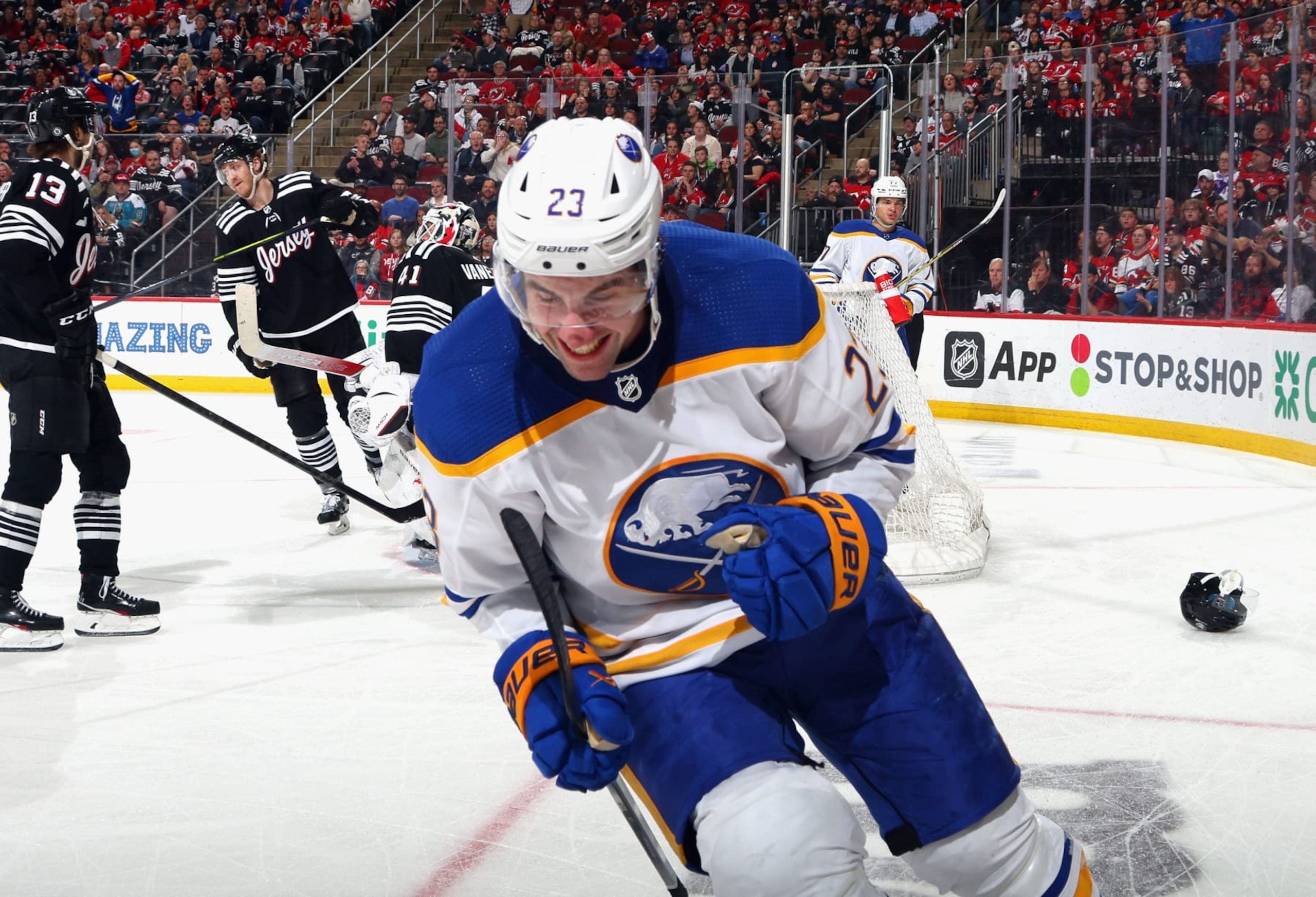
The Sabres have been ahead of the market when it comes to their contracts for the past couple of seasons. The long-term extensions for Tage Thompson and Dylan Cozens (each just more than $7 million a year for seven years) look like steals now and even Jeff Skinner's eight-year, $72 million contract he signed back in 2019 looks a lot better now that he's scoring 30-plus goals a season once again.
The Sabres are in a great spot even with a Rasmus Dahlin extension forthcoming and Owen Power likely seeing one of his own soon, be it a bridge or long-term which makes it really hard to say they've got a bad contract. But if there's one to highlight, it's defenseman Mattias Samuelsson's seven-year, $30 million contract ($4.2-plus million cap hit).
Samuelsson isn't a point-scoring defenseman; he's a physical blue liner that clears the front of the net and lays the body along the boards. His job allows Dahlin to be free to generate offense and he can clean things up in the defensive end as needed. He's paid well to do the dirty work and the Sabres are more than happy to have a guy like him to do it. The money they've saved on Thompson and Cozens goes to guys like Samuelsson who take care of the little things.
Without any real contract issues to speak of, the process of elimination falls onto Samuelsson, who ends up getting the nod as the Sabres' worst contract.
Calgary Flames - Jonathan Huberdeau
5 of 32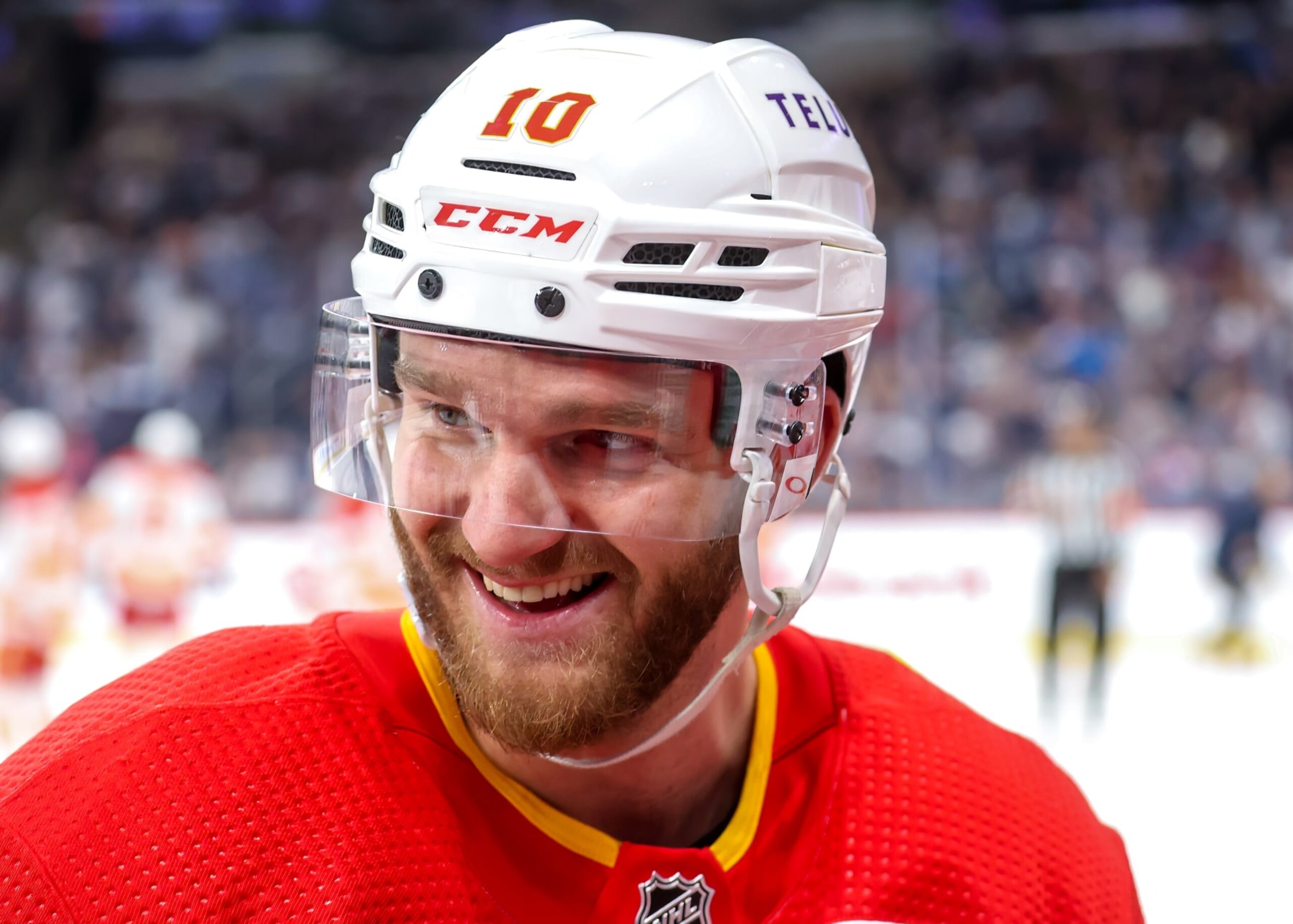
It's very easy to bury Calgary for Jonathan Huberdeau's eight-year, $84 million contract. His first season with the Flames saw his offensive production go from 115 points with Florida to 55 with the Flames last season, nearly a 53 percent decrease in scoring. But that drop is a contributing factor to why Darryl Sutter was let go as coach in the offseason.
How Huberdeau performs under new coach Ryan Huska will go a long way into deciding whether or not the 30-year-old's contract is a mammoth disaster or concrete proof it was never going to go well under Sutter. We've learned from seeing Jeff Skinner turn things around to get too eager about burying a guy with a new contract, but the pressure is sky-high for Huberdeau to get anywhere close to the 115-point mark he hit two years ago.
Yes, the Flames have other bad contracts (Jacob Markstrom, Nazem Kadri, Mackenzie Weegar, Blake Coleman), but Huberdeau's $10.5 million cap hit is a monster worth 12.6 percent of the cap. He has to improve, or the Flames are going to be in a bad place for some time.
Carolina Hurricanes - Jesperi Kotkaniemi
6 of 32
A big part of Carolina's success has been thanks to how well they've handled their salary structure and the way they're able to get talented players involved and not breaking the bank to do it.
Their big splurge this summer came when they awarded Sebastian Aho an eight-year, $78.5 million extension that kicks in next season. The $9.75 million cap hit is just a smidge higher than his current $8.46 million hit so it's a raise but not one that throws the books into disarray.
The Hurricanes don't have any backbreaking contracts to speak of and the closest one to that is one that came through an offer sheet. When the 'Canes signed Jesperi Kotkaniemi to an eight-year, $38.56 million offer sheet from Montréal it came off like a huge overpay, but he tied for fifth on the team in scoring with 43 points while he was tied for 13th in average time-on-ice (14:44). Scoring points in not a ton of ice time means he's maximizing what he can do.
Yeah, it's a lot of years, but the money doesn't hurt them at all. What will be worth watching is how they handle Brett Pesce, Brady Skjei and Teuvo Teravainen's impending unrestricted free agencies.
Chicago Blackhawks - Seth Jones
7 of 32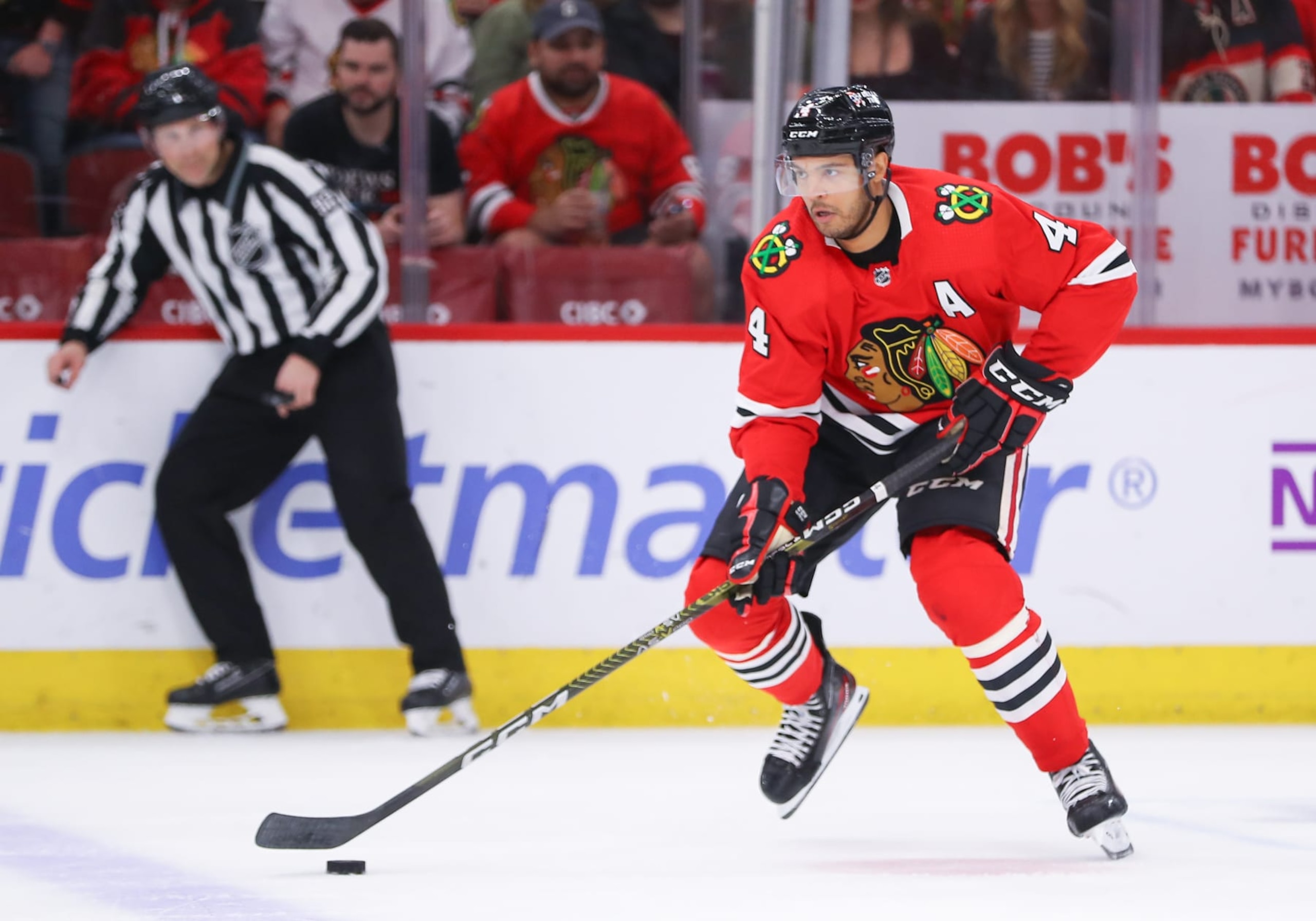
There weren't a lot of contenders for bad contracts with Chicago. They've got very few long-term commitments and because of that, their future cap issues don't exist. They've got a lot of freedom to spend as they need to and with Connor Bedard joining the franchise, that works out beautifully.
But...we've got to pick on someone, and the choices are Seth Jones and Connor Murphy because they're the two guys with a lot of time and money to go on their contracts. Murphy has three years at $4.4 million against the cap each year while Jones has seven years to go at $9.5 million.
Jones was OK last year given that Chicago was so putrid, but his numbers weren't terrible apart from the ever-flawed plus-minus (minus-38). But he played nearly 25 minutes per game for 72 games on that team, of course, his plus-minus was awful.
Chicago doesn't have any cap worries apart from staying above the floor for now, and because they're not going to be so hot this season and maybe even next season. If Jones' numbers continue to struggle, it won't really matter. By the time it will matter, the salary cap should be high enough that his cap hit no longer breaks their back.
Colorado Avalanche - Gabriel Landeskog
8 of 32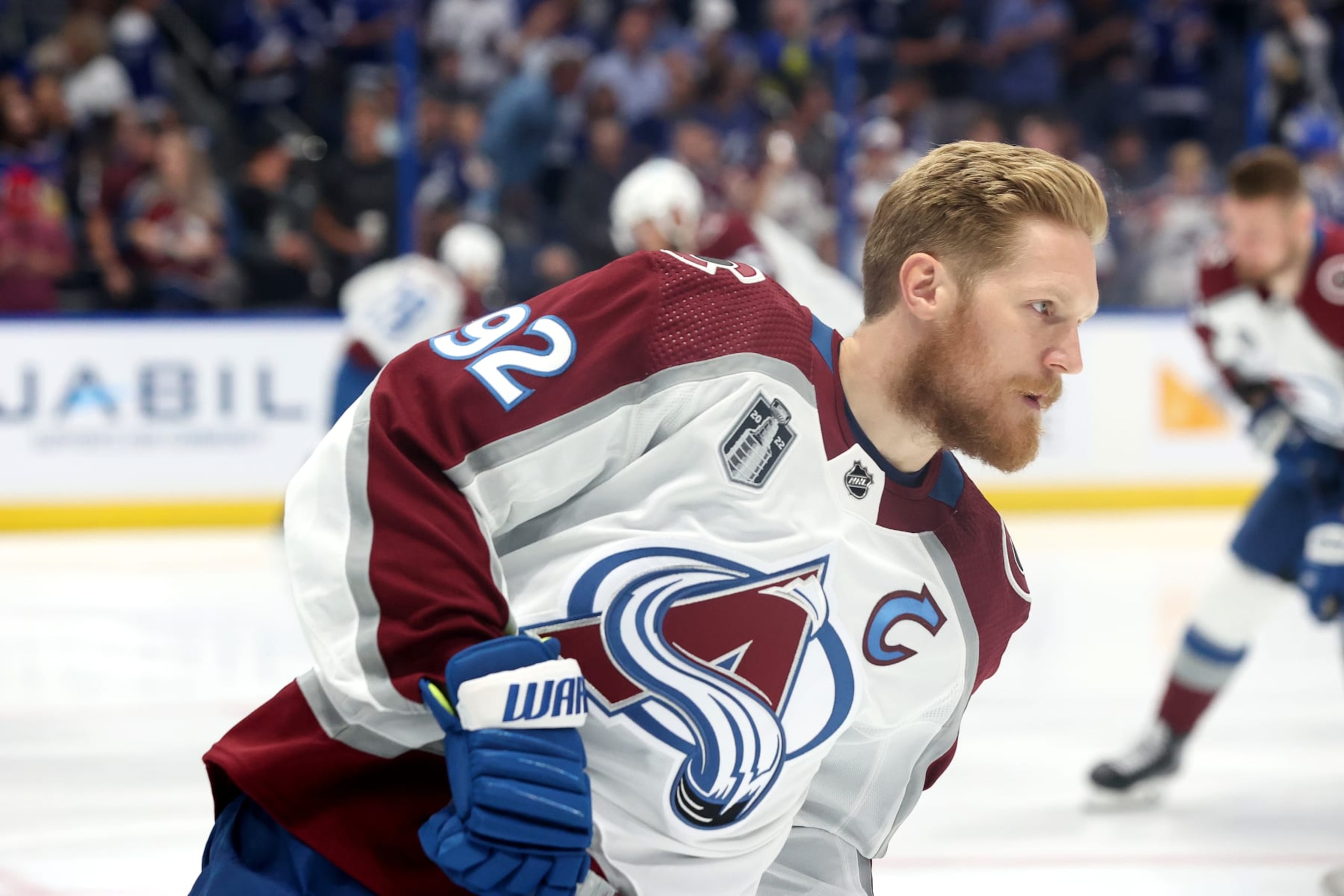
You have to feel for Gabriel Landeskog. He was able to help the Avalanche win the Stanley Cup two seasons ago, but his right knee caused him to miss all of last season and will cost him this upcoming season as well after knee cartilage replacement surgery this summer.
Landeskog signed an eight-year, $56 million extension back in July 2021 and while that first season worked out perfectly, the next two are toast and you have to wonder what his career will be like beyond that. Because of all of that, his contract is the worst one in Denver.
Yes, the Avalanche will use LTIR on him if they need to (and they probably will) and it won't really cost them in the end, but losing his presence is the biggest blow. Replacing him with Ryan Johansen, Ross Colton and Miles Wood will go a long way to softening that blow and they're able to do it because of LTIR, but the unknown is scary for the Avs.
Landeskog was a well-known quantity and you knew what you'd get out of him every game. Finding ways to replace someone like that who's also very good makes the job a lot tougher.
Columbus Blue Jackets - Damon Severson
9 of 32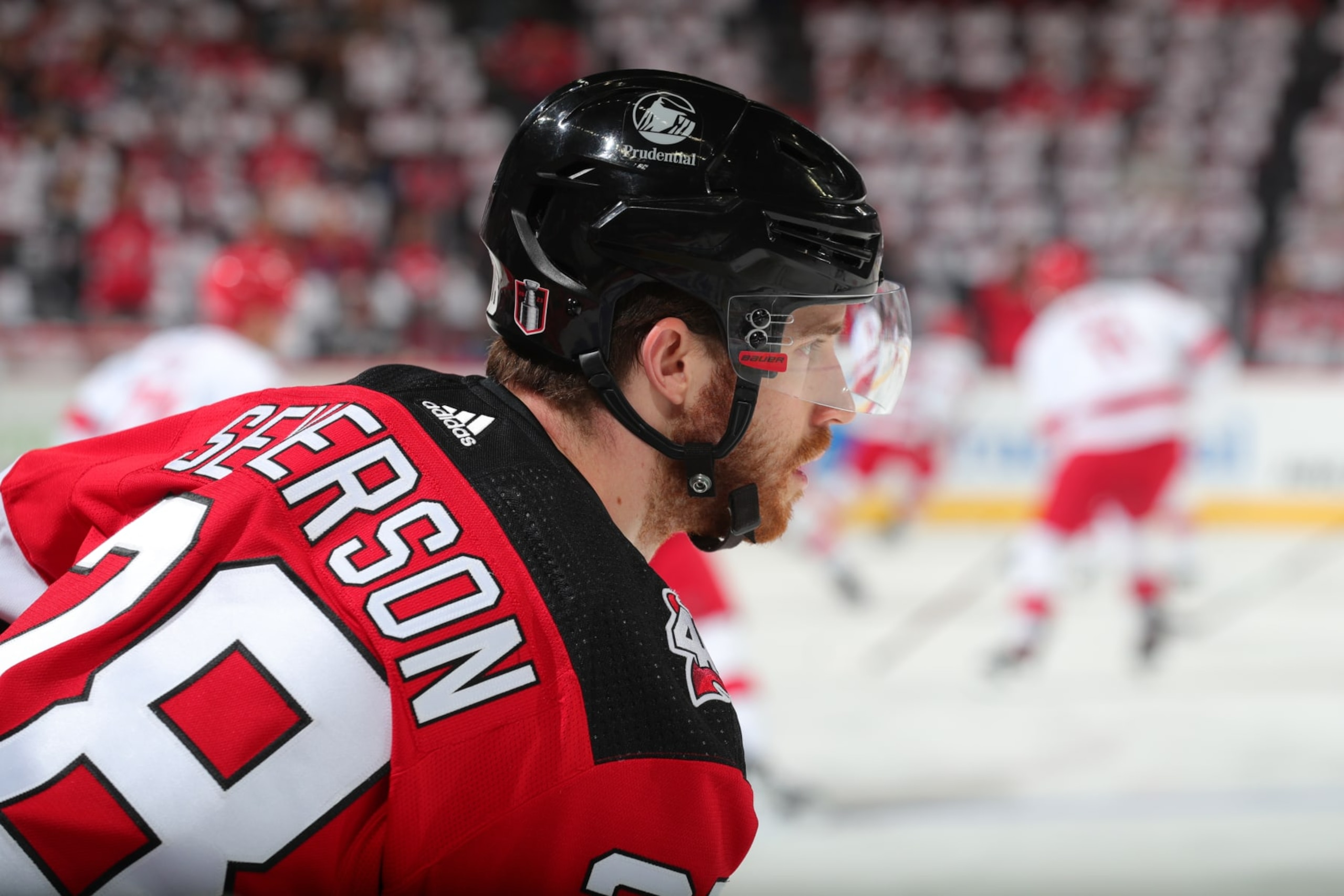
This might be really unfair because it's tough to bury a guy before he plays a game with his new team. But not every guy signs the kind of deal Damon Severson did to get to the Columbus Blue Jackets.
The sign-and-trade deal with New Jersey that sent Severson to the Jackets was borne from their desire to strengthen their blue line in a big way. After all, they traded with Philadelphia to get Ivan Provorov and they'll get Zach Werenski back from injury and should have David Jiricek in the fold after a year in the AHL. Adding Severson to that mix makes sense, right?
At eight years, and $50 million, the Jackets are betting big that Severson can be their guru on the power play and at 5-on-5 to generate shots and points. Werenski does it all, but Severson is now their de facto No. 2 guy a year after he was solid as New Jersey's No. 2 scorer on the blue line behind Dougie Hamilton with 33 points.
Is $6.25 million a year for a player who's averaged 29.2 points per season and 0.4 points per game on defense too much? Would you bet the next eight years on it?
Dallas Stars - Tyler Seguin
10 of 32
Had we done this a couple of years ago, there's a really good chance we'd be arguing whether it was Tyler Seguin or Jamie Benn who had the worst contract in Dallas.
Now? The Stars' long-term contract commitments are minimal. Defenseman Miro Heiskanen and forward Roope Hintz (both for eight years, $67.6 million) have their two longest current deals, but the third longest belongs to Seguin and that's both surprising and tougher to swallow.
Seguin signed his eight-year, $78.8 million contract back in 2018 and it'll come to an end after the 2026-2027 season. While he looked great before the deal kicked in, since then he's been a good but different kind of player. He went from being nearly a point-per-game player to 0.6 to 0.7 once the extension kicked in.
Yes, he's not producing at the level he's being paid, but now he's a leader on the team and a key-depth offensive weapon. For crying out loud, he's 31 years old now. We're all old and time comes for us all. Going from being an 80-point guy to a 50-point guy is just fine for now. It might hurt a little more when it's time to sign Jason Robertson and Jake Oettinger to long-term deals, but still, $9.5 million a year for a 50-point guy doesn't look great outwardly.
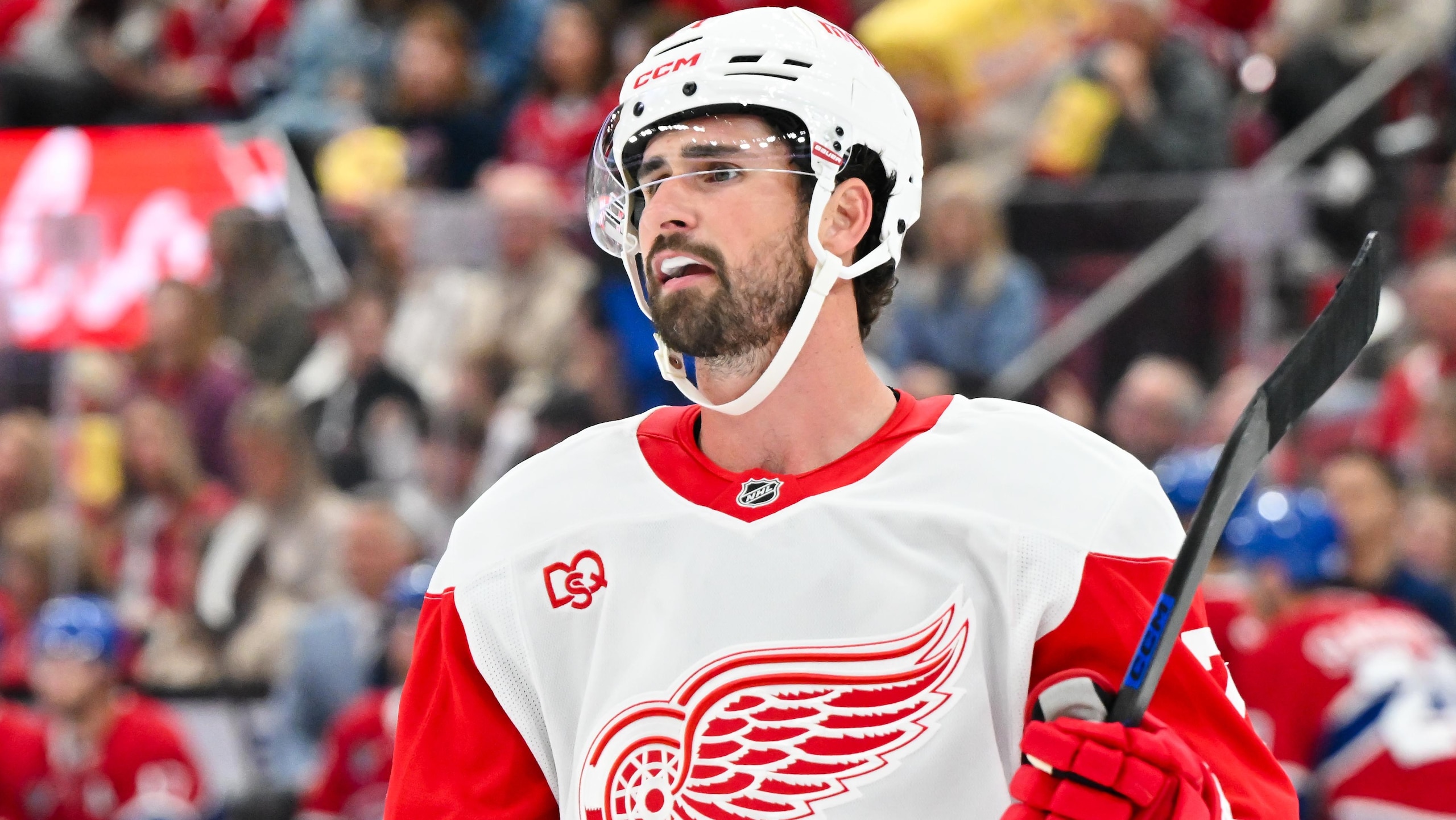
Detroit Red Wings - Ben Chiarot
11 of 32
Ben Chiarot has a particular set of skills and he's generally pretty good at them.
He's a defensive defenseman to whom points are an afterthought. He's a great depth defender and specialized matchup guy.
The problem for Detroit is he's paid like a guy who has to do more than that and now he's got more competition for ice time. Chiarot has the highest cap hit among Red Wings defensemen at $4.75 million a year for the next three years.
With how poorly things have gone for Chiarot in Detroit, there's a chance he could be fighting for ice time this season, never mind the two years after that.
Detroit added Shayne Gostisbehere, Justin Holl and Jeff Petry this summer in free agency and via trade. Mix in Moritz Seider, a healthy Jake Walman, Olli Määttä, and rookie Simon Edvinsson and it's a real crowded house on the Motor City blue line.
If Detroit winds up out of the playoff picture once again, expect this will be a major point of discussion as to why.
Edmonton Oilers - Jack Campbell
12 of 32
Goaltending has been such a classic mess in Edmonton the past few years that when they signed Jack Campbell as a free agent last summer, it felt like they'd figured the position out at long last.
Of course, the Oilers can't be Classic Oilers without something going totally sideways unexpectedly. Campbell struggled and his numbers sagged tremendously from what he did in Toronto the year before (.914 to .888 in save percentage) and rookie Stuart Skinner saved the season for them by being the top rookie goalie in the league.
Now, Edmonton has a clear-cut No. 1 in Skinner and Campbell will make $5 million a year for the next four seasons to presumably back him up. Need we remind you the Oilers are a cap-strapped team that has Leon Draisaitl due for a new contract in two years with defenseman Evan Bouchard likely looking at a major extension at the same time.
Sure, we could've picked on Darnell Nurse making $9.25 million a year for the next seven seasons, but someone's got to play defense there and Mattias Ekholm is locked up for the next three seasons already.
The Oilers needlessly burning money on goalies was a Peter Chiarelli special (hello, Mikko Koskinen) that GM Ken Holland decided to pay homage to with Campbell.
Florida Panthers - Sergei Bobrovsky
13 of 32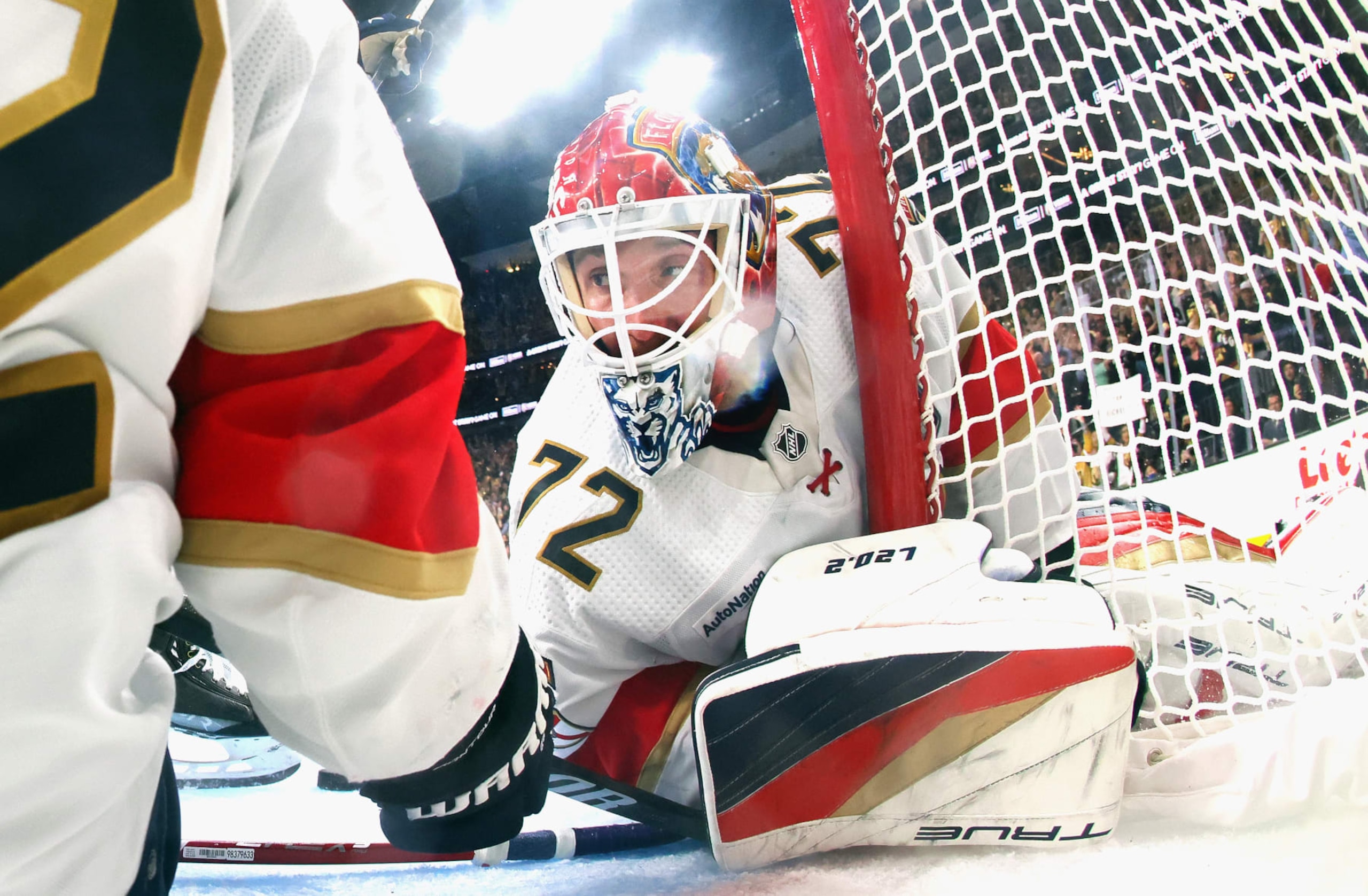
Speaking of paying goalies a lot of money, let's remember Sergei Bobrovsky's seven-year, $70 million deal with the Florida Panthers which has three more years left to go on it.
Bobrovsky was outstanding in the playoffs for the Panthers last season and gave a clinic on why GMs spend big bucks on top netminders. Of course, the first lesson in GM spending is to not break the bank on goalies because, as we all know, goaltending is voodoo.
Since signing with Florida in 2019, Bobrovsky's play has been all over the map. Three of his four seasons in Sunrise have been average-to-below-average in terms of quality. Being "fine" is OK if you're making less than $4 million a year to play goal, but at $10 million a year, you have to be top-five in the league.
Two years ago when the Panthers won the Presidents' Trophy, Bobrovsky was very good going 39-7-3 with a .913 save percentage. Wins are a team stat, but he was 16th in save percentage among goalies with 30 or more games played. That'll do when compared to the other three seasons, but it's clear any team would want more and better. The Panthers will need Bobrovsky to be on top of his game with Aaron Ekblad and Brandon Montour out for the first part of the season this year.
Los Angeles Kings - Pierre-Luc Dubois
14 of 32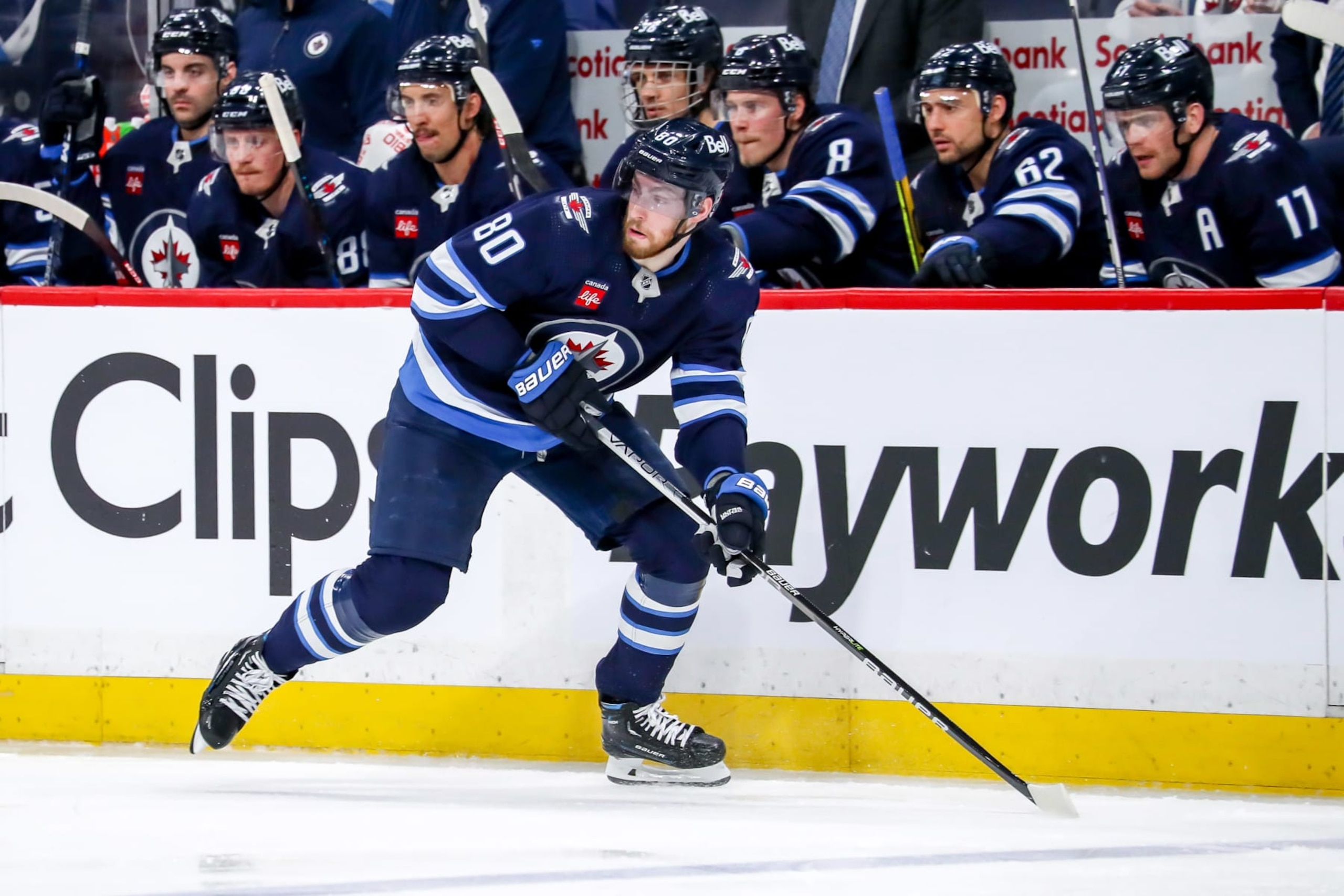
Much like our critique of Damon Severson in Columbus, we're being a bit mean about hitting Pierre-Luc Dubois before he plays his first game for the Los Angeles Kings, but man what a contract he signed and man, do his stats not jive with it.
Dubois signed an eight-year, $68 million contract in a sign-and-trade deal with Winnipeg this summer. Arriving in Hollywood with a $8.5 million cap hit and aspirations to be the Kings' future No. 1 center means he's got to put up big, big numbers...something he's yet to do in his career.
Dubois is coming off a season in which he put up a career-high 63 points with the Jets including 27 goals, one shy of his career-high set in 2021-2022. Those are really good numbers and with the Kings, it means he'd fit right in with their top scorers like Adrian Kempe, Kevin Fiala and Viktor Arvidsson -- three players whose cap hits are lower than Dubois'.
The thought is he'll be the heir apparent to Anže Kopitar on the top line and whenever he decides to retire, presumably, Dubois becomes the top earner among forwards which self-corrects everything else. But it's a risk because Dubois hasn't been happy in his previous situations in Columbus and Winnipeg.
If the glitz and glam of LA can't get Dubois locked in, you have to wonder where, if anywhere, would.
Minnesota Wild - Ryan Suter and Zach Parise
15 of 32
Hey, wait a minute, these guys don't go here anymore...
That's true, but Ryan Suter and Zach Parise's buyout legacies live on for six more years and the next two years of that are especially painful.
In 2021, the Wild bought out the final four years of Ryan Suter and Zach Parise's contracts which meant the next eight years would have cap hits assessed to pay them off. While Suter plays for Dallas and Parise spent the past couple of seasons on Long Island, their collective cap hits have walloped the Wild.
This season and next, the Wild owes more than $14.7 million against the cap because of the buyouts, but fortunately for them, the worst of it will be over after that. GM Bill Guerin has been judicious in the meantime and the Wild haven't been able to saddle themselves with further questionable contracts. They got Matthew Boldy and Joel Eriksson Ek signed to long-term extensions in the past year or so, and other extensions to Jared Spurgeon and Jonas Brodin have been respectable and apt given their roles on the team.
After 2024-2025, the collective dead cap hits from Suter and Parise drops from more than $14.7 million to $1.67 million for the final four years of the buyout. That's perfect timing for when the cap should grow substantially and to help pay for a big extension to Kirill Kaprizov...right?
Montréal Canadiens - Carey Price
16 of 32
This one is less fun to discuss.
A knee injury ruined Carey Price's career and all but ended it officially after he helped the Canadiens to the Stanley Cup Final in 2021. He played five more games the following season but it was all too much for him to stay on the ice.
Price is owed $10.5 million each of the next three years against the cap and the Canadiens have no choice but to try and do salary cap gymnastics to make best use of it for LTIR according to the Montréal Gazette. While having his cap hit free to spend eventually helps the Habs, there's little doubt they'd much rather have a healthy Price in goal to help speed along their rebuild.
Still, the Canadiens are spending to the cap limit and how they have to maneuver around Price's contract until they can officially place him on LTIR once the regular season begins makes GM Kent Hughes' job a lot more adventurous.
The Habs are closing in on time to become yet another young, skilled team in the Atlantic Division to make everyone in the East's life a living nightmare, but their offseason plans have to be designed carefully because of Price's contract. Besides, Price's contract helps keep us distracted from discussing what they'll do about Brendan Gallagher and Josh Anderson over the next few seasons because those two deals might become sizable talking points in the near future.
Nashville Predators - Ryan McDonagh
17 of 32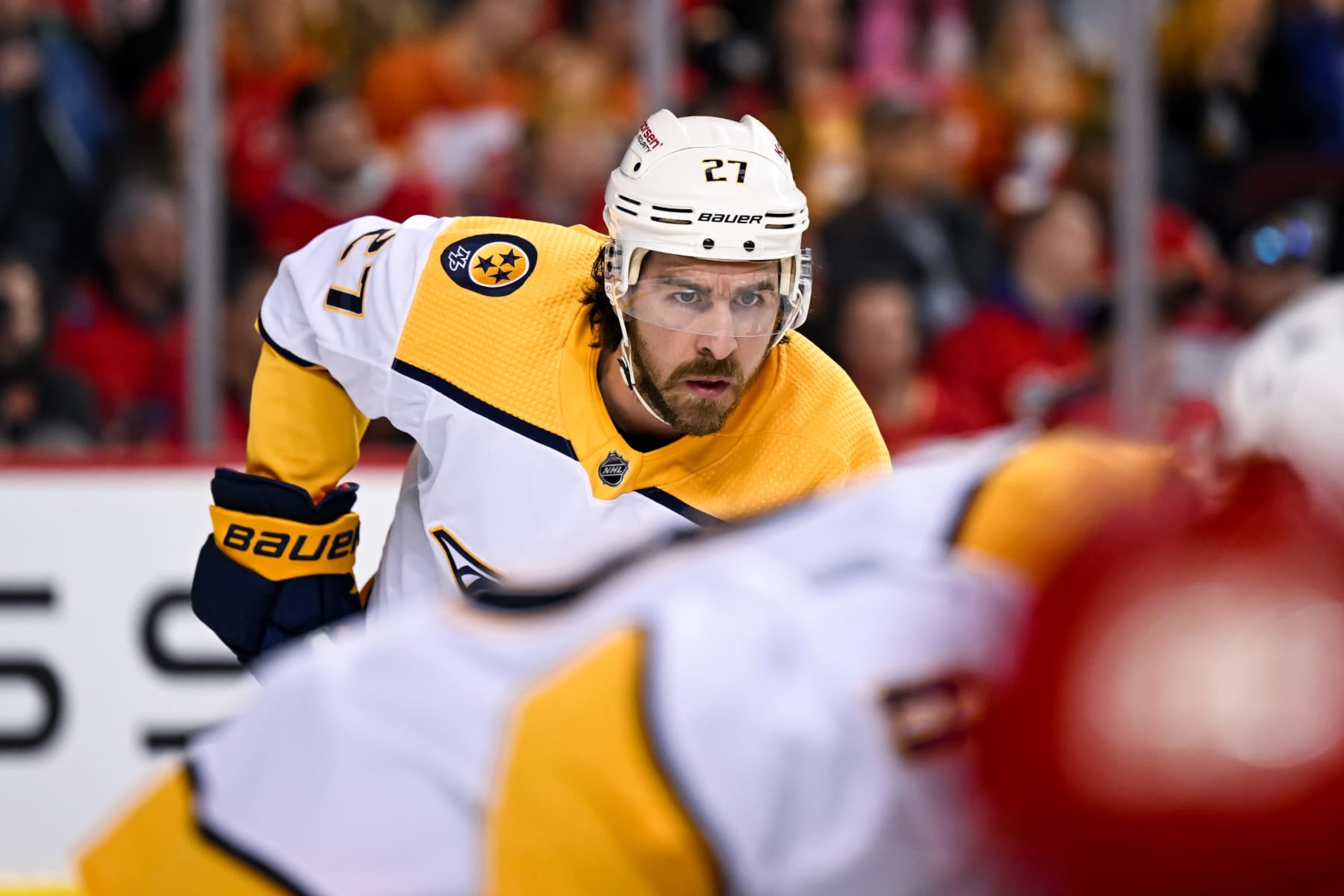
When Barry Trotz took over as the Predators GM, he shook everything up by clearing up a few contracts former GM David Poile painted the team into a corner with.
Trotz traded Ryan Johansen to Colorado and ate half of his $8 million cap hit for the next two seasons to do it. He then bought out the final three years of Matt Duchene's contract which had an $8 million cap hit, with two-thirds of that will be paid out over the next six seasons.
For our purposes, that left the Predators with only a couple of long-term commitments to Roman Josi and the remainder and Ryan McDonagh's contract as options for this exercise.
With so few long-term deals signed, it highlighted the cost left on McDonagh's contract as one of the very few leftovers from Poile's regime. While it was Tampa Bay that signed McDonagh to that deal, it's the Predators paying it now to the tune of $6.75 million for the next three years. Fortunately, Nashville isn't hard up against the cap anymore.
Duchene's buyout will wreak some havoc on them for a few years after this season, but for now, it's McDonagh's contract that looks "tough" because of his age (34), the years left on it (three) and the drop in his point production. Perhaps playing for new coach Andrew Brunette will help fix that up a little bit.
New Jersey Devils - Jesper Bratt
18 of 32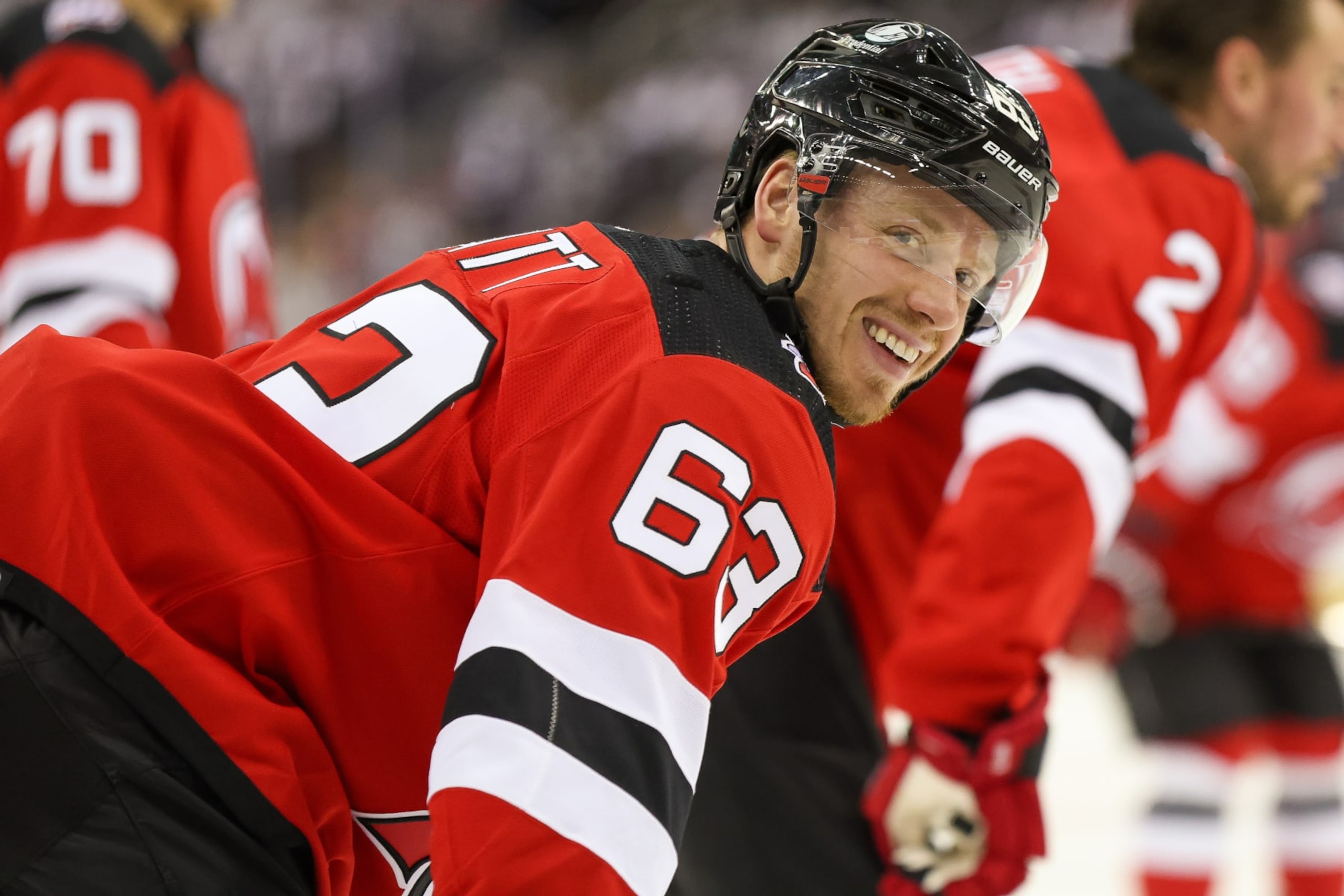
The New Jersey Devils are on the rise and with how young of a team they have, they don't exactly have any contract problems. If anything, they've moved on from players who were able to cash in bigger elsewhere (Ryan Graves, Miles Wood).
They've given apt extensions to Nico Hischier, Jack Hughes and Timo Meier. They paid out smartly for Dougie Hamilton on defense to lead the way there. Their most recent extension to Jesper Bratt is the only one where someone might get surprised by its size (eight years, $63 million), but when you see he's been a 70-point scorer each of the past two seasons, a $7.875 million cap hit makes sense.
Bratt may be one of the more under-the-radar players in the NHL, but considering who he's lining up with nightly in Newark, it's understandable. Jack Hughes is making highlights nightly, and his brother Luke is likely to start doing the same from the blue line. Meier fills the net with goals and plays a physical style of hockey while Hischier is a top two-way forward. Bratt is really good and his contract isn't actually bad...just it's a high cost for a guy who's probably their fifth-best player.
New York Islanders - Pierre Engvall
19 of 32
If you can make heads or tails of what the Islanders are doing with their roster, congratulations. GM Lou Lamoriello has a design for his team that makes sense for him, but the way he's got it set for the future with some of the contracts and the payouts therein don't totally make sense to those of us not on Long Island.
His big moves this summer included handing out long-term extensions to Ilya Sorokin for eight years, $66 million (Good!); Scott Mayfield for seven years, $24.5 million (OK...); Semyon Varlamov for four years, $11 million (four years for a backup goalie...?) and Pierre Engvall for seven years, $21 million.
Sorokin is their best player and one of the best goalies in the NHL so that checks out. Signing his backup for four years is definitely strange, but if the duo works and everyone is happy, fine. Mayfield's contract is a little strange, but he's done well with the Isles so whatever. Engvall though...that's the oddest of them all.
They got him at the deadline from Toronto last season and he had nine points in 18 games with the Isles after 21 in 58 with the Maple Leafs. He's big, he hangs around the net and he came up through the Leafs' organization with Lamoriello at the helm although he was drafted by Dave Nonis. None of that translates into giving a depth role player a seven-year contract though.
New York Rangers - Barclay Goodrow
20 of 32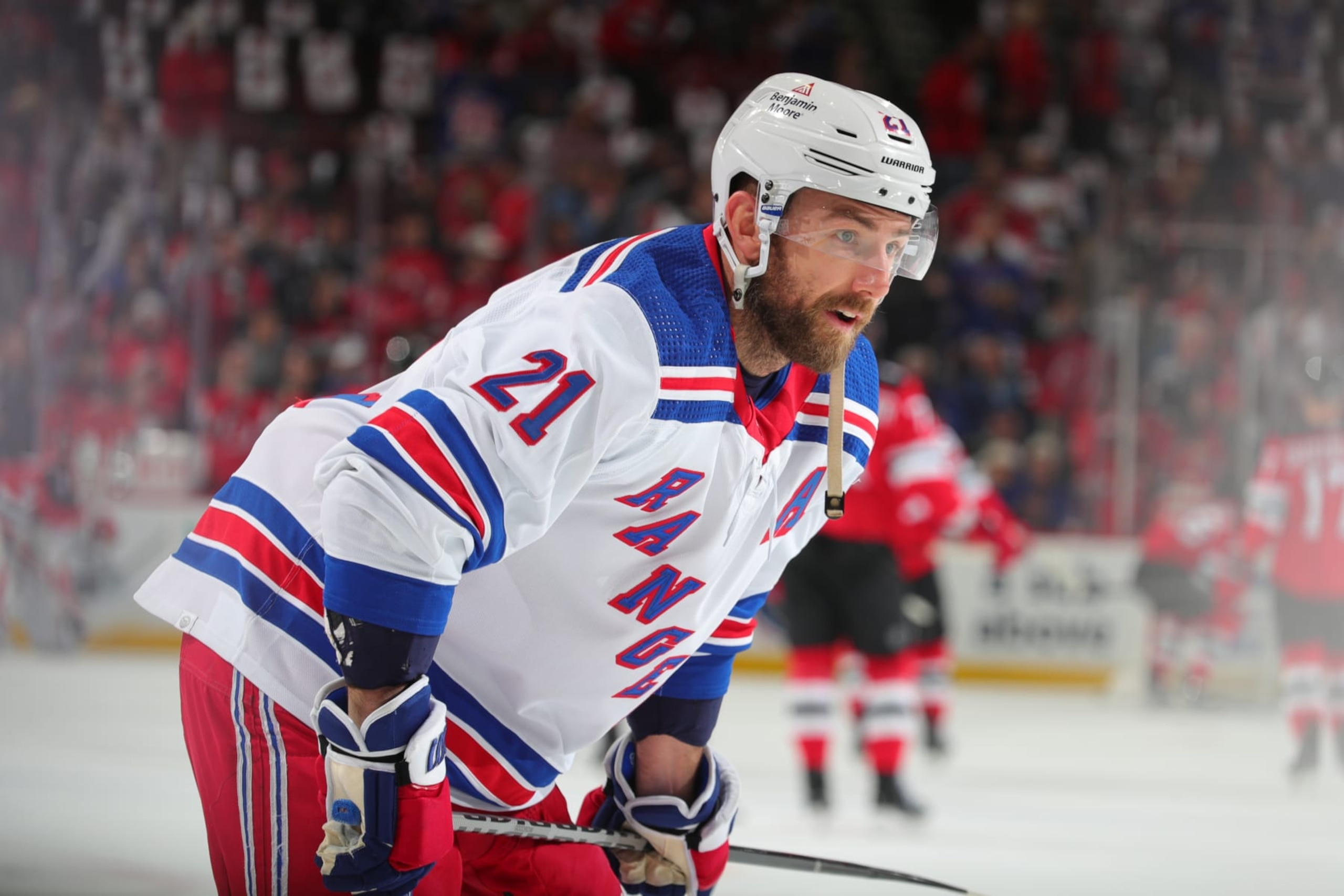
When the Rangers acquired Barclay Goodrow's free agent rights for a seventh-round pick, it made a lot of sense. They needed a player with his skill set badly to help their depth and give them a strong grinding presence up front.
When GM Chris Drury signed him to a six-year, $21.85 million contract it raised some eyebrows, but when he put up a career-high 33 points in his first season with the Blueshirts, it all seemed to make sense. He followed that up with 31 points last season but points only tell half the story.
Goodrow's possession numbers for a player with his skills and role on the team go against what he's meant to do. His consecutive seasons with a 5-on-5 shot attempts-for percentage are ugly. Of all Rangers players the past two seasons with at least 400 minutes played at 5-on-5, he's 17th in that category (45.04 percent). He doesn't play on a scoring line, yet the units he plays on give up tons of chances and it's foreboding because he's got four years left on his contract.
The Rangers are a cap spending team and Goodrow's $3.641 million cap hit counts harder in that situation.
What he did to help Tampa Bay win back-to-back Stanley Cups was great, but he hasn't been able to recreate that completely with the Rangers. The boosted offense is nice, but if opposing teams continue to pile up chances against him, the Rangers won't get a sniff of the Cup.
Ottawa Senators - Josh Norris
21 of 32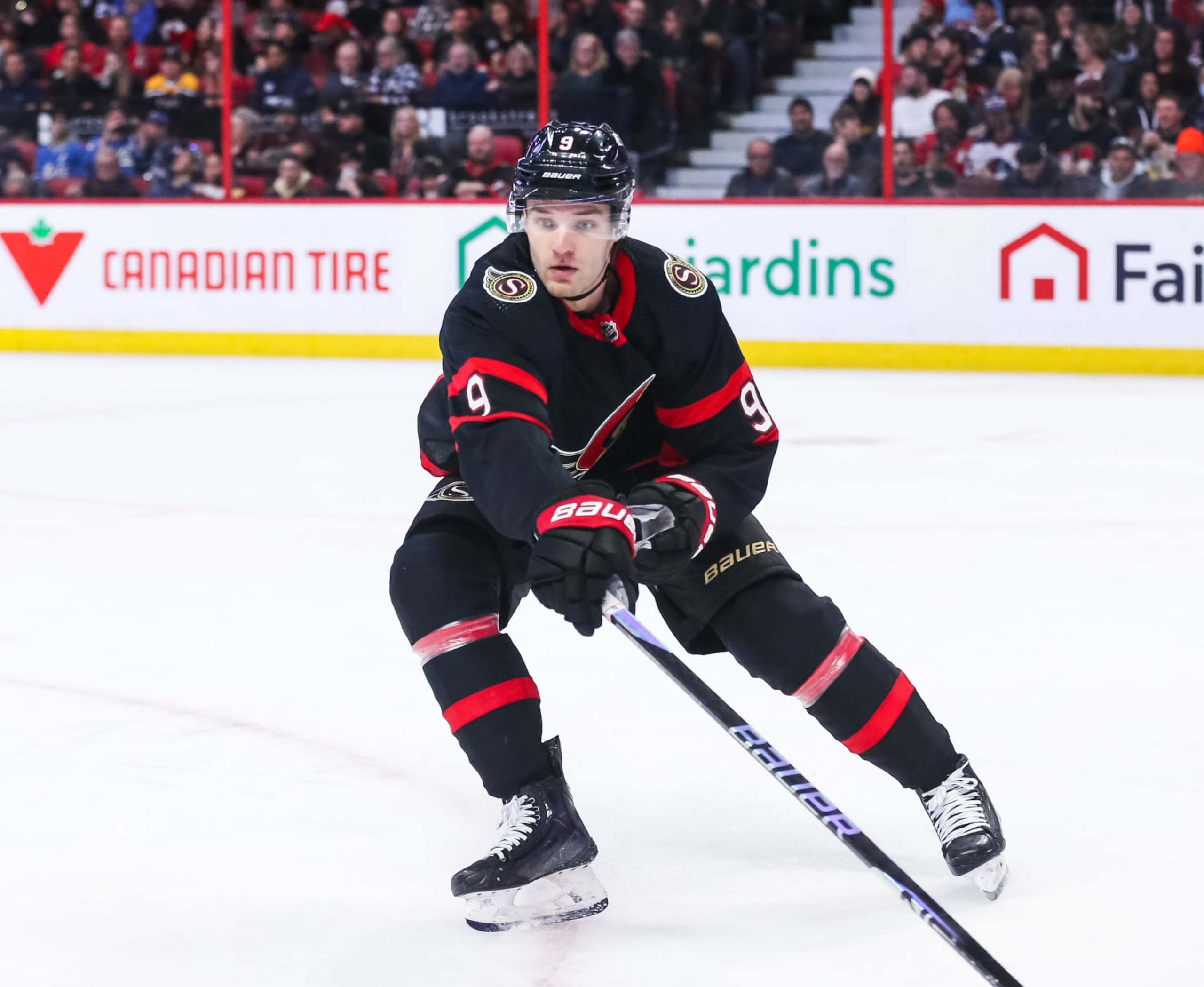
Bet you thought this would be about Jake Sanderson, didn't you? Swerve city, baby.
Josh Norris has been haunted by shoulder injuries throughout his career dating back to the 2019 World Junior Championships when he had his left shoulder operated on. He missed 16 games during the 2021-2022 season with a shoulder injury.
He scored 35 goals in 66 games that season which led to him signing an eight-year, $63.6 million extension with Ottawa that summer...and then he hurt his shoulder once again five games into last season. He came back, but lasted just three games before going back for surgery after a setback.
The Senators are banking heavily on Norris being able to return to what he did two years ago before the shoulder issues began. If he can come back and be a 30-goal scorer again, it will turn Ottawa into a vastly more dangerous team.
But if he can't and the issues plague him, it's a crushing blow for Norris and for the Senators' budget. With his cap hit at $7.95 million a year, it's a vast sum to dance around.
At least the Senators have been sold so that's one less issue hanging around, but Norris returning healthy and back to form is of the utmost importance for their hopes of returning to the playoffs.
Philadelphia Flyers - Sean Couturier
22 of 32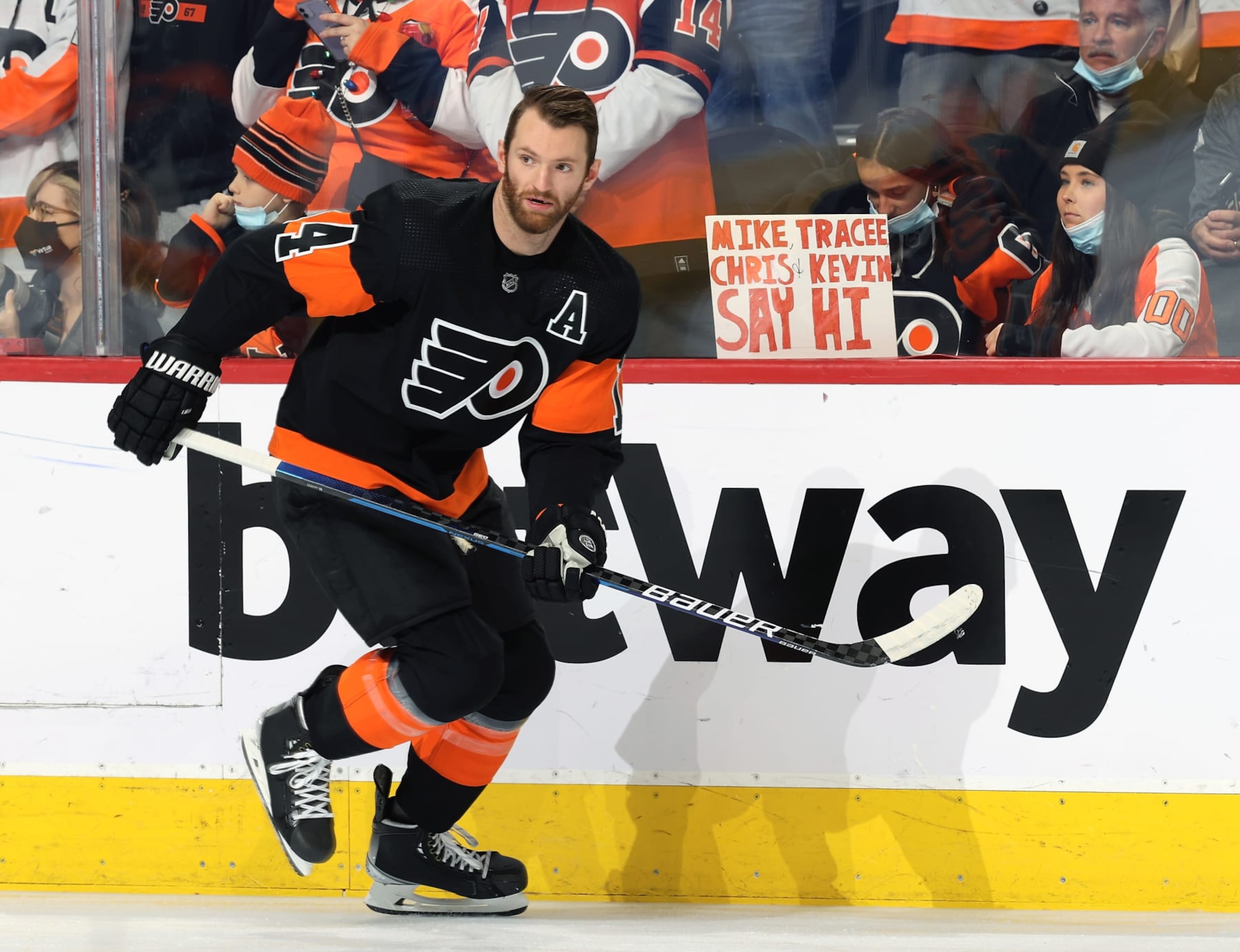
Sean Couturier's story is similar to Ottawa's with Josh Norris both in his importance to the team and how vital it is he can return to form.
Couturier has missed most of the past two seasons with a back injury that required multiple surgeries to address issues. We last saw Couturier when he played 29 games in the 2021-2022 season with his last game being Dec. 18, 2021.
When healthy, Couturier is one of the best defensive forwards in the NHL and capable of scoring as well. If he returned to his old playing style, the Flyers would be well beyond grateful to have him. He's a difference maker, even on what might be a not-so-great team.
The Flyers are another team that doesn't fear using LTIR and they did so with Couturier's contract the past two seasons. At $7.75 million per year, Couturier comes with a hefty cost but the real danger with him at that price is if he comes back and is a shadow of the player he once was. After that much time away, it's an honest concern particularly since he's now 30 years old.
Pittsburgh Penguins - Tristan Jarry
23 of 32
The Penguins were in a real bind this offseason. They desperately wanted to do something about their goaltending after it proved to be one of a few key problems that caused them the miss the playoffs for the first time since 2006. The problem was trades were hard to make, and free agency didn't offer a lot of better options.
Sticking with who you know best is fine and it's not as if Tristan Jarry has been bad, per se, but he hasn't provided the answers the way Matt Murray and Marc-Andre Fleury have in the past. That's what made it so strange that new Penguins GM Kyle Dubas signed Jarry to a five-year, $26.875 million contract.
With a $5.375 million cap hit, the cap-strapped Penguins have their de facto No. 1 for the next few seasons in Jarry. And while he can be very good, he's also proven staying healthy is a definitive concern. Although the Pens sent backup Casey DeSmith to the Canadiens as part of the massive Erik Karlsson trade, they signed Alex Nedeljkovic to be the new backup to Jarry. If Jarry stays healthy and can be consistent, it'll work fine for the aging Pens. But that's asking a lot from the group.
St. Louis Blues - Colton Parayko
24 of 32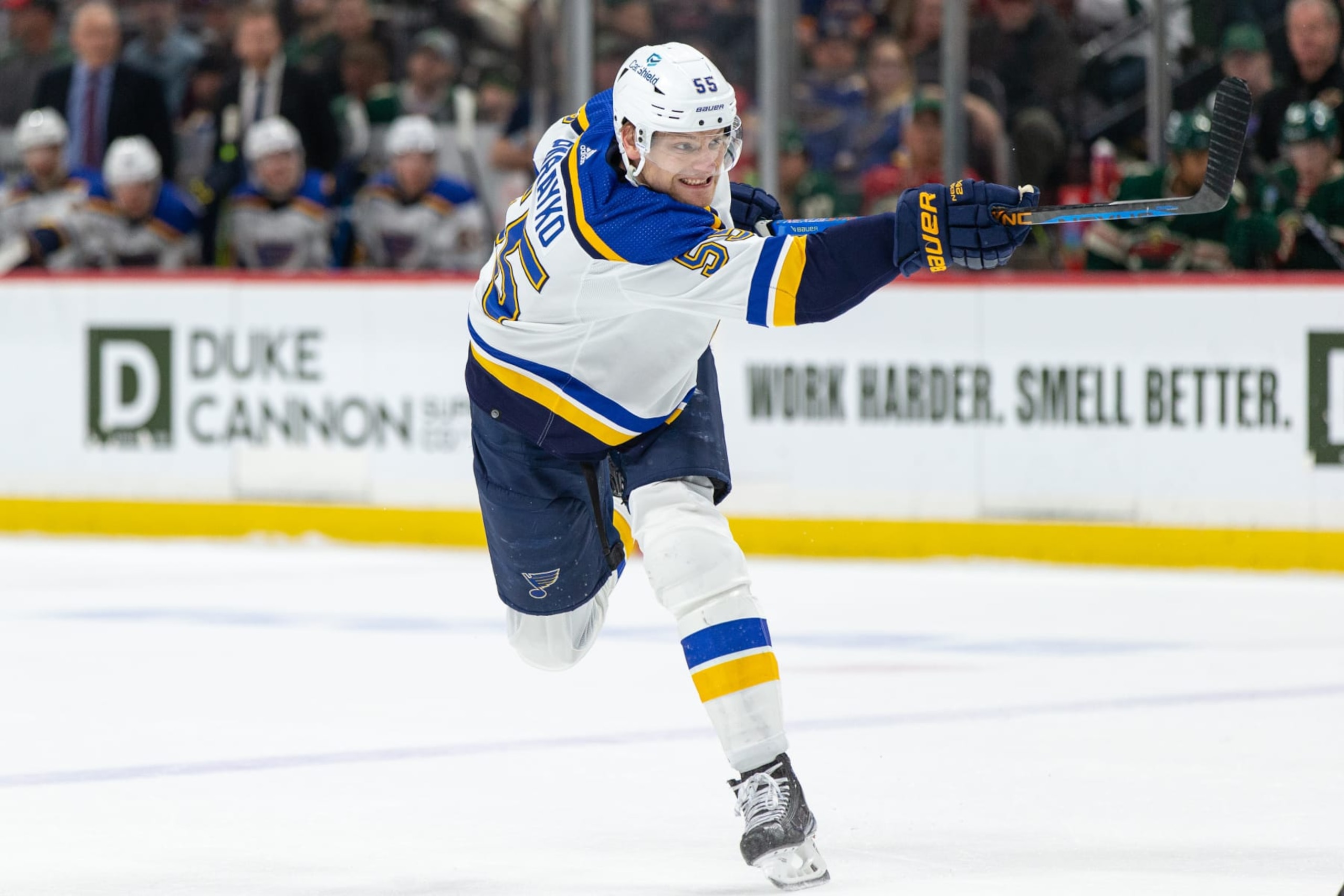
The Blues are in a transition of sorts but it's sort of clear they're going to try to make it back to the playoffs with what they've got for the most part. That's tricky because it puts them close to the cap and they've still got some big questions to answer.
The biggest question, both literally and figuratively, is what Colton Parayko can do to get his game back to the way it was that earned him an eight-year, $52 million extension back in 2021. At $6.5 million per year, the big blue liner has to return to being a consistent 30-35 point-per-year player who terrorizes goalies with his mammoth slap shot and makes opposing forwards miserable in the defensive end with his size.
It was a tough year for everyone involved on the Blues' defense last season and between Parayko, Torey Krug and Justin Faulk (who all make $6.5 million against the cap) having one guy going through it is tough enough, never mind three. But Parayko's talents and abilities are so different from his peers that he can leave a different impression when he's on his game. A return to his old ways would best help the Blues get back into the playoff discussion.
San Jose Sharks - Marc-Edouard Vlasic
25 of 32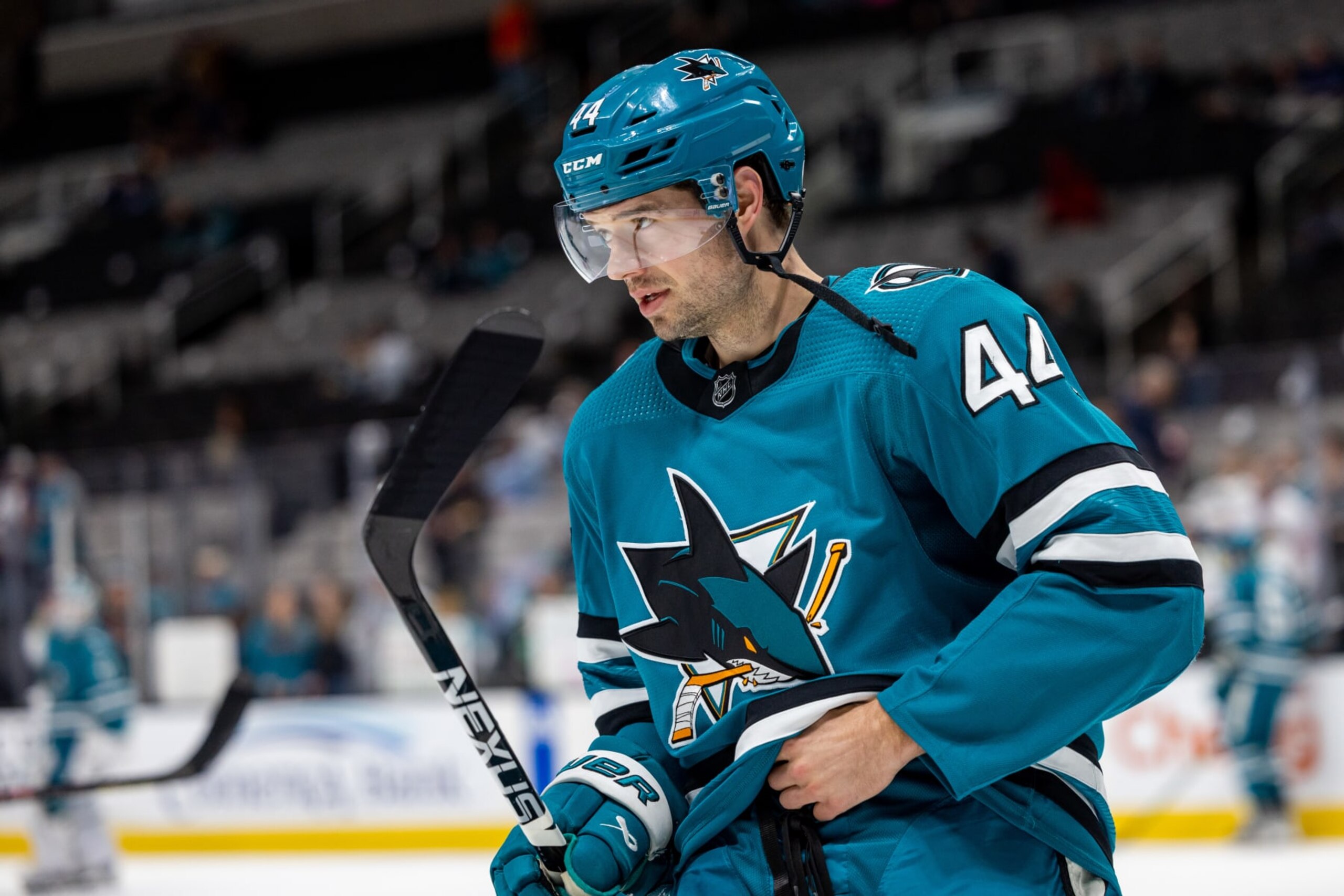
With Erik Karlsson off to Pittsburgh, the Sharks lost their biggest contract on the books. And while Tomas Hertl and Logan Couture still make big money, it's Marc-Edouard Vlasic whose deal hits hardest in all the wrong ways.
Vlasic has three years left at $7 million a season on his eight-year, $56 million deal he signed back in 2017. Vlasic back then was one of the better defenders in the league, capable of using physical play and his dedication to hold down the defensive zone to his and the Sharks' benefit. On top of that, he was capable of chipping in 20-30 points per season, but now he's much different.
Vlasic's foot speed hurts him getting up and down the ice and once he wasn't steadily playing next to Karlsson, the points dried up. Now with Karlsson gone and the fact he'll be the Sharks' highest paid defenseman, it's difficult to see how things will get better at all for the 36-year-old Canadian.
Fortunately, the Sharks aren't too close to the cap, but Vlasic's cost and what he produces are so far apart now it's hard to see his contract as anything more than an unfortunate circumstance.
Seattle Kraken - Philipp Grubauer
26 of 32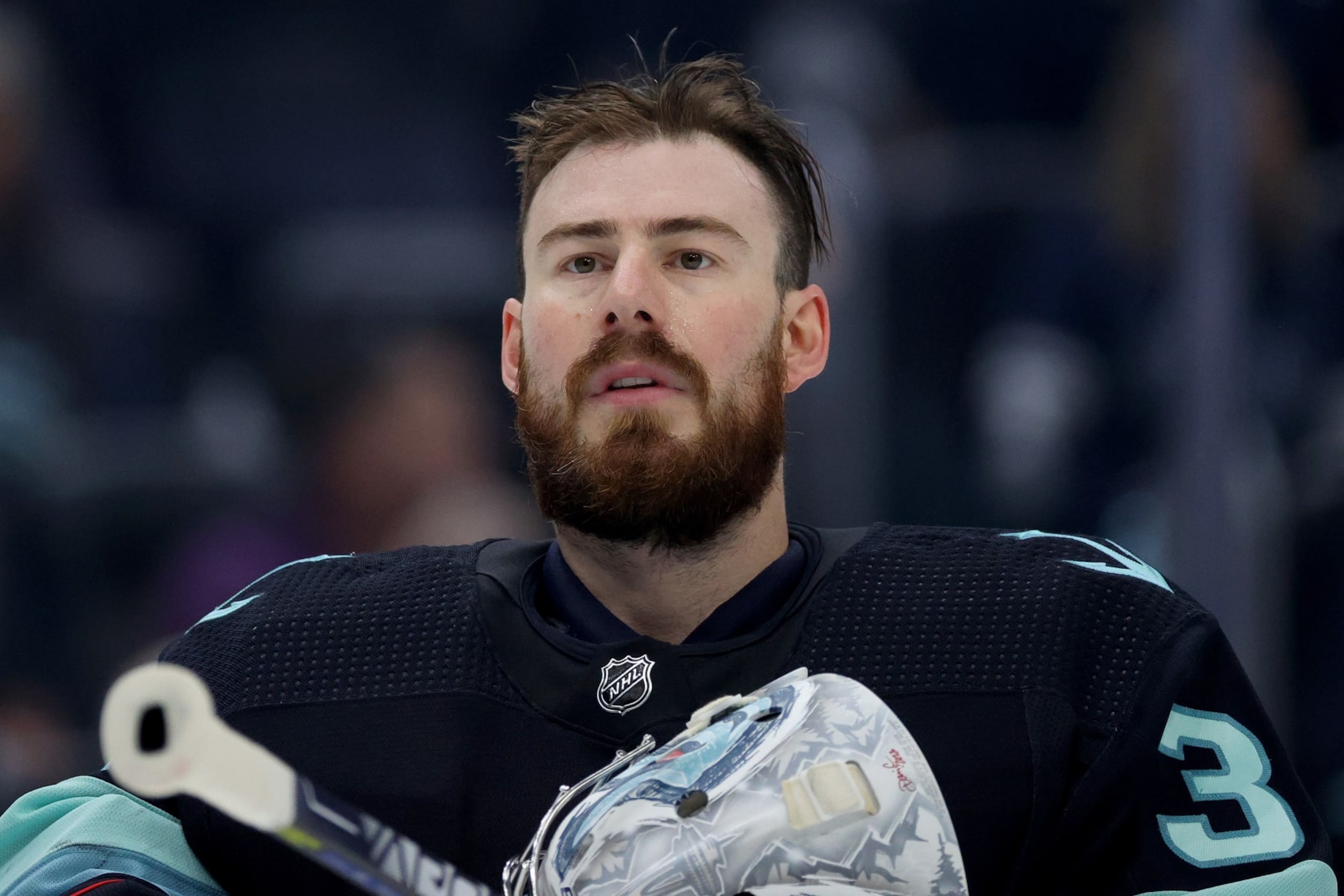
The Seattle Kraken have shown they're already one of the smartest teams in the NHL when it comes to how they've built from the ground up. They haven't gone mad handing out long-term deals for fat money and they've found tremendous bargains throughout free agency and made the best use of their money that way. It's almost as if they're using advanced numbers to find good deals and great fits for their roster. Weird concept!
Because of this it's really hard to find a contract that adds a sense of looming fear to their layout. They just signed defenseman Vince Dunn to a long-term deal, but given how well he played and how under the radar he was when they acquired him, it fits their whole M.O.
But if you had to pick one contract that could be construed as troublesome, goaltending usually shows the way and Philipp Grubauer's four remaining years at $5.9 million seem a little irksome. Two years ago, he was the worst goalie in the NHL by most metrics. Given it came in the Kraken's inaugural season, it at least made sense. But he improved last year and then played great in the playoffs leading Seattle to the second round in their first appearance in the postseason.
Grubauer was Seattle's big splash before their first season and if he can take the momentum gained by a great playoff run and turn it into confidence for the future, that's great. With Chris Driedger and Joey Daccord behind him, there's pressure there to make sure he does it, too.
Tampa Bay Lightning - Erik Černák
27 of 32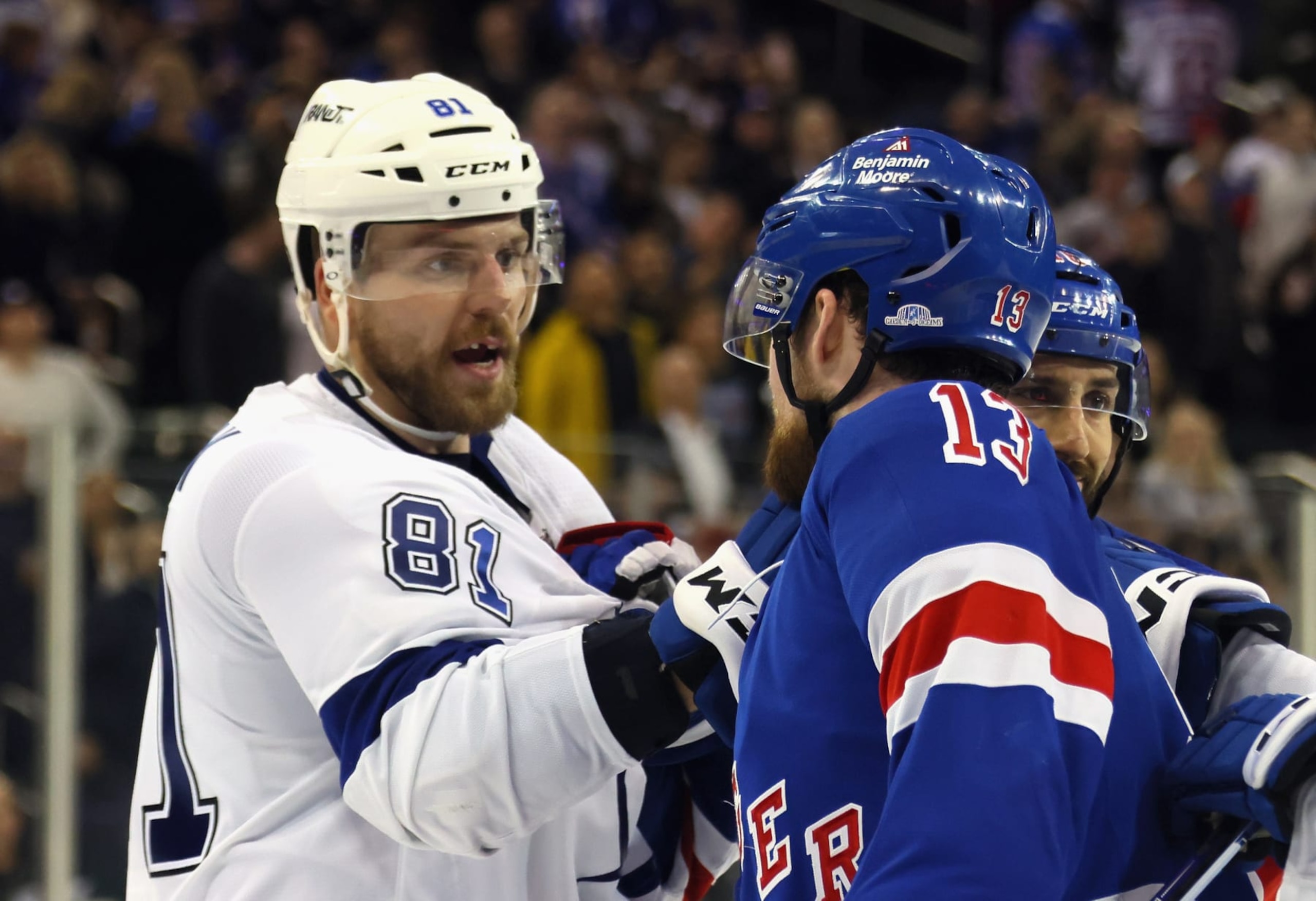
It's both easy and difficult to pick on the Lightning about their cap situation and some of their contracts. They've gone over the top to reward key players and even some role players while biding their time with up-and-coming players and not paying them big money until it was absolutely necessary to do so.
Could we get grumpy about the big deals signed by Brayden Point, Anthony Cirelli and, most recently, Brandon Hagel? I guess so but getting mad that a 90-plus point player like Point signed an extension worth $9.5 million a year would be kind of silly. Hagel scored 30 goals last season, so of course he got a big raise. Cirelli is one of the best defensive forwards in the NHL. That Nikita Kucherov also rolls with a $9.5 million cap hit is pretty great, too.
Meanwhile, Mikhail Sergachev makes $8.5 million against the cap and Victor Hedman's deal from years ago has two more years to go at $7.875 million against the cap. Those are superb deals for top players. Those also highlight how Erik Černák's eight-year, $41.6 million deal is kind of out of place.
He's a second-pair defenseman and his advanced numbers are good (as most Lightning players advanced numbers tend to be). But the physical play takes a toll both in injuries and occasional suspensions and a $5.2 million cap hit on a team that routinely spends to the cap and makes use of LTIR whenever possible makes his contract stick out in a bad way. He doesn't produce points which makes his defensive presence necessary to be above average or else.
Toronto Maple Leafs - John Tavares
28 of 32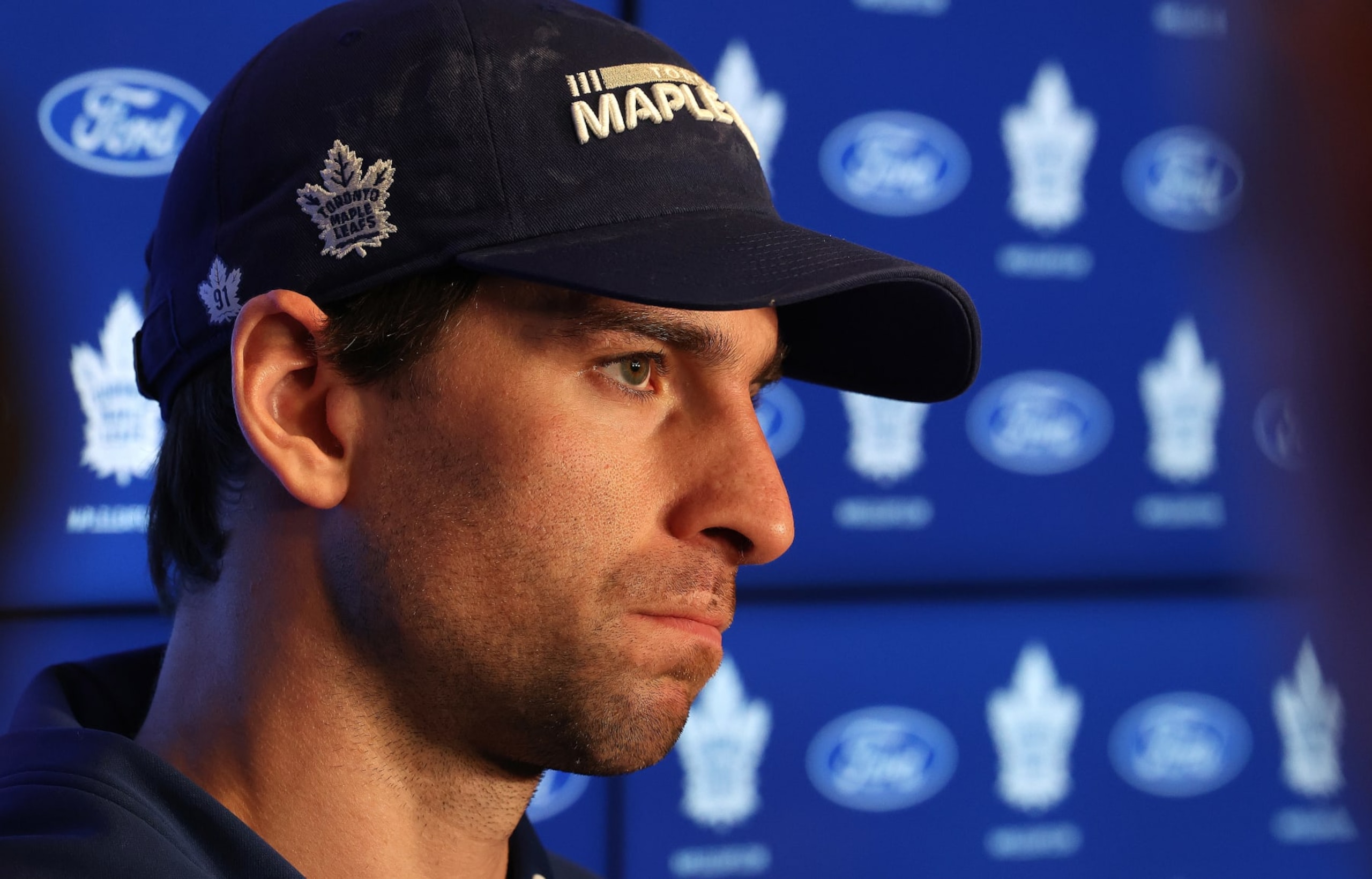
Hot take time, everyone: The Toronto Maple Leafs don't really have a bad contract on the books.
Would you argue Auston Matthews or Mitch Marner are severely overpaid? Given their top-tier offensive play and exceptional defensive play, that's a losing argument to make. Morgan Rielly at $7.5 million for the next seven years could be bad down the road, but he's their No. 1 defenseman and helps drive their power play as well. Not to mention he's the heart of the team. Great deal.
We'll see what happens with William Nylander's extension, should it actually happen in Toronto, but even he was one Toronto's best players last season and particularly in the playoffs.
So, this leaves John Tavares as the guy we're ultimately going to pick on, but he's got two years left on his seven-year, $77 million contract and he had 80 points last season. For $11 million a year, you'll take that kind of production especially when he's surrounded by Marner, Nylander and Matthews among others. At 32 years old, Tavares is the old guy among the forwards but he's still producing very well.
What hurts the Leafs is the culmination of those big-money deals and how it undercuts their ability to have solid depth. But that's an entirely different argument to take up as opposed to picking one big contract to be the pariah of the bunch.
Vancouver Canucks - JT Miller
29 of 32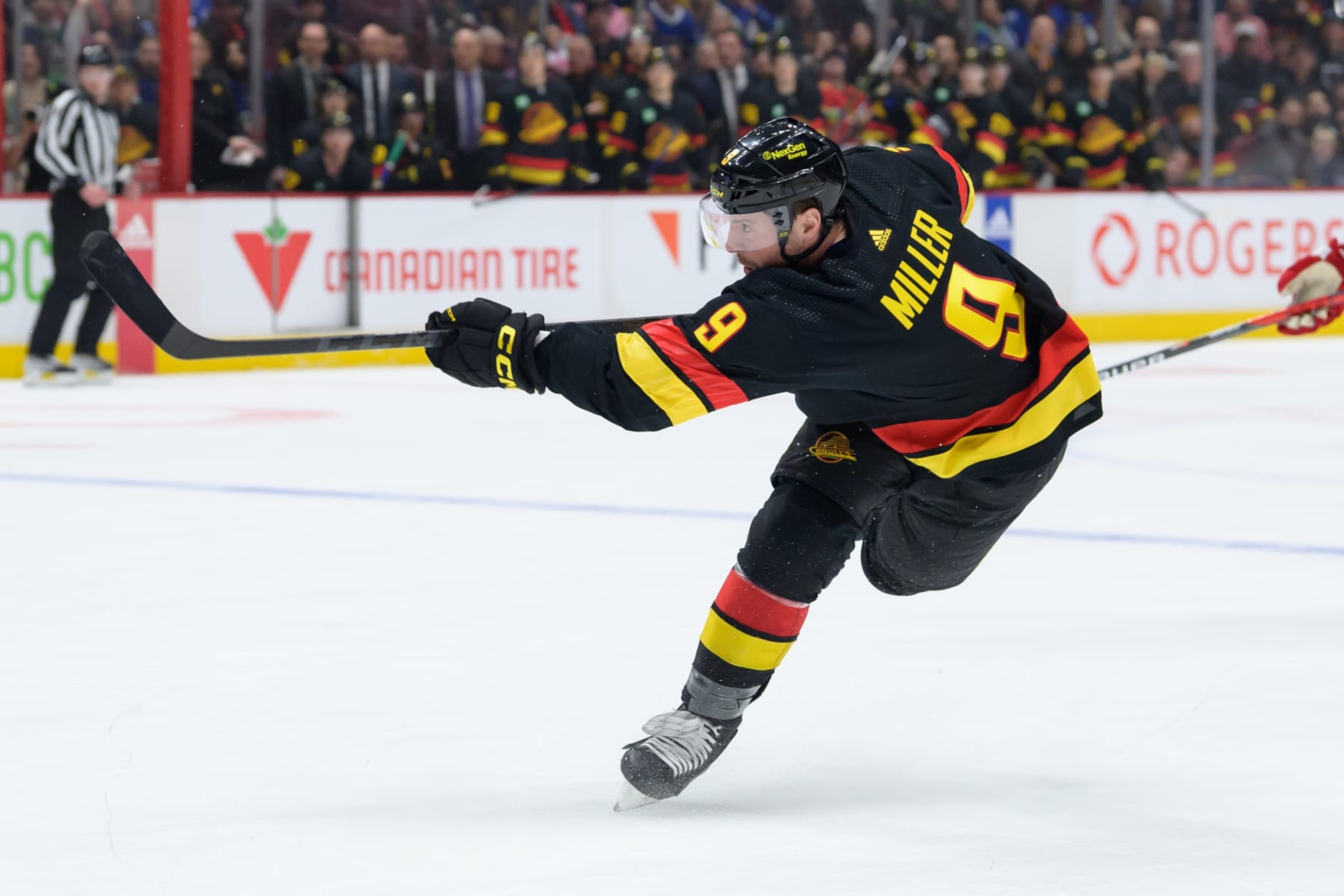
It's pretty wild to think that while Ron Hextall was GM of the Pittsburgh Penguins last season, he was this close to trading for JT Miller and then we'd be stuck wondering who we would've picked for this project for the Canucks.
Miller's a very good player, but with how messy everything has been in Vancouver the past two years and how rushed Miller's extension with the Canucks appeared to be when it was signed last year, the next seven years at $8 million a year could get really awkward, particularly with Elias Pettersson due for an extension in the very near future.
The Canucks have a lot of bad money thrown around and fortunately, most of it isn't hooked into long-term deals. This season alone, Vancouver has 12 players with cap hits of $3 million or more with seven of those deals going beyond this season. But Miller's is the longest of them all until Pettersson signs and his advanced metrics have slipped in recent years. Perhaps with Rick Tocchet at the helm, things will change for the better in Vancouver, but for now, Miller's contract is one that sets a difficult bar for the future.
Vegas Golden Knights - William Karlsson
30 of 32
When "Wild Bill" William Karlsson signed his eight-year, $47.2 million extension with Vegas, it came on the heels of a 43-goal season for the Swede that was followed by a 24-goal, 56-point season. The prevailing thought was this was the kind of player he would be and perhaps somewhere in the soft middle of those two goal totals would be the ideal.
That...hasn't exactly been the case.
Karlsson's point production has been OK, but he hasn't scored 20 goals since that 24-goal season in 2018-2019. In the past four seasons, he's scored 55 goals with 173 points in 268 games. That's not bad, but it's questionable whether that's worth $5.9 million a season. For the cap-strapped Golden Knights, it's money that could be shuffled around to help in other areas. But they love Karlsson and what he brings to the team on and off the ice, so he's totally worth it, right?
Vegas operates by their own set of rules and while Karlsson's contract in a similar cap situation elsewhere might be a killer, in Vegas it's part of the ride.
Washington Capitals - Tom Wilson
31 of 32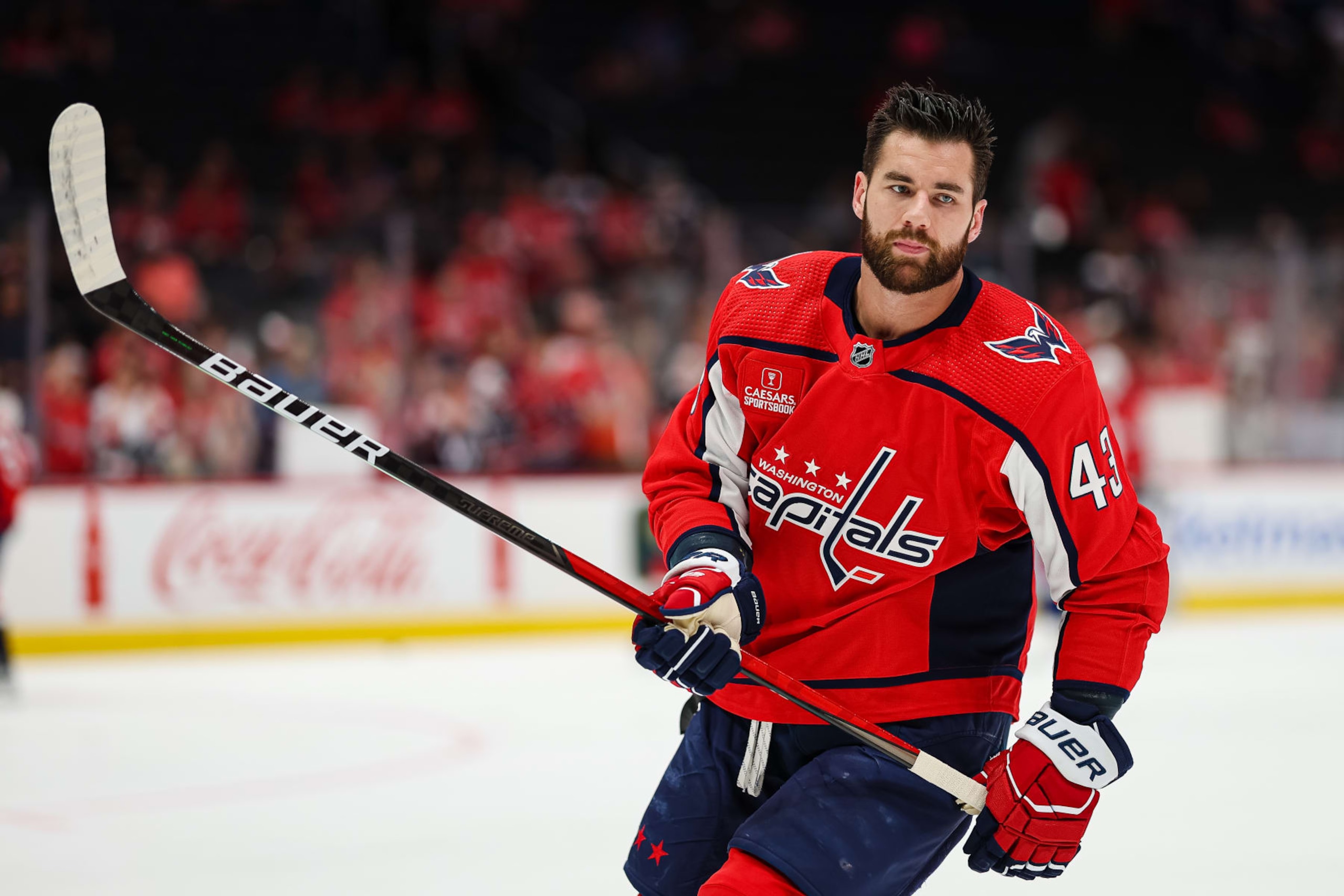
Tom Wilson has a particular set of skills that make him beyond valuable for the Washington Capitals. When they signed Wilson recently to a seven-year, $45.5 million extension (that kicks in next season) this summer, the reaction everywhere outside the nation's capital was one of "what the heck are they even doing?"
Never mind that Wilson was coming off a season marred by injury and that his game is played on the edge at all times. Never mind also that he heads into this season at 29 years old and that guys who play that kind of physical game tend to wear down sooner than those who don't.
Actually, I take that back, you should mind all of those things because holy cats, that's a massive extension worth $6.5 million per year for a team that's staring hard seasons in the face in the very near future and they did this after they missed the playoffs for the first time since 2006.
Capitals GM Brian MacLellan has shown he's a savvy, smart guy, but he didn't need to artificially up the difficulty level on his own job. If the future means building around Wilson, then it makes a lot more sense, but even that seems like a curious decision.
Winnipeg Jets - Nate Schmidt
32 of 32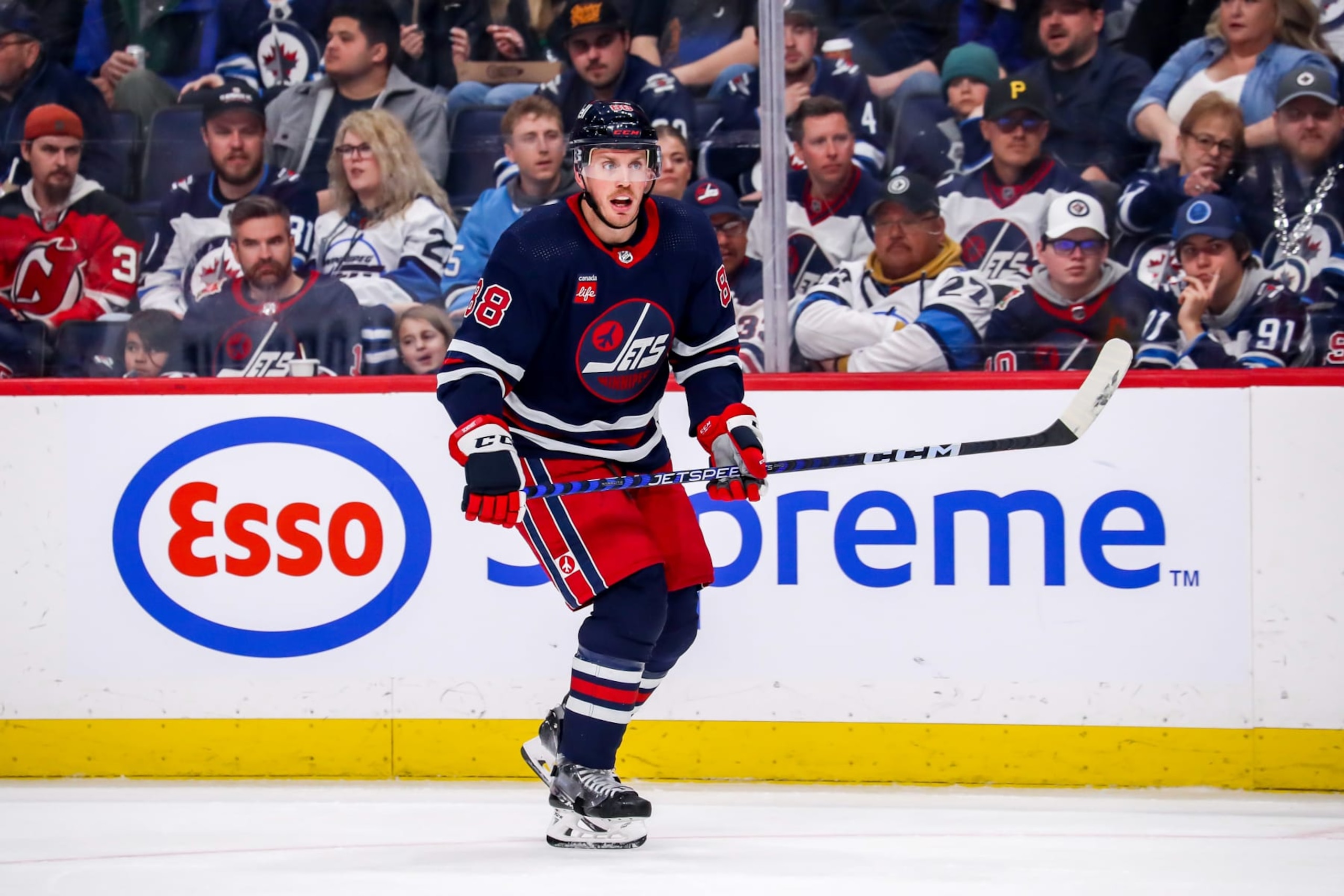
When the Winnipeg Jets parted ways with Pierre-Luc Dubois this summer, it alleviated the possibility of signing a monster extension. The thing is, they'd like to sign a few of those, namely to goalie Connor Hellebuyck and center Mark Scheifele, but the prospects of those things happening seem low.
Truth is, the Jets don't have any contracts that are holding them down and the only one that sticks out poorly is because of production, not cost. Defenseman Nate Schmidt has run into injuries in recent seasons and those on top of getting older have conspired to make the final two years of his contract with a $5.95 million cap hit look not-so-great.
Schmidt has 11 goals and 51 points the past two seasons combined with Winnipeg which is fine for a second or third pairing guy. It's just guys like that don't usually make as much money as Schmidt does.
Truth is, those numbers are perfectly in line with what he's done throughout his career with four different teams, just that his contract was signed with Vegas back in 2018 by the GM who drafted him in Washington (George McPhee). Then, Schmidt was in his prime as a 30-point-per-season player, but last season his minutes and points dropped. Now at 32 years old, he's the veteran on the Jets' blue line and while he can still move the puck, the rise of Josh Morrissey and Neal Pionk in Winnipeg has cut into his ice time. Still, it's not a bad contract and the Jets shouldn't be hamstrung at all by it because they don't have any active contract worries to speak of.
Salary and contract information provided by CapFriendly.com
Advanced metrics provided by NaturalStatTrick.com

.jpg?w=2560)
.jpg?w=2560 "Top Trade Targets Entering Week 6")



.png?w=2560 "Muncy Sums Up NLCS Offense 💩")