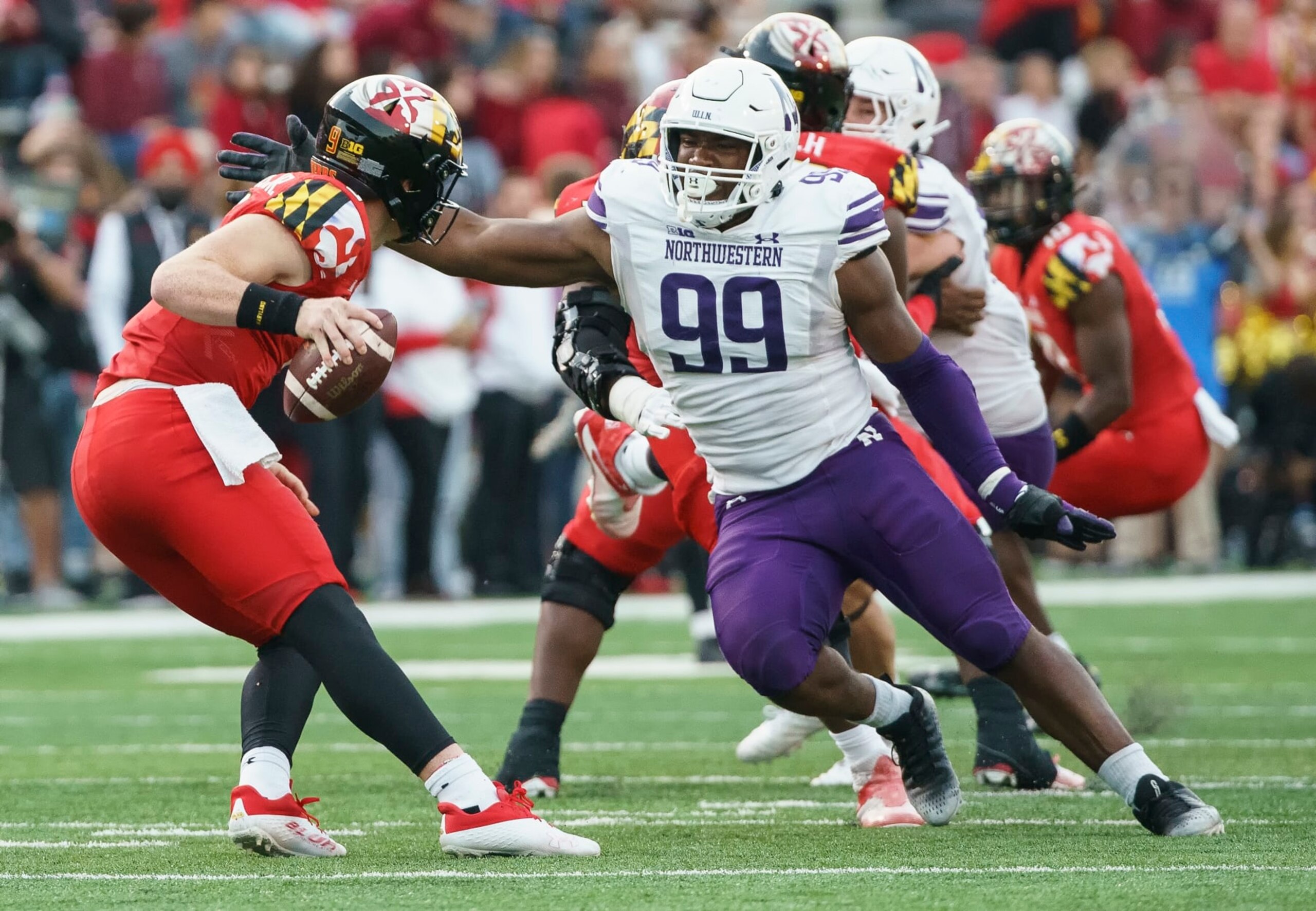


The NFL draft is still cooking in downtown Kansas City, with Day 3 serving as the necessary sides to accompany the entrees already tasted through the first three rounds.
Rounds 4 to 7 are absolutely vital to the construction of a team's roster.
"There will be chances and opportunities to get guys in certain different rounds that make a lot of sense and (you can) get really good value on so we just have to be on point with our board like we have been in the past," Chiefs general manager Brett Veach told reporters leading up to the this weekend's festivities.
A year ago, the likes of Coby Bryant, Spencer Burford, Joshua Williams, Cordell Volson, Chigoziem Okonkwo, Sam Howell, Tyler Allgeier, Tariq Woolen, Braxton Jones, Malcolm Rodriguez, Jamaree Salyer, Isiah Pacheco and, of course, Mr. Irrelevant Brock Purdy heard their names called on the draft's third day.
Early contributors will inevitably emerge from Saturday's selections. Maybe they won't turn into a potential franchise quarterback like Howell or Purdy. But these picks are the potatoes to go along with the meat of the draft's early rounds.
Follow along as Bleacher Report provides analysis and grades for every selection based on talent, fit and the team's decision-making process.
Round 4
1 of 4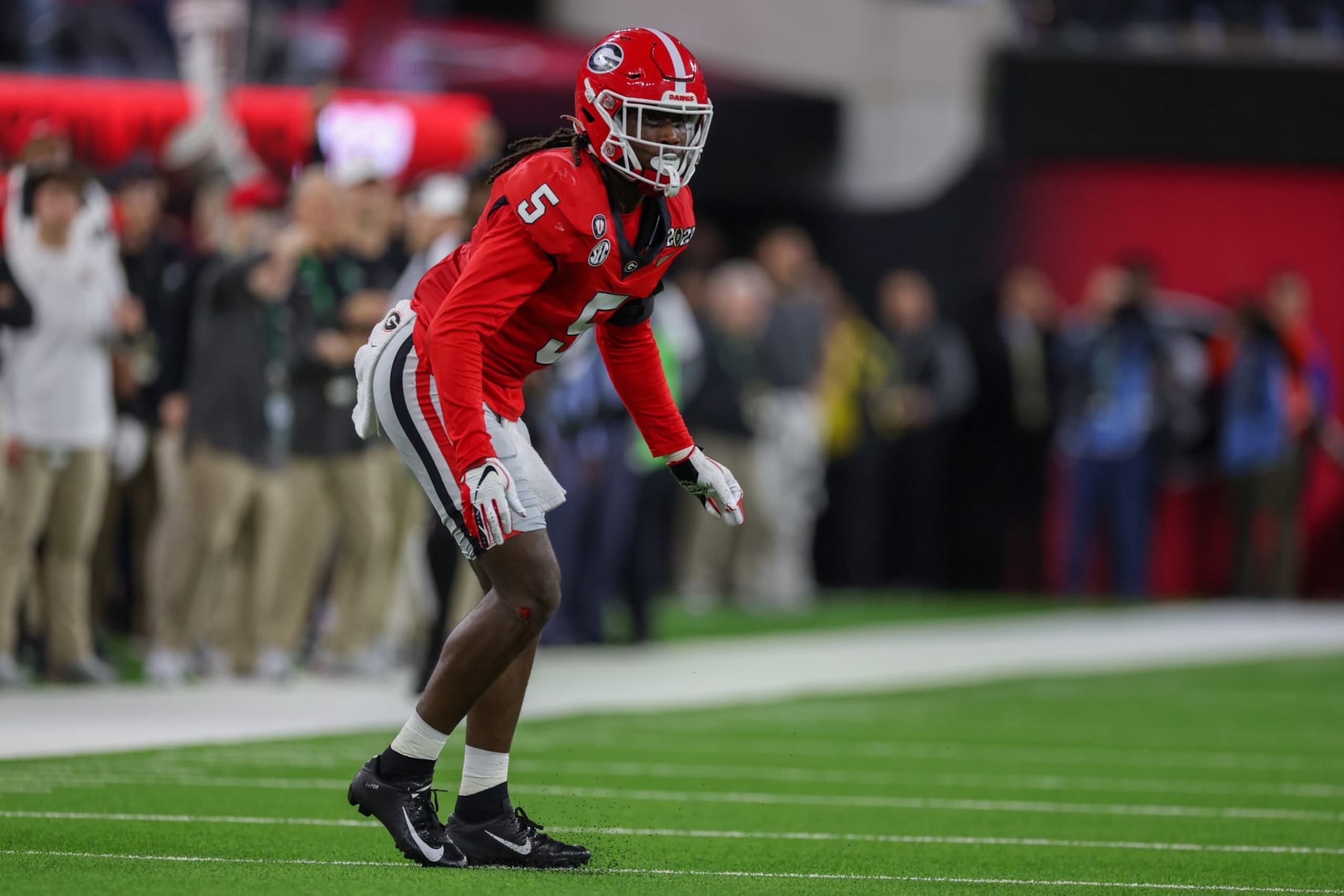
103. New Orleans Saints (via Chicago)
Nick Saldiveri, OT, Old Dominion
Strengths: Polished pass protector who consistently works to hit his landmarks, flexible lower body, nimble feet, strength to anchor
Weaknesses: Could deliver bigger blow with initial punch, gets overextended in the run game
Offensive linemen generally work in anonymity, especially those who aren't considered elite draft prospects or don't play at a premier program. Yet quality blockers are consistently found at all levels.
Old Dominion's Nick Saldiveri entered this year's draft process as a three-year starter with experience at right tackle and guard.
"He's going to play 15 years in the NFL," former ODU head coach Bobby Wilder told the Charlotte Observer's Mike Kaye.
The reason behind the assertion is twofold. The 6'6", 318-pound blocker is an excellent athlete capable of playing across the offensive line.
"When I was walking into the interviews, I had clips of me playing tackle, guard and center," Saldiveri told the Draft Network's Justin Melo. "... I have an entire library of tackle film from Old Dominion. I had a lot of success playing tackle this past year.
"I went to the Senior Bowl and I played the interior. The Senior Bowl was my first time playing center and I heard really good feedback."
The New Orleans Saints believed in Saldiveri so much that they traded up to the top of the fourth round to acquire the Old Dominion product. While Saldiveri primarily played right tackle in college, he likely projects as a guard for the Saints. Ultimately, he could replace Andrus Peat in the lineup since the veteran will turn 30 later this year and is entering the last year of his contract.
Grade: B+
104. Las Vegas Raiders (via Houston)
Jakorian Bennett, CB, Maryland
Strengths: Continually challenges passes and works through catch point, fluid mover, likes to hit and defend the run
Weaknesses: Poor hands to create turnovers, tendency to be overly aggressive and penalized, can be beat off the jam
In a lot of ways, Maryland cornerback Deonte Banks overshadowed teammate Jakorian Bennett.
Banks is a bigger corner with a whopping 9.99 relative athletic score and first-round potential. Bennett had to work his way through community college before becoming a two-year starter for the Terrapins.
Bennett is a standout prospect in his own right, though. The 5'11", 188-pound cornerback posted a 4.30-second 40-yard dash, a 40.5-inch vertical and 11'1" broad jump at the NFL Scouting Combine. All three figures ranked among the top four for cornerbacks at the combine.
Bennett also gets his hands on a lot of passes. He had 27 pass breakups over the last two seasons, although he hauled in only four interceptions over that span.
Imagine where Bennett, who was initially too small and underdeveloped to start in high school, would be if he had actually quit playing football.
The spirit of Al Davis is smiling with the addition of Bennett to the team's defensive backfield. His athletic profile fits the old Raiders Way to a T. But he can also compete to be a starting outside corner, even as a fourth-round pick.
Grade: B
105. Philadelphia Eagles (via Houston)
Kelee Ringo, CB, Georgia
Strengths: Elite top-end speed for a bigger corner, reroutes receivers, flies up against the run
Weaknesses: Not as explosive coming out of his backpedal or breaks, takes time to gather speed, will panic and grab if beaten
Kelee Ringo did everything at Georgia he was supposed to do after being the best cornerback prospect in his recruiting class.
The 20-year old started two seasons after an injury derailed his true freshman campaign. Upon his return, he helped anchor a two-time national championship-winning squad. He played in all 30 games over that span, snagged four interceptions and broke up 19 passes. Last year, Ringo allowed only one touchdown while forcing 11 incompletions during 545 coverage snaps, per Pro Football Focus.
However, the 6'2", 207-pounder is a straight-line speedster whose success in the NFL will depend on scheme fit.
Ringo tested poorly in the change-of-direction drills at Georgia's pro day. He struggles when he's asked to make sudden movements and display a certain level of shiftines. Instead, he can thrive in a heavy-zone scheme or one where he's allowed to press and consistently beat up opposing receivers.
Another standout Georgia defender finds himself on the Philadelphia Eagles defense. They did bring back Darius Slay and James Bradberry this offseason, but both will be 30 or older next season. Ringo is a young, physically gifted corner who can learn from both before eventually taking over one of the outside spots.
Grade: A
106. Indianapolis Colts
Blake Freeland, OT, BYU
Indianapolis Colts general manager Chris Ballard doesn't veer from his preferences often. He already did so in the third round with wide receiver Josh Downs to make his head coach and wide receivers coach happy.
But the Colts are back on track with selecting prospects who have high-end traits. Freeland posted an elite relative athletic score. He can come in and compete with Bernhard Raimann at left tackle or serve as the team's swing tackle. However, Freeland is more athlete than technician at this point in his career.
Grade: C
107. New England Patriots (via Los Angeles Rams)
Jake Andrews, IOL, Troy
The New England Patriots are preparing to make the switch from one Andrews to another. David Andrews has been the anchor of the team's offensive line for the last eight seasons. But he'll turn 31 later this year.
Troy's Jake Andrews isn't just a center option despite starting over the ball for the entirety of his senior season. He does have extensive guard experience as well.
Grade: C
108. Seattle Seahawks (via Denver)
Anthony Bradford, IOL, LSU
Strengths: Aggressive and powerful, people-mover, starting experience at guard and tackle
Weaknesses: Slow to recover after initial contact, oversets, one-year starter
LSU's Anthony Bradford is an example of an underclassman declaring early and somewhat unexpectedly. He didn't come into LSU as a 5-star recruit. He wasn't necessarily considered an elite prospect throughout this year's cycle, either.
But after going through his film, Bradford deserves a Shaq-like response: "I owe you an apology. I wasn't really familiar with your game."
Bradford didn't become a full-time starter until in his final season on campus, although he started games throughout his career at left tackle, right tackle and right guard.
The 6'4", 332-pound guard is a bulldozer with pretty good maneuverability. Bradford is a force multiplier at the point of contact. He's an ideal fit for the Seattle Seahawks, who clearly want to reemploy a physical brand of football with Kenneth Walker III and Zach Charbonnet in the backfield together.
Grade: B
109. Houston Texans (via Las Vegas)
Dylan Horton, Edge, TCU
DeMeco Ryans wants pass-rushers. His defensive approach is predicated on coming at opposing quarterbacks in waves.
The Houston Texans already made a statement by trading up to the third overall pick and selecting Will Anderson Jr. The team now has its bookend in TCU's Dylan Horton, who will get to learn from the 34-year-old Jerry Hughes.
Grade: C
110. Indianapolis Colts (via Atlanta)
Adetomiwa Adebawore, DL, Northwestern
Strengths: Phenomenal athlete, powerfully stout frame, strong hands, position flexibility
Weaknesses: Straight-line pass-rusher, needs better technique and recognition of keys, stays blocked too often
Adetomiwa Adebawore primarily played defensive end at Northwestern, though the coaching staff did utilize him at multiple spots along the defensive line. But a permanent move to 3-technique appears to be in his best interest.
Adebawore opened eyes at the Senior Bowl because he was unblockable throughout the week's practices, particularly when he lined up over a guard. At 6'2" and 282 pounds, Adebawore could be considered undersized for a full-time defensive tackle. But he has rare strength and explosive traits to excel at the position.
Keeping a potential full-time position switch in mind, Adebawore's testing metrics are mind-blowingly good. He ran a 4.49-second 40-yard dash and set a record for a defensive tackle with a 10'5" broad jump, according to his agent. Adebawore posted elite numbers in every single testing phase for a defensive tackle.
As with the Blake Freeland pick earlier in the fourth round, Indianapolis Colts general manager Chris Ballard stuck by selecting another premium athlete. In this particular case, Indianapolis found tremendous value by getting Adebawore in the fourth.
Grade: A
111. Cleveland Browns
Dawand Jones, OT, Ohio State
Strengths: Gargantuan frame, awesome wingspan, strong hands, overwhelms at point of attack, quick and patient in pass set
Weaknesses: Moves well for size but still relatively heavy-footed, slow to process defensive movement
Ohio State's Dawand Jones epitomizes the planet theory: There are only so many men walking on this planet with his size and athleticism.
Jones is comically large compared to the defensive linemen whom he often blocks, even though those defenders are also elite athletes. The first-team All-American stands 6'8" and weighs 374 pounds. He knows how to use his size and length, too.
Jones' effectiveness is less about ideal technique and athleticism and more about using his humongous build to make it difficult for defenders to circumnavigate him. He allowed zero sacks and quarterback hits while serving as Ohio State's right tackle last season, per Pro Football Focus.
Once Jones gets his hands on an assignment, the play tends to be over. That was on full display during his one practice at the Senior Bowl, where he was the best individual performer against other all-stars and future draft picks.
The Cleveland Browns already claim one of the league's best offensive lines. They certainly get bigger and better with Jones, who's clearly a value pick in the fourth round. Besides, current right tackle Jack Conklin does have an injury history that may make this luxury pick turn into a smart investment.
Grade: A
112. New England Patriots (via New York Jets)
Chad Ryland, K, Maryland
What's worse? That the New England Patriots drafted a kicker in the fourth round, that they traded up to do it or the fact that they gave up assets to the rival New York Jets to make it happen?
To be fair, Ryland does have an enormously strong leg, having converted nine field goals over 50 yards during his collegiate career.
Grade: D
113. Atlanta Falcons
Clark Phillips III, CB, Utah
Strengths: Elite ball skills, short-area quickness, will fight in both the pass and run games
Weaknesses: Likely a pure slot corner, lacks top-end speed or overall explosiveness, can be overwhelmed against bigger targets/blockers
Utah's Clark Phillips III arguably has the best ball skills of any defender in this year's draft class, but he also has a poor athletic profile.
Phillips is an absolute ball hawk. The reigning Pac-12 Defensive Player of the Year snagged eight interceptions over the past two seasons, including six this year. He also had 27 passes defended during that stretch. His instincts and fluidity in coverage are both outstanding, which is why his predraft tasting is so perplexing.
Phillips' size was always going to be an issue. Some organizations would have automatically pegged him as a nickel corner since he's only 5'9" and 184 pounds. But the rest of his athletic profile is staggeringly poor. He didn't break a 4.5-second 40-yard dash. His 33-inch vertical finished 17th…among defensive linemen.
Phillips' traits translate as a small-area coverage defender, which pegs him as a prototypical nickel cornerback.
With A.J. Terrell and Jeff Okudah on the inside, Phillips immediately slots in as the Atlanta Falcons' nickel corner to complete a young, talented trio.
Grade: A
114. Carolina Panthers
Chandler Zavala, IOL, North Carolina State
Strengths: Excellent lateral agility, wide body with good play strength, plays with good leverage
Weaknesses: Only one full season starting at FBS level, injury history, inconsistent hand usage
Chandler Zavala's on-field performance is wonderful, and he's a top-tier athlete along the offensive interior. Yet he enters the league as a sixth-year senior who transferred from a Division II school and only started one-and-a-half years at the FBS level because of a season-ending back injury during the 2021 campaign. (He also suffered a knee injury as a freshman, which allowed him to play a sixth season.)
From a pure athletic standpoint, Zavala is everything a team wants at guard. The non-combine invite posted a 9.95 (out of 10) relative athletic score at the Wolfpack's pro day, per Pro Football Network's Kent Lee Platte.
At 6'3" and 322 pounds with excellent and explosive movement skills, Zavala is an ideal candidate for a zone-heavy scheme.
The Carolina Panthers have built a good, young offensive line. While the starting five may be set, Zavala can push Brady Christensen at left guard. Bonus: He can play next to Ikem Ekwonu again.
Grade B
115. Chicago Bears (via New Orleans)
Roschon Johnson, RB, Texas
Strengths: Downhill powerhouse, enough speed to get outside if needed, sets up blockers, pass protection
Weaknesses: Lateral movement is questionable, little wiggle in tight spaces, never served as a lead back
Initially, Roschon Johnson committed to the Texas Longhorns as a quarterback but switched to running back a week before his freshman campaign began. During that 2019 season, he posted what turned out to be a career-high 123 rushing attempts. Then, Bijan Robinson joined the program.
Johnson has never served as a featured runner, though his skill set indicates he can do so at the professional level.
The 6'0", 219-pound convert is the most powerful downhill runner in this year's class. Johnson was tied with Robinson in rate of missed tackles forced per attempt among Big 12 runners going into this past season, according to Pro Football Focus. In total, he forced 139 missed tackles and fumbled only once during his entire collegiate career.
While a limited sample size certainly plays a part, Johnson's effectiveness shouldn't be lessened with an increased role. Instead, he should get an opportunity to showcase his entire skill set on a regular basis.
The Chicago Bears are going to thump some teams with Johnson, D'onta Foreman and Khalil Herbert in the backfield, as well as Justin Fields doing his thing at quarterback. Their running game should be deadly.
Grade: A
116. Green Bay Packers
Colby Wooden, DL, Auburn
Strengths: Accelerates quickly off the snap, changes directions well, size and strength to play all over a front
Weaknesses: Inconsistent pad level and leverage, limited pass-rush arsenal
Auburn's Colby Wooden isn't the type of prospect who typically garners a lot of attention. The underclassman managed only 15 career sacks in four seasons. The 6'4", 273-pound defensive lineman didn't capture any major accolades, either.
Yet Wooden is an excellent athlete, which makes him the type of defensive lineman who's needed on every NFL squad.
Wooden can bounce back and forth as a base end and defensive tackle. He may be a critical contributor as a 5-technique depending on the situation. He isn't just a lineman who eats up blocks, either. Wooden can scoot.
At this year's NFL Scouting Combine, the former Tiger was the third-heaviest player to crack the 4.8-second barrier in the 40-yard dash. Only two defensive linemen over 270 pounds posted a better short shuttle or three-cone effort, too.
And Wooden is exactly the type of player the Green Bay Packers like along their defensive front. He can join Kenny Clark and Devonte Wyatt to form an ideal three-man front in base sets.
Grade: B+
117. New England Patriots
Sidy Sow, IOL, Eastern Michigan
The New England Patriots entered Day 3 with the intent to improve their offensive interior (aside from the selection of kicker Chad Ryland).
Earlier, Jake Andrews entered the fold, and he can compete at guard and eventually take over at center.
Sow is a powerful guard, with an excellent athletic profile. He's a 323-pounder who can move much better than expected and has the accompanying strength to displace defensive linemen.
Grade: C
118. Washington Commanders
Braeden Daniels, IOL, Utah
The run on offensive linemen continues with the Washington Commanders selecting Utah's Braeden Daniels.
The organization already selected Ricky Stromberg to take over at center. But Daniels is capable of playing all five positions, hence his likely future as the team's swing lineman. He also provides insurance as a potential starter who could beat out Samuel Cosmi or eventually take over for an aging Andrew Norwell.
Grade: C
119. Kansas City Chiefs (via Minnesota)
Chamarri Conner, S, Virginia Tech
The Kansas City Chiefs earned a lot of slack with how they've drafted on Day 3, particularly among the secondary. Last year, they brought in Joshua Williams and Jaylen Watson.
So, the fact that general manager Brett Veach chose a safety prospect in Chamarri Conner, who didn't have a draftable grade on Bleacher Report's Top 300, won't be completely overlooked, but he'll certainly get the benefit of the doubt.
Grade: D
120. New York Jets (via New England)
Carter Warren, OT, Pittsburgh
Strengths: Long arms, four-year starter, team captain, technically sound pass set, good run fits
Weaknesses: Suspect lateral movement, lacks punch as a run defender
Starting-caliber offensive tackles aren't easy to find, particularly outside the first round. Carter Warren is one of the class' most experienced tackles, having served as a four-year starter at Pittsburgh, though he's coming off a season-ending torn meniscus.
At 24, Warren is an older prospect. However, his physical profile and extensive time at left tackle might allow him to take over the blind side sooner rather than later.
The former second-team All-ACC performer is long (35⅜-inch arms) with a well-coached pass set. He's clearly capable of riding defenders wide of the pocket because he plays squarely and uses his levers to his advantage.
Despite his 6'5½", 311-pound frame, Warren isn't as powerful at the point of attack. But he excels in a zone-based ground attack.
Joe Douglas' attention is now squarely set upon the New York Jets' offensive line. With the earlier selection of Joe Tippmann, center is settled. Last year's rash of injuries are certainly in the back of the general manager's mind. Warren can immediately step in as the team's swing tackle and possibly start.
Grade: B
121. Jacksonville Jaguars (via Tampa Bay)
Ventrell Miller, LB, Florida
A year ago, the Jacksonville Jaguars completely revamped their linebacker corps with the additions of Foyesade Oluokun, Devin Lloyd and Chad Muma.
Florida's Ventrell Miller comes in as an athletic coverage defender to help complement each of the previously mentioned linebackers.
Grade: C
122. Arizona Cardinals (via Detroit)
Jon Gaines II, IOL, UCLA
The Arizona Cardinals picked up two valuable traits with the addition of UCLA's Jon Gaines II: athleticism and versatility. The 303-pounder can play anywhere along the interior, and he posted an elite relative athletic score during the predraft process.
The Cardinals already landed Paris Johnson Jr. to complete their bookend tackles. Gaines will compete along the interior. The entire front five received a much-needed infusion of youth.
Grade: C
123. Seattle Seahawks
Cameron Young, DL, Mississippi State
The Seattle Seahawks started their Saturday picks by getting tougher along the offensive line with Anthony Bradford. They're now doing so on the defensive line with the selection of Mississippi State's Cameron Young.
Young is going to do the dirty work along the Seahawks' defensive interior.
Grade: C
124. Baltimore Ravens
Tavius Robinson, Edge, Ole Miss
Typically, the Baltimore Ravens get value with nearly every pick. Ole Miss' Tavius Robinson doesn't fit the bill. He is more potential than production at this point, showcasing a tremendous athletic profile.
He'll have a chance to be a rotational piece alongside Tyus Bowser and Odafe Oweh.
Grade: D
125. Los Angeles Chargers
Derius Davis, WR, TCU
The Los Angeles Chargers knew they needed speed coming into this year's draft class. The organization already chose Quentin Johnson in the first round. TCU's Derius Davis is a big-play machine. Granted, Davis isn't a reliable target as receiver. But he can break off a chunk play at a moment's notice. Plus, he's arguably the best return man in this year's class.
Grade: C+
126. Cleveland Browns (via Minnesota)
Isaiah McGuire, DL, Missouri
Strengths: Long, strong and physical, disruptive run defender, powerful bull rush
Weaknesses: Lacks burst and bend around edge, subpar lateral agility
Missouri's Isaiah McGuire is an example of a collegiate edge-defender who may be better served by playing in a limited role on the outside and by usage along the defensive interior in sub-packages. That's because he relies so heavily on converting speed to power.
The first-team All-SEC performer loves to play through offensive linemen, especially as a pass-rusher. But the 6'4", 268-pounder's overall pass-rushing repertoire and flexibility off the edge are limited. He certainly has straight-line explosive numbers, according to his relative athletic score.
Despite the perceived limitations, McGuire produced 28 tackles for loss and 14.5 sacks over the last two seasons in the nation's toughest conference.
The Cleveland Browns have a type at defensive end. They like big, long and athletic players, with Myles Garrett being the archetype. Though Jadeveon Clowney was Garrett's bookend the last couple of years and the team drafted Alex Wright last year, McGuire adds much-needed depth to the rotation.
Grade: C
127. New Orleans Saints (via Jacksonville)
Jake Haener, QB, Fresno State
Strengths: Anticipatory thrower, hangs tough in the pocket, isn't rattled by pressure, understands where to go with the ball
Weaknesses: Smallish signal-caller with an injury history, inconsistent velocity, not much of threat to run
Fresno State's Jake Haener is a quarterback's quarterback. Why? Because the first-team All-Mountain West selection knows how to play the position and executes efficiently. Since the start of the 2021 campaign, Haener completed 69.2 percent of his passes and sported a 53-to-12 touchdown-to-interception ratio.
Ultimately, he knows where to go with the football based on decisive pre- and post-snap reads. He throws with anticipation and doesn't get rattled by pressure. He'll make difficult throws when necessary.
But he's a 6'0", 207-pound quarterback with marginal arm strength and unremarkable athleticism. Plus, he's dealt with injuries the past two seasons (an oblique in '21 and high-ankle sprain in '22).
"I've been fighting the naysayers, the doubters, forever," Haener told reporters at a local San Francisco 49ers pro day. "I just love proving people wrong. It's part of my DNA, and that's not going to change."
It's extremely difficult not to think of Drew Brees when thinking of Haener landing in New Orleans. Obviously, Derek Carr is the starting quarterback of the Saints franchise. Plus, there's a tie between the team's two quarterbacks since both are Fresno State alum. Haener is the ideal backup in this situation.
Grade: B
128. Los Angeles Rams (via New York Giants)
Stetson Bennett, QB, Georgia
Stetson Bennett is a back-to-back national championship-winning quarterback. He started behind center for the most talented team in the nation.
However, Bennett's physical tools leave a person wanting when watching him. His on-field mentality is great. He worked to get where he is. But Bleacher Report didn't even have him as a draftable prospect.
Still, he should fit in well with Los Angeles Rams head coach Sean McVay and fellow Bulldog alum Matthew Stafford.
Grade: D
129. Dallas Cowboys
Viliami Fehoko, Edge, San Jose State
In the first round, the Dallas Cowboys chose Mazi Smith to get bigger and far more physical along their defensive interior. The team was far too soft up front. But it does feature multiple talented edge-defenders.
San Jose State's Viliami Fehoko brings a similar mentality as Smith by setting a strong edge and beating up tight ends who try to block him.
Grade: C
130. Jacksonville Jaguars (via Buffalo)
Tyler Lacy, Edge, Oklahoma State
The Jacksonville Jaguars' two-year overhaul of their defensive front continues with Oklahoma State's Tyler Lacy.
The 6'4", 279-pound defensive lineman fits well in the team's scheme as someone who can play 5-technique and reduce down in sub-packages, though he didn't receive a draftable grade from Bleacher Report.
Grade: C-
131. Cincinnati Bengals
Charlie Jones, WR, Purdue
The Cincinnati Bengals are preparing for what may be the inevitable. Next offseason, both Tee Higgins and Tyler Boyd will be free agents. It's unlikely both will return.
The 175-pound Jones brings enough speed to be a threat out of the slot–which makes him a likely replacement for Boyd.
Grade: B
132. Pittsburgh Steelers (via Carolina)
Nick Herbig, LB, Wisconsin
Strengths: Natural edge-defender, uses hands well, quick to diagnose, good acceleration, solid feel for dropping into space
Weaknesses: Lacks length, must get more comfortable playing off the ball, not adept at tackling in space
The term "tweener" isn't as prevalent in today's draft lexicon as it used to be. NFL coaches became far more flexible in how to cater their systems to certain talents.
Case in point: Wisconsin's Nick Herbig is listed as a linebacker, but he's an edge-defender. Over the last two years, the first-team All-Big Ten selection registered 30 tackles for loss and 20 sacks.
Herbig technically played outside linebacker in college, but the Badgers employ a three-man front, and those outside 'backers come screaming off the edge. The 6'2", 240-pound defender with 31¼-inch arms is better suited playing off the ball in the NFL.
"I'm honestly excited about it," Herbig told reporters at Wisconsin's pro day. "I've played outside linebacker almost my whole career, so just learning something new, diving into something new, getting a fresh start, it's exciting to me."
The Pittsburgh Steelers love to add brother tandems. They employed two of the Watts for the last few seasons. A pair of Heywards can be found on the roster as well. Now, the Herbigs are the latest additions. Big brother Nate Herbig signed as a free agent, while Nick Herbig adds to the outside linebacker rotation and possibly even becomes the long-term replacement for Alex Highsmith, who will be a free agent after the upcoming season.
Grade: A
133. Chicago Bears (via Philadelphia)
Tyler Scott, WR, Cincinnati
Strengths: Big-play threat, top speed as a deep threat or underneath option to create YAC, excellent ball tracking
Weaknesses: Slight frame and subpar play strength, rounds off routes
Cincinnati's Tyler Scott is a ball-winner who can take the top off a defense.
According to the Bearcats' official site, the 5'10", 177-pound wide receiver "has been clocked at" a 4.29-second 40-yard dash. He ran a 4.44-second 40-yard dash at the combine, but that speed is more than enough to stack defenders.
Don't let Scott's size fool you, either. He can go up and get the football with his 39.5-inch vertical.
The early entrant improved every year, and he received favorable predraft comps to T.Y. Hilton and Tyler Lockett throughout the draft process.
"One thing about those guys that I do notice is they're route savvy," Scott told SB Nation's Ed Valentine. "That's what I would like to pride myself on and one area that I would love to continue to improve my game on. That skill to be able to manipulate DBs, which I think T.Y. Hilton and Tyler Lockett do very well."
While the Chicago Bears waited until the fourth round to get more wide receiver help, they did so after already bringing in DJ Moore to join Darnell Mooney and Chase Claypool. The latter may already be a vertical threat, but Scott is very different with his raw speed to threaten every blade of grass.
Grade: A
134. Minnesota Vikings (via Kansas City)
Jay Ward, S, LSU
Strengths: Fluid in and out of his breaks, excellent instincts, reliable and forceful tackler, cornerback experience
Weaknesses: Can add weight as full-time safety, overly physical in coverage, draws flags
LSU's Jay Ward is another hybrid defensive back who has experience at both cornerback and safety.
He began his collegiate career as a corner and contributed to the Tigers' 2019 national championship team. But the talented cover man struggled to obtain a starting role through his first two seasons. So, LSU's staff moved him to safety.
"I like playing safety because I get to go downhill more. I get to blitz, come off the edge and just being on the field more than last year," Ward said prior to the 2021 campaign, per LSU Country's Glen West.
Yet Ward worked out as a corner at the NFL Scouting Combine and didn't test particularly well. Safety with a little flexibility within the scheme is a good spot for him.
The Minnesota Vikings have doubled down with defensive backs in the third and fourth rounds. Earlier, Mekhi Blackmon came in to contribute as an outside corner. Ward can play all over, but he can be a strong slot option since Chandon Sullivan didn't re-sign after playing the most slot snaps this past season.
Grade: B
135. Las Vegas Raiders (via New England)
Aidan O'Connell, QB, Purdue
Strengths: Tough in the pocket, good on play-action, consistently leads his receivers
Weaknesses: Statuesque, doesn't make plays outside of structure, inconsistent deep passer, older prospect
Aidan O'Connell is everything a team wants in a quarterback, circa 2003. He's a true pocket passer who stands tall and stares down oncoming defenders. He's not mobile, though.
Statuesque pocket passers are now hindrances in a world where off-platform throws, pocket wizardry and scrambling to create/designed run plays are all part of playing and excelling as an NFL quarterback.
To O'Connell's credit, he'll make his drop and deliver the ball. He does so with anticipation and good ball placement, which should allow him to be a solid backup for years to come. Beyond that, the game passed traditional pro-style quarterbacks by some time ago.
Las Vegas Raiders head coach Josh McDaniels knows how to build an offense around a relatively immobile quarterback. He did so with Tom Brady. He's worked with Jimmy Garoppolo both in New England and now in Sin City. O'Connell landed in the best possible situation for him to potentially become anything more than backup.
Grade: C+
Round 5
2 of 4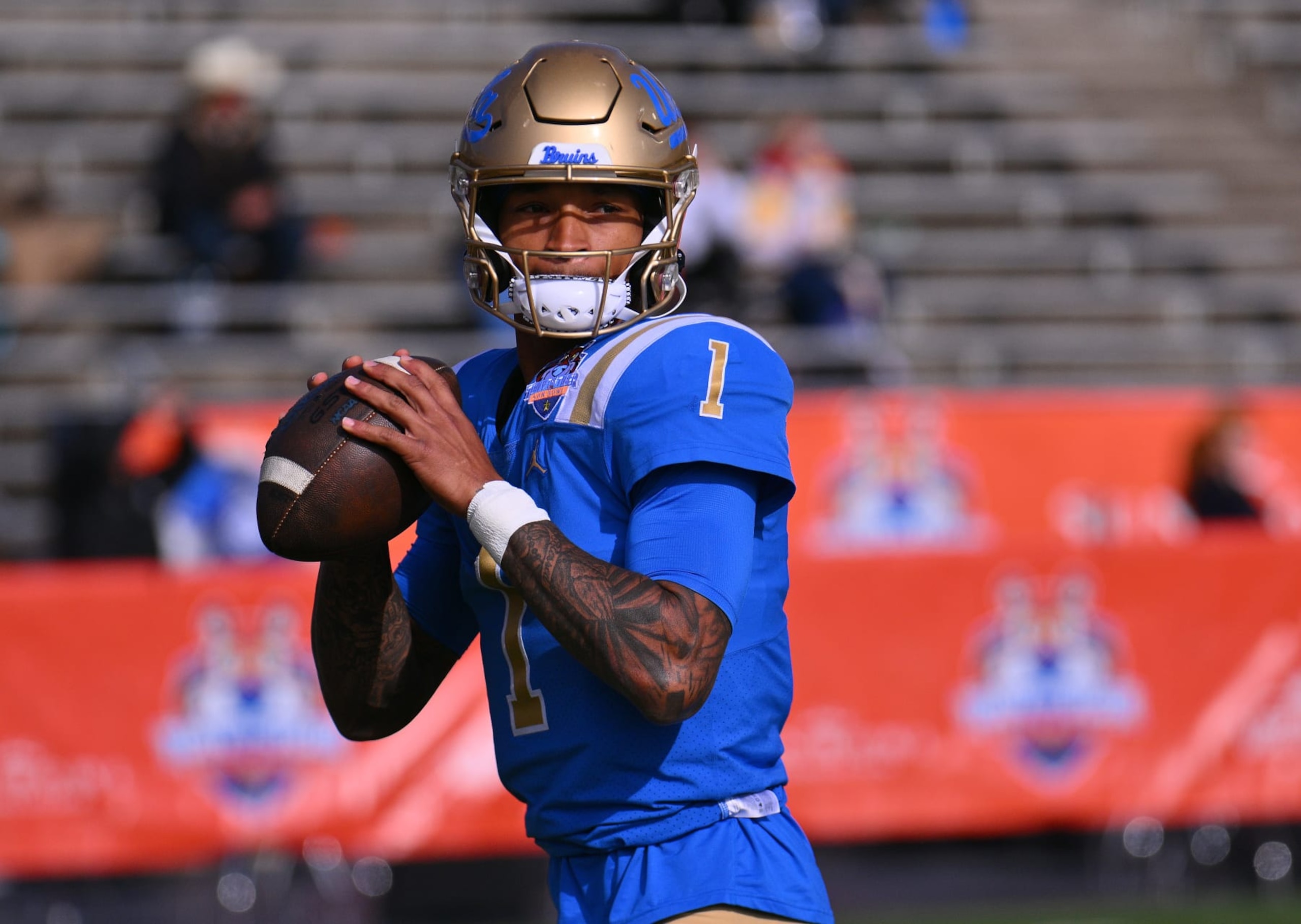
136. Jacksonville Jaguars (via Chicago)
Yasir Abdullah, Edge, Louisville
The Jacksonville Jaguars continue their Day 3 trend of addressing the defensive front. Louisville's Yasir Abdullah follows linebacker Ventrell Miller and edge-rusher Tyler Lacy. But each contributes differently.
The 6'1", 237-pound edge brings plenty of speed to attack opposing backfields. Abdullah ran an impressive 4.47-second 40-yard dash at the NFL Scouting Combine. He'll serve as a rotational piece behind Josh Allen and Travon Walker.
Grade: C
137. Washington Commanders (via Buffalo)
KJ Henry, Edge, Clemson
Strengths: Good acceleration off the snap, plays with leverage and a level of physicality against the run, reads keys well and keeps gap integrity
Weaknesses: Limited pass-rush plan, lacks power to bull rush and bend to turn the corner
KJ Henry's size (6'4", 251 lbs) and athletic profile suggest he could be a premium pass-rusher. The fifth-year senior even expresses himself as a top edge-rusher should.
"I really just love rushing the passer as a whole," Henry told The Draft Network's Justin Melo. "The details are so intricate. Hand placement matters a bunch. Get-off and pad-level matters. There are so many details that go into it. I see rushing the passer as an art. I'm continuously trying to master my craft."
However, Henry never managed more than 4.5 sacks in a season. Sacks aren't the only indicator of a quality pass-rusher, but he's a little further along as a run defender at this point.
The Washington Commanders chose not to pick up Chase Young's fifth-year option prior to the start of the draft. While Young's future has yet to be decided, the team definitely needs to hedge its bet either way. Henry provides depth.
Grade: C+
138. Indianapolis Colts
Darius Rush, CB, South Carolina
Strengths: Ideal size, length and top-end speed, excels in man coverage, significant remaining upside as a wide receiver convert
Weaknesses: Lacks fluidity in hips, breaks on the ball can be sluggish, must do a better job against double-moves
Darius Rush came to South Carolina as a wide receiver. He left the program as the type of cornerback that every NFL team wants.
"The league likes man coverage nowadays," Rush told The Draft Network's Justin Melo. "Playing man coverage is something I can do. I do it very well. I consider myself a man-coverage cornerback first and foremost."
According to Pro Football Focus, the fifth-year senior graded as the SEC's best cornerback when in man coverage last season. Rush forced 12 incompletions and allowed a 53.2 passer rating in press situations, per PFF.
The 6'2", 198-pound defender also has 4.36-second 40-yard-dash speed. However, Rush is a little tight in the hips and doesn't particularly have quick feet when asked to change directions.
The Indianapolis Colts have two new long, athletic corners in Julius Brents and Rush. Both ideally fit in coordinator Gus Bradley's defensive scheme. These moves were necessary after entering the draft with Kenny Moore II and Isaiah Rodgers as the team's top two corners following the trade of Stephon Gilmore.
Grade: B
139. Arizona Cardinals (via Detroit)
Clayton Tune, QB, Houston
Strengths: Good athlete, tough runner, layers throws well, three-year starter, three-time team captain
Weaknesses: Lacks arm strength to drive ball, hesitant to attempt tight-window throws, better on move than managing pocket
Just based on numbers and athletic profile, Houston quarterback Clayton Tune is intriguing.
Over the last two seasons, the first-team All-AAC performer completed 67.8 percent of his passes for 7,618 yards and 70 touchdowns (compared to 20 interceptions). Tune also served as the Cougars' leading rusher last season, with 544 yards and five more scores.
The 6'2½", 220-pound signal-caller then posted a 9.81 relative athletic score (out of 10) during his predraft testing, per Pro Football Network's Kent Lee Platte.
Issues arise regarding an abbreviated release, marginal arm strength and poor pocket management. But the ability is there to be a long-term backup who can provide a bit of a spark in short bursts.
Tune's athletic traits make him an interesting backup with the Arizona Cardinals. While the incoming rookie certainly isn't on the same level as Kyler Murray when it comes to raw physical talent, the offense won't need to completely change if something happens to Arizona's franchise quarterback.
Grade: C+
140. Cleveland Browns (via Los Angeles Rams)
Dorian Thompson-Robinson, QB, UCLA
Strengths: Four-year starter, continual improvement, good athlete, strong arm, solid accuracy from within and outside pocket
Weaknesses: Overall pocket presence, lower body mechanics, somewhat elongated release
Dorian Thompson-Robinson saved his best for last during his time with the UCLA Bruins.
Sometimes it takes a little longer for the light to come on for certain players. In Thompson-Robinson's case, the fifth-year senior set career highs in completion percentage (69.6), passing yards (3,169), touchdown tosses (27), quarterback rating (157.4), rushing yardage (645) and rushing touchdowns (12).
His athleticism, with a 4.56-second 40-yard dash, also lends well to the professional level, as does a strong arm.
However, the biggest growth teams wanted to see came off the field, where his maturity came into question.
"DTR had a really good workout, maybe gained a little bit of steam," an NFC executive told NFL.com's Tom Pelissero. "But I still can't see him overcoming the [initial] character stuff. ... They said he made significant strides this year. And he did in his play, too."
Last year, the Browns played without Deshaun Watson as he served his league-mandated suspension. Jacoby Brissett performed admirably, though he's now a member of the Washington Commanders. Thompson-Robinson brings a fantastic athletic profile to develop behind Watson and potentially thrive in Kevin Stefanski's offensive scheme.
Grade: B+
141. Minnesota Vikings (via Indianapolis)
Jaquelin Roy, DL, LSU
Strengths: Good first-step quickness, strength to jolt and lock out blockers, difficult to move
Weaknesses: Lack of development as a pass-rusher, poor lateral agility, stops feet on contact
Defensive tackle Jaquelin Roy never quite put it all together at LSU. He showed scattered flashes of potential top-level play, though they were present.
Going into last season, the 6'3", 305-pound prospect ranked second among returning defensive tackles in pass-rush grade, according to Pro Football Focus. Roy ranked behind only Georgia's Jalen Carter, who's an elite talent.
However, Roy didn't continue on that trajectory during his final season on campus. He managed a career-low 0.5 sacks and 3.5 tackles for loss.
Despite that, Roy can immediately help a defensive line rotation as a run defender. He plays with good strength, base and leverage to hold the point of attack.
With Dalvin Tomlinson leaving in free agency, a 325-pound hole was left in the middle of the Minnesota Vikings defense. Roy isn't quite as big, but he comes into the league with a similar profile as a good run defender who presents some upside as an interior rusher.
Grade: B
142. Cleveland Browns
Cameron Mitchell, CB, Northwestern
The Cleveland Browns already had some success with a Northwestern cornerback when the organization drafted Greg Newsome II in the first round of the 2021 class. General manager Andrew Berry went back to the well with Cameron Mitchell.
Mitchell is an experienced corner who performs well in man and zone coverage. His ball skills definitely serve as a positive, though he can be a more physical defender, particularly when asked to tackle.
Grade: C
143. New York Jets
Israel Abanikanda, RB, Pittsburgh
The New York Jets are far more explosive in their backfield now. Israel Abanikanda's athletic profile is exceptional. He posted a reported sub-4.4-second 40-yard dash at Pitt's pro day. His overall profile makes him one of the top 25 athletes at running back over the last 37 years, per Pro Football Network's Kent Lee Platte.
Breece Hall, Michael Carter and Abanikanda present significant dynamic potential.
Grade: B
144. New England Patriots (via Las Vegas)
Atoni Mafi, IOL, UCLA
Bill Belichick is determined to improve the New England Patriots' offensive interior. With three of their four Day 3 selections so far, the organization added Jake Andrews, Sidy Sow and now UCLA's Atonio Mafi. The latter is similar to Sow, who is a piledriver, as a pure guard.
Michael Onwenu and Cole Strange shouldn't be threatened, per se, but the Patriots made this particular spot a point of emphasis for a reason.
Grade: C
145. Carolina Panthers
Jammie Robinson, S, Florida State
Strengths: Great instincts, always around the ball, versatile, high-end effort, ability to lock up tight ends and slot receivers
Weaknesses: Tends to play a little reckless, lacks top gear, struggles to play ball at high point
Florida State doesn't produce as much NFL talent as it once did, but defensive back Jammie Robinson is an exception this year. He's a safety prospect whom the Seminoles asked to play all over the defensive backfield.
"Honestly, versatility," Robinson told reporters at the NFL Scouting Combine when asked about his best trait. "Being able to play nickel, the dime, both safety positions. … [his peers are] physical, smart students of the game and they play fast. And I feel that's the same thing with me.
"That just comes from how I'm raised. I got five brothers and a single-parent mom. So, when I play football, it's just the joyfulness for my mom."
Adversity struck Robinson's family at an early age, but he said football is his "safe haven." It shows in how he plays. The South Carolina transfer thrived at the Senior Bowl and showed his varied skill set to earn a spot as a top-five safety prospect in this year's class.
The Carolina Panthers like versatility among their safeties. Jeremy Chinn is a hybrid. Xavier Woods joined the team last year. Eric Rowe and Vonn Bell signed as free agents this offseason. Robinson is the latest addition. The flexibility found within each can create an amorphous back end for defensive coordinator Ejiro Evero and his approach of dropping as many defenders as possible to confuse opposing quarterbacks.
Grade: B
146. New Orleans Saints
Jordan Howden, S, Minnesota
The New Orleans Saints feature two high-profile safeties in Tyrann Mathieu and Marcus Maye. Mathieu has been durable, but the same can't be said about Maye, who missed multiple games in each of the last two seasons.
Johnathan Abram is on the roster, but he's a liability in coverage, whereas Minnesota's Jordan Howden is a reliable free safety with good instincts.
Grade: C
147. Tennessee Titans
Josh Whyle, TE, Cincinnati
Chigoziem Okonkwo's role with the Tennessee Titans should expand exponentially after a promising rookie year. At the same time, he's a detached tight end.
An in-line threat is still very much needed. Cincinnati's Josh Whyle can provide that presence as a 6'6", 248-pound athlete who's smooth while working over the middle of the field. He's not a great point-of-attack blocker, but he's further along at this point than Okonkwo was entering the league.
Grade: B
148. Chicago Bears (via Baltimore)
Noah Sewell, LB, Oregon
Strengths: Instinctive run defender, physical and attacking approach, strong at point of attack to take on and defeat blocks, natural feel for blitz
Weaknesses: Struggles to locate in coverage, marginal lateral movement, undisciplined tackler
Oregon's Noah Sewell is the third member of his family to go through the NFL draft process.
His oldest brother, Nephi, went undrafted out of Utah last year, but he spent the majority of the 2022 campaign on the New Orleans Saints' practice squad. The family's middle child, Penei, was the seventh overall pick in the 2021 draft class, and he has developed into one of the game's best young offensive linemen.
"I really love watching that boy play," Noah Sewell told reporters. "He really brings a lot of passion to the game. I mean, you see it. Every snap, every play, he brings a lot. I'm just trying to match that."
In some ways, the youngest sibling does.
Sewell plays a downhill, smashmouth style, where he excels as a blitzer. The 21-year-old does need to improve when working in space, but he still has significant untapped potential.
At one point, Sewell was considered the top off-ball linebacker in this year's class. But deficiencies in his game became evident, and the talented Polynesian fell into the draft's third day.
Even so, his fit with the Chicago Bears is fascinating considering how big Tremaine Edmunds is (6'5", 250 lbs). Sewell is another big, physical middle linebacker. With the rookie playing behind Edmunds, he could maximize what previously was thought to be first-round potential.
Grade: B
149. Green Bay Packers
Sean Clifford, QB, Penn State
Jordan Love is now the starting quarterback of the Green Bay Packers after the franchise finally traded Aaron Rodgers to the New York Jets. With Love's ascension, Penn State's Sean Clifford can step in as the long-term backup.
Clifford is an experienced starter with a highly competitive nature. At the same time, his leadership doesn't mean as much when he's not spearheading the program, and he's certainly lacking when it comes to the physical tools to play the position.
Grade: D
150. Buffalo Bills (via Washington)
Justin Shorter, WR, Florida
The Buffalo Bills found their Cole Beasley replacement in first-round tight end Dalton Kincaid. The team's top draft pick becomes its de facto slot.
Instead of trying to further address the position, the Bills took Florida's Justin Shorter, who provides a different skill set as an outside target with buildup speed. He's another big-bodied (6'4", 229 lbs) deep threat for quarterback Josh Allen.
Grade: C-
151. Seattle Seahawks (via Pittsburgh)
Mike Morris, DL, Michigan
Strengths: Powerful edge-setter, overwhelms tight ends, maintains gap integrity, pop in hands
Weaknesses: Not athletic enough to stay at end, little burst, inflexible, poor pass-rusher
The Michigan Wolverines listed Mike Morris at 6'6" and 292 pounds and then played him as a true edge-defender. That's impressive unto itself, especially since Morris regularly played from a two-point stance.
Morris' game is exactly what a person would expect just by looking at his build. He was a bully at the point of attack and excelled at setting the edge.
The NFL Scouting Combine changed the perception of Morris when he measured 6'5" and 275 pounds. He still has the previously mentioned traits, though he's far less impressive when taking his athletic profile into consideration.
According to Pro Football Network's Kent Lee Platte, Morris is a marginal-to-poor athlete as an edge. A full-time move to the inside may be in the cards.
The toughness factor once again comes into play with the Seattle Seahawks' selection of Morris. He can set the edge, play 5-technique and reduce over an interior lineman to provide flexibility for the entire front.
Grade: C+
152. Detroit Lions
Colby Sorsdal, IOL, William & Mary
The Detroit Lions found their replacement plan once the organization decides to move on from Halapoulivaati Vaitai–whether it's this year or when his contract ends after this season.
William & Mary's Colby Sorsdal was a small-school offensive tackle who'll make the transition to guard. However, his movement skills might be enough to play on an island in a pinch.
Grade: B
153. Tampa Bay Buccaneers
SirVocea Dennis, LB, Pittsburgh
Eventually, the Tampa Bay Buccaneers must prepare for life without Lavonte David. Furthermore, fellow linebacker Devin White requested a trade this offseason. The dynamic duo may be broken up in the near future.
As such, the selection of Pittsburgh's SirVocea Dennis gives the squad another option. Dennis is small (6'0", 226 lbs), but he's productive with long arms and explosive traits to keep offensive linemen off his body.
Grade: C
154. Seattle Seahawks
Olusegun Oluwatimi, IOL, Michigan
The reigning Rimington Trophy winner joins the Seattle Seahawks. Even as a fifth-round pick, the experienced blocker may immediately slot in as a starter because the position was a void entering this year's draft.
Joey Hunt and Evan Brown are serviceable. But Oluwatimi shows excellent understanding of how to play the position and take excellent angles.
Grade: B+
155. San Francisco 49ers (via Miami)
Darrell Luter Jr., CB, South Alabama
The San Francisco 49ers' draft class has been suspect with arguably three overdrafts among their first three selections (all in the third round).
However, the addition of South Alabama's Darrell Luter Jr. is sound. He's a long corner (32⅜-inch arms) with 4.46-second 40-yard dash speed. He can immediately help in the 49ers' cornerback rotation.
Grade: B
156. Los Angeles Chargers
Jordan McFadden, IOL, Clemson
A year ago, the Los Angeles Chargers took a sixth-round flier on offensive line prospect Jamaree Salyer. He left Georgia as a sawed-off left tackle projected at guard. Salyer was forced to start at left tackle with Rashawn Slater's season-ending biceps injury. Now, Salyer is expected to start at guard during his sophomore campaign.
Clemson's Jordan McFadden brings a similar profile. He is 6'2" and 303 pounds. McFadden has the experience and length to play tackle in a pinch, but he'll ultimately end up at guard.
Grade: C+
157. Baltimore Ravens
Kyu Blu Kelly, CB, Stanford
The Baltimore Ravens like long corners with outstanding ball skills. So it comes as no surprise that general manager Eric DeCosta drafted Stanford's Kyu Blu Kelly.
Kelly also has an outstanding pedigree, as the son of former NFL 11-year veteran Brian Kelly. However, the younger Kelly needs to refine his technique and improve his consistency.
Grade: B
158. Indianapolis Colts (via Minnesota)
Daniel Scott, S, California
As previously stated, Indianapolis Colts general manager Chris Ballard loves his athletes. He's built an all-time RAS draft class, and the addition of California's Daniel Scott only adds to the incoming group of impressive athletes.
The 6'1", 208-pound Scott was the seventh-most athletic safety over the last 37 years, according to Pro Football Network's Kent Lee Platte. Scott should make an immediate impact as a core-four special teamer.
Grade: C
159. Green Bay Packers (via Detroit)
Dontayvion Wicks, WR, Virginia
Strengths: Sudden athlete, shifty, creates separation, excellent body control
Weaknesses: Lacks top-end speed, drops, struggles to beat jam, unpolished route-runner
Virginia's Dontayvion Wicks looked like a future early-round pick after he caught 57 passes for 1,203 yards and nine touchdowns as a redshirt sophomore in 2021. However, Virginia's coaching staff underwent significant changes between the 2021 and 2022 seasons, which significantly hampered Wicks' production.
His receptions were almost halved (30) while his yardage dropped by nearly two-thirds (430).
"Change in the scheme and having to learn everything quickly," Wicks told reporters at the NFL Scouting Combine when asked about the difference. "It was hard for everybody."
He added, "I was just thinking a lot, having to learn new things on the run. Thinking so much with it and not going out and playing fast."
The Green Bay Packers continue to load up on weapons with Jordan Love behind center. Wicks joins Jayden Reed, as well as tight ends Luke Musgrave and Tucker Kraft.
Grade: B
160. Jacksonville Jaguars (via New York Giants)
Antonio Johnson, S, Texas A&M
Strengths: Nickel corner, man coverage, big frame, tone-setter against run
Weaknesses: Lack of ball skills, tendency not to break down and miss some tackles, stiff in backpedal
Texas A&M's Antonio Johnson is more than just a safety prospect. In fact, he spent three seasons as the Aggies' primary nickel corner. He even graded as the second-best SEC corner in man coverage during the 2021 campaign, per Pro Football Focus.
"I have reps everywhere," Johnson told reporters at the NFL Scouting Combine. "I know that I mostly played nickel corner, but I also have reps at either safety spot. I'd feel [just as] comfortable playing there."
While Johnson can play all over the secondary, he doesn't have as much experience at deep safety. He typically lined up over the slot or close to the box.
Johnson has no fear when he's asked to trigger and play downhill. He's often found around the ball, though missed tackles are a concern, as is his lack of on-ball production (one interception in three seasons).
The Jacksonville Jaguars have now addressed all three levels of their defense with Johnson's additon to go along with linebacker Ventrell Miller, edge-rusher Yasir Abdullah and defensive lineman Tyler Lacy. For his part, Johnson brings strong man-cover skills for a safety.
Grade: B
161. Los Angeles Rams (via Houston)
Nick Hampton, Edge, Appalachian State
Los Angeles Rams general manager Les Snead knew his squad had next to nothing among its edge-rushers. With the team's initial third-round pick, Snead chose Byron Young to pair his speed with the wrecking ball who is Aaron Donald along the defensive interior.
Appalachian State's Nick Hampton adds yet another edge-rusher. In this case, Hampton is a natural bender with 40 career tackles for loss and 26.5 sacks.
Grade: B
162. Indianapolis Colts (via Buffalo)
Will Mallory, TE, Miami
The Indianapolis Colts' decision to draft Miami tight end Will Mallory is perplexing because of the depth already found on the roster in Jelani Woods, Mo Alie-Cox, Kylen Granson, Pharoah Brown and Andrew Ogletree.
While Mallory does fit the athletic profile the Colts prefer, he doesn't immediately add a specific trait that differentiates him from those already at the position.
Grade: D
163. Cincinnati Bengals
Chase Brown, RB, Illinois
Strengths: Top gear, strong lower body, can contribute as blocker and receiver on third downs
Weaknesses: Stiff hips, upright runner, lacks sudden lateral quickness
In an interesting bit of role reversal, Chase Brown was the more highly regarded recruit entering the collegiate ranks compared to his twin brother, Sydney.
Yet Sydney Brown entered the draft process as a higher-ranked prospect and became the 66th overall pick by the Philadelphia Eagles.
Chase remains an outstanding runner. The Western Michigan transfer finished fourth at the FBS level this past season with 1,643 rushing yards. According to Pro Football Focus, he completed the regular season ranked first among Power Five backs with 48 carries of 10 or more yards and tied for second with 77 missed tackles forced on runs.
But he plays a devalued position. Also, despite outstanding explosive testing numbers, Brown is a linear athlete, which hampers his overall fluidity and further knocks his value.
The Cincinnati Bengals added an alternative if the team ultimately decides to move on from Joe Mixon, whose contract runs out after the 2024 season.
Grade: A
164. Minnesota Vikings (via San Francisco)
Jaren Hall, QB, BYU
Strengths: Natural thrower, easy velocity, cool and confident, finds throwing lanes or escapes out the backside, two-sport athlete in college
Weaknesses: Older prospect (25), extensive injury history, struggles with tight-window throws
Jaren Hall is what many refer to as a thrower of the football. He's not a polished passer, per se. But his baseball background shows up on the gridiron when he throws from different angles and on the run and gets plenty of zip.
Hall is a creative quarterback who played well in 2021 and '22. But two issues affected his draft stock: age and injury history.
Unfortunately, injuries in each of the last four seasons possibly portend his 6'0", 207-pound frame not being able to hold up at the NFL level. Hall dealt with concussions in 2019. He missed all of the 2020 campaign because of a torn adductor. Rib and ankle injuries slowed him in 2021. Finally, foot and ankle issues hampered him last season.
Eventually, the Minnesota Vikings must decide whether they'll move on from Kirk Cousins or re-sign him yet again. Cousins is entering the last year of his current deal. Hall presents significant upside. He shouldn't be viewed as the long-term solution, but he's the first step to moving away from Cousins.
Grade: C+
165. Chicago Bears (via New Orleans)
Terell Smith, CB, Minnesota
The Chicago Bears understood they weren't done with their secondary simply because they drafted Jaquan Brisker and Kyler Gordon last year. The team already chose Tyrique Stevenson in this year's second round. Minnesota's Terell Smith joins Stevenson as rookies in the cornerback room.
Smith struggled throughout the early portions of his career but really began to put everything together in his final year on campus as his play caught up to his natural athletic ability.
Grade: C+
166. Kansas City Chiefs
BJ Thompson, Edge, Stephen F. Austin
The Kansas City Chiefs began their draft class by selecting Kansas State's Felix Anudike-Uzomah in the first round. General manager Brett Veach doubled down on undersized edge-rushers to get after opposing quarterbacks.
Stephen F. Austin's BJ Thompson is built differently than Anudike-Uzomah, though. The FCS product is long and lanky with the type of frame that allows him to easily add 10-20 pounds after weighing 238 pounds at the Shrine Bowl.
Grade: B
167. Houston Texans (via Los Angeles Rams)
Henry To'oTo'o, LB, Alabama
Strengths: Good straight-line speed, quick to trigger downhill, solid feel for zone coverage, consistent motor
Weaknesses: Misses gaps, poor lateral agility, can be swallowed by bigger blockers, is a tick slow in pass recognition
Being the starting middle linebacker for the Alabama Crimson Tide typically means good things, since the likes of Rolando McClain, Dont'a Hightower, C.J. Mosley, Reggie Ragland, Reuben Foster, Rashaan Evans and Christian Harris all became first- or second-day draft picks.
Henry To'oTo'o produced 205 total tackles and 15.5 tackles for loss during his two years with the program. His 43 combined tackles for or no gain led the SEC since the start of the 2020 campaign, per Pro Football Focus.
What holds back the Tennessee transfer are the poor run fits at times and his limited lateral movement skills. His 4.4-second time in the short shuttle is considered poor among linebackers.
The concerns about To'oTo'o's game are lessened as a fifth-round selection by Houston Texans. But it should come as no surprise that DeMeco Ryans wanted the Alabama linebacker.
Grade: C+
168. Arizona Cardinals (via Detroit)
Owen Pappoe, LB, Auburn
Strengths: Outstanding range, uses elite speed to beat blockers to their spots, wrap-up tackler, closes quickly in coverage
Weaknesses: Can be overwhelmed by bigger blockers once engaged, lacks eye discipline, adds little in pressure packages
A new breed of linebacker developed over time as a counterpunch to wildly successful passing attacks. The position gradually grew smaller and more athletic.
Auburn's Owen Pappoe is a perfect example of that evolution. He's a 6'0", 225-pound second-line defender with 31¾-inch arms. But the speed and urgency with which he flies to the football can't be denied.
Pappoe's 4.39-second 40-yard dash was the second-fastest effort ever recorded by a linebacker at the NFL Scouting Combine. At the same time, an emphasis on speed and athleticism doesn't entirely detract from the linebacker's smallish stature.
In two of the last three seasons, the two-time team captain amassed at least 90 tackles. (He played in only five games during the 2021 campaign because of a leg injury.)
The Arizona Cardinals simply need talent, because their roster is depleted. Bleacher Report's Scouting Department graded Pappoe as a top-80 prospect. The Cards landed him with the 168th overall selection. Tremendous value.
Grade: A
169. Dallas Cowboys
Asim Richards, OT, North Carolina
A pair of former North Carolina offensive linemen heard their names called during the 2022 draft. An argument can be made that Asim Richards was the better player in college compared to his former teammates, Joshua Ezeudu and Marcus McKethan–the former being a third-round selection.
The Dallas Cowboys now have insurance if/when Tyron Smith doesn't make it through the regular season. After all, Smith hasn't played a full slate of games since the 2015 campaign.
Grade: B
170. Las Vegas Raiders (via New York Jets)
Christopher Smith II, S, Georgia
Strengths: Good recognition and quick trigger, always at full tilt, takes good angles, smooth backpedal
Weaknesses: Poor athleticism, lacks top-end speed, smallish frame doesn't allow him to play through ball-carriers
The film of a prospect sometimes needs to speak for itself. The curious case of Christopher Smith II is an example of seeing the player in an entirely different light from the athlete.
Smith started two years for the back-to-back national champions. During that stretch, he accumulated 96 total tackles, 15 pass breakups, six interceptions and five tackles for loss.
The unanimous All-American throws his body all over the field, excels as a downhill run defender and consistently shows up in both phases of the game. However, his predraft testing couldn't have gone worse. The 5'11", 192-pound safety posted a terrible relative athletic score with his 4.62-second 40-yard dash, 33-inch vertical, 9'8" broad jump, 4.41-second short shuttle and 7.45-second three-cone drill.
Smith's film says he should be an early-round pick. His testing is that of an undrafted prospect. These two extremes need to be reconciled.
Purely from a value perspective, Smith's selection with the 170th overall pick by the Las Vegas Raiders may be the best of the entire class. Bleacher Report's Scouting Department had the former Bulldog as the second-best safety and the 35th overall prospect. His testing metrics aren't great, but Smith plays at a high level.
Grade: A
171. Tampa Bay Buccaneers (via Los Angeles Rams)
Payne Durham, TE, Purdue
The Tampa Bay Buccaneers love big, rugged tight ends. They're now a season removed from Rob Gronkowski being on the field. Currently, Cade Otton and Ko Kieft fill the spot. The Buccaneers weren't settled at the position, though.
Purdue's Payne Durham is a big (6'6", 253 lbs) throwback who is going to serve as a traditional in-line option but also provide a solid target in the passing game.
Grade: C
172. New York Giants
Eric Gray, RB, Oklahoma
Strengths: Strong runner with good balance, great short-area burst, receiving threat
Weaknesses: Lacks top gear, doesn't have size to consistently play through tacklers
A running back doesn't need to be a burner to be effective. Oklahoma's Eric Gray finished with 1,366 rushing yards last season and ranked fifth in average yards per carry (6.4) among backs with 200 or more carries despite 4.62-second 40-yard dash speed.
The answer to his effectiveness can be found in his hips and footwork. Gray is a decisive, slashing runner with good vision, lateral agility and contact balance.
Furthermore, the 5'9½", 207-pound prospect adds to the passing game, with 86 receptions over the last three seasons between Tennessee and Oklahoma.
Gray may not be a home run threat as a runner, but he can be a productive back in the pros.
He can immediately step in as the New York Giants' primary backup running back. If Saquon Barkley doesn't sign a long-term contract extension, Gray could even become Big Blue's featured back.
Grade: B
173. San Francisco 49ers
Robert Beal Jr., Edge, Georgia
Nick Bosa is the reigning NFL Defensive Player of the Year. He needs help, though. No one else on the San Francisco 49ers roster managed more than five sacks last season, and Samson Ebukam is no longer on the roster.
Robert Beal Jr. is used to playing on a talented front and being part of a defensive rotation. He never put up huge numbers, but he presents fantastic short-area burst and some bend to shorten the porch toward a quarterback.
Grade: C+
174. Los Angeles Rams (via Houston)
Warren McClendon Jr., OT, Georgia
The Los Angeles Rams are simultaneously checking off boxes on this year's grocery list of positional needs. But general manager Les Snead realized he needed more than one serving of offensive lineman.
With Steve Avila set to take over one guard spot, Georgia's Warren McClendon Jr. can serve as a swing tackle and possibly be Rob Havenstein's long-term replacement at right tackle.
Grade: C+
175. Los Angeles Rams (via Tampa Bay)
Davis Allen, TE, Clemson
One pick after addressing the offensive line for a second time, the Los Angeles Rams addressed tight end.
Clemson's Davis Allen provides another threat at the position alongside Tyler Higbee. Allen is a good receiver with soft hands. He's not much of an in-line presence, though. That's OK. Sean McVay will almost certainly find a way to utilize the near-6'6" target.
Grade: C
176. Indianapolis Colts (via Dallas)
Evan Hull, RB, Northwestern
The Indianapolis Colts traded Nyheim Hines to the Buffalo Bills last season. Northwestern's Evan Hull is Hines' replacement.
First, Hull is another premier athlete. Shocking, right? He can immediately help on passing downs, though. Hull finished third among running backs last year in yards per route run, according to Draft Breakdown's Nick Penticoff.
The Colts' run game now looks deadly with Jonathan Taylor, Zach Moss, Hull and quarterback Anthony Richardson in the backfield.
Grade: B
177. Los Angeles Rams
Puka Nacua, WR, BYU
Strengths: Big frame and good short-area quickness to gain YAC, plays strong, excellent ball tracking, physical blocker
Weaknesses: Gadget player, limited route tree, injury history
Football is the family business for the Nacua brothers. Puka Nacua's three older brothers all played at BYU. Some NFL experience can be found among them, but the youngest brother is the most talented of the four.
"His athletic abilities are a big thing. It runs in our family like a lot of people know. We're all athletes," Samson Nacua said, per KSL Sports' Mitch Harper. "But his knowledge is what separates him from being a really good player and a really great player."
Puka is an offensive weapon. The 6'2", 201-pound target tends to work out of the slot, but he can be used on fly sweeps, screens and other quick hitters that allow him to create after the catch.
Sean McVay's creativity within the Los Angeles Rams' offensive scheme makes Nacua a perfect fit. Plus, he can do some of the things that Cooper Kupp is asked to do to take some pressure off the soon-to-be 30-year-old receiver.
Grade: B
Round 6
3 of 4
178. Dallas Cowboys (via Kansas City)
Eric Scott Jr., CB, Southern Mississippi
The Dallas Cowboys love to take lesser-known cornerbacks on the draft's third day. What the team is typically looking for is traits. Scott is a 6'1", 204-pound corner with near-33-inch arms. He's not the fastest or most fluid coverage corner. But the community college transfer shouldn't be exposed in Dan Quinn's zone-heavy scheme.
Grade: C
179. Green Bay Packers (via Tampa Bay)
Karl Brooks, DL, Bowling Green
Strengths: Disruptive penetrator, positional flexibility, productive, strong hands, full toolbox of pass-rush moves
Weaknesses: Lacks length, tends to play high, tends to get gassed as game wears on
It's difficult to say someone is playing out of position when he registered 30.5 tackles for loss and 17.5 sacks over the last two seasons like Bowling Green's Karl Brooks did. Yet the first-team All-MAC selection primarily lined up over opposing offensive tackles instead of at defensive tackle, where he can feast on stubbier and less athletic guards.
The 6'3", 303-pound Brooks didn't look out of place when he worked on the edge. But the NFL features far better athletes compared to those who play at a mid-major.
At the Senior Bowl, Brooks showed how explosive he can be when he works along the interior. Fellow all-stars struggled to block him.
While the addition of Brooks alongside Colby Wooden could be viewed as redundant, the Green Bay Packers' two new defensive linemen bring entirely different skill sets. Wooden can be an early-down defender with starting potential. Brooks can immediately enter the rotation as a sub-package pass-rusher.
Grade: B
180. Arizona Cardinals
Kei'trel Clark, CB, Louisville
Kei'trel Clark's addition alongside that of classmate Garrett Williams gives the Arizona Cardinals a solid inside-out combination at cornerback. Clark will serve as Mr. Inside over the slot. The 5'10", 181-pound defensive back is feisty and will continually compete.
When these two are added to Marco Wilson and Rashad Fenton, the Cardinals' back line won't look as faulty as it did entering this year's draft.
Grade: C+
181. Tampa Bay Buccaneers (via Indianapolis)
Josh Hayes, S, Kansas State
NFL scouting departments love to set upon certain players who aren't getting much attention and snag them in the sixth or seventh round instead of potentially losing them as undrafted free agents.
The Tampa Bay Buccaneers' selection of Kansas State's Josh Hayes certainly has the feel of such a pick. Though Hayes was a successful defender, with 38 starts over six seasons, he bounced around the country with stops at North Dakota State and Virginia before finishing in Manhattan, Kansas.
Grade: C-
182. Los Angeles Rams
Tre'Vius Hodges-Tomlinson, CB, TCU
Strengths: Phenomenal short-area quickness and change of direction, outstanding ball skills, attacks receivers/ball-carriers out on the edge
Weaknesses: Tiny, can struggle against bigger, more physical targets, too many penalties to compensate
TCU cornerback Tre'Vius Hodges-Tomlinson followed in the footsteps of his famous uncle, Hall of Fame running back LaDainian Tomlinson, then carved out his own legacy with the Horned Frogs program.
Hodges-Tomlinson leaves the program as a first-team All-American and its second Jim Thorpe Award winner in the last three years (after Trevon Moehrig). He didn't allow a touchdown when in man coverage last season and forced 18 incompletions, per Pro Football Focus. His 32 forced incompletions are the most by any collegiate defender over the last two years, according to PFF.
Unfortunately, the standout corner is small. Some teams probably didn't even consider drafting him because he's just under 5'8" and weighs 178 pounds.
The Los Angeles Rams have done an excellent job under Les Snead's supervision of drafting good football players at discounted rates. They had to since they continually traded early-round picks.
Tomlinson is a perfect example of how the Rams operate. He's a fantastic, albeit flawed, prospect. The Rams simply see the former and will work around the latter in order to make the roster better.
Grade: B
183. Denver Broncos (via Detroit)
JL Skinner, S, Boise State
Strengths: Massive frame, understands and breaks well on routes, good range, will make plays on the ball
Weaknesses: A tendency to play tall, little stiff in the hips
There's a fine line between an oversized safety and an undersized linebacker. The line blurs at times, because some teams use safeties as nickel or dime 'backers.
Boise State's JL Skinner is a massive defensive back at 6'4" and 209 pounds. He's taller than the likes of Derwin James, Isaiah Simmons and Divine Deablo, some of the biggest safety prospects in recent draft classes.
In that regard, Skinner is a unique option in this year's class, especially considering his skill set. He's stiff in the hips, which is expected of a bigger safety, but he's also a tone-setter who can contribute in multiple roles.
Over the last two seasons, the first-team All-Mountain West honoree accumulated 157 total tackles, 7.5 tackles for loss, six interceptions and two forced fumbles.
The Denver Broncos like big, physical safeties. Skinner will fit in nicely. With Justin Simmons and Caden Sterns already on the roster, the incoming rookie can become a defensive chess piece by playing some safety, nickel linebacker or even slot in certain instances.
Grade: B
184. New York Jets (via New England)
Zaire Barnes, LB, Western Michigan
Western Michigan's Zaire Barnes can run. In the short term, he can help on special teams or fill in as necessary behind C.J. Mosley and Quincy Williams. Over the long haul, Barnes could become Mosley's replacement. The veteran will turn 31 this summer, and his contract only has one remaining year after the upcoming campaign.
Grade: C+
185. Jacksonville Jaguars (via New York Jets)
Parker Washington, WR, Penn State
The Jacksonville Jaguars began this year's draft by adding pieces around Trevor Lawrence in offensive tackle Anton Harrison, tight end Brenton Strange and running back Tank Bigsby. Then, general manager Trent Baalke shifted to the defense by making four straight picks on that side of the ball.
By coming back to the offense, Baalke found a good fit in Penn State's Parker Washington. The Jaguars have an excellent receiving trio in Christian Kirk, Zay Jones and Calvin Ridley. All three can play from the slot, but Washington provides some toughness on the inside. Plus he can create after the catch.
Grade: B
186. Tennessee Titans (via Atlanta)
Jaelyn Duncan, OT, Maryland
A year ago, the Chicago Bears selected Braxton Jones in the fifth round, only to see him become a Week 1 starter at left tackle. Maryland's Jaelyn Duncan fell a round later, but he brings the same potential to become a surprise starter for the Tennessee Titans.
The Titans did sign Andre Dillard as a free agent, though they did so after he couldn't find his way into the starting lineup as a 2019 first-round pick of the Philadelphia Eagles. The team's 2023 first-round selection, Peter Skoronski, can take over blindside duties if necessary. However, he has All-Pro potential at guard.
Duncan has the movement skills to be a starting NFL left tackle, and he should have an opportunity to win that job.
Grade: B+
187. New England Patriots (via Carolina)
Kayshon Boutte, WR, LSU
New England Patriots head coach Bill Belichick has never been afraid to take a chance on a talented wide receiver.
LSU's Kayshon Boutte entered this season as a potential first-round target, but he didn't transition well into Brian Kelly's offense and struggled throughout the campaign. Boutte couldn't really build upon a 2021 performance in which he scored nine touchdowns.
In the sixth round, the investment is worth the risk, especially since the Patriots lack dynamic threats in the passing game.
Grade: C+
188. Philadelphia Eagles (via Houston)
Tanner McKee, QB, Stanford
Strengths: Sturdy frame, willingness and velocity to make every throw, relatively good ball placement
Weaknesses: Pure pocket passer, elongated release
Stanford's Tanner McKee might have been regarded far more highly had he entered the draft 10-20 years earlier. He's a throwback as a tall pocket passer who's built to work within a team's offensive structure.
Physically, he's everything a team wanted for decades. The highly regarded 4-star recruit stands 6'6" and weighs 231 pounds.
McKee played in a pro-style system at Stanford, where he showed he can drive the ball down the field and into tight windows. He's more than willing to stare down an oncoming defender and deliver the football.
However, the game continues to evolve, and McKee doesn't have the athleticism or skill set to create consistently when asked to do so outside of structure or in the running game. As a result, there's a large gap between the Stanford product and the top four quarterback prospects in this year's draft class.
While selecting McKee with the 188th overall pick is stunning value for the Philadelphia Eagles, the excitement is tempered by the fact that he presents the exact opposite skill set of Jalen Hurts. One has to question if McKee even makes the active roster with Marcus Mariota and Ian Book already in tow.
Grade: C-
189. Los Angeles Rams (via Tennessee)
Ochaun Mathis, Edge, Nebraska
Again, the Los Angeles Rams had next to nothing among their pass-rushers entering this draft. Now, the unit has three rookies—Byron Young, Nick Hampton and Nebraska's Ochaun Mathis—to provide some juice.
This particular selection isn't about Mathis' skill set, per se. It's far more about throwing enough bodies at the position to make sure the Rams can generate some type of edge pressure.
Grade: C
190. Cleveland Browns
Luke Wypler, IOL, Ohio State
Strengths: Lateral agility, good pad level, keeps hands within his frame, maintains blocks through entire play
Weaknesses: Small frame, lacks length, no experience at guard, struggles to anchor
Ohio State has a history of developing center prospects with varying degrees of success once they reach the NFL. Corey Linsley, Pat Elflein, Bill Price, Michael Jordan and Josh Myers have all been drafted within the last decade. Luke Wypler is next in line.
Wypler took over snapping as a redshirt freshman and started for two seasons before declaring early for this year's draft class.
Wypler falls more in line with Linsley and Elflein because of his size limitations. The incoming pivot is 6'3" and 303 pounds with 31⅝-inch arms. His game is predicated on his movement skills. He is an ideal candidate to play in a heavy zone scheme because of his ability to consistently reach blocking assignments.
What team plays a heavy zone scheme? The Cleveland Browns. Bingo.
While the Browns are settled with Ethan Pocic at center, Wypler can immediately push Nick Harris, who was slated to start last preseason, as the team's backup center.
Grade: B
191. Tampa Bay Buccaneers (via Philadelphia)
Trey Palmer, WR, Nebraska
Strengths: Field-tilting speed, creates after the catch, instant acceleration out of breaks, experienced returner
Weaknesses: Limited route tree, isn't a ball-winner, poor play strength
His 4.33-second 40-yard dash backs that up, but he's lacking in other areas that makes him more along the lines of an Anthony Schwartz or Travis Benjamin than a Tyreek Hill. There's certainly value in being able to take the top off a defense, but speed alone doesn't make a great all-around wide receiver.
To Palmer's credit, he did improve dramatically during his one season with Nebraska after transferring from LSU. He led the Cornhuskers with 71 receptions for 1,043 yards and nine touchdowns. No one else on the roster reached even half of those numbers.
Concerns stem from Palmer's limited skill set as a below-the-rim receiver and limited route-runner. Yet his raw speed was lacking among the Tampa Bay Buccaneers' wide receiver corps.
Mike Evans and Chris Godwin's play speaks for itself. Russell Gage isn't a burner. Palmer can come in and just run go-routes all day to provide something different for whomever is behind center.
Grade: B
192. New England Patriots
Bryce Baringer, P, Michigan State
Obviously, Bill Belichick values special teams play. In fact, the New England Patriots became the first franchise since the Oakland Raiders in 2000 to draft a kicker and punter in the same class.
Baringer was the top-rated punter because of a booming leg that averaged over 48 yards per punt for two straight seasons.
Grade: C-
193. Washington Commanders
Chris Rodriguez Jr., RB, Kentucky
The Washington Commanders certainly have a type they like at running back. Like Brian Robinson, Chris Rodriguez Jr. is a physical downhill runner.
His '21 effort in the SEC was tremendous with 1,378 rushing yards and 10 scores. Upon his return, Rodriguez graded better than any other running back in the nation, according to Pro Football Focus.
Away from the field,Rodriguez was suspended for the first four games last season after being arrested and charged with careless driving and operating a motor vehicle under the influence, as well as an undisclosed reason in a separate incident.
Grade: B
194. Kansas City Chiefs (via Detroit)
Keondre Coburn, DL, Texas
The Kansas City Chiefs added some heft to their defensive interior with the addition of Texas' Keondre Coburn.
The 332-pound defensive tackle immediately provides depth behind Derrick Nnadi as a 1-technique, and he'll push Danny Shelton as the immediate backup.
The biggest concern with Coburn is his lack of length. With 31.5-inch arms, the former Longhorn struggles to disengage from blocks.
Grade: C
195. New Orleans Saints (via Denver)
A.T. Perry, WR, Wake Forest
Strengths: Ball-tracking skills, deep speed, excellent body control for bigger receiver, long arms
Weaknesses: Build-up speed, lacks twitch, imprecise route-runner, drops
Wake Forest wide receiver A.T. Perry fits the bill as one of the best in this year's draft class at beating man covera.ge and serving as a deep threat.
Since the start of the 2021 campaign, the 6'3½", 198-pound wideout led all players with the most receiving yards (1,534) against man coverage, according to Pro Football Focus. Late into the 2021 campaign, Perry's five touchdown receptions of 40-plus yards also led the FBS.
The two-time first-team All-ACC selection produced two straight 1,000-yard campaigns and played at a high level for a middling program. However, he'll need to clean up inconsistency with his hands and route-running in the NFL.
Even so, Perry's raw athleticism–he had a 4.47-second 40-yard dash, 35-inch vertical and 11'1" broad jump at the combine–make him a tantalizing option as a bigger target.
The New Orleans Saints needed another wide receiver and found a Day 2 talent deep in the heart of the sixth round. Much like Tre'Quan Smith, who is on the last year of his two-year deal, Perry is a big-bodied deep vertical threat.
Grade: A
196. Tampa Bay Buccaneers
Jose Ramirez, Edge, Eastern Michigan
The Tampa Bay Buccaneers are reshaping their roster to reflect head coach Todd Bowles' approach to football. The ol' defensive coordinator employs one of the league's most aggressive defenses.
The organization already added Pittsburgh's Calijah Kancey and Louisville's YaYa Diaby to get more athletic along its defensive front. Eastern Michigan's Jose Ramirez brings more juice with a 4.73-second 40-yard dash and is coming off a season with 19.5 tackles for loss and 12 sacks.
Grade: C
197. Miami Dolphins
Elijah Higgins, TE, Stanford
The Miami Dolphins drafted a potential tight end project in Stanford's Elijah Higgins.
He played wide receiver for the Stanford Cardinal and is 6'3", 235 pounds. His thick frame made him stick out when working outside the numbers. His fluidity can be called into question at his natural position, though. Instead, his skill set translates well to tight end.
With the Dolphins moving on from Mike Gesicki, Higgins infuses some much-needed athleticism into the tight end room.
Grade: C+
198. Seattle Seahawks
Jerrick Reed II, S, New Mexico
Jerrick Reed II's skill set mirrors Julian Love's, who signed with the Seattle Seahawks this offseason. Now, the two can work together and provide complementary pieces to Jamal Adams and Quandre Diggs.
Reed excelled as a Cover 2 safety and nickel corner. The super-senior amassed 183 total tackles and 20 defended passes over the last two seasons, per the school's website.
Grade: C
199. Baltimore Ravens
Malaesala Aumavae-Laulu, IOL, Oregon
The Baltimore Ravens love hulking, physical and nasty offensive lineman. Oregon's Malaesala Aumavae-Laulu is a 6'6", 317-pound blocker who helped lead the way for a resurgent Ducks offense.
The sixth-year senior started three seasons at right tackle, though he's more likely to move to guard and provide depth behind the aging Kevin Zeitler.
Grade: C
200. Los Angeles Chargers
Scott Matlock, DL, Boise State
Boise State's Scott Matlock is the type of player every coach wants on his team. He's high-energy with a non-stop motor. He helps set the tone in practice and games. He's also a standout athlete with a 9.65 (out of 10) relative athletic score, per Pro Football Network's Kent Lee Platte.
Matlock can help do the dirty work alongside Austin Johnson and Sebastian Joseph-Day.
Grade: C
201. Houston Texans (via Minnesota)
Jarrett Patterson, IOL, Notre Dame
Strengths: Three-position versatility, four-year starter, two-time captain, plays within his frame, finishes blocks
Weaknesses: Poor agility, marginal athlete, short arms
It's rare for one of the nation's best centers to move to guard during his final season on campus. The opposite usually happens, because coaches want to rely on the blocker's experience for pre-snap identification and making line calls.
But Notre Dame's Jarrett Patterson made the atypical switch and only added to his NFL value.
Patterson entered the Fighting Irish program as an offensive tackle before moving over the ball. He had never played guard until this past season, when head coach Marcus Freeman insisted a move to right guard gave the offense its best starting five.
Patterson was named the team's offensive lineman of the year this past season. Throughout his collegiate career, he was never charged with a single sack, per Pro Football Focus.
The Houston Texans can now have a competition at center if DeMeco Ryans wants. The earlier selection of Juice Scruggs may be a better schematic fit, but Patterson is an experienced pivot who moved to guard as a senior. Otherwise, Patterson may eventually replace Shaq Mason.
Grade: B
202. Jacksonville Jaguars
Christian Braswell, CB, Rutgers
Rutgers' Christian Braswell joins Montaric Brown and Gregory Junior as recent late-round picks to provide cornerback depth for the Jacksonville Jaguars.
The 5'10", 181-pound Braswell is built to cover the slot, but he'll compete on the outside despite his lack of size and length. He also plays tough against the run.
Grade: C
203. Las Vegas Raiders (via Houston)
Amari Burney, LB, Florida
The Las Vegas Raiders chose to wait until the sixth round to address linebacker, despite Robert Spillane and Divine Deablo being projected as the starters. An argument can be made that a team can only do so much in one class. The Raiders already addressed defensive line, tight end, cornerback, safety and wide receiver.
Burney is a good bet as an aggressive linebacker with excellent speed. He may push those previously mentioned veterans, even as a late-round pick.
Grade: B
204. New York Jets (via Las Vegas)
Jarrick Bernard-Converse, CB, LSU
Strengths: Size, length and speed to stick at corner, previous starting safety experience, longtime starter, reliable open-field tackler
Weaknesses: Rough transition through backpedal, coverage breakdowns, limited on-ball production
LSU's Jarrick Bernard-Converse was a five-year starter between two different programs in college, yet there's still no real clarity of where he'll ultimately play in the NFL.
The Oklahoma transfer began his high school career at safety before moving to cornerback. Upon reaching the collegiate ranks, he began at safety and then moved to cornerback.
"It was a little bit of a switch," Bernard-Converse told FanSided's Justin Fries, "but it wasn't much. I feel like a DB should be versatile enough to play safety and cornerback. … Personally, I don't think there was much of a difference."
Where he ultimately lands depends on the situation, though the 6'1", 197-pound defender has the top-end speed (4.40-second 40-yard dash), length (32¼-inch arms) and explosiveness to remain on the outside against wide receivers.
Bernard-Converse has the size and length that the Jets lack beyond Sauce Gardner. He can rotate in as an outside corner and allow others to slide over the slot.
Grade: B
205. Houston Texans (via Buffalo)
Xavier Hutchinson, WR, Iowa State
The Houston Texans selected two wide receivers who have completely different skill sets yet can contribute in similar manners.
Tank Dell is a water bug who shoots around everyone to get open. Iowa State's Xavier Hutchinson is another potential Y or slot receiver whose skill set is closer to that of Jarvis Landry. He's going to play hard and physically and serve as the reliable, strong-handed option.
In the end, the team is rightly adding multiple weapons around new franchise quarterback C.J. Stroud.
Grade: B
206. Cincinnati Bengals
Andrei Iosivas, WR, Princeton
During the 2022 draft, the Cincinnati Bengals prepared for life without Jessie Bates III and Vonn Bell by drafting three defensive backs. A similar approach is being taken with wide receiver this year, since Tee Higgins and Tyler Boyd are impending free agents.
The organization already drafted Purdue's Charlie Jones in the fourth round. Princeton's Andrei Iosivas brings Olympic-level athleticism to the position. He was a three-time Ivy League champion in the heptathlon and ran a meet-record 60-meter dash (6.71) portion at the '22 NCAA Indoor Championships.
Grade: B+
207. Green Bay Packers (via New York Jets)
Anders Carlson, K, Auburn
The importance of specialists are coming to the forefront in this year's draft class. Anders Carlson is the third kicker drafted before the seventh round even begins.
Carlson pretty much slams the door shut on the idea of Mason Crosby returning to the Green Bay Packers for a 17th season.
Grade: C
208. Jacksonville Jaguars (via Philadelphia)
Erick Hallett II, S, Pittsburgh
The Jacksonville Jaguars aren't quite done with their secondary. Pittsburgh's Erick Hallett II is the third defensive back Trent Baalke selected on Day 3.
Hallett made 31 consecutive starts at free safety for the Panthers. He can be the eraser along the back line with 24 defended passes over the last two seasons.
Grade: C
209. New York Giants (via Kansas City)
Tre Hawkins III, CB, Old Dominion
In the first round, the New York Giants landed an exceptional athlete in Maryland's Deonte Banks. Old Dominion's Tre Hawkins III brings size (6'2", 188 lbs) and length to the position as another press corner.
Wink Martindale's defensive scheme requires his corners to be physical and carry receivers down the field so he can put together all of those exotic pressure packages. Both Banks and Hawkins definitely fit the bill.
Grade: C+
210. New England Patriots
Demario Douglas, WR, Liberty
The New England Patriots hedged their previous bet on Kayshon Boutte a little by selecting Liberty's Demario Douglas in the sixth round.
He is a much different receiver as a 5'8", 179-pound target. Still, he's another potential threat at wide receiver and could take reps from others on the roster.
While Douglas may be viewed as yet another Patriots slot receiver, his game lacks the refinement of those who feasted at that position in New England's offense.
Grade: C
211. Indianapolis Colts (via Minnesota)
Titus Leo, Edge, Wagner
The Colts continue to live up to their modus operandi as a team that craves high-end athletes at every spot.
The 245-pound edge-rusher has sub-4.7-second 40 speed and should fit in nicely in the Leo spot behind Samson Ebukam for Gus Bradley's defensive scheme.
Grade: C
212. Dallas Cowboys
Deuce Vaughn, RB, Kansas State
The argument in favor of Alabama's Bryce Young as this year's top quarterback prospect and No. 1 overall pick also applies to Kansas State running back Deuce Vaughn.
Obviously, running backs are viewed very differently when it comes to positional value. Still, Vaughn's size (5'5¼", 179 lbs) shouldn't completely detract from the fact that he's an electric football player.
In an awesome twist, Vaughn's father is a scout for the team that drafted the running back, the Dallas Cowboys.
Grade: B+
213. Arizona Cardinals
Dante Stills, DL, West Virginia
West Virginia's Dante Stills adds much-needed talent to a defensive line in Arizona after the Cardinals lost J.J. Watt (retired) and Zach Allen (free agency) this offseason. Stills can step in and add both strength and energy at 1-technique.
Grade: C+
214. New England Patriots (via Las Vegas)
Ameer Speed, CB, Michigan State
The New England Patriots weren't content with just one big corner in this year's class. Christian Gonzalez's acquisition in the first round looked to be one of the frame's best selections.
Michigan's Ameer Speed is even bigger than Gonzalez. The sixth-year senior stands 6'3" and weighs 215 pounds. He may find himself at safety depending on how he develops in the system.
Grade: C
215. Los Angeles Rams (via Buffalo)
Zach Evans, RB, Ole Miss
Strengths: Runs through contact, excellent contact balance, good lower-body flexibility, decisive runner, willing blocker
Weaknesses: Not a lot of wiggle, lacks top gear, doesn't add much as a pass-catcher
Interestingly, Zach Evans didn't transfer to Ole Miss just to up his profile by playing for an SEC program, as many are wont to do. After all, he was already a 5-star recruit who originally played for a Big 12 program. Instead, he saw an opportunity to become a featured part of the Rebels offense.
"I think I was underused," Evans said about his transfer from the TCU Horned Frogs, per the Clarion Ledger's Nick Suss. "Not a knock against (TCU). I'm not saying they don't know what they were doing. But I feel like I could've done a lot more and contributed a lot more to the team."
The 2020 247Sports 5-star recruit shared a backfield and didn't eclipse 100 carries or 650 rushing yards with his previous program. In Evans' lone season with the Rebels, he carried the ball 144 times for 936 yards and nine touchdowns. In an expanded role, Evans' vision, decisiveness and physicality came to the forefront.
The Los Angeles Rams waited until the tail end of the sixth round to select a running back and landed a top-five five player at his position group, according to the Bleacher Report Scouting Department. Evans can be an immediate contributor behind Cam Akers.
Grade: A
216. San Francisco 49ers
Dee Winters, LB, TCU
The San Francisco 49ers are locked in with Fred Warner and Dre Greenlaw for at least the next two seasons. TCU's Dee Winters is a nice player who showed up in TCU's biggest games this past season. The undersized (5'11", 227 lbs) 'backer can fly, too, with a 4.49-second 40-yard dash. Winters will immediately contribute on special teams.
Grade: C+
217. Cincinnati Bengals (via Kansas City)
Brad Robbins, P, Michigan
The Cincinnati Bengals finally moved on from Kevin Huber after he started a franchise-record 216 games. Michigan's Brad Robbins could be the team's next long-term specialist. He averaged 43 yards per punt throughout his collegiate career.
Grade: C
.jpg?w=2560 "Colts Football")
.jpg?w=2560)
.jpg?w=2560 "Commanders 49ers Football")
Round 7
4 of 4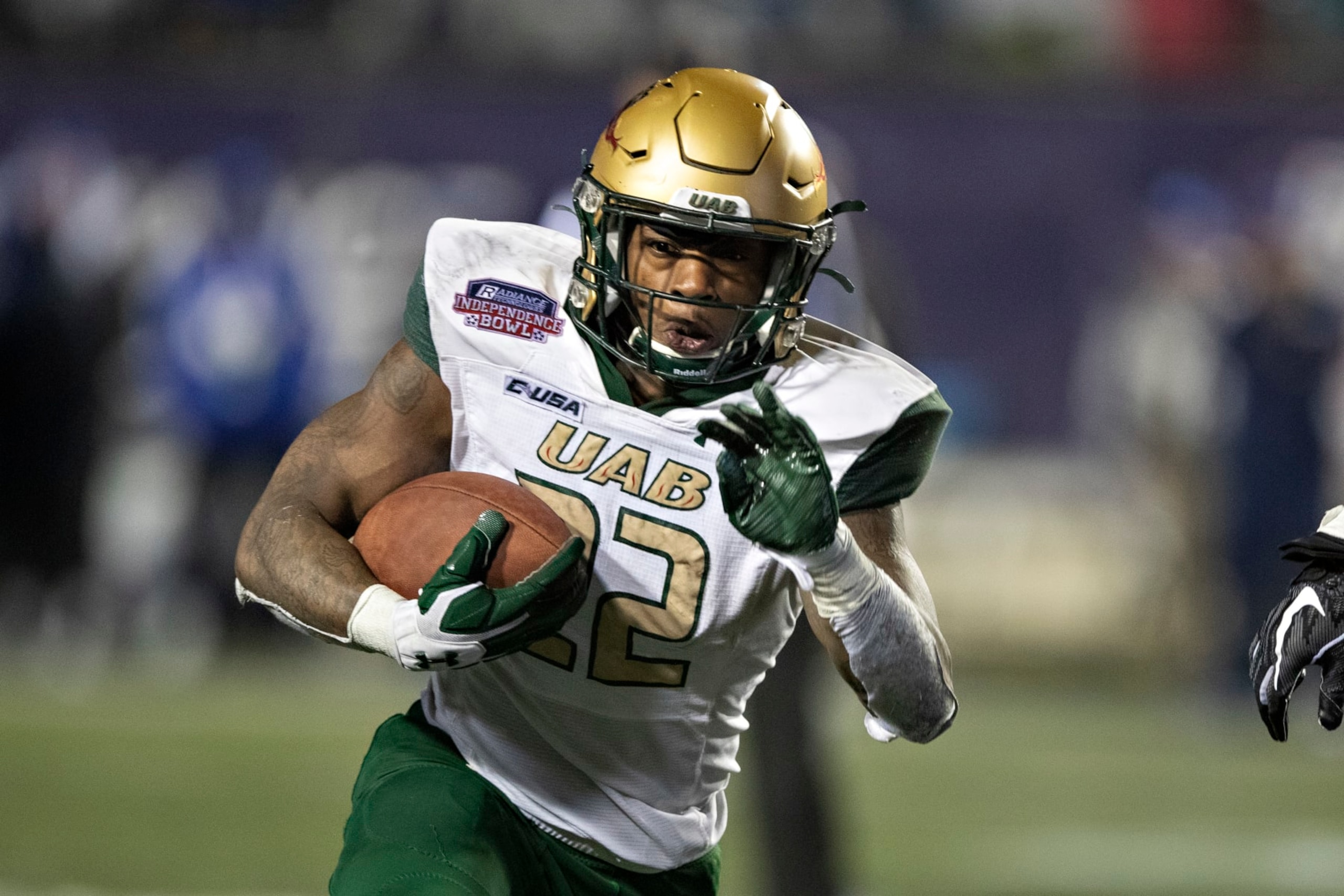
218. Chicago Bears
Travis Bell, DL, Kennesaw State
The Chicago Bears added their third interior defender, and Kennesaw State's Travis Bell brings some upfield explosivity alongside fellow rookies Gervon Dexter Sr. and Zacch Pickens.
Grade: C
219. Detroit Lions (via Philadelphia)
Antoine Greene, WR, North Carolina
The Detroit Lions didn't address wide receiver until the seventh round, though Green deserves credit for improving each of the past two years as part of the North Carolina Tar Heels program. He set career highs last season with 43 catches for 798 yards and seven touchdowns.
Grade: C+
220. New York Jets (via Las Vegas)
Zack Kuntz, TE, Old Dominion
Strengths: Phenomenal natural athlete, massive target, elite speed to stretch seam
Weaknesses: Adds nothing as an in-line option, suspect hands, one year of solid production
Strictly from a size and athletic standpoint, Old Dominion's Zack Kuntz is everything an NFL team wants in a tight end prospect.
He's a 6'7", 255-pound target with a perfect relative athletic score. Yes, Kuntz already eclipsed Jelani Woods' score from last year to become the most athletic tight end since 1987, per Pro Football Network's Kent Lee Platte.
Here's the problem: The Penn State transfer never dominated in the Sun Belt Conference, though a season-ending knee injury played its part this past season, and he's a glorified wide receiver with an aversion to in-line blocking
The potential to be something special is evident. But Kuntz still has a long way to go to reach that point.
He's the perfect project to develop with the New York Jets, since the team lacks a legitimate threat at tight end.
Grade: A
221. Indianapolis Colts
Jaylon Jones, CB, Texas A&M
Strengths: Big, physical corner who knows how to use his size, reacts well on developing plays
Weaknesses: Subpar athletic profile, lacks top-end speed, struggles to carry receivers in man coverage
The following stat is one of the most impressive among this year's class: Texas A&M's Jaylon Jones allowed a total 94 yards in coverage for the entirety of the 2022 campaign, according to Pro Football Focus.
As a 6'2", 200-pound corner with that stat attached to his name, the early entrant decided it was the perfect time to enter the draft.
The concerns holding back Jones wouldn't have necessarily changed had he returned to the Aggies for another year. Yes, his footwork and overall technique require refinement. But Jones is a defensive back who's tailor-made for a heavy zone scheme. He has the size to bully receivers but lacks the athleticism and speed to hang in consistent man situations.
The Indianapolis Colts didn't mess around at cornerback with the additions of Julius Brents, Darius Rush and Jaylon Jones. All three are big, long and physical corners to make Gus Bradley smile from ear to ear.
Grade: B+
222. Minnesota Vikings (via San Francisco)
DeWayne McBride, RB, UAB
Strengths: True lead back with size, power to serve as workhorse, consistently turns plays into positive runs, excellent contact balance
Weaknesses: Non-factor as a receiver, average speed and quickness, ball security
Quick raise of hands: Who knows which running back with 175 or more carries led the FBS in average yards per attempt last season?
No, it wasn't Texas's Bijan Robinson, UCLA's Zach Charbonnett or Tulane's Tyjae Spears. UAB's DeWayne McBride is the correct answer. McBride finished second in 2021 among backs with 200 or more carries.
He even led the nation in rushing yardage (1,713) this past year, but he sat out the Blazers' bowl game and got surpassed by Air Force's Brad Roberts.
The 5'10", 209-pound back will get every yard he can by playing through contact and always falling forward. At the start of last season, McBride ranked only one percentage point behind Robinson for the highest career forced missed tackle rate since 2014, per Pro Football Focus.
Dalvin Cook's future with the Minnesota Vikings remains uncertain, whereas McBride has lead back capabilities if called upon to do so.
Grade: B+
223. Los Angeles Rams
Ethan Evans, P, Wingate
The Los Angeles Rams once had success dipping into the lower levels to draft specialist Greg Zuerlein in the sixth round in 2012. Now, punter Ethan Evans joins the squad after booming 30 punts over 50 yards last season and pinning opponents inside the 20 on 89 different occasions throughout his collegiate career.
Grade: C
224. Atlanta Falcons (via Las Vegas)
DeMarcco Hellams, S, Alabama
DeMarcco Hellams is used to sharing a defensive backfield after playing alongside Jordan Battle and Brian Branch, though he found a way onto the field. He'll have to do so again with the Atlanta Falcons since Jaylinn Hawkins, Jessie Bates III and Richie Grant are already on the roster.
Grade: B
225. Atlanta Falcons
Jovaughn Gwyn, IOL, South Carolina
The Atlanta Falcons already drafted Syracuse's Matthew Bergeron to solve left guard. South Carolina's Jovaughn Gwyn can provide depth behind Bergeron and center Drew Dalman.
Grade: C
226. Jacksonville Jaguars (via Carolina)
Cooper Hodges, OT, Appalachian State
Though Appalachian State's Cooper Hodges played offensive tackle in college, he's a sub-6'4", 305-pound offensive lineman. He's more likely to replace Ben Bartch at left guard when the veteran's contract ends after the upcoming season.
Grade: C
227. Jacksonville Jaguars (via New Orleans)
Raymond Vohasek, DL, North Carolina
After the Jaguars acquired Tyler Lacy earlier to potentially play 5-technique, North Carolina's Raymond Vohasek provides depth as a nose tackle behind DaVon Hamilton.
Grade: C
228. Tennessee Titans
Colton Dowell, WR, Tennessee-Martin
The Tennessee Titans waited until the seventh round to finally bring in a wide receiver, and they stayed in-state to do so. Tennessee-Martin's Colton Dowell is a big (6'3", 212 lbs) target to pair with Treylon Burks.
Grade: C
229. Baltimore Ravens (via Cleveland)
Andrew Vorhees, IOL, USC
USC's Andrew Vorhees would have been selected much higher had he not suffered a major knee injury during the NFL Scouting Combine. Instead, he'll get a redshirt year as part of the Baltimore Ravens roster.
Grade: B
230. Buffalo Bills (via Philadelphia)
Nick Broeker, IOL, Ole Miss
Ole Miss' Nick Broeker can be a nice complement to fellow rookie O'Cyrus Torrence. Torrence should immediately step in as the Buffalo Bills' starting right guard. Broeker can compete at left guard and back up multiple spots.
Grade: B
231. Las Vegas Raiders (via New England)
Nesta Jade Silvera, DL, Arizona State
The Las Vegas Raiders now have a type along their defensive interior after selecting Alabama's Byron Young and Arizona State's Nesta Jade Silvera. They're both space-eaters who will maintain their gap integrity.
Grade: C
232. Green Bay Packers
Carrington Valentine, CB, Kentucky
The Green Bay Packers selected only one cornerback among their 13 picks, and Carrington is a good gamble as a premium athlete who can provide depth behind Jaire Alexander and Eric Stokes.
Grade: C+
233. Washington Commanders
Andre Jones Jr., Edge, Louisiana
Louisiana's Andre Jones Jr. is the second edge-rusher the Washington Commanders selected; the other being Clemson's K.J. Henry. Jones has the length and speed to provide solid depth and possibly give the team more if it decides to move past Chase Young.
Grade: C+
234. Los Angeles Rams (via Pittsburgh)
Jason Taylor II, S, Oklahoma State
The Los Angeles Rams' current starting safeties are Jordan Fuller and…With Taylor Rapp gone, someone needs to fill the void.
Oklahoma State's Jason Taylor II was a leader on one of the nation's best defenses in 2021. At worst, he should be a special teams ace early in his career.
Grade: B
235. Green Bay Packers (via Los Angeles Rams)
Lew Nichols III, RB, Central Michigan
Two seasons ago, Central Michigan's Lew Nichols III led the FBS with 1,848 rushing yards. The MAC product can join Aaron Jones and AJ Dillon in the backfield in what could turn into a run-heavy scheme until Jordan Love is comfortable.
Grade: C+
236. Indianapolis Colts (via Tampa Bay)
Jake Witt, OT, Northern Michigan
Jake Witt's potential and athleticism quickly became legendary after the tight end-turned-left tackle prospect posted a fabulous workout in front of scouts at his pro day. Of course Indianapolis Colts general manager Chris Ballard drafted him. He secured the two most athletic tackles in the entire class. Still, Witt is clearly a project.
Grade: C
237. Seattle Seahawks
Kenny McIntosh, RB, Georgia
After the Seattle Seahawks already drafted Zach Charbonnet in the second round, Georgia's Kenny McIntosh gives them a different look in the backfield. The running back is a natural pass-catcher and plucked 43 balls this past season.
Grade: B
238. Miami Dolphins
Ryan Hayes, IOL, Michigan
The Miami Dolphins only made four selections, and Michigan's Ryan Hayes provides value in the seventh round with his experience at left tackle and potential projection to guard.
Grade: C
239. Los Angeles Chargers
Max Duggan, QB, TCU
The Los Angeles Chargers need a backup behind Justin Herbert. Duggan is a great competitor and leader, but he lacks the arm talent to succeed in the NFL.
Grade: D
240. Jacksonville Jaguars (via New York Giants)
Derek Parish, Edge, Houston
Houston's Derek Parish may be listed as a defensive lineman, but he'll switch to fullback for the Jacksonville Jaguars, where he'll help lead the way for Travis Etienne Jr. and Tank Bigsby in Doug Pederson's offense.
Grade: C
241. Pittsburgh Steelers (via Denver)
Cory Trice Jr., CB, Purdue
Strengths: Ideal size and length, excellent change-of-direction quickness, alters routes, stacks and sheds blocks
Weaknesses: Build-up speed that hurts recovery, will get high in backpedal and bail early
Length and athleticism are the traits that NFL teams value in cornerbacks these days.
Previously, the Legion of Boom-style defense of predominantly playing zone and finding bigger, longer cornerbacks wasn't the norm. In today's game, the approach is all about rerouting wide receivers in press and then dropping as many as possible into coverage to limit big plays.
Purdue's Cory Trice is a prime example of a prospect who's meant to thrive in these systems, even though he isn't the fastest corner.
As a 6'3", 206-pound cornerback with 32 3/8-inch arms, Trice is built to jam his assignments, disrupt routes and squeeze throwing lanes. His 4.47-second 40-yard dash is a respectable number for a bigger corner, too. But the most impressive aspects of Trice's profile are a 4.06-second short shuttle and 6.70-second three-cone. Those are outstanding change-of-direction numbers for a defensive back with his size.
Trice and Joey Porter Jr. just may be the longest cornerback duo this side of Richard Sherman and Brandon Browner, and the new Pittsburgh Steelers in the same draft class.
Grade: A
242. Green Bay Packers (via Jacksonville)
Anthony Johnson Jr., S, Iowa State
In the seventh round, Iowa State's Anthony Johnson Jr.'s selection isn't a message to Green Bay Packers safety Darnell Savage. Though it's clear expectations are much higher for the 2019 first-round pick and the Packers are willing to bring in others to compete.
Grade: C
243. New York Giants
Jordan Riley, DT, Oregon
Oregon listed Jordon Riley at 6'5" and 325 pounds. He'll provide some actual beef behind Dexter Lawrence to play over center when needed.
Grade: C
244. Dallas Cowboys
Jalen Brooks, WR, South Carolina
The Dallas Cowboys may have wanted to address wide receiver sooner, but the board didn't fall to their liking. Instead, they waited until the seventh round to select South Carolina's Jalen Brooks. He improved each year in the SEC after transferring from Wingate.
Grade: C
245. New England Patriots (via Atlanta)
Isaiah Bolden, CB, Jackson State
The New England Patriots can't get enough big corners. First, they selected Christian Gonzalez and then followed with Ameer Speed. Jackson State's Isaiah Bolden is a 6'2" option, though his real value may come on special teams as a dynamic returner.
Grade: C+
246. Cincinnati Bengals
D.J. Ivey, CB, Miami
The Cincinnati Bengals drafted three defensive backs for the second time in a row. Miami's D.J. Ivey is a bigger corner with some length. But this approach shows how the Bengals are preparing to slow the other high-octane teams found in the loaded AFC.
Grade: C
247. San Francisco 49ers
Brayden Willis, TE, Oklahoma
Any time a tight end enters Kyle Shanahan's scheme, eyebrows are raised because of how the position tends to be featured. Willis is a potential red-zone target after snagging seven scores during his final season on campus.
Grade: C
248. Houston Texans (via Philadelphia)
Brandon Hill, S, Pittsburgh
Last year, the Houston Texans made a big splash in their secondary by drafting Derek Stingley Jr. and Jalen Pitre. So much flexibility exists among the team's current crop of safeties, and Pittsburgh's Brandon Hill adds even more. He'll fly to the football with his 4.43-second 40-yard dash speed.
Grade: B
249. Philadelphia Eagles (via Detroit)
Moro Ojomo, DL, Texas
Strengths: Long and athletic along interior, strong at the point of attack, flashes pass-rush potential, consistent motor
Weaknesses: Inconsistent hand placement and pad level, must develop a better pass-rush plan
Moro Ojomo's path to the NFL falls somewhat in line with the Three Little Bears.
After emigrating from Nigeria with his family at the age of seven, he eventually found football. But he didn't really discover who he was as a player until his third year at Texas.
"When you look at, I kind of call it this new-age DT," Ojomo said of his skill set, per The Austin American-Statesman's Brian Davis. "The new-age DT is a guy who's mobile. They're not necessarily too tall, but they're also strong. On the edge, I was a little too heavy. On the nose, I was a little too light."
As a 3-technique, Ojomo is just right. At 6'3" and 292 pounds, he can take advantage of a two-way go because of his athleticism. He's strong and explosive. Ojomo also had a career-high three sacks and 5.5 tackles for loss during his final season at Texas.
Philadelphia Eagles general manager Howie Roseman understands that Brandon Graham and Fletcher Cox can't play forever. Ojomo is yet another addition to Gang Green's young defensive line corps and will provide quality depth behind Jordan Davis and Jalen Carter.
Grade: B+
250. Kansas City Chiefs
Nic Jones, CB, Ball State
Ball State's Nic Jones isn't the biggest or best athlete, but he knows how to play cornerback and displays good ball skills. He should come in and provide depth in the defensive backfield and contribute on special teams.
Grade: C
251. Pittsburgh Steelers (via Los Angeles Rams)
Spencer Anderson, IOL, Maryland
The Pittsburgh Steelers stayed true to their offseason approach after adding offensive linemen Isaac Seumalo and Nate Herbig by also drafting Georgia's Broderick Jones and Maryland's Spencer Anderson. The Big Ten product is an outstanding athlete at guard and has experience at both right and left tackle.
Grade: C
252. Buffalo Bills (via Los Angeles Chargers)
Alex Austin, CB, Oregon State
The Buffalo Bills rounded out their draft class with Oregon State defensive back Alex Austin. Interestingly, the team didn't address safety despite its two standouts–Micah Hyde and Jordan Poyer–both being 32. Austin is an outside corner, but he may get a look at safety.
Grade: C
253. San Francisco 49ers
Ronnie Bell, WR, Michigan
Michigan's Ronnie Bell is the type of prospect who falls in the draft because he doesn't have an outstanding physical skill set, yet he knows how to play the position and get open. San Francisco 49ers head coach/offensive play-caller Kyle Shanahan can certainly work with that type of player.
Grade: B+
254. New York Giants
Gervarrius Owens, S, Houston
The New York Giants made sure they were going to have the type of secondary that could really challenge the game's top passing offenses after adding Deonte Banks, Tre Hawkins III and Houston's Gervarrius Owens. The former Cougar does have mental lapses, but he's a physical presence on the field.
Grade: C
255. San Francisco 49ers
Jalen Graham, LB, Purdue
The San Francisco 49ers drafted linebackers in back-to-back rounds. Purdue's Jalen Graham joins TCU's Dee Winters as depth behind Fred Warner and Dre Greenlaw. In Graham's case, he's not as fast as Winters, but he makes up for that with his instinctual play.
Grade: C
256. Green Bay Packers
Grant Dubose, WR, Charlotte
The draft after the Green Bay Packers finally moved on from Aaron Rodgers proved to be a hoot, because the organization drafted three wide receivers and two tight ends to place around Jordan Love. Charlotte's Grant Dubose, who stands 6'2", grabbed 15 touchdowns over the last two seasons for the 49ers.
Grade: C+
257. Denver Broncos (via New Orleans)
Alex Forsyth, IOL, Oregon
Alex Forsyth immediately pushing Lloyd Cushenberry III to start at center for the Denver Broncos despite being a seventh-round selection wouldn't be a surprise at all. The Oregon product is one of the class' headiest players, and he can absolutely take over making calls at the pivot.
Grade: A
258. Chicago Bears
Kendall Williams, S, Stanford
Kendall Williamson essentially became a four-year starter for the Stanford Cardinal. While experienced, he didn't show much in the way of ball skills with only one career interception. The 202-pound safety does run a sub-4.5-second 40-yard dash and will provide depth behind Jaquan Brisker and Eddie Jackson.
Grade: C
259. Los Angeles Rams (via Houston)
Desjuan Johnson, DL, Toledo
A near complete overhaul went into the Los Angeles defensive front, aside from Aaron Donald. Toledo's Desjuan Johnson is the final piece as Mr. Irrelevant after the previous additions of Byron Young, Kobie Turner, Nick Hampton and Ochaun Mathis. The 285-pound Johnson can play up and down the line of scrimmage with his lightning quick initial burst.
Grade: B

.jpg?w=2560 "DOLPHINS-AIKMAN")








