

Entering the 2023 NFL draft, the general consensus floated somewhere between 15 to 20 legitimate first-round talents, while the depth and overall quality of the class could be found among the second tier of prospects. A belief emerged that the caliber of players selected in the 20s would be relatively similar to those still available in the 40s.
As such, Friday's Day 2 will be integral to how franchises build their draft classes.
Thirty-one aspiring professionals heard their names called during the opening frame. The order in which they came off the board turned into a fascinating practice, with teams clearly higher on certain players than others.
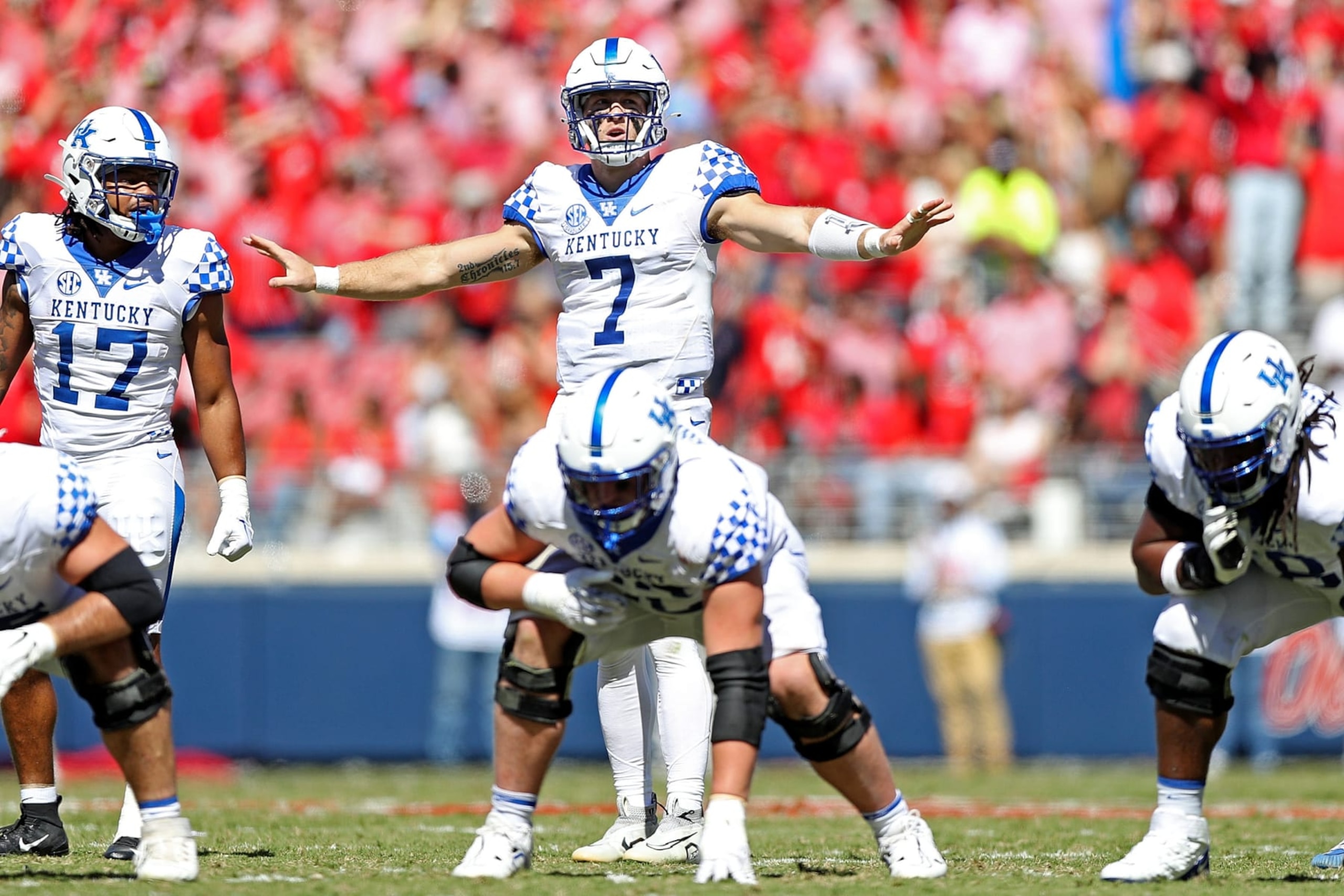
The availability of specific guys—particularly Kentucky quarterback Will Levis, Notre Dame tight end Michael Mayer and Penn State cornerback Joey Porter Jr.—make the top of this year's second round white hot, with the potential to see multiple deals struck early for their services.
According to NFL Network's Tom Pelissero, the Pittsburgh Steelers' phone has been ringing off the hook with teams trying to get to the top of the second round.
The Atlanta Falcons, Tennessee Titans, Los Angeles Rams and New England Patriots tried to trade back into the first round but failed to do so, per ESPNs Jeremy Fowler. Exactly who those franchises were interested in targeting remains unknown, but they could still be in the mix, with multiple other teams also jockeying for positioning.
As the early second-round selections sort themselves out and the rest of the second and third rounds proceed, Bleacher Report will provide analysis and grades for every single pick.
32. Pittsburgh Steelers (via Chicago)
1 of 71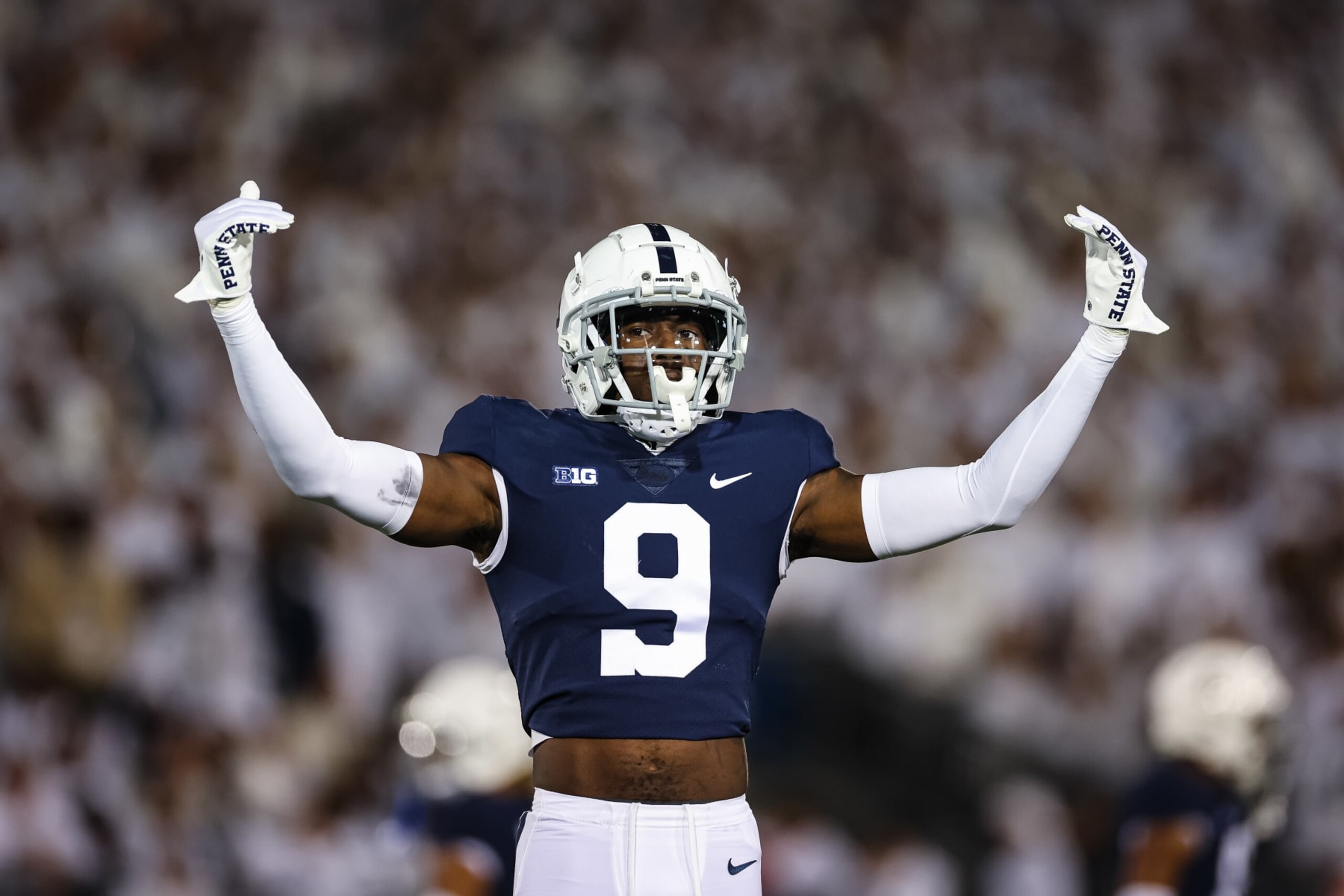
Joey Porter Jr., CB, Penn State
Strengths: Big, long corner who does his best work rerouting wide receivers, physical brand of football, looks to get his head around to make plays on passes
Weaknesses: Can be overly aggressive and play out of control at times, taller corner who needs some runway to pick up speed
Walking in the footsteps of a successful parent can be extremely difficult. For Joey Porter Jr., the transition isn't exactly the same. The elder Porter played 13 seasons in the NFL between the Pittsburgh Steelers, Miami Dolphins and Arizona Cardinals. He played a significant role in some of the era's most intimidating defenses and made four All-Pro teams along the way.
However, Joey Porter Sr. played outside linebacker. His son is a standout corner, with exceptional coverage skills and some of the same attitude his father once brought to the game.
Porter's length—he's 6'2½" with 34-inch arms and an 80⅞-inch wingspan—allows him to get his hands on wide receivers early in the route and control them. He also uses his lineage as a source of strength.
"My family really motivated me," Porter Jr. said, per Hal Habib of the Palm Beach Post. "Just really a legacy standpoint for me. My dad's been there before. He's done it. I want to do the same thing and just be better. That's the main thing. He always told me he wants me to be better than him, so that's what I'm going to strive to do."
With regard to the draft, Junior easily eclipsed Senior, who didn't hear his name called until the third round in 1999.
In the case of the former, he can go home again, joining the Pittsburgh Steelers after his father played eight highly successful seasons with the organization.
The younger Porter, who played at North Allegheny Senior High School–a suburb of Pittsburgh–and went to Penn State, will stay in the Keystone State.
But this selection isn't just a great story. Porter fits a major need in the Steelers secondary after Cameron Sutton left in free agency. Plus, the 22-year-old rookie will have the opportunity to play opposite of and learn from Patrick Peterson.
Grade: A+
33. Tennessee Titans (via Arizona)
2 of 71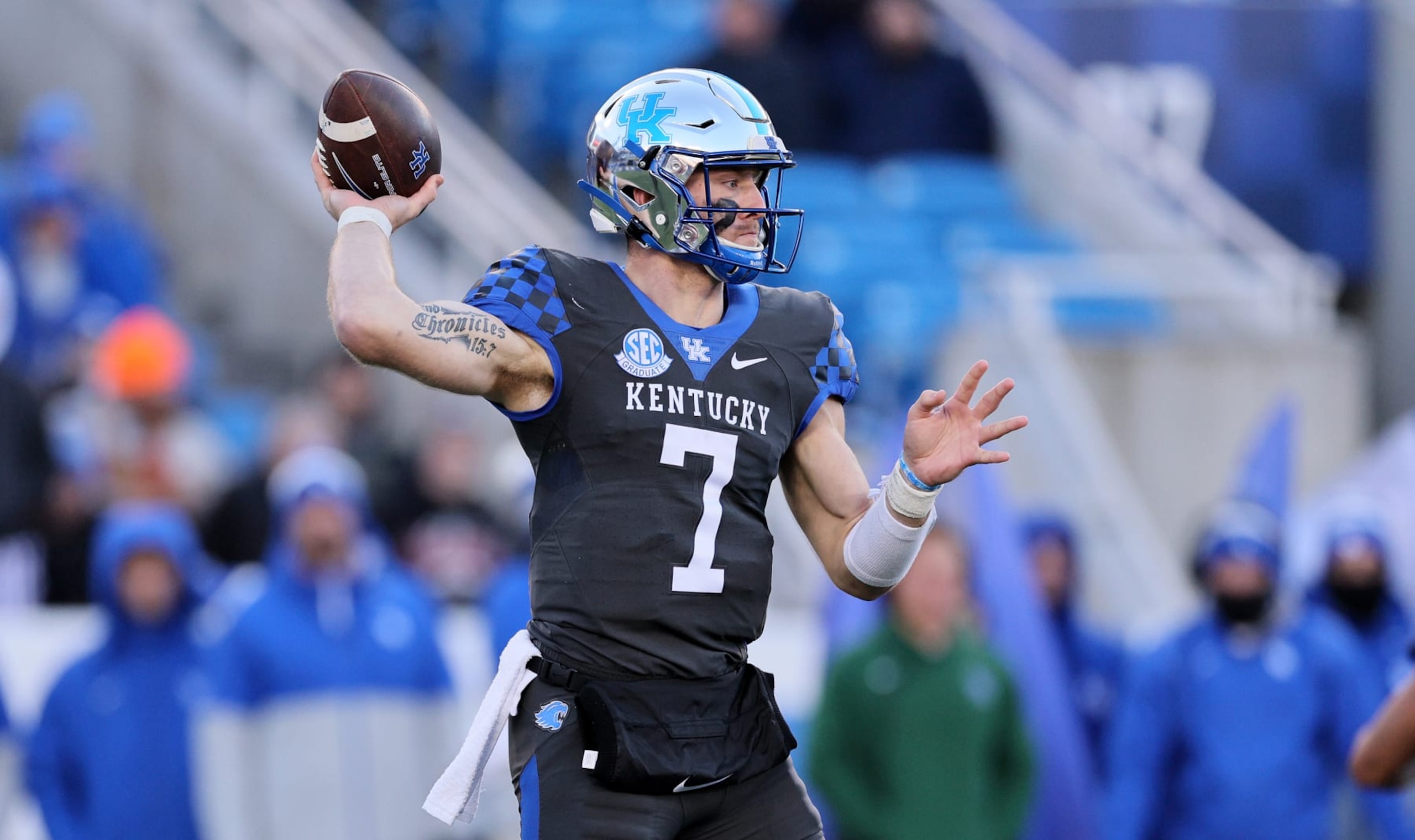
Will Levis, QB, Kentucky
Strengths: Easy velocity, consistently drives the ball downfield and into tight windows, sturdy frame, doesn't shy from pressure or difficult throws
Weaknesses: Spotty accuracy, decision-making is questionable at times, doesn't consistently create much outside of pocket/offensive structure
Will Levis is different from the other top quarterbacks in this year's class. He's older (will turn 24 before the start of the 2023 campaign). He projects a certain sense of bravado. If not for Florida's Anthony Richardson, Levis would be considered the most physically imposing QB in the group.
The 6'4", 229-pound signal-caller is big, sturdy and has an outstanding arm. When asked why he chose to throw at this year's NFL Scouting Combine, the two-year standout at Kentucky told reporters: "Because I got a cannon. I'm gonna show it off."
Levis is closer to a more traditional option, though he's a solid athlete. His game is predicated on standing tall in the pocket, staring down pressure and delivering ropes.
His drop-off in play from 2021 to '22 is a point of contention. Levis' completion percentage, passing yardage and passing touchdowns all decreased.
As part of the assessment, evaluators must consider the circumstances at Kentucky. Levis lost his offensive coordinator, Liam Cohen, who landed with the Los Angeles Rams. His two best offensive linemen were drafted. His top three wide receivers left. Furthermore, the Wildcats' main back, Chris Rodriguez Jr., dealt with injuries last season.
While Levis must be disappointed with falling out of the first round, he landed with an organization that's a perfect fit.
The Tennessee Titans didn't waste much time Friday to trade up for Levis' services, and they did the right thing. Ryan Tannehill turns 35 later this year and is in the last year of his contract. Plus, the Titans rely heavily on a play-action passing attack that asks their quarterback to drive the ball down the field. Levis is the ideal addition–whether it came in the first or second round.
Levis immediately surpasses Malik Willis as the future franchise quarterback.
Grade: A
34. Detroit Lions
3 of 71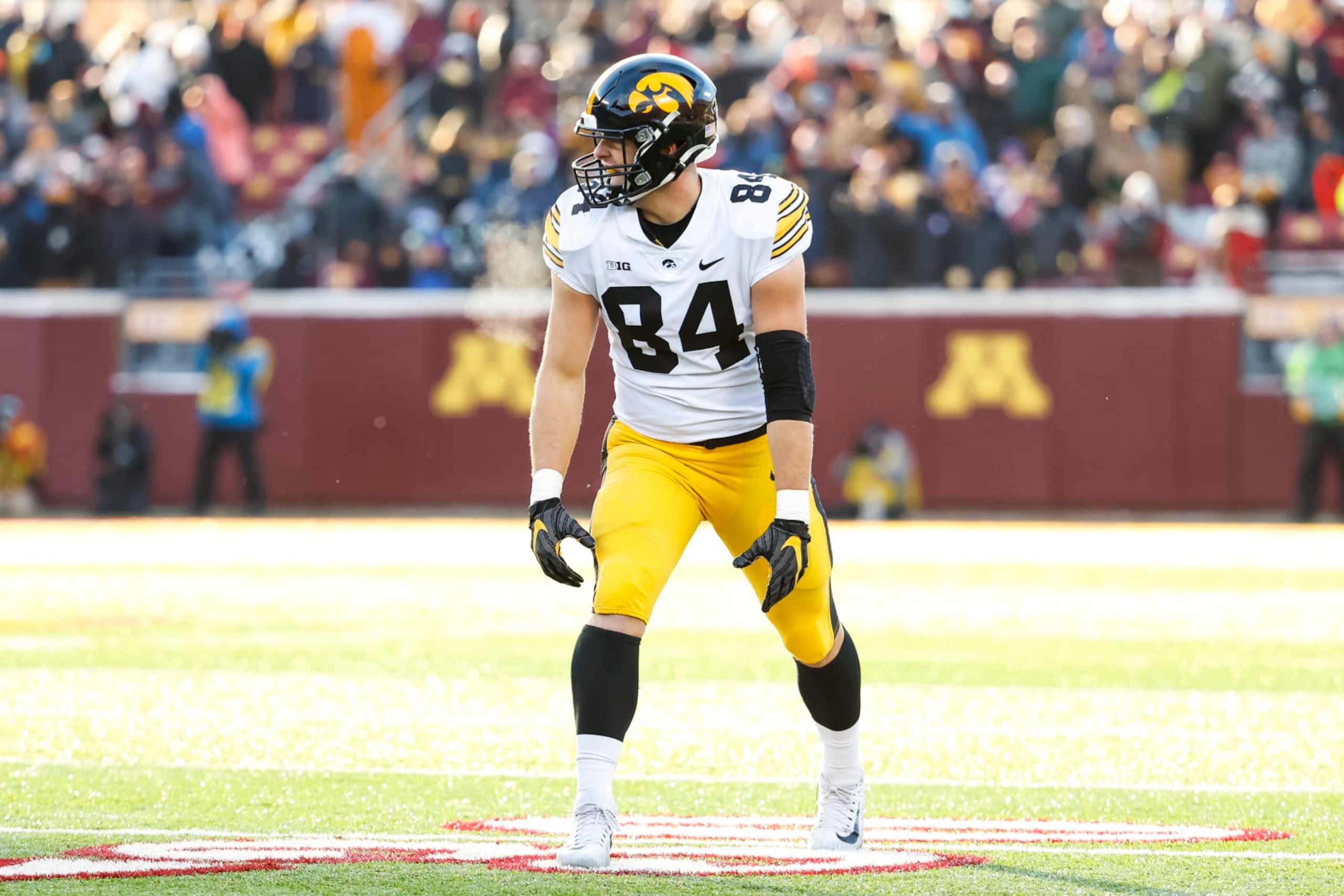
Sam LaPorta, TE, Iowa
Strengths: Fights for extra yards after the catch, excellent athlete, detached weapon, smooth route-runner
Weaknesses: Still evolving as an in-line option, not necessarily a ball-winner
Sam LaPorta is the greatest tight end ever to wear an Iowa Hawkeyes uniform. That isn't hyperbole despite the program producing Dallas Clark, Tony Moeaki, George Kittle, T.J. Hockenson and Noah Fant.
Statistically speaking, no tight end who made his way through Iowa City produced more receptions or receiving yardage than LaPorta. Purely as a target, LaPorta is fifth all-time in the program's history with 153 career catches.
To be clear, the incoming prospect's production doesn't make him the same caliber of prospect as those mentioned, especially since Clark and Kittle developed into elite NFL tight ends. But LaPorta's performance coupled with his athletic traits are predictors of another dangerous offensive weapon.
The first-team All-Big Ten performer is undersized at 6'3" and 245 pounds, but he posted elite athletic metrics across the board. LaPorta is still a work-in-progress as an in-line contributor, but his physical presence shines after the catch.
Interestingly, the Detroit Lions' board is far different than the general consensus. During Day 1 of the draft, the team drafted running back Jahmyr Gibbs far sooner than expected with the 12th overall pick and took linebacker Jack Campbell at 18th overall.
In the second round, the Lions snag LaPorta over Notre Dame's Michael Mayer and Georgia's Darnell Washington–both of whom are still on the board despite being projected as first-round options.
With the organization's decision to trade Hockenson last year, LaPorta brings another Iowa tight end into the mix and gets a highly athletic weapon to pair with Gibbs and wide receivers Amon-Ra St. Brown and Jameson Williams (once he returns from suspension).
Grade: B+
.jpg?w=2560)


35. Las Vegas Raiders (via Indianapolis)
4 of 71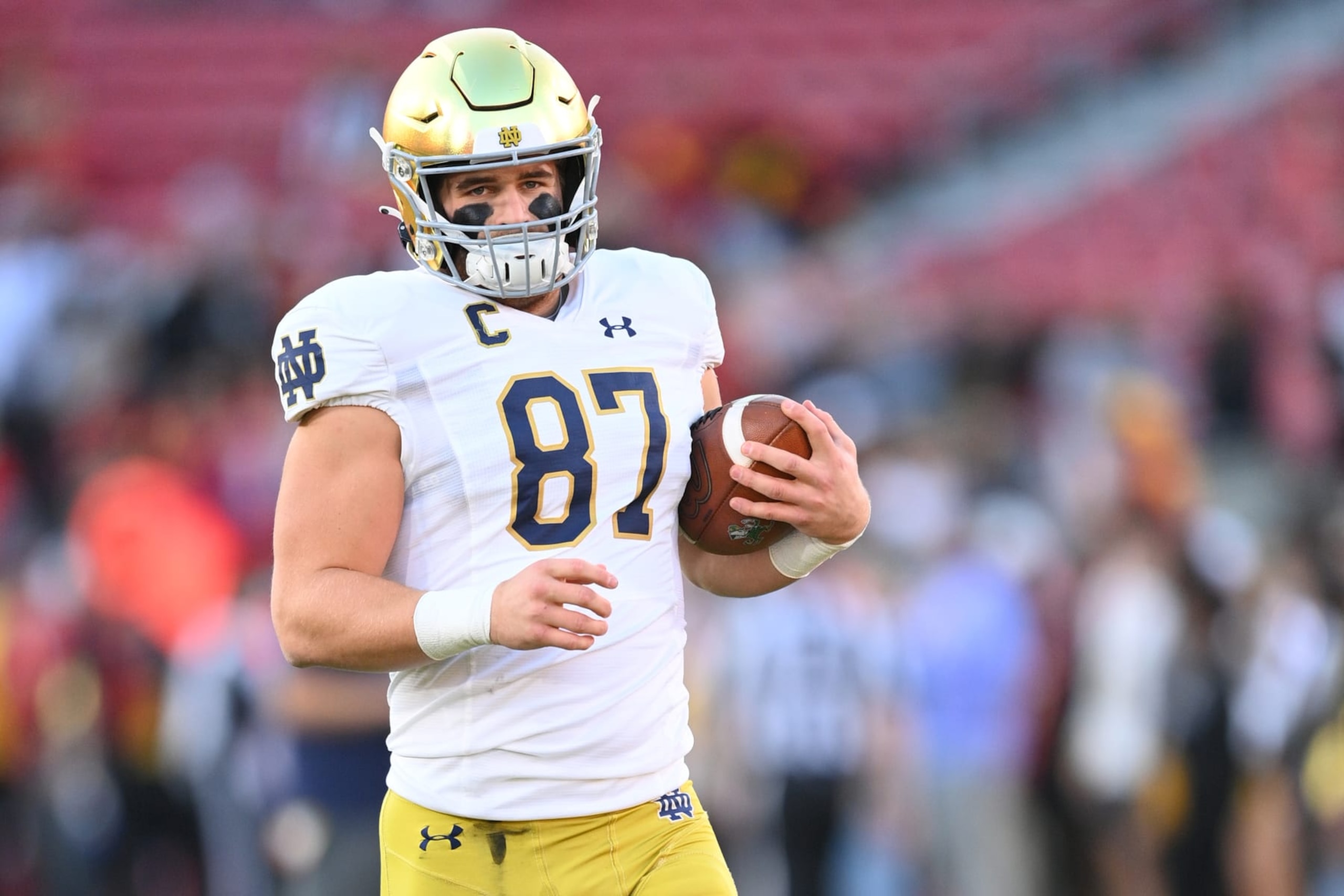
Michael Mayer, TE, Notre Dame
Strengths: Smooth, physical target with strong hands to pluck the ball out of the air, regularly bodies off defenders, runs through tacklers
Weaknesses: Marginal in-line blocker, average speed/burst for the position
Tight end tends to be a volatile position in the draft. Two years ago, Kyle Pitts was a true unicorn and was picked fourth, the highest ever selected at the position. Last year, Trey McBride became TE1 yet didn't hear his name called until the 55th selection.
Notre Dame's Michael Mayer veers closer to Pitts than McBride but falls somewhere between those two points as the highest-rated tight end among this year's draft cycle.
The consensus All-American is a modern tight end because of how he affects the game as a receiver.
Typically, Mayer will be used in the slot or detached from the line of scrimmage. Over the last three seasons, he caught 180 passes for 2,099 yards and 18 touchdowns. In fact, he either tied for the top number or outright led the Fighting Irish in receptions each of his seasons on campus.
As a threat in the passing game, he brings top-10 overall potential. He's an instant security blanket with fluidity in his route running to provide a reliable target and toughness to work the middle of the field. He'll be an immediate contributor as both a receiver and a manageable blocker.
The Las Vegas Raiders traded Darren Waller this offseason. They replaced the veteran with the top-rated tight end in the 2023 class, according to Bleacher Report Scouting Department.
Mayer gives new quarterback Jimmy Garoppolo a security blanket over the middle of the field.
Head coach/play-caller Josh McDaniels experienced significant success with another former second-round tight end. What was his name again? Oh, yeah, Rob Gronkowski.
Mayer doesn't need to be Gronk, but he can certainly serve as a focal point in the Raiders' offensive scheme.
Grade: A+
36. Los Angeles Rams
5 of 71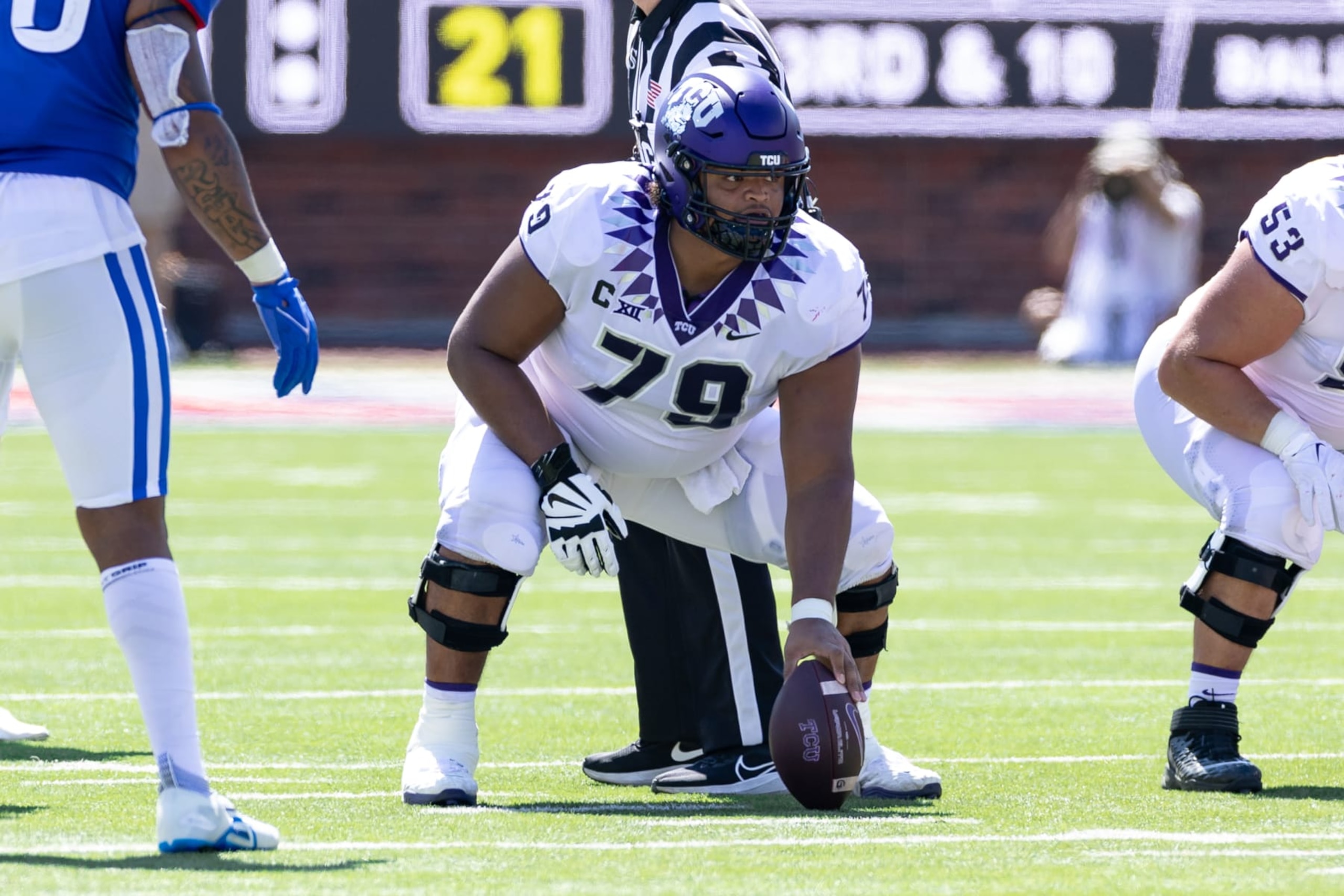
Steve Avila, IOL, TCU
Strengths: Center/guard versatility, strong at point of attack and stout in pass protection, performs well in zone or gap schemes
Weaknesses: Marginal lateral agility and change-of-direction movement, pad level is sometimes questionable
The TCU Horned Frogs went on a Cinderella-like run to the BCS Championship Game, only to have their season turn into a pumpkin when the clock struck midnight. But the group deserves considerable credit for reaching such heights after enduring a 5-7 season and the departure of longtime head coach Gary Patterson in 2021.
Although Steve Avila is an interior offensive lineman, TCU head coach Sonny Dykes credited him as the primary force behind the turnaround.
"When you look at it last year, you just kind of say what was the strength of last year's team, and really, truly, it was leadership," Dykes said, per CBS Sports' Garrett Podell. "... And to me, Steve was the main guy, he really was. He was from day one, he just took responsibility–when things were bad and when things were good."
The first-team All-American is also a standout 6'3½", 332-pound guard with starting center experience.
With their first pick of the 2023 NFL draft, the Los Angeles Rams selected the versatile blocker to start rebuilding a crumbling roster.
Avila could realistically start at any of the three interior spots and help the Rams' front, though he and Logan Bruss–whom the team selected in the third round last year–will likely bookend center Brian Allen as the starting guards.
The Rams must keep quarterback Matthew Stafford upright after he endured multiple injuries, including a concussion and spinal contusion, last season.
Grade: B
37. Seattle Seahawks (via Denver)
6 of 71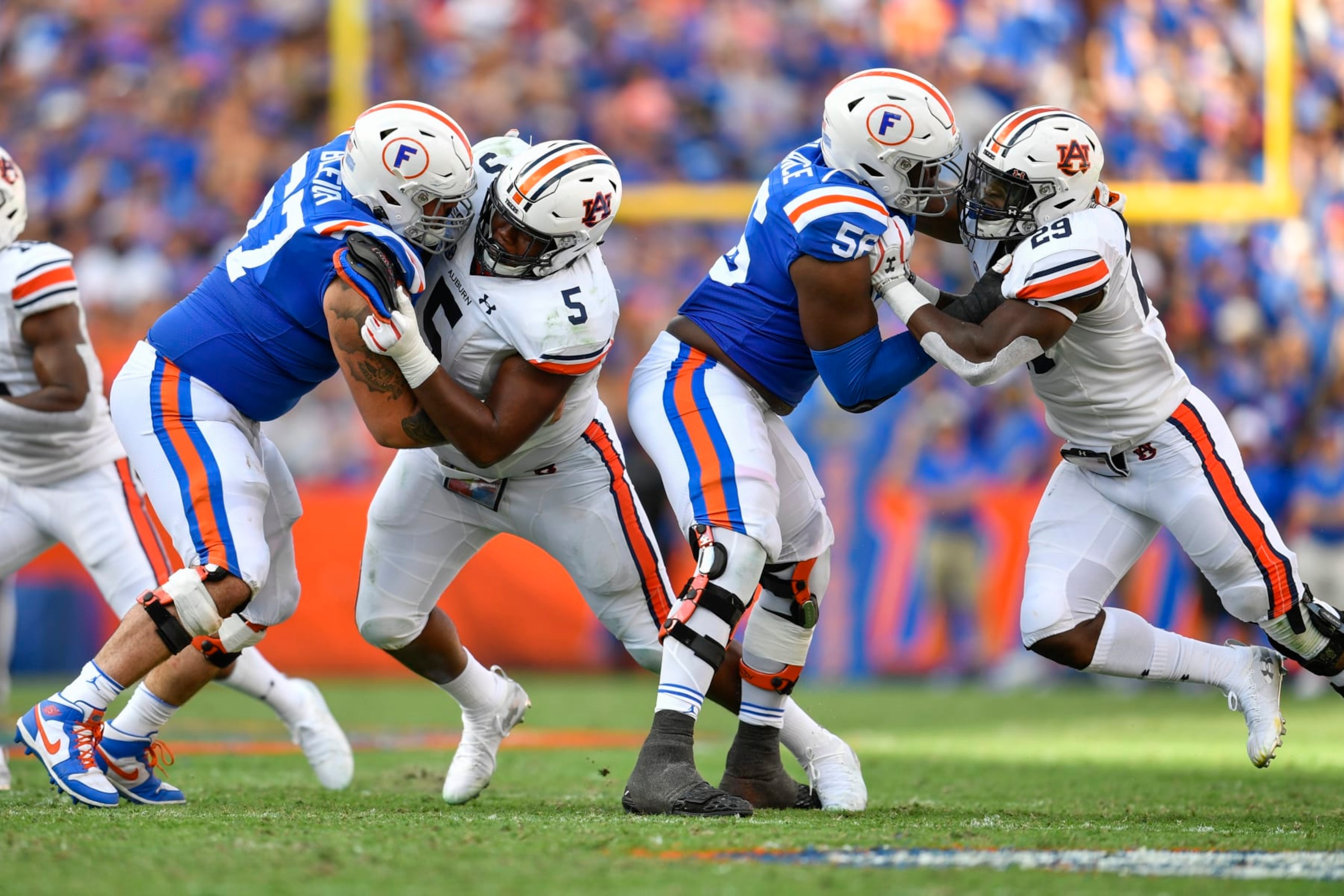
Derick Hall, Edge, Auburn
Strengths: Absolutely relentless, elite get-off, uses long arms well, sets the edge
Weaknesses: Stiff hips and subpar ankle flexion, plays high at times, tries to shoot backside instead of squeezing blocks
Some edge prospects are referred to as straight-line pass-rushers. Auburn's Derick Hall is an excellent example.
The first-team All-SEC defender has elite speed when he pins his ears back. Hall posted a 4.55-second 40-yard dash and a 10'7" broad jump at the NFL Scouting Combine. However, he corners about as well as a 1986 Cutlass Supreme.
Hall's pass-rushing plan is based on beating an offensive tackle off the snap, taking advantage of a designed slant or relentlessly hustling to make a play. All three of those traits can be valuable if used properly.
However, fans shouldn't expect the 6'3", 254-pound edge-rusher to magically turn into Dwight Freeney by dipping his shoulder, getting great body lean and shortening the porch toward opposing quarterbacks.
On Thursday, the Seahawks wanted to relive their Legion of Boom days by selecting Devon Witherspoon to pair with Tariq Woolen. Hall gives them an updated version of Chris Clemons/Cliff Avril.
To be fair, Hall won't turn the edge like those previous edge defenders did for Pete Carroll, but he provides an explosive quality to work in a rotation with Uchenna Nwosu, Alton Robinson, Darrell Taylor and Boye Mafe.
It's often said that a team can't have too many pass-rushers, and the Seahawks are testing that theory.
Grade: C+
38. Atlanta Falcons (via Indianapolis)
7 of 71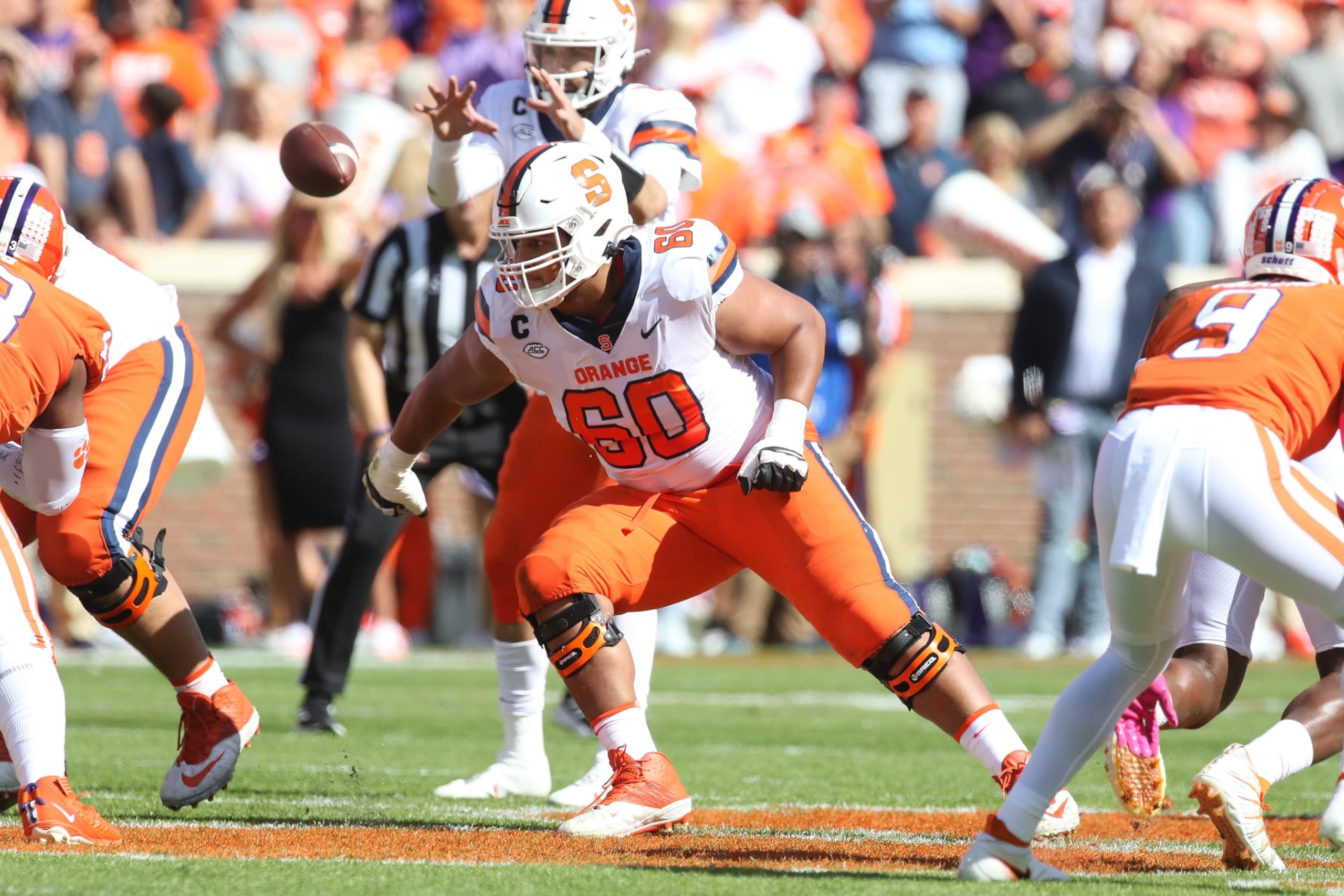
Matthew Bergeron, IOL, Syracuse
Strengths: Physical, aggressive, powerful, takes good angles in the run game, sinks hips to drive defenders off the ball and anchor in pass protection
Weaknesses: Hips open early in pass set to keep up with athletic pass-rushers, average lateral movement, inconsistent footwork
One thing leads to another, which leads to another.
In the case of Syracuse's Matthew Bergeron, running back Sean Tucker's production drew attention to the Orange offense. Tucker ran for more yards at Syracuse than Jim Brown, Ernie Davis, Larry Csonka and Floyd Little did.
Naturally, the spotlight then turned to those blocking for him. Bergeron emerged as the best of the bunch and the B/R Scouting Department's highest-graded player on Syracuse's roster, even over Tucker.
The three-year starter at left tackle may have a position switch ahead of him. The 6'5", 318-pound lineman clearly excels as a run-blocker, but he possibly lacks the movement skills to remain on an island as a blindside protector. The Orange scheme hid this to some degree because of a 934-to-657 run-to-pass ratio over the last two seasons.
Bergeron can certainly put a defender on skates when engaging as a run defender, though.
The Atlanta Falcons' offensive line is now complete. Jalen Mayfield's transition to left guard during his rookie season turned into a disaster. Bergeron will make a similar move from left tackle to guard, but he's better suited for the position.
While the Falcons still aren't entirely settled at quarterbacks–with hopes of Desmond Ridder emerging as the franchise's long-term solution–there won't be an excuse for the sophomore signal-caller if he fails.
A front five of Jake Matthews, Bergeron, Drew Dalman, Chris Lindstrom and Kaleb McGary is an excellent group to serve as tone-setter for Atlanta's run-first approach.
Grade: B
39. Carolina Panthers
8 of 71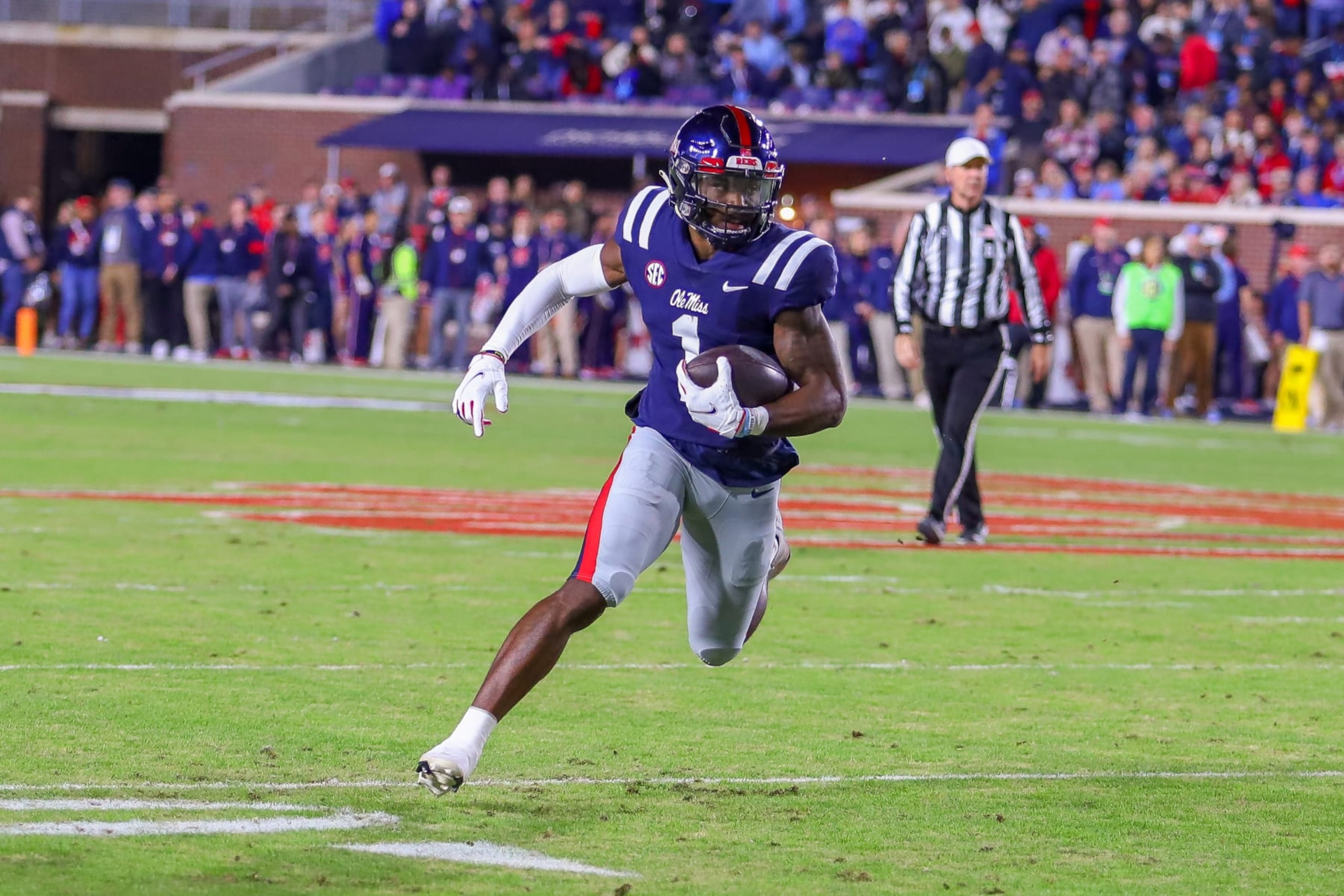
Jonathan Mingo, WR, Ole Miss
Strengths: Powerful build, impressive athlete, YAC creator, physical blocker, good ball-tracking
Weaknesses: Never produced a top season, not as explosive or sudden out of his breaks
In a wide receiver class generally considered weak compared to recent years and full of undersized targets, Ole Miss' Jonathan Mingo is a unique option because of body type, skill set and overall athleticism.
Mingo only produced at a relatively high level for one season. Even last year, the senior finished second on the Rebels with 51 catches for 861 yards. But he's capable of playing all three receiver spots. The 6'2", 220-pound target may even thrive as a power slot in the NFL, with his ability to create after the catch and willingness to block.
When an elite relative athletic score is sprinkled into the mix, Mingo's potential is as great as any wide receiver's in this class.
"I feel like I just can't be stopped," Mingo told reporters at the NFL Scouting Combine. "Once I get the ball in my hands, I feel like nobody can bring me down. I feel like I have great run after the catch because I got a lot of tools in my bag."
The Carolina Panthers took the next logical step after acquiring their new franchise quarterback in the first round of the 2023 NFL draft–they started to add weapons around Bryce Young.
Aside from Adam Thielen, the Panthers' weapons at wide receiver are sparse since the team included D.J. Moore in the trade to move up and get Young.
Mingo has significant upside as someone who was asked to create with the ball in his hands and quickly contribute in multiple roles. He'll be needed. Good thing Young distributes the ball like a point guard on grass.
Grade: A
40. New Orleans Saints
9 of 71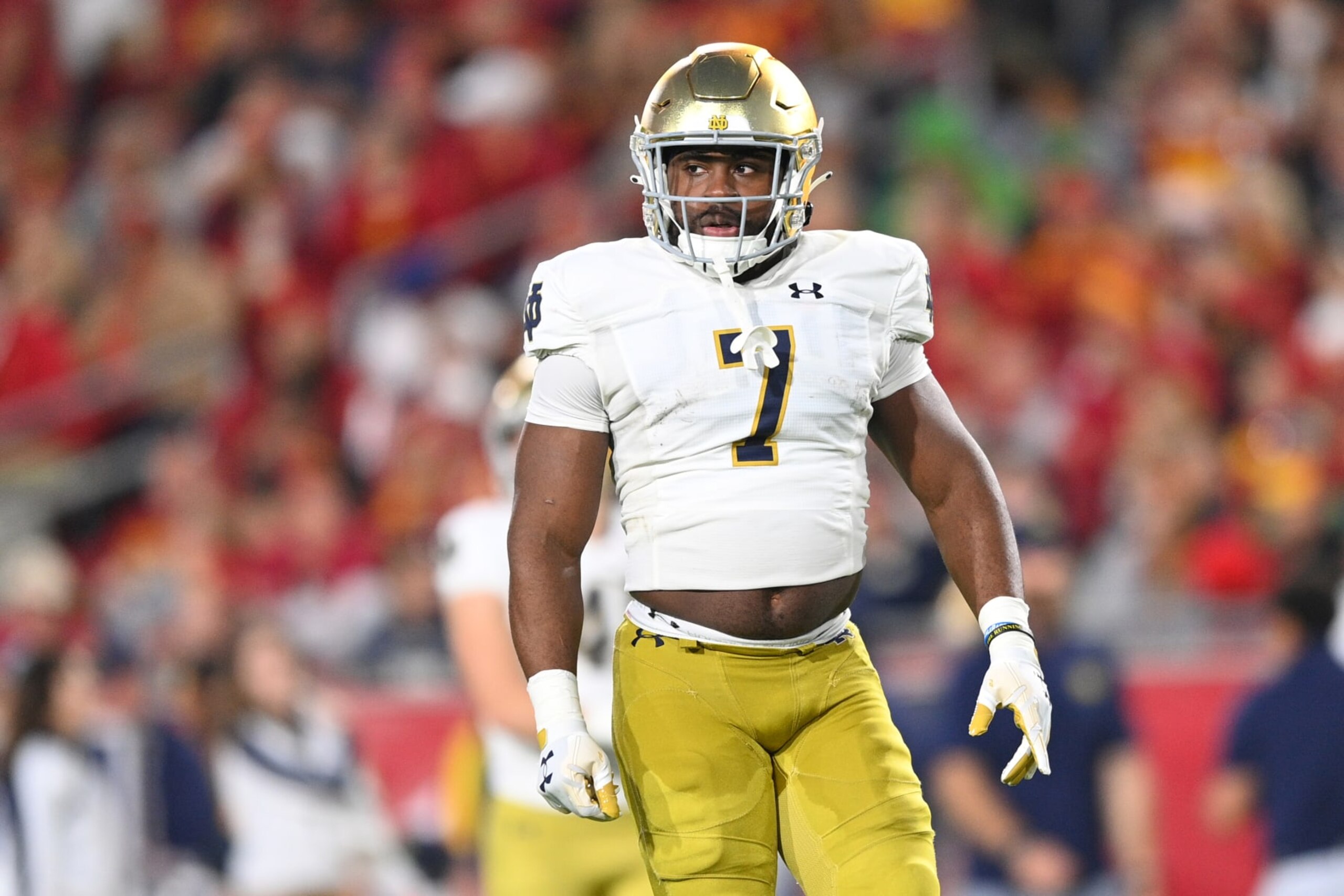
Isaiah Foskey, Edge, Notre Dame
Strengths: Physical in taking on blocks and maintaining responsibilities, athletic upfield burst and jolt in hands as pass-rusher, consistent motor
Weaknesses: Unrefined pass-rusher, little stiff in the hips when asked to bend, can be slow with key reads
Isaiah Foskey left Notre Dame as the Fighting Irish's all-time leader in sacks. Granted, sacks weren't an official stat during Notre Dame's heyday, but it continues to be a nationally relevant program and produces significant NFL talent on a yearly basis.
Nobody tell Foskey that it's a big deal, though.
"Getting a sack is just normal," the edge-defender told reporters at the NFL Scouting Combine. "Everyone always gets a sack. But the next step is always getting to the ball. That's what the defense wants. That's what every team wants.
"It's not just about getting a sack, getting a negative play."
To go along with Foskey's 20.5 sacks over the last two seasons, the consensus All-American also forced seven fumbles during that span. Imagine if he finally puts everything together and becomes a polished pass-rusher.
Clearly, the New Orleans Saints prioritized upgrades to their defensive front. The first-round addition of Bryan Bresee automatically boosts the interior, whereas Foskey will provide another option off the edge.
While the Saints continue to wait on Payton Turner to fully develop as a former first-round pick, Foskey can help take pressure off Cameron Jordan, especially since Marcus Davenport left in free agency to join the Minnesota Vikings.
So far this offseason, the Saints added Bresse, Foskey, Nathan Shepherd and Khalen Saunders to revamp their defensive trenches.
Grade: B
41. Arizona Cardinals (via Tennessee)
10 of 71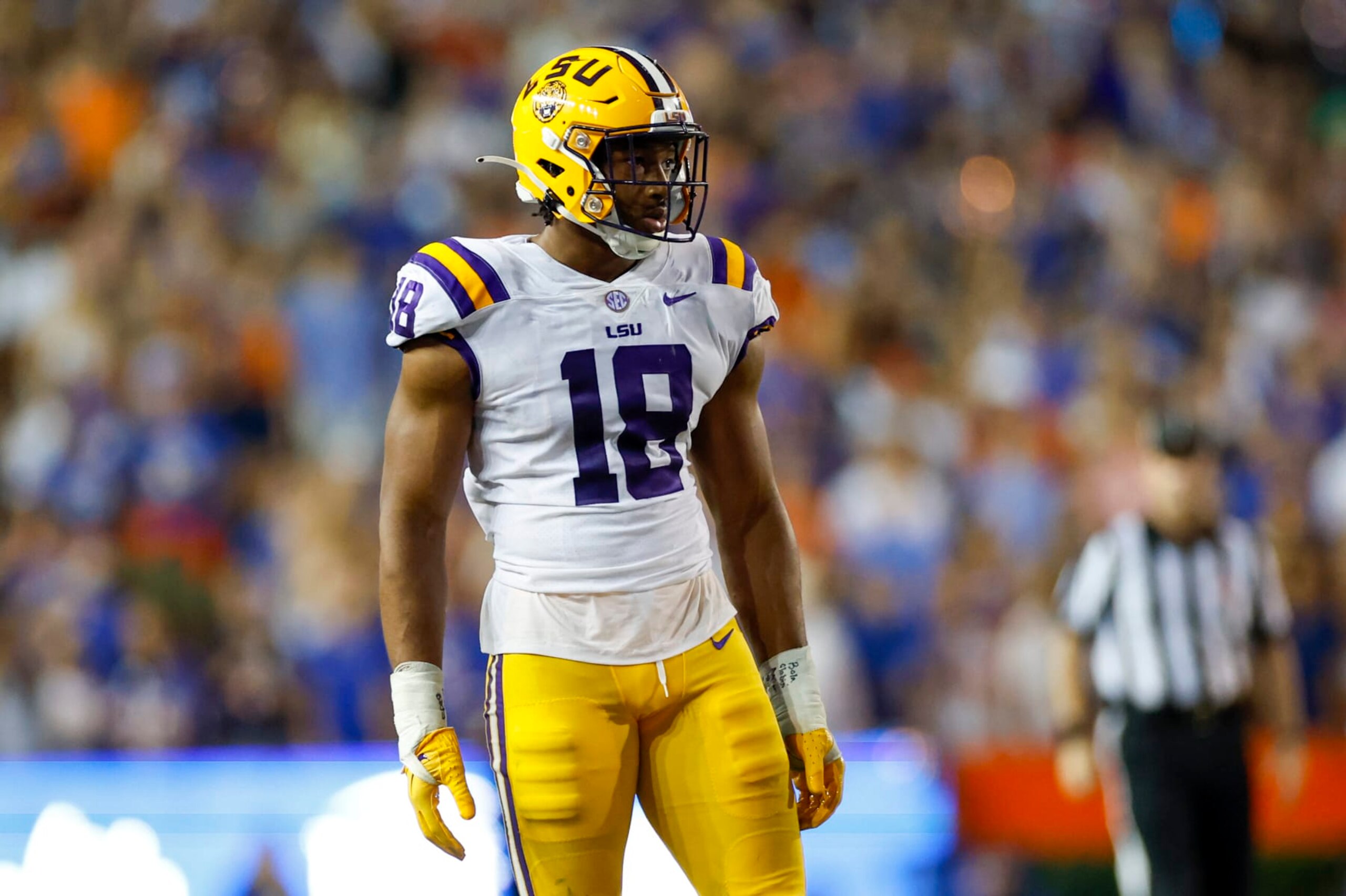
BJ Ojulari, Edge, LSU
Strengths: Deep bag of tricks when rushing passer, quick off the snap, flexible to dip shoulder and get under bigger blockers, excellent lateral agility
Weaknesses: Suboptimal play strength particularly against the run, can be undisciplined with pass-rush assignments, can be stopped in his tracks upon first contact
Size is the only part of BJ Ojulari's game holding him back. The LSU edge-defender is 6'2", 248 pounds and needs to add strength. Otherwise, the rest of Ojulari's skill set is up to snuff. He displays excellent first-step quickness, the bend to shorten the edge and the class' most varied pass-rushing repertoire.
"It's all there. His bend and quickness. I think he's gonna be a star," an anonymous scout told theScore's Jordan Schultz. "He created havoc against quality SEC tackles. Quarterbacks feel his presence."
To the scout's point, Ojulari led the SEC last season with 14 quarterback hits, according to Pro Football Focus. While those hits didn't lead to quite as many sacks–Ojulari finished with 5.5–he was a constant nuisance in opposing backfields. The first-team All-SEC selection did so while dealing with a hamstring injury.
During the previous season, he led all returning defenders with 26 total third-down pressures (just ahead of Alabama's Will Anderson Jr.), per PFF.
Ojulari may not be an ideal fit in every situation, but he has the burst and talent to be a premium pass-rusher.
The Arizona Cardinals are attacking premium positions in this year's draft–which is a smart strategy considering the current state of the rosters (which may be the NFL's worst).
Originally, the Cardinals added Paris Johnson Jr. with the sixth overall pick to likely play right tackle and bookend D.J. Humphries. So, quarterback Kyler Murray got his guy in the first.
New head coach Jonathan Gannon is a former defensive coordinator, and his philosophies fall in line with that of the Philadelphia Eagles. His group needs numerous pass-rushers.
Ojulari joins a promising duo in Myjai Sanders and Cameron Thomas, who are coming off strong rookie campaigns.
Grade: A
42. Green Bay Packers (via New York Jets)
11 of 71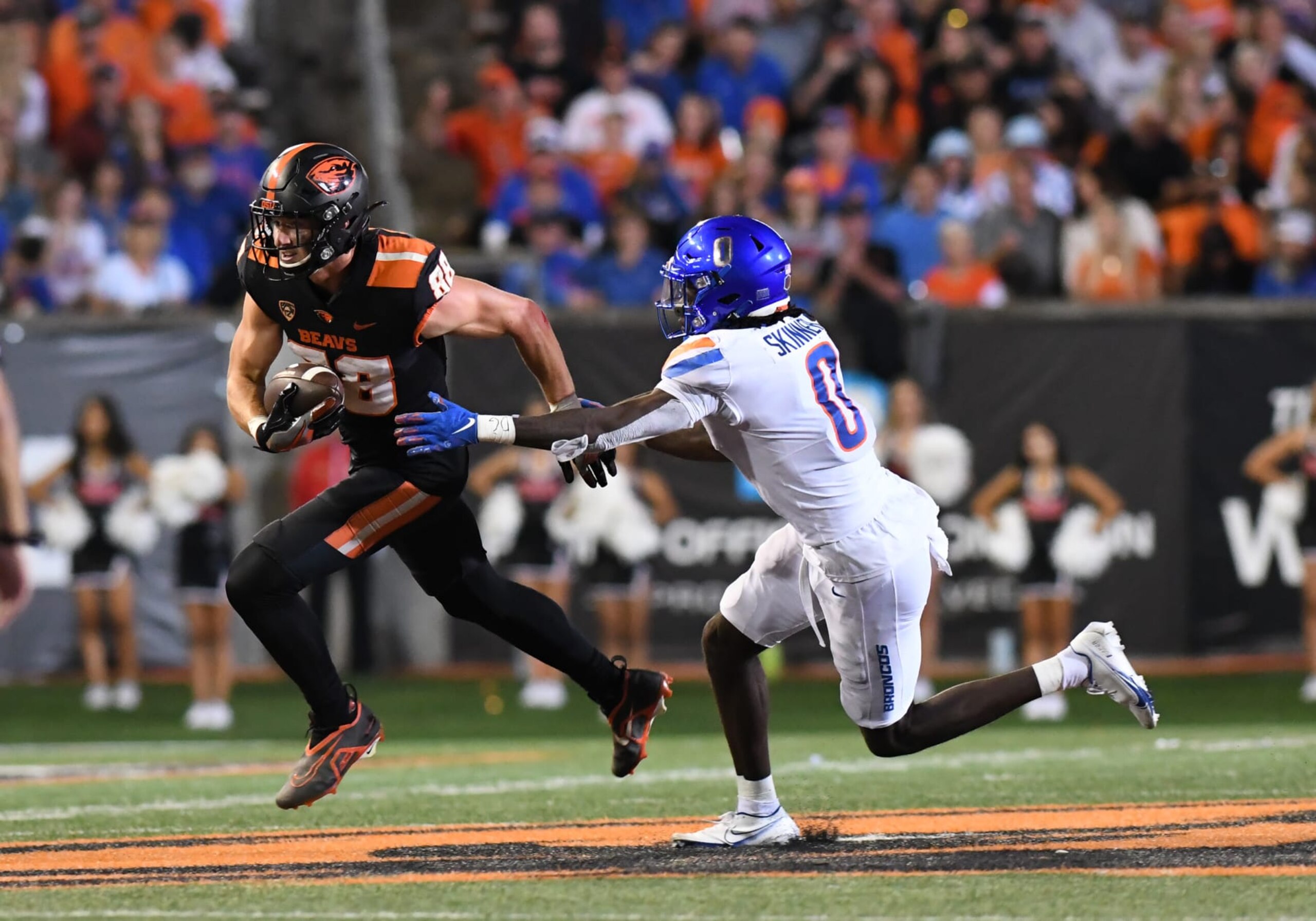
Luke Musgrave, TE, Oregon State
Strengths: Ideal natural traits, stretches the seam, can contribute from multiple alignments
Weaknesses: Not as physical when attacking the ball against defenders, can be rerouted, recent injury history
In a class loaded with tight end talent, Oregon State's Luke Musgrave is in a different class based on how he projects at the next level.
Why? Because he's almost an unknown quantity relative to other highly regarded tight ends.
Musgrave played in 20 collegiate games with 47 career receptions for 633 yards and two touchdowns. This past season, the 6'6", 253-pound target played in only two games because of a knee injury. He's since been cleared and even participated in this year's Senior Bowl
Despite the lack of film from this past year, intrigue surrounding him remains high because Musgrave is an outstanding athlete at the position and has the potential to be a dynamic passing-game weapon. His testing certainly reflected expectations.
The tight end posted a 4.61-second 40-yard dash and 36-inch vertical at the NFL Scouting Combine. His relative athletic score ranked 26th among 1,091 tight ends over the last 37 years, according to Pro Football Network's Kent Lee Platte.
A large and fluid tight end with the capability of creating in the passing game is something every NFL offense wants.
With Robert Tonyan Jr.'s free-agent departure, the Green Bay Packers had a massive void at tight end. While Josiah Deguara remains on the roster, Musgrave is a bigger and more athletic alternative to give Jordan Love an excellent option to work over the middle of the field.
Grade: B
43. New York Jets
12 of 71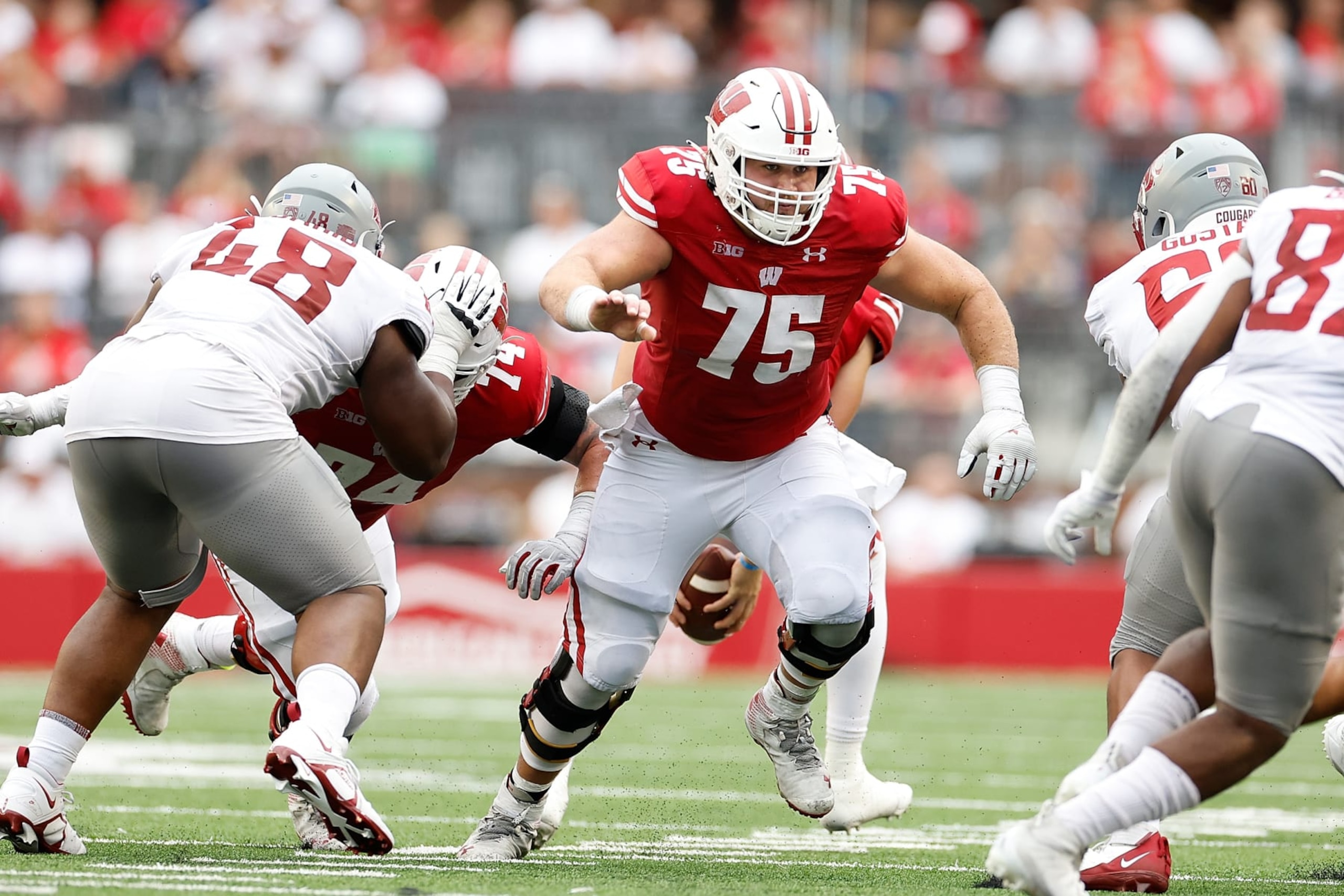
Joe Tippmann, IOL, Wisconsin
Strengths: Thrives as puller and working in space, massive frame, excellent change-of-direction movement, physical blocker
Weaknesses: Hand placement is poor, too often gives up chest, lunges and leans into blocks
Centers aren't built like Wisconsin's Joe Tippman all that often. He's a 6'6", 313-pound pivot. Only the Cleveland Browns' Ethan Pocic is a hair taller among the league's starting snappers. But the athleticism Tippmann displays at that size is truly rare.
The 22-year-old lineman joined the Badgers with full intention of playing offensive tackle. The previous coaching staff recruited him as a tackle but abruptly shifted him over the ball prior to the 2021 campaign.
"I had never played it all," Tippmann said, per Mike Lucas of the Badgers' official site. "There are a lot of differences to just being that close to the defensive linemen. You're the closest one and everything just happens sooner at the center spot. That was a little bit of an adjustment. And I'd say that I'm still adjusting there."
While there are clear differences between the positions, Tippmann's size and athleticism remained the same. He can be weaponized when asked to be a lead blocker and pull into space.
The Pittsburgh Steelers foiled the New York Jets' potential attempt to select an offensive lineman by trading ahead of Gang Green and choosing Georgia's Broderick Jones. General manager Joe Douglas pivoted to edge Will McDonald IV.
But Douglas wasn't deterred and landed Tippmann in the second round. The Wisconsin product automatically upgrades the pivot in both size and athleticism. An interior of Tippman, Laken Tomlinson and Alijah Vera-Tucker gives the Jets an extremely talented trio.
Grade: A
44. Indianapolis Colts (via Atlanta)
13 of 71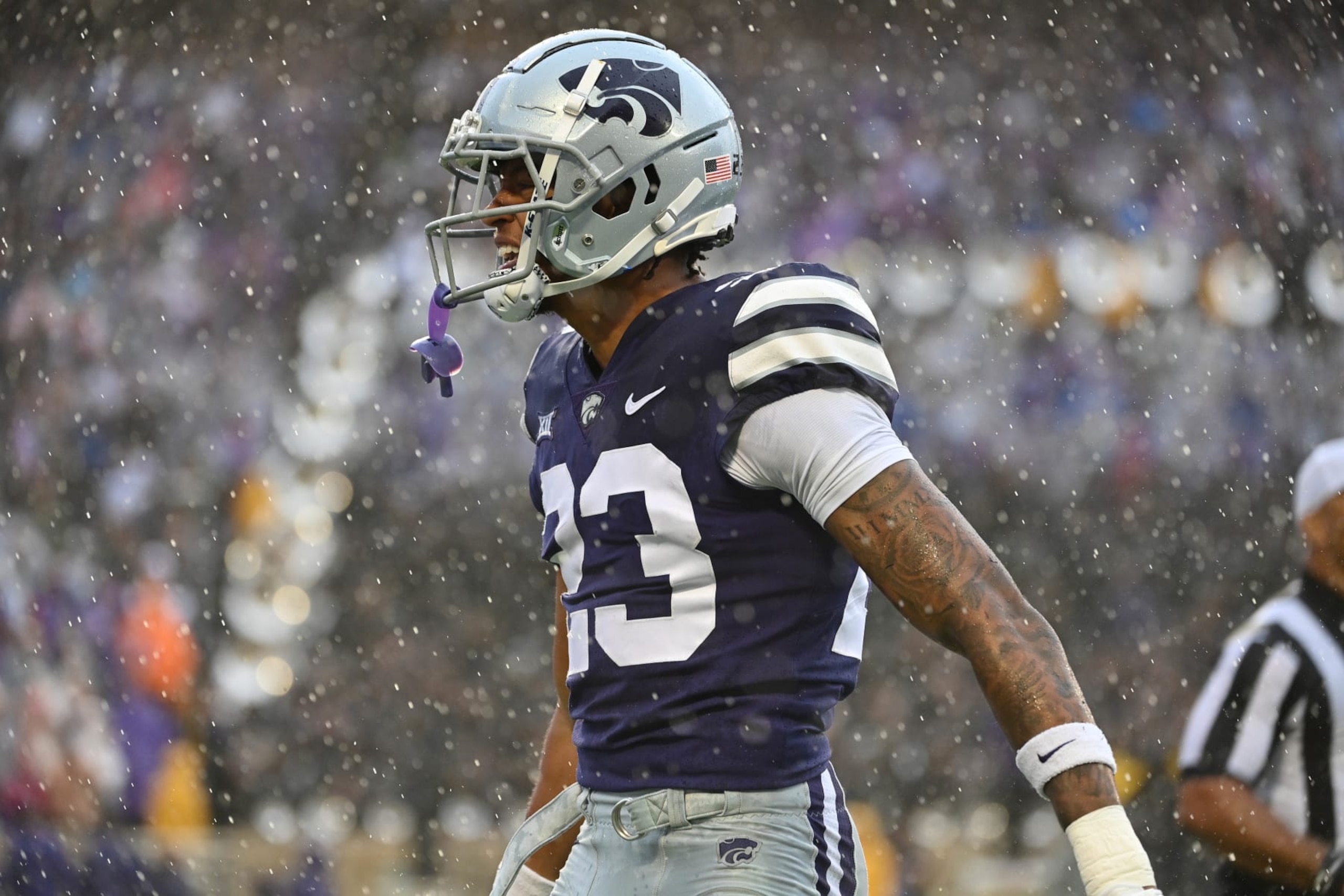
Julius Brents, CB, Kansas State
Strengths: Extremely long and sticky defender, plays through ball-carriers, powerful jam to redirect, experience in man and zone coverages
Weaknesses: Clunky in transition through backpedal and off of breaks, can be caught flat-footed if he misses jam, lacks top gear
A secondary coach can't teach his cornerbacks to be 6'3" with 34-inch arms, a 41.5-inch vertical and a 4.05-second short shuttle. Kansas State's Julius Brents already has these physical traits.
"I make sure guys feel my presence," Brents told the Draft Network's Justin Melo. "I'm here and I'm not going anywhere (laughs). I'm going to be me every single play. I don't take plays off. You're going to feel me every single play.
Brents added, "I also understand how to use my length to my advantage. A lot of receivers aren't used to going up against cornerbacks as long and physical as I am. I let my presence be known. Ultimately, I have a lot of different tools in the toolbox. I'm a bigger guy, but I know how to switch it up as well. I'm not a one-dimensional player."
The Iowa transfer improved each year, and he had a career-high four interceptions and eight defended passes last season.
Indianapolis Colts general manager Chris Ballard worked phone lines, traded down twice in the second round, picked up an extra pair of Day 3 picks and still landed one of the top corners that were available when the team owned the 35th selection.
Brents is an ideal fit in Gus Bradley's system. His tarantula-like length and stickiness are perfect for a scheme inspired by the old Legion of Boom scheme. Furthermore, Ballard drafts yet another prospect with an elite athletic profile. Brents posted the fourth-best relative athletic score for a cornerback of the last 36 years, according to Pro Football Network's Kent Lee Platte.
Grade: A
45. Detroit Lions (via Green Bay)
14 of 71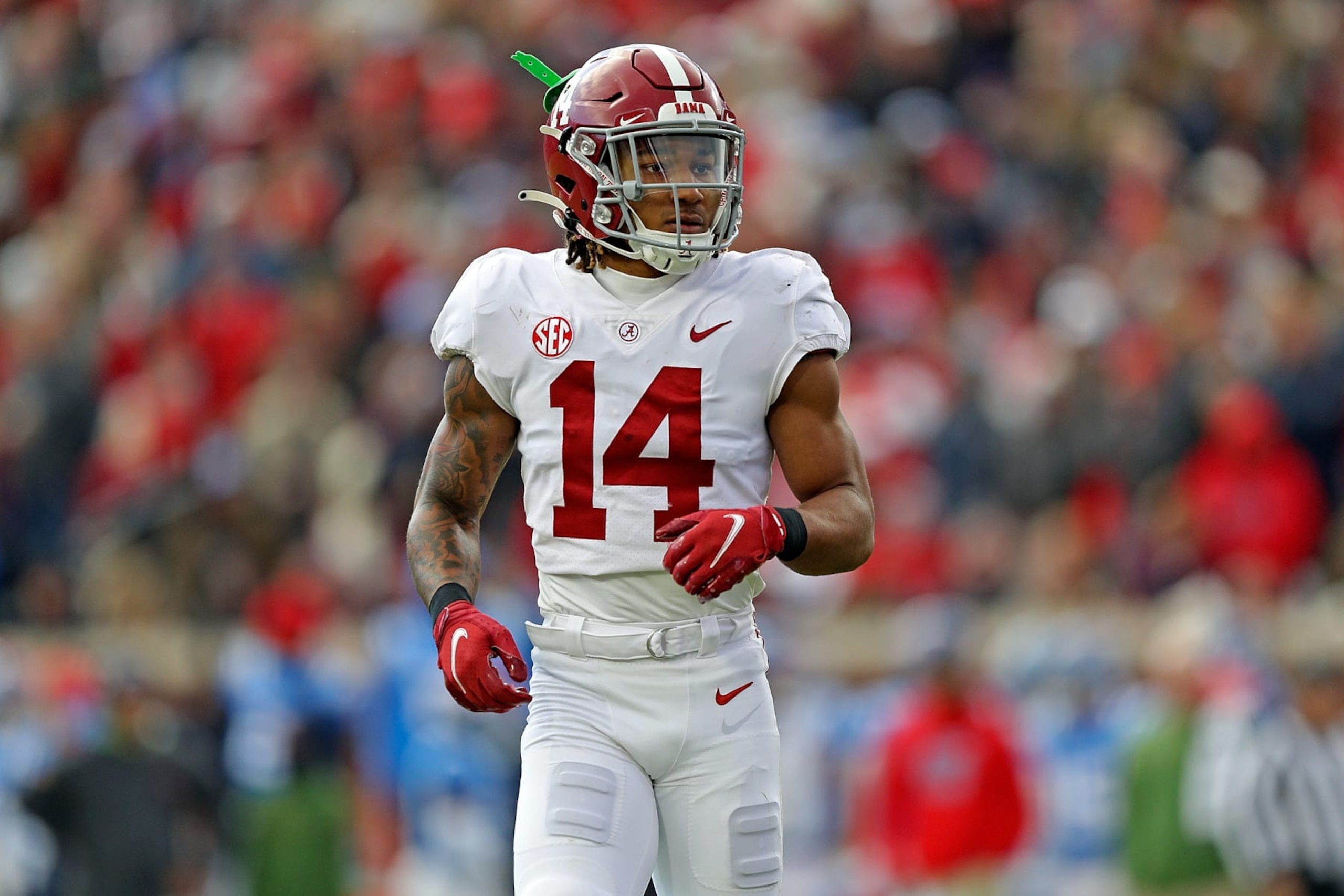
Brian Branch, S, Alabama
Strengths: Hybrid defender, top-notch recognition and trigger, plays good angles, smooth backpedal
Weaknesses: Lacks top gear, poor timing at catchpoint, marginal ball skills
Brian Branch is the best of a bad group of safeties in this year's draft class. Interestingly, he worked out with the cornerbacks at the NFL Scouting Combine.
"I think my versatility is a great selling point in the NFL," the first-team All-American told reporters at the combine. "Letting them know wherever they need me, I can play. Being able to go out there and work at it, I feel like it enhances my game in the long run."
Branch added, "If teams want me to cover the slot receiver, man coverage, I can do that. If a team utilizes me to drop in the zone, I can do that as well and also be back at safety, call the defense and be the quarterback of the defense."
Positionless defenders, particularly those in the secondary, help their unit by cutting down on substitutions. Today's safeties need to do more than simply serving as a traditional free or strong defender.
Instead, a prospect like Branch holds value over others in the class because he can comfortably line up over the slot, play deep third, drop down into the box and even play near the line of scrimmage.
The Detroit Lions already began a secondary overhaul with the additions of free agents Cameron Sutton, Emmanuel Moseley and C.J. Gardner-Johnson. While all three should be considered good additions, they're not enough to completely turn around a bottom-three passing defense.
Branch provides even more flexibility when working alongside Gardner-Johnson since both can start at safety or serve as the primary nickel corner.
Grade: A
46. New England Patriots
15 of 71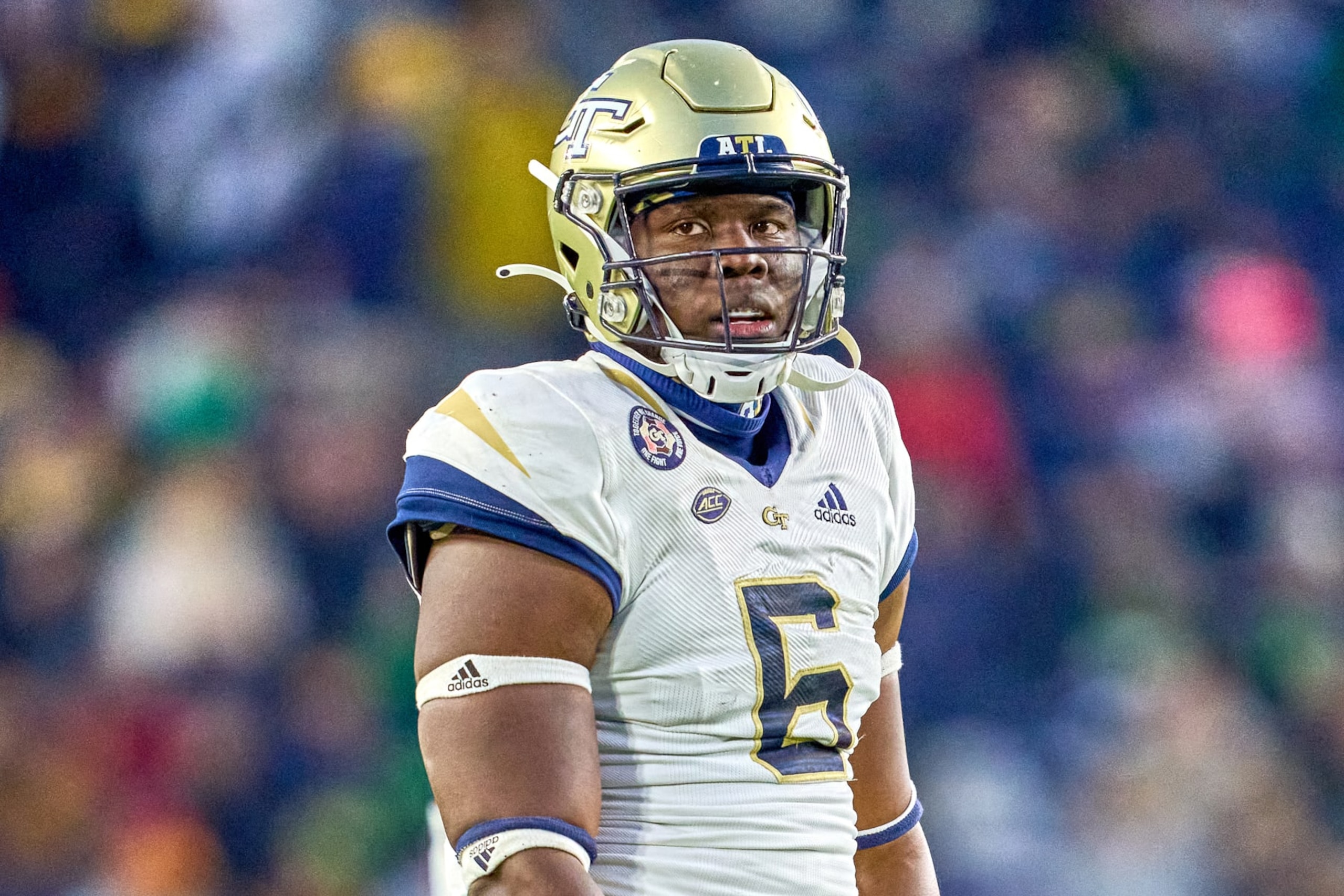
Keion White, Edge, Georgia Tech
Strengths: Big, strong athlete, gets into blocks to control opposing lineman then violently sheds them, better-than-expected bend for bigger end
Weaknesses: Consistency with technique in all areas: hand placement, not keeping a wide base and pad level, older prospect (24)
Football almost wasn't in Keion White's future. According to the Atlanta Journal-Constitution's Ken Sugiura, White nearly joined the military until a late scholarship offer came from Old Dominion.
The 6'5", 285-pound edge-defender spent four seasons with the Monarchs. After beginning his career as a tight end, he broke out in 2019 with 19 tackles for loss before the COVID-19 pandemic shut down the following season.
A transfer to Georgia Tech allowed the sixth-year senior to shine against a higher level of competition. White, who's an ideal athlete for the position with 34-inch arms, registered 14 tackles for loss and 7.5 sacks this past year and earned third-team All-ACC honors.
"For me, I feel like at this point, I'm playing with house money," White said, per Sugiura. "First round, second round, third round, I don't care. Just to have the opportunity because I was so close to not playing college football is big for me."
White fits the profile of what the New England Patriots like for their defensive line. He's big and rugged. He can rush off the edge, play a tighter 5-technique or reduce down in sub-packages. With Matthew Judon and now White working off the edge, the Patriots have the length to truly disrupt the rhythm of opposing quarterbacks while consistently setting the edges.
Grade: B
47. Washington Commanders
16 of 71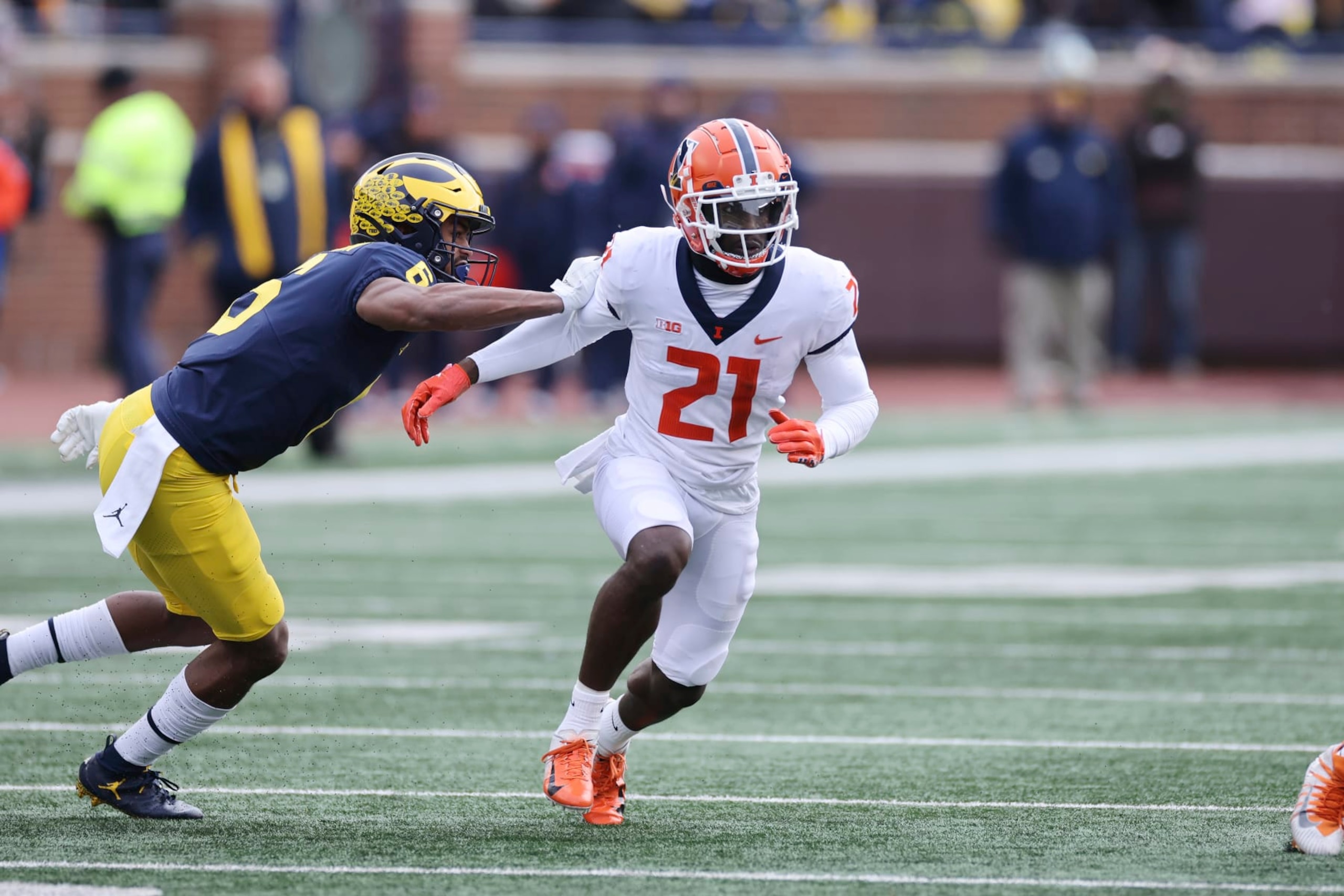
Jartavius Martin, S, Illinois
Strengths: Versatile, explosive athlete, history as corner shows up in coverage, backline range
Weaknesses: Questionable play strength, needs to play with better angles on routes/ball-carriers
Safety prospects must possess two vital traits to excel in today's NFL: versatility and ball skills. NFL teams are looking for positionless defenders who won't be exposed or forced to come off the field in certain sub-packages. Teams also want prospects who can create turnovers and provide the offense with more opportunities.
Illinois' Jartavius Martin didn't receive as much recognition as his teammate, Sydney Brown, but his game should translate well to the NFL.
The second-team All-Big Ten defensive back finished first among safeties in hand-on-ball percentage (2.2 percent) and second in percentage of snaps in the slot (64 percent), according to Sports Info Solutions (h/t the Washington Post's Nicki Jhabvala).
Clearly, the Washington Commanders have 1) prioritized upgrades to their secondary and 2) targeted very specific talents.
With the selection of Emmanuel Forbes in the first round, the team went against the consensus for someone the organization thinks best fits the system. Brian Branch, who was the class' top safety prospect, came off the board two picks earlier. Still, the Commanders stuck at safety and chose Martin.
Despite a top-four pass defense last season, Washington understood it could still upgrade portions of the roster.
Grade: C
48. Tampa Bay Buccaneers (via Green Bay)
17 of 71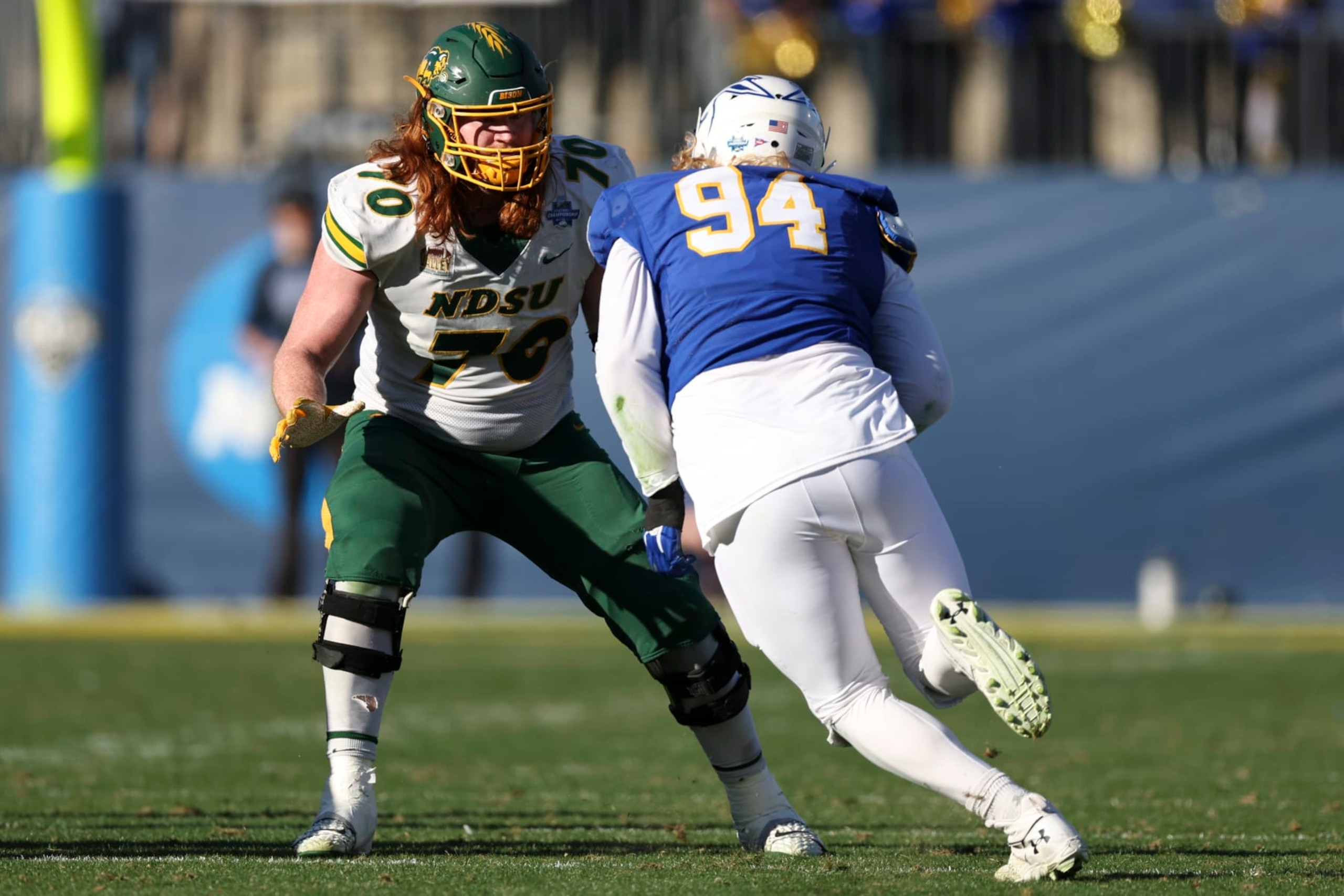
Cody Mauch, IOL, North Dakota State
Strengths: Adept drive-blocker, top-notch play strength and finisher, moves well to second level and out in space
Weaknesses: Few true pass sets based on Bison's system, overall pass protection needs polish, lacks length
Whether it's Cody Mauch's flowing red locks, front-toothless grin or five-position versatility, all of these things comprise maybe the most unique individual in this year's draft class.
Mauch entered the Bison program as a 221-pound tight end and left as the FCS' top offensive lineman. He had fun while doing it, too. "You're kicking these guys' butts and then talking to them about their uncle and farming," former teammate Jake Kava told ESPN's Adam Rittenberg. "I think we were playing [Northern Iowa] and he's talking about egg science with their D-tackle. We'd get home and he would tell me, 'We were talking about the new combine from John Deere.'"
The consensus FCS All-American started games at left and right tackle. He has experience at guard. At the Senior Bowl, Mauch made a smooth transition over the ball. He projects as a plus-starter in any of the offensive line spots.
The Tampa Bay Buccaneers selection of Mauch is fascinating.
Where will he play? The FCS product can line up at all five positions. He primarily served as a left tackle in college, and the Bucs do need to replace Donovan Smith. Maybe Tristan Wirfs flips from right to left tackle, and Mauch takes over at one of the guard spots, as he could easily start at left guard.
Whatever the case, Tampa Bay adds yet another nasty blocker to go along with Wrifs and Ryan Jensen.
Grade: A
49. Pittsburgh Steelers
18 of 71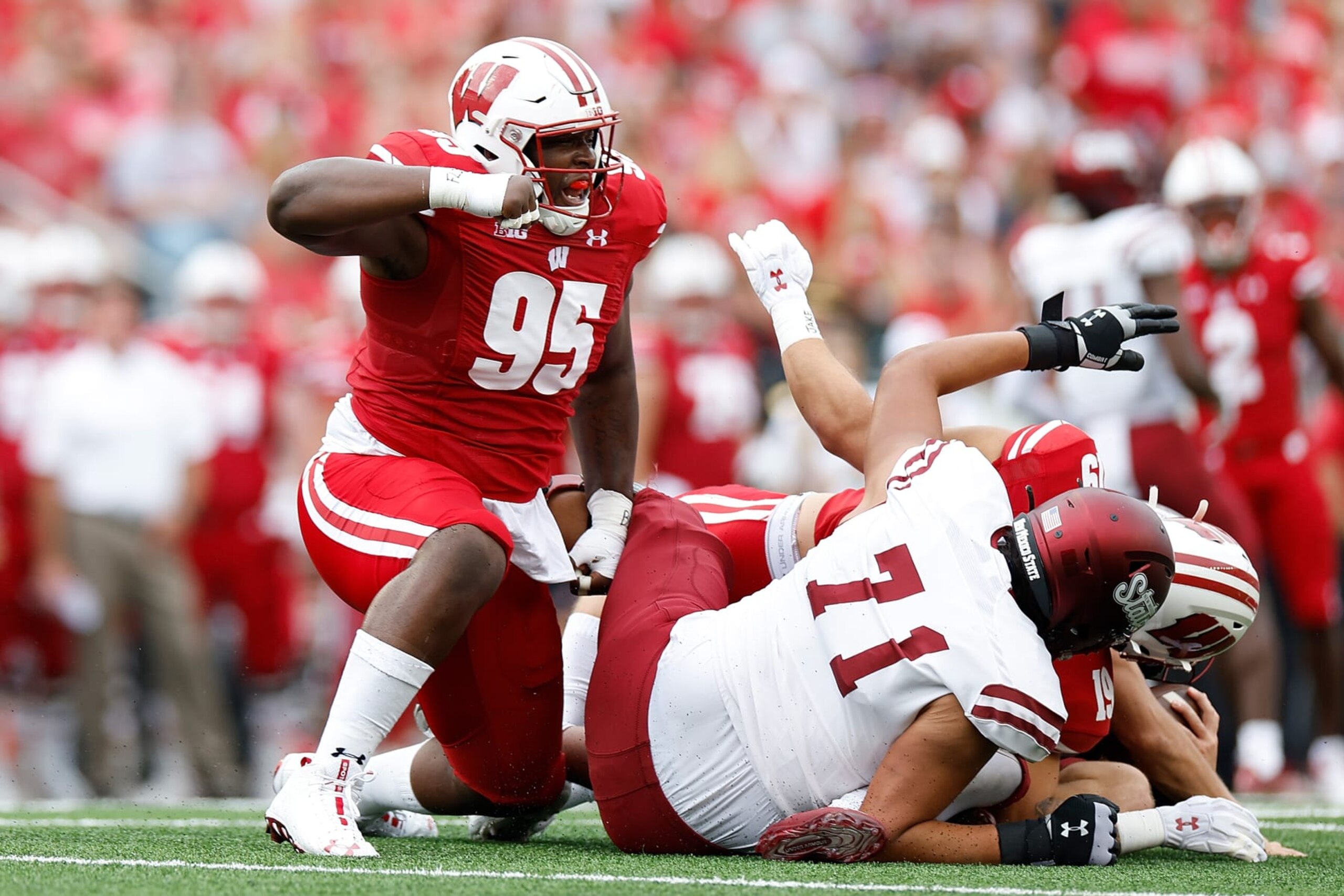
Keeanu Benton, DL, Wisconsin
Strengths: Powerful at the point of attack with strong base, can get upfield with quick move off snap, uses long arms to get into throwing lanes
Weaknesses: Developmental pass-rusher, hand usage must improve, needs to consistently shed blocks if he doesn't automatically win rep
This year's Senior Bowl shed a different light on Wisconsin's Keeanu Benton as a prospect.
In four seasons with the Badgers, Benton registered nine sacks. Though he set a career high with 4.5 last season, the 6'4", 309-pound defender was mostly viewed as a pure nose tackle.
His upfield explosiveness came to light when asked to one-gap and penetrate as part of the all-star festivities. So much so that Benton shouldn't be viewed as just an option over the center. He has the quickness and disruptive traits to play 3-technique too.
First and foremost, Benton is a stout run defender capable of holding the point of attack, thus allowing those around him to flow to the football. He's powerful and has long levers to reset the line of scrimmage.
On top of his defined skill set, he clearly has the potential to be an every-down defensive tackle who doesn't need to be replaced in sub-packages, as long as his development continues.
The Pittsburgh Steelers are systematically going about their business by filling areas of need with excellent values.
First, the team added left tackle Broderick Jones to complete their offensive line after offseason additions of Isaac Seumalo and Nate Herbig. Then the team added Joey Porter Jr. to start at one outside corner after the free-agent loss of Cameron Sutton. Now, Benton is exactly the type of nose tackle the Steelers' vaunted defense has lacked for years.
Benton already played in heavy three-man fronts in Wisconsin's scheme. His transition to the Steelers' system should be seamless.
Grade: A
50. Green Bay Packers (via Tampa Bay)
19 of 71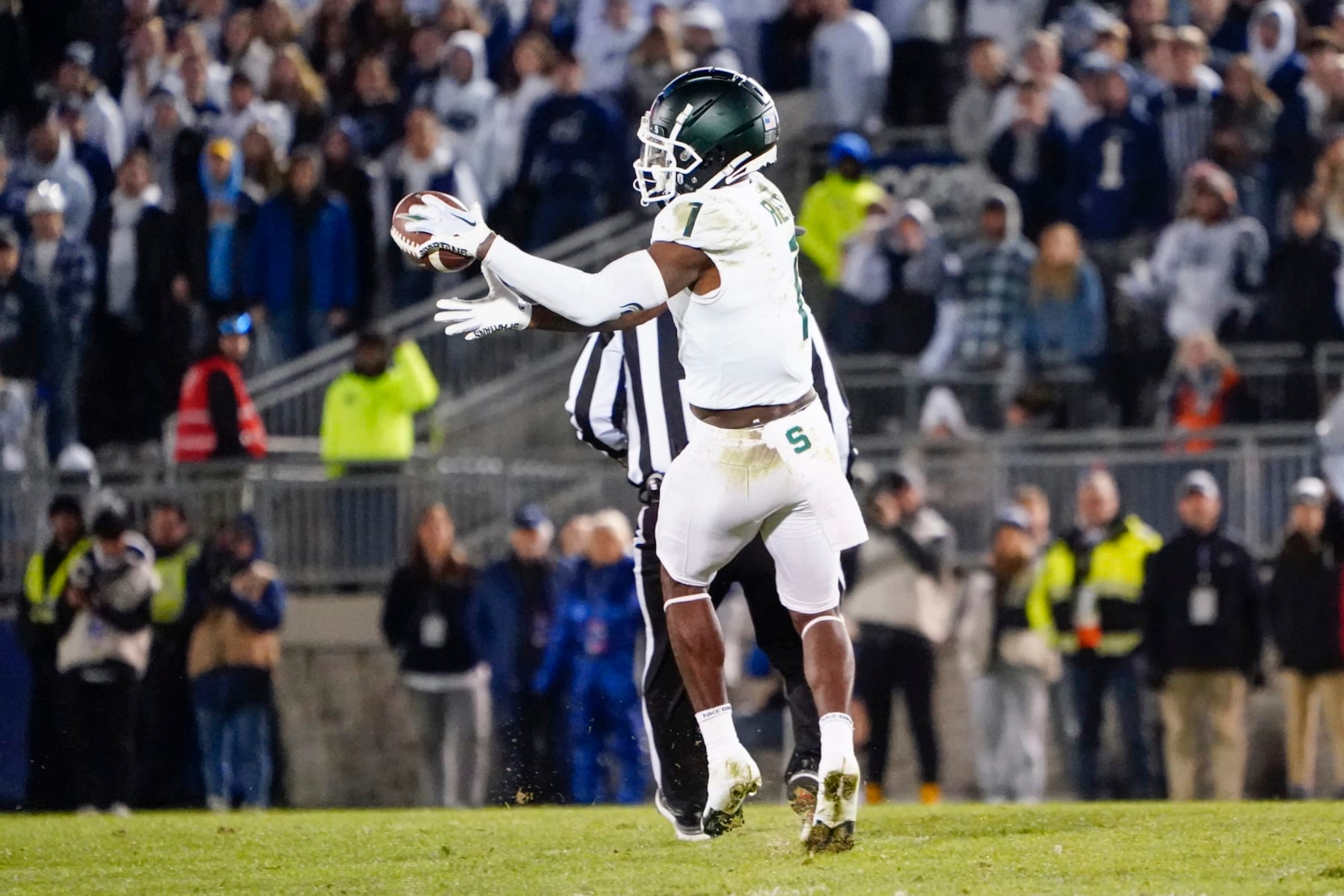
Jayden Reed, WR, Michigan State
Strengths: Deep threat, excellent ball-tracker, crafty hand placement for targets, ace returner
Weaknesses: More of a straight-line athlete than a polished route-runner, doesn't have size or play strength to consistently grab contested passes
Jayden Reed's 1,026-yard performance during the 2021 campaign is the only time a Michigan State receiver eclipsed 1,000 yards in the last seven seasons. He's one of only eight Spartans to break the barrier, and his 59 receptions to do so are the fewest among those who did.
Reed has enough deep speed (4.45-second 40-yard dash) to stack cornerbacks and serve as a vertical threat. He also showed the competitiveness to go up and get the football even as a smaller target (5'11", 187 lbs) with a surprisingly poor vertical (33.5 inches).
"Me, personally, I love the deep ball," Reed told the Draft Network's Justin Melo. "I enjoy executing a play that allows me to showcase my deep speed. I love making contested catches. You can't go wrong with a fade route or a post route."
The 22-year-old can play all three receiver spots and double as a dynamic returner.
Somewhere, Aaron Rodgers sighs. After years of the Packers seemingly avoiding the addition of multiple assets among the skill positions, the team already drafted a tight end and wide receiver to start Day 2 of their 2023 class.
Oregon State's Luke Musgrave gives the Packers offense a legitimate threat over the middle of the field. Reed provides another vertical option.
Christian Watson blossomed as his rookie season progressed. He must now step up as a true WR1 in his second campaign, whereas Reed can serve as a complementary open and stretch the field for quarterback Jordan Love.
Romeo Doubs gives the team a really nice, young trio of targets.
Grade: B
51. Miami Dolphins
20 of 71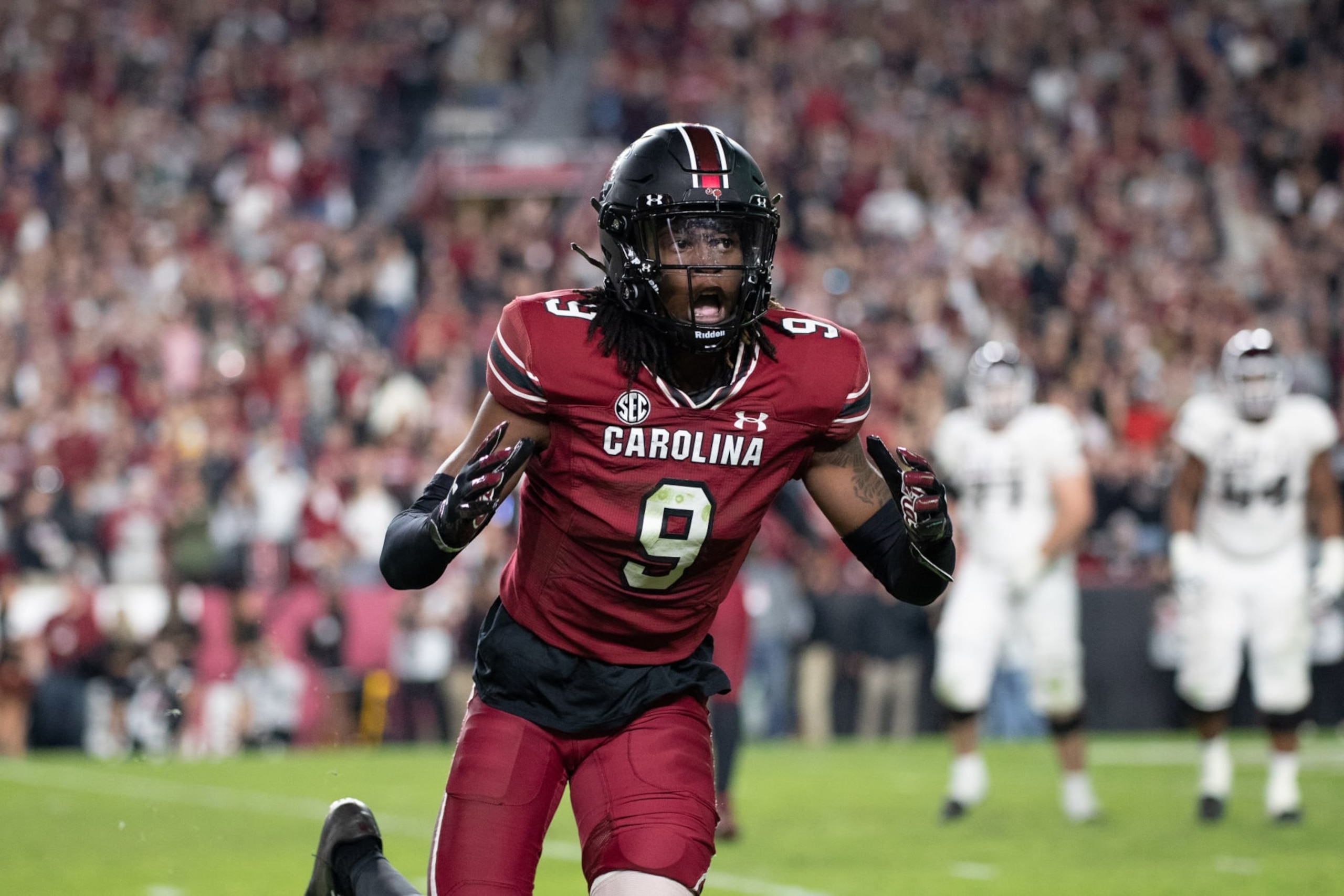
Cam Smith, CB, South Carolina
Strengths: Fluid defender in and out of backpedal and breaks, good ball skills, sets edge despite slender frame
Weaknesses: Doesn't always trust his technique, tendency to be overly physical down the field
The 2022 campaign didn't go exactly how South Carolina's Cam Smith likely wanted.
He suffered a concussion early in the season that prevented him from playing against the Georgia Bulldogs. As a result, he had a slow start to his final year on campus. Ultimately, the talented cover corner still declared for the draft with a season of eligibility remaining.
Entering the year, Smith was generally considered a first-round talent. After all, he was the nation's highest-graded returning defender entering last season, per Pro Football Focus.
While his injury history (including foot surgery in 2021) knocked the corner slightly, Smith remains an extremely talented defensive back with the capability of playing in heavy man or zone schemes, plus the versatility to line up outside the numbers or over the slot. The 6'1" defender is also an excellent athlete with 4.43-second 40-yard-dash speed and a 38-inch vertical.
The Miami Dolphins simply can't have too many cornerbacks. After releasing Byron Jones, the team traded for Jalen Ramsey. Smith is another long and athletic corner.
Interestingly, Smith spent last spring working as the Gamecocks' nickel before bumping back out to outside corner. The incoming rookie can make the switch permanent, with Ramsey and Xavien Howard primarily working on the outside.
Grade: C
52. Seattle Seahawks
21 of 71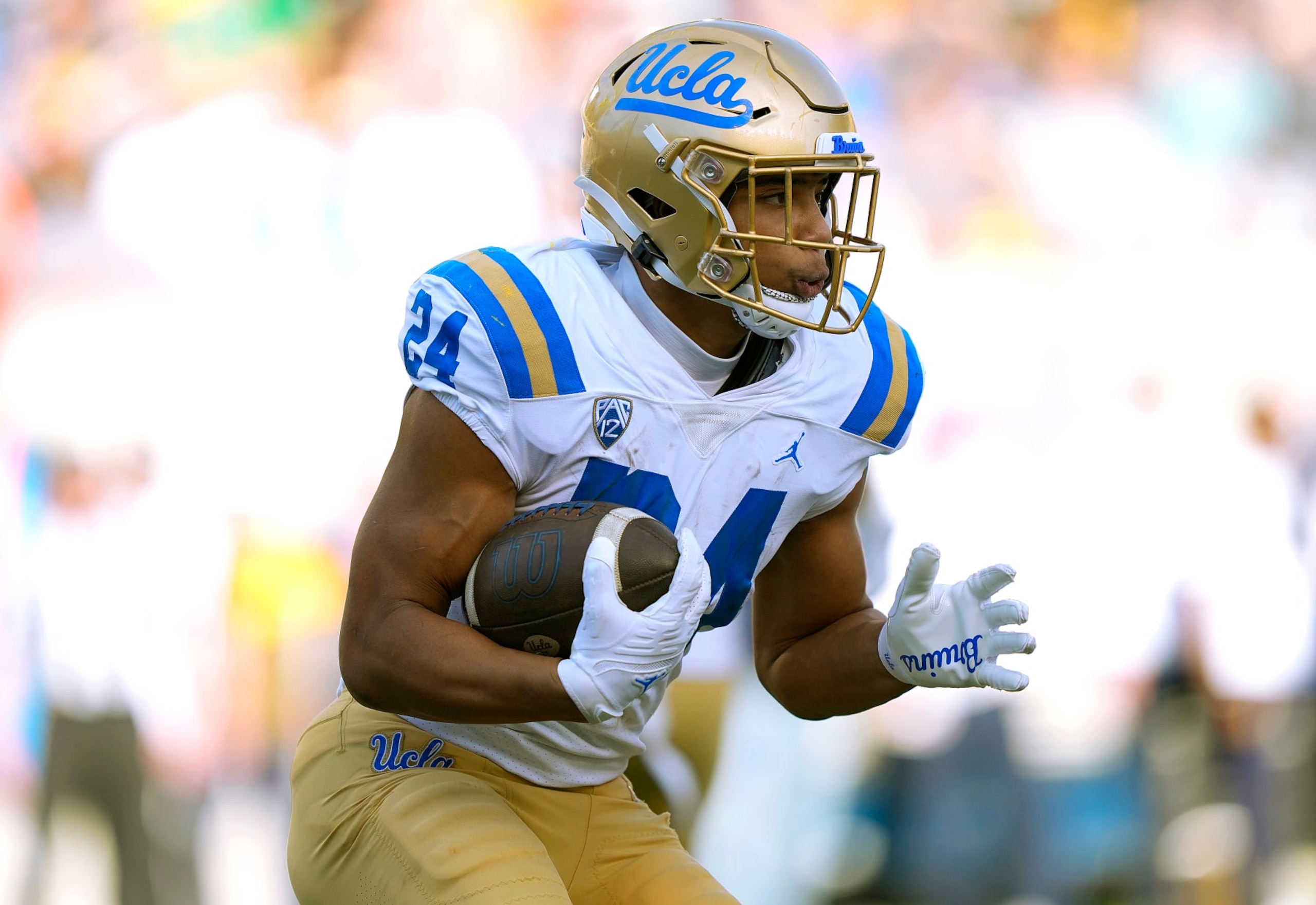
Zach Charbonnet, RB, UCLA
Strengths: Good balance and power to fight through traffic and explode for big plays, plants his foot and goes, soft hands
Weaknesses: Bit of an upright, stiff runner, inexperienced as pass protector and with running full route tree
A team doesn't need to invest in an elite running prospect to garner a primary back. UCLA's Zach Charbonnet pieced together two excellent seasons after transferring from Michigan. During that stretch, he carried the ball 398 times for 2,496 yards and 27 touchdowns.
The back added 61 receptions for 518 yards.
Upon closer inspection, Charbonnet proved to be particularly effective on early downs. According to Sports Info Solutions (h/t The Athletic's Nate Tice), the first-team All-American posted the third-best success rate on early downs and best overall first-down rush rate.
Charbonnet isn't as fluid as other backs in this class, but he's a slashing runner who makes decisive cuts and runs through attempted tackles. Going into last season, the Bruin posted the second-highest percentage of missed tackles forced by a Pac-12 running back since the start of the 2016 campaign, per Pro Football Focus.
Again, the Seattle Seahawks are going back to what they know best.
The selections of cornerback Devon Witherspoon and edge-rusher Derick Hall certainly signaled this approach. However, Charbonnet's addition shows how much head coach Pete Carroll and general manager John Schneider believe in their formula.
Kenneth Walker III eclipsed 1,000 rushing yards as a rookie. The team could have viewed him as its workhorse. Instead the game isn't played quite the same way when Marshawn Lynch made the earth move. Charbonnet is a further commitment to playing a physical style of football and leaning on the ground game, even with Geno Smith's return to the lineup.
Grade: B
53. Chicago Bears (via Baltimore)
22 of 71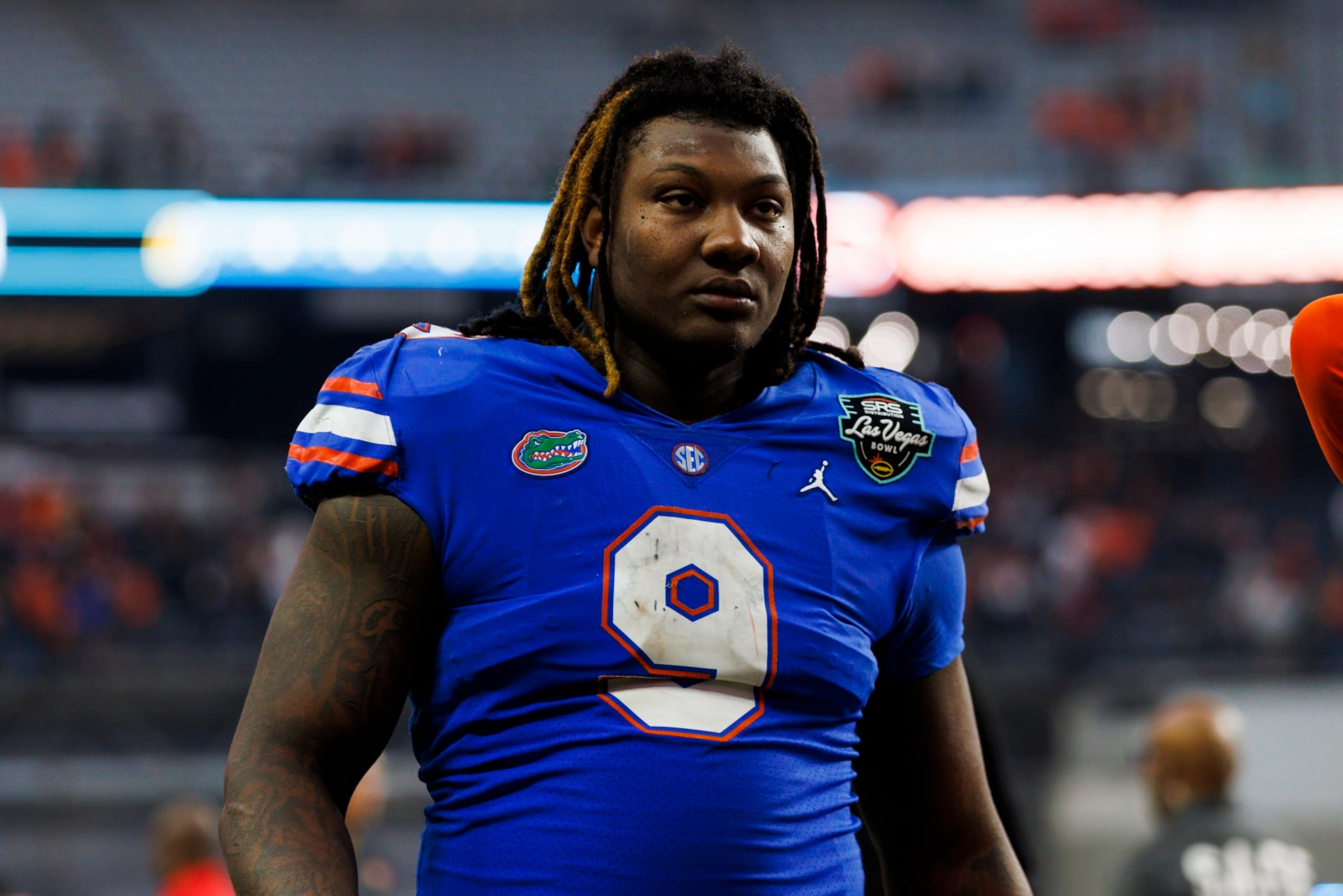
Gervon Dexter Sr., DL, Florida
Strengths: Long and strong and uses both traits against the run, bull-rusher to overpower interior blockers, sheds and hustles when fresh
Weaknesses: Subpar first-step quickness, tendency to play too high, limited pass-rusher, inconsistent motor
Athletes like Florida's Gevon Dexter Sr. typically aren't found playing nose tackle.
The 6'6", 310-pound defensive lineman is a former 5-star recruit, a high school basketball player and a state qualifier in discus. According to The Athletic's Bruce Feldman, Dexter benched 425 pounds and squatted 655 pounds going into his final season on campus.
At the NFL Scouting Combine, Dexter pieced together an exceptional workout with a 4.88-second 40-yard dash, 31-inch vertical and 9'2" broad jump. He was the only defensive lineman at 310 pounds or heavier to reach the latter two numbers.
During the 2021 campaign, Gervon tied for second among SEC defensive tackles with 29 stops, per Pro Football Focus. The 21-year-old's length is an issue for centers.
Here's the problem: All of those impressive traits don't translate on a down-by-down basis.
Chicago Bears general manager Ryan Poles decided his team needed to get bigger and more physical in the trenches. The first-round selection of Darnell Wright gives the team a tone-setter on offense. Dexter has the chance to immediately become the spearhead of the defense at 1-technique.
Last year, Poles addressed the secondary in the draft. The team signed Tremaine Edmunds in free agency to provide a field general at middle linebacker. Dexter can now control the middle of the line of scrimmage as long as he reaches his full potential.
Grade: B
54. Los Angeles Chargers
23 of 71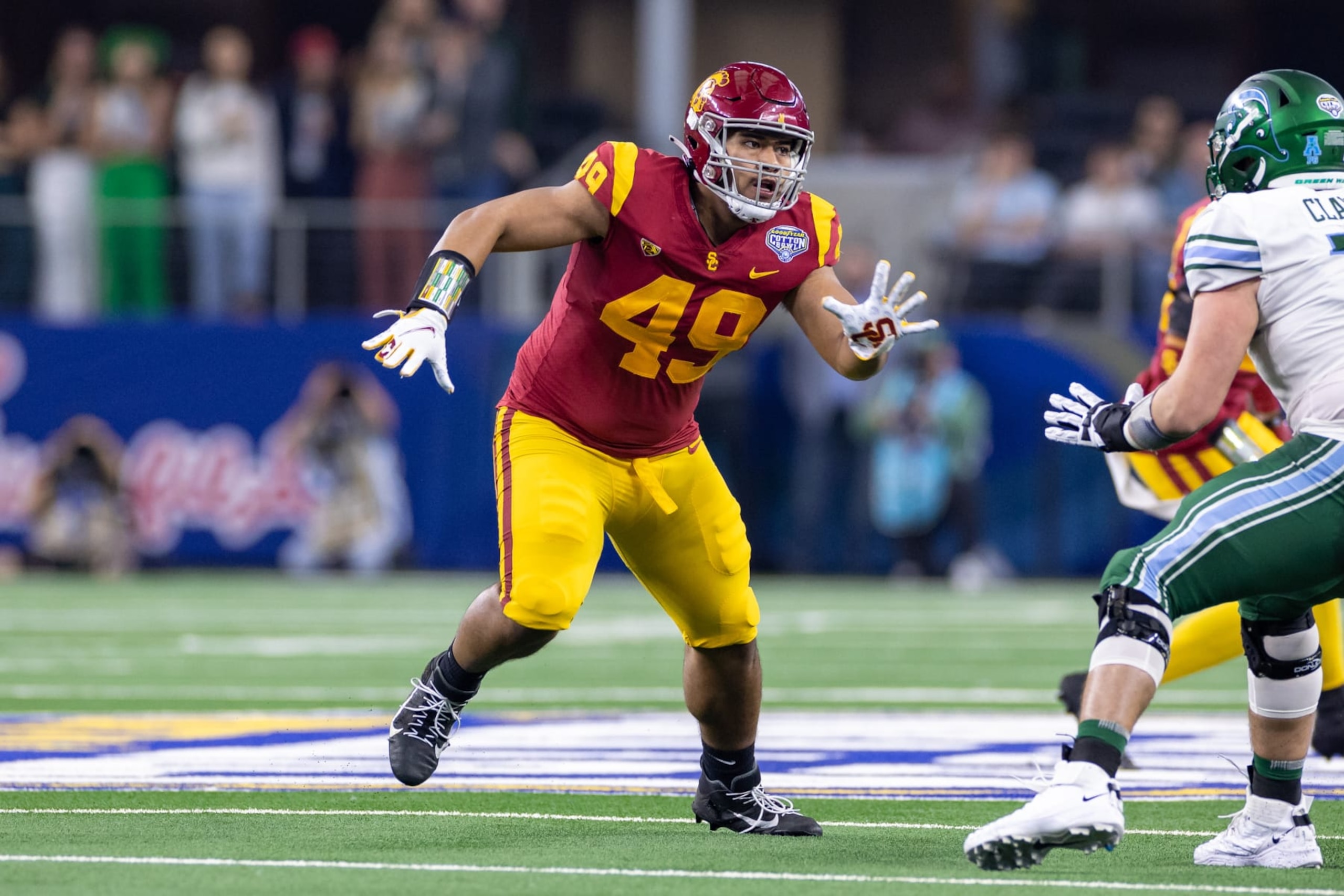
Tuli Tuipulotu, Edge, USC
Strengths: Plays up and down the line of scrimmage, upward trajectory with consistent improvement, attacks blockers with pass-rush plan
Weaknesses: Lacks length for an edge, struggles against the run with technique and recognition
In one of the more bizarre twists of this draft cycle, USC's Tuli Tuipulotu entered this season as a potential first-round edge, looked more like an interior defender, balled out and then showed up at the NFL Scouting Combine as a true defensive end.
The Trojans' official site listed the unanimous All-American at 290 pounds. Tuipulotu thrived when he reduced down over the interior. But he weighed a surprising 266 pounds in Indianapolis. His preference seems obvious.
"I feel like I can play whatever position," Tuipulotu told reporters. "Putting on weight, going back inside. Slimming down, going back outside. I'll play whatever. But I have a lot of experience on the edge. That's the position I played the most during college."
The reigning Pat Tillman Defensive Player of the Year can still be used in a variety of manners, though the picture is clearer today about his natural position.
The Los Angeles Chargers spent a significant amount of time and assets last offseason to address their defensive front so they wouldn't be nearly as soft at the point of attack as they were previously.
The group is still a work in progress. Tuipulotu can start as a base end or 4i-technique then reduce inside to provide quality reps along the interior.
Grade: C+
55. Kansas City Chiefs (via Detroit)
24 of 71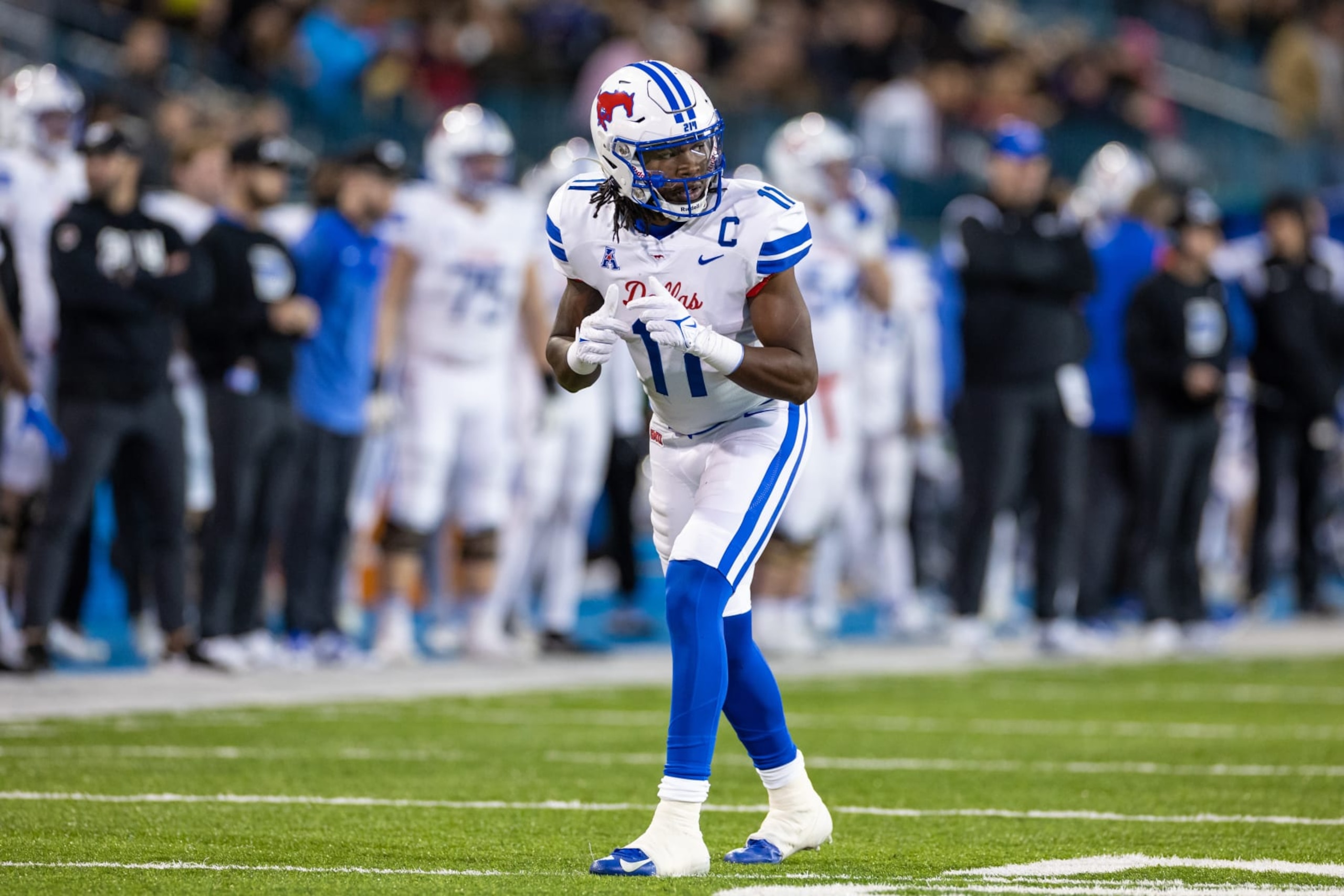
Rashee Rice, WR, SMU
Strengths: Strong hands, good initial quickness to separate, capable of playing in multiple alignments, plays through defenders to create after catch
Weaknesses: Limited route tree, lacks top gear, more of a straight-line athlete
SMU's Rashee Rice is simultaneously a product of his collegiate system and a quality target with impressive traits.
"I've just been working on my technique, to be honest," Rice told CBS Sports' Garrett Podell. "What [NFL teams] want to see the most out of me is running double-move routes, opening up my route tree because we were an Air Raid offense."
Last season, Rice finished among the top five nationwide with 96 receptions and 1,355 receiving yards. His production wasn't entirely due to SMU's system, though.
The 6'1", 204-pound receiver displays strong hands to pluck the ball away from his frame, and he's an excellent athlete with a top-three 10-yard split (1.49 seconds) and top-ranked vertical (41 inches) among the wide receivers at the combine.
The Kansas City Chiefs lost JuJu Smith-Schuster and Mecole Hardman in free agency.
The team still features Marquez Valdes-Scantling, Skyy Moore and Kadarius Toney. More is definitely expected from the latter two. But the Chiefs always make sure to replenish Patrick Mahomes' weapons, and they're not leaving themselves open to the possibility of Moore and Toney not improving to expected levels.
Rice is yet another dangerous weapon to use as part of the rotation, and he might have the class' strongest hands among wide receivers.
Grade: B
56. Chicago Bears (via Jacksonville)
25 of 71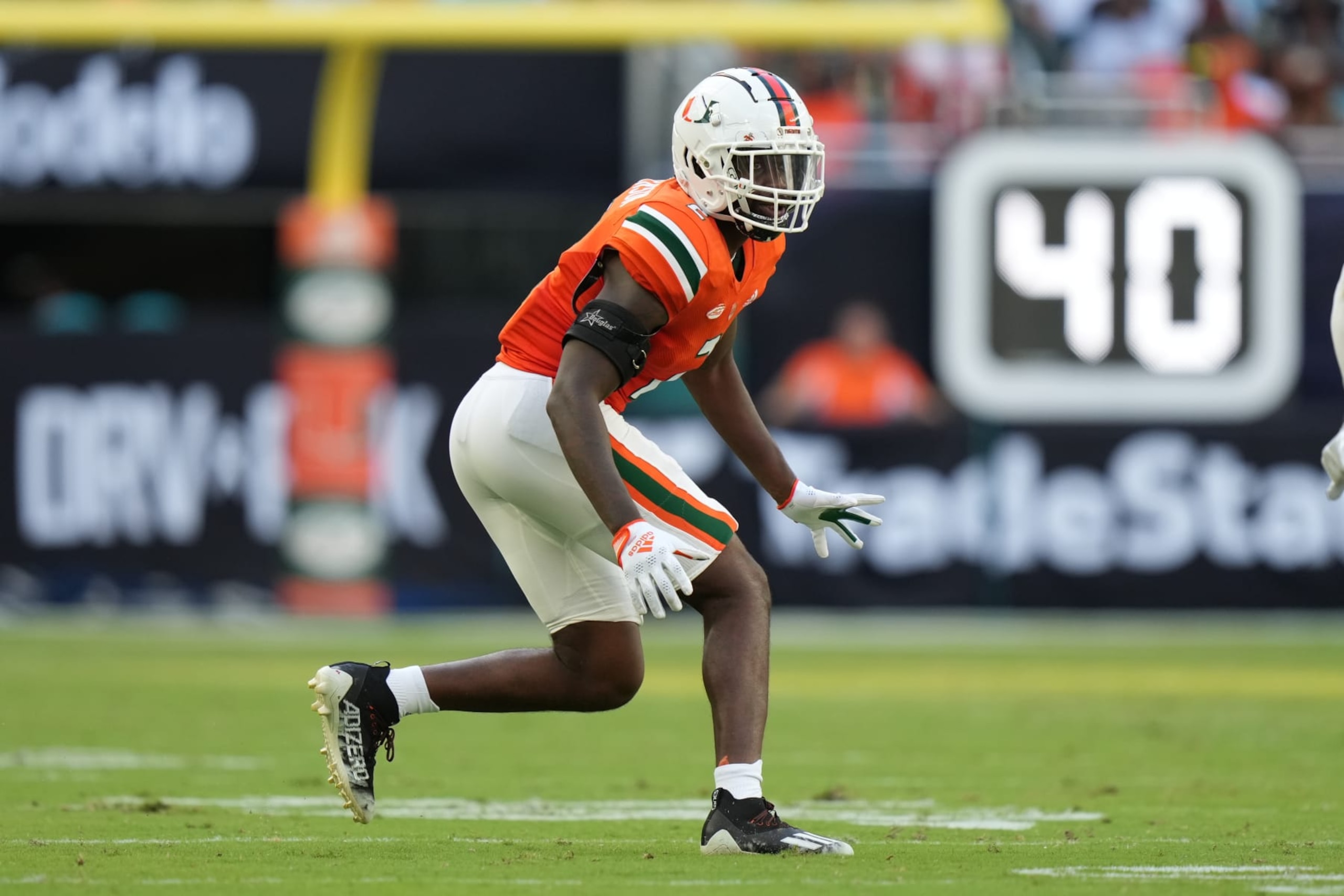
Tyrique Stevenson, CB, Miami
Strengths: Big, physical corner to reroute receivers, plays through the catch point, can get up to challenge receivers in the air
Weaknesses: Poor transition through backpedal, looks lost at times in zone coverage
The ability to press and reroute wide receivers is as important as ever in the NFL. That makes prospects like Miami cornerback Tyrique Stevenson more valuable thanks to his size (6'0", 209 lbs), length (32 5/8-inch arms) and man-coverage skills.
"I feel comfortable playing in multiple schemes. I do love playing man coverage, though." Stevenson told The Draft Network's Justin Melo. "We played a lot of man coverage at Miami. We felt like we could match up with anybody. We thought we could run with everybody and I agreed with that assessment. We played a lot of man coverage."
Some of the bigger, more physical corners in this year's draft class are lacking with regard to their lateral movement, and Stevenson is no exception. He tested poorly in both the short shuttle (4.41-seconds) and three-cone drill (7.09 seconds) at the combine.
While the Bears previously concentrated on their offensive and defensive lines, Chicago gives itself a quality defensive back.
With Jaylon Johnson and Kyler Gordon already in tow, Stevenson can step in as the team's third cornerback and provide the depth needed in a secondary.
Grade: C+
57. New York Giants
26 of 71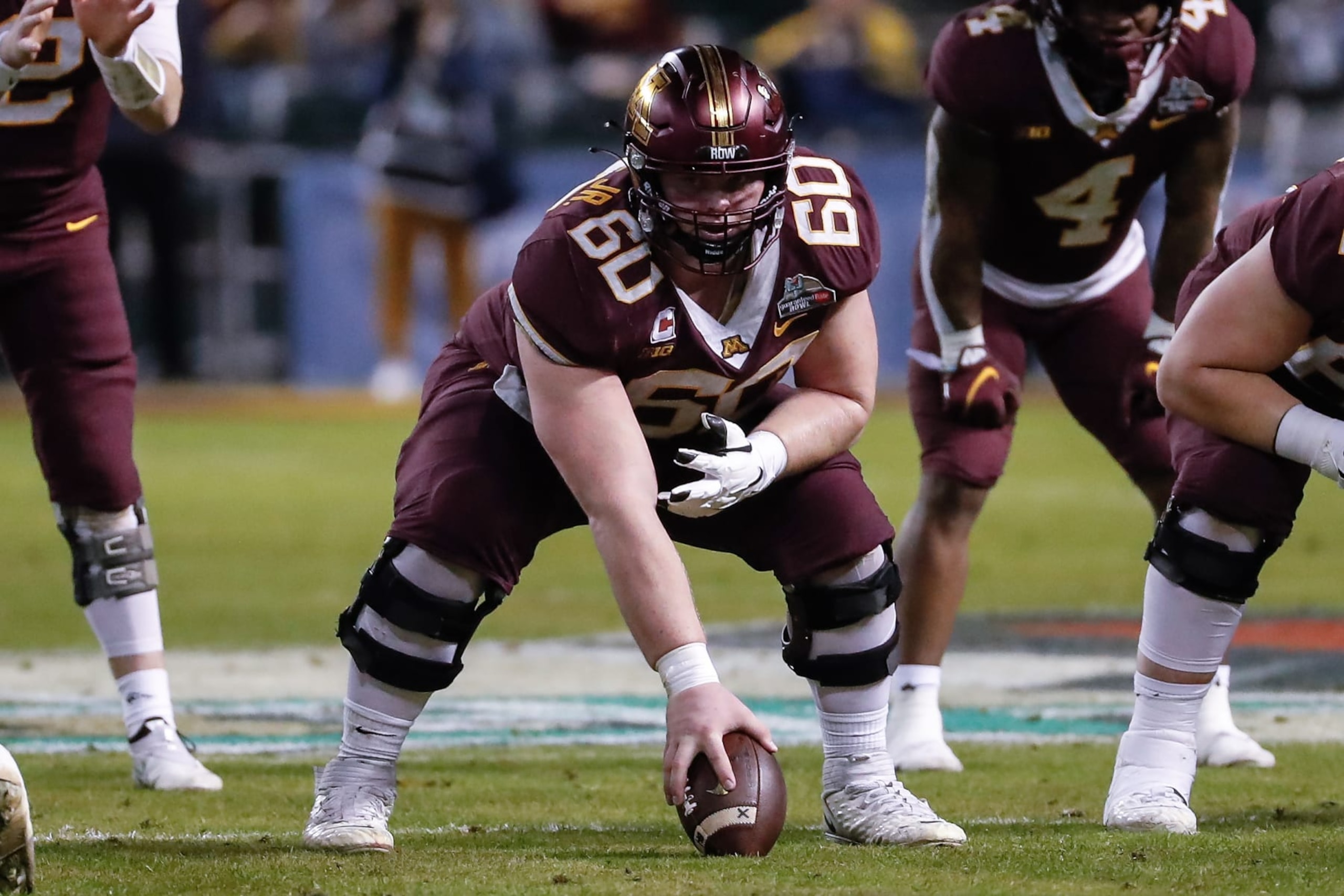
John Michael Schmitz, IOL, Minnesota
Strengths: Powerful and violent run-blocker with strong hands, smart with understanding of line calls and defensive movement, anchors well
Weaknesses: Can improve angles to second level and in space; overaggressive at times, which causes him to fall off blocks
Offensive line positional designations are often blurred because interior blockers tend to cross-train. But Minnesota's John Michael Schmitz is the top-ranked pure center prospect in this year's draft class.
The 24-year-old is a ready-made pivot who likely would have been in the first- or second-round conversation had he chosen to declare for the 2022 draft. But it was important for him to take on more responsibility as a sixth-year senior.
"The big thing for John, it's now his offensive line," offensive line coach Brian Callahan said last summer, per The Athletic's Mitch Sherman. "I couldn't be more pleased with how he's taken that upon himself. He's the leader of the group. He's a throwback, an old-school kind of guy, somebody who truly, truly loves the game."
The first-team All-American enters the NFL as a polished and experienced prospect who's capable of taking over snapping duties right away.
Aside from Andrew Thomas, who emerged as a premier left tackle, the New York Giants offensive line was a complete disaster. Far more is expected of Evan Neal in his second year, of course.
Michael Schmitz can be immediately inserted at center and provide a calming presence. His intelligence over the ball can't be overlooked because his calls and recognition should help everyone on the offense.
Grade: A
58. Dallas Cowboys
27 of 71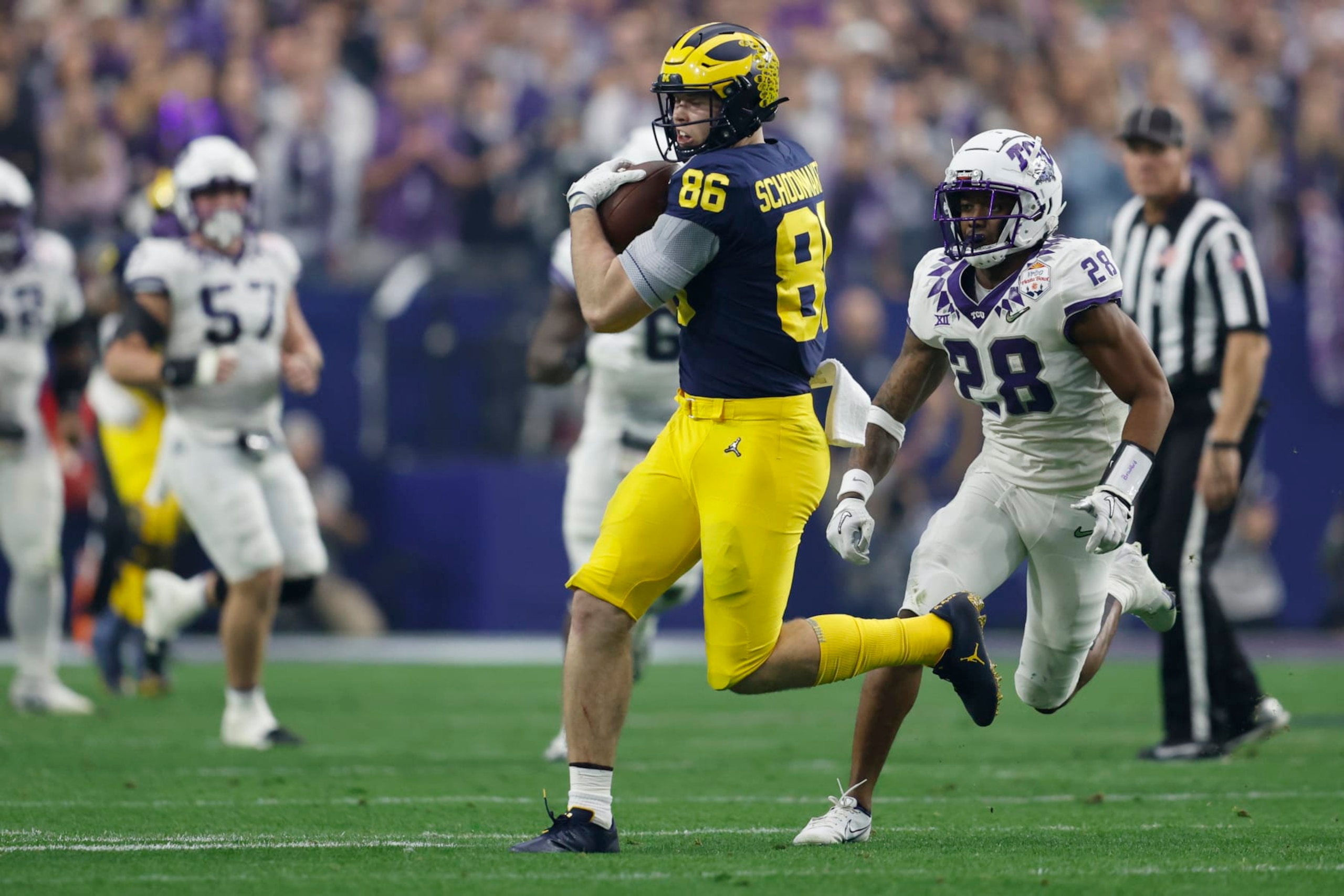
Luke Schoonmaker, TE, Michigan
Strengths: Tall, athletic and fast, moves about the field well, enthusiastic blocker
Weaknesses: Older prospect, route running is a work-in-progress, not a ball-winner, limited production
Luke Schoonmaker's development was a process. The high school quarterback began the transition to tight end at the prep level but didn't fully embrace the move until he arrived at Michigan as a 225-pound prospect. He needed the time to mature physically and earn snaps.
"You are with a bunch of big-time players," Schoonmaker said, per the San Francisco Gate's Jeff Jacobs. "All the recruiting stars and rankings go away. It becomes competing with someone else for a position and everyone is as big, fast and strong. You've got to find a way to get on the field any way you can."
The fifth-year senior, who will turn 25 in September, didn't experience a breakout campaign until his final season on campus. Schoonmaker caught 35 passes for 418 yards despite dealing with a shoulder injury. While older, he's also a 6'5" target with 4.63-second 40-yard-dash speed.
The Dallas Cowboys needed to address tight end after Dalton Schultz left in free agency to join the Houston Texans. Schoonmaker is the team's choice to do so. Jake Ferguson can still be a contributor, but the Michigan product brings a superior athletic profile, even when compared to Schultz when he entered the league.
Grade: C
59. Buffalo Bills
28 of 71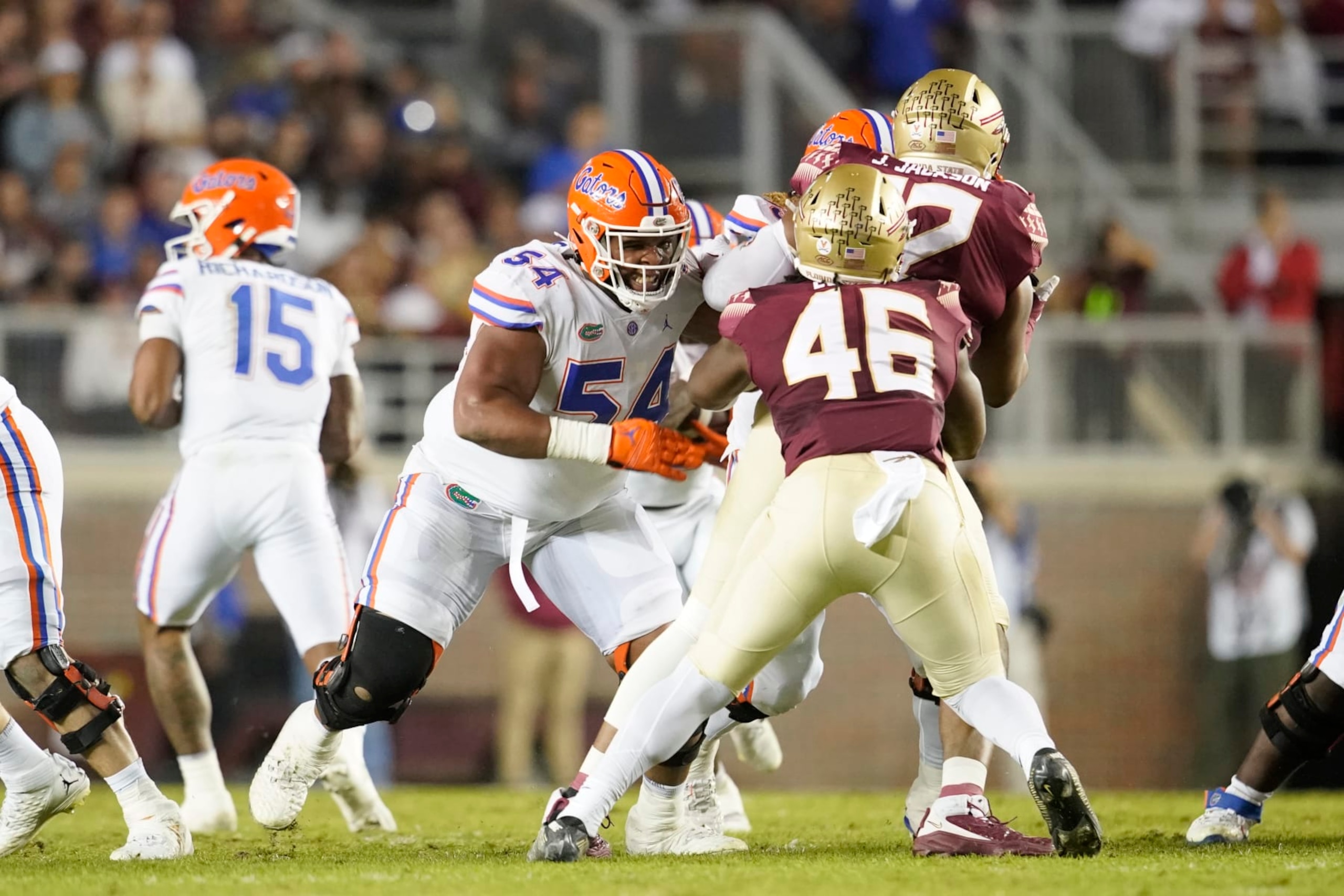
O'Cyrus Torrence, IOL, Florida
Strengths: Overwhelming at point of attack, uproots defenders, uses size and length well while run- and pass-blocking, experienced starter
Weaknesses: Marginal athleticism and bend, less effective working in space
Two types of blocking schemes exist: zone and man (gap) principles. All teams employ both, though they're often more reliant on one more than the other. An understanding of the system helps in the evaluation and fit for a prospect.
In the case of Florida's O'Cyrus Torrence, he's a mauler. He's not going to be the most athletic option, though he can excel in simple zone schemes. The 6'5", 330-pound guard is an old-school bulldozer with the size and power to consistently win at the point of attack.
Interestingly, Torrence started his career with the Louisiana Ragin' Cajuns before transferring to Florida. While there, he became the best blocker for an SEC program and a first-team all-conference performer.
Immediate adjustments are important when making the leap to the professional ranks. Torrence told reporters when asked about the transfer:
"It showed teams that I could switch and be in a different environment and also compete at a higher level. But also be able to flip the switch faster, being able to get to know new people, new teammates and being able to get comfortable in a new spot and being able to still perform under a lot of pressure in a different area that I'm maybe not used to. I feel like it helped out a lot."
An argument can be made in Torrence's favor as the class' best pure guard prospect. His size and power immediately bring a different dynamic to the Buffalo Bills offense. The team needs to make sure Josh Allen is properly protected, and Torrence immediately solidifies the interior.
Grade: A
60. Cincinnati Bengals
29 of 71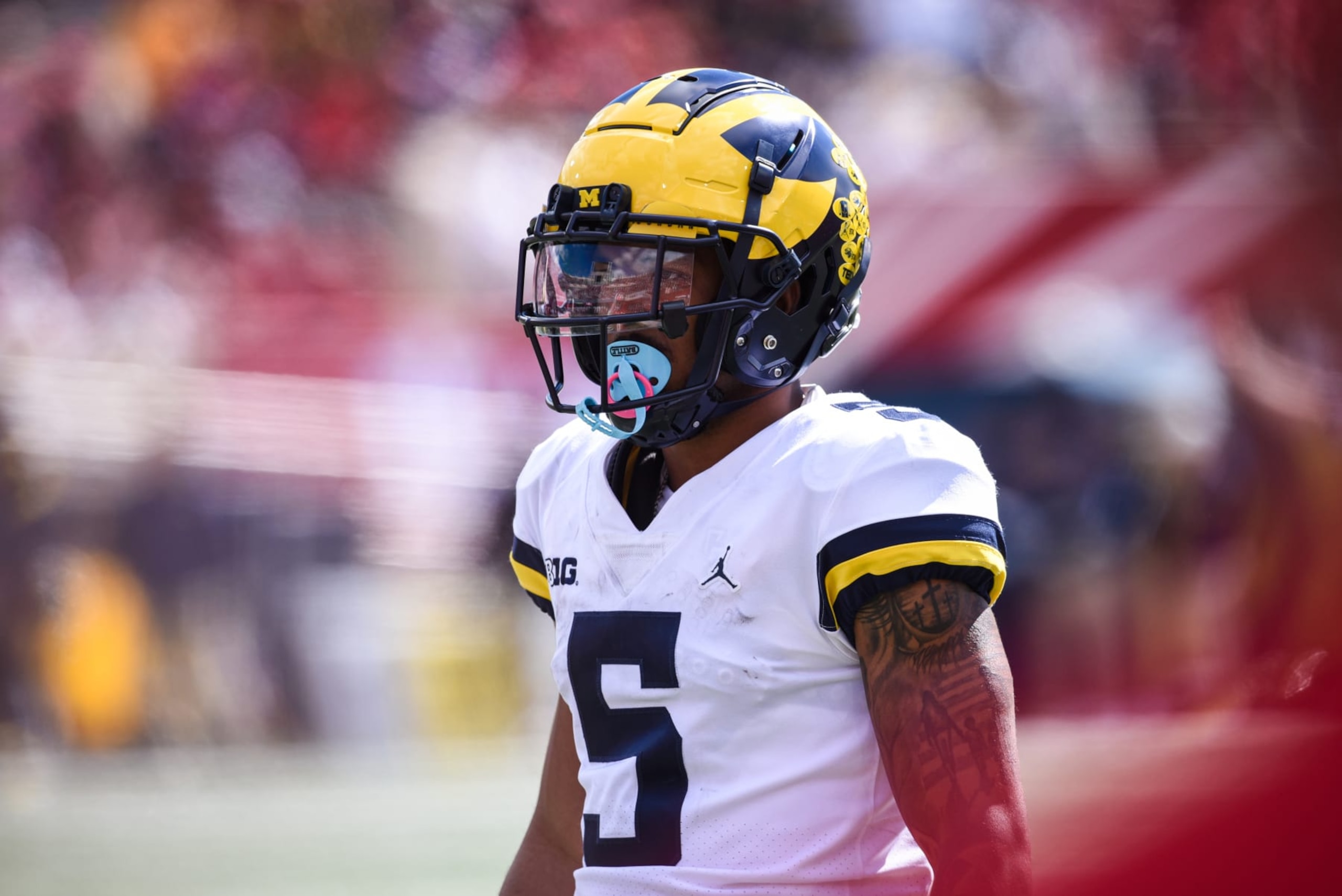
DJ Turner II, CB, Michigan
Strengths: Warp speed, lightning quick feet, thrives in press, can play outside or over the slot
Weaknesses: Thin frame, suspect tackler, can be bodied by bigger wide receivers
If anyone feels the need for speed, then Michigan cornerback DJ Turner II is first in line (probably because he beat everyone else there).
Turner posted the fastest 40-yard-dash at this year's NFL Scouting Combine with a 4.26-second effort. That was tied for the fourth-best all-time since the league began to reveal those numbers.
While every team craves speed, Turner's game extends beyond straight-line velocity.
According to Pro Football Focus, Turner graded higher than any other corner in press coverage over the last two seasons. When asked to fight through receivers and make plays on the ball, he forced 23 incompletions and allowed a 62.2 passer rating throughout his collegiate career, per PFF.
Turner's 178-pound frame is a cause for concern, although he didn't miss a single game over the last two seasons. Even so, he may find a home covering the slot in the NFL because of his quick feet and his ability to stick with receivers from the onset of their routes.
A year ago, the Cincinnati Bengals chose Michigan's Daxton Hill in the first round. They've doubled down on Wolverines with the selection of Turner in this year's second round.
Interestingly, Hill's value skyrocketed last year because of his ability to play over the slot, though he didn't do it as often during his rookie campaign with Mike Hilton on the roster. Meanwhile, Turner has been often projected as a nickel corner, but his raw speed will likely keep him on the outside for now.
Grade: B
61. Jacksonville Jaguars (via Chicago)
30 of 71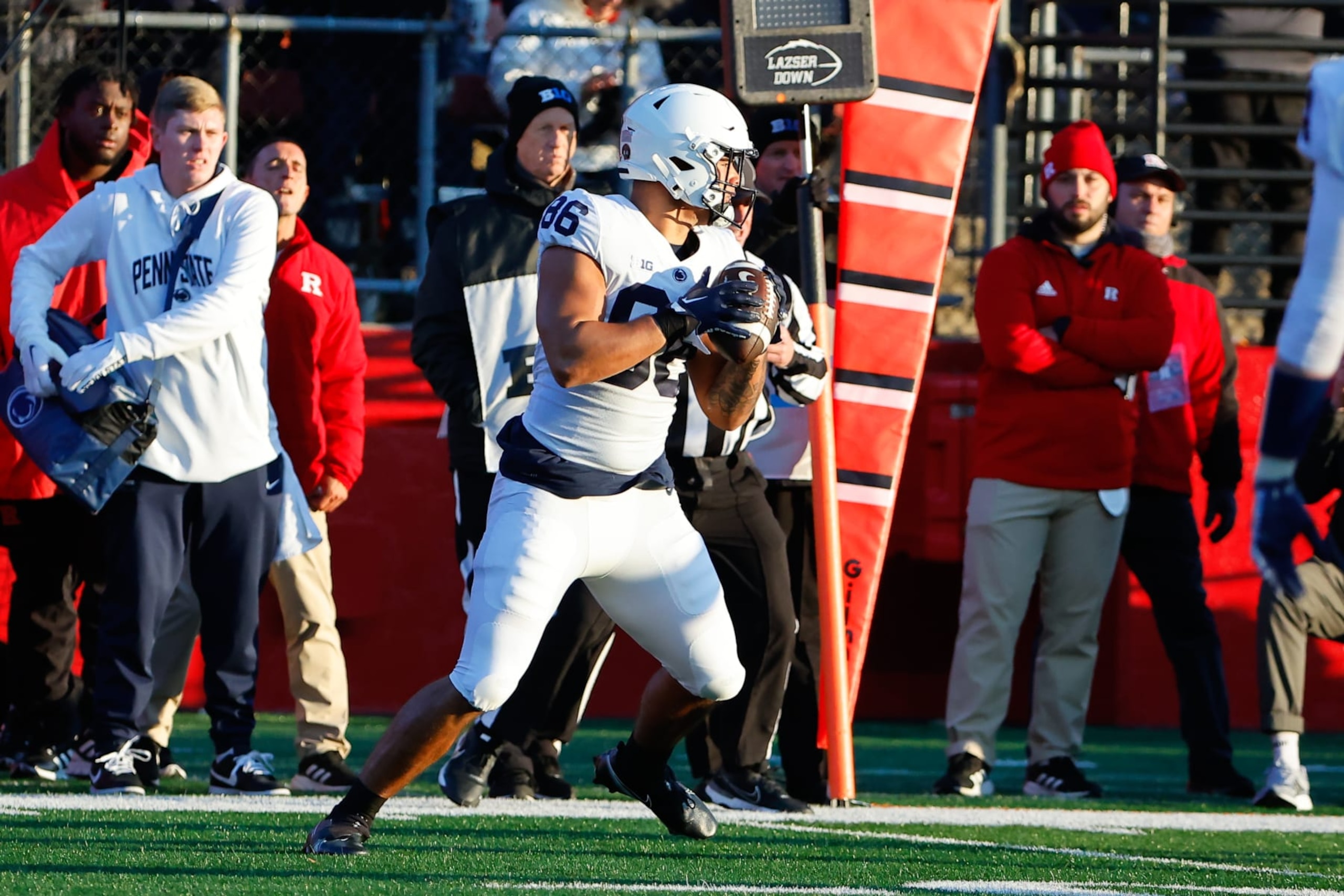
Brenton Strange, TE, Penn State
Strengths: Tough and physical player who gets after it as a blocker and ball-carrier, has speed and verticality to become a bigger receiving threat
Weaknesses: Untested and unpolished route-runner, not the most fluid when working in space
Brenton Strange wasn't as much of a threat in the passing game as his Penn State predecessors, Pat Freiermuth and Mike Gesicki. The incoming tight end isn't quite as big either at 6'4" and 253 pounds.
However, significant growth potential exists in the latest former Nittany Lion tight end. The scheme often asked Strange to block. But he did tie for the team lead last season with five touchdown receptions. The early entrant is also a good athlete with untapped upside, particularly if used to create after the catch.
"No one person should ever take me to the ground," Strange said last September, per the Daily Collegian's Zach Allen. "I'm 6'4", a little less than 250 pounds. One defender should never tackle me. That's always been my mindset."
Strange's experience as an inline option should prove to be valuable, with Evan Engram already on the roster. Engram is far more effective as a detached option. Furthermore, Strange serves as an insurance plan if the Jaguars' franchise player doesn't agree to terms on a long-term contract.
Grade: C
62. Houston Texans (via Philadelphia)
31 of 71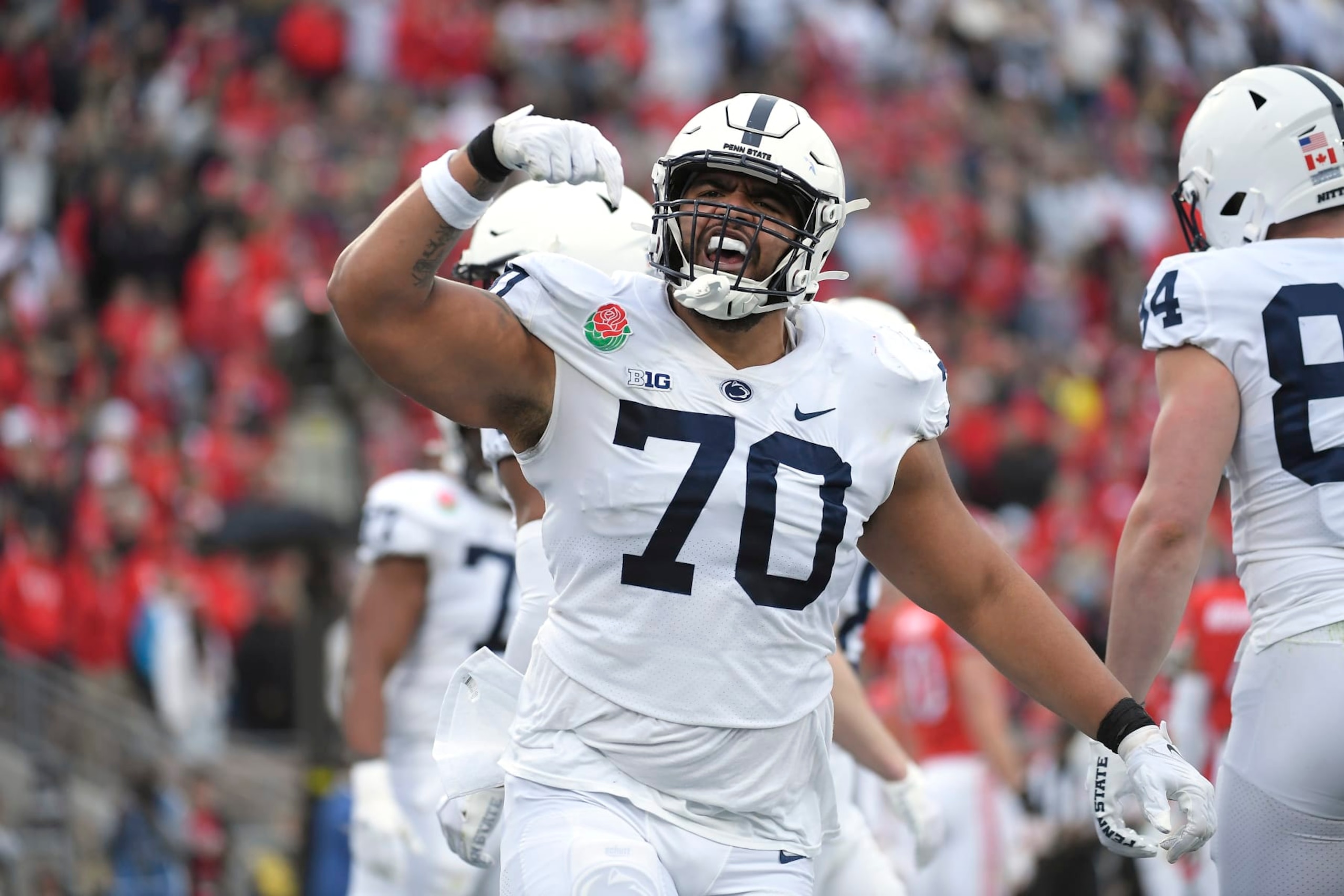
Juice Scruggs, IOL, Penn State
Strengths: Good anchor and fits, finishes blocks, interior flexibility
Weaknesses: Poor lateral agility
With the addition of Penn State's Juice Scruggs, the Houston Texans' offensive line is complete. The team already traded for Shaq Mason this offseason. Both tackles–Laremy Tunsil and Tytus Howard–are former first-round picks, as is left guard Kenyon Green.
However, the Texans chose Scruggs over Ohio State's Luke Wypler, who's still available. The thought of bringing C.J. Stroud's batterymate with this year's second-overall pick should have been strongly considered to make a smooth transition for the quarterback.
Grade: C
63. Denver Broncos (via Detroit)
32 of 71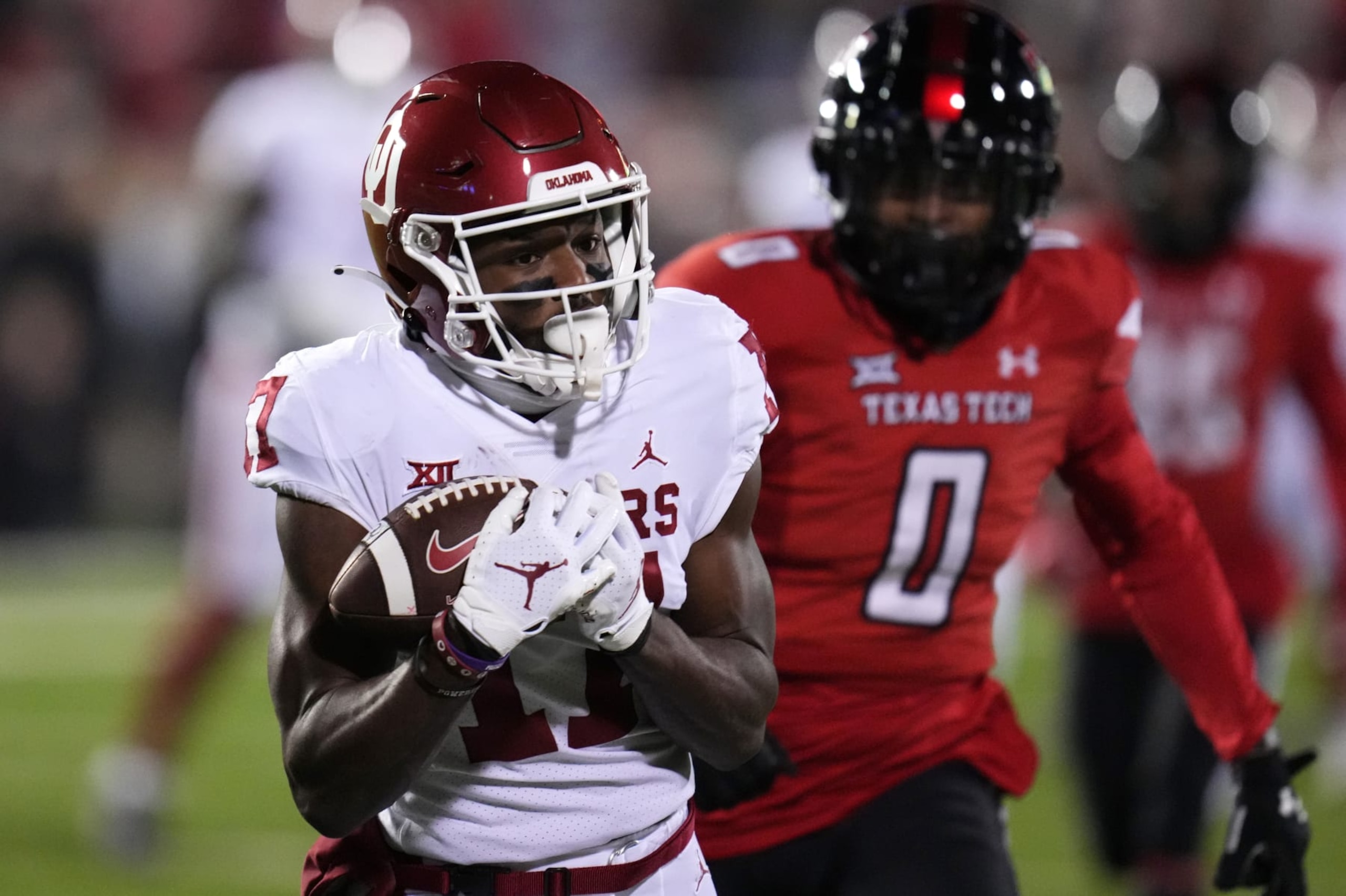
Marvin Mims Jr., WR, Oklahoma
Strengths: Deep threat with extra gear, instant acceleration, explodes after the catch, tracks ball well
Weaknesses: Poor play-strength, will get beat up a bit, not adept at fighting for ball in traffic, marginal route-runner
Oklahoma's Marvin Mims Jr. has always been a productive wide receiver.
He set Texas high school records with 5,485 career receiving yards and 2,629 receiving yards in a single season. During each of his three years in Norman, the 21-year-old target led the Sooners in receiving yardage, with a breakout campaign coming last year via a 1,083-yard effort. In fact, Mims outpaced all wide receivers with 50 or more receptions by averaging 20.1 yards per catch.
According to Pro Football Focus, he led all Big 12 receivers with 602 yards on throws of 20 yards or longer in 2022. He also led his draft classmates in average yards per touch throughout their careers and finished second in yards per route run among Power Five wide receivers last season, per Fantasy Points' Scott Barrett.
Production is important, of course. But Mims is another undersized target (5'11", 183 lbs), who's not going to be a huge factor in the intermediate game. He'll certainly work as a deep threat or underneath option to create after the catch.
The Denver Broncos have been adamant that they don't plan to trade either Courtland Sutton or Jerry Jeudy. Yet the organization traded up in the second round to acquire Mims. Granted, Mims can give the team what it once hoped that KJ Hamler might provide. The incoming rookie's vertical presence differentiates him from Tim Patrick, too.
Grade: B
64. Chicago Bears
33 of 71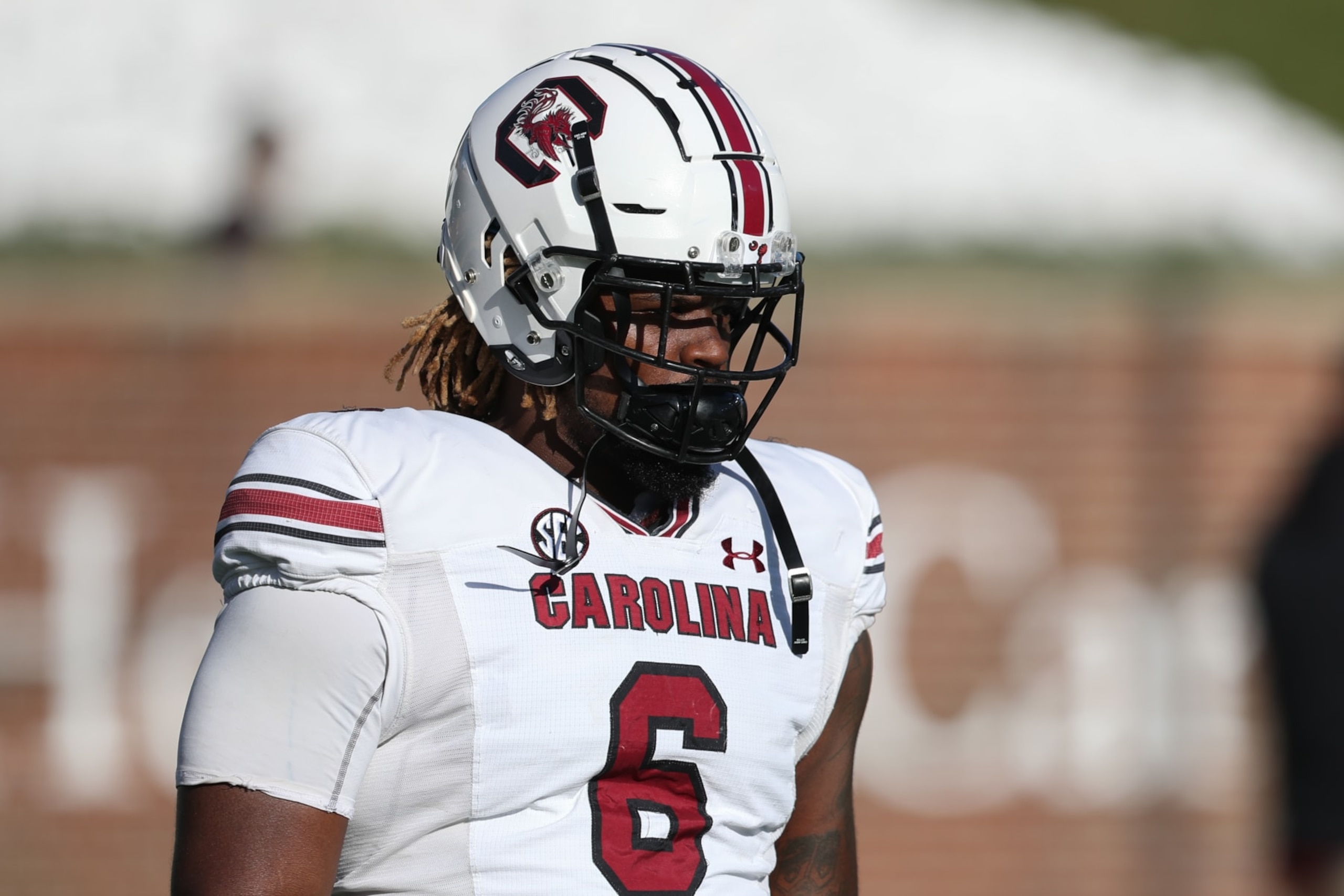
Zacch Pickens, DL, South Carolina
Strengths: Quick hands with long arms, uses length, plays with a wide base, reads keys well
Weaknesses: Inconsistent get-off, peeks into backfield too often, poor pad level, subpar core strength
Zacch Pickens' story throughout the predraft process is one of the incredible shrinking man.
Evaluated as an interior prospect, particularly as a 1-technique based on South Carolina listing him at 6'4" and 305 pounds, Pickens showed up at the NFL Scouting Combine and weighed 291 pounds.
The swing in size affected his evaluation, though it did so positively.
Pickens entered the Gamecocks' program as a 5-star recruit, the nation's best defensive tackle and the top prospect from South Carolina in the 2019 class. He pieced together a solid but arguably underwhelming career considering expectations upon arrival.
However, the slender version looked more explosive (4.89-second 40-yard dash, 9'8" broad jump) during predraft testing, with the type of length (34⅜-inch arms) that NFL teams prefer along the interior.
The Bears return to the line of scrimmage after a short dalliance with a new cornerback. Pickens' addition gives Chicago an excellent interior complement for Gervon Dexter Sr., who the team selected in the second round. Dexter can potentially take over at 1-technique, while the sub-300-pound Pickens can serve as 3-technique behind Justin Jones.
Grade: C+
65. Philadelphia Eagles (via Houston)
34 of 71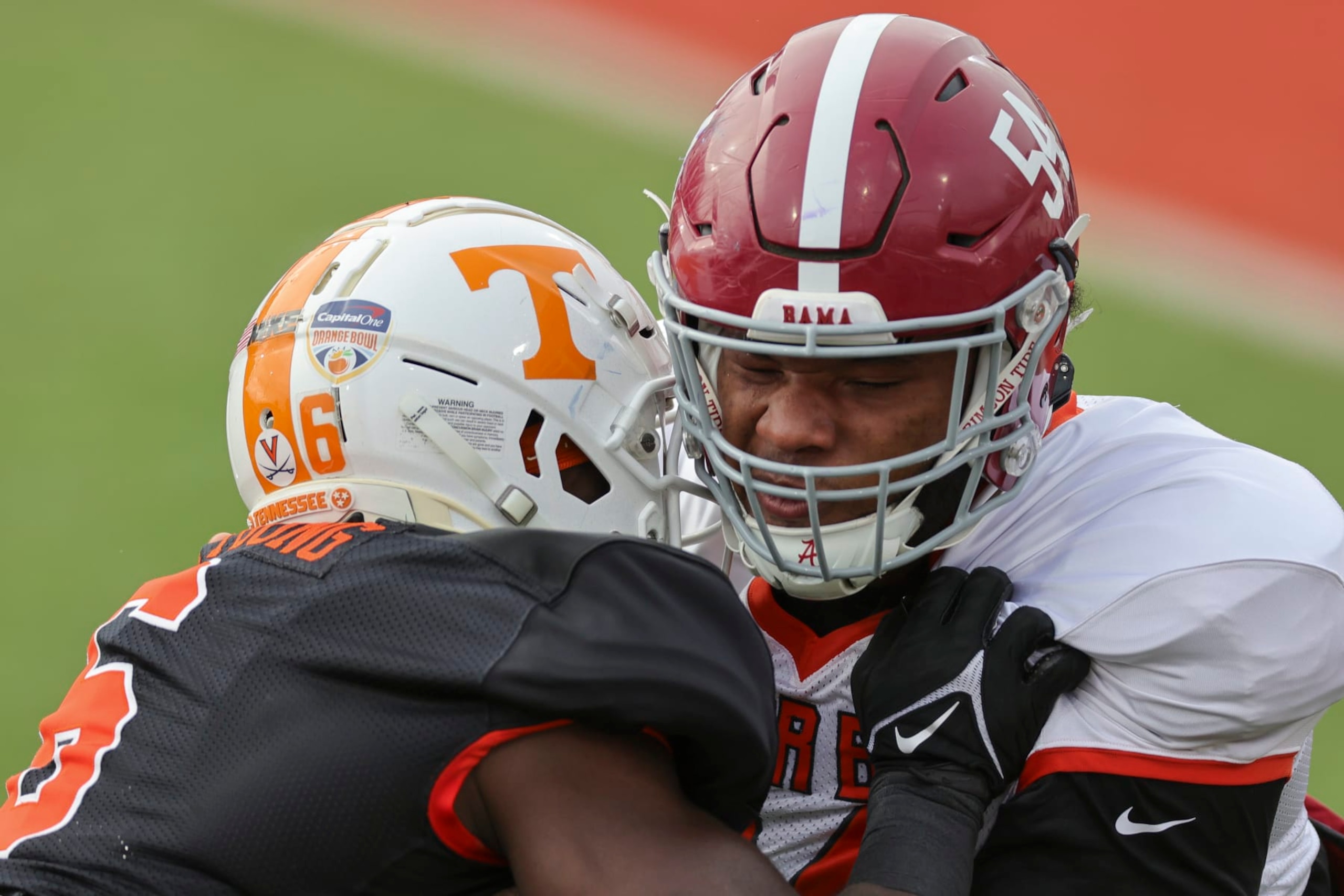
Tyler Steen, OT, Alabama
Strengths: Experienced blocker, smooth pass set, uses length well, good play strength
Weaknesses: Footwork and placement are erratic, lapses in concentration
Tyler Steen started for two different SEC programs. But a player starting for Vanderbilt is significantly different from one who overtakes a plethora of highly recruited athletes at Alabama. Yet that's exactly what Steen did.
He started 33 games for the Commodores. Upon graduation, he transferred and joined the Crimson Tide, who prepared him for the professional ranks.
"I would say how we work is different," Steen said, per Bama Online's Charlie Potter. "It's different over here for sure—different expectations, different people around you that expect you to do what needs to be done at your highest capability."
The defensive line convert took over right tackle before flipping to the blind side for the last three seasons. In total, he earned 46 starts against college football's best competition.
One of the reasons why the Philadelphia Eagles own the league's best offensive line is because general manager Howie Roseman continually reinvests in the position group.
Even as a third-round pick, Steen may move inside and compete to start at right guard after Isaac Seumalo left in free agency to join the Pittsburgh Steelers. Cam Jurgens is another possibility, but he's not the physical presence the Eagles tend to prefer at guard.
Grade: B
66. Philadelphia Eagles (via Arizona)
35 of 71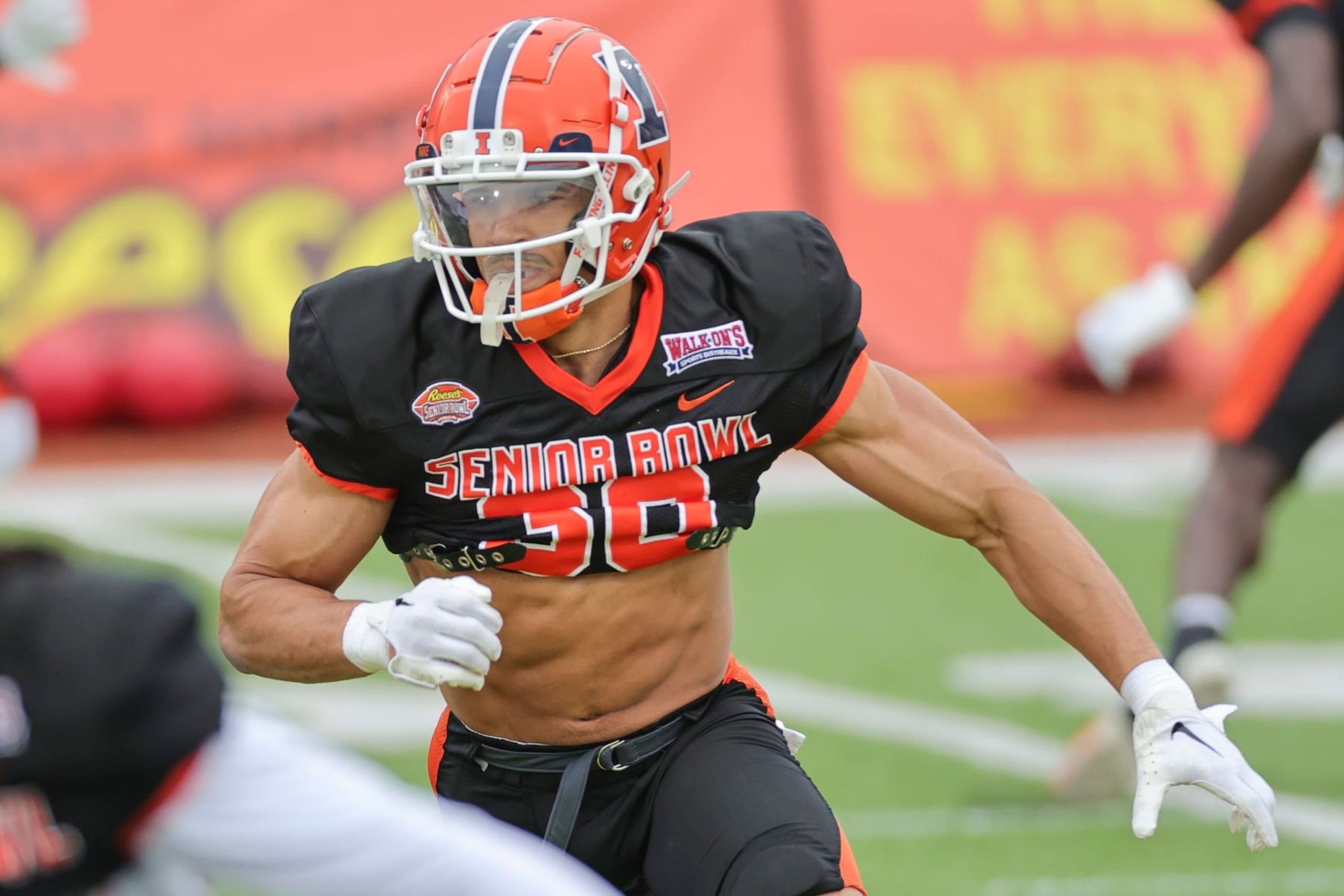
Sydney Brown, S, Illinois
Strengths: Explosive athlete, aggressive run defender, soft hands to pluck ball, experience in man and zone coverage
Weaknesses: Too many missed tackles, stiffness in hips, suspect change-of-direction
Illinois safety Sydney Brown is an aggressive downhill defender and a ballhawk.
"I can play in the box, I have a natural flow for the line games… whatever concepts you're going to throw at me," he told reporters at the NFL Scouting Combine. "I can play in the post, I can play deep half, I can play curl-flat, whatever you need, I can do, and just kind of rely on that with confidence. I trust my instincts."
Brown's style of play is a double-edged sword, though. The aggressiveness he brings from the secondary isn't always under control.
Brown triggers quickly and flies up against the run. He's physical when arrives at the ball-carrier. Check that, if he arrives at the ball-carrier. Poor angles and missed tackles can be a problem.
When playing along the backline, Brown can identify and react to the ball. He was tied for third in the nation this past season with six interceptions.
Brown's speed is a massive upgrade over what the Eagles had in undrafted free agent Reed Blankenship last year. After C.J. Gardner-Johnson left in free agency, a starting safety spot is available.
The Big Ten Conference standout has the experience, athletic profile and mentality to immediately start, even as a third-round selection.
Grade: B
67. Denver Broncos (via Indianapolis)
36 of 71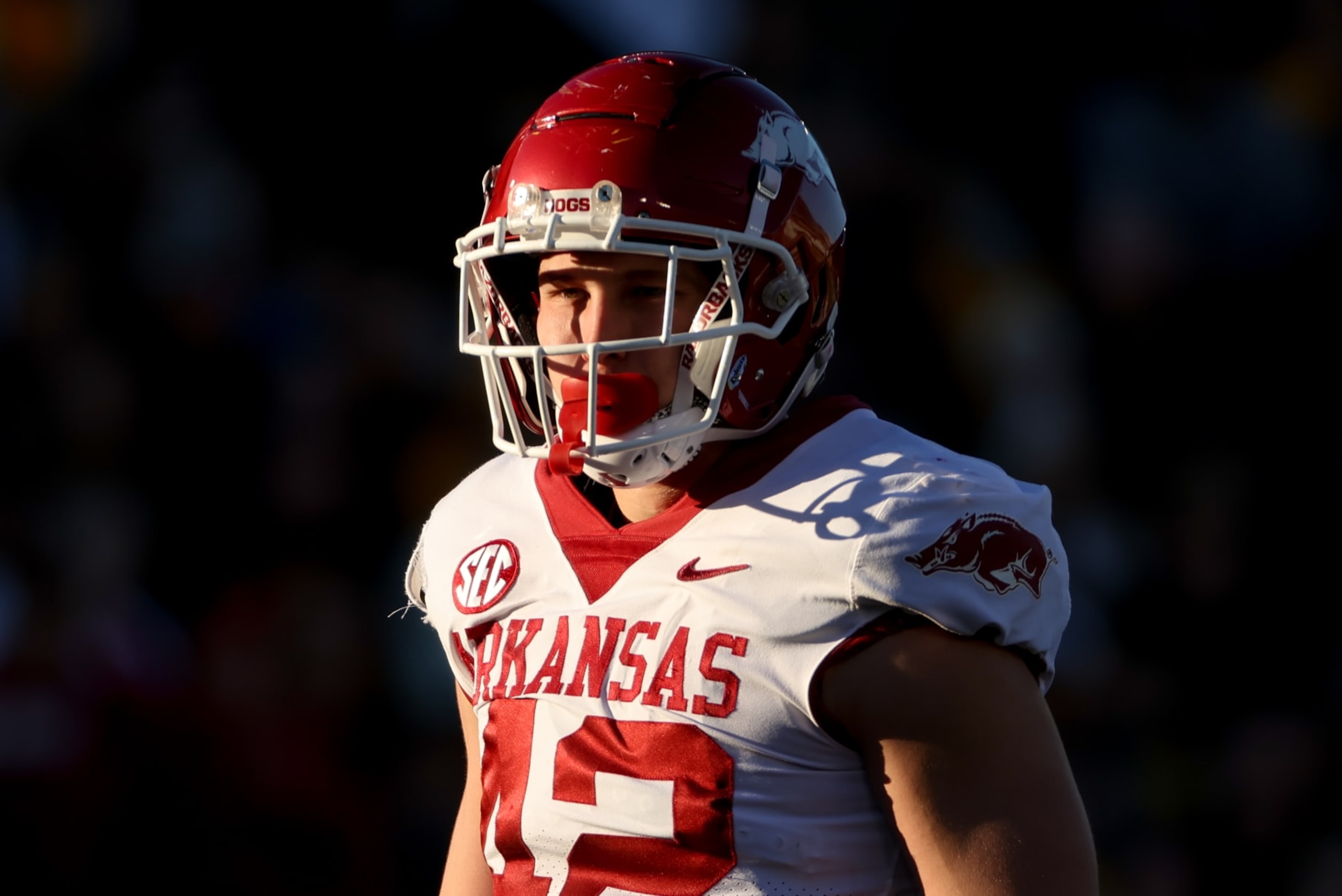
Drew Sanders, LB, Arkansas
Strengths: Skilled pass-rusher, long frame, quickness and recognition to regularly play off the ball, fluid to drop into space and cover
Weaknesses: Could add bulk to improve play strength, overaggressive with angles, needs to clean up hand placement
Drew Sanders bet on himself, and the decision paid off greatly.
The former 5-star recruit spent two seasons at Alabama. He began his career on special teams and then primarily served as a backup/rotational contributor during his sophomore campaign.
Sanders thought he brought more to the table as a hybrid defender. He thus transferred to Arkansas and thrived.
The 6'4", 235-pound defender played both off the ball and worked off the edge. He led the Razorbacks with 103 total tackles, 13.5 tackles for loss, 9.5 sacks and three forced fumbles. He also had six pass breakups.
The 21-year-old is a defensive chess piece who's capable of affecting the game whether he's lined up outside an offensive tackle or playing off the ball. Like everyone learned after watching his collegiate career, Sanders' usage is critical to maximizing his massive talent.
Sanders' addition to the Denver Broncos defense creates significant flexibility because he can contribute as a sub-package off-ball linebacker alongside Josey Jewell and/or Alex Singleton. Then, he can take a similar approach as Baron Browning by playing off the edge, though Sanders is a more accomplished edge-defender coming into the league.
Grade: A
68. Detroit Lions (via Denver)
37 of 71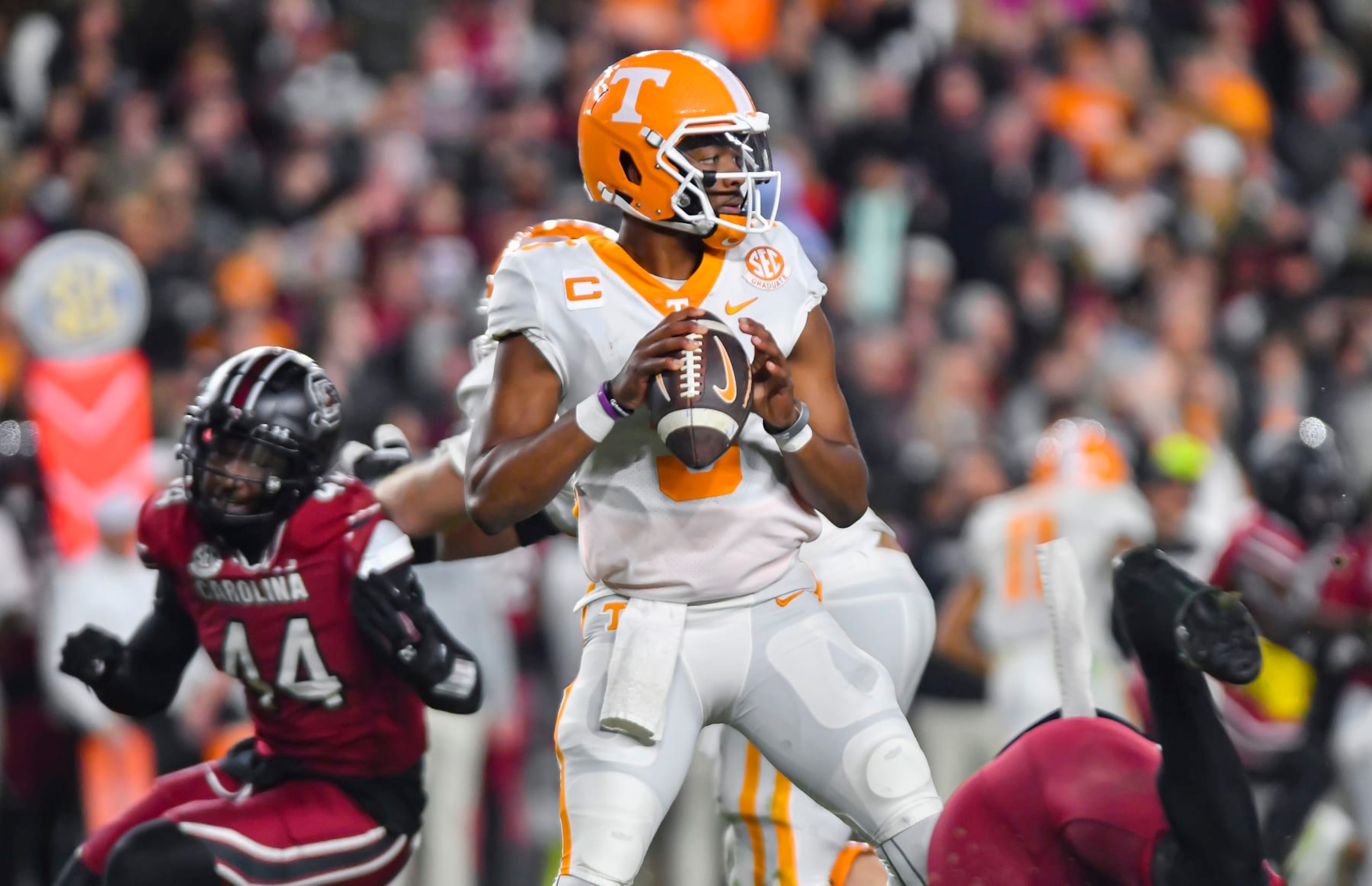
Hendon Hooker, QB, Tennessee
Strengths: Good touch/timing on deep throws and in-breaking routes, refined passer, not turnover-prone, adds to the running game
Weaknesses: Coming off season-ending knee surgery, older prospect, struggles to navigate pocket against pressure
Hendon Hooker deserves ample credit for A) not being content with his four years at Virginia Tech and B) helping the Tennessee Volunteers program reach national relevance again.
After transferring to Knoxville, Hooker became the starter, completed 68.8 percent of his passes, threw for 6,080 yards and 58 touchdowns and added 1,046 rushing yards and 10 more scores over a two-year span. The sixth-year senior has an NFL arm coupled with ideal mechanics and functional athleticism.
As a prospect, concerns linger.
Hooker suffered a torn ACL during a November contest against the South Carolina Gamecocks. Second, he already turned 25. He needed five seasons before reaching his breakout campaign. Finally, Tennessee employs a quarterback-friendly scheme that doesn't necessarily translate to NFL systems.
Quarterbacks always retain value, particularly those with good physical traits who excelled in major conferences. But Hooker's potential red flags can't be entirely overlooked.
Nonetheless, the Detroit Lions now have a fallback plan at quarterback.
Jared Goff has played above expectations since being traded from the Los Angeles Rams. However, the Lions can move off his contract after this season and save over $26.7 million against the cap if the organization wants to go in another direction.
Hooker can take a redshirt year. The team can then decide whether he'll get a shot to become the starter.
Grade: C
69. Houston Texans (via Los Angeles Rams)
38 of 71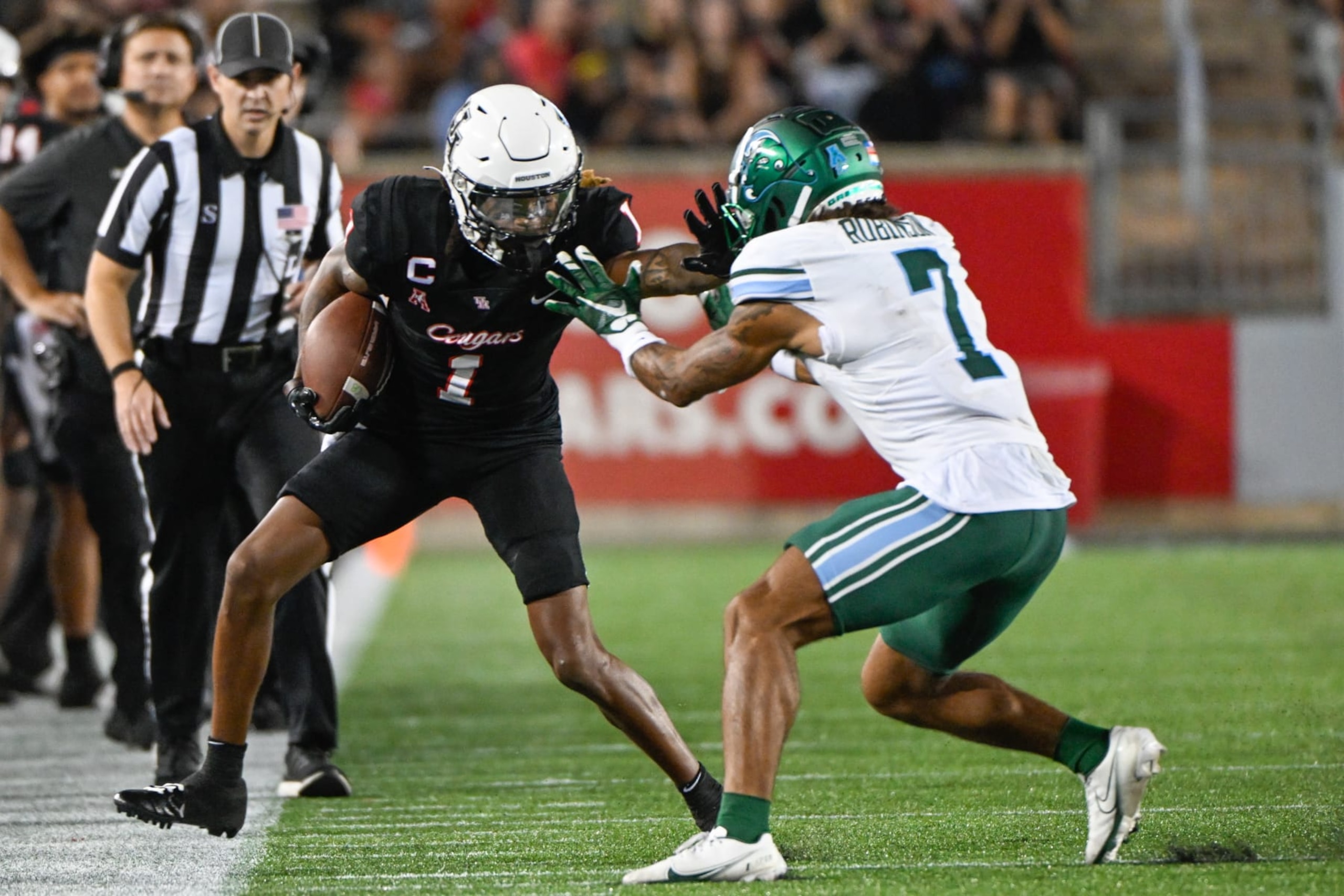
Tank Dell, WR, Houston
Strengths: Electric route-runner, short-area Houdini, elite production, added value as returner
Weaknesses: Tiny frame, small hands, limited catch radius, drops, marginal top-end speed
When someone refers to turning on a dime, they don't expect a tank to do so. Houston's
Tank Dell is the snappiest route-runner in this year's draft class. He breaks defenders off at the stem and leaves them in the dust. His shiftiness allowed him to become the nation's leading receiver over the past two seasons. The two-time first-team All-AAC honoree produced 199 receptions, 2,727 yards and 29 touchdowns during that span.
Two factors work against Dell. He's extremely small at 5'8" and 165, and his top-end speed (a 4.49-second 40-yard dash) isn't all that impressive considering his diminutive size.
Dell primarily projects as a slot receiver in the NFL. That's OK, because he can quickly get open to create a mismatch nightmare for opposing defenses.
The Houston Texans are now laser-focused on helping their new franchise quarterback. Earlier, the team selected who could be their new starting guard in Penn State's Juice Scruggs. Dell gives the most accurate thrower in this year's class a target who consistently creates separation.
A wide receiver room of Robert Woods, Nico Collins, Noah Brown, a healthy John Metchie III and Dell doesn't present a lot of name recognition, but the group definitely looks different than it did a year ago when the pass offense finished in the league's bottom 10.
Grade: B+
70. Las Vegas Raiders
39 of 71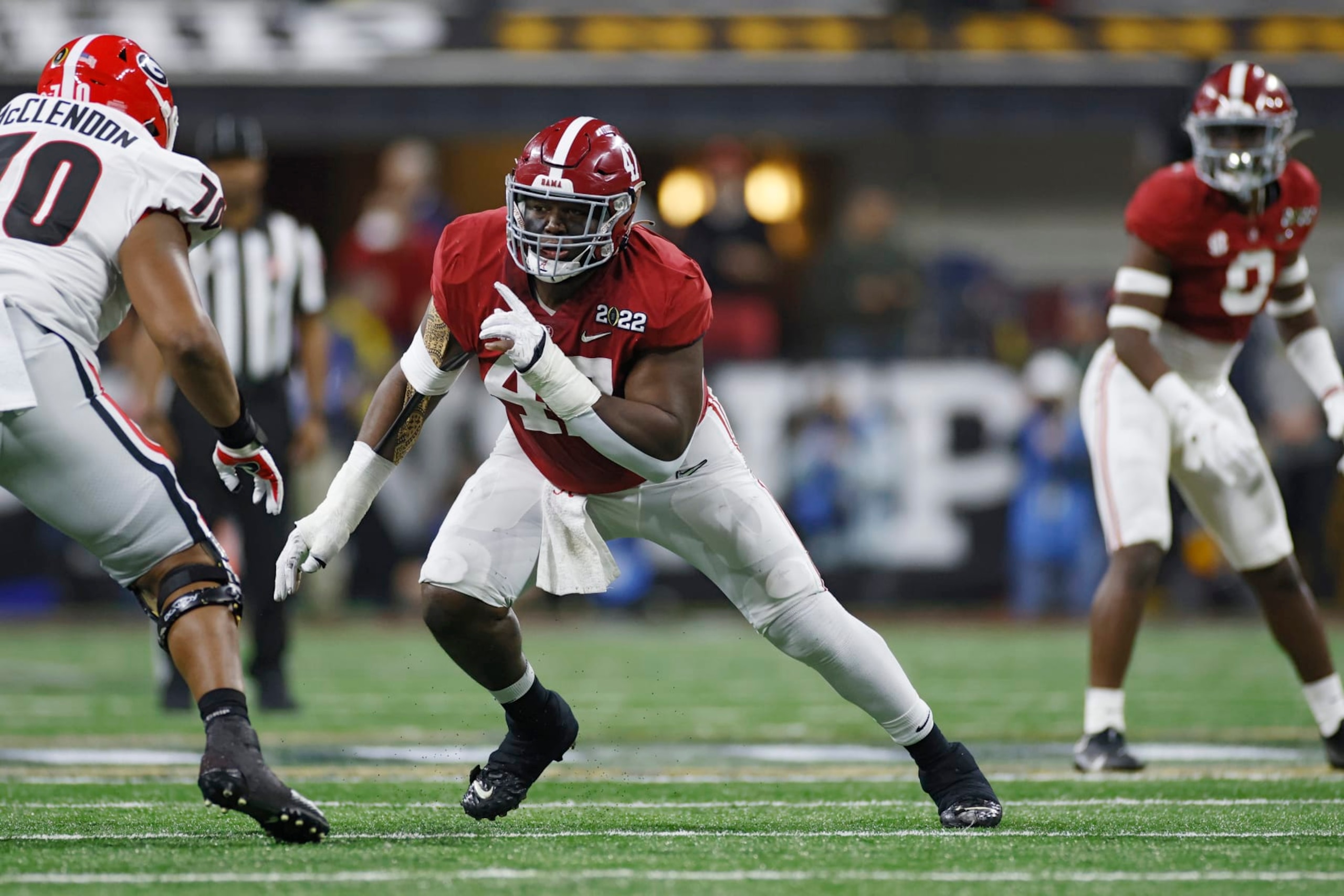
Byron Young, DL, Alabama
Strengths: Well-coached, uses hands well, plays square to the line of scrimmage with good pad level
Weaknesses: Little to no pass-rush, marginal athlete
The Las Vegas Raiders needed an injection of toughness along their defensive interior. When in doubt, draft an Alabama defensive lineman because you know they're going to be well-versed in how to stack and shed blocks.
Byron Young is no different. He should be able to step in and automatically provide some heft at the point of attack and potentially displace the likes of Jerry Tillery and Bilal Nichols.
Grade: C
71. New Orleans Saints
40 of 71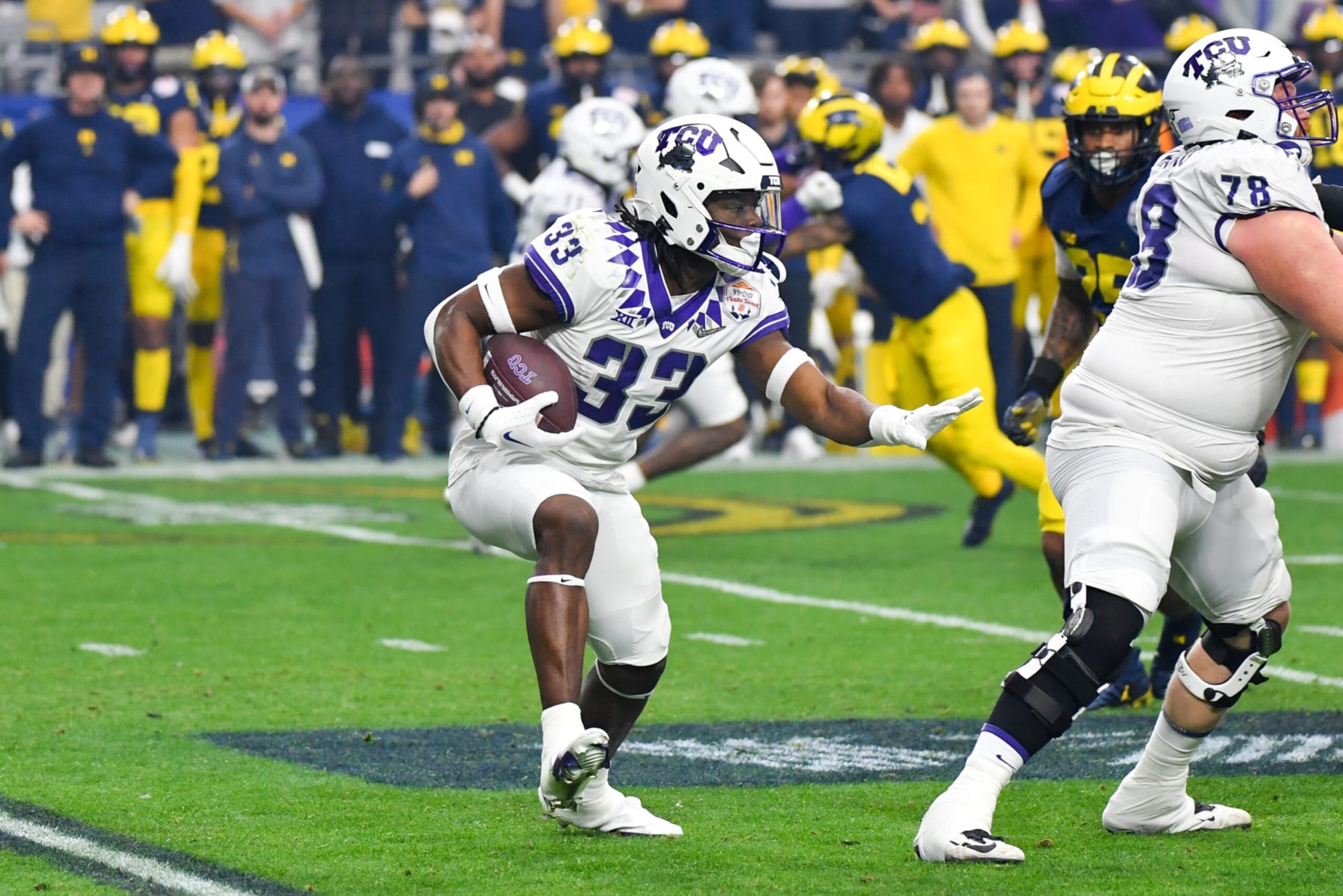
Kendre Miller, RB, TCU
Strengths: Instant acceleration, top-end speed, plays through contact
Weaknesses: Tight hips, indecisive if an obvious hole isn't present
The New Orleans Saints understand that Alvin Kamara has an injury history (and potentially faces discipline from the league after pleading not guilty to battery charges from an incident in February 2022), and he can't continue to be the primary focal point of the offense. As a result, the organization signed Jamaal Williams in free agency.
The addition of TCU's Kendre Miller in the third round is a luxury selection. Granted, Miller served as the motor to the Horned Frogs offense during the team's run to the national title game. However, he's not an instinctive runner, and he likely won't be a huge help early in his career with the current backs on the Saints roster.
Grade: D
72. Arizona Cardinals (via Tennessee)
41 of 71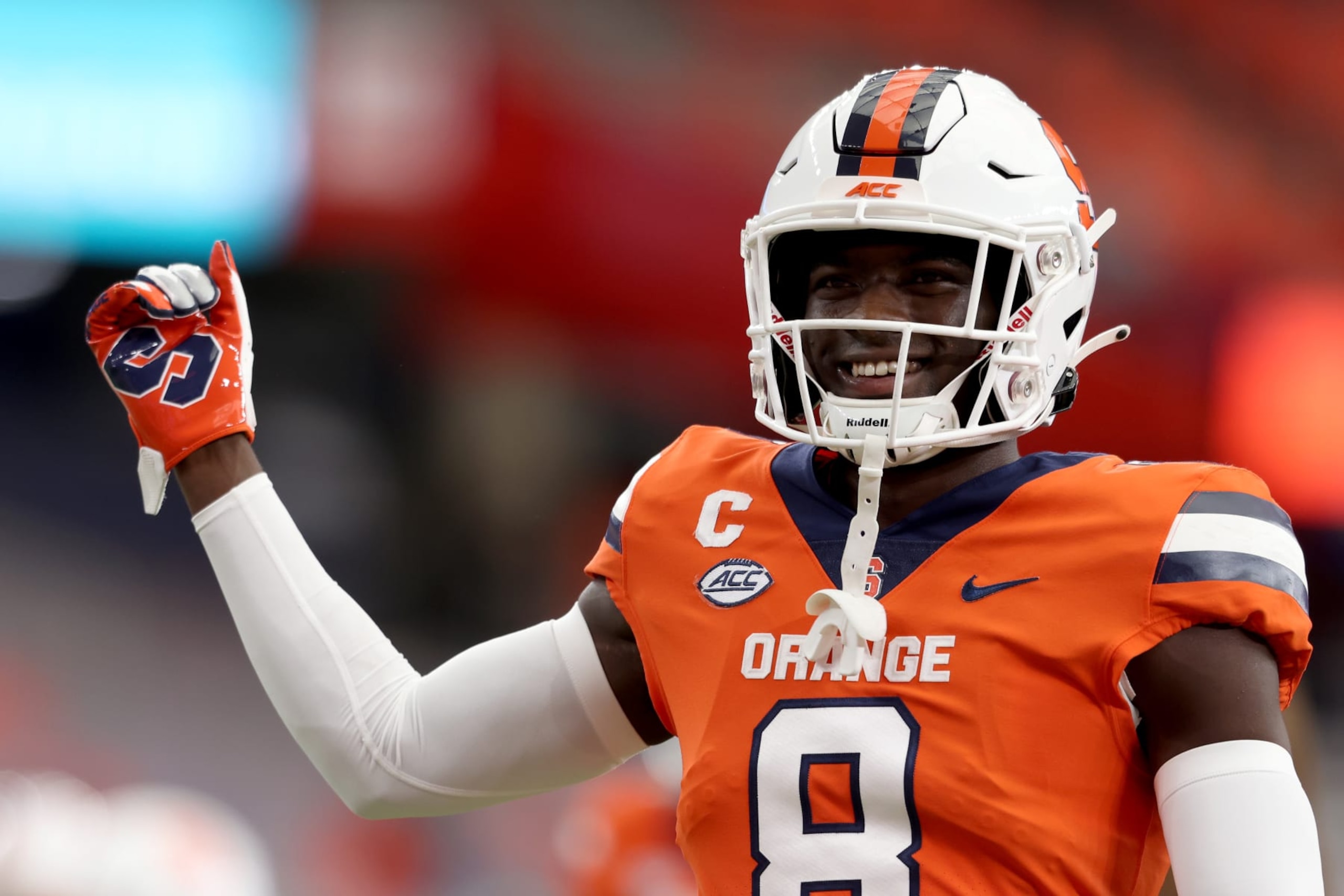
Garrett Williams, CB, Syracuse
Strengths: Good footwork and fluidity through his backpedal, technician, excels in zone coverage
Weaknesses: Coming off a torn ACL, questionable top-end speed
Syracuse's Garrett Williams might have found himself among this year's top cornerback prospects had he not suffered a torn ACL in October.
Williams told the Draft Network's Justin Melo:
"It was a lot to handle at first. I went into the 2022 season with a lot of goals. I had very high expectations for the team and for myself. To start the season the way we did, and for me to start the season the way I did, I felt like I was on track to hit all of my goals. …
"I never had a serious injury before. This was my first surgery. It was a lot of new experiences. As time went on, it just made me realize how resilient I am. … I'm on track to be 100% ready before training camp."
Prior to last year's season-ending injury, Williams thrived as two-plus-year starter and team captain. In 28 career games, the early entrant defended 27 passes and snagged four interceptions.
Had Williams been healthy, he wouldn't have been available to the Arizona Cardinals in the third round. But new general manager Monti Ossenfort won't complain. Ossenfort has now addressed three of the four premium positions in the first three rounds (OT, pass-rusher, CB), with quarterback Kyler Murray already on the roster.
Grade: B
73. New York Giants (via Los Angeles Rams)
42 of 71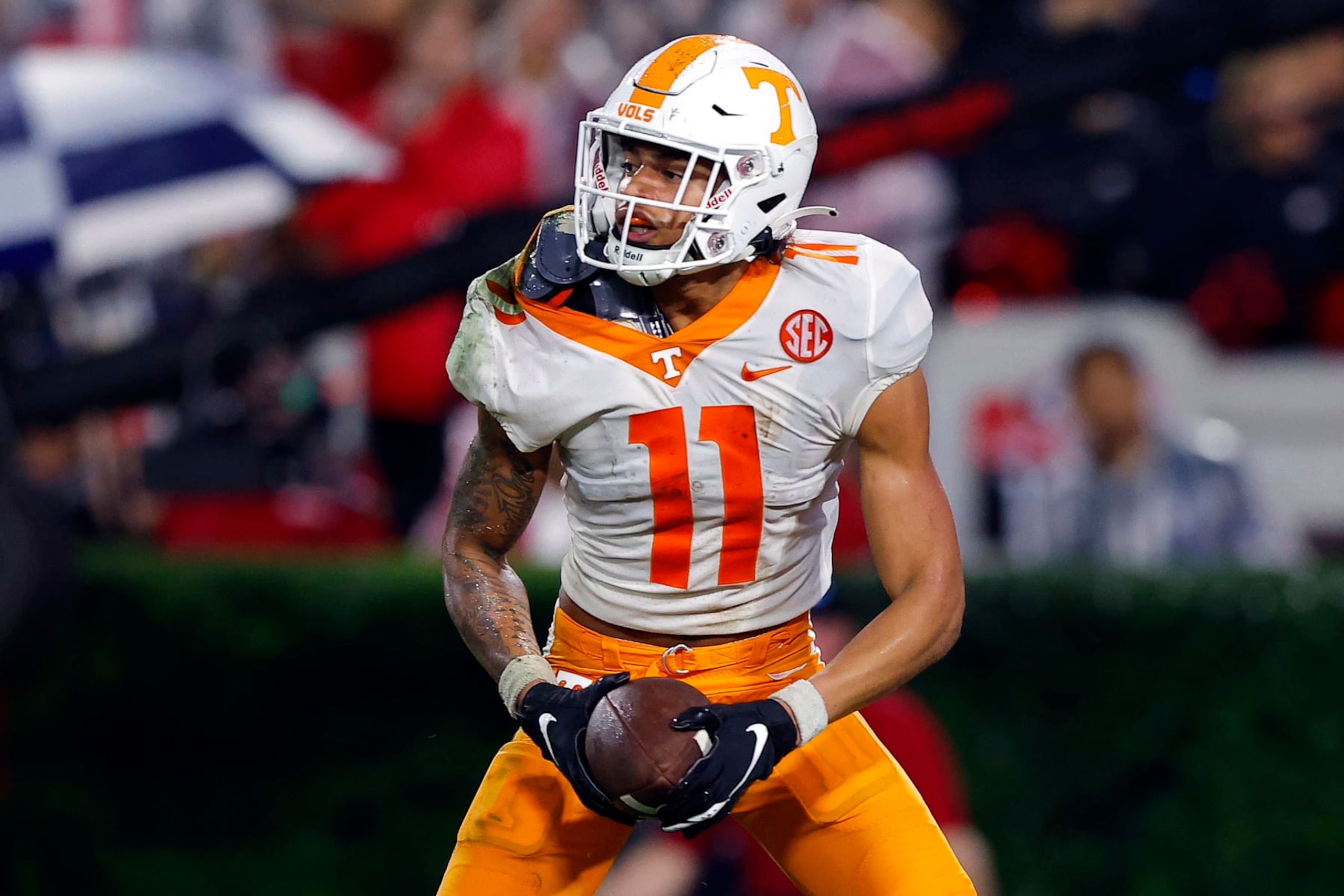
Jalin Hyatt, WR, Tennessee
Strengths: Rapid release, elite vertical speed, plays bigger than size indicates
Weaknesses: Never really challenged by physical corners, straight-line speed, doesn't create significant separation off top of stem
Tennessee's Jalin Hyatt emerged as the nation's best wide receiver and captured the Biletnikoff Award after his breakout campaign, in which the unanimous All-American led the SEC with 1,267 receiving yards and 15 touchdown grabs.
According to Pro Football Focus, he generated the highest quarterback rating (153.6) when targeted last season.
But the 176-pound Hyatt is primarily viewed as a vertical speedster. His 2022 average of 18.9 yards per reception led all receivers with 55 or more catches. To be fair, Tennessee's system is predicated on creating vertical opportunities for its targets. In some ways, it's overly simplified in its approach, hence why Hyatt isn't viewed as a complete target.
"I'm not really worried about running routes; I can run routes," Hyatt told reporters at the NFL Scouting Combine. "I know how to release. I played in the SEC. So, I know how to do all those."
Hyatt was often viewed as an early-round option in this year's class, but he fell into the third round because of those previously stated questions about his skill set.
However, the New York Giants needed help in their wide receiver corps, and Hyatt is a legitimate field-stretcher.
Grade: C
74. Cleveland Browns (via New York Jets)
43 of 71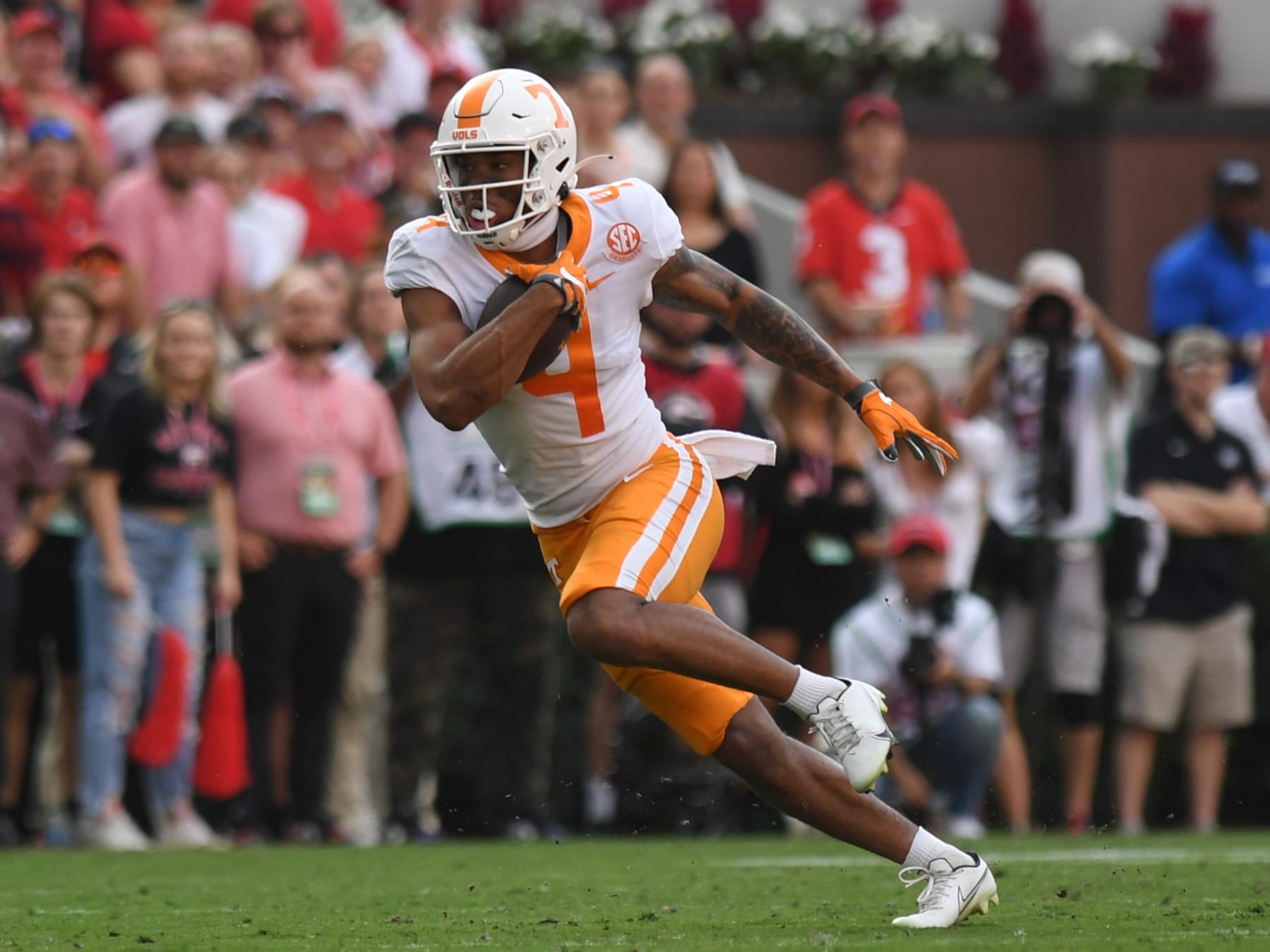
Cedric Tillman, WR, Tennessee
Strengths: Outstanding ball skills, bigger target with vertical ability, creates after the catch, adds to run game as outside blocker
Weaknesses: One year of top-notch production, limited route tree, coming off season-ending injury
The 2022 campaign turned into a lost season for Tennessee's Cedric Tillman. The wide receiver did play in six games and contributed 417 yards as part of the Volunteers' reemergence onto the national scene. However, ankle surgery derailed most of the prospect's final season on campus.
The bulk of Tillman's evaluation stems back to the previous year, when he finished second among SEC wide receivers with 12 touchdown receptions and fifth with 1,081 receiving yards. According to Pro Football Focus, Tillman generated the second-highest passer rating among SEC targets on intermediate throws during that campaign.
The 6'3", 213-pound receiver showed up and out when the lights shined brightest. Since the start of October 2021, Tillman caught 50 passes for 767 yards in seven games against Top 25 opponents, including a 200-yard effort against the No. 1 Georgia Bulldogs.
For the Cleveland Browns, the organization knew it needed more at wide receiver this offseason. First, general manager Andrew Berry traded this year's second-round pick for Elijah Moore. He's now added Tillman. The Browns are now far more than Amari Cooper in the passing game.
Cooper, Donovan Peoples-Jones, Moore and Tillman have the potential to be special if Deshaun Watson returns to form.
Grade: B
75. Atlanta Falcons
44 of 71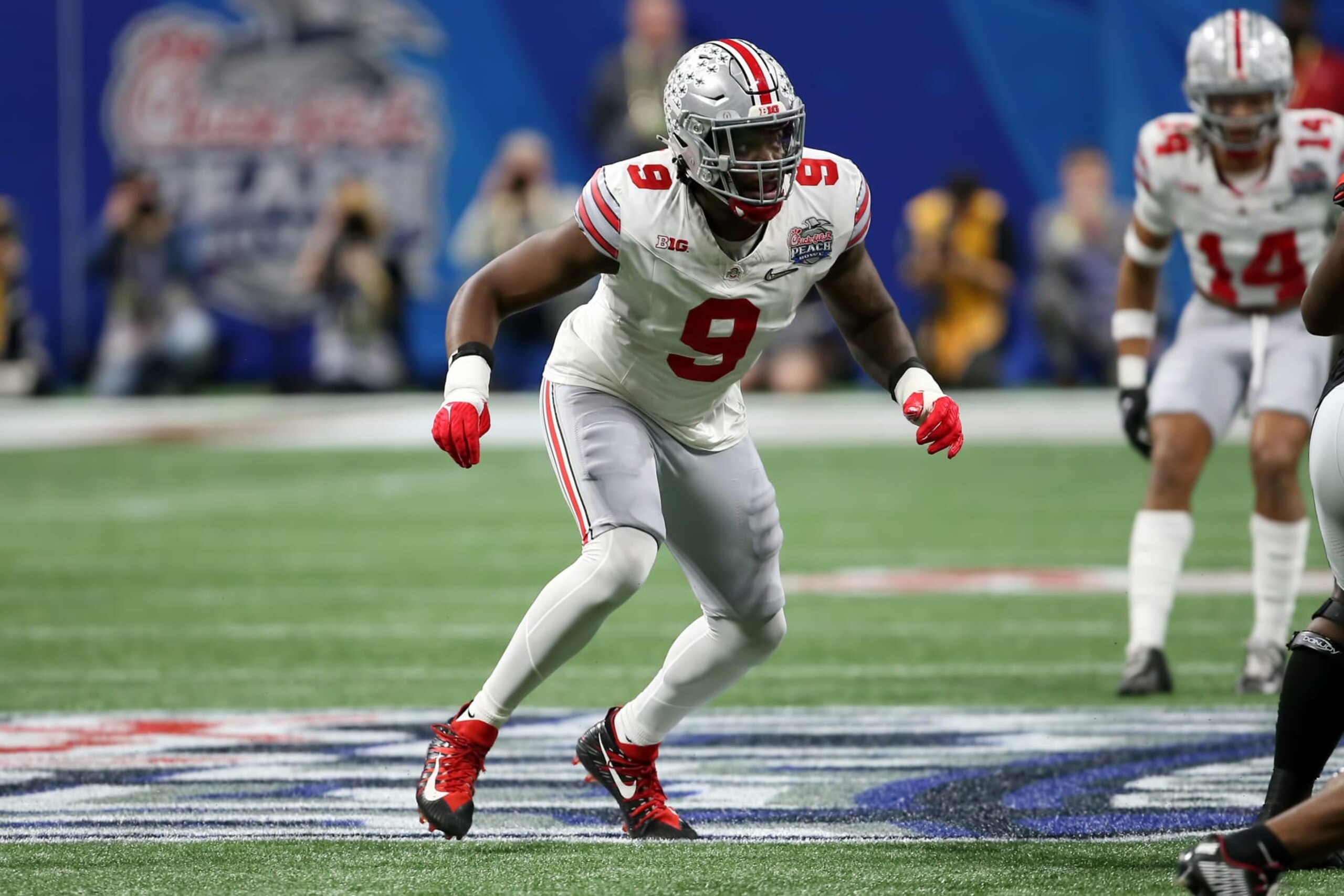
Zach Harrison, DL, Ohio State
Strengths: Ideal frame and long levers, strong at point of attack, easily locks out blockers and sheds, good hand usage
Weaknesses: Lacks explosive traits as a pass-rusher, plays too stiffly and tall
Zach Harrison was supposed to follow in the footsteps of the Bosa brothers and Chase Young to become the next great Ohio State pass-rusher. The 2019 247Sports 5-star recruit's career never developed as such.
As a true freshman, Harrison flashed signs of future dominance. But that expected level of play never fully materialized. In four seasons, he managed 11 total sacks. In fact, his 3.5 sacks during his senior campaign equaled his freshman output.
Harrison turned out to be a solid player but a step below those previously mentioned.
Despite what may be deemed a disappointing collegiate career, Harrison still presents top-level physical talent as a 6'5½", 274-pound defender with 36¼-inch arms and the versatility to play up and down the line of scrimmage.
The Atlanta Falcons continue to refurbish their defensive line beyond Grady Jarrett. The organization already brought in David Onyemata and Calais Campbell. Harrison provides a young option capable of playing end and defensive tackle in sub-packages. Now, the group is far more talented and stout than a year ago.
Grade: C
76. New England Patriots (via Carolina)
45 of 71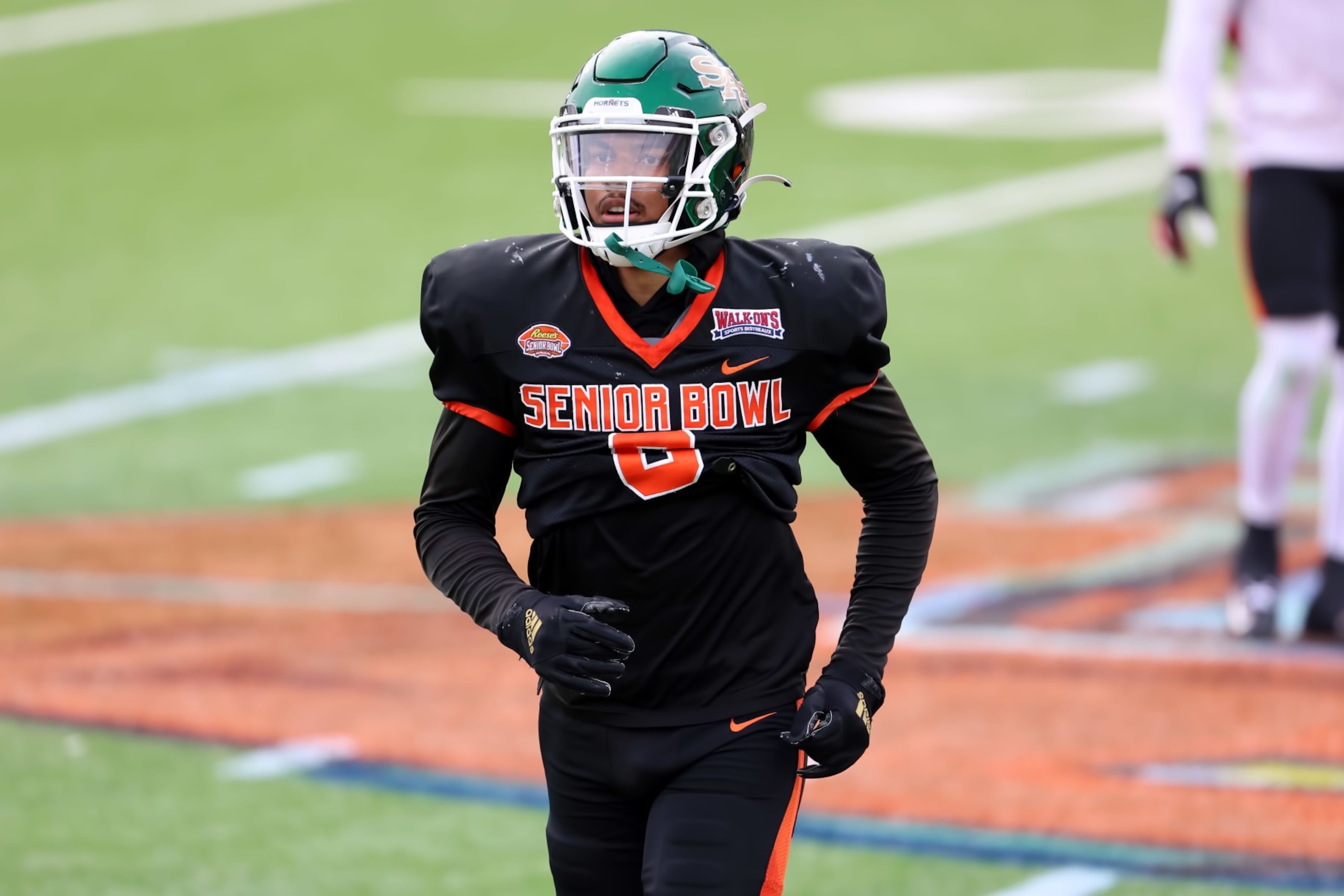
Marte Mapu, LB, Sacramento State
Strengths: Safety convert who plays much bigger than size indicates, physical downhill defender, ball skills
Weaknesses: Struggles to disengage from blockers, questionable top-end speed
One moment from a prospect can open eyes around the NFL.
In the case of Sacramento State's Marte Mapu, the converted safety showed up as a late invite to the Senior Bowl. During practice, he blew up a fullback with the sound of a loud crack and made the play in the backfield.
Then, Mapu looked extremely fluid and comfortable working in coverage.
The New England Patriots love players who can contribute in multiple areas, especially among their linebackers. Mapu screams the Patriot Way.
Grade: B
77. Los Angeles Rams (via Miami)
46 of 71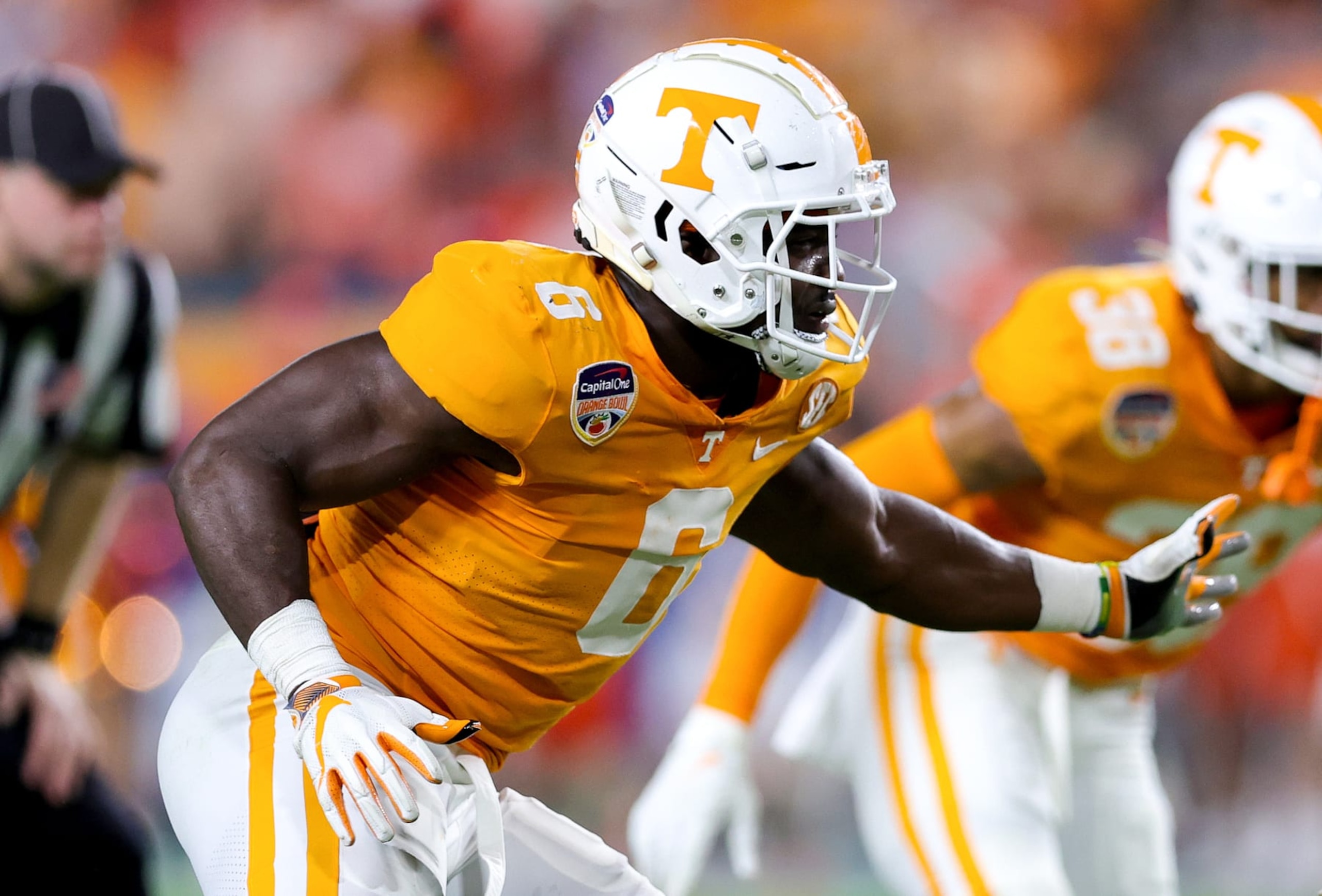
Byron Young, Edge, Tennessee
Strengths: Elite acceleration off the snap, flexible to turn the corner, attacks blockers in the run game (even if he doesn't have a plan)
Weaknesses: Small build with shorter arms, struggles to hold point of attack and shed, tendency to play high
With a story tailor-made for future movie rights, Tennessee's Byron Young didn't enter college football as a heralded recruit. Instead, he worked at Burger King, the Dollar Store and Circle K before he had an opportunity to join the Georgia Military Academy and send his scrimmage highlights to bigger programs, according to the Knoxville News Sentinel's Adam Sparks.
The Volunteers eventually called, and Young capitalized. In only two seasons, he racked up 23.5 tackles for loss and 12.5 sacks. His blazing 4.43-second 40-yard-dash speed should be harnessed in the NFL to make him a premium pass-rusher, even if he plays only in specific pressure packages.
At the age of 25, his dream is finally being realized.
"Sometimes I think about (those jobs) and tell myself that I'm not supposed to be here," Young told Sparks. "It's crazy how I got here. So I'm really proud of myself and everything I accomplished."
The Los Angeles Rams desperately needed help on the edge after releasing Leonard Floyd. Young provides the speed and athleticism that general manager Les Snead prefers at the position and hopefully takes some pressure off of Aaron Donald.
Grade: B
78. Green Bay Packers
47 of 71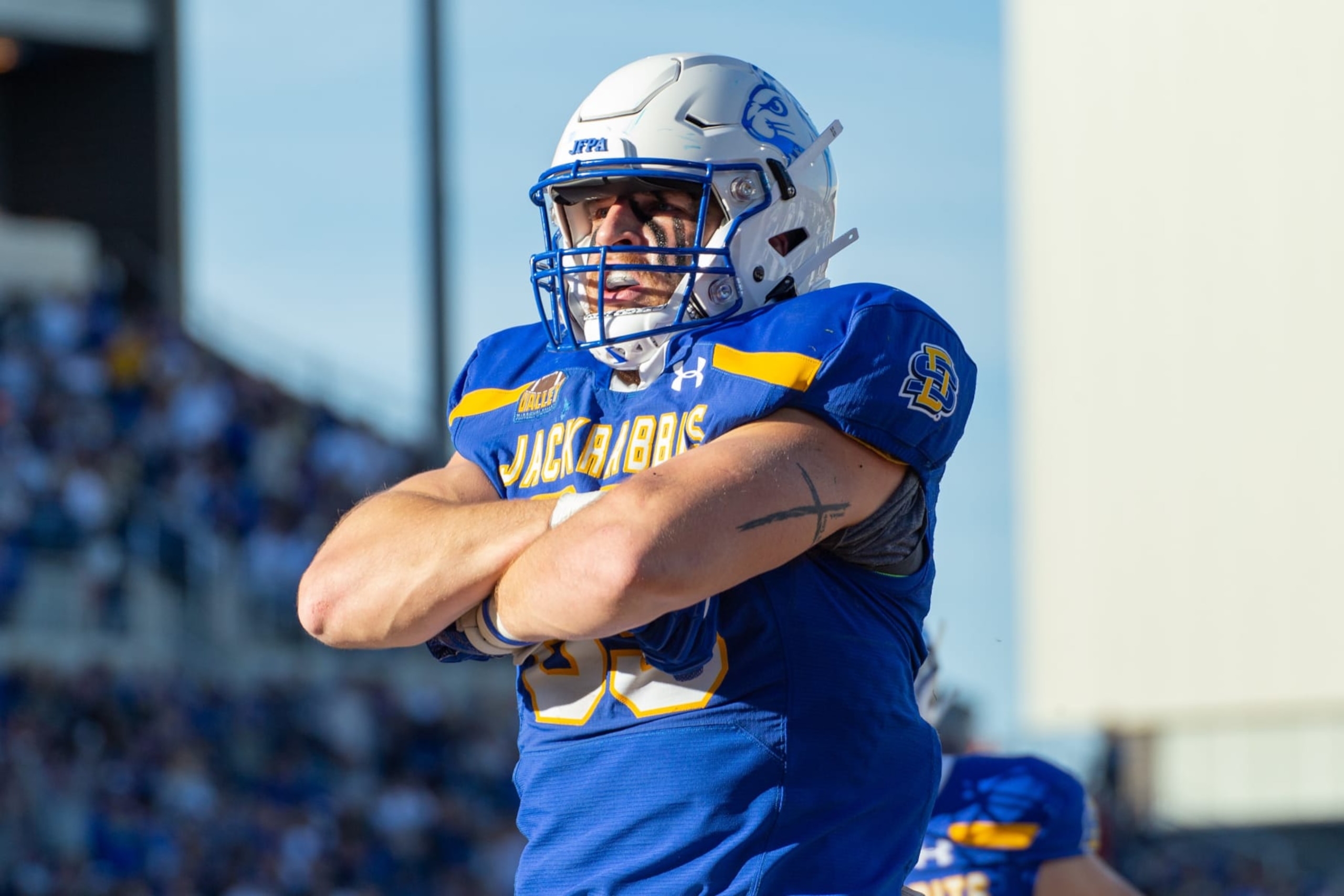
Tucker Kraft, TE, South Dakota State
Strengths: Top-notch speed and athleticism, creates after catch, strong blocker, contributes from multiple alignments
Weaknesses: Subpar route-runner, tends to play with high pad level
FCS underclassmen don't often make the leap to the NFL draft, but that's exactly what South Dakota State tight end Tucker Kraft did.
"I pretty much had my mind made up the whole year," Kraft said, per the Sioux Falls Argus Leader's Matt Zimmer. "Scouts told me I needed to do one thing this season to solidify my spot (atop NFL draft boards) and that was to return to the field and still look like myself. I've done that, and I'm only feeling better every single week."
Kraft suffered a foot injury during South Dakota State's first contest against the Iowa Hawkeyes, only to return for the Jackrabbits' final four regular-season games and their playoff run. He still finished third on the team with 348 receiving yards.
In doing so, he answered scouts' questions about how'd he perform coming off the injury. That helped solidify him as one of the most skilled tight ends in this year's draft class.
The Green Bay Packers are taking an interesting approach to this year's draft class. Before, their second-round selections were good additions to give new starting quarterback Jordan Love more weapons. Another tight end in the third round after already taking Luke Musgrave is a fascinating approach, and everyone should expect more 12 personnel in Green Bay this season.
Tight ends are a quarterback's best friend, and multiple tight end sets can certainly help Love with protection. Besides, Kraft is an excellent value at this juncture.
Grade: B
79. Indianapolis Colts (via Washington)
48 of 71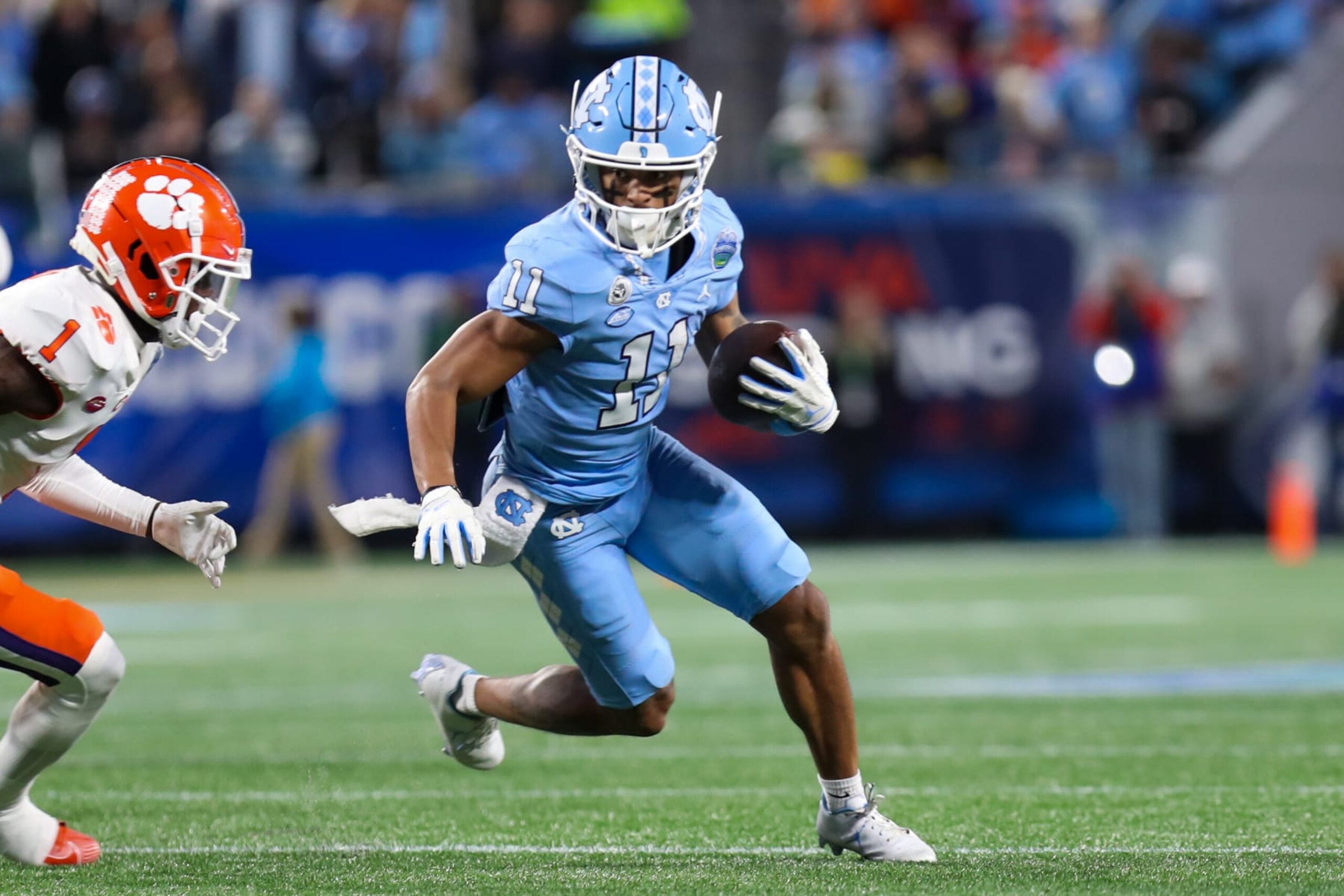
Josh Downs, WR, North Carolina
Strengths: Outstanding short-area quickness, deadly slot receiver, speed and shiftiness allows him to create after the catch
Weaknesses: Small target with limited catch radius, not going to outmuscle defenders for contested catches or break tackles
There are two different ways to look at North Carolina's Josh Downs as a prospect.
In one light, he's an elite route-runner capable of creating separation, particularly when working from the slot. In another, Downs is yet another undersized target in this class at 5'9" and 171 pounds.
For a team to benefit from the first part of who Downs is, it must accept the second.
There's absolutely no doubt what the two-time first-team All-ACC performer provides. According to Pro Football Focus, Downs led all receivers with 173 receptions and 2,107 yards when working out of the slot over the last two seasons. To look at those numbers a different way, 89.1 percent of the underclassman's total receiving yards during that span came when working as the inside receiver.
Downs adds extra value as a punt returner. But his primary role entering the Indianapolis Colts' lineup will be as the offense's primary slot receiver.
Previously, the Colts' wide receiver corps was full of trees. Michael Pittman Jr. and Alec Pierce are tall, linear athletes. The team lacked a true threat out of the slot. General manager Chris Ballard did sign Isaiah McKenzie as a free agent, but Downs is a far more electric option to get open consistent for the organization's newly minted franchise quarterback, Anthony Richardson.
Grade: B
80. Carolina Panthers (via Pittsburgh)
49 of 71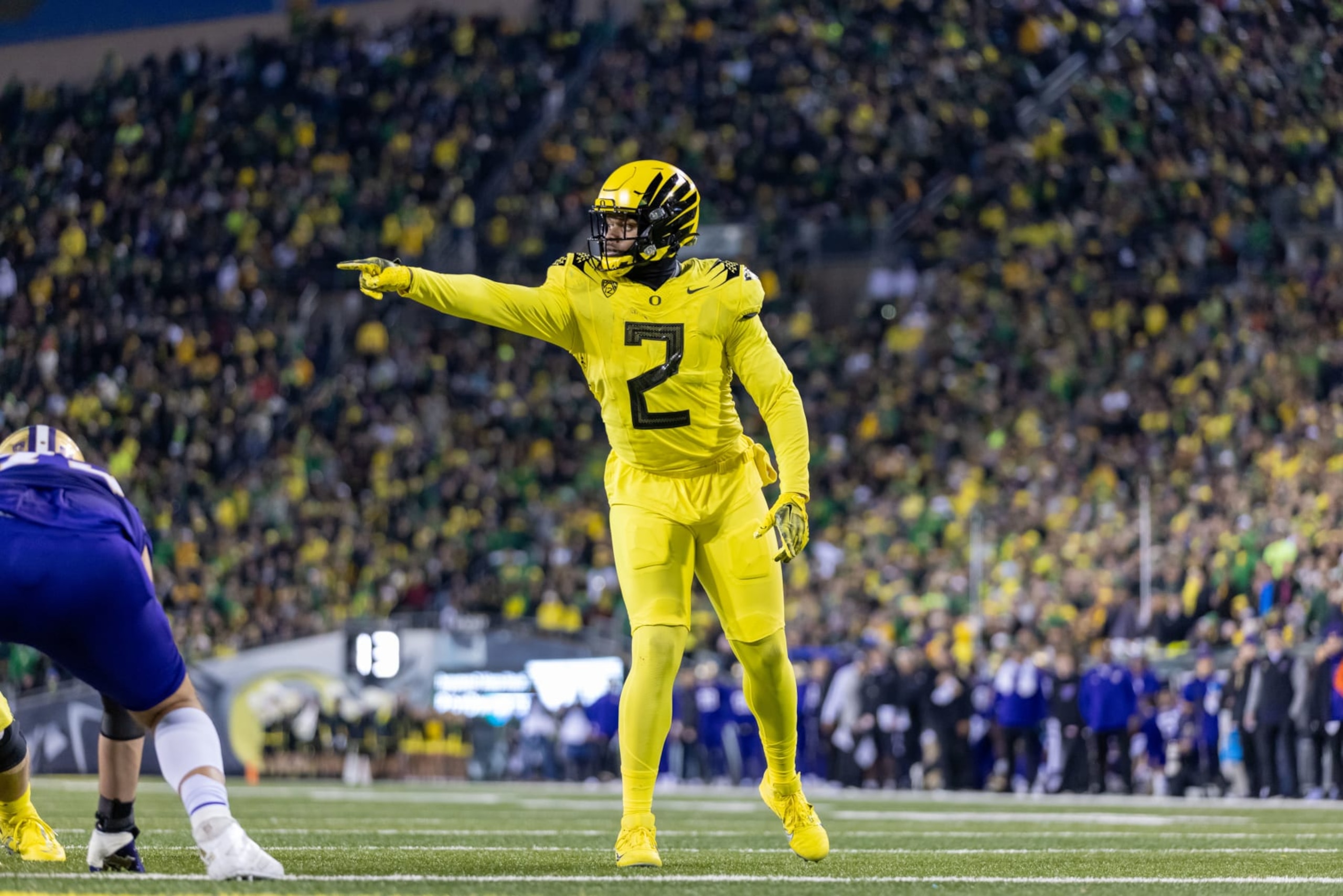
DJ Johnson, Edge, Oregon
Strengths: Elite burst, sets edge, works over tight ends
Weaknesses: Linear athlete, inconsistent hand usage, inconsistent at reading keys
One number will pop up when looking at DJ Johnson's athletic profile: The 6'4", 260-pound edge defender ran a 4.49-second 40-yard dash at the NFL Scouting Combine.
His burst allows him to get upfield and be disruptive, though he doesn't have ideal lateral movement.
For the Carolina Panthers, Johnson gives the team's defense another option opposite Brian Brians, alongside Yetur Gross-Matos and Marquis Haynes Jr.
Grade: C
81. Tennessee Titans (via Arizona)
50 of 71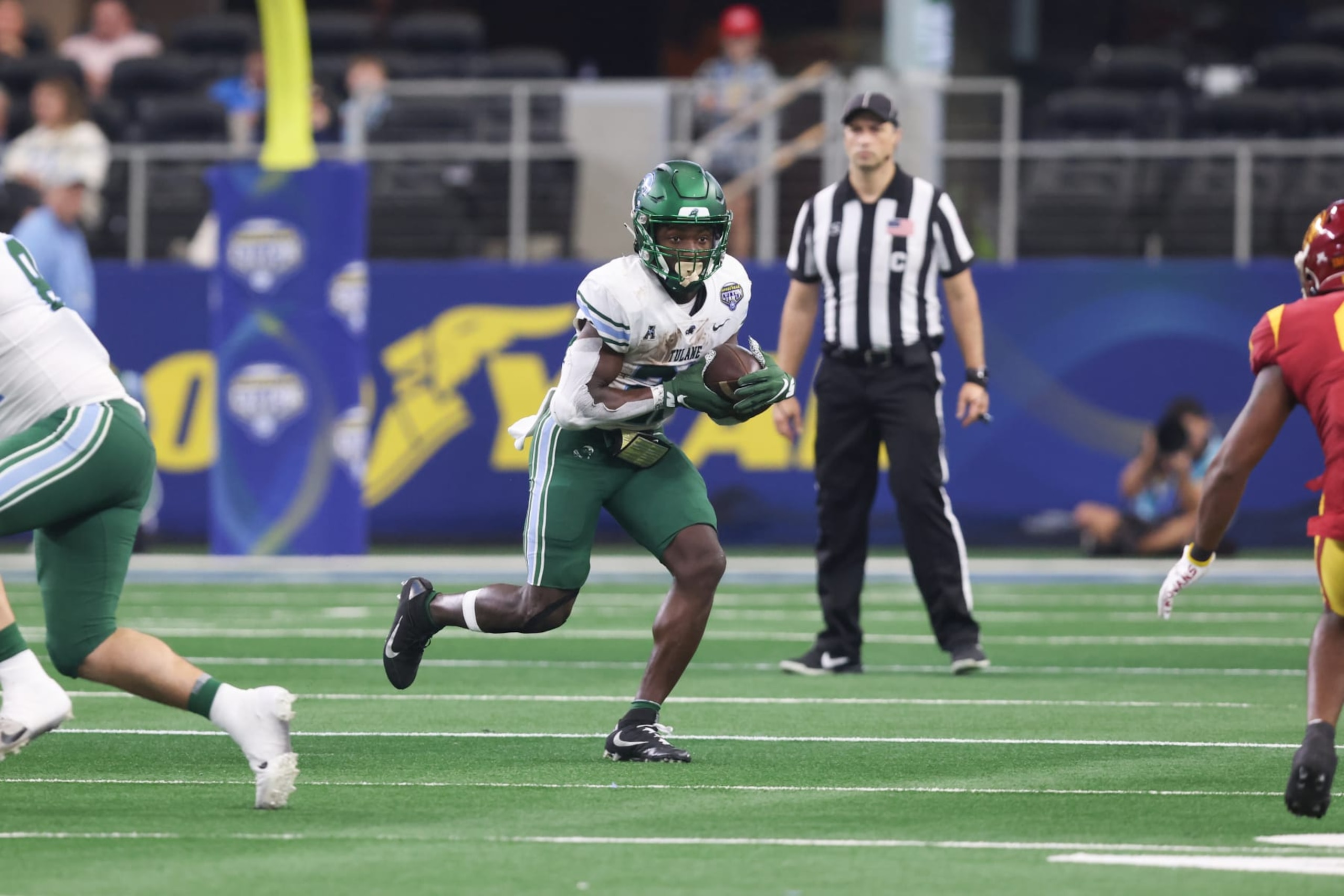
Tyjae Spears, RB, Tulane
Strengths: Gumby-like lower body with loose hips and ankles, instant acceleration off jump-cuts, big-play threat, fights for extra yards
Weaknesses: Lacks power, tough ACL injury during 2020 season
Excitement accompanies Tulane's Tyjae Spears whenever he runs the ball.
The reigning AAC Offensive Player of the Year weaves and jukes his way through traffic better than anyone in this year's class. His vision, lower-body flexibility and lateral agility are exceptional.
His effectiveness came into focus over the last eight games of the 2022 campaign, when the 5'10", 201-pound ball-carrier eclipsed 120 yards in each of those contests, including a spectacular 205-yard, four-touchdown effort against the USC Trojans in the Cotton Bowl.
To fully illustrate how elusive Spears is, 66.3 percent of his total rushing yardage came after contact, per Pro Football Focus. The junior also forced 63 missed tackles. According to SumerSports' Tej Seth, Spears' career explosive run rate tied for first in this year's draft class.
The Tennessee Titans know a special runner when they see one, though Spears is basically the opposite of Derrick Henry in play style and skill set. For that exact reason, the rookie's inclusion into the lineup will make the Titans offense more well-rounded overall.
Overall, the Titans draft class so far is reflective of the franchise's philosophies. Peter Skoronski is the type of lineman the team needed to control the line of scrimmage. Will Levis is an excellent schematic fit with similar abilities to Ryan Tannehill. And Spears will help in setting the tone with a ground-and-pound approach.
Grade: B+
82. Tampa Bay Buccaneers
51 of 71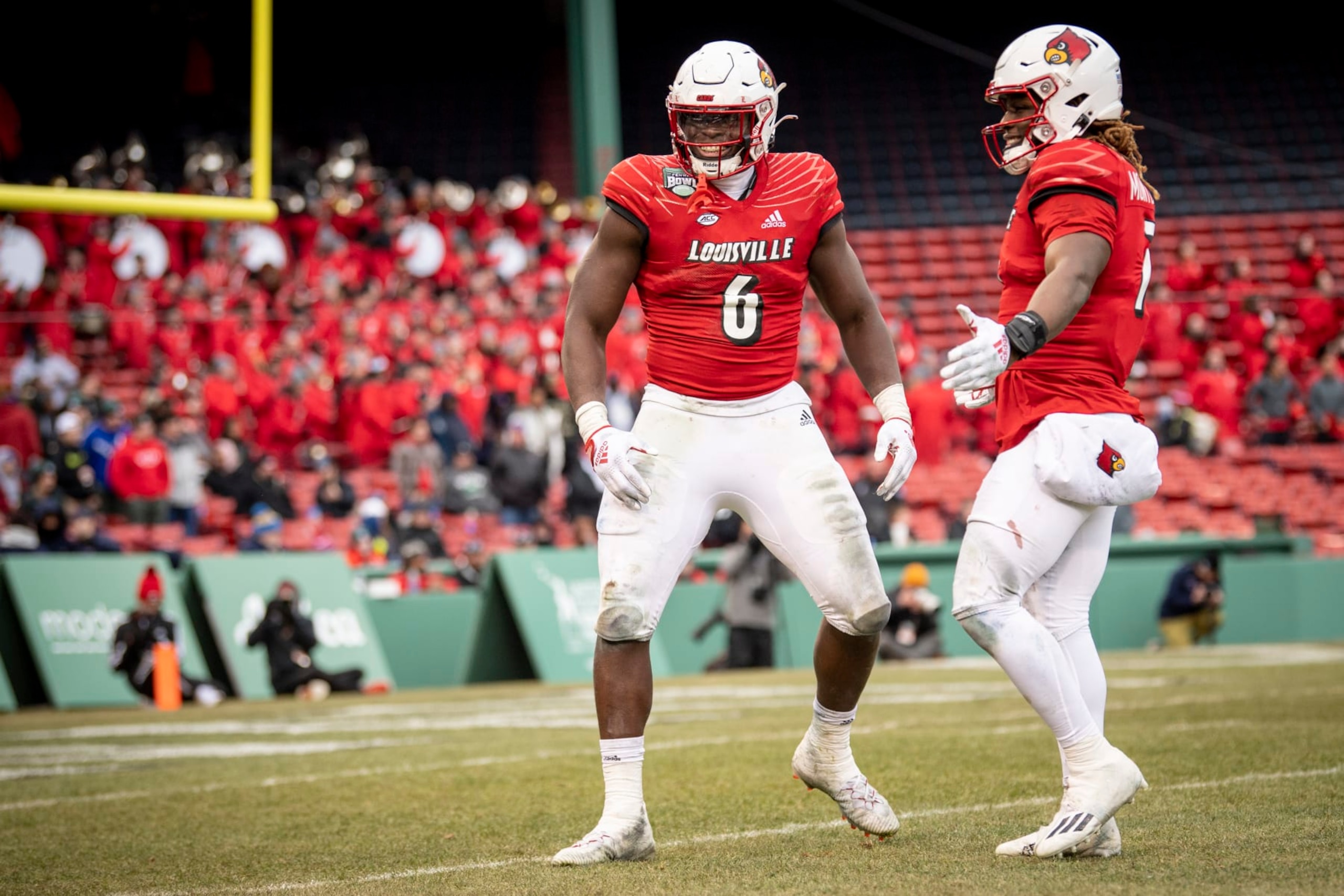
YaYa Diaby, Edge, Louisville
Strengths: Fantastic athlete, Good lateral agility to avoid getting hooked, consistent motor
Weaknesses: Late off the ball as a result of read-and-react defense, lacks play strength
Louisville's YaYa Diaby may be listed as an edge, but he played in base three-man front for the Cardinals. He'll feel right at home with the Tampa Bay Buccaneers.
Diaby's athletic profile indicates he can be an explosive edge, but he's most comfortable working as a 5-technique.
With Diaby's addition in the third and Calijah Kancey's first-round selection, the Buccaneers upgraded their athleticism along their defensive front.
Grade: C
83. Denver Broncos (via Seattle)
52 of 71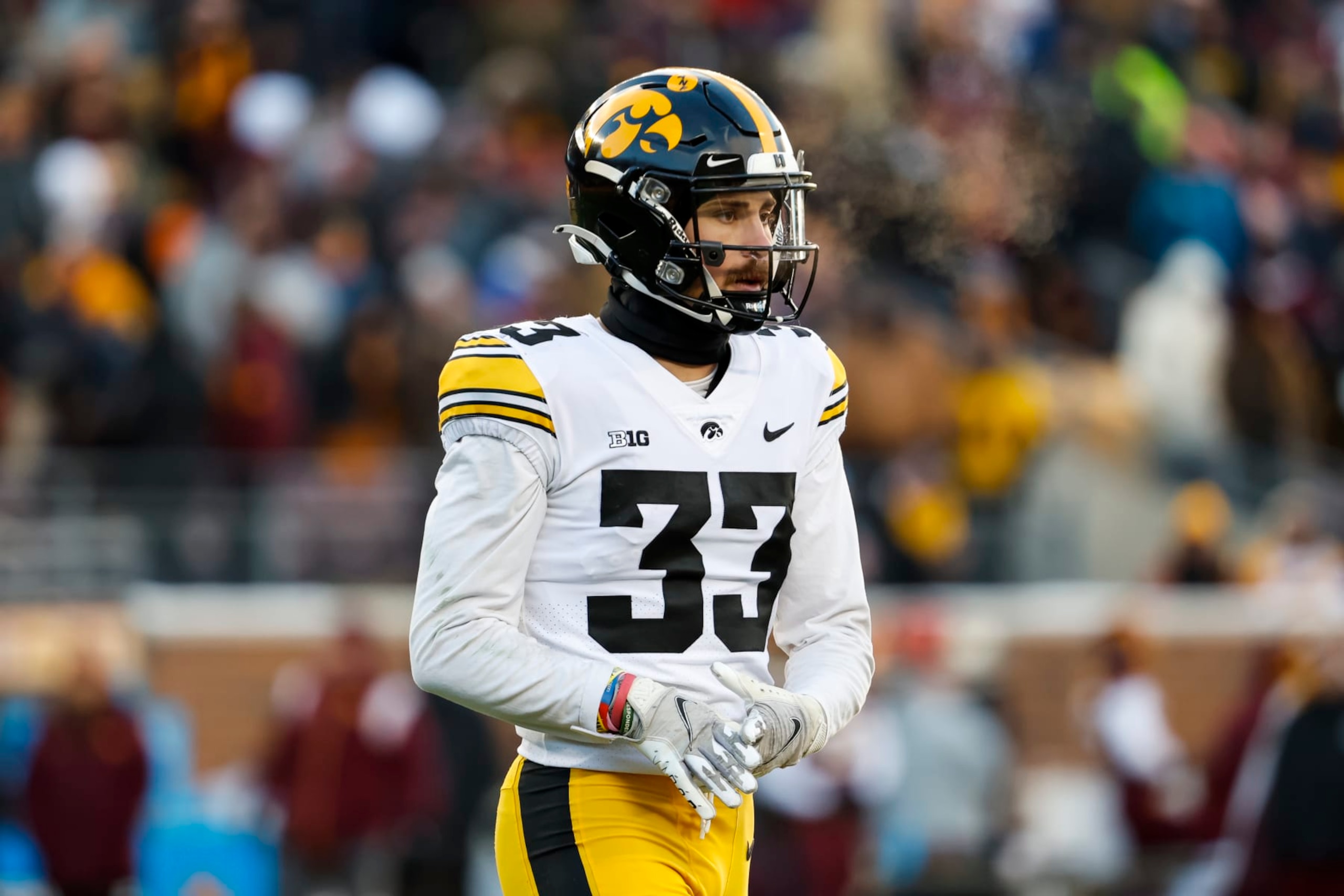
Riley Moss, CB, Iowa
Strengths: Experienced starter, impressive all-around athlete, good ball skills with a nose for the end zone, understand angles and spacing
Weaknesses: Inconsistent footwork, bites on some fakes, lacks length
Iowa's Riley Moss emerged as one of the nation's top cornerbacks during his collegiate career.
As a three-year starter in one of the nation's best conferences, Moss was a two-time first-team All-Big Ten selection and earned the Tatum-Woodson Big Ten Defensive Back of the Year award in 2021. Throughout his time with the Hawkeyes, Moss had 37 pass breakups, 11 interceptions and scored three touchdowns.
According to Pro Football Focus, Moss had the highest career grade among this year's draft-eligible cornerbacks.
The former state (Kansas) champion high-hurdler is also a standout athlete with a 4.45-second 40-yard dash, 39-inch vertical and 10'7" broad jump.
Patrick Surtain II is a shutdown cover corner on one side of the Denver Broncos defense. Damarri Mathis, who the team chose in the fourth round of last year's draft, emerged as a starter over the second half of his rookie season. Moss showed himself to be a better cover corner throughout his collegiate career.
All three now form a solid trio of outside corners, along with K'Waun Williams in the slot, in a division where the group must face Patrick Mahomes and Justin Herbert twice a year.
Grade: B
84. Miami Dolphins
53 of 71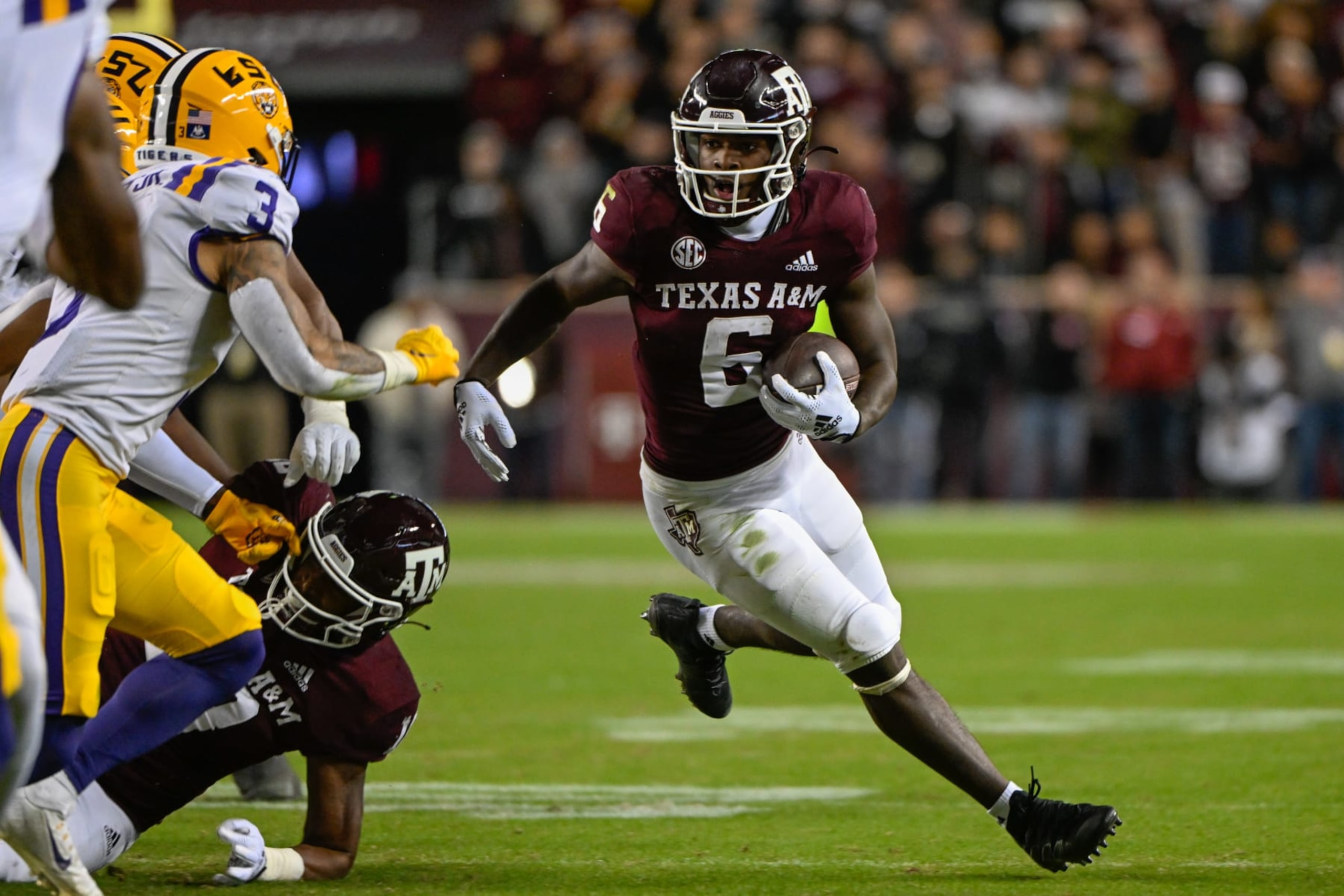
Devon Achane, RB, Texas A&M
Strength: Game-changing speed, excellent footwork in tight areas, has shiftiness to avoid big hits, understands how to change gears and set up blocks, adds value as returner
Weaknesses: Small frame, unlikely to be an every-down back, play strength is subpar
Texas A&M's Devon Achane brings two elements that every offense wants: speed and big-play ability.
Achane doubled as a sprinter for the Texas A&M track team, where his 4x100-meter squad captured first place at the 2021 NCAA Outdoor West Regionals. The 5'9", 188-pound back ran a 4.32-second 40-yard dash at this year's NFL Scouting Combine.
Track speed doesn't always translate to the football field, though, particularly at running back where abrupt stop-starts and speed changes are vital to success. But Achane showed he can properly harness his velocity.
"Sometimes with track guys ... they're a little bit out of control or there's some unnaturalness to them," Aggies head coach Jimbo Fisher said two years ago, per All Aggies' Cole Thompson. "He was so natural and smooth that he made it look easy. You didn't realize how fast he was."
The SEC back carried the ball 326 times for 2,012 yards since his coach made those comments.
Achane joins a track team currently fielded by the Miami Dolphins. The selection is about more than straight speed, though. The Dolphins don't have a true lead back on the roster. Achane's smallish stature may be worrisome, but his performance in that role with the Aggies shows he's more than capable of being more than a change-of-pace back.
Grade: A
85. Los Angeles Chargers
54 of 71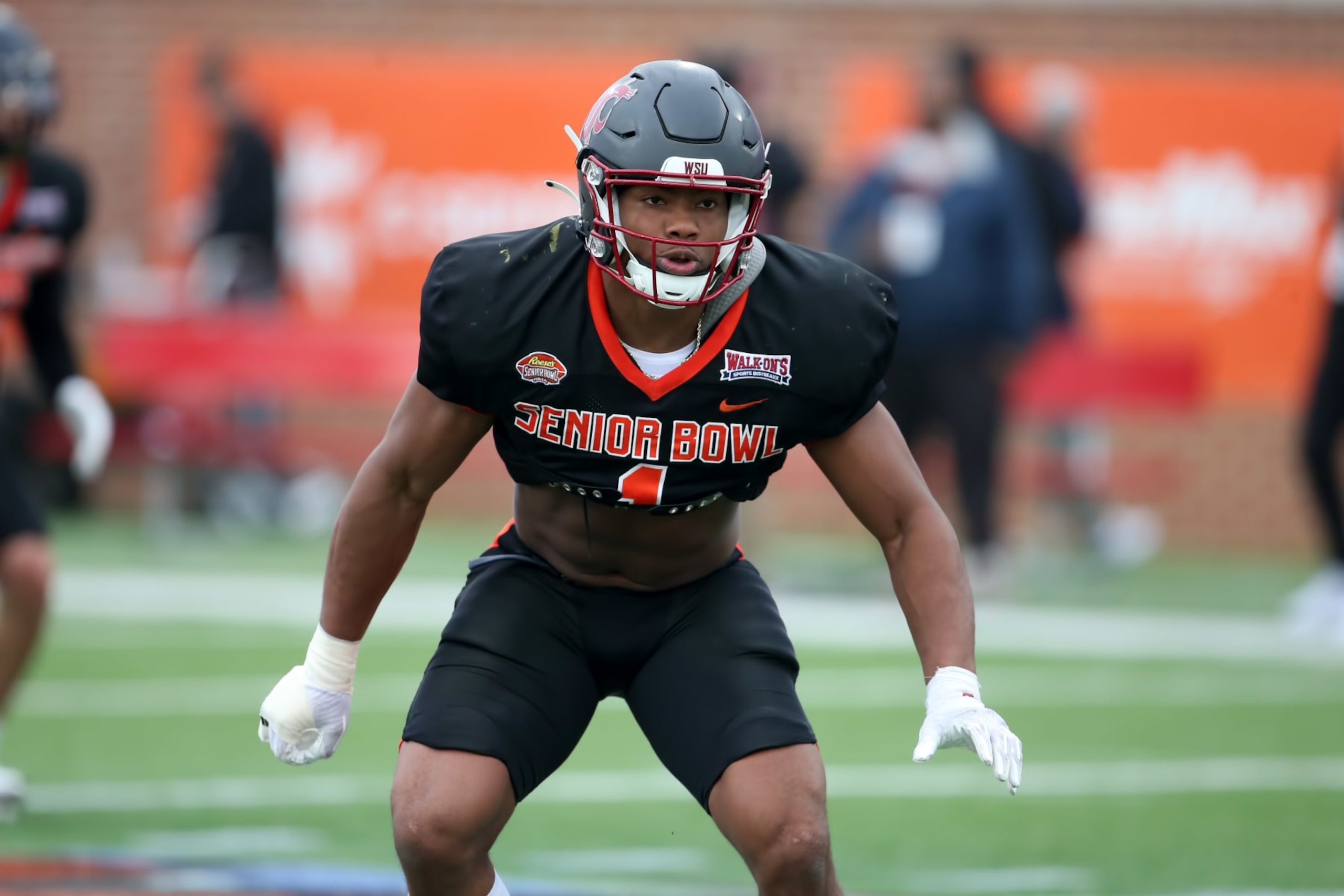
Daiyan Henley, LB, Washington State
Strengths: Multipurpose athlete, history as a DB shows in fluidity and man coverage, good range and tracking speed
Weaknesses: Instincts are still developing, undersized, will get enveloped by bigger blockers
Versatile defenders are often referred to as positionless, but Daiyan Henley truly was to start his collegiate career.
Henley originally committed to and played five seasons with the Nevada Wolf Pack. After being recruited as an athlete/wide receiver, Henley moved to defensive back, where he ultimately won the starting nickel spot, only to be asked by the coaching staff to move to linebacker.
"That was probably the weirdest transition I ever had because I rejected it," Henley told the New York Post's Andrew Crane.
What Henley didn't see at the time, his coaches clearly did. As a redshirt junior at Nevada, the 6'1", 225-pound defender amassed a team-high 103 tackles and four interceptions. He then transferred to Washington State for his sixth year of eligibility and led the Cougars with 106 total tackles with 12 tackles for loss.
The Los Angeles Chargers are preparing for what may come at linebacker, with Kenneth Murray in the fourth year of his first-round rookie deal and Eric Kendricks, who turned 31 earlier this year, manning the other spot.
Henley can immediately help as a nickel linebacker in sub-packages and possibly take over as a starter in a year or two.
Grade: B
86. Baltimore Ravens
55 of 71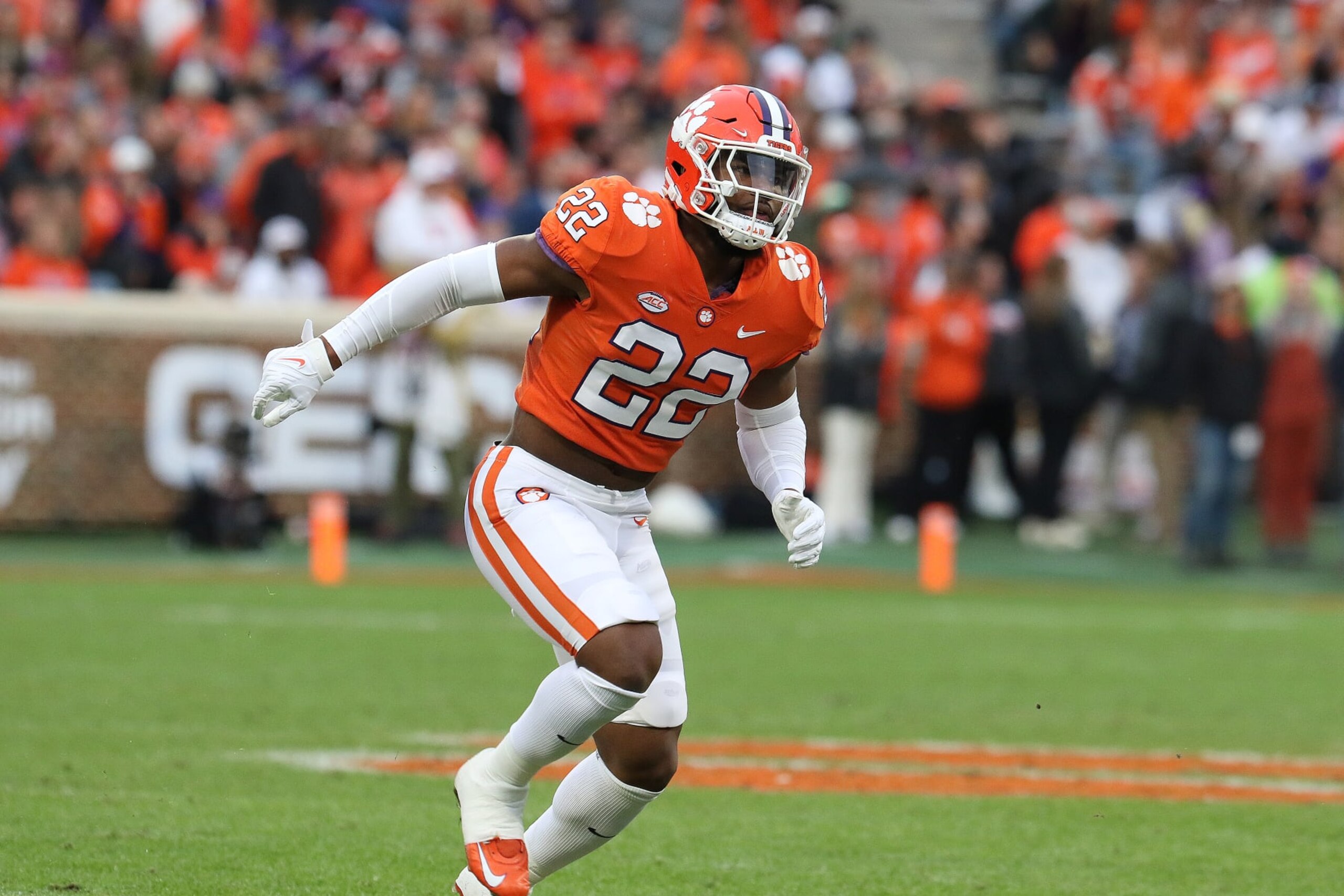
Trenton Simpson, LB, Clemson
Strengths: Fluid and versatile athlete, doesn't look out of place in man coverage, quickly closes ground to ball-carrier, physical when playing downhill
Weaknesses: Overwhelmed once engaged by blockers, not as adept in zone coverage, more athlete than polished pass-rusher
For today's linebacker prospects to truly hold value, they must be able to do more than just play their position at a high level.
Clemson's Trenton Simpson told reporters at the NFL Scouting Combine that he "can play at all three levels–defensive end, all three linebackers, safety and free safety."
His athletic profile certainly backs that up. The 6'2", 235-pounder posted an elite relative athletic score with a 4.43-second 40-yard dash, 40.5-inch vertical and 4.24-second short shuttle.
"Being able to be on the field all three downs, that's what I pride myself on," Simpson told reporters at the combine. "Being able to be in the box on first and second down and then third down, spying any quarterback. I feel like that's my best attribute, being able to spy that quarterback. He moves off the spot, I'm going to get him every time."
The Baltimore Ravens do it every time. The organization remains patient and lets the board come to them. In this case, they landed a top-three linebacker in this year's class after Simpson slid to a degree.
The organization has yet to pick up Patrick Queen's fifth-year option, and Simpson could eventually be the linebacker starting next to Roquan Smith.
Grade: A
87. San Francisco 49ers (via Minnesota)
56 of 71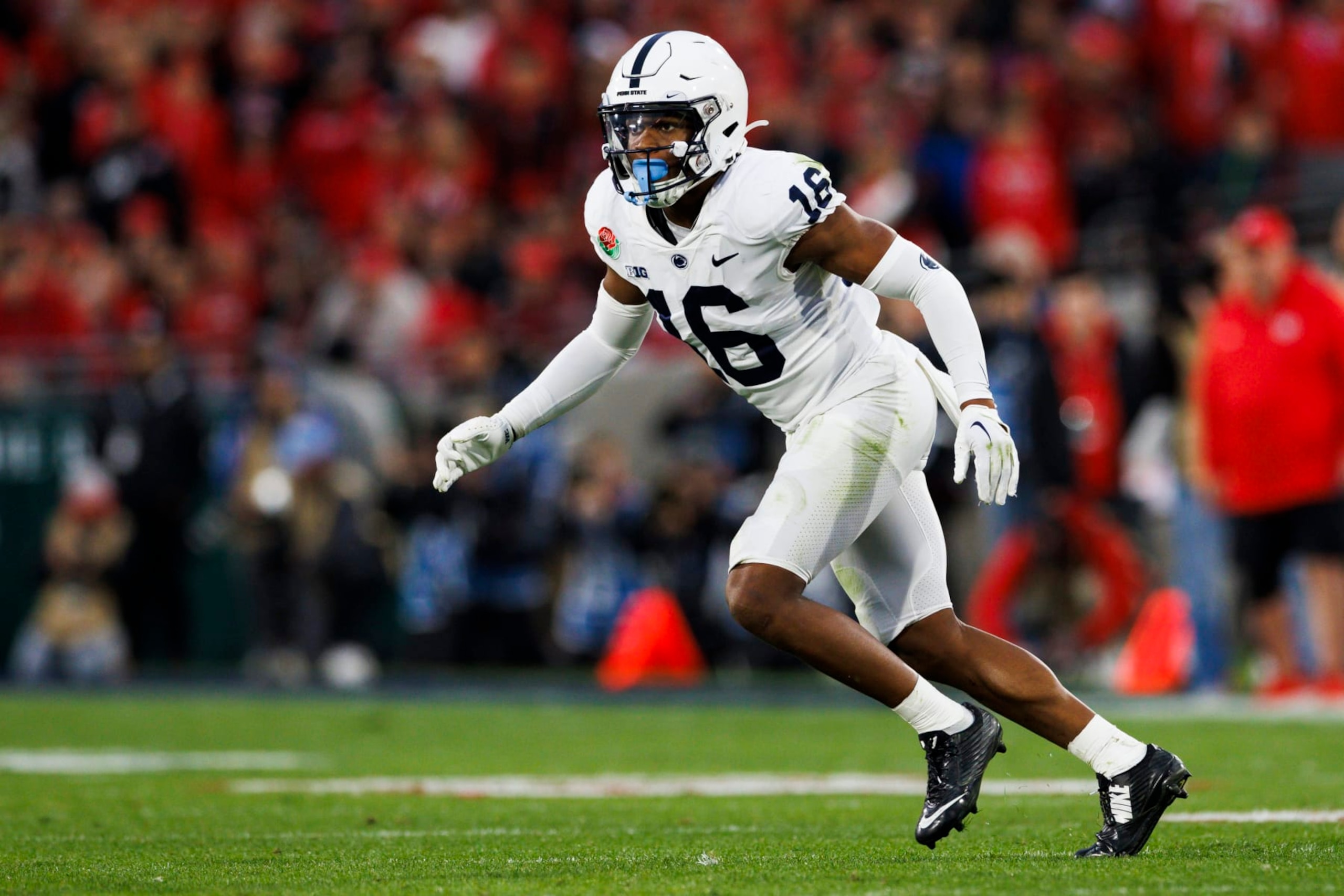
Ji'Ayir Brown, S, Penn State
Strengths: Instinctive ballhawk, quick trigger, versatility, high energy, no problem filling against run
Weaknesses: Marginal athlete who lacks top-end speed, lacks explosive traits, overaggressive at times
Penn State safety Ji'Ayir Brown exemplifies how instincts and a strong understanding of how to play your position can overcome physical shortcomings.
Over the last two seasons, no defender snatched more than Brown's 10 interceptions. He also accumulated 147 total tackles, 18 pass breakups and three forced fumbles during that span. He's an excellent deep safety who has the ability to cover the slot and punish ball-carriers when playing downhill.
However, his athletic profile raises some concern. Brown ran a 4.65-second 40-yard dash at the NFL Scouting Combine, although he reportedly ran a 4.57 at Penn State's pro day.
"It was very important (to get under 4.6 seconds in the 40)," Brown said, per The Trentonian's Rich Scarcella. "I still didn't run the time I believed I should have run."
Brown also improved both his vertical and broad jumps at his pro day versus the combine. Even so, he still isn't considered an elite athlete at the position.
The San Francisco 49ers had to wait a long time to make their initial pick in this year's draft. The team did get a little impatient, though, and traded up to select Brown.
Three reasons likely led to this particular selection. First, Brown is just a good football player. Second, Tashaun Gipson Sr. turns 33 later this year. Finally, Talanoa Hufanga's previous injury history can't be completely overlooked.
Grade: B
88. Jacksonville Jaguars
57 of 71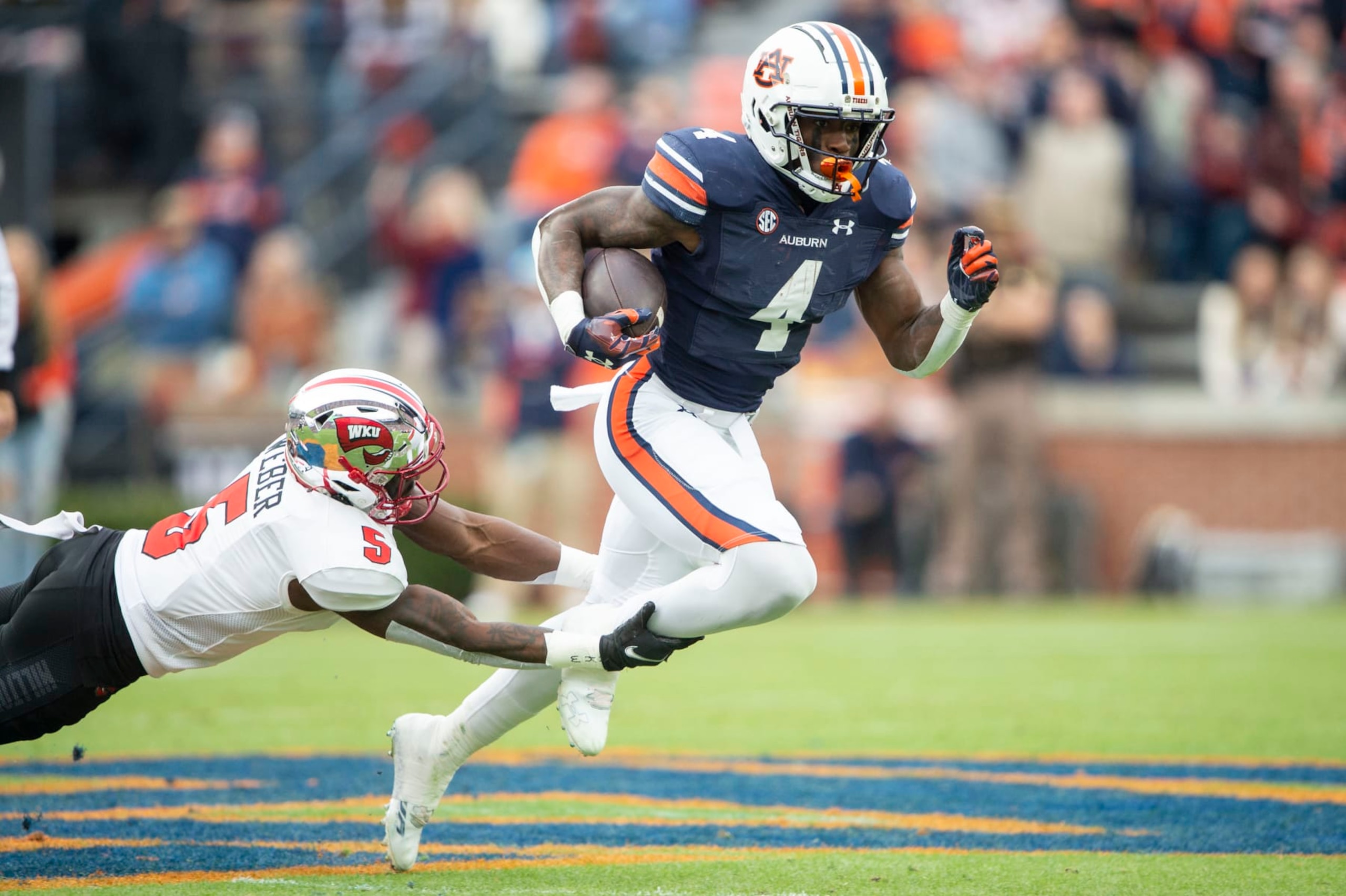
Tank Bigsby, RB, Auburn
Strengths: Physical runner, quick acceleration, flexible and strong lower body, three years as a lead back in SEC before declaring
Weaknesses: Tries to do too much, loses footing, can be indecisive, inconsistent hands and pass protection
Tank Bigsby's mother knew exactly what she was doing when she nicknamed her son at the age of seven.
Bigsby recalled the moment with Up and Adams' Kay Adams about how he lost his helmet during a rec-league game and continued to run for a touchdown. Cartavious Bigsby has been known as "Tank" ever since.
That nom de guerre appropriately fits Bigsby's style of play. The 6'0", 210-pound running back seemingly hasn't changed his game much in the last 15 years, as he still runs with power and reckless abandon.
The SEC Freshman of the Year in 2020 led the conference with 7.1 broken tackles forced per 25 carries, per CFB Film Room. Over the following two seasons, Bigbsy continued as the Tigers' lead back and led the program in rushing yardage each year.
The Jacksonville Jaguars have used the first two days of this year's draft to build around their emerging superstar quarterback, Trevor Lawrence.
With offensive tackle Anton Harrison and tight end Brenton Strange already in the fold, Bigsby provides more punch from the backfield. His bowling ball approach to playing the position is an ideal complement to lead back Travis Etienne Jr.
Grade: C+
89. Los Angeles Rams (via New York Giants)
58 of 71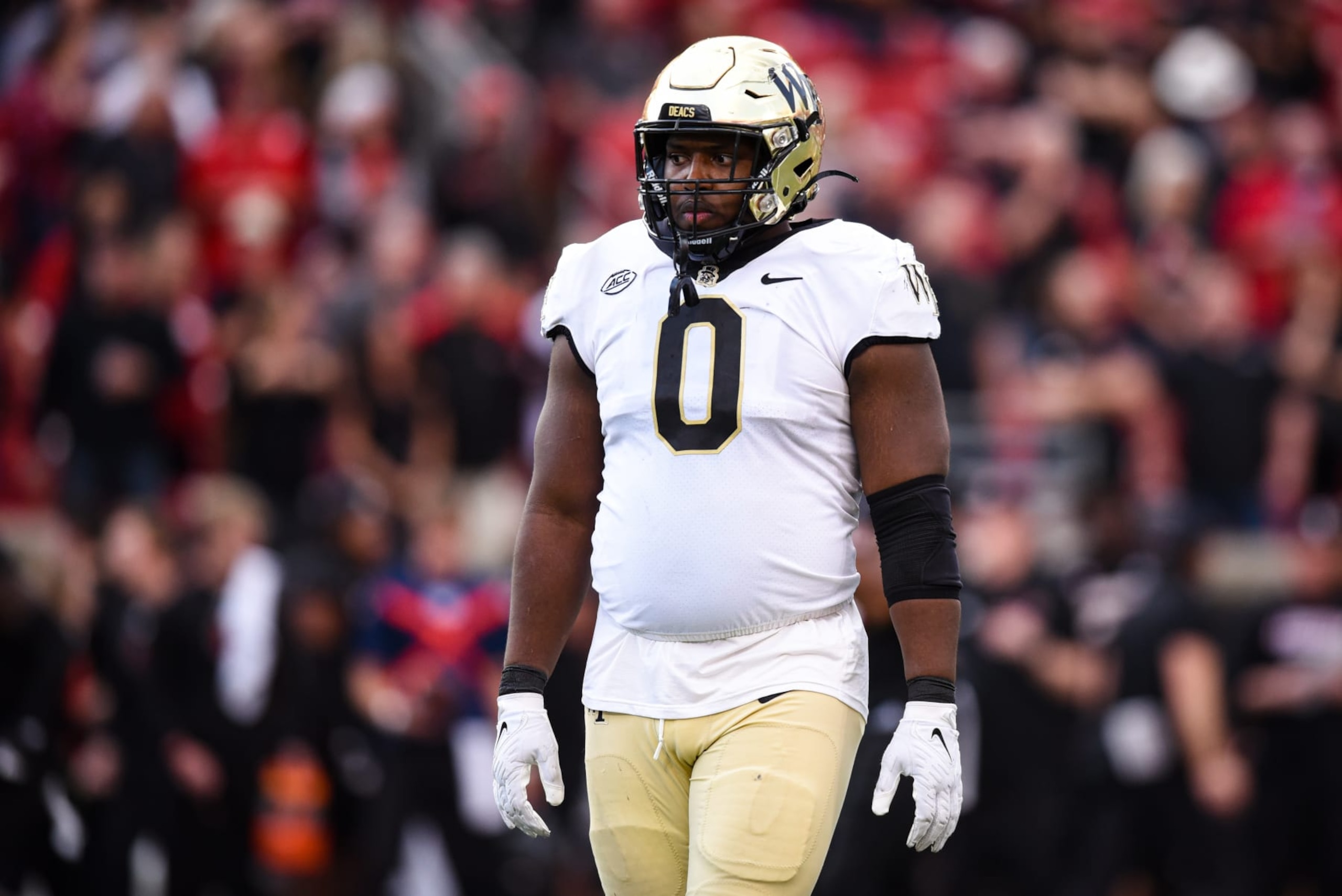
Kobie Turner, DL, Wake Forest
Strengths: Outstanding first-step quickness and lateral agility, good pad level, actively tries to rip football away, consistent motor
Weaknesses: Lacks girth and length, will be pushed around by double-teams, overall inconsistency
Kobie Turner's approach to football is strictly business.
The 6'2", 288-pound defensive tackle walked on to the FCS-level Richmond Spiders roster. At his first stop, Turner became a three-time All-Colonial Athletic Association selection and even earned the conference's Co-Defensive Player of the Year award.
In order to follow his NFL dream, Turner transferred to Wake Forest.
"The whole transfer was about playing against better competition, about doing whatever it took to put myself in the best position to be able to make it to the league, so it was a complete business decision," Turner told Bleacher Report's Matt Holder.
While undersized as an interior defender, Turner racked up 43.5 tackles for loss, 18 sacks and six forced fumbles between his two stops.
Turner could ask to learn from and play alongside his new teammate Aaron Donald. Turner is primarily a 3-technique. He's obviously not going to displace the three-time Defensive Player of the Year, but he can provide more juice along the interior, particularly in obvious passing downs.
Grade: B
90. Dallas Cowboys
59 of 71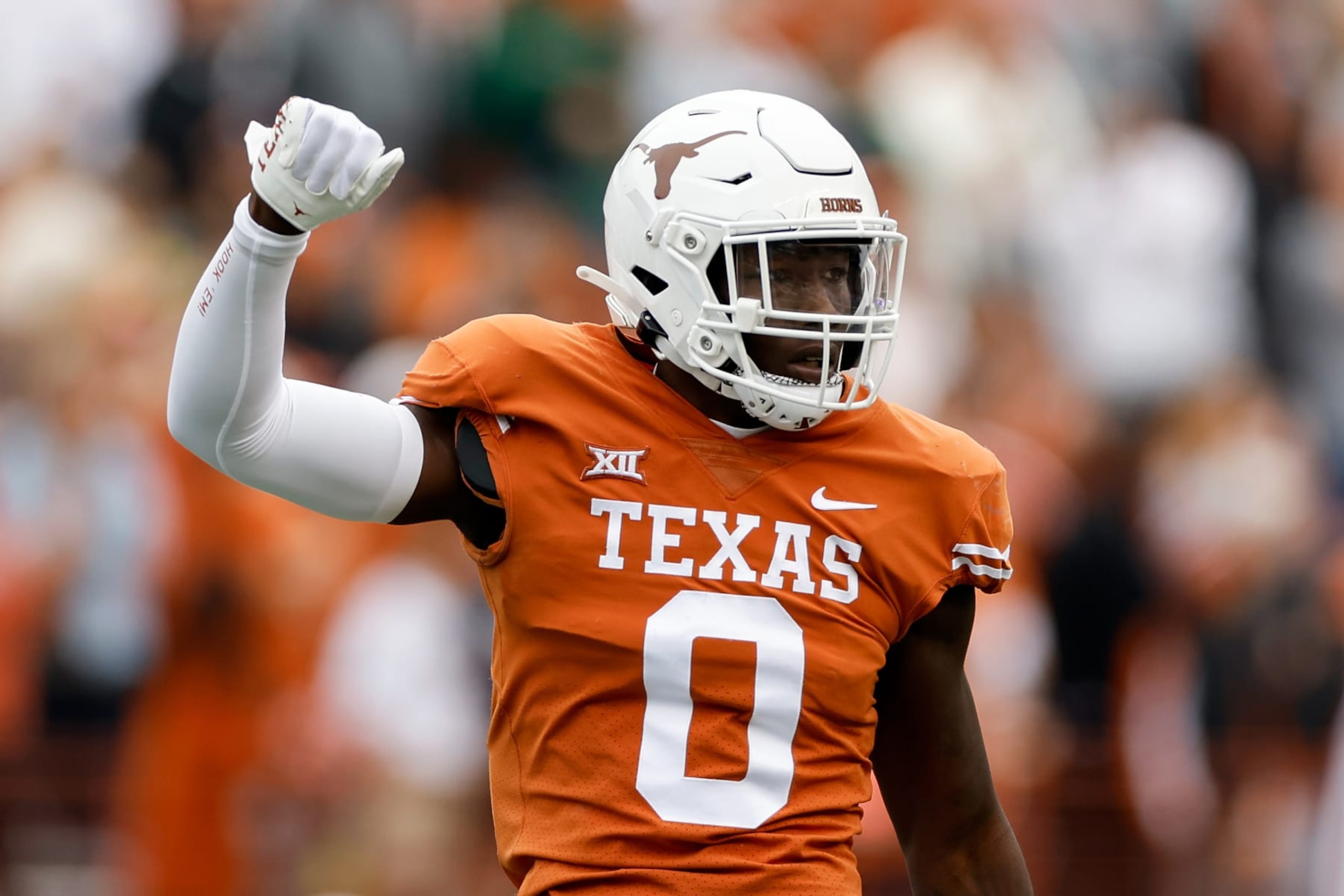
DeMarvion Overshown, LB, Texas
Strengths: Great frame, flies to the football, excellent change-of-direction movement
Weaknesses: Slow reaction, lack of bulk hurts when taking on blocks, doesn't add much in pressure packages
Leighton Vander Esch returned to the Dallas Cowboys again. How long he's actually with the organization must be brought into question even after signing a two-year contract extension this offseason. The Cowboys have never fully committed to the linebacker after suffering a neck injury during his second season.
Next to Vander Esch, Jabril Cox is going into Year 3 with only 16 games played.
Texas DeMarvion Overshown isn't a complete defender. He has the size (6'3", 229 lbs) and athleticism to develop into an eventual starter. However, he's more of an insurance policy with significant upside instead of someone expected to make an immediate contribution other than on special teams.
Grade: C
91. Buffalo Bills
60 of 71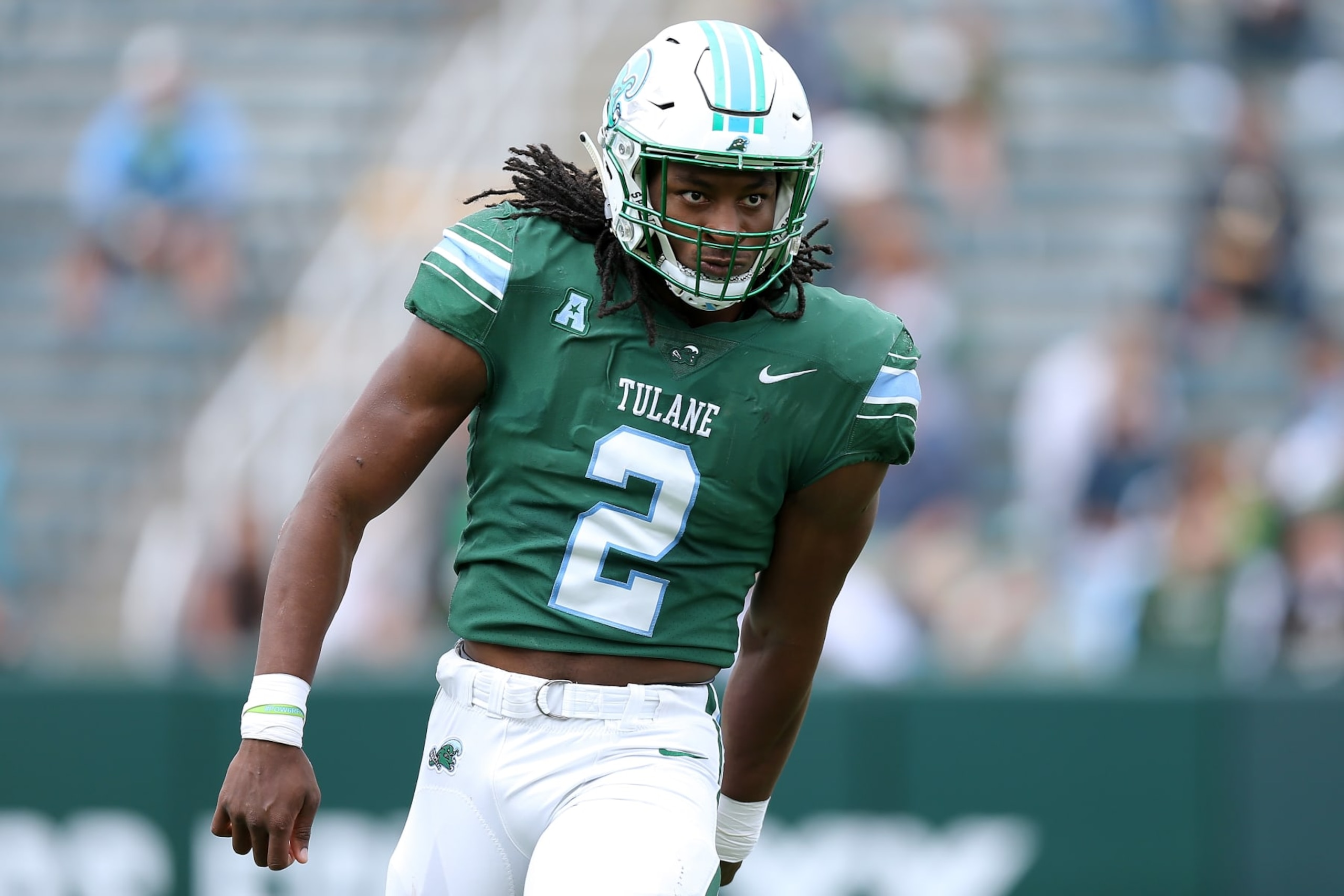
Dorian Williams, LB, Tulane
Strengths: Second-line speedster, solid instincts, uses hands and long arms relatively well to keep blockers off his body
Weaknesses: Overwhelmed by bigger blockers once fully engaged, doesn't bring much force upon contact
Dorian Williams literally grew into his role as a linebacker, having joined the Tulane Green Wave as a 195-pound recruit out of South Carolina. To this day, his size remains an issue.
But the first-team All-AAC selection matured into a 228-pound defender who amassed 303 total tackles, 27 tackles for loss and 13 passes defended during his three-year starting career.
Maybe his 6'1" frame is maxed out around 230 pounds, but the second-line rover still presents intriguing traits, with his 4.49-second 40-yard-dash speed and 33¾-inch arms. He's a run-and-chase linebacker. Let him play on the weak side and watch him rack up tackles as he runs down ball-carriers on the regular and comfortably drops into space to help in coverage.
Tremaine Edmunds' departure in free agency to join the Chicago Bears makes the Williams selection an intriguing addition to the Buffalo Bills lineup. Williams falls on the opposite end of the spectrum regarding his build, but his speed and athleticism make him a fascinating fit for the Bills defense.
Buffalo does have a veteran in line with A.J. Klein as a stopgap, but don't be surprised if Williams finds his way into the lineup sooner rather than later.
Grade: B
92. Kansas City Chiefs (via Cincinnati)
61 of 71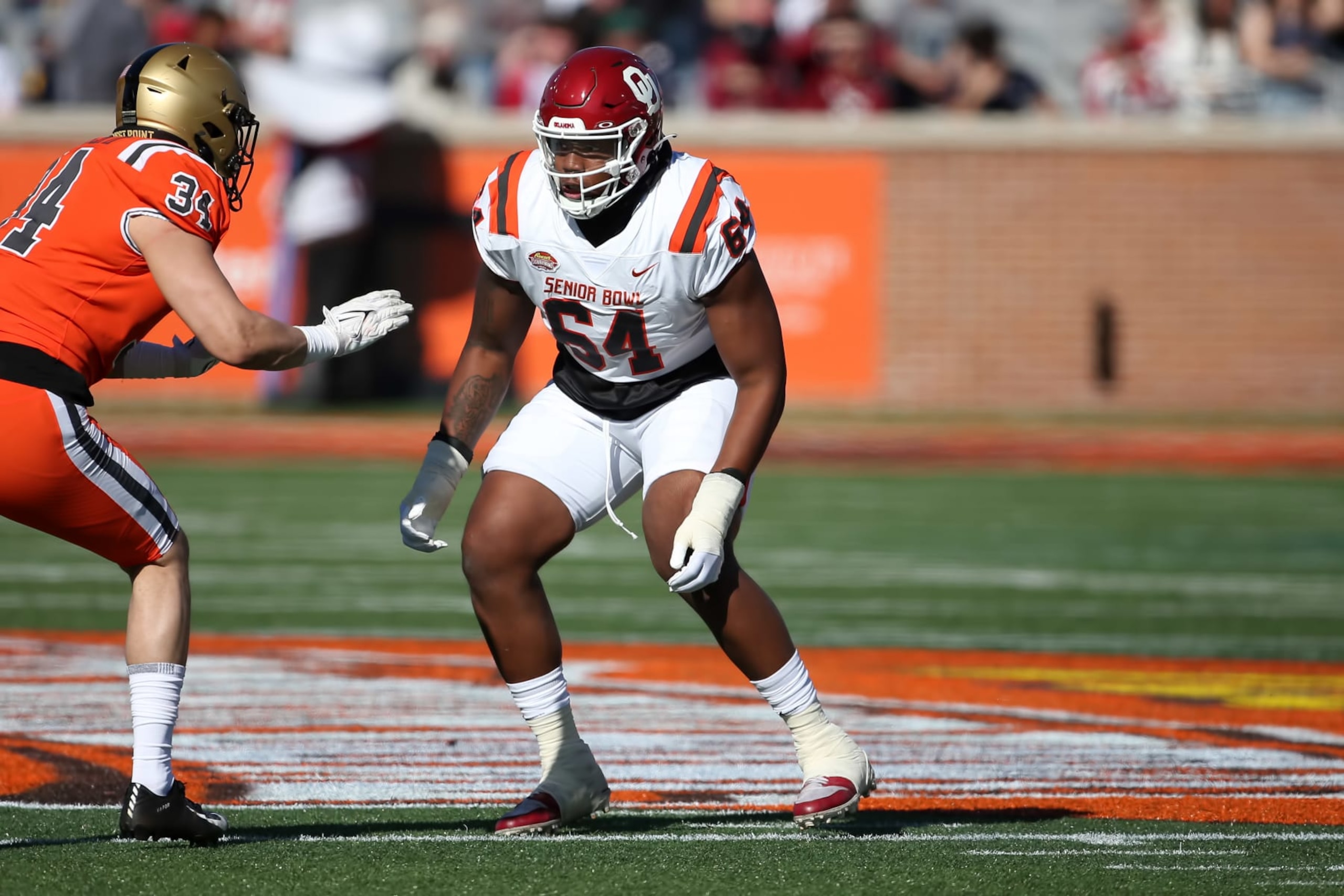
Wanya Morris, OT, Oklahoma
Strengths: Heavy hands and raw strength, tackle versatility, smooth pass sets, good lateral legibility, long arms
Weaknesses: Wide hands, will struggle to drop his hips to anchor or uproot defenders
This draft isn't the end of the road for Wanya Morris—it's just the beginning.
The Oklahoma offensive tackle, who's named after the Boyz II Men vocalist, knows how to make his own music on the football field, but he's a little metal in his approach. He's powerful, athletic and sometimes out of control.
The 6'5", 307-pound blocker with 35⅛-inch arms had stardom attached to his name since he entered the collegiate ranks as a 247Sports 5-star recruit in 2019. Morris, who began his career at Tennessee, started 25 career games and has experience at both tackle spots.
An undisclosed suspension to begin the 2022 season does raise eyebrows, though Morris still started eight games and earned second-team All-Big 12 honors.
The Kansas City Chiefs have been outstanding in adding offensive line talent in the draft recently with the previous addition of Creed Humphrey and Trey Smith. Morris' selection is more of a necessity than anything else.
Orlando Brown Jr. and Andrew Wylie both departed in the offseason. Jawaan Taylor signed in free agency to man the blind side, so Morris should compete with Lucas Niang to start at right tackle.
Grade: B
93. Pittsburgh Steelers (via Carolina)
62 of 71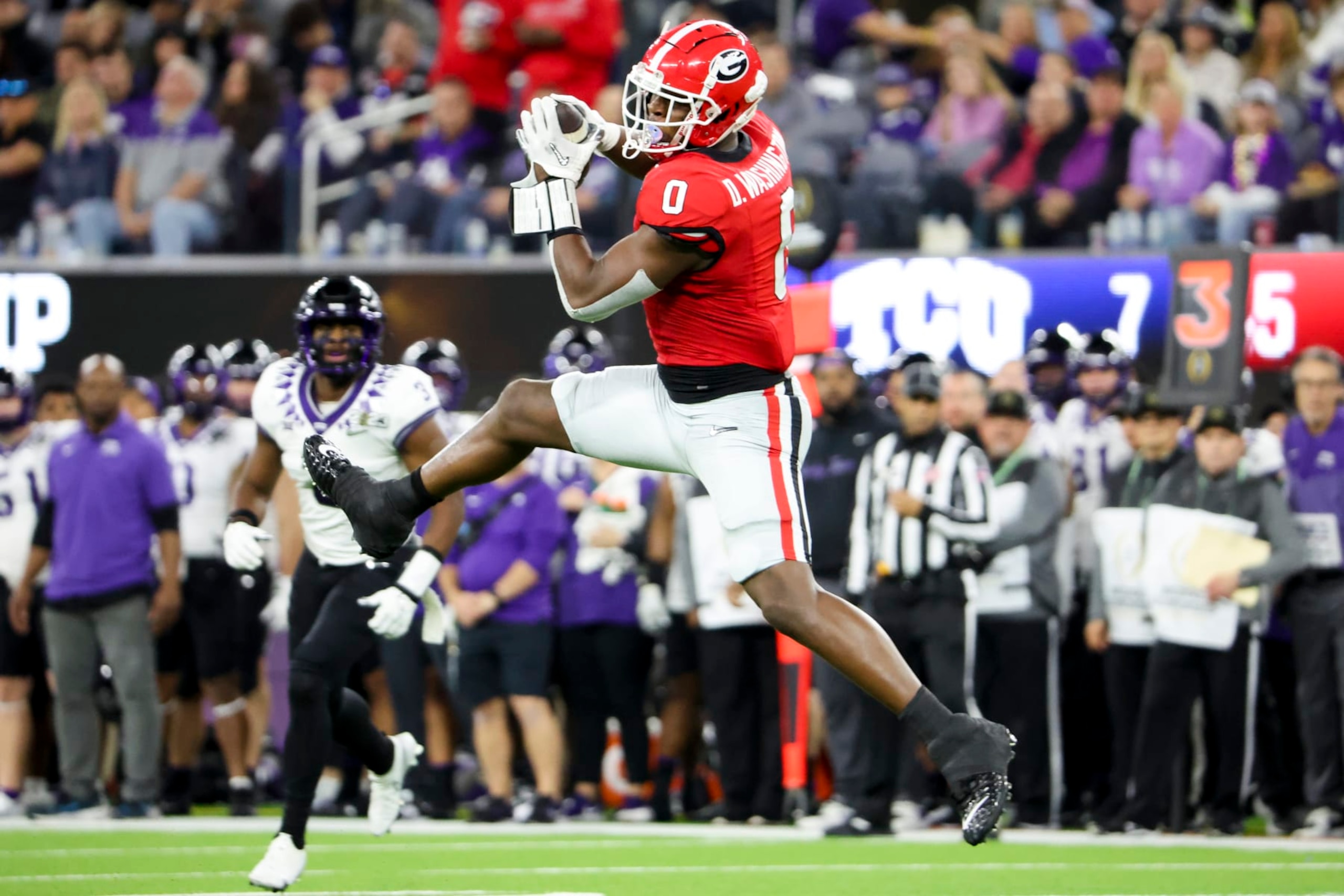
Darnell Washington, TE, Georgia
Strengths: Massive frame/wingspan/mitts, special athlete for his size, physical as a receiver and blocker
Weaknesses: Limited production, inconsistent blocking technique
When someone describes an athlete as the "first one a team wants getting off the bus," Georgia tight end Darnell Washington is that individual.
At 6'7" and 264 pounds, Washington cuts an imposing figure. On the field, he brings enough potential to be a dominant force as a receiver, blocker or both.
Right now, the early entrant is still a ways from being what he can become.
"I feel like I'm only scratching the surface," Washington told reporters at the NFL Scouting
Combine. "I feel like I'm a good blocker, but I can turn into a great blocker. I'm a good athlete. I feel like I can turn into a great athlete."
In three seasons with the Bulldogs, Washington caught 45 total passes for 774 yards and three touchdowns. Granted, the program also features the reigning John Mackey Award winner in Brock Bowers, who'll likely be a top-10 draft pick during the 2024 cycle. But Washington never even became the red-zone target his size implies.
As a blocker, Washington can maul opponents. At the same time, one can also find film of him falling off blocks and playing with heavy feet.
The third round is the perfect time to take a chance on a legitimate first-round talent who had teams scared off because of his medical evaluations, according to ESPN's Jeremy Fowler.
Otherwise, the Pittsburgh Steelers are crushing this year's draft, Washington included. He can serve as a bone-rattling blocker and provide second-year quarterback Kenny Pickett with yet another massive target over the middle of the field.
Grade: A+
94. Arizona Cardinals (via Philadelphia)
63 of 71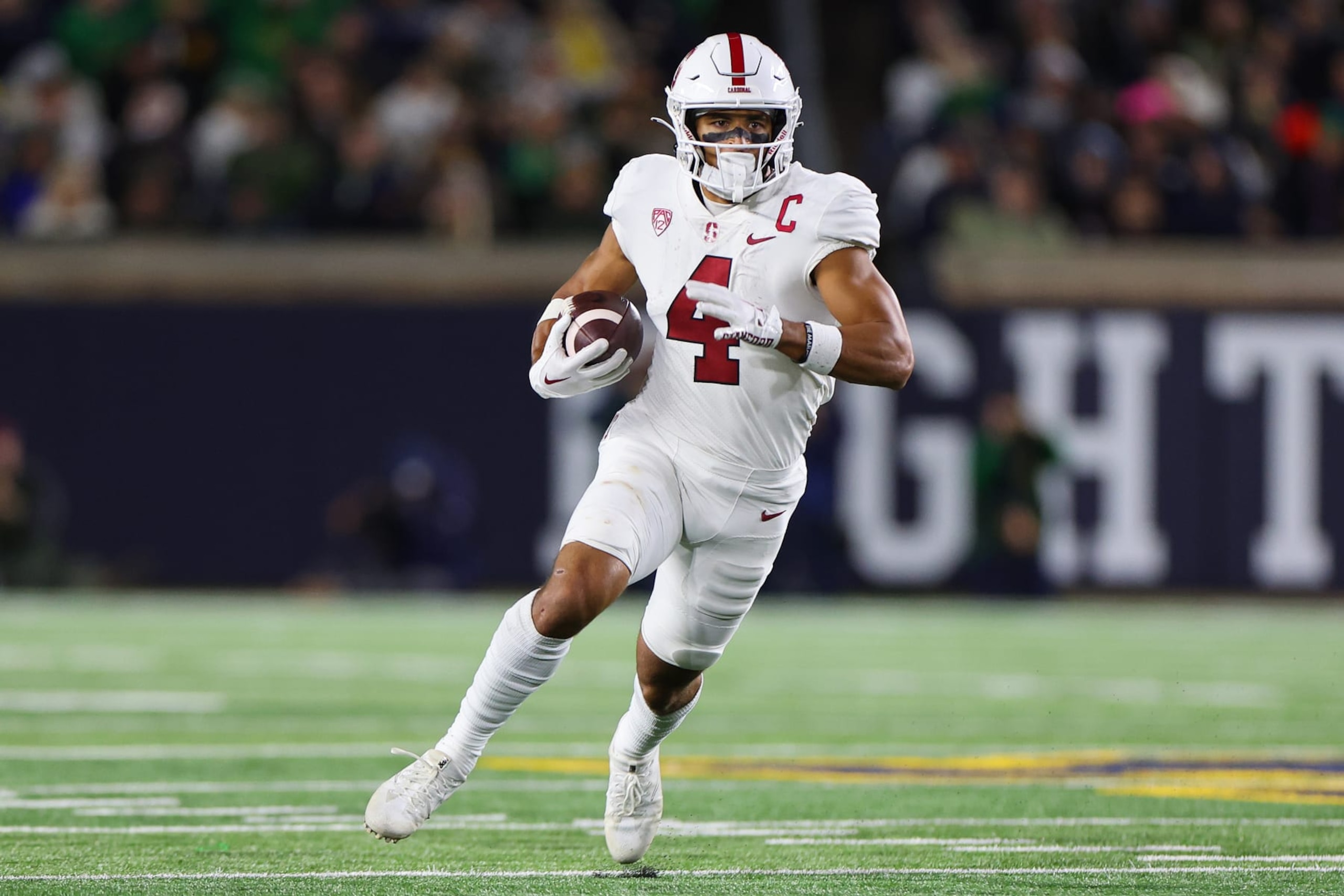
Michael Wilson, WR, Stanford
Strengths: Technician off the snap, strong hands, good body control, solid frame, blocks on edges
Weaknesses: Extensive injury history, concentration drops, lacks top gear
Michael Wilson never had the chance to truly shine in Stanford's wonky passing attack, and injuries robbed him of becoming the wide receiver he can still be in the NFL.
Wilson's best season came in 2019 when he caught 56 passes for 672 yards and five touchdowns. A foot injury cost him the end of the '20 and beginning of the '21 seasons, and an undisclosed injury prevented him from playing a full 2022 campaign as well.
But the offseason draft cycle has been a salve in some ways. Wilson showed well at the Senior Bowl and then posted an excellent relative athletic score, particularly with the explosive metrics.
The fifth-year senior sells and runs crisp routes to create separation, even against cornerbacks with better top-end speed.
At the time of his selection, DeAndre Hopkins is still a member of the Arizona Cardinals. Whether the veteran remains with the team has yet to be determined, but Wilson's addition is necessary.
Wilson adds another big body to play alongside the smaller Marquise Brown and Rondale Moore. If Hopkins is eventually traded, Wilson immediately becomes the team's third receiving option.
Grade: B
95. Cincinnati Bengals (via Kansas City)
64 of 71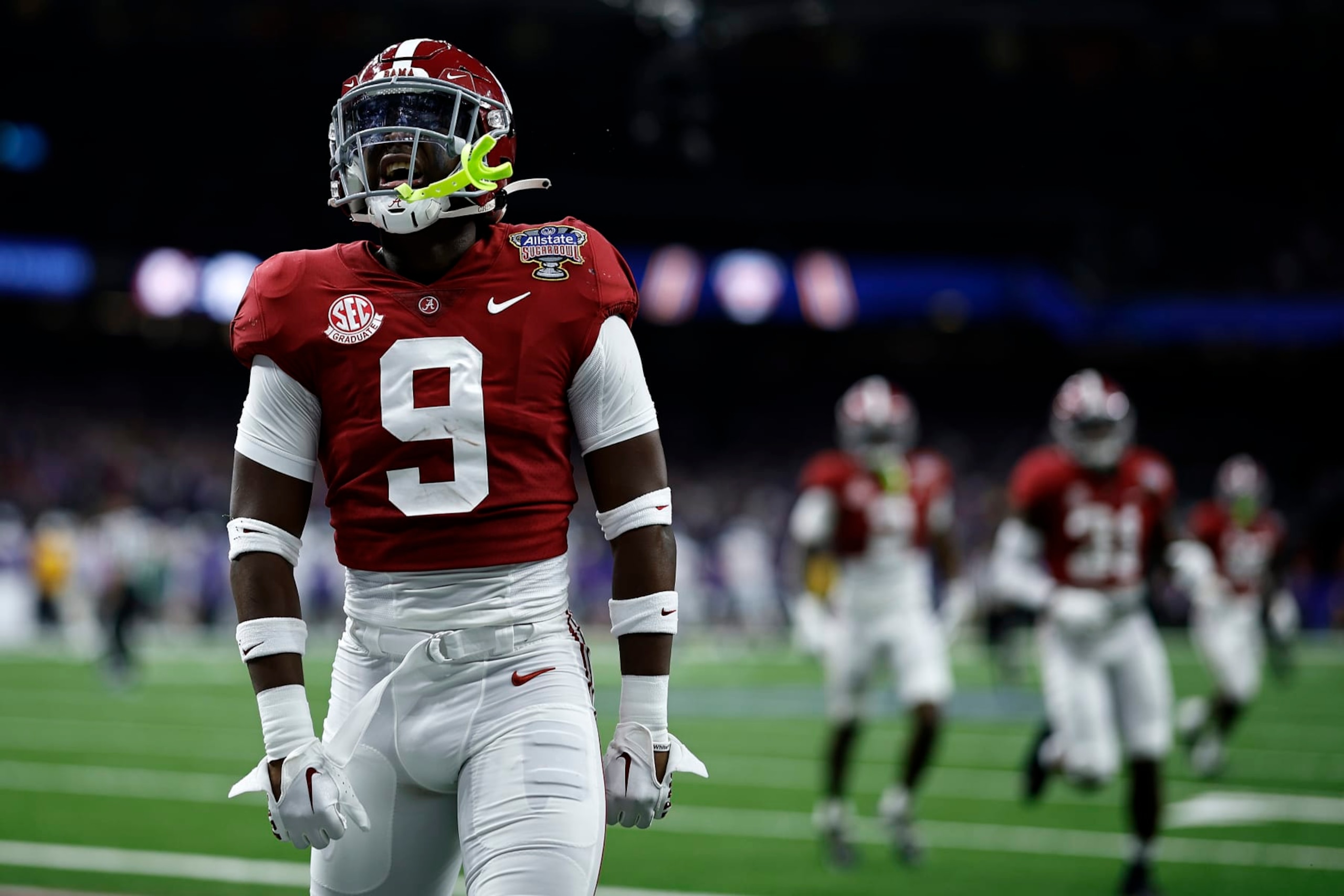
Jordan Battle, S, Alabama
Strengths: Instinctive, takes good angles, flies up to attack ball-carriers, can play over the slot
Weaknesses: Marginal speed and athleticism, sometime out of control when playing downhill
Reliability isn't often viewed as a positive trait for NFL draft prospects. It's easier to point toward a player's athleticism, natural tools or big plays. A Steady Eddie isn't seen as a sexy pick.
In this year's mediocre safety class, that label might be one of the best possible descriptions for a prospect. It certainly fits Alabama's Jordan Battle.
Battle's teammate, Brian Branch, became the headliner of this position group because of his versatility. Meanwhile, Battle went about his business and played strong complementary football in the Crimson Tide's backfield.
The two-time first-team All-SEC selection started three full seasons. During that time, Battle accumulated 221 total tackles, 14 pass breakups and five interceptions. The 6'1", 209-pound safety was a vital component to Alabama's defense because he's an instinctive defender who's typically where he's supposed to be.
The Cincinnati Bengals have doubled, tripled and quadrupled down on secondary help in the last two drafts. Daxton Hill, Cam Taylor-Britt and Tycen Anderson were added last year. DJ Turner II and Battle join them this year.
These moves are in direct response to two factors. The first is building a defense to play complementary football opposite Joe Burrow and Co.'s high-flying offense. The second is trying to slow all of the talented quarterbacks found in the loaded AFC.
Grade: C
96. Detroit Lions (via Arizona)
65 of 71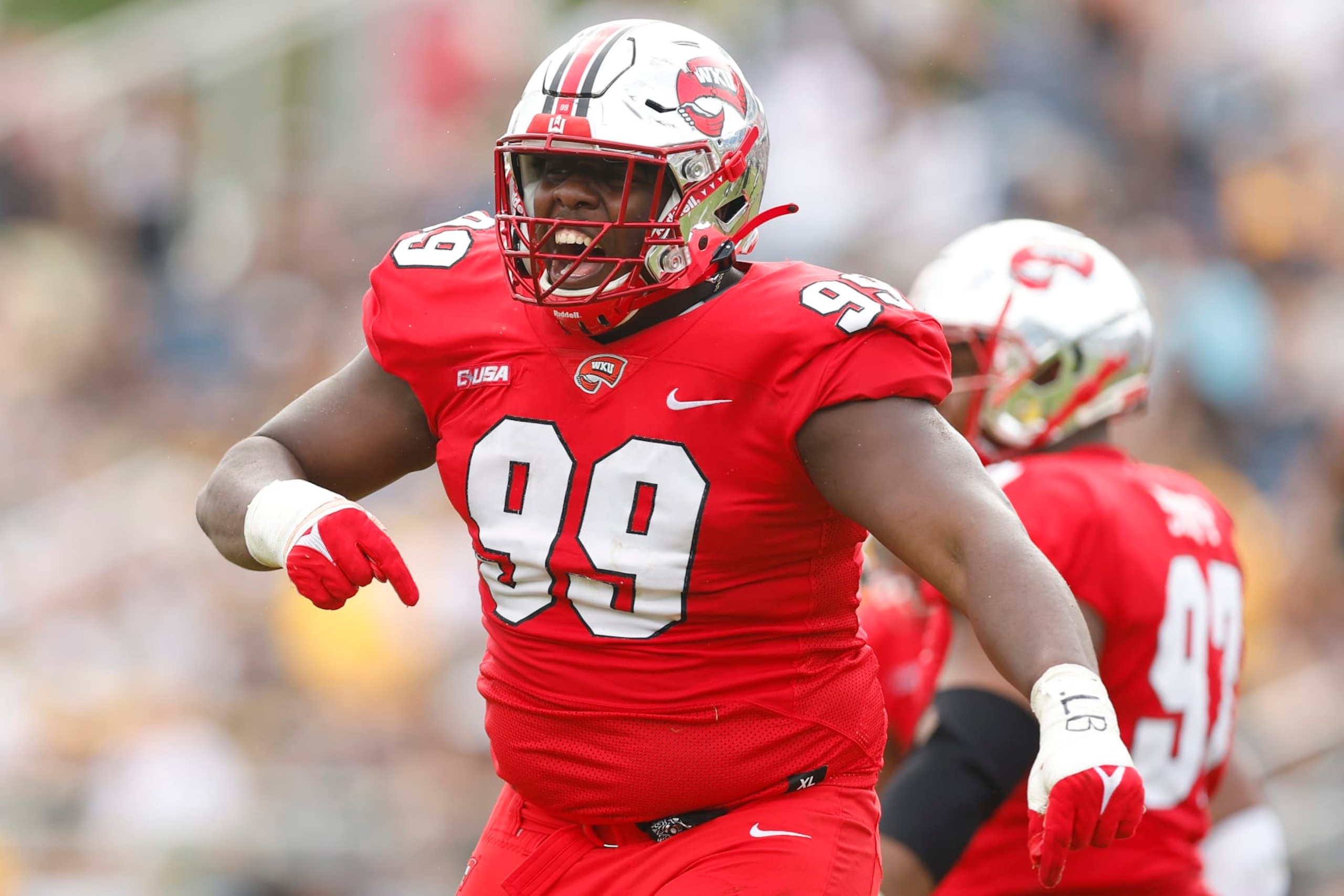
Brodric Martin, DL, Western Kentucky
Strengths: Perfect build for nose tackle, nearly immovable, gets extension and sheds blocks, some pass-rush potential and awareness to knock passes down
Weaknesses: Not an explosive or nimble athlete, tends to stand up a big when he wears down, still developing a pass-rush plan
In a draft class featuring the likes of Baylor's Siaki Ika and Michigan's Mazi Smith, Western Kentucky's Brodric Martin is another tailor-made nose tackle/1-technique.
As the importance of holding the point of attack becomes a priority again thanks to greater usage of gap-blocking schemes, a big-bodied tackle in the middle of the defense can make a difference.
Martin is built perfectly for the position. He's 6'5" and 337 pounds with long arms (35 inches). He can stack and shed, but he isn't just a typical space-eater. According to Pro Football Focus' Mike Renner, the sixth-year senior registered 23 quarterback pressures during his final season on campus.
The selection of a nose tackle is as much about the Detroit Lions' first round as it is about the actual player. Martin is a true nose who should be able to keep Jack Campbell clean and let him rack up tackles. Furthermore, he adds much need girth to the Lions interior after finishing among the league's bottom four last season in run defense.
Grade: B
97. Washington Commanders
66 of 71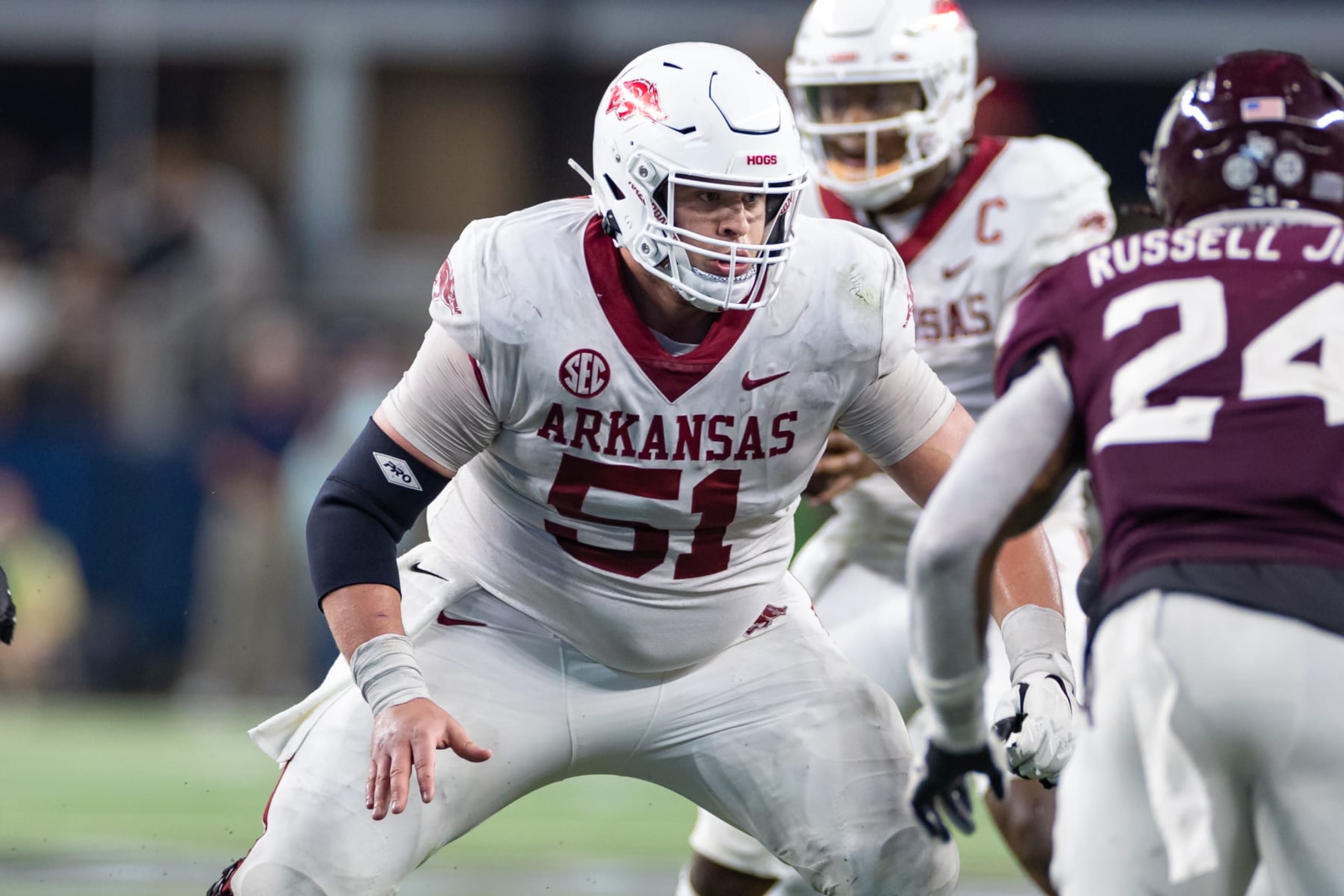
Ricky Stromberg, IOL, Arkansas
Strengths: Extremely physical, advanced run blocker, point man at the line of scrimmage, identifies blitzes and line stunts
Weaknesses: Overextends at times, aiming points with hands, can be rocked by powerful nose tackles
This year's center class might not light up the marquee, but it's definitely one of the stronger position groups, with its overall quality and number of prospects who could become starters.
Arkansas' Ricky Stromberg is in the thick of things, as he quietly climbed Bleacher Report's rankings throughout the predraft process. He's an experienced, gritty pivot who could enter a lineup soon.
Stromberg, who emerged as the SEC's best blocker as the 2022 Jacobs Blocking Award winner, is an experienced, smart center with some guard flexibility. Upon taking over the center spot in 2020, Stromberg started 33 games as the snapper against college football's best competition.
"I like to watch film a lot," Stromberg said, per Fan Nation's Bo Marchionte. "I enjoy it. I feel I've always been a student of the game and have a great football IQ. I think that is one of my most underappreciated traits."
Even as the 97th overall pick, Stromberg should be a Day 1 starter at center for the Washington Commanders, since Nick Gates is currently the team's best option.
Grade: A
98. Cleveland Browns
67 of 71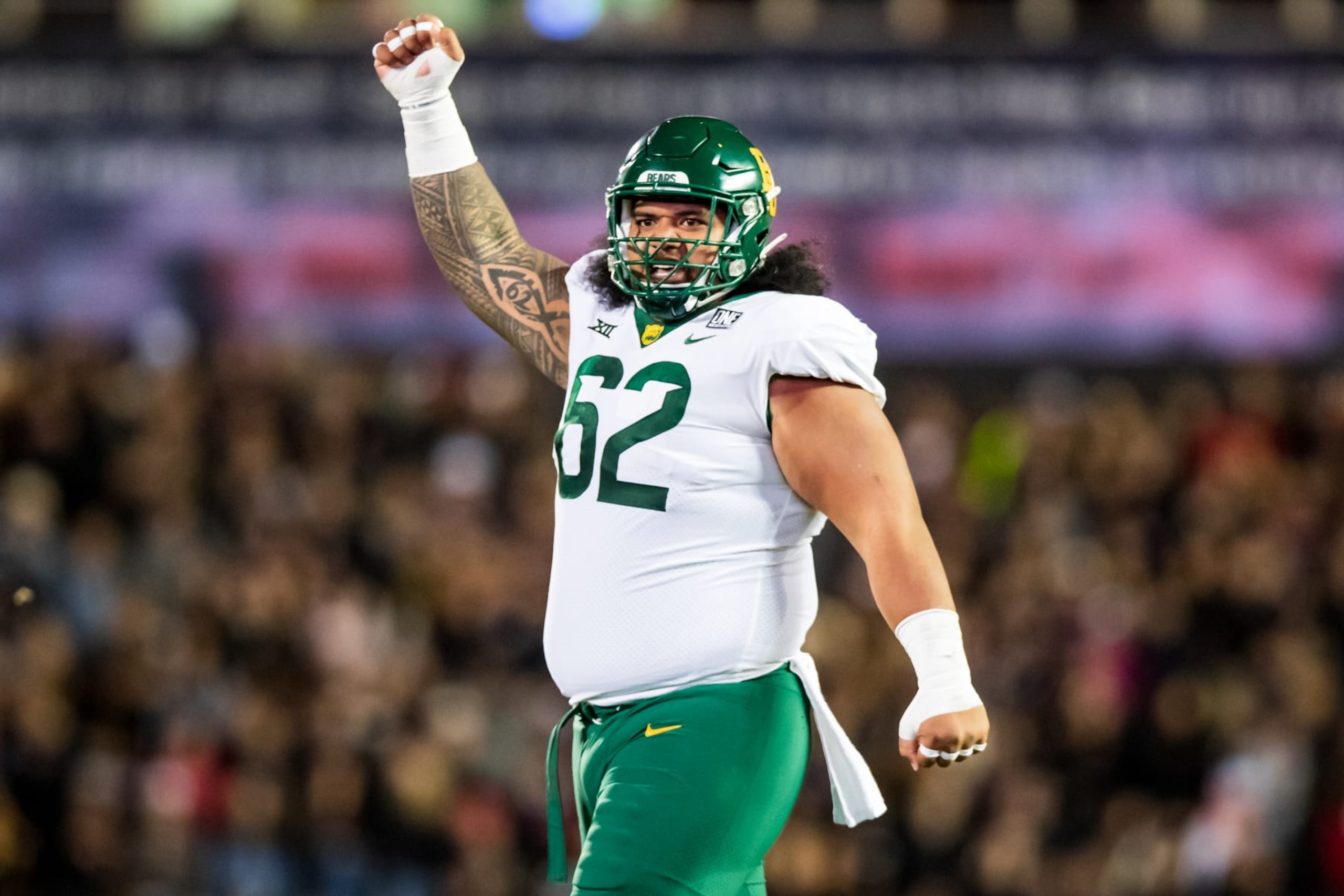
Siaki Ika, DL, Baylor
Strengths: Immovable object, powerful hands and plays with good base, identifies blocks and keys well
Weaknesses: Wears down easily, inconsistent effort, limited pass-rush contributions
The 335-pound Siaki Ika is heading into the NFL at the right time.
For years, massive nose tackles declined in value and usage because the game trended toward speed, athleticism and the ability to work in space. Logically, defenses became smaller to offset football's high-flying passing offenses. True nose tackles were often taken off the field in sub-packages unless they could consistently collapse the pocket.
Today's game is evolving to where offensive coaches saw this trend and counterpunched with more physical rushing attacks.
As a result, Ika, who's the class' best pure nose tackle, is needed to hold the point of attack and control the line of scrimmage. The two-time, first-team All-Big 12 performer is powerful and has the play strength to control and shed blockers.
There's even some potential in the big man to improve as a pass-rusher, as long as he keeps his weight in check.
The Cleveland Browns had been Charmin soft along their defensive interior because general manager Andrew Berry didn't prioritize the position. His approach has changed with the free-agent signing of Dalvin Tomlinson and Ika's selection. The Browns are now far bigger and more powerful at the point of attack.
Grade: A
99. San Francisco 49ers
68 of 71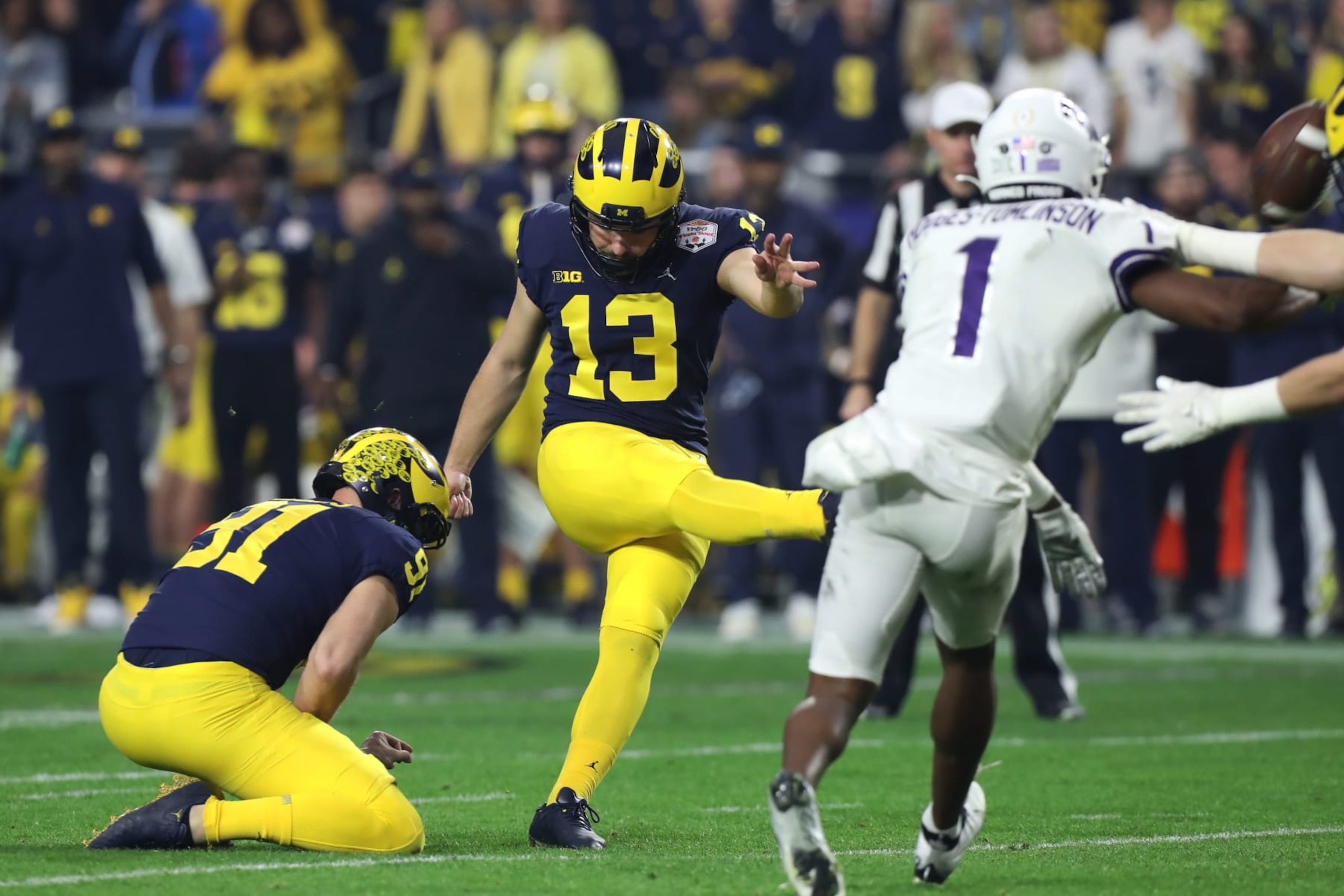
Jake Moody, K, Michigan
Strengths: Consistent leg inside of 50, played well in big games
Weaknesses: Long-distance accuracy is suspect
The San Francisco 49ers making Michigan's Jake Moody the highest-drafted kicker since
Roberto Aguayo went 59th overall in 2018 says a lot about where the team stood on special teams and how it views Moody.
At the same time, all the team has to do is look at another kicker on the roster in Zane Gonzalez to see how easily a selection for a kicker can backfire. The Cleveland Browns drafted Gonzalez in the seventh round of the 2017 NFL draft. He flamed out in less than two seasons.
Moody is an excellent talent, but the position is finicky.
Grade: D
100. Las Vegas Raiders (via New York Giants)
69 of 71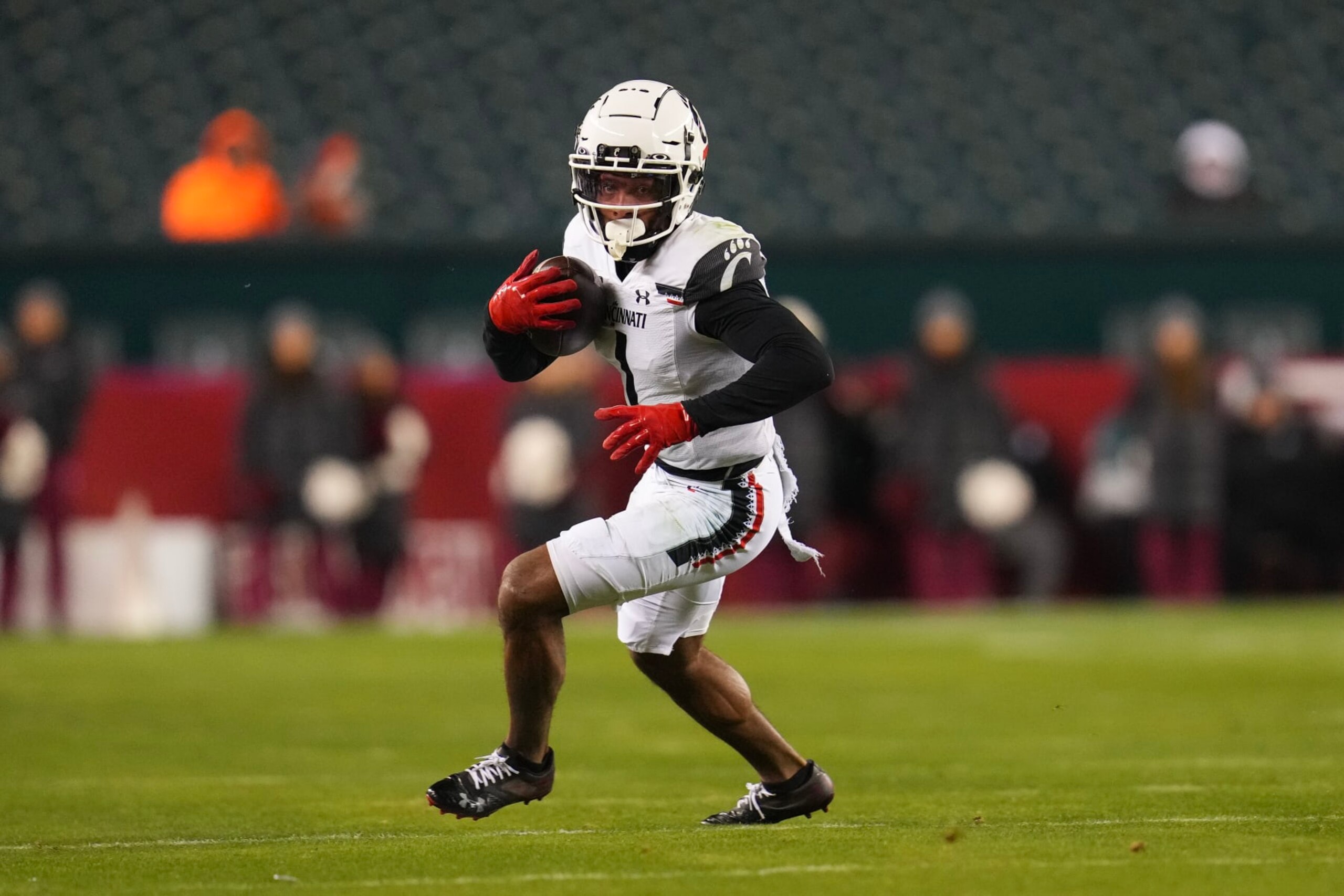
Tre Tucker, WR, Cincinnati
Strengths: Legit 4.4-second 40-yard-dash speed, wins off release
Weaknesses: Small frame, can be bodied by more physical defensive backs
Cincinnati's Tre Tucker adds something the Las Vegas Raiders' wide receiver corps previously lacked: He's a legitimate vertical threat.
Davante Adams is the game's premier route-runner, but he's not a burner. Jakobi Meyers is in the same boat from a pure speed perspective. Hunter Renfrow is all about creating separation in small areas.
As long as Tucker gets a clean release, he can take the top off a defense, which should help open up Josh McDaniels' offense.
Grade: C+
101. San Francisco 49ers
70 of 71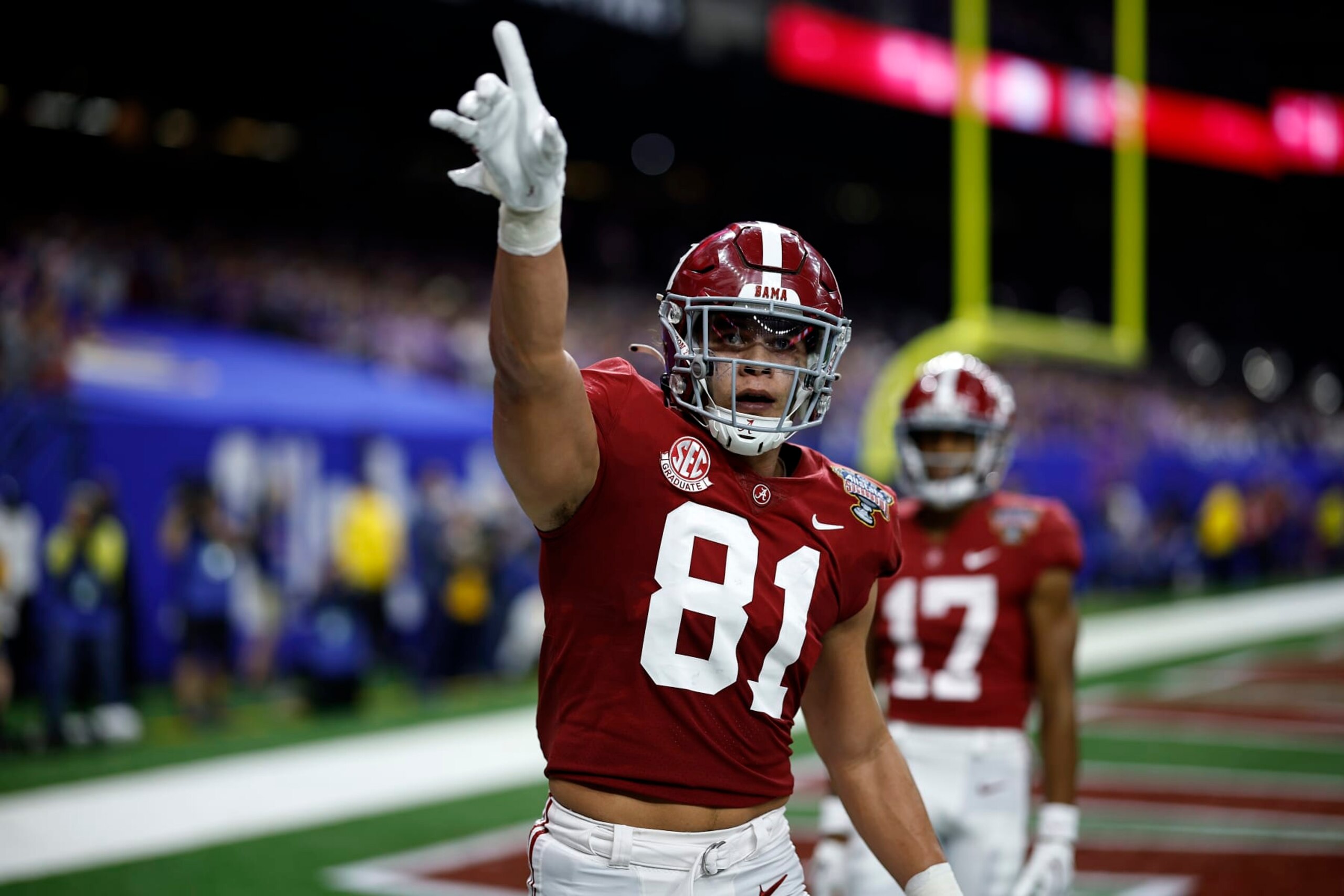
Cameron Latu, TE, Alabama
Strengths: Soft hands, solid catch radius
Weaknesses: Poor athletic profile, provides little as a blocker
Kyle Shanahan knows what he wants for his offense. Yet there's not a lot to like with Cameron Latu's game.
"Latu is a middle-round type whose skill set doesn't reflect his projection," B/R scout Derrik Klassen said. "He's considered a 'move' tight end who doesn't actually have athletic traits that pop off the film.
"He's also an undisciplined route-runner, which is a problem for someone whose entire value is intertwined with being a pass-catcher. Latu doesn't bring anything as a blocker right now, either."
At best, Latu can be a solid backup for George Kittle.
Grade: D
102. Minnesota Vikings (via San Francisco)
71 of 71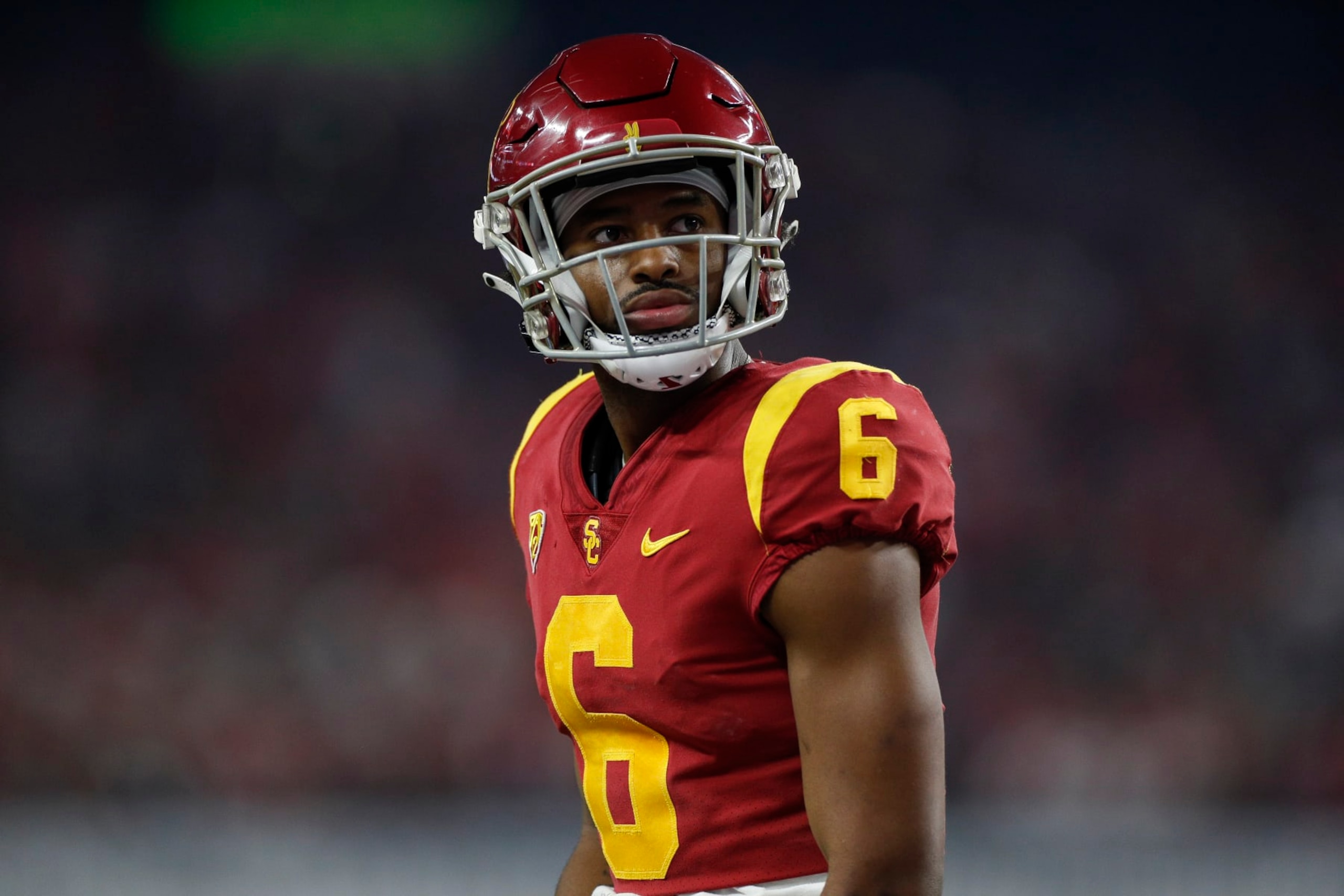
Mekhi Blackmon, CB, USC
Strengths: Competitive man-cover corner, ball skills
Weaknesses: Thin frame, not much help in run support
Since the Minnesota Vikings decided to move on from veteran Patrick Peterson, release Cameron Dantzler Sr. and not re-sign Chandon Sullivan, cornerback was a significant area of need.
The team still has Andrew Booth Jr. and signed Byron Murphy Jr. in free agency to help offset those losses. Still, more needed to be done.
USC's Mekhi Blackmon joins the position group after posting the second-highest grade among cornerbacks last season, according to Pro Football Focus.
Grade: C+
.jpg?w=2560 "49ers Player Shooting Arrests Football")
.jpg?w=2560 "Bills Rams Football")

.png?w=2560 "Muncy Sums Up NLCS Offense 💩")