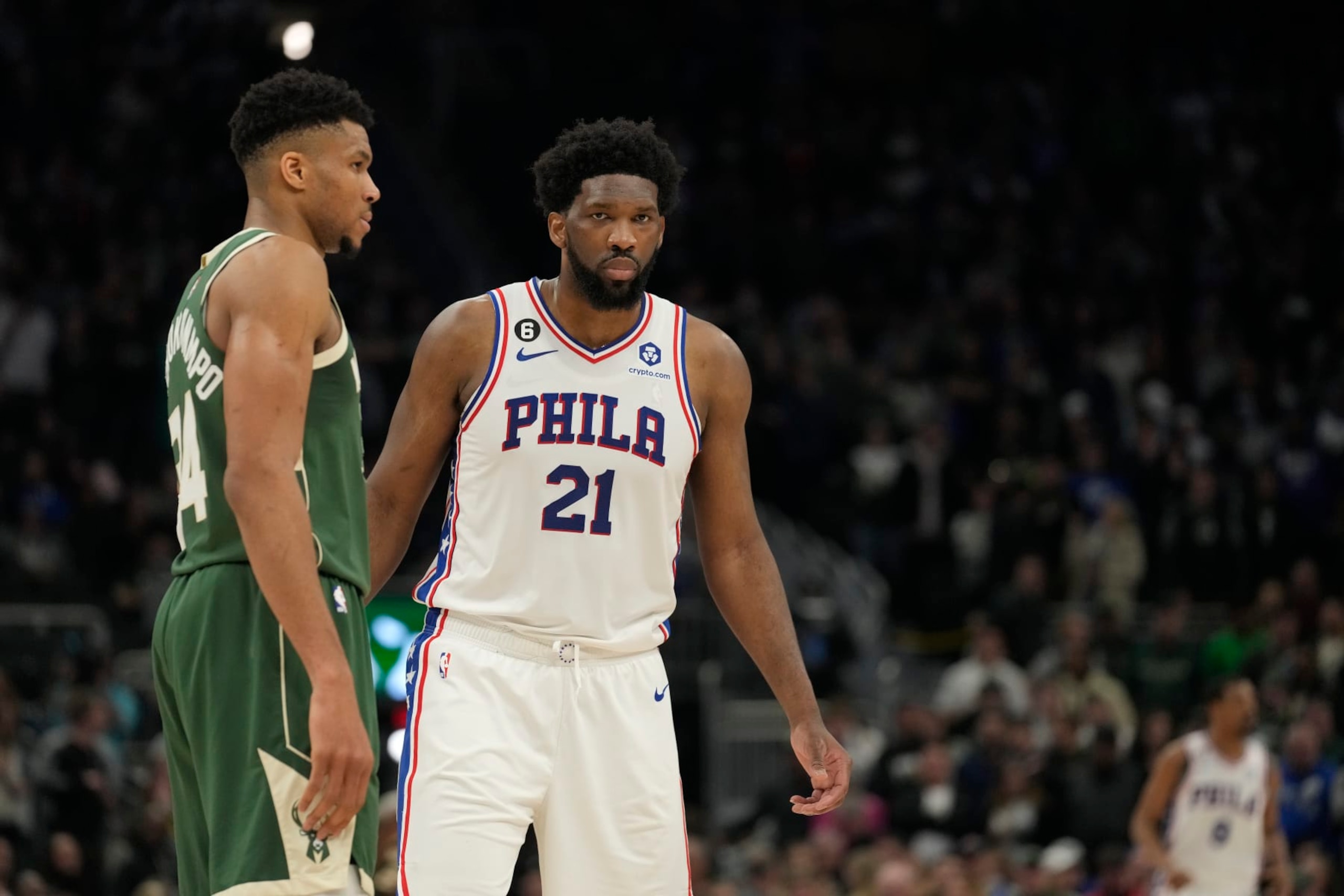


Hold onto your seats. Remove all sunglasses, hats and caps and loose jewelry. Finally, and most importantly, please also make sure to relinquish any delicate basketball sensibilities that evoke outrage, contempt or feelings of neglect when poked and prodded by dissenting opinions and agendas. We're about to make one painfully giant, overarching assumption.
Your favorite NBA playoff team isn't going to win the 2023 championship.
Sinister as hell, right? Potentially. But congratulate your fandom on making it this far.
Only 18 of 30 teams remain alive entering play-in festivities on Friday. Is 60 percent of the league a comically, and cosmically, large share relative to how exclusive postseason basketball should theoretically be? Absolutely. But hey, for supporters of these 18 squads, your team is still here! Twelve other fanbases cannot say the same.
This exercise will not be as tongue-in-cheek as our offseason why-your-favorite-team-sucks-basically rendering. It will not be devoid of over-the-top personality, either. Basketball is, above all, fun. There's no need to take ourselves too seriously.
To that end, the spotlight cast here isn't meant to be dismissive or rudely revelatory. It's simply looking for the biggest reason each surviving franchise might see its postseason jaunt end without a parade.
Programming caveat: My wonderful colleague Mo Dakhil recently gifted us with a similar concept for every playoff and play-in team from the East and West. Stepping on too many toes can be painful, so I'll look to dwell on alternative issues and angles wherever reasonably appropriate.
And yes, for all the Well Actually-ists out there, I understand that one team will win the title. For the purposes of this arctic-cold-water dousing, it won't be yours.
The East's Remaining Play-In Teams
1 of 16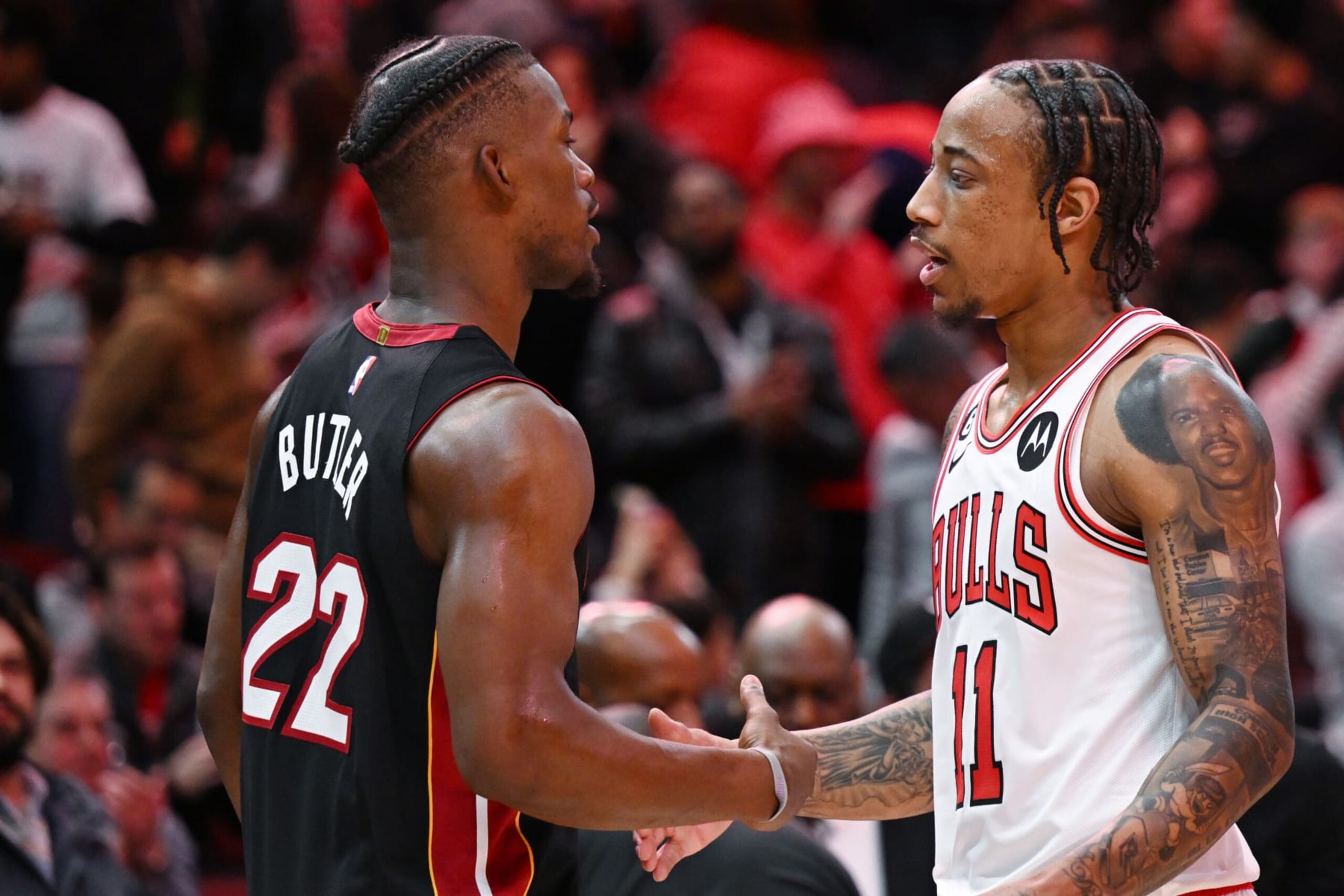
Chicago Bulls: Too Many Playoff Games Take Place on School Nights
How are the Bulls supposed to kind of, sort of survive a possible first-round matchup with the Milwaukee Bucks if Diar DeRozan isn't in attendance earning first-team All-Defensive honors every game? It beats me.
More seriously, even though I'm not kidding about Diar, Chicago's championship stock fades completely in a first-round matchup with Milwaukee. The Bulls' ball pressure isn't going to fly against Giannis Antetokounmpo, who will make mincemeat of Patrick Williams or, if Chicago dares, Alex Caruso. Beyond that, a painfully mediocre offense that doesn't jack enough threes isn't fit to last more than five games against the Bucks defense.
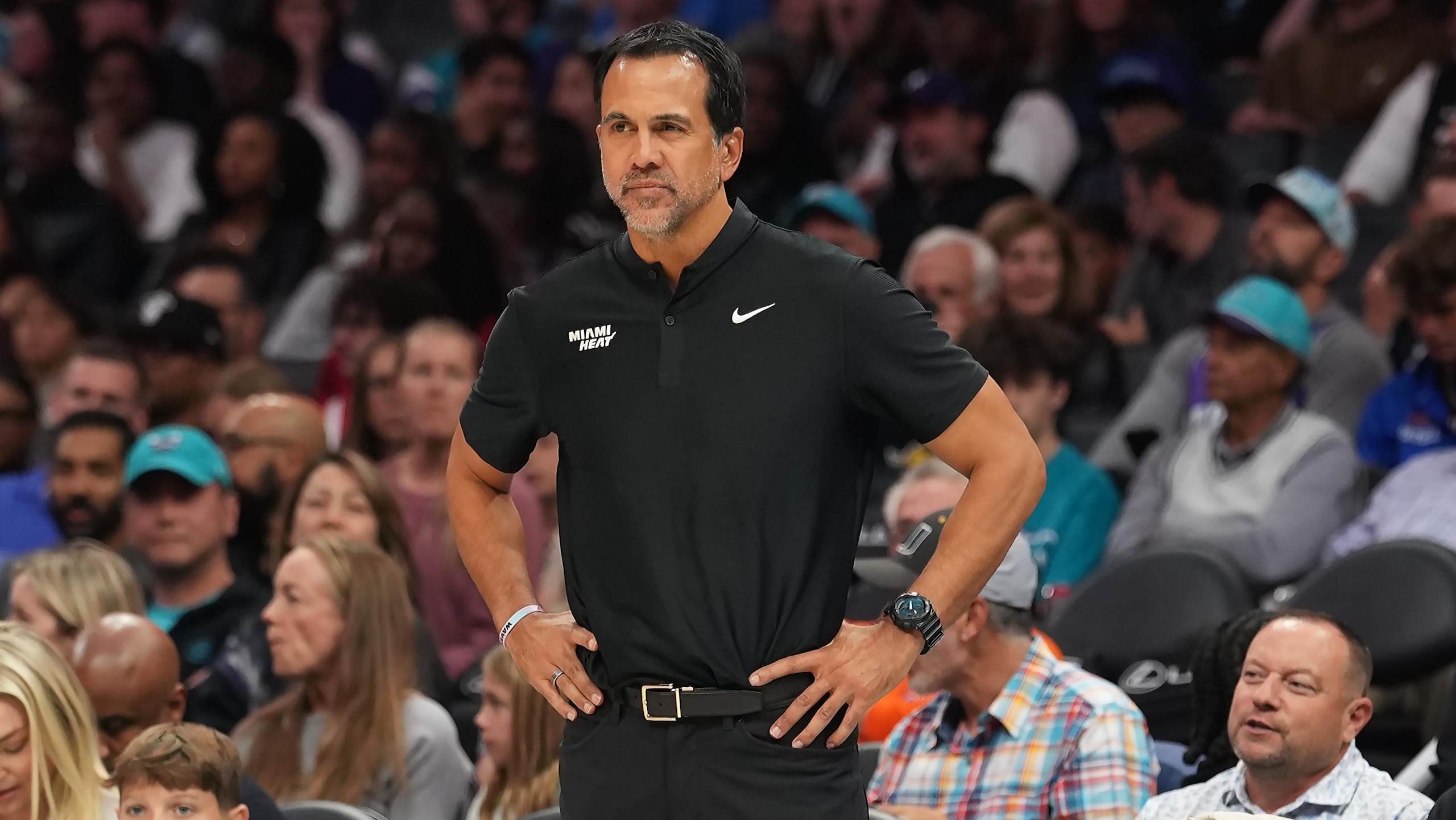
Miami Heat: This Isn't 2020
Remember when Miami actually profiled as a touch matchup for Milwaukee? It's understandable if you don't. It was a lifetime ago in NBA years.
The concept of Jimmy Butler and Bam Adebayo slowing Giannis and Milwaukee's half-court attack has some pull. But it's minimal. And even if the Heat zone the Bucks to oblivion, Miami's half-court offense is a painfully sloggy eyesore.
The West's Remaining Play-In Teams
2 of 16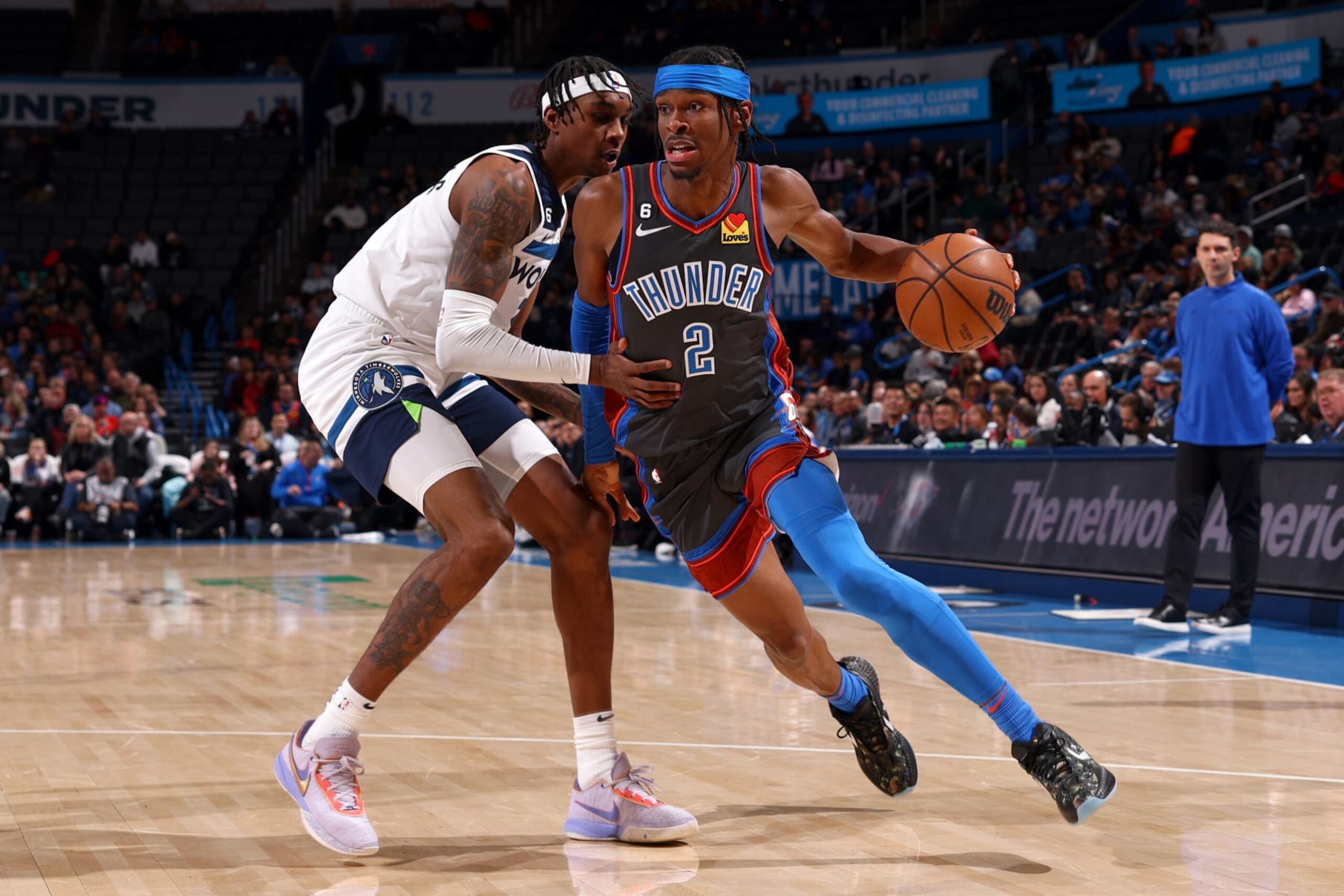
Minnesota Timberwolves: With All Due Respect, It's Just Not Happening
Jaden McDaniels is done for the season. Ditto for Naz Reid. Rudy Gobert is dealing with back issues. Anthony Edwards is seemingly suffering from a little bit of everything.
Maybe Minnesota emerges from the play-in. Maybe. And perhaps Edwards and Karl-Anthony Towns are healthy enough to roast the Denver Nuggets' pick-and-roll defense in the actual playoffs.
Invariably, though, it's hard to envision this version of the Timberwolves lasting more than five, maaaybe six, games into Round 1.
Oklahoma City Thunder: It's a Bit Too Early
Shame on Oklahoma City for forcing us to sit through a—*opens calculator app*—two-year rebuilding project.
Shout-out to the superheroes inclined to point out this team hasn't stopped rebuilding. I'm well aware. But after getting lampooned for their focus on the future, the Thunder are now skipping steps. They're already a problem, just not yet a heavyweight. That comes next:
I am open to their drive-kick-drive offense causing problems for the Denver Nuggets in a Round 1 showdown, but they don't have the size or depth at the 5 to begin handling Nikola Jokić. Let's all agree to reassess the Thunder's championship stock after they trade for Pascal Siakam or Joel Embiid and Chet Holmgren makes his NBA debut.
Atlanta Hawks: Dejounte Murray and De'Andre Hunter Can't Play 48 Minutes Per Game
3 of 16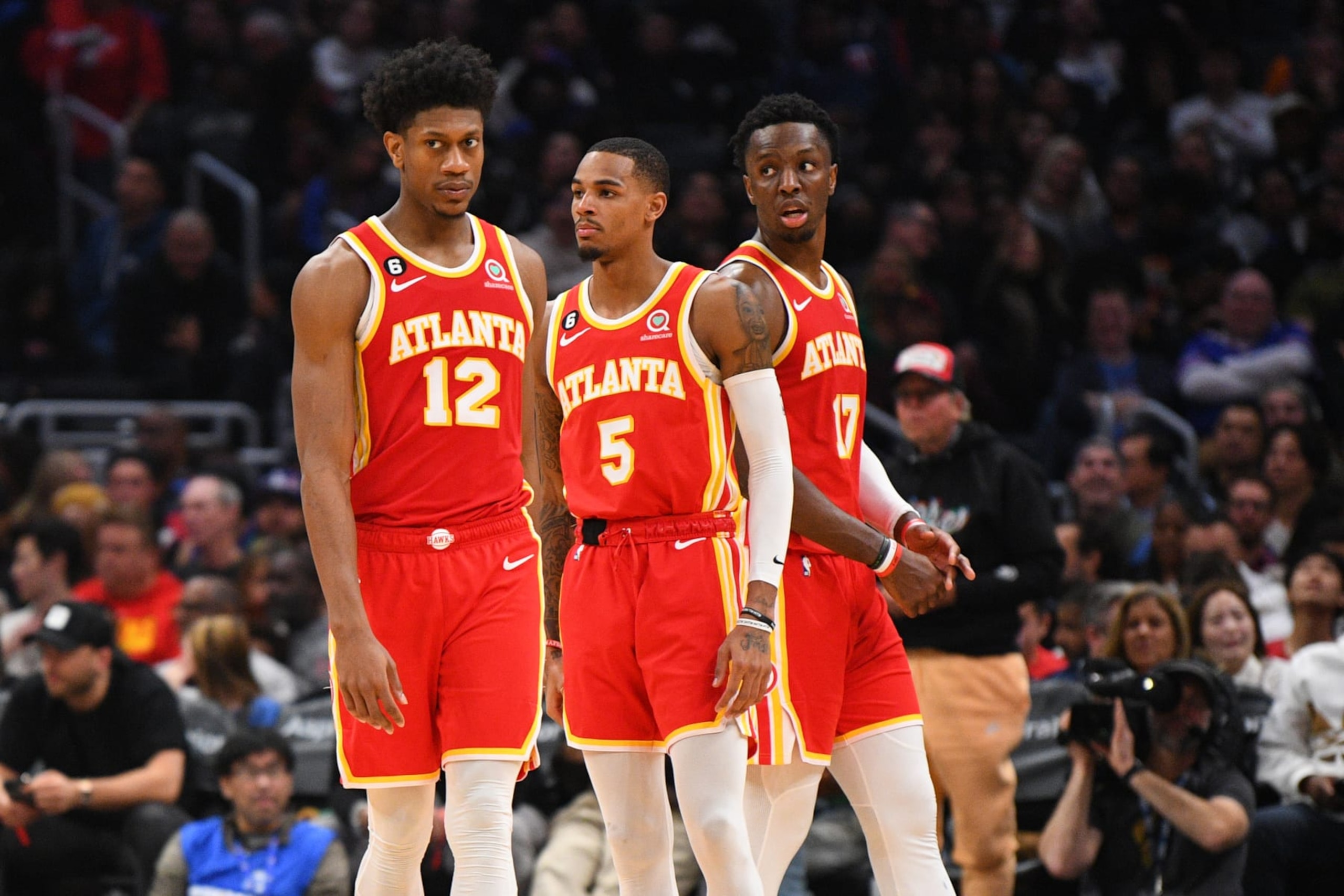
Put another way: Wing defense is a thing.
Feel free to focus on the Atlanta Hawks' mid-range-drunk, rim-and-threes-allergic shot profile. Dakhil's piece already did that. And for their part, the Hawks ranked fourth in points scored per possession after the trade deadline. Getting buckets won't be their biggest problem.
Stopping them at the other end will be.
More specifically, the Hawks don't match up especially well with the Boston Celtics in Round 1. Dejounte Murray and De'Andre Hunter are their best cracks at slowing down Jaylen Brown and Jayson Tatum, and they can't reasonably play all 48 minutes while being spared from exhaustion.
Perhaps this underrates what Jalen Johnson can do. He had a stealthy impact against the Miami Heat during Atlanta's play-in game.
But let's say the Hawks slow down the Js, or that the star duo bricks a ton of jumpers. Atlanta isn't readily built to dissuade Boston's secondary options. It will struggle to cut off rim pressure when Robert Williams III plays, and there's no good place to stash Trae Young.
This is all to say, beating Miami merely prolonged the inevitable.



Brooklyn Nets: Good Luck Defending Joel Embiid
4 of 16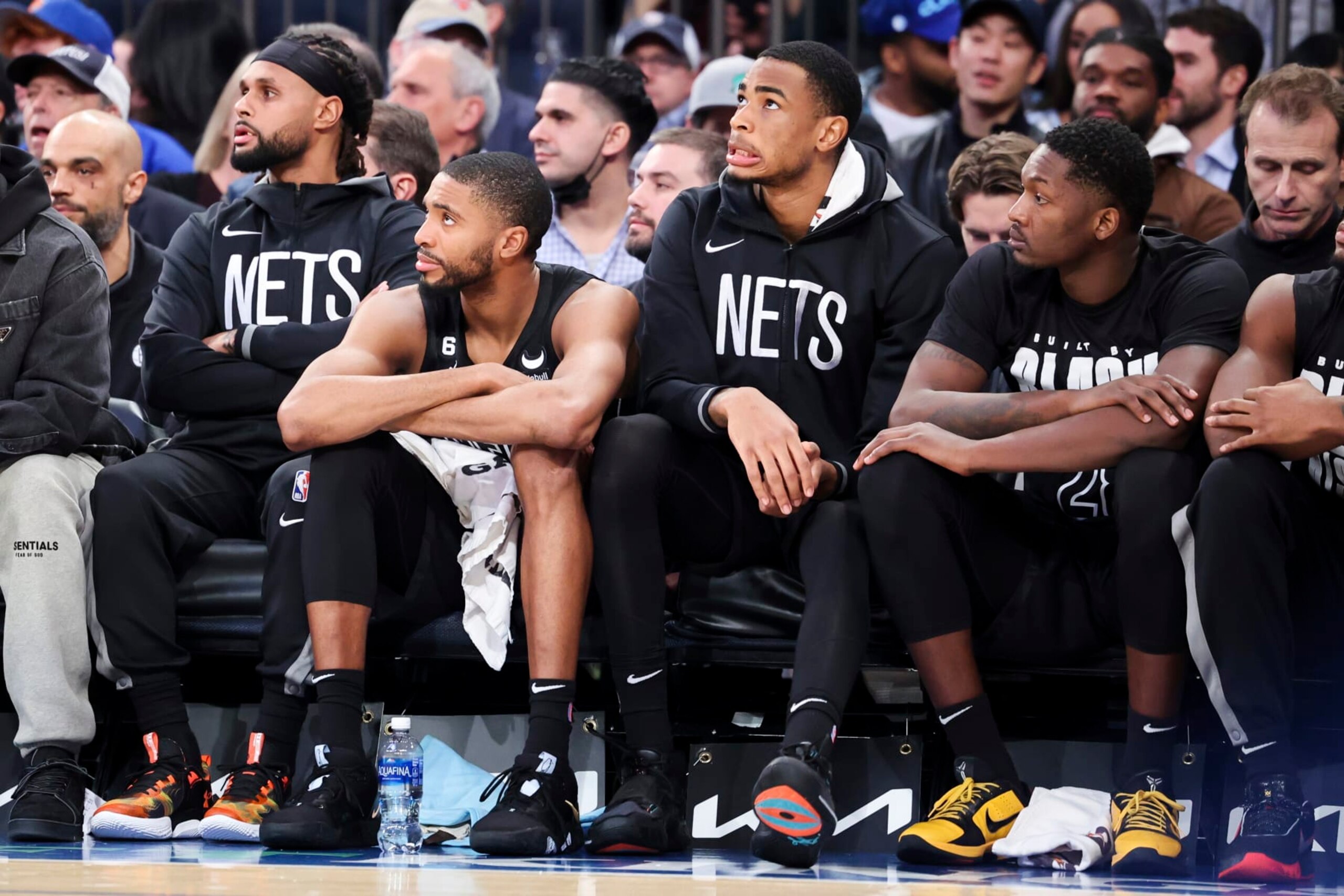
Larger-scale reasons abound for why the Brooklyn Nets are no longer title threats. They don't have Kevin Durant. Or Kyrie Irving. The complete absence of star power is damning this time of year.
Mikal Bridges' ascent remains huge. He alone doesn't make the Nets offense elite. They are 23rd in points scored per possession since he debuted, and the half-court attack is, impressively, a notch above average with him on the floor. That's not getting it done in the postseason pressure-cooker, where game plans will be even more tailored to neutralizing him.
Not that this matters. Brooklyn has a series-specific problem on its hands: guarding Joel Embiid.
Nobody on the Nets is built to match up with the MVP favorite/the Philadelphia 76ers' resident massive human being. Nicolas Claxton played fringe All-Defense this year, but he weighs less than Dorian Finney-Smith.
A 265-pound Day'Ron Sharpe stands a chance on the physical spectrum. His frenzied efforts on the offensive glass will go a long way, too. But he isn't in the same mobility or craft class as Embiid.
Claxton's serial disruption is a potential counter. He gives up 65 pounds to Embiid but has the hands, speed, gait and length to contest jumpers and recover to contest at the rim. Philly as a team averaged 0.94 points per possession whenever he guarded Embiid this season.
That small sample is...something. What, exactly, I'm not sure. But it's equal parts interesting and certainly nowhere near a harbinger of what's to come.
Boston Celtics: Rim Pressure Matters
5 of 16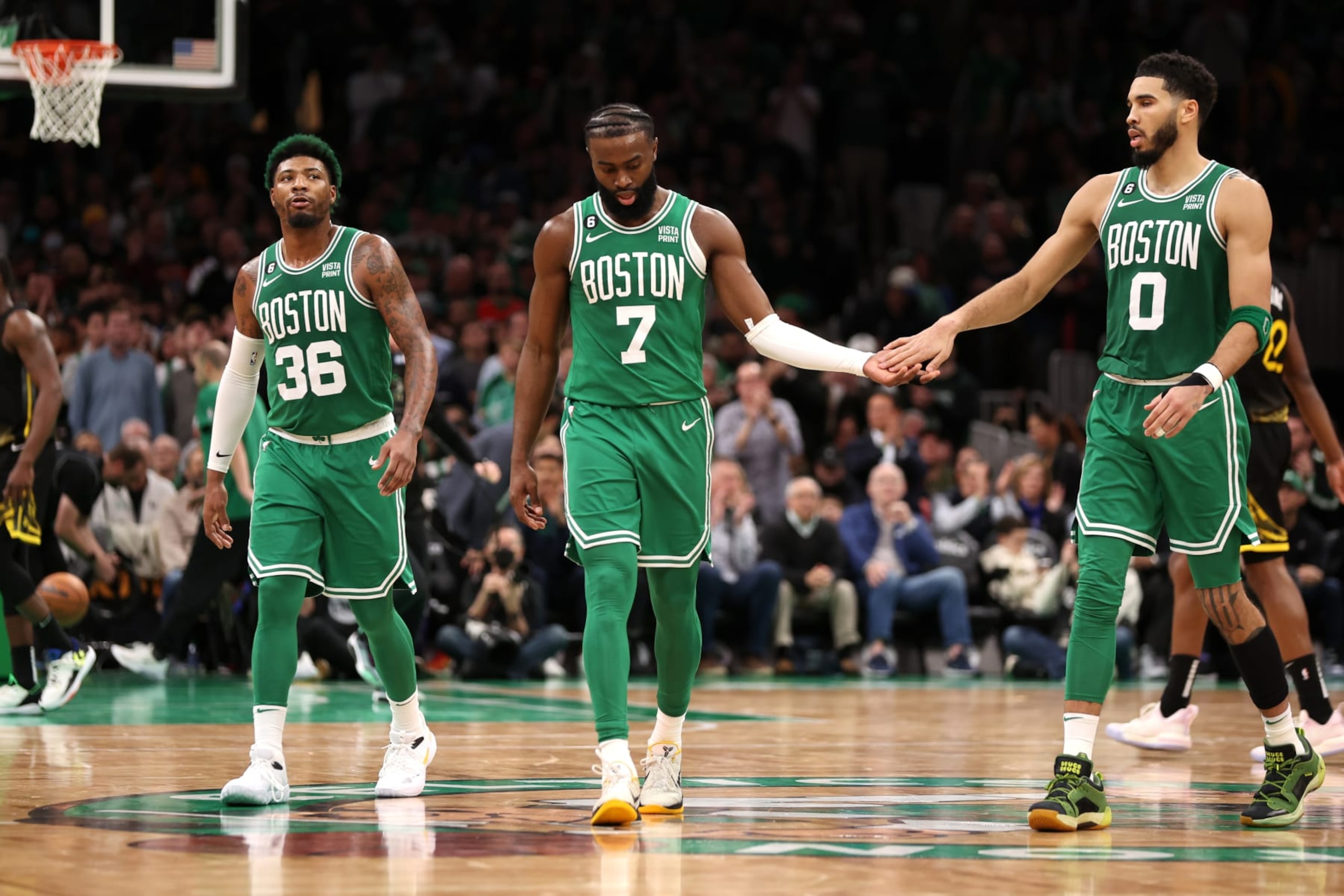
This is another way of focusing on Boston's marriage to the three-ball and perimeter at large. And that's absolutely something to monitor. Ditto for Jayson Tatum's shaky percentages from the outside. He grades out as one of the least efficient, high-volume off-the-dribble jump-shooters this season.
Minimal rim pressure is a byproduct of the Celtics' live-and-die-by-the-three model, though. They ranked 25th in the share of their shots coming inside four feet during the regular season and were only a hair better post-trade deadline. Even angling for in-the-paint, non-restricted-area twos can be a challenge. So many of their drives to the basket feature premature bailouts.
A healthy Robert Williams III arms them with a career rim-runner and helps some. It isn't a cure-all. Boston's offense still places in the 12th percentile of rim pressure when he's on the floor. That number dips to the 7th percentile when RW3 plays without Al Horford.
Infrequent rim pressure also spills into foul-line opportunities. The Celtics aren't generating a ton of trips to the charity stripe. They have three or four guys who are above average at drawing shooting fouls, and some of those instances are predicated on inciting contact on jumpers.
Navigating Atlanta in Round 1 shouldn't be a problem. This issue gets dicier when projecting ahead to potential matchups with the Philadelphia 76ers, Milwaukee Bucks or Cleveland Cavaliers.
Cleveland Cavaliers: The Small Forward Carousel Continues to Go 'Round and 'Round
6 of 16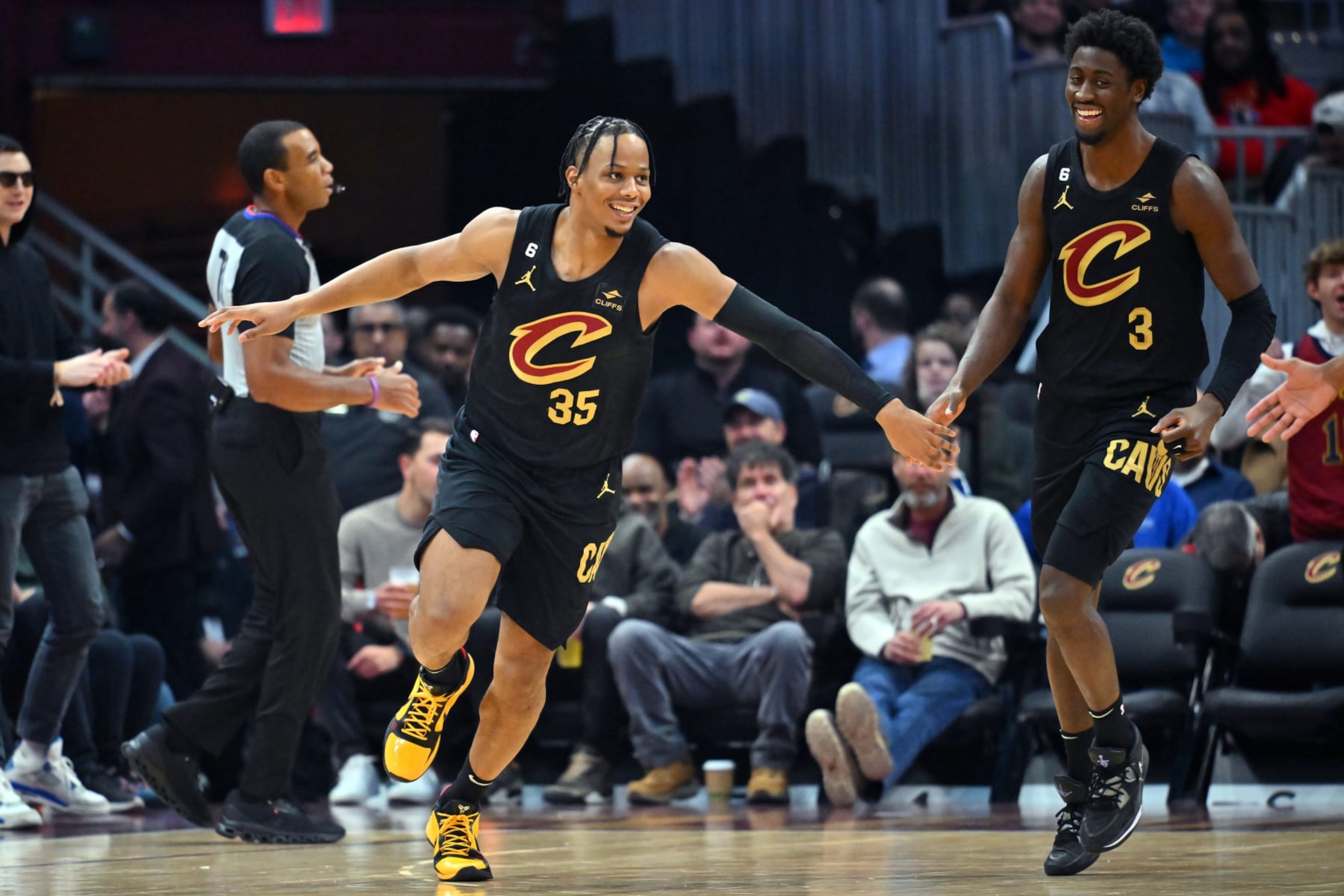
Sussing out another primary concern for the Cavaliers is a waste of time. Finding the right fit at the 3 has been a season-long issue. It persists into the playoffs.
Isaac Okoro is banging in more than 41 percent of his triples over his past 52 appearances. That matters. This efficiency comes on negligible volume (2.5 attempts). That matters, too. Okoro missed Cleveland's final six games with a sore left knee. That matters most.
Caris LeVert looms as the most intriguing answer. The dial for his on-ball defensive energy has been turned to an 11, he's downed 39.3 percent of his spot-up treys for the season, and he's converted 44.9 percent of his threes since the trade deadline.
Still, LeVert's outside success comes on, at most, medium volume. Will it sustain against playoff defenses? The same question applies to Okoro if he's ready to rock.
Catching COVID-19 limited Danny Green's availability after coming over from the Memphis Grizzlies. To what degree he can contribute remains to be seen. His shooting will endure, but can he, at age 35, coming off a torn left ACL, provide true-wing stints on defense?
Dean Wade looked like the answer at one time. His shooting has since dropped off a cliff. Lamar Stevens presents spacing challenges. Cedi Osman-at-the-3 works in the regular season. He will be targeted more on defense now.
To say Cleveland is screwed would be an overstatement. But the fifth spot in its best lineups is nothing if not a vulnerability.
Denver Nuggets: Depth isn't Totally Irrelevant
7 of 16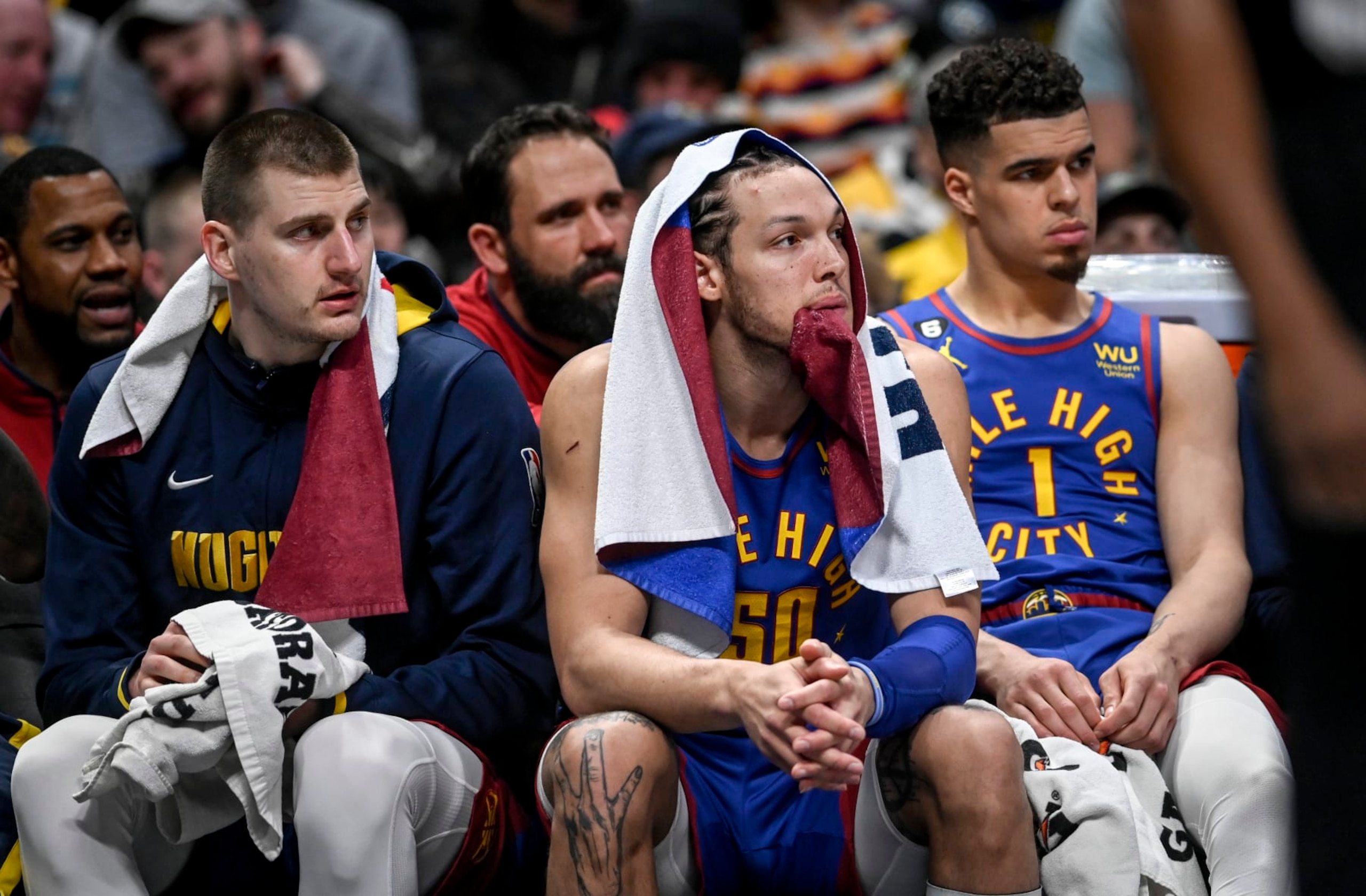
Pick-and-roll defense will be, without question, the Nuggets' make-or-break swing factor. Teams will hunt Nikola Jokić in the half-court. Some prospective opponents (like the Phoenix Suns) are hard-wired to succeed.
You can futz and fiddle with calendar filters on your favorite stats source as you please. Pockets of time are not inexorably telltale. Denver's defensive personnel, including Jokić, is a problem.
Dakhil thoroughly unpacked this issue here and here:
This begs us to explore another avenue: Denver's depth.
How many trustworthy players does the Nuggets' rotation stretch? Be brutally honest with your answer.
If you're coming up with more than six, congratulations on remaining true to your rooting biases.
Someone from the gaggle of Christian Braun, Thomas Bryant, Vlatko Čančar, Jeff Green, Reggie Jackson and Zeke Nnaji will need to stand out for stretches. That's...uncomfortable.
Equally unsettling: The Nuggets' top six of Jokić, Jamal Murray, Michael Porter Jr., Aaron Gordon, Kentavious Caldwell-Pope and Bruce Brown isn't unflappable. Many of Denver's top-end units have been a two-way force. That's awesome. But they lose luster if their most important defenders aren't performing up to snuff on offense. And, well, Brown, KCP and Gordon have all gone cold from deep for a not-insignificant amount of time.
Denver was always top-heavy. It may just be even more imbalanced and, therefore, vulnerable than initially advertised.
Golden State Warriors: You Have to Win on the Road at Some Point
8 of 16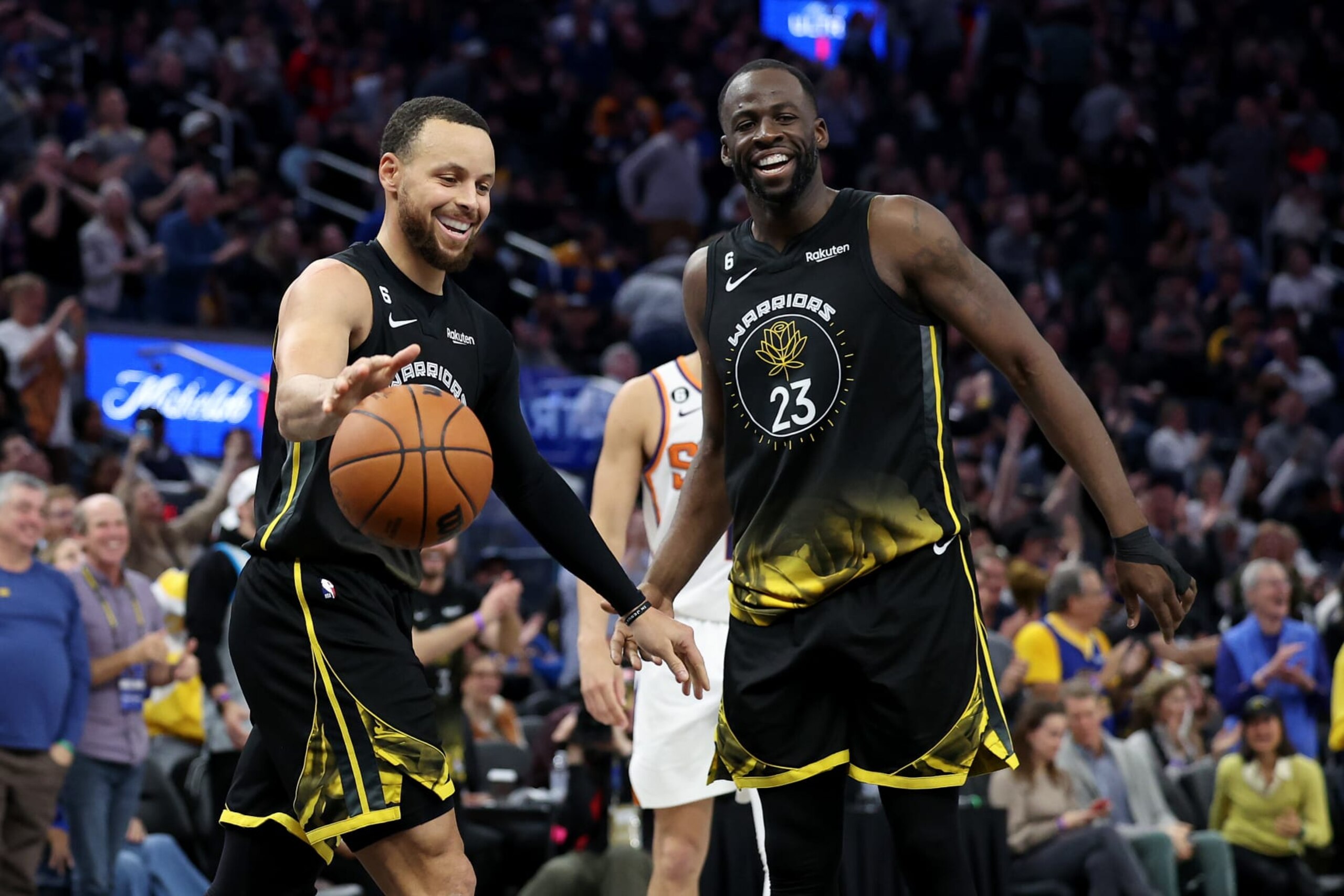
Any and all Golden State Warriors skepticism can simply be met with a dismissive scoff, immediately followed by one or more of many possible refrains.
They're the reigning champs! They'll flip a switch when it matters most! Have you seen the performance of their top-end lineups! Andrew Wiggins is back for the playoffs! Stop evaluating their defense as if they had Gary Payton II all season! Playoff Mode Kevon Looney is generational! They have Stephen Curry, so I don't care!
Some of these are an oversimplification. None of them are actually wrong. A bunch of them can be recited in response to me tsk-tsking the Warriors' road splits.
However!
Those road splits still exist. Junking them entirely is bad form.
The Warriors were one of four teams to win fewer than 12 games away from home. Their company includes Victor Wembanyama obsessives in Detroit, Houston and San Antonio.
Speaking of which: Houston and San Antonio were the only teams who posted worse defensive ratings when playing on the road. The Warriors improved away from home to close the season, but placing 22nd in points allowed per possession while posting a 4-7 record in hostile territory after the All-Star break is hardly the stuff from which successful championship repeats are made.
Knowing Golden State will, in all likelihood, never have the luxury of hosting prospective Game 7s, this feels at least somewhat important.
LA Clippers: Paul George's Right Knee
9 of 16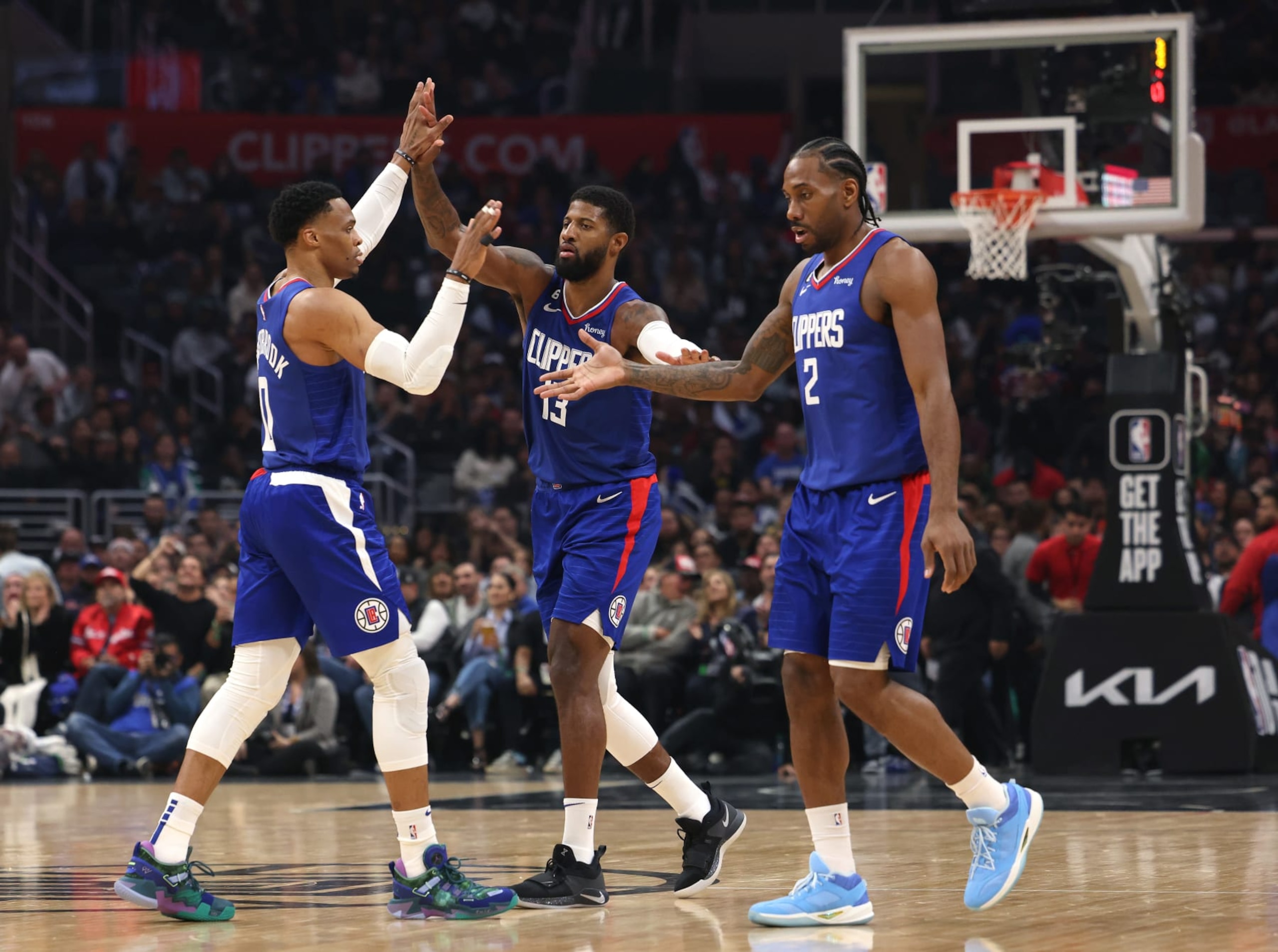
Paul George is expected to miss at least the start of the L.A. Clippers' first-round series with the Phoenix Suns. Frankly, that's a championship-breaker.
L.A.'s defense has been touch-and-go for most of this season. Lineups featuring George and Kawhi Leonard, predictably, get the job done. Things begin to splinter when you separate them.
The Clippers are allowing 116.9 points per 100 possessions when Leonard is on the floor without George. Some semi-hot opponent shooting might be at play, but their core struggles during these stints track. L.A.'s foul rate skyrockets, and it struggles to get stops in transition.
Soldiering on without him is complicated enough. It has a trickle-up effect on pretty much everyone. Leonard's defensive assignments are less negotiable, and the Clippers become more reliant on some combination of Nicolas Batum, Eric Gordon and Terance Mann punching above their weight.
This says nothing of the offensive hierarchy. L.A. has replacement bodies to put pressure on defenses, but it comes with functional trade-offs. Increasing the importance of Russell Westbrook's and Norman Powell's scoring won't do the team any favors at the other end.
Applying George's absence to the Suns specifically only exacerbates the issue. Does Leonard defend Kevin Durant or Devin Booker? Who on the team guards the other one? Do the Clippers still have the personnel to skew smaller when the Suns have Deandre Ayton on the court?
This squad's margin for error was slim in the first place. It is nonexistent now.
Los Angeles Lakers: Defending Perimeter Stars Remains a Chore
10 of 16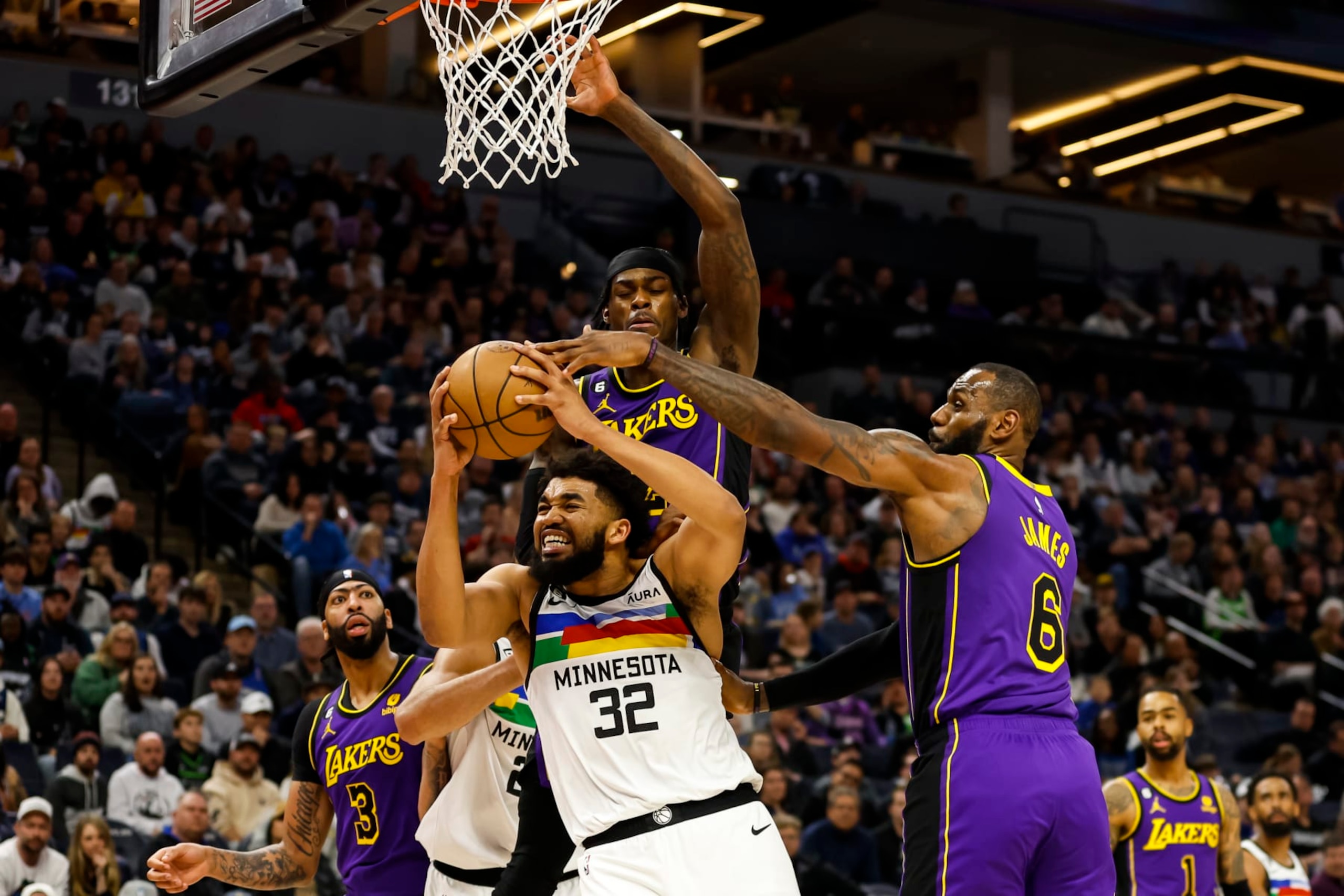
Getting up and making enough threes continues to rank among the Lakers' biggest X-factors. Their perimeter shot-making in general is flimsy. They finished 27th in effective field-goal percentage on pull-up jumpers during the regular season.
Still, that standing ticked up to the middle of the pack after the trade deadline, as did their catch-and-shoot efficiency. That's not great, but it frees us up to harp on other warts. (Plus, Dakhil went into more detail on L.A.'s outside thorniness here.)
Enter their perimeter stopping.
Defense is not the Lakers' Achilles heel in the grand scheme. They have Anthony Davis and Jarred Vanderbilt, who can both teleport in the half-court. Los Angeles also ranked 12th in points allowed per possession after beginning the season 2-10 and was first in that department post-trade deadline.
Certain matchups still profile as problematic. It starts with the Grizzlies. How do you guard not only Ja Morant, but Desmond Bane?
Davis and Vanderbilt shouldn't spend too much time handling point-of-attack assignments. Austin Reaves can pitch in, but head coach Darvin Ham has been more inclined to use Troy Brown Jr. on the toughest pulls. Can the latter provide enough offense to stick on the floor? (He's shooting 42.7 percent from deep since the deadline.)
Dennis Schröder takes on difficult matchups by virtue of his position. That's not exactly ideal. Does LeBron, at age 38, have the superhuman spunk necessary to play at a high-octane pace, barrel into the lane, finish through contact and ratchet up his defensive workload?
Memphis Grizzlies: Face It, the Frontcourt Is No Longer Playoff-Proof
11 of 16
Potential half-court lumps would typically top the Grizzlies' list of postseason red flags. Not this time.
To be sure, it remains a concern. But Memphis ranks 11th in half-court efficiency since the trade deadline. And get this: The Grizzlies aren't depending on boarding their own misses to fuel this rise. They are 27th in half-court offensive rebounding rate during this stretch. Their ascent is more about progression from Jaren Jackson Jr. and spiffier three-point volume and shot-making (aka The Luke Kennard Effect).
Hooray!
Sort of.
Memphis has not weened off second-chance opportunities by choice. Steven Adams (knee) and Brandon Clarke (Achilles) are done for the season, and their absences have rendered the Grizzlies smaller and, in Clarke's case, less bouncy.
Sustaining the recent half-court success might be doable. But the front line is suddenly thin. Memphis needs critical minutes from Xavier Tillman and Santi Aldama. That's not damning. Tillman can be a brute force, and Aldama offers plenty of range and mobility.
Inevitable foul trouble from Jackson warps that calculus. And even if he steers clear of his offensive foul spurts, he still needs to rest. How much time can the Grizz realistically buy from an Aldama-Tillman frontcourt? Do they downsize to Dillon Brooks-at-the-4 arrangements? Will either of these decisions let them cover up for Kennard's defense? Or will they have to restrict his minutes and integral outside volume?
Lineups without Memphis' three primary bigs barely held up in the regular season. The playoffs won't be any kinder.
Milwaukee Bucks: The Wing Depth May Not Be Deep Enough
12 of 16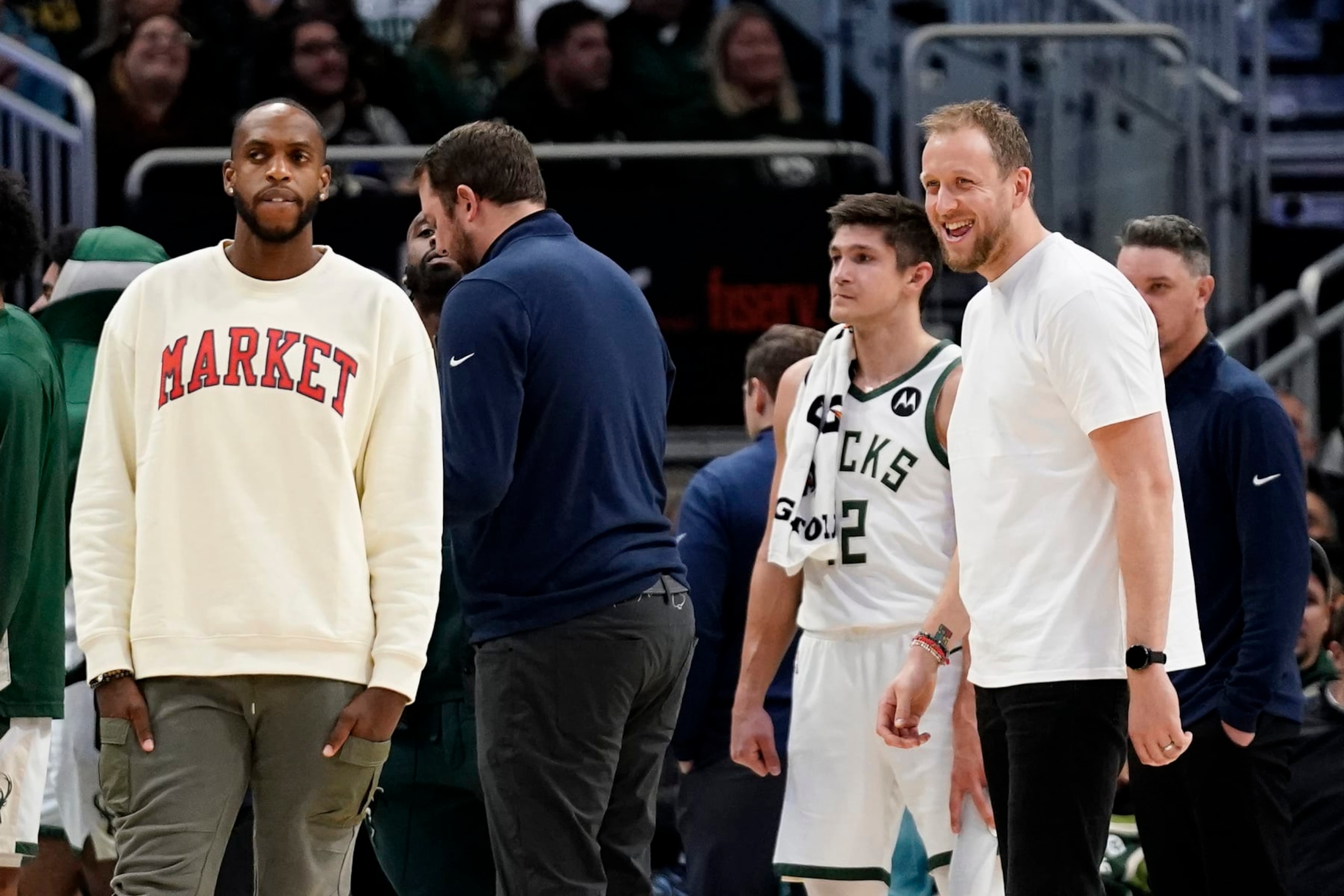
Criticizing the Bucks' half-court offense is so trendy it's mutated into a cliche.
It's also so middle-of-January.
Milwaukee is third in half-court efficiency since Khris Middleton made his second return. That's a big deal. It doesn't absolve the Bucks of all concern, but unless you're worried about Middleton's right knee costing him playoff games, there's wiggle room to redirect the spotlight.
Let's go ahead and shift it onto the general wing rotation, shall we?
Nekias Duncan of The Dunker Spot podcast wondered on a recent episode whether the Bucks were fully equipped to handle some of the starrier wing scorers. Jrue Holiday gives them an exhaustive one-on-one lifeline and is no stranger to guarding up. But he's not super big and, more to the point, can't play all 48 minutes.
Throwing Giannis Antetokounmpo onto whomever is a pretty good alternative. But he's at his peak as a roving everywhere, all-at-once, party-crasher. Tethering him to exclusivity compromises a critical element of Milwaukee's defense even though it's not actively looking to force turnovers.
Options get iffy from here. Middleton has never been a lockdown stopper and lost some lateral zip this season. Joe Ingles knows how to use space to his advantage, but he's 35. Will Pat Connaughton take and make enough threes to stay on the floor? How much do the Bucks trust Grayson Allen's defense? How many minutes can Jae Crowder log these days? Does this all end with too much age-36 Wesley Matthews?
New York Knicks: Julius Randle's Left Ankle
13 of 16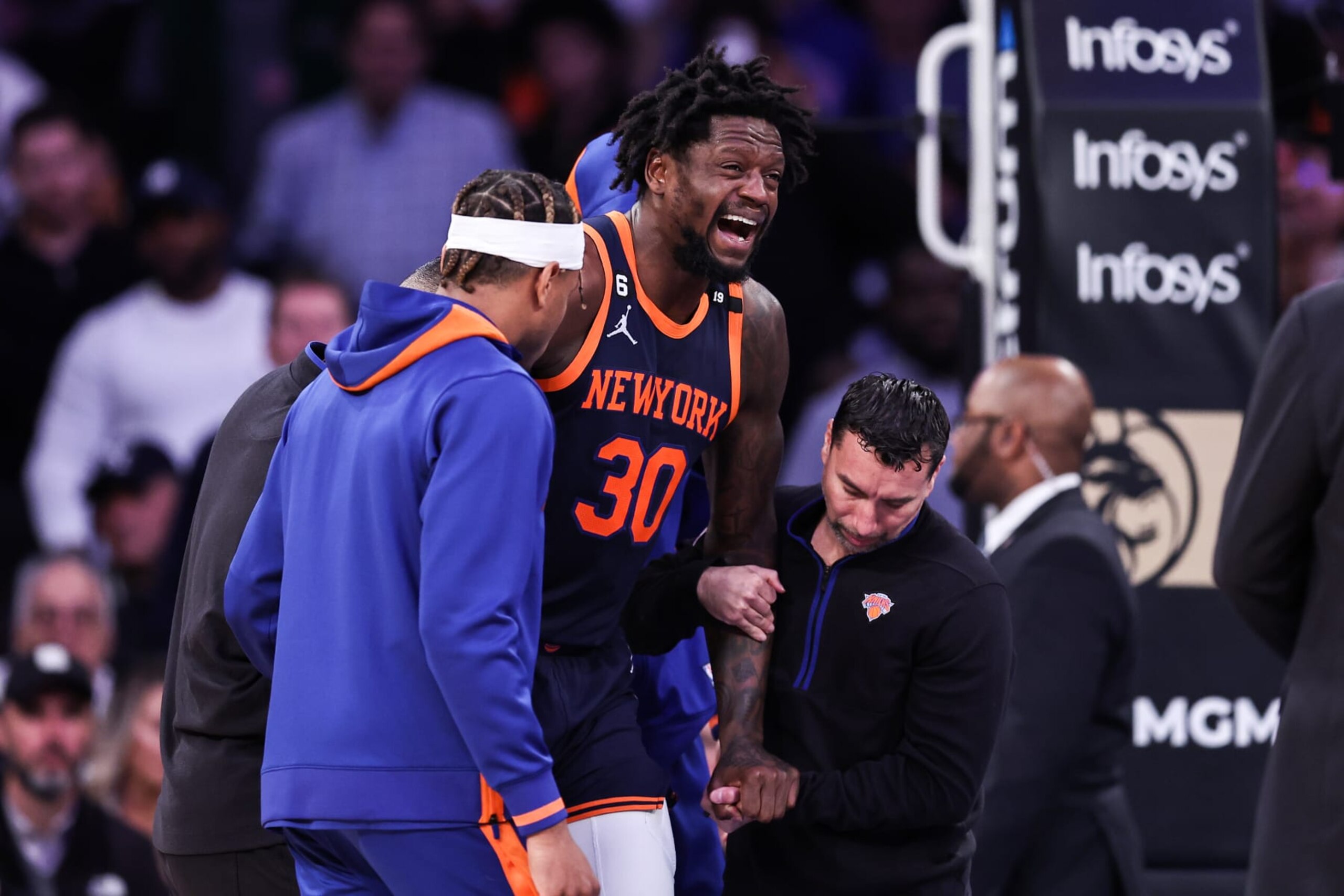
Julius Randle's status for Saturday's Game 1 against the Cleveland Cavaliers remains uncertain at this writing. I'm betting he suits up. He's an ironman, and New York Knicks head coach Tom Thibodeau believes one ankle is more than enough to play.
The real question: What does Randle look like on that sprained left ankle? Will he be closer to 100 percent or 50 percent?
Any drop-off, at all, stands to hurt the Knicks. Randle and Jalen Brunson (who's playing through a right hand injury) are irreplaceable to New York's offense. They more so than anyone else on the roster have the capacity to hunt mismatches and take advantage of them.
What happens if Randle can't attack switches with the usual oomph after screening for Brunson? Cleveland, specifically, already threatens to neutralize the full-strength version of this approach by having Evan Mobley start off possessions on Brunson and rotating onto Randle or just by guarding the latter outright.
Will Randle have the jet fuel to get going downhill off the catch and put the defense in rotation? Can he survive in more of a pick-and-pop capacity if he doesn't?
You need to be incredibly high on Immanuel Quickley's and RJ Barrett's creation to view the state of Randle's ankle as immaterial. It's harder to get there, for either of them, knowing who and what awaits them in the lane (Mobley and Jarrett Allen).
Philadelphia 76ers: Is James Harden Healthy Enough for This?
14 of 16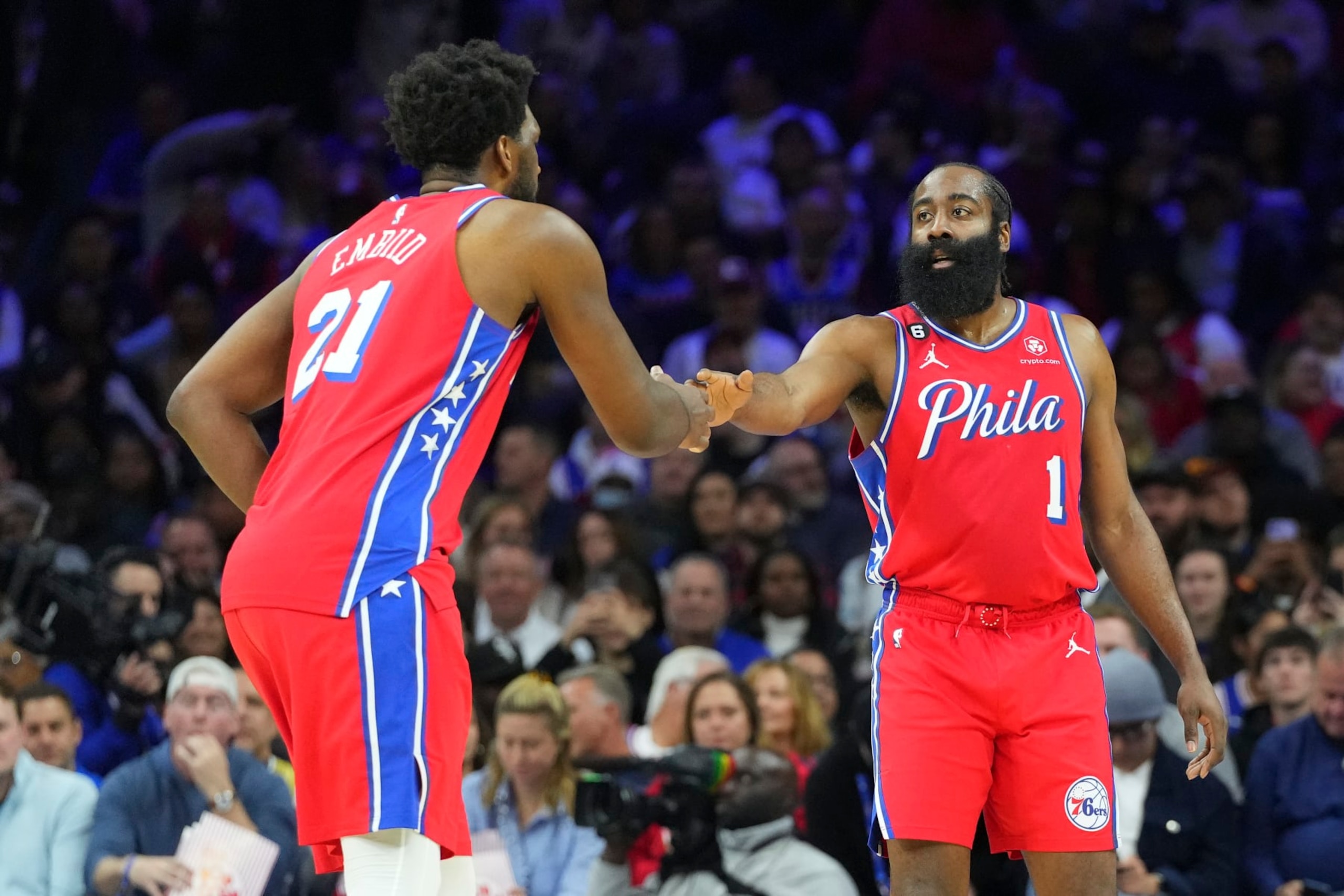
Focusing on James Harden's spotty playoff resume is fair game. It's absolutely a thing. It's also implicit and not entirely relevant in the context of these Sixers.
Harden isn't in Philly to be Peak Houston Rockets Era James Harden. He is the team's second in command, and he's playing like he both understands and accepts it. Last year's postseason was far from a banner run yet also proof of concept. Harden wasn't at his most explosive, but he still put defenses in rotation, even when he didn't drive as deep, and capitalized on his vision.
Just like then, when he labored through pesky hamstring issues, his health poses a bigger pickle than his playoff track record. Harden has dealt with right foot and left Achilles injuries, and his ability to roast dudes on switches and get deep into the lane is not always a given.
Evaluating his closing kick to the season doesn't yield many answers. He ran hot and cold, passive and aggressive, all while missing some time. But the Sixers weren't playing in high-stakes games down the stretch, and Embiid had an MVP race to win. Rest and inconsistency might have just been precautionary and prescribed restraint.
We'll know soon enough. Philly can beat Brooklyn with a half-healthy Harden, but the combination of the Nets' length on the wings and switch-dynamo Nic Claxton will be a good litmus test for Harden's health—which, by the way, is mission critical to surviving the equally defining non-Embiid minutes.
Phoenix Suns: The Kevin Durant Era Is Only 8 Games Old
15 of 16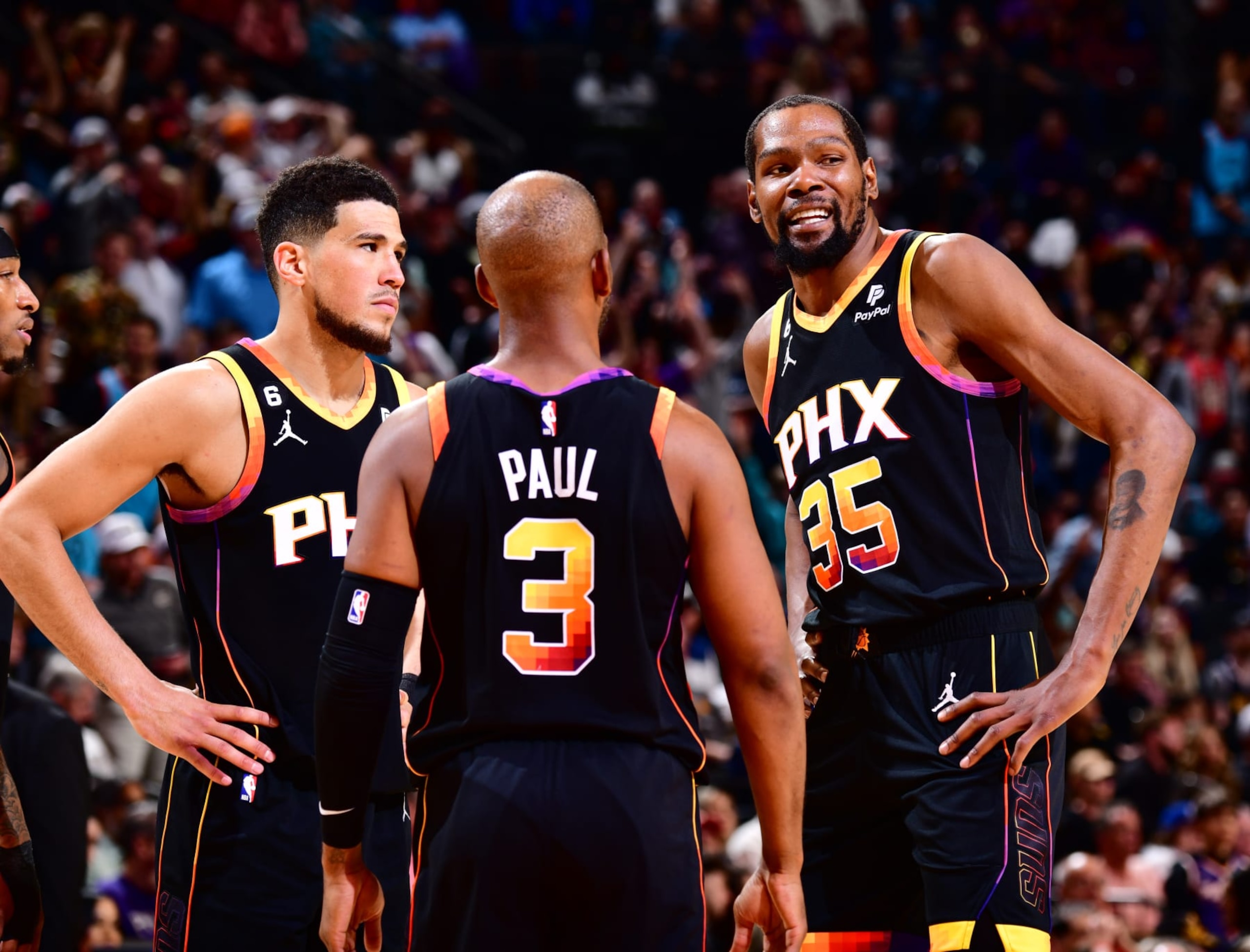
It speaks to my lack of concern for the Suns that this is the primary concern. (Also: My close personal friend Mo already stole looked at Phoenix's top-heaviness here.)
Kevin Durant has played eight games in a Suns uniform. Phoenix won them all. And the lineup data is largely annihilatory enough to convince us that sample sizes don't matter.
Except, they do.
Familiarity begets chemistry, and synergy is important. Durant is one of the most scalable stars of all time. Devin Booker might be right there with him. But the Suns are entering uncharted territory. Teams don't routinely acquire top-10 superstars in the middle of the season, play fewer than 10 games with him and win the title.
Phoenix is attempting to do the unprecedented. It is talented enough, on paper, to succeed. It is not above critique or concern.
Should we read into the offense's struggles when Durant plays without Booker? Or without Deandre Ayton? Does the Suns' offensive rating with their four best players (125.4) trounce the possessions of aesthetic jaggedness? Will the Ayton-in-the-dunker-spot experiment, as outlined by masterfully by David (@theIVpointplay) on Twitter, translate to the postseason?
Are Phoenix's best lineups equipped to defend in the playoff crucible? If your answer is, "Yes, because Josh Okogie and Torrey Craig exist," will either or both of them drill enough wide-open triples to stay on the floor?
The questions, as trivial as they seem, go on. There's still so much about the Suns we don't know. Too much, arguably.
Sacramento Kings: LOLOLOL DEFENSE
16 of 16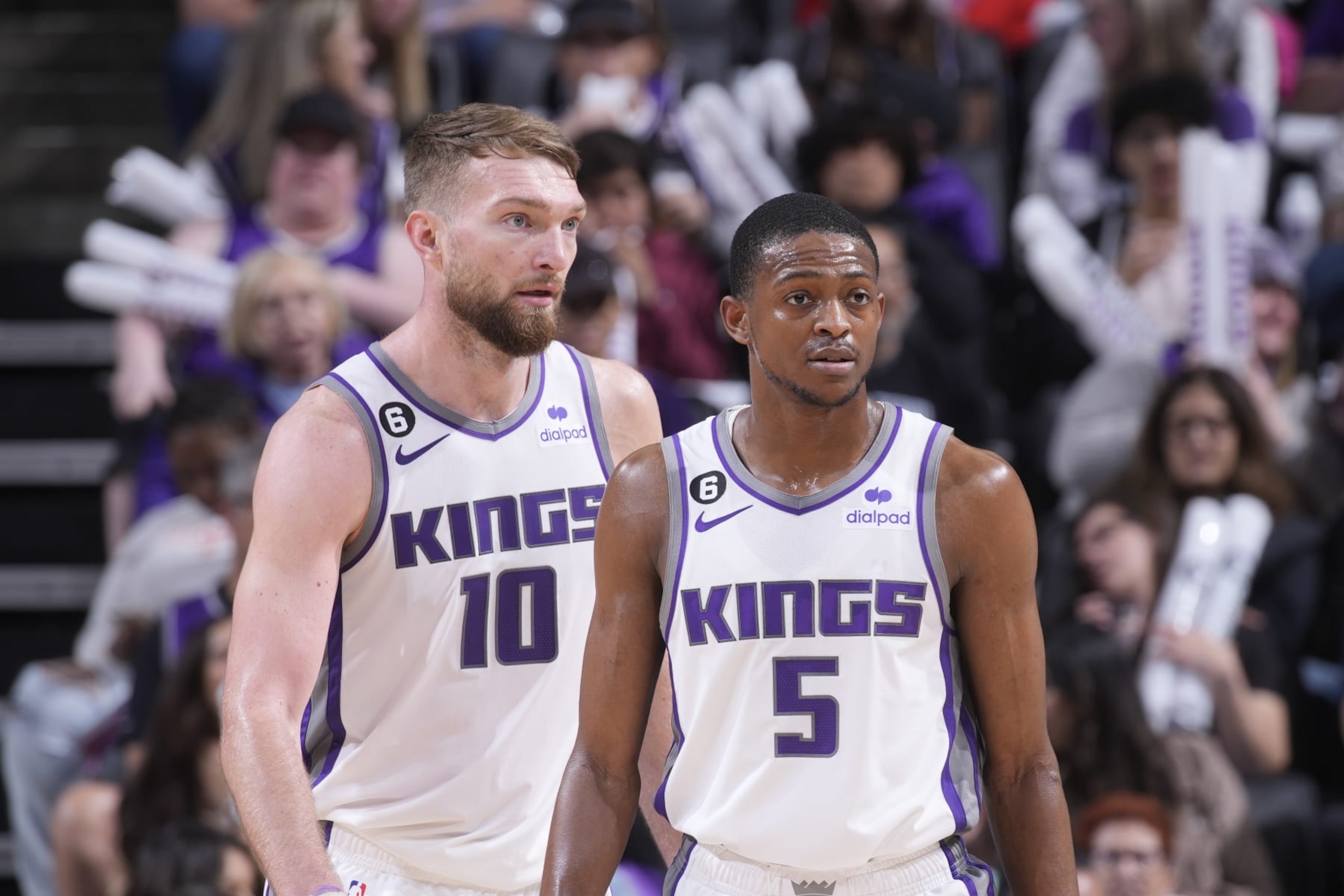
The title of this subsection is snarkier than its contents. Yes, the Sacramento Kings are objectively not good on defense. They wrapped the regular season 25th in points allowed per possession, a standing that's at once misleading and unequivocally going to be their postseason downfall.
Sacramento is not without defensive fundamentals. It doesn't foul in droves. It gobbles up rebounds. It doesn't surrender fast-break parades. It invites the right mix of shots; its expected effective field-goal percentage allowed ranks a stellar 11th. It competes deep into possessions. Over 20 percent of opponent field-goal attempts come inside seven seconds—one of the league's top marks.
Too bad moral victories don't count toward playoff-series scores. And frankly, this roster isn't stacked with the talent to outperform its overall defensive rank.
Drawing the Warriors in Round 1 is particularly problematic. The Kings don't have the bodies to hang with Golden State's off-ball movement. Davion Mitchell and Kessler Edwards can be blanketing. Playing them heavy minutes isn't an answer. Sacramento's best line of defense at the rim, meanwhile, is Golden State's aversion to ever getting there.
Perhaps the Kings feast on the rotting corpse of the Road Warriors. Cool. That's one round. They need to win four. Which they won't.
Unless otherwise noted, stats courtesy of NBA.com, Basketball Reference, Stathead or Cleaning the Glass. Salary information via Spotrac.
Dan Favale covers the NBA for Bleacher Report. Follow him on Twitter (@danfavale), and subscribe to the Hardwood Knocks podcast, co-hosted by Bleacher Report's Grant Hughes.



.jpg?w=2560 "Jonathan Taylor Landing Spots 📍")



