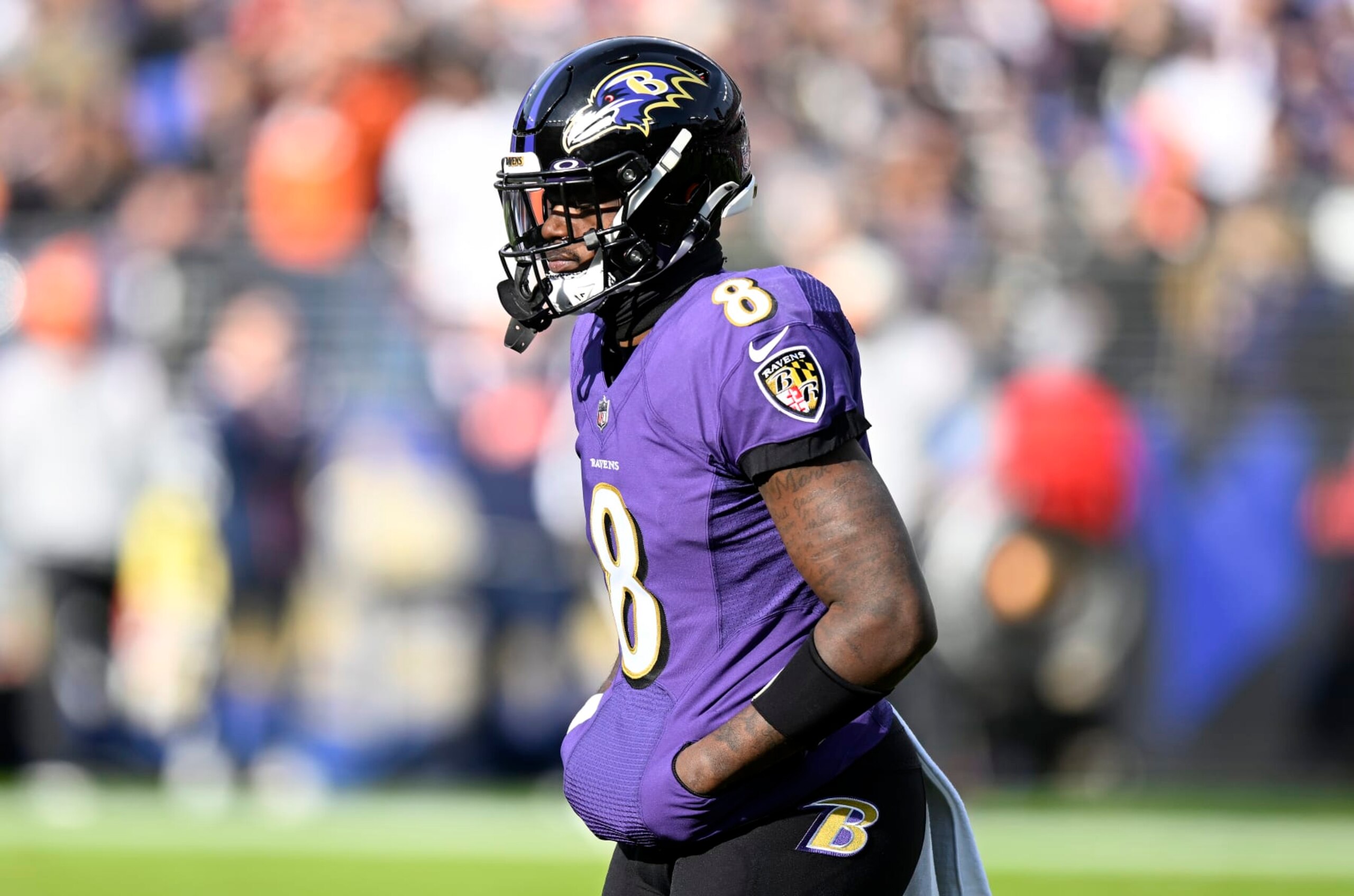


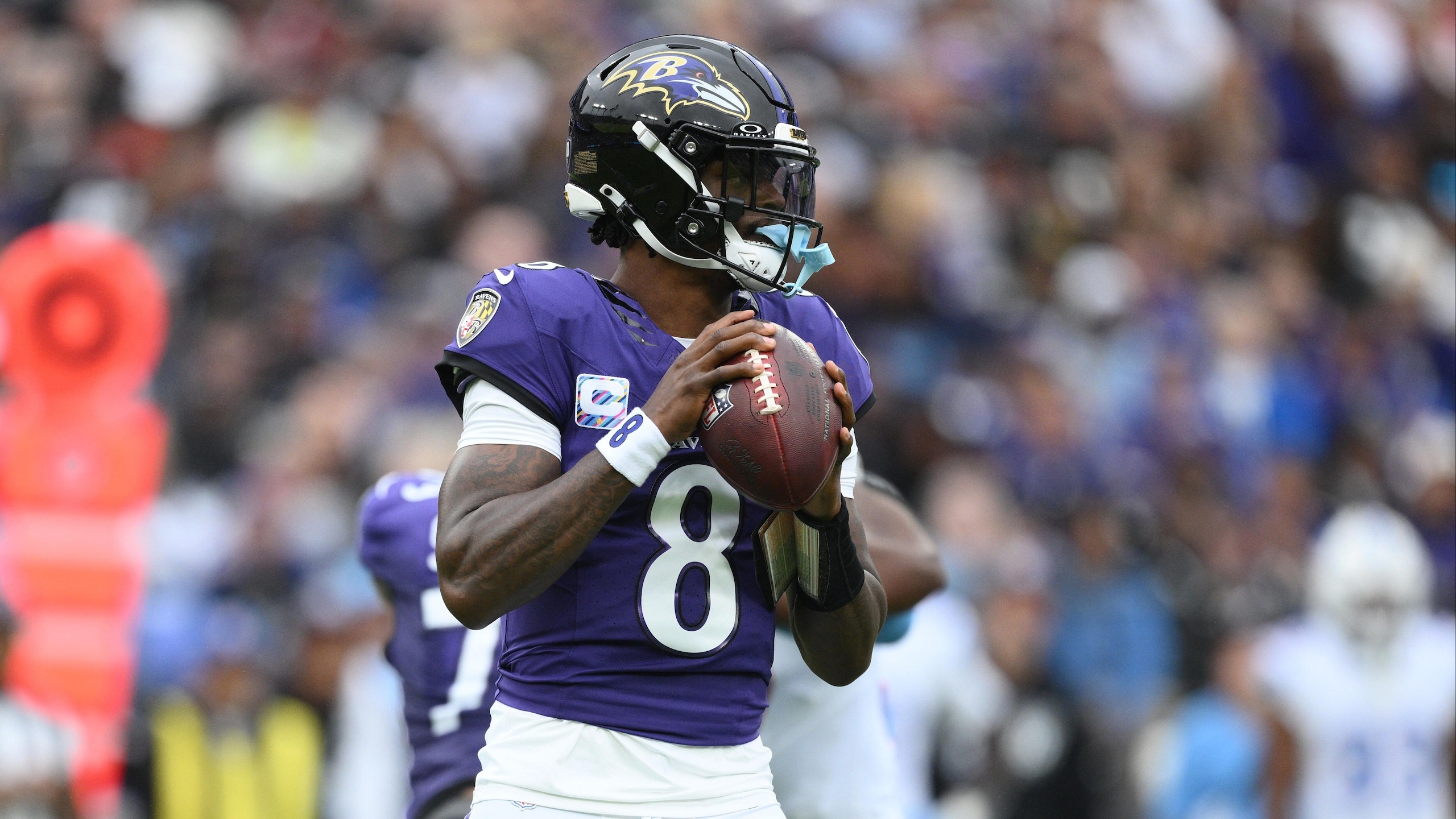
The Baltimore Ravens did not reach a long-term extension with quarterback Lamar Jackson before last week's franchise-tag deadline. Instead, they gave him the non-exclusive tag, which allows other teams to sign him to an offer sheet.
Should Baltimore choose not to match an offer for the 26-year-old, it would receive two first-round picks as compensation.
The Ravens' decision to use the non-exclusive tag was likely a calculated decision based on two important factors. The most obvious is that the non-exclusive tag is cheaper. It will carry a value of $32.4 million, while the exclusive tag is expected to be valued at over $45 million.
TOP NEWS
.jpg?w=2560 "Chargers Chiefs Football")
Reported Details of Seahawks-K9 Split
.jpg?w=2560)
B/R's Expert Week 7 NFL Picks 🔮
Biggest Draft Risers and Fallers 🎢
The other factor is Baltimore's own inability to negotiate a new deal with Jackson. NFL Media's Ian Rapoport reported in September that the signal-caller turned down an offer that included $133 million in full guarantees. If the two sides have made progress in negotiations since then, it hasn't been enough to get a deal done.
According to ESPN's Jamison Hensley, Jackson wants a contract that is fully guaranteed, like the one Deshaun Watson got from the rival Cleveland Browns. Baltimore has insisted it wants to get a long-term extension done.
"I'm optimistic and I continue to be optimistic, and we'll see where it goes," general manager Eric DeCosta said on March 1, per Ryan Mink of the team's official website.
By using the non-exclusive tag, Baltimore has given other teams the opportunity to negotiate with Jackson. If a different franchise comes up with a contract with which he is happy, the Ravens could simply match it.
In other words, this could be a play by Baltimore to allow other front offices to do the work for it. Only, it seems that even teams interested in acquiring the Louisville product are uninterested in cooperating.
"There are teams interested in pursuing a potential Jackson trade if he decides he wants out of Baltimore, but I don't know that you'll see anyone submit a formal offer sheet that puts two first-round draft picks at risk if the Ravens don't match," ESPN's Dan Graziano wrote on Sunday.
If a franchise is going to acquire Jackson this offseason, it may have to do so with a straight-up trade. And that's a route Baltimore absolutely should be open to considering.
The reality is that the Ravens don't have a lot of other options. If Jackson isn't willing to budge on his contract demands, Baltimore can either play him in 2023 and try again next offseason or trade him.
That's risky for a couple of reasons. For one, a return to MVP form by Jackson would only increase his 2024 contract leverage. Should he suffer a season-ending injury for the third-straight season, though, it could also erase any chance Baltimore has of a 2024 tag-and-trade.
Tagging Jackson a second time would also come with a minimum of a 20 percent salary increase.
A trade this offseason has its own obstacles, of course—Jackson would first have to sign the franchise tag. However, it would be entirely logical if things get to a point where he does decide he "wants out."
If Jackson makes it known that he no longer wants to be in Baltimore, it will further hurt the Ravens' trade leverage. They can maintain some leverage for now by insisting they want to keep him for the long term but are open to hearing offers.
And that's the important thing to remember. Baltimore can listen to offers without being obligated to make a trade. The bidding can start at two first-round picks—the same cost as obtaining Jackson via the offer sheet—and if the Ravens don't find a package they like, they don't have to flip the switch on a deal.
If the Ravens do find an offer they like, they could quickly go to work on finding the quarterback's successor. If an interested potential trade partner is picking in the top 10 of this year's draft, for example, Baltimore could have a shot at a rookie prospect such as Florida's Anthony Richardson or Alabama's Bryce Young.
The Ravens could also get to work on retaining restricted free agent Tyler Huntley, who was a Pro Bowl alternate as Baltimore's quarterback fill-in this past season—something they should do anyway.
Baltimore has little to gain by refusing to listen to trade offers. The list of teams that could sign Jackson to an offer sheet—if any actually exist—will only shrink as free agency and the draft unfold. There's nothing to obtain on that front.
The only potential benefit to shutting down the phone lines is that it could send a message to Jackson that the Ravens do indeed view him as their franchise quarterback. Until/unless they send that message by giving him the contract he wants, public displays of commitment probably won't mean much.
If another franchise is willing to offer multiple high draft picks for a quarterback with injury concerns who isn't under contract long-term, Baltimore would be foolish not to pay attention.
.jpg?w=2560 "Seahawks Chiefs Football")
.jpg?w=2560 "Grading SmackDown 🔠")