How Bad Would the Bubble Be If the Men's NCAA Tournament Field Expanded?
During the various men's college basketball conference media days in October, there was a lot of rumbling from the commissioners about the possibility of expanding the NCAA tournament field.
Then, again in January, a "transformation committee" recommended the following: "Accommodate access for 25 percent of active Division I members in good standing in team sports sponsored by more than 200 schools."
Translation: Expand the NCAA tournament field to at least 90 teams so that a quarter of the nation's 363 teams get to go to the postseason.

And if 90 is mathematically the proposal, it would probably actually be 96, broken down as 24 teams per region, with the top eight seeds in each region getting a bye into what we currently know and love as the first round.
Compared to MLB, the NBA, the NFL and the NHL, where at least 40 percent of teams make the postseason each year, 25 percent doesn't sound so bad, right?
One glance at the would-be bubble confirms that, yes, it would be bad.
Every step of the way, fans and national media have rebuffed the notion of expansion. Whether it's 80 teams, 96 teams, 128 teams or some diabolical every-team-in-the-country invitational, we hate it.
If anything, we should go back to 64 instead of further diluting the greatest tournament on the planet.
But the big-time commissioners—the SEC's Greg Sankey, the ACC's Jim Phillips and others—expressed a desire to look into expanding the field, which means it's probably going to happen, no matter how much we protest.
It won't be this year, thank heavens.
Not next year, either.
But potentially in time for the 2024-25 season.
Here's hoping it never happens, but we might as well start preparing for that fiasco by taking a look at how bad the bubble resumes would be if we had to find room for more teams this season.
Before we dive in, here's a disclaimer that we're assuming all spots added to the field would be at-large bids. It's possible they could work it into the expansion proposal that each of the 32 conferences gets to send two teams to the Big Dance, or that of the (N-minus-32) at-large spots, at least X need to go to teams from outside the six major conferences.
However, as was the case when the field expanded from 65 to 68 teams in 2011, it's likely that all the additions would be wild cards.
And that's a nauseating thought, because as it is for the 68-team field, the bubble is already pretty darn ugly.
For example, Utah State has an 0-4 record against Quadrant 1 plus a pair of Quadrant 4 losses. Yet, the Aggies entered Wednesday's game against San Diego State as one of the first four teams out of the projected field, per the Bracket Matrix.
Meanwhile, Memphis has just one win against the projected field—a neutral-site victory over plummeting-to-the-bubble Auburn—and five losses to teams not projected to dance. Yet, Memphis is in the consensus field.
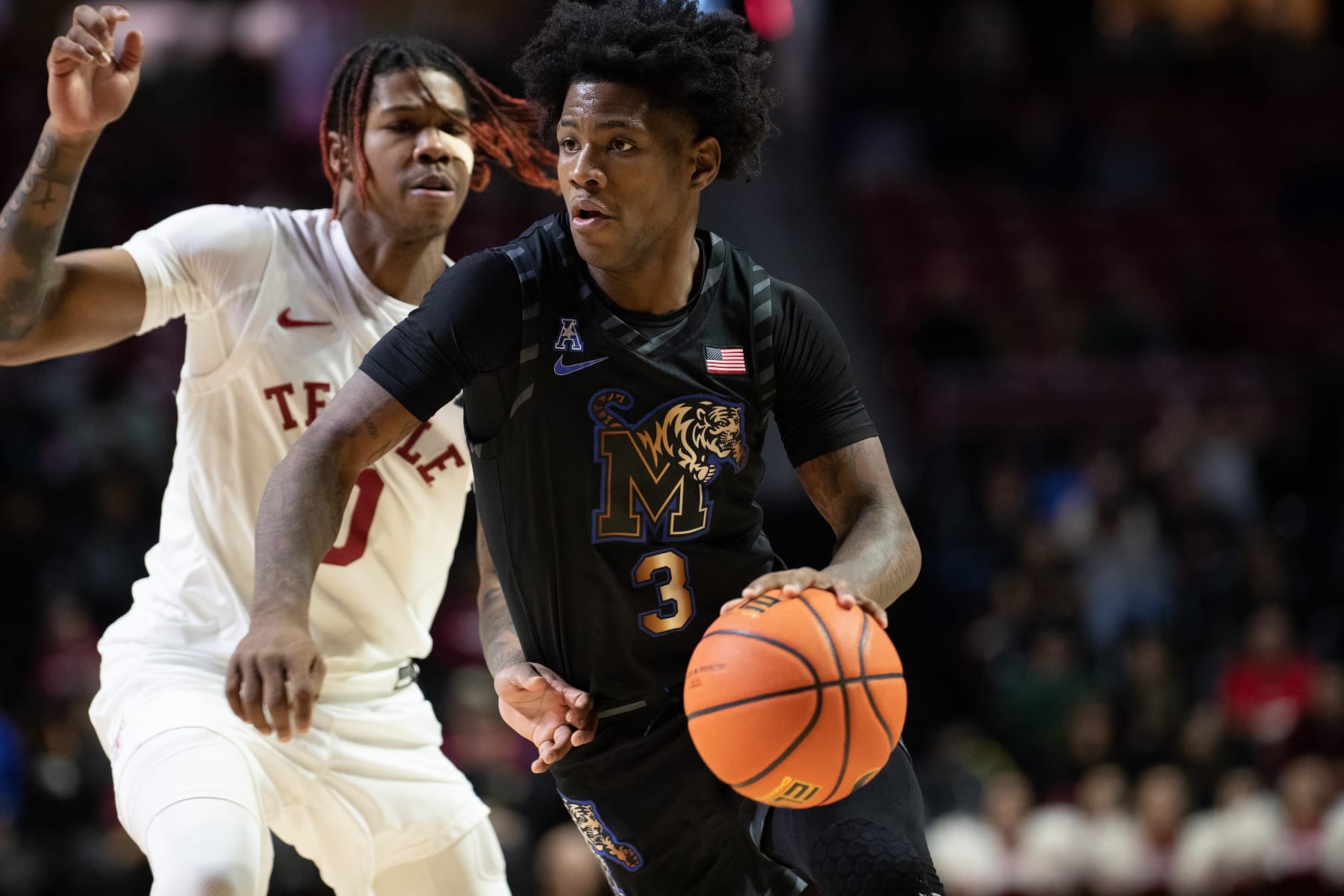
Expand the field, though, and suddenly those hideous resumes become locks for the tournament.
If we're talking an 80-team field, these 12 teams would figure to join the mix as of today: Arizona State, Florida, Mississippi State, Oklahoma, Oregon, Penn State, Seton Hall, Texas A&M, Utah State, Virginia Tech, Wake Forest and Wisconsin, with Michigan and Utah knocking at the door as the first teams out.
The immediate takeaway there is that you're likely to be sorely disappointed if you're thinking, "Yeah, expanding the field stinks, but hey, at least we'll get more mid-majors into the field!" That's one Mountain West team (Utah State) and 11 major-conference squads.
Some of those resumes are all sorts of bad, too.
Oklahoma is .500 overall and has a 5-12 record against the top two Quadrants. At least that's better than Florida, though, as the Gators are sitting at 3-11 versus Q1 and Q2. Oregon, Texas A&M and Utah State have multiple losses in Quadrants 3 and 4 with minimal good wins to make up for them. And by including both Virginia Tech and Wake Forest, that means nine bids for the ACC in what has been a horrible year by that league's standards.
Again, that's just for an expansion to 80 teams.
Push it all the way to 96 teams and buckle up for a regular season that really doesn't matter.
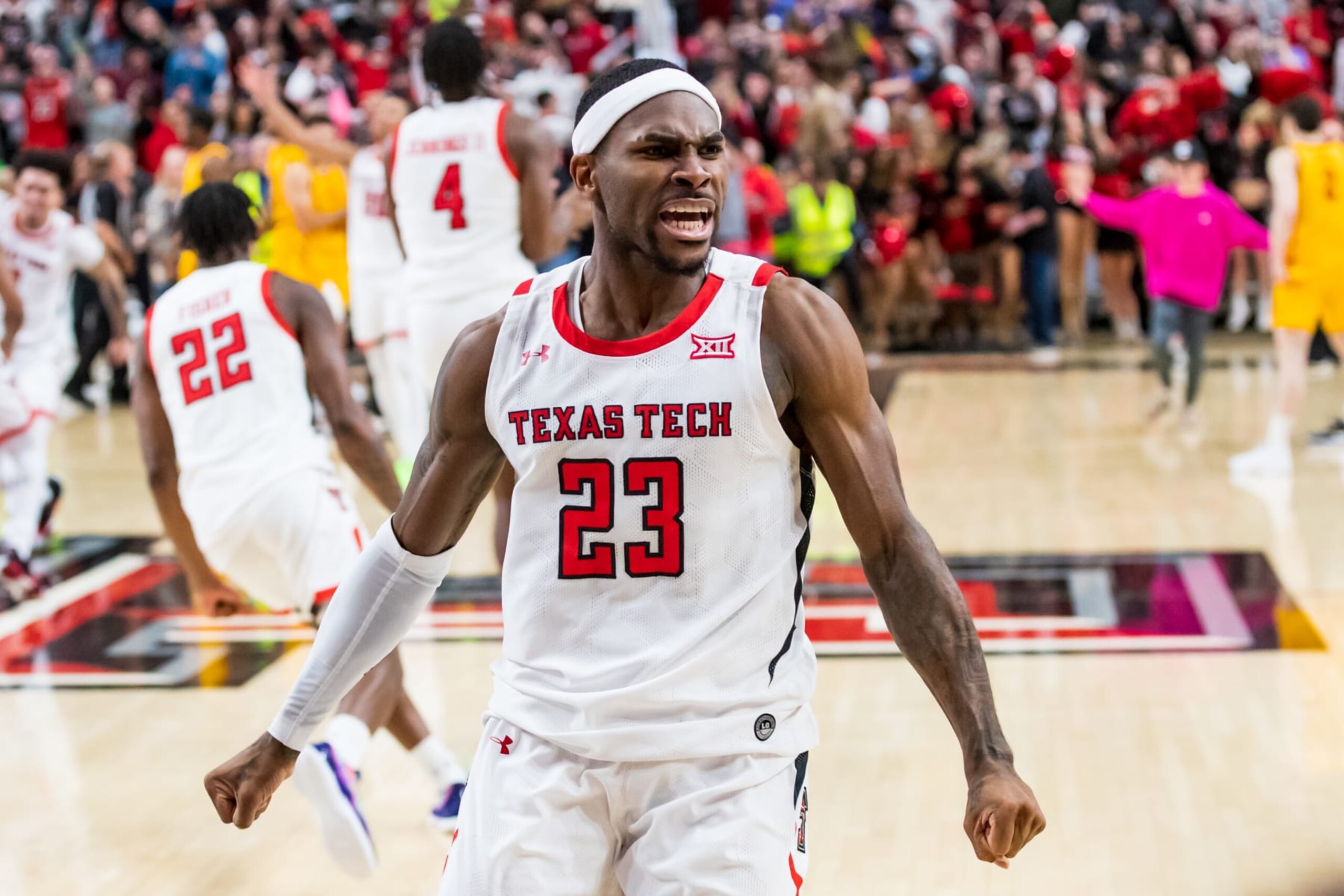
Here are the next 16 teams into the projected field in that scenario: Cincinnati, Colorado, Louisiana, Loyola Marymount, Michigan, North Texas, Ohio State, Sam Houston State, Santa Clara, St. John's, Temple, Texas Tech, Tulane, UCF, UNLV and Utah, with BYU and Hofstra just missing the cut.
That's a fun group for the mid-major diehards. Four more teams from the AAC, two from the WCC and one each from the Sun Belt, Conference USA, MWC and WAC. (The Atlantic 10 might still be a one-bid league, though. Yikes.)
But sub-.500 Ohio State?
Texas Tech and its 1-12 record against the top two Quadrants?
Temple getting in with eight bad losses?
Can we not, please?
Even if the NCAA were to institute a "must finish the season with at least two more wins than losses to qualify for an at-large bid" rule to eliminate the likes of Ohio State, Oklahoma and Texas Tech from the conversation, it's not like those major-conference loss stockpilers are keeping out deserving teams.
BYU has one good win over a short-handed Creighton and three bad losses. Hofstra has six bad losses and only one win worth mentioning. And the last team sneaking in if you throw out the Buckeyes, Sooners and Red Raiders might be Syracuse with a grand total of one win against the KenPom.com top 100.
I don't have enough antacids on hand to dig further into the possibility of a 128-team field to give you 32 more teams, but just know that I will immediately retire from bracketology if the day ever arrives when I have to decide between Kennesaw State (15-7, NET: 122, RES: 90.5, QUAL: 145.3, 0-4 vs. Q1/Q2, two losses vs. Q4) and Hawai'i (16-7, NET: 123, RES: 132.5, QUAL: 138.7, 0-4 vs. Q1/Q2, one loss vs. Q4) for the final spot in the projected field.
Of course, they're not talking about expanding the field to try to keep bracketologists happy. It's a blatant money grab. And the fact that we've already seen two teams (VCU in 2011, UCLA in 2021) make the unexpected trip from First Four to Final Four is Exhibit A in the quest to be more inclusive of teams who stunk during the regular season.
Would it even be a successful money grab, though?
Are people really tuning in on Tuesday and Wednesday to watch "play-in" games like Memphis vs. Utah State and Florida Atlantic vs. Santa Clara, or would we all just wait until Wednesday night/Thursday morning to fill out our preferred 64-team brackets?
Are enough people watching those first-round games to counterbalance the fans who no longer see any point in watching any college basketball games from November to January?
At some point, it no longer makes sense for ESPN to pay for the rights to broadcast more than 3,000 games per season across its family of networks if it's all about CBS/Turner making bank during the tournament, right?
That latter question is probably the only sticking point that could keep the field as is. But, sadly, even that might not be enough to prevent an expansion to 96 teams.
So get ready for Bubble Banter sponsored by Alka Seltzer, where you'll need the heartburn relief in order to stomach the conversation.
Kerry Miller covers men's college basketball and Major League Baseball for Bleacher Report. You can follow him on Twitter: @KerranceJames


.jpg?w=2560 "Terrell Owens Being Sued for Defamation")


.jpg?w=2560 "WWE NXT Live Grades ✍️")