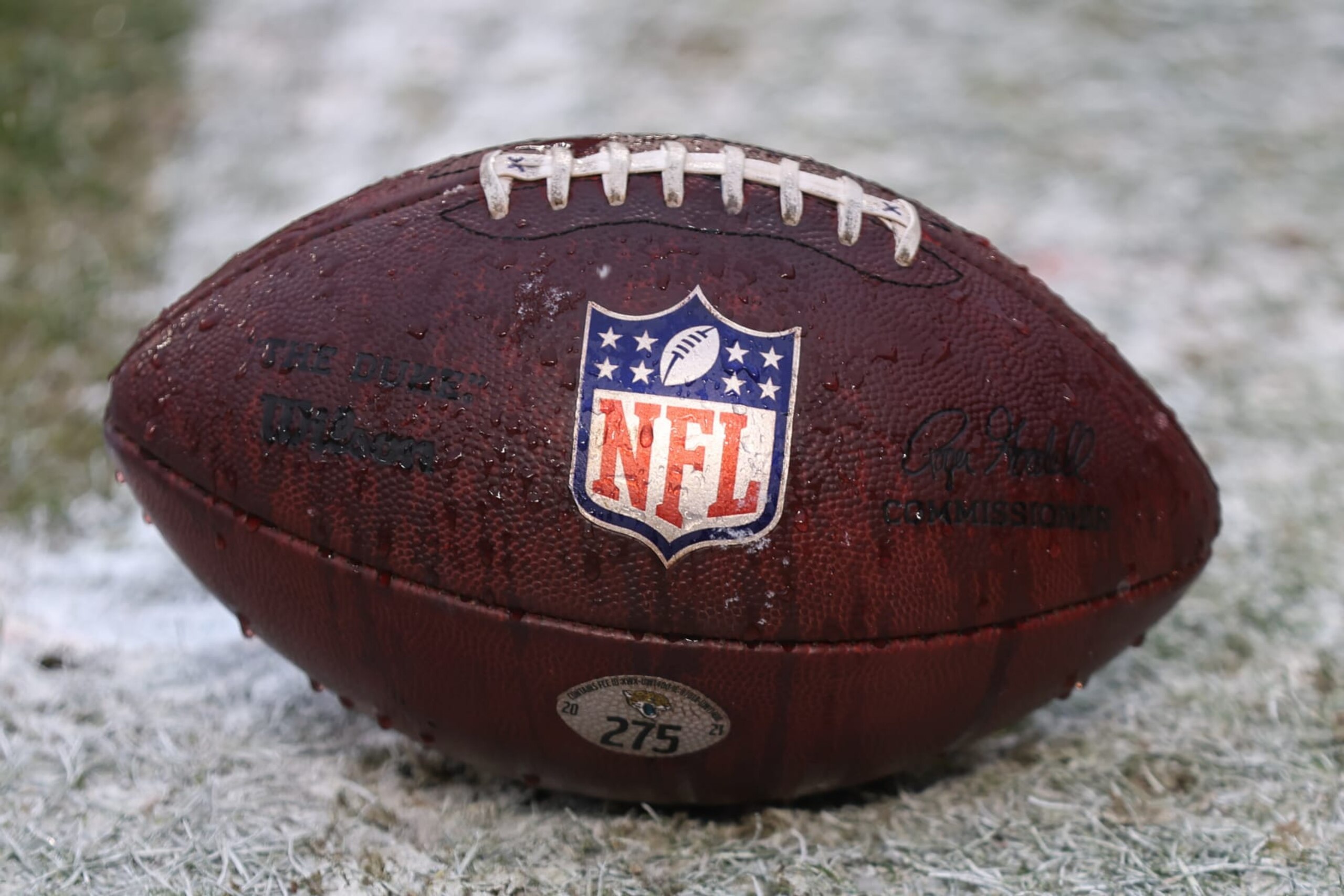

Boston University Study Shows 92 Percent of Former NFL Players Studied Had CTE
The long-term health of NFL players after the playing careers come to an end is a growing concern, and a recent study paints a bleak picture.
According to the Boston University CTE Center, the results of the study "diagnosed 345 former NFL players with chronic traumatic encephalopathy, out of 376 former players who were studied, a rate of 91.7 percent."
TOP NEWS

New NFL contenders starting to emerge after Week 4
.jpg?w=2560 "Cardinals Giants Football")
NFL investigating 2 referees for separate viral exchanges
.jpg?w=2560 "Hill Injury Update Football")
Report: Chiefs Contact Hill's Agent
Two of the players included in the study played for the Philadelphia Eagles and Kansas City Chiefs, who are facing off in Super Bowl LVII on Sunday. Former Eagles quarterback Rick Arrington, who played for them from 1970 to 1973, and former Chiefs defensive tackle Ed Lothamer, who played for two of their Super Bowl teams in the 1960s, were both diagnosed with CTE within the past year.
On Friday, the NFL announced that concussions increased by 18 percent in 2022, as 149 concussions were suffered across 271 games. compared to 126 in 2021. A series of concussions suffered by Miami Dolphins quarterback Tua Tagovailoa caused the league to amend its concussion protocol.
Ann McKee, director of the BU CTE Center and chief of neuropathology at VA Boston Healthcare System, noted that the study's findings "[do] not mean that roughly 92 percent of all former and current NFL players have CTE." She also added "the prevalence of the brain disease can only be definitively diagnosed after death." The main causes of CTE were explained further:
"The biggest risk factor for CTE is not the violence of one or two isolated head blows, but rather the smaller, repetitive head impacts, like those that football players experience throughout a game or season. Those repeated blows cause a buildup of misfolded tau protein in the brain that is unlike the changes seen from aging, Alzheimer's disease, or any other brain disease."
The BU CTE Center is set to publish its 182nd study on the disease.
.jpg?w=2560 "Titans Giants Football")
.jpg?w=2560 "Dolphins Bills Football")



.jpg?w=2560 "Greenlaw Talks Payton Exchange")
