God of War Ragnarök Review: Gameplay Impressions, Videos and Speedrunning Tips
There's nothing simple about God of War Ragnarök from developer Sony Santa Monica Studio.
The challenge in front of the release is immense and complex. It's one of the most anticipated games ever, a status earned because it's the follow-up to the jaw-dropping marriage of storytelling and combat found in 2018's God of War.
Genre-best storytelling weaving complex interpersonal relationships within the backdrop of the Norse-foretold end of times is anything but simple. Neither is an array of interwoven gameplay and exploration systems that have left others in the industry playing catchup all this time.
TOP NEWS

Unranked CFB teams cause chaos in Week 8

Brown with an all-time summary of relationship with Tatum

More top teams upset and more takeaways from CFB Week 8
But complex is nothing but good in this instance. Ragnarök does nothing short of providing more of the same that made its predecessor a defining release of a generation, upgrading in smart, innovative ways while again weaving a lengthy, downright unforgettable tale.
Graphics and Gameplay
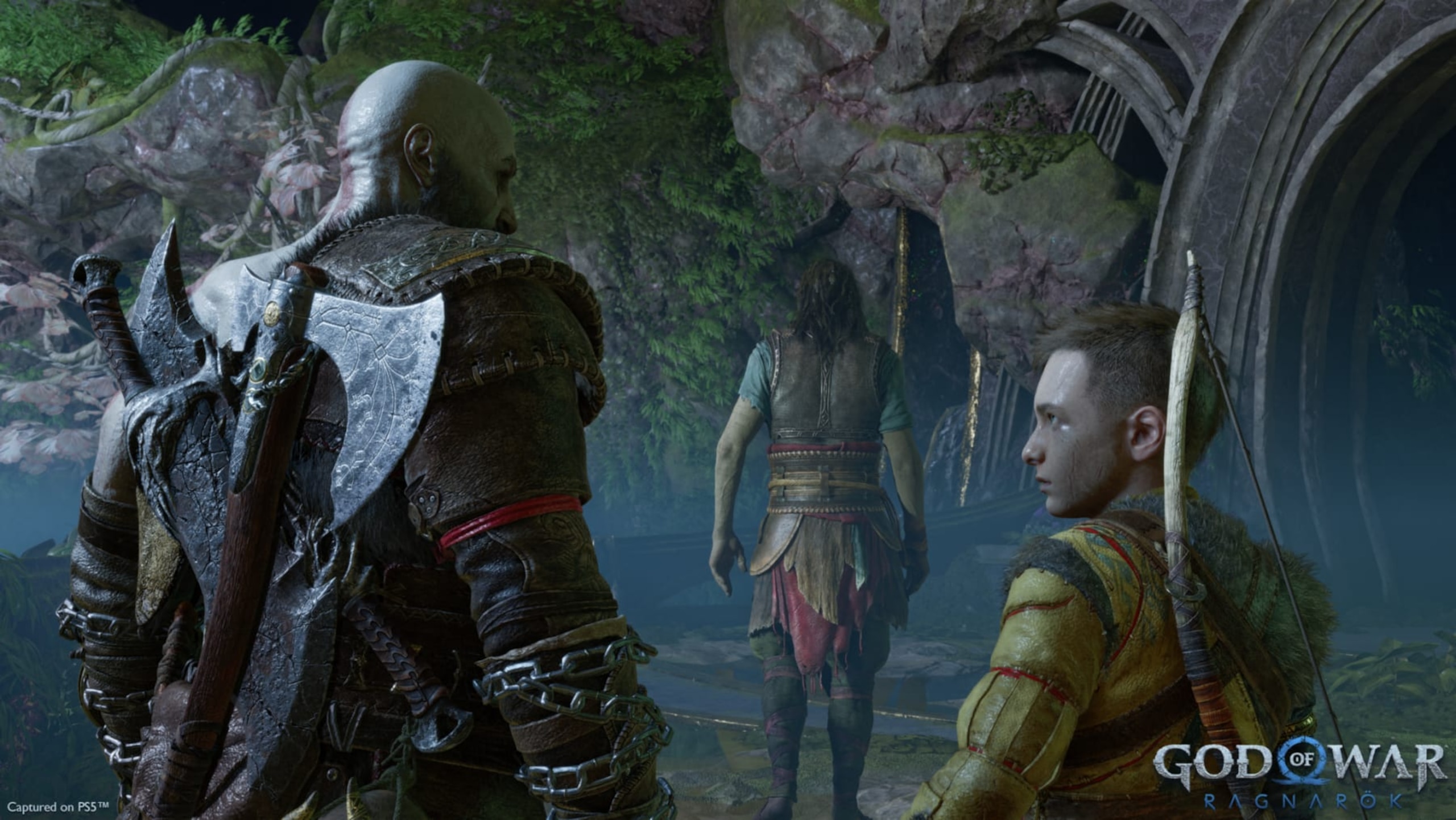
Like its predecessor, Ragnarök gets the single-shot camera treatment.
The entire game takes place within a single shot, a feat of cinematography most games don't dare attempt. The effect is stunningly immersive. There are no cuts, not in gameplay or in cinematics, which blends the two together almost indistinguishably. Many players might not think of it while playing, but it's a big part of the reason bonds formed with characters over shared experiences mean so much in the series—players and the characters go through hell together.
Also like its predecessor, Ragnarök just looks amazing. All sorts of varied foliage, bodies of water, bodies of sand, enemies and endlessly more look distinct and top of the line without a memorable weak point across a huge amount of varied ecosystems players will visit. The game masks its oft-linearity with breathtaking skyboxes and detailed long-range views (or detailed cityscapes) that create an almost intimidating sense of scale.
Characters, in cutscene or out, emote and behave realistically, dramatically amplifying the emotional effect of the game's (constant) heavy moments. Small details like the swaying of jewelry, look of hair or the realistic smatterings of gore quietly boast the power of the game's underlying engines.
The game's voice acting—again nearly without equal in the medium—intertwines intimately with the narrative. Atreus' dramatic voice change shows nothing but the maturation involved since the first story ended, for example. Every single scene simply oozes heartfelt emotion in a way most games cannot.
This also applies to combat, when a warning shout from a companion will accurately call out where an attack comes from and when, giving players the time to dodge or turn around—remember, single-shot camera.
Ditto for puzzles, where a companion will eventually throw out a suggestion. Struggle long enough and they might just straight-up tell the player the solution, though by then it was admittedly a welcome bit of help.
This marriage of presentation and combat is no better exemplified than in a very early sparring match with Thor himself. Kratos and Thor go back and forth in a brutally ugly battle out of something like a Marvel movie or episode of Dragon Ball Z. They taunt and berate each other, with health gates moving along the story during pauses in the action.
Speaking of puzzles, the game goes to great lengths to provide new experiences for those who spent a lot of time with the first. It uses creative scenarios like using the ice from Kratos' ax to freeze over a geyser to reach new places or bouncing the axe off multiple surfaces to hit a particular switch. The game does retread some familiar puzzle ground too, but it's hardly to the game's detriment.
In combat, Kratos wields the Leviathan Axe and Blades of Chaos right from the beginning, whereas in the first, the latter was a late-game obtainable and huge moment.
The game doesn't waste any time making sure players swap between them often, too. Puzzles not only often require both, but players also will quickly encounter foes with ice shields that need to melt away before a weapon swap opens them up for more damage, to provide an early example.
Using those weapons and their eventual unlocks is again a blast, especially in tandem with companions who can amplify specific attacks. Those companions can do an array of things, from providing well-timed arrows or spells to trapping an opponent for Kratos to beat the tar out of for a small amount of time.
Combat never really feels sluggish, but it can be punishing if players queue up too many movements and then feel locked in for free hits. But there isn't one scenario that has truly felt unfair. There are bosses that will mow over the player a few times, for sure, but really concentrating on the tendencies and tells of the opponents ends up quite rewarding. It's a product of superb encounter designs that after a few rounds of practice against a boss, players might dispatch of it easily and end up wondering how they struggled at all in the first place.
There is also more mobility to the combat this time out thanks to grapple points and vertical spaces the player can employ. Though beware—many enemies can do the same and don't give the player much time for a breather.
Also a plus is more ways to interact with the environment, such as big objects Kratos can swing around as deadly traps or big chunks of stuff he can heave as weapons.
Weapon choice and overall loadout is even more important in the sequel, too. Stuns, for example, are more potent than ever. Gearing toward earlier stuns in fights can leave enemies finishable with the press of a button much, much earlier in their health bar than a player might expect.
Kratos now picks from fury or valor. The former is the tried-and-true rage mode from the first game that doles out huge damage. But the latter is an interesting thing players can eventually sub into the gameplay, and upon double-joystick press, Kratos heals himself a big chunk of hitpoints.
This sort of give-and-take permeates most of the combat. It starts with picking fire or ice or simple ease of use based on the number of opponents encountered.
Non-Kratos characters feel just as great in the player's hands during a bout, if not more so. Atreus is the highlight and huge change of pace, as he's much nimbler and indirect in his dodges and ranged attacks. He can get in and melee while dishing out god-like punishment too, no doubt, but he's at his most enjoyable when players string his variety of ranged barrages at groups of enemies, chaining sonic stuns as they go.
One thing players shouldn't overlook is just how much the haptic feedback vibration tech of the PlayStation 5 controller amplifies the experience. One early, stunning example is the distinct feel of a wooden axe handle sliding down a coarse rope as the player zips down toward a destination, but the examples begin to pile up about as high as Kratos' body count.
Story, Multiplayer and More
Players dusty on the details of God of War or who didn't play it will be happy to hear there is a welcome video recap available right from the main menu.
Kratos and Atreus (with Mimir swinging along for the ride) resume their journey from the first game by resuming a tug-of-war that features the father wanting to protect the son by any means necessary and the son wanting to not just up and hide from, well, everything.
In the backdrop, Fimbulwinter is upon the realms, which could all end in Ragnarök itself. Freya's still on a hunt for revenge over the murder of her son Baldur, and Asgard representatives make early appearances too. Thor shows up with a debt come due over the death of his sons in the first game, and a surprising let's-make-a-deal Odin isn't far behind.
But the story is so much more than a simple tale of a father-son relationship. Fate, acceptance and/or denial of it, forgiveness, the agony of loss, companionship and heavy theme after heavy theme ooze from nearly every single line of dialogue, in cutscene and out. When the big resolutions arrive, they hit hard and will leave players with open jaws.
It's impossible not to be totally invested just a few hours after the start thanks to strong storytelling, both blatant and subtle. This is, after all, one part the tale of Loki, who players might notice, is no longer a BOY, in the words of Kratos.
It sure doesn't hurt that the supporting cast offers some impeccable comedic timing via the dynamic duo of Sindri and Brok. They're downright hilarious again, which makes their own serious moments all the more disarming.
Many of the story beats from the first game are indeed wrapped, so the players are right there with Atreus as desperately wanting to find out more about his past. That interestingly puts the player in a position of agreement with Atreus and perhaps slightly disgruntled with Kratos, the man they control. That Freya has a bit of a rightful beef with him too only makes things more complex.
It's very, very important to point out just how much the storytelling benefits from swapping playable characters here and there and often switching companions. In the first game it was mostly a static duo, to great effect. Here, the consistent switching gives players so much more rich storytelling in the form of conversations and ever-moving relationships that it's just a grin-inducing treat to pick up and play.
The same applies to sidequests, especially the bigger ones that branch off and spawn several of their own mini-quests, too. These are rather big narrative beats and context players won't want to miss, to put it lightly.
Along the way, open-world exploration areas (aided by different types of rideable vehicles) return some of the familiar beats that were so successful in the first game. This includes putting an arrow through the heart of a many Eyes of Odin Ravens, combating Draugr Holes, finding lore, and accumulating hacksilver wealth via chests and general property damage.
Players will revisit old places but from new angles. It's fun to see how events from the first game changed them, and the player can eventually make huge changes of their own to certain locales via their actions, even in sidequests.
If there's a minor critique, the overall experience is still rather linear with the usual white markings to help players along the proper path. It can be a little immersion-wrecking to know there's largely nothing to explore within a current mission or see an area open up for what is clearly a battleground for combat before getting linear again.
Skill trees for both weapons and Atreus himself return with the expected beats and seem to work just as well as in the original. Especially early on, players will really feel the impact of their choices if they go heavy into only one of the weapons.
In a fun twist, unlocked abilities themselves now level up with usage, too. So using a certain move enough times will provide it the experience necessary to become even more effective.
Beyond just crafting new gear via resources acquired, players can again also modify the components of a weapon with attachments and runes. These can range from more effective in specific scenarios to upgrades across the board.
It's a subtle thing overall that, when looking at all of these systems, players can RPG their way into having two rather distinct, different-playing versions of Kratos.
For those who just want to relax and enjoy what truly classifies as a breathtaking story, the game offers various difficulty tiers. Give Me God of War difficulty is, well, let's just call it difficult, and players who bemoan the ease of modern games are going to be busy for a long, long time.
Like companions throwing out hints, the game will eventually throw an assist in tough roadblocks, such as adding helpful checkpoints to a tough boss battle that has seen a handful of unsuccessful attempts. There are a number of other assists players can turn on within the menus as Sony continues to lead the industry with an exceptional accessibility suite.
Ragnarök is, of course, technically sound and runs well with few hiccups or mishaps. It does seem to hide some load times with things like "squeeze through this tight crevice" or "pick up this heavy thing," a surprise on the PS5. But even these moments and things like wall traversal that seem to stretch on for far too long at times still hit the player with important dialogue and narrative development.
Speedrunning Tips
God of War from 2018 was a fun speedrun game to watch and attempt, with some of the world-best times sitting right around the four-hour mark.
Some of the usual tips and strategies from that game carry over to this one nicely. Cutscenes? Skip. Going off the required path? Largely unnecessary, especially in the smallish open-world sequences, provided players don't find something they desperately need for a competitive time.
The best combat tip? Level Atreus and his bow. The thing is borderline overpowered considering we're talking about an A.I. companion with nigh-perfect aim firing off stun arrows that can apply stun to enemies around the target, too, all while Kratos goes in axe or chains flying.
When players find best routes for runs, it's largely going to hinge on uncovering little tricks like sequencing puzzles quickly and skipping the passable enemies. But overall, it's going to take a simple bit of time and memorization to really start nailing competitive times.
Luckily for those would-be runners, the game is an absolute blast to watch either way.
Conclusion
On second thought, there are some simple things about God of War Ragnarök: It's fun, a surefire classic and an epic follow-up to its predecessor.
It is a bit strange, though. Ragnarök doesn't feel all that different from its predecessor in many ways. Maybe that's just a testament to how great the first game was, though. And make no mistake, there shouldn't be any doubt that this feels like a next-generation game, either.
Ragnarök needs all of an hour in the hands of a player to prove it has trumped its predecessor in every conceivable way. If God of War was ripping the one-note series and one-note Kratos into so much more, Ragnarök is perfecting the formula and humanizing the protagonists and characters around them in a way that resets the bar for storytelling in video games.
In the video game landscape, there really isn't anything close to the combination of gameplay and storytelling in Ragnarök. The result is one of the most memorable experiences ever in gaming, and one that players will wish they could experience for the first time again and again.
.jpg?w=2560 "Colts Football")





