
Biggest Rookie Surprises, Disappointments of NBA Summer League
A handful of NBA rookies outperformed their draft slot in summer league. A few others struggled, raising some questions about their readiness and fit.
There were more surprises than disappointments, however, including multiple undrafted players who looked like they'll wind up on rosters or even in rotations.
Summer league ultimately gives players more freedom compared to college. And it allows certain players to showcase previously masked skills, although it can also expose a weakness.
MarJon Beauchamp, Milwaukee Bucks SF
1 of 9
With shooting viewed as a key swing skill for MarJon Beauchamp, the Milwaukee Bucks must be feeling optimistic after he hit 10-of-23 threes in summer league.
He shot 27.3 percent from deep with the G League Ignite, though between Las Vegas and his one year at Yakima Valley (39.8 percent 3PT), there should be some degree of optimism over his three-and-D impact for Milwaukee.
Beauchamp flashed his defensive potential over the past week, staying attached to wings and making plays on the ball.
Otherwise, he converted some drives past closeouts and showed some wiggle off the dribble. His role in Milwaukee will call for mostly spot-up play, though he did average 30.7 points at Yakima Valley, and there remains more self-creation and scoring potential for the Bucks to unlock.
JD Davison, Boston Celtics PG
2 of 9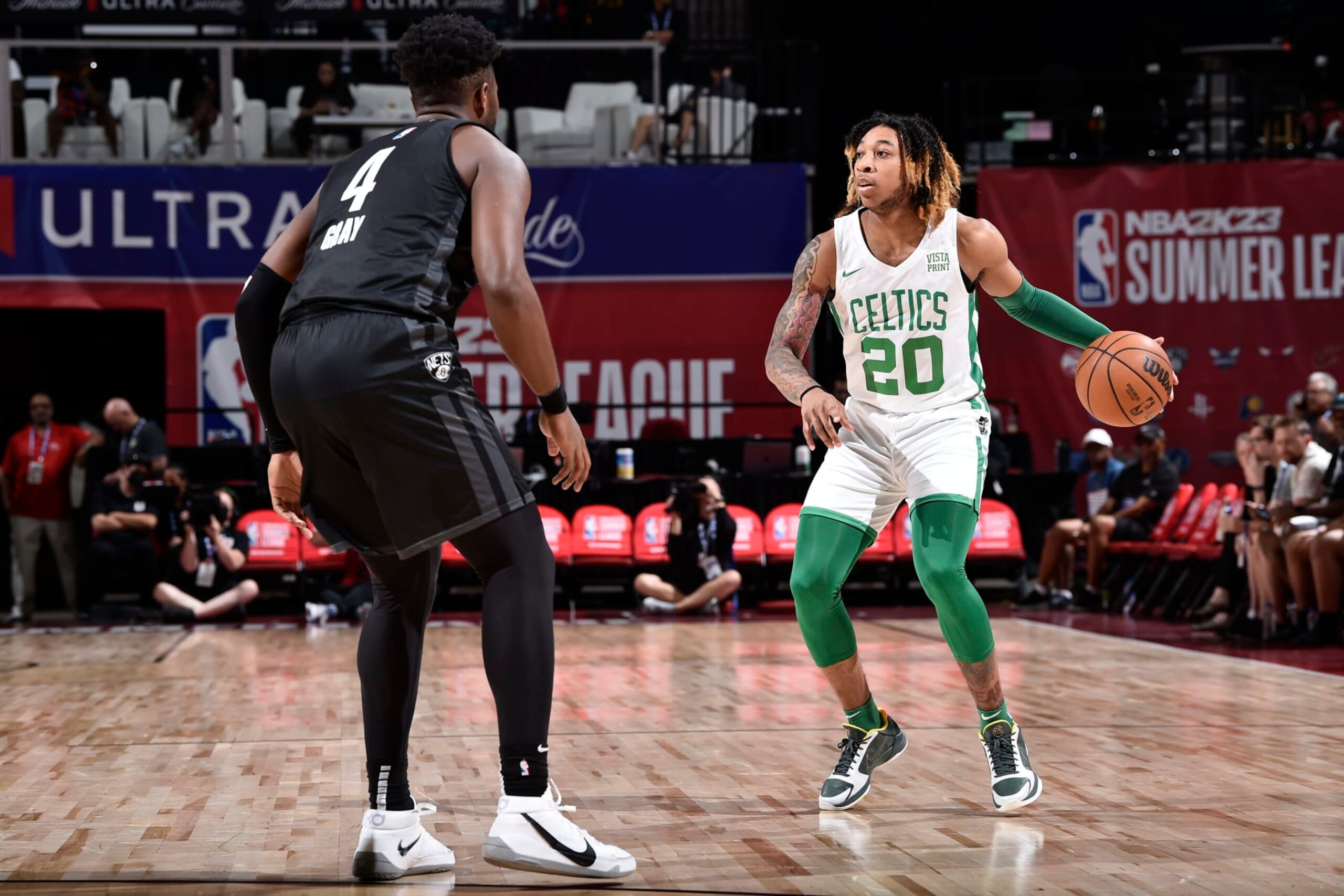
After a slow start, JD Davison strung together a pair of double-doubles to finish summer league averaging 8.2 assists.
He showcased terrific feel and patience passing out of pick-and-rolls. Playmaking was Davison's primary strength at Alabama, so it wasn't super surprising to see how well he was able to set up teammates with more space and freedom in Las Vegas.
Hitting 7-of-14 threes was surprising, however. Davison shot well while also tapping into his athleticism to finish drives and transition takes.
Still, his value to Boston will revolve around facilitating, which was evident as the draft's No. 53 pick led the summer league in assists.
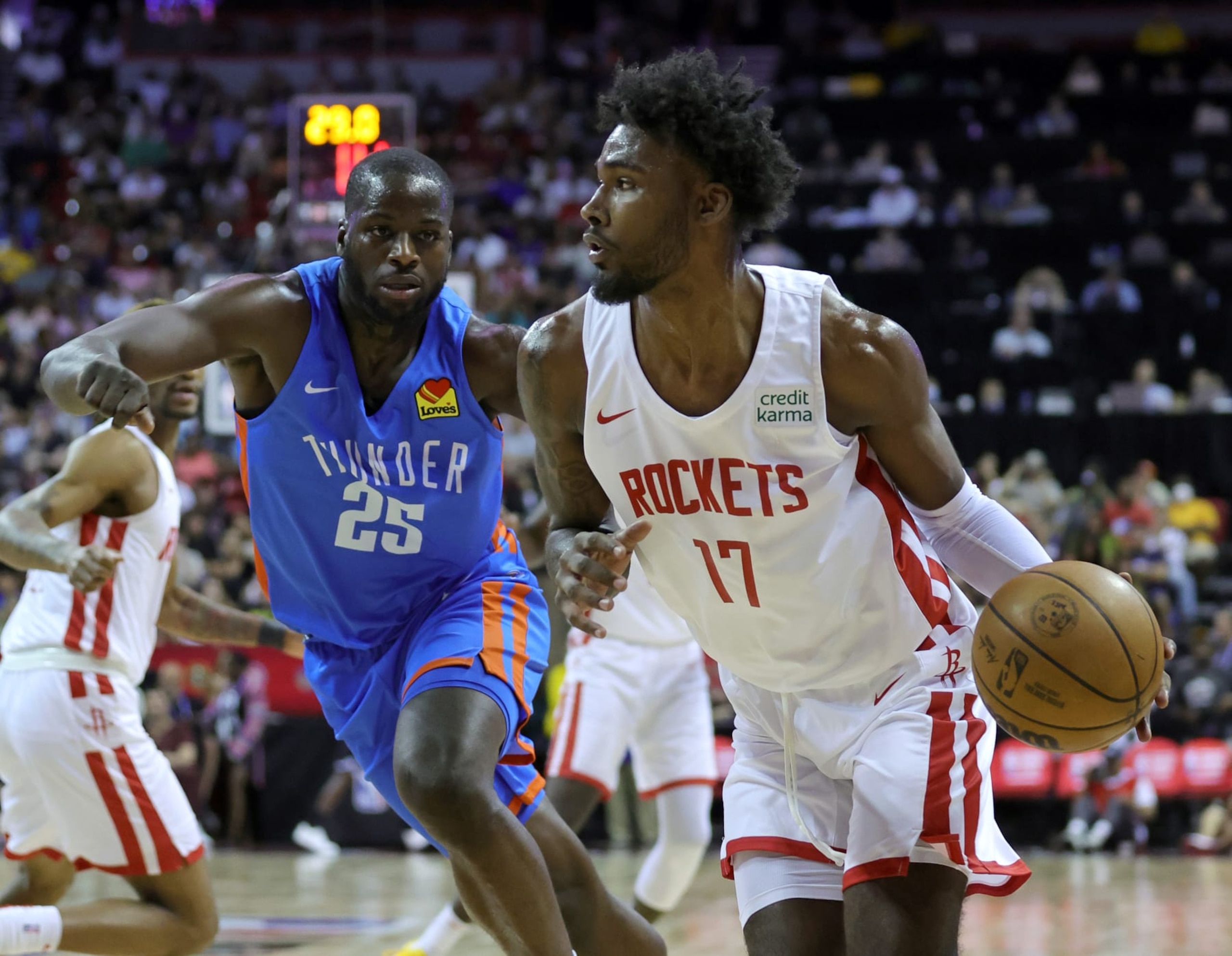
Tari Eason, Houston Rockets F
3 of 9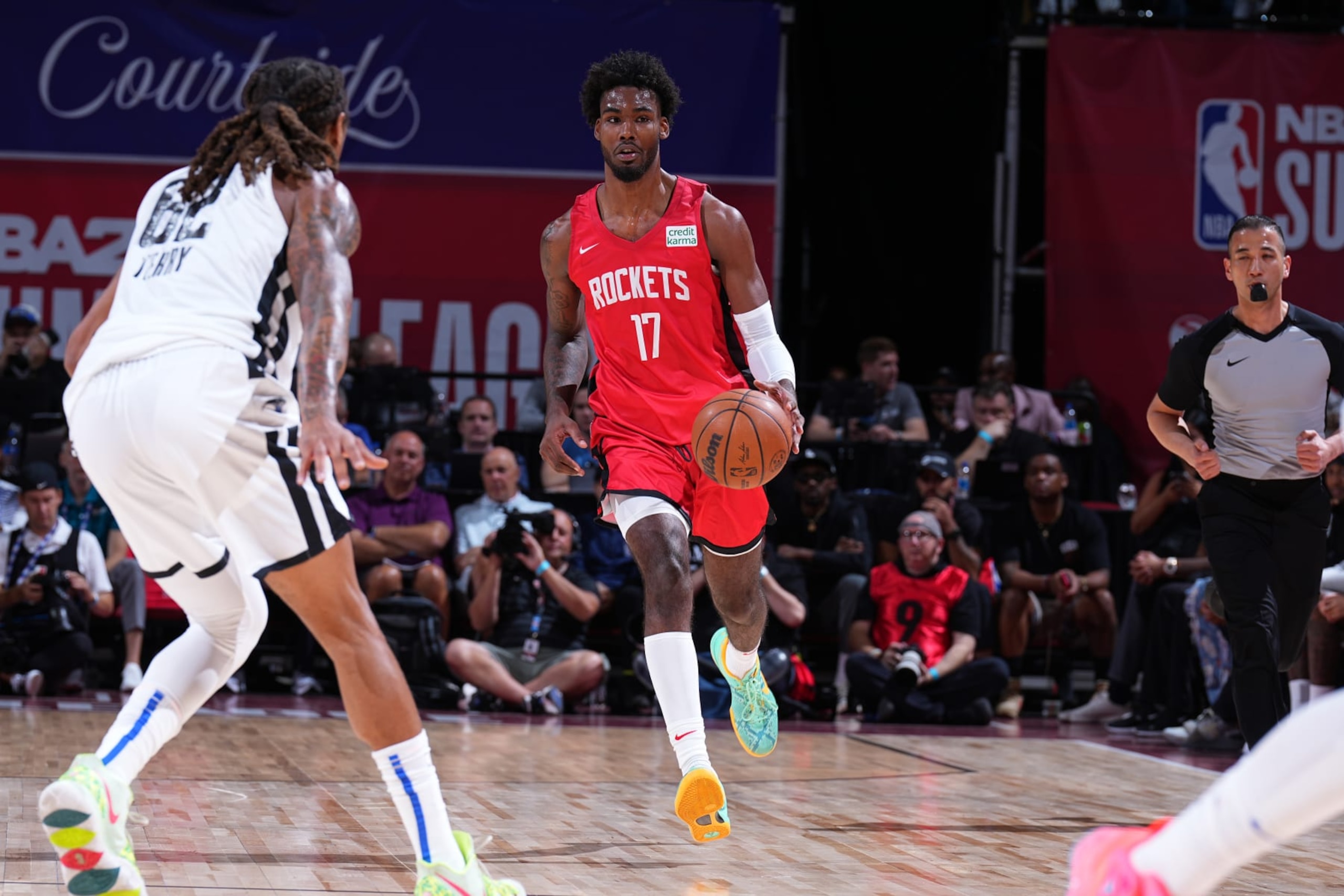
The draft's No. 17 pick, Tari Eason (17.2 PPG, 44.7 percent FG) outscored the Houston Rockets' No. 3 pick Jabari Smith (14.4 PPG, 37.7 percent FG) in summer league.
His face-up game shined more than it did at LSU, which should make it easier for coach Stephen Silas to give him more minutes by playing him as a jumbo wing.
He looked skilled and in control handling the ball and attacking into lay-ins and dunks. Eason does have some wing-like footwork and body control operating off the dribble, and he plays big inside as a finisher and offensive rebounder.
His seven made threes were also more important than the 14 misses. Eason has shown he can make jumpers when set or shooting in rhythm, which should be enough to justify 20-plus minutes a game considering how his versatility and motor impact games in other ways.
Eason's defensive activity and energy were also on display. He should quickly build a reputation for being a forward who can guard bigs and wings.
Just as he was for LSU, Eason was ultimately the Rockets player who made plays each game without needing isolation or ball screens.


Keon Ellis, Sacramento Kings SG
4 of 9
Keon Ellis' three-and-D potential wasn't convincing enough to teams before the draft. It looks more believable after summer league, where he shot 44.1 percent from deep and averaged 2.0 steals a game.
The bigger surprise was his 3.3 assists, considering he averaged fewer than two in both seasons at Alabama.
Still, it was Ellis' shot-making that stood out most in San Francisco and Las Vegas. It also wasn't all just catch-and-shoot buckets, as he converted multiple jumpers off the dribble.
With 6'6" size, shooting touch and the tools, toughness and IQ to add value defensively, Ellis always had a clear path toward the Sacramento Kings' roster. His case feels even more persuasive after summer league.
Kenneth Lofton Jr., Memphis Grizzlies PF
5 of 9
Summer league was another setting where Kenneth Lofton Jr. had success after he averaged 16.5 points for Louisiana Tech and stood out at both the G League Elite Camp and NBA combine.
Teams wrote him off, primarily because of his massive 280-pound frame. But Lofton continued to score in Las Vegas and Salt Lake City with a high skill level and instincts. Aside from being able to overpower bigs around the basket, he also beat them with deceptive, crafty moves off the dribble. And he knocked down a number of different touch shots and jumpers.
While it's still worth questioning how effective he'll be on defense, Lofton's ability to punish bigs physically, create for himself in the post, pass, handle in certain situations and potentially shoot remains highly intriguing. The Memphis Grizzlies may wind up viewing him as an offensive specialist for their second unit.
Cole Swider, Los Angeles Lakers F
6 of 9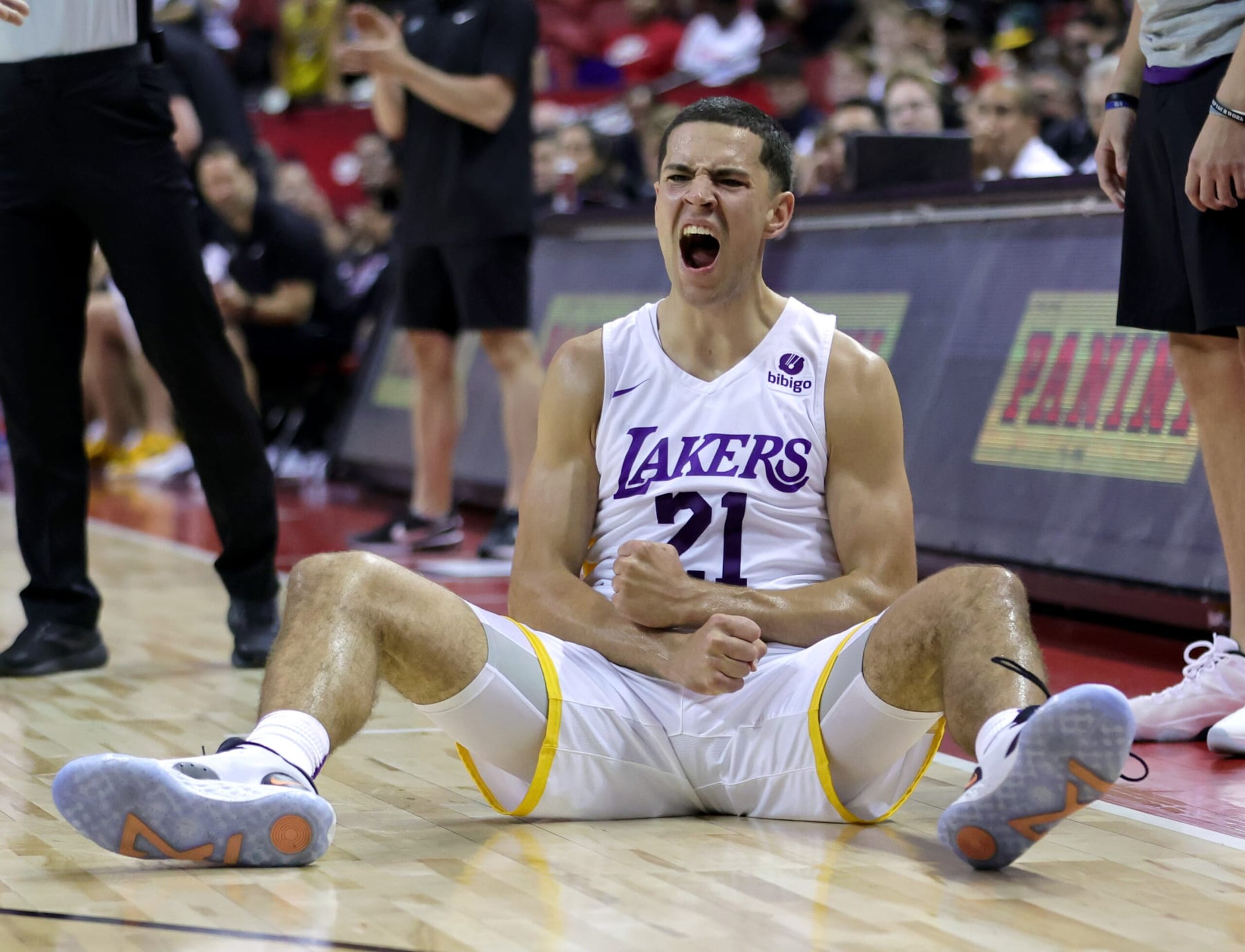
Without an invite to the combine or a team interested in using a second-round pick, Cole Swider made new fans in summer league. He's presumably earned himself mentions and attention within the Los Angeles Lakers front office after making 28-of-53 three-pointers through eight games.
He's interesting, considering Swider was once a big-name recruit who played in the Nike Hoop Summit with Darius Garland, Tyler Herro, Quentin Grimes, Cam Reddish and other current pros. He started to build rhythm late in his college career with Syracuse, having erupted for 34 points against North Carolina and 28 points versus Florida State over his final four NCAA games.
At 6'9", Swider's shooting stroke may be worth thinking about, as he appeared completely confident, showing no hesitation in catching and firing.
Dalen Terry, Chicago Bulls PG/SG
7 of 9
An injury ended Dalen Terry's summer league, but not before he showed Chicago Bulls coaches versatility they'll find useful during the regular season.
He had more success off the ball, capitalizing as a cutter, driver and transition man. Athletic with long strides, Terry made 16-of-26 twos, with most of them coming at the rim within the flow of Chicago's offense.
Turnovers were an issue, though he did showcase some on-ball value as a passer.
The Bulls will ultimately find minutes for Terry for his play-finishing, secondary playmaking, defense and intangibles. He shot 57.6 percent in summer league, and he should continue to score efficiently as a complementary role player alongside the Bulls' more threatening creators and shooters.
Jabari Walker, Portland Trail Blazers PF
8 of 9
The draft's second-to-last pick, Jabari Walker earned a regular NBA contract by scoring efficiently with a defined, translatable skill set for shooting and finishing.
He made 14-of-18 shots inside the arc off timely cuts, offensive rebounds and inside touch. And after shooting 39.9 percent for his two-year career at Colorado, the 4-of-9 made threes in summer league felt real.
Ball-handling won't be a big part of his game in the regular season, but he did demonstrate more ability to initiate breaks and use the dribble to get to spots.
A 20.6 rebounding percentage in summer league also highlights his tremendous activity and nose for the ball and rim.
In a play-to-strengths role that asks for minimal creation, Walker should be able to produce early just by spot-up shooting, attacking closeouts, catch-and-finishing and bringing in boards.
Disappointments
9 of 9
Johnny Davis, Washington Wizards SG
Davis' habit of taking tough two-point jumpers and challenged paint finishes led to a 29.6 field-goal percentage in summer league. He didn't shoot many threes at Wisconsin, and it could be a tough road to consistent scoring if he continues to create low-percentage two-point attempts. He may look better around the Wizards' rotation players. In that role early in his career, he'll be better suited to make shots as a spot-up threat, cutter and more opportunistic driver.
TyTy Washington, Houston Rockets PG
Washington failed to reach double figures in scoring in summer league, finishing at 37.5 percent from the floor through four games. His lack of burst for creating separation seemed evident. He took eight free throws in 133 minutes. Given his athletic limitations, shooting will be key for Washington, who shot 6-of-20 from three. His playmaking feel will translate faster than his scoring.
Max Christie, Los Angeles Lakers SG
The Lakers traded into the draft at No. 35, presumably with Christie as a second-round target all along. Because his mechanics seem so clean, scouts ignored his disappointing shooting percentages at Michigan State. But they were even worse through six games in summer league, where he shot 27.3 percent and 5-of-25 from three. His shot figures to start falling more consistently eventually, but he won't be playable until he's an above-average threat.
Trevor Keels, New York Knicks SG
Versatility didn't offset Keels' weaknesses, which were highly visible in Las Vegas. Lacking blow-by burst and explosion, he struggles to get clean looks or finish around the basket. And he missed 14 of 18 threes. He did make some nice passes, but Keels' shot will need to improve given the trouble he'll have scoring inside the arc.




.jpg?w=2560 "Terrell Owens Being Sued for Defamation")