
Every MLB Team's Best Curveball Artist Ever
There are two types of pitching fans in Major League Baseball. Most like the hard-throwing guys who can hit 100 mph with their fastballs and can strike players out simply by throwing past them.
Others, however, like the art of the curveball. Seeing a ball go from a batter's shoulders to their knees and watching them buckle as they try to swing may be even better to watch than a great fastball. This slideshow celebrates the latter.
Here is the best curveball artist from every team in MLB history.
Baltimore Orioles: Mike Cuellar
1 of 30When Mike Cuellar joined the Baltimore Orioles in 1969 and won the Cy Young Award in his first year, he did it with a great curveball. He combined his curveball with a screwball to become nearly unhittbale in his prime.
He may also be one of the most underrated pitchers, let alone curveball artists, of all time. He won 18 games six straight years. How many other pitchers can say that in the live ball era?
Boston Red Sox: Tom Gordon
2 of 30During his time in Boston, Tom Gordon converted from a decent starter to a great closer. As a result, he was able to use his curveball more effectively, and it became the key piece in his arsenal.
His curveball was one of the best in the game, even if his other stuff was not as good, and during his four seasons in Boston, the big curve helped him get some MVP votes and an All-Star appearance one year.
Bronson Arroyo gets an honorable mention, but he had even less playing time in Boston than Gordon, so he doesn't make it on here.
New York Yankees: Johnny Murphy
3 of 30Wait, so with all the legendary pitchers the Yankees have had over the years, I'm putting up a relative unknown like Johnny Murphy? Yes I am. He may be unknown now, but during his time he was a major player and was with the Yankees for 12 years.
Murphy served as the Yankees' closer in the 1930s and early 1940s, and was considered to have the best curveball of his era, ranking up there with another 1930s ballplayer who appears later. Besides, a reliever making three all-star teams back then is amazing.


Tampa Bay Rays: Matt Moore
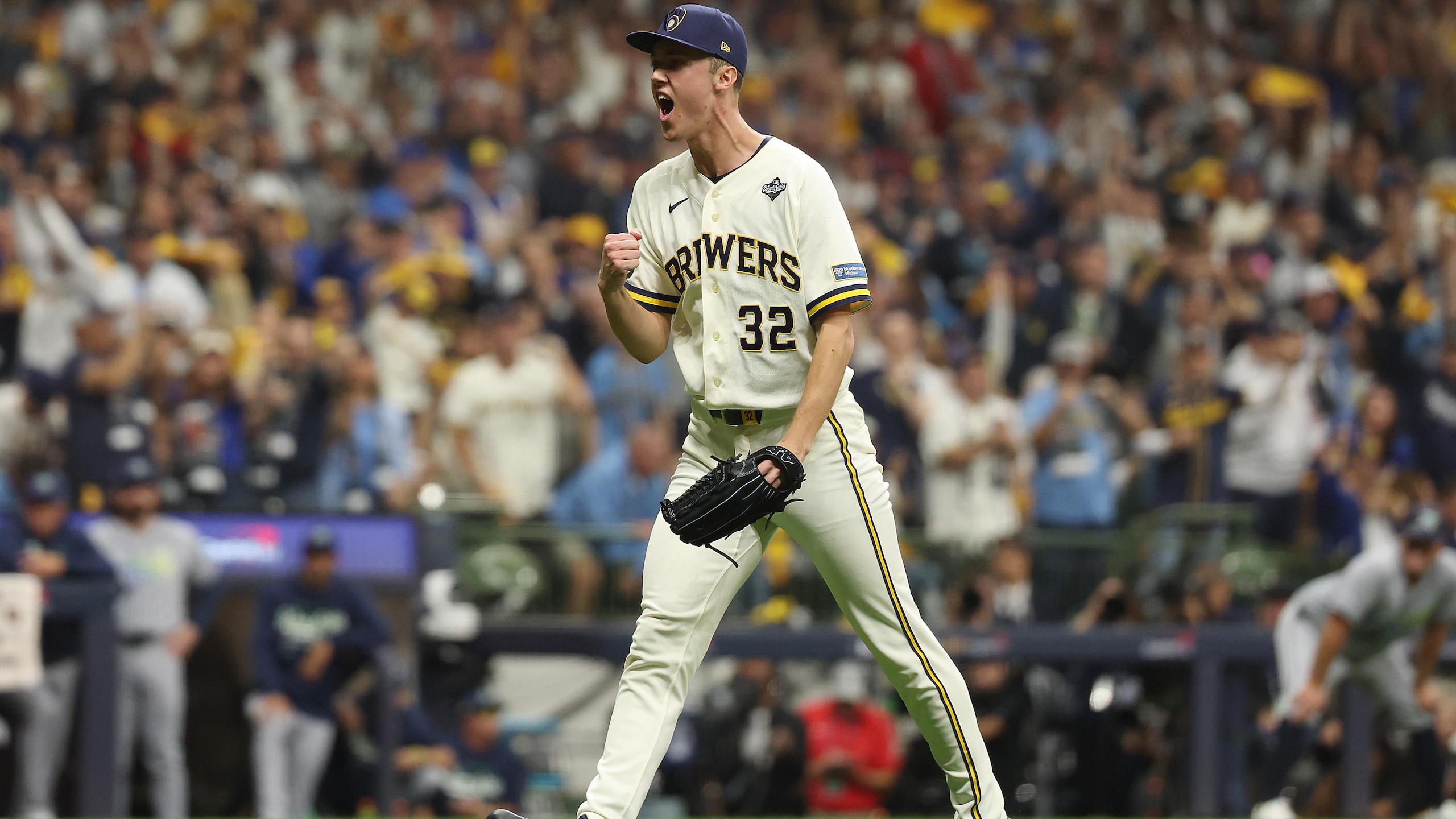
4 of 30It may be way too early to put Moore on this list, since his major league career is just beginning. However, prospect guides have time and time again cited him as having the best curveball in the minors, and if what they say is true, he will be a joy to watch next year.
Toronto Blue Jays: Roy Halladay
5 of 30Roy Halladay is, in my opinion, the best pitcher in baseball today, and part of the reason he holds that title is his great pitching control. He also has perfect command of an already great curveball.
His curveball is not really a 12-6, but is instead one that starts around the middle of the strike zone before shooting downward. As a result players are going to naturally swing and miss it, making his curveball a great out pitch.
Chicago White Sox: Billy Pierce
6 of 30To my surprise, it was difficult to find a member of the Chicago White Sox highly regarded for his curve. I considered adding active pitcher Gavin Floyd, who is highly regarded for his curve, but instead went for the longtime veteran Billy Pierce.
A 211-game winner in his career, he actually preferred throwing fastballs often, rarely using the curve. It's a shame that he went that route because his curveball was highly regarded, especially when combined with the changeup, as he used the same motion for both pitches.
Cleveland Indians: Bob Feller
7 of 30Bob Feller, one of the greatest pitchers of all time, was known for his 100 mph fastball. However, along with that, he had one of the best curveballs the game has seen, and the combination of the two led to him frequently leading the league in strikeouts.
He was definitely an artist on the mound, and his talent was great enough that he was able to play tricks on opposing batters, making his fastball and curveball that much more effective.
Detroit Tigers: Tommy Bridges
8 of 30Tommy Bridges was perhaps one of the best pitchers not in the Hall of Fame, and in a 16-year career with the Detroit Tigers, he became known for his pristine curveball.
Bridges' curveball was generally considered the best of the 1930s, and to consistently have an ERA under 4.00 most seasons in the 1930s was no small feat, as that was one of the great offensive eras of baseball.
Kansas City Royals: Zack Greinke
9 of 30Zack Greinke has been a bit inconsistent at times, and doesn't have the best control in the world. However, he has amazing raw talent, and his deadly curveball is a prime example of this.
When he started out with Kansas City, his 12-6 curveball was rather wild, but it was still a sight to see. He developed more control of it over the years, and while it looks less impressive, it's far more effective. Hopefully he can maintain the curve's quality with Milwaukee and remain on these types of lists.
Minnesota Twins: Bert Blyleven
10 of 30Bert Blyleven was one of the most prolific strikeout pitchers, and part of the reason he was finally named to the Hall of Fame was his great curveball.
The trick to Blyleven's curve was that it was not a traditional one; he threw his the same way he threw a four-seam fastball so that he could have a better grip on it. The result was that he was perhaps the best curveball thrower of the 1970s.
An honorable mention is fellow Twin Camilo Pascual, whose curveball may arguably be in the top ten all time alongside Blyleven's.
Los Angeles Angels of Anaheim: Nolan Ryan
11 of 30The question I has to ask myself was not if Nolan Ryan should be on this list, but what team to put him under. As he played eight seasons with the California Angels in his prime, and the Rangers and Astros have other great options, Ryan gets to represent the Angels.
His 5,714 strikeouts were not just due to a 100 mph fastball, but they were thanks to one of the most dangerous curveballs in the league. As a result, that one-two combination was unstoppable.
Oakland Athletics: Barry Zito
12 of 30Barry Zito is known for two things. In San Francisco, he is known for his huge contract and being one of the all-time free agent busts. In Oakland, he was known for his nasty curveball.
Zito's 12-6 curveball was perhaps the best one I've ever seen up close, and if he didn't have it, I wonder if he'd even be in the league, given how his stats look now that it's not as good as it used to be.
Seattle Mariners: Felix Hernandez
13 of 30As tempted as it was to use Randy Johnson both here and on the Arizona slide, he uses a slider as his key pitcher rather than a curveball, technically. sticking with curves, one of the best in the game right now easily belongs to King Felix.
Not only does Felix Hernandez's sharp curve lead to a lot of strikeouts, but the dip makes him one of the best ground ball pitchers in the majors, as if a player does hit it, he ends up just hitting the top of it.
Texas Rangers: Camilo Pascual
14 of 30Camilo Pascual spent three years with the second Washington Senators before they became the Texas Rangers, so while Nolan Ryan is a good person to use here, he's already on the Angels.
Besides, when you talk about elite curveball pitchers, Pascual's name has to come up. Ted Williams himself said that Pascual's curveball was the most feared in the league. That's a good endorsement to have.
Atlanta Braves: Rick Mahler
15 of 30Before the Atlanta Braves had the 1990s pitching dynasty with Tom Glavine, John Smoltz, and Greg Maddux, they had one of the great curveball pitchers the game has seen in Rick Mahler, who was a mainstay in the Braves' rotation in the 1980s.
Both he and his brother Mickey Mahler had big, slow 12-6 curveballs. The curveball may have in fact been too slow, as he regularly led the league in hits allowed. Still, it was a sight to see, especially when the opposing batter did not hit it.
Miami Marlins: Josh Beckett
16 of 30Josh Beckett's five seasons on the Marlins showed the franchise the best curveball they had seen, and it led to him being a cornerstone of the team.
When he signed with the Boston Red Sox, his curve diminished a bit, yet some tweaks to his grip led to the career resurgence we saw in 2011. When he's on, he definitely has one of the best curveballs in the game.
New York Mets: Dwight Gooden
17 of 30Dwight Gooden's peak may have been short-lived, but in his prime he was a strikeout king thanks to not only a great fastball, but a sweeping curve that gave him a deadly one-two punch.
Those that saw him pitch know exactly what I'm talking about, but for those that have not, keep this in mind: his curveball was nicknamed Lord Charles, when the typical curveball nickname is Uncle Charlie. That shows how great it was.
Philadelphia Phillies: Steve Carlton
18 of 30A lot of names popping up on the list are those that throw a lot of strikeouts. That goes to show you that to be highly regarded and get people out with the fastball, you need a great curve as well.
When it comes to the Phillies, Steve Carlton ranks atop the list, as he usually done on pitching lists. His looping curveball was great as is, but when combined with a near-perfect slider and a great fastball, it's no wonder he put up over 4,000 strikeouts.
Washington Nationals: Bryn Smith
19 of 30Stephen Strasburg's curveball is starting to look good enough to make this list, but until then, Bryn Smith easily holds down the fort as the Expos or Nats' greatest curveball thrower.
A nine-year veteran of the Montreal Expos in the 1980s, Smith was a consistently good pitcher who became as good as he was thanks to a dangerous curveball. It was rather underrated as well, since it has been forgotten by many who did not see it in person.
Chicago Cubs: Mordecai Brown
20 of 30I was tempted to go all the way back to the beginning and put Fred Goldsmith in this slot, one of the first pitchers to throw the curveball. However, it would be remiss of me to leave off Mordecai "Three Finger" Brown.
After a farming accident messed up his hand, it ended up making his curveball incredibly effective, as he was able to grip it in such a way to give it a great spin. It's what helped him win 239 games and earn him a spot in the Hall of Fame.
Cincinnati Reds: Jack Billingham
21 of 30I almost put Candy Cummings in as one of the first curveball throwers, but he was pretty much done by the time he joined Cincinnati. Bronson Arroyo almost made the cut as well. Instead, I'm putting in a relative unknown, Jack Billingham.
Billingham has his best years in six seasons with Cincinnati, winning 19 games twice. This was thanks to his curveball, which was considered one of the nastiest ones in the 1970s, and helped the Big Red Machine win two World Series titles.
Houston Astros: Darryl Kile
22 of 30I could easily have put Nolan Ryan on this slide, but I tried to limit him to just representing one team. Besides, the Astros have a pitcher in their history with a curveball just as good in Darryl Kile.
Kile's eight seasons on the Astros were very productive thanks to a big breaking curveball, though it may have broken a bit too much, as he regularly walked 80 batters in a season. Still, his curveball was a sight to see in the 1990s.
Milwaukee Brewers: Ben Sheets
23 of 30Ben Sheets has had a career riddled with injuries, but when he was on, his curveball was easily one of the best in the majors the past decade, right alongside Barry Zito.
Sheets' curve was considered the best in baseball by Braves' manager Bobby Cox, among others, and he had such good control on it that he allowed very few walks during his career.
Pittsburgh Pirates: Ron Necciai
24 of 30I'm sure those that are not Pirates fans are wondering just who this is, and maybe some Pirates fans are here too. Necciai only played one season of baseball in the majors, going 1-6 with the Pirates in 1952.
The short career was due to arm trouble and ulcers; to see his amazing curveball you have to look at his minor league record. In one game in Class-D (rookie-level) for the Bristol Twins, he struck out 27 batters to give his team the win thanks to his curve, among other pitches.
His curveball was noted as looking "like it dropped off the edge of a table," which is exactly how you want an elite curve to look.
St. Louis Cardinals: Matt Morris
25 of 30Currently, the Cardinals have a gifted rotation, as Adam Wainwright and Jaime Garcia both have great curveballs. Matt Morris, however, had a curveball up there with Barry Zito's in his prime.
The eight-year veteran of the Cardinals was as good as he was thanks to a sharp curveball, which led to many consistently good seasons. It was made better by the fact that he had Tommy John surgery early in his career, yet his curve did not suffer.
Arizona Diamondbacks: Brandon Webb
26 of 30While Brandon Webb is best known for his sinker, during his time with the Diamondbacks he had a great curveball as well. It was actually a fairly slow one, clocked in the low 70s, which means that combining it with a fastball left hitters dazed.
Hopefully he'll be able to stay healthy and make it back to the majors so that we can see the curve again.
Colorado Rockies: Ubaldo Jimenez
27 of 30Ubaldo Jimenez is a player who uses his curve quite infrequently. It's a shame that he rarely does, because it might be the best pitch in his arsenal.
His curveball is a good looping one that can be a 12-6 curve, and the fact that his changeup has a curve to it as well makes him a dangerous pitcher when he's hot. That's why he was so good the first half of 2010.
Los Angeles Dodgers: Sandy Koufax
28 of 30Sandy Koufax seems to be a regular on "Best X Ever" lists, and it's easy to see why with how dominant he was. He was a hard thrower that could strike out 300 to begin with, and that made his curveball more effective.
There are many out there that have Koufax's curveball noted as the best they've ever seen, since combined with the fastball it made him unhittable at times.
Don Sutton and Orel Hershiser's curves have been accepted as great as well, and deserve an honorable mention.
San Diego Padres: Greg W. Harris
29 of 30In a six-year career with the San Diego Padres in the late 80s and early 90s, Greg Harris put up rather unimpressive career numbers. However, he made an impact with his sweeping curveball.
His curve, widely considered the best in the National League during his time with the Padres, led to him finishing his Padre career with a 2.95 ERA, one of the best in team history. His career ended shortly after leaving San Diego, as he was an early casualty of Coors Field after signing with Colorado.
San Francisco Giants: Christy Mathewson
30 of 30This is a tough one to argue for. New York Giants ace Christy Mathewson is no doubt one of the all-time best pitchers, but his amazing curveball was not really a curveball.
Instead, Mathewson's key pitch was a fadeaway. It worked like a curveball, but was in fact what we know today as a screwball, as it broke opposite where you would expect. Most pitchers on this list throw a 12-6 curve, but his was closer to a 9-3, yet remained nearly impossible to hit.
For those not counting the screwball in a curveball list, then they can substitute Mathewson with Sal Maglie, whose brushback pitches would have been less effective has he not had a great curveball. Tim Lincecum could also usurp both players soon.

.png?w=2560)


.jpg?w=2560 "Malik Beasley Negotiating Plea Deal (AP)")


.png?w=2560 "Week 8 Winners & Losers 📊")

.jpg?w=2560 "Aikman Blasts Cowboys WR 🫣")
.jpg?w=2560 "Jonathan Taylor Landing Spots")