25 MLB Players Whose Careers Ended Before They Should Have
There are few sure things in sports, and inevitably, players fall short of expectations for one reason or another.
Many times a baseball player begins their career looking like a future star before falling short of expectations due to recurring injuries. Occasionally, the unthinkable happens and a player has his career ended abruptly when tragedy strikes and he loses his life.
So here is a look at 25 players whose careers ended before they should have, a list of players surrounded by "what ifs" for one reason or another.
Cory Lidle
1 of 25A journeyman starter, Lidle played for six teams in nine seasons before joining the Yankees at the July 30th deadline in 2006. He enjoyed mixed levels of success in his career, winning double-digit games five times and he had a 4-3 record in nine starts after joining the Yankees.
Just after the 2006 playoffs, on October 11th, Lidle lost control of a plane that he was flying over New York and crashed into the Belaire Apartments complex as he and the passenger were killed and 21 others were injured. He was 34 years old at the time.
Mark Mulder
2 of 25The Oakland Athletics were the envy of baseball a decade ago when they had a trio of impressive young starters in Barry Zito, Tim Hudson and Mark Mulder. Flash forward, and Hudson is the only one still pitching at that high level as Zito is a financial burden on the Giants and Mulder is a commentator.
Following five straight seasons of at least 15 wins, and an overall record of 88-40, Mulder ran into problems in his second season with the Cardinals in 2006. A rotator cuff injury sidelined him and flared up again later as he made just 21 more starts before retiring at the age of 30 following the 2008 season.
Dave Nilsson
3 of 25Dave Nilsson was one of the most underrated catchers of the 1990s, as he spent eight seasons with the Brewers from 1992-1999 and averaged a line of .284 BA, 13 HR and 59 RBI.
His best season came in 1999 when he hit .309 BA, 21 HR, 62 RBI and made his only All-Star appearance. When he hit free agency after that season, he turned down a number of big-money offers and headed back to his native Australia where he wanted to play in the Olympics in 2000.
He is credited with helping promote baseball in Australia and he actually owned the International Baseball League of Australia before it went bankrupt. It is too bad he left the MLB at the age of 29, but it was certainly for a good reason.


Brien Taylor
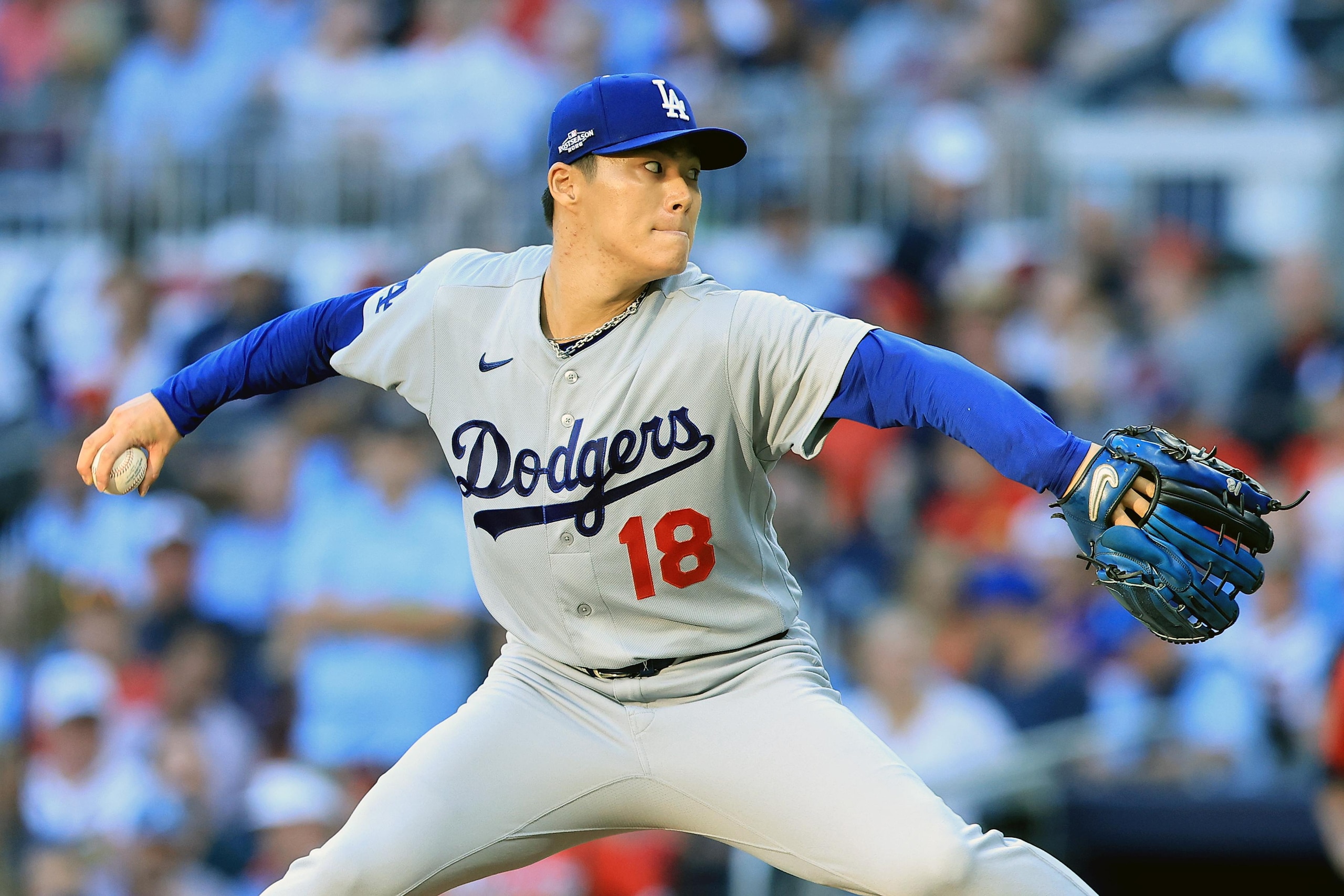
4 of 25One of the most highly touted high school pitching prospects of all time, Taylor drew comparisons to Dwight Gooden right off the bat, and despite Scott Boras being his adviser he was a no-brainier first overall pick for the Yankees in 1991.
He began his career at High Single-A and posted a 2.57 ERA and 10.4 K/9 mark in his first pro season. Moving right up the ladder, he went 13-7, 3.48 ERA, 150 K's the following season at Double-A and looked to be on his way to the big leagues in 1994.
However, on Dec. 18th, 1993, he suffered a dislocated shoulder and torn labrum in his throwing arm defending his brother in a fist fight. When he returned, he had lost eight mph off his fastball and could no longer locate his breaking ball, and he was never the same again as he would never reach the big leagues.
Bo Jackson
5 of 25Perhaps the most physically gifted athlete ever, Bo Jackson had the potential to be the greatest running back of all time and the best power hitter ever.
A degenerative hip condition ended his football career, and he was not the same player he was with the Royals upon his return to baseball. He still had the power, but his incredible speed was gone. It is fun to think what sort of numbers Jackson could have put up in 15 or so healthy seasons just playing baseball.
Mark Prior
6 of 25The second pick in the 2001 draft, Prior left USC as one of the greatest pitchers in college history and a can't-miss future ace. He was in the majors by 2002 as he made 19 starts and proved he belonged with a 3.32 ERA and 11.3 K/9.
The next season, he went 18-6, 2.43 ERA, 245 K's to finish third in NL Cy Young voting and help the Cubs to the NLCS. However, injuries set in after that season and while he is still fighting to come back in the Yankees organization there is no question he fell well short of what he should have accomplished.
Mark Fidrych
7 of 25Fidrych took the league by storm as a 21-year-old rookie in 1976 both for his performance and his crazy antics on the mound. By season's end he had a line of 19-9, 2.34 ERA, 97 K's as he took home AL Rookie of the Year and finished second in AL Cy Young voting.
However, injuries set in as he also pitched a league-high 24 complete games in his first season. He was sidelined with a "dead arm" the next season after 11 starts and he would make just 16 more starts over three years before retiring at the age of 25 in 1980.
Bill Lange
8 of 25A center fielder for the Chicago Cubs from 1893-1899, Lange retired at the age of 28 as one of the best all-around players in baseball and coming off of a season in which he hit .325 and stole 41 bases.
He retired in his prime because the father of the woman he wished to marry forbid her from marrying a baseball player. The marriage was short-lived, but Lange turned down offers to return to the game and goes down as one of the great "what ifs" in baseball.
Darryl Kile
9 of 25The ace of the Astros staff during the 1990s, Kile bounced back from a couple awful seasons with the Rockies to win 20 games in his first season with the Cardinals in 2000. He followed that up with a 16-win season the next year and was off to a good start in 2002.
Over 14 starts, Kile had a 5-4 record and a 3.72 ERA and he gave the Cardinals a solid front-line starter to join Matt Morris. However, on June 22nd, 2002 Kile was found dead of a heart attack in his hotel room during a series against the Cubs at just 33 years old.
Ken Hubbs
10 of 25Playing second base for the Cubs, Hubbs was the first rookie to ever win a Gold Glove in 1962. While he did not hit all that well in his two seasons with the team, he was widely considered to be among the best second basemen in all of baseball even that early in his career.
However, his career was over before it could really get going as he was killed in a plane crash at the age 22 before the start of the 1964 season.
Kirby Puckett
11 of 25One of the best players of the 1980s and 1990s, and the face of the Twins franchise to this day Puckett was a fantastic hitter and an equally impressive fielder despite his somewhat round stature.
A 10-time All-Star, Puckett was forced to retire during spring training in 1996 when he lost vision in his right eye due to a central retinal vein occlusion. He was just 35 years old and had shown no signs of slowing with a .314 BA, 23 HR and 99 RBI season the year before.
Herb Score
12 of 25Score burst onto the scene in 1955 when he went 16-10 with a 2.85 ERA and AL-best 245 strikeouts as a 22-year-old rookie, earning Rookie of the Year honors.
He was even better the next season with a 20-9, 2.53 ERA, 263 K line, but his career took a sharp downward turn on May 7th, 1957 when he was hit in the face with a line drive off the bat of Yankee Gil McDougald.
After missing the rest of the season, Score returned 100 percent in 1958 but he was never the same pitcher and he went just 17-26 with a 4.43 ERA over the next five seasons before retiring at the age of 30.
J.R. Richard
13 of 25Richard broke into the league in 1971, but did not join the Astros rotation full-time until 1975 when he went an unimpressive 12-10 with a 4.39 ERA. However, he took a huge step the next season and won 20 games to start a stretch from 1976-1980 that saw him emerge as one of the most dominant pitchers in baseball.
During that five years stretch, he went 84-55, 2.79 ERA, 1,163 K's winning an ERA title and two strikeout titles. However, during the 1980 season he began feeling discomfort in his arm and then blurred vision, all concerns that fell on deaf ears within the Astros organization.
Then on July 30th, 1980 while he was warming up, Richard suffered a stroke that would end his season and eventually his career. He was just 30 years old, and in the midst of the best season of his career.
Don Mattingly
14 of 25Perhaps the best first baseman of the 1980s despite not becoming a full-time player until the 1984 season, Mattingly was great from 1984-1989 as he averaged a line of .327 BA, 27 HR, 114 RBI, won five Gold Glove Awards and made the All-Star team every season.
However, back problems began to wear him down after that and while he was still a productive player, he was no longer the dominant force he once was. He retired after the 1995 season at the age of 34 after just 14 years in the league.
Ralph Kiner
15 of 25Few players have begun their career the way that Kiner did, as he led the National League in home runs in each of his first seven seasons and by the time he turned 30 he already had 329 home runs to his credit.
Like Mattingly though, a back issue cut short his career and he retired at the age of 33 after just 10 seasons in the league. Still, he racked up a .279 BA, 369 HR, 1,015 RBI line and earned Hall of Fame induction.
Addie Joss
16 of 25While he played just nine seasons, and is largely overlooked as one of the greats, Joss was lights-out at the turn of the century and over nine seasons from 1902-1910 he went 160-97 with a 1.89 ERA. That is good for the second-best career ERA ever, and his 0.968 career WHIP is the best mark ever.
His fantastic career ended abruptly when he died of tubercular meningitis prior to the 1911 season, at just 30 years old. It took until 1978 for him to be recognized by the Veteran's Committee with Hall of Fame induction.
Nick Adenhart
17 of 25The 68th-ranked prospect entering the 2009 season, his fourth appearance on the Baseball America Top 100, Adenhart broke camp in the Angels rotation to open the 2009 season.
His first start was phenomenal, as he went six shutout innings and struck out five, although he took a no-decision. It would be the last start of his career.
Just hours later, Adenhart lost his life in a car crash when the car that he was a passenger in was hit by a drunk driver.
Lou Gehrig
18 of 25There is little debate that Lou Gehrig is the greatest first baseman of all time, and he was as important to the success of the dominant Yankees teams of the 1920s and 1930s as the legendary Babe Ruth.
Much like Clemente, he was putting the finishing touches on a Hall of Fame career when his playing days were tragically cut short. Diagnosed with ALS, Gehrig was forced to retire at the age of 36 and he no doubt would have crossed the 500 HR and 2,000 RBI thresholds had he been able to retire on his own terms.
Roberto Clemente
19 of 25One of the greatest hitters to ever play the game, Pirates right fielder Robert Clemente was wrapping up a Hall of Fame career following the 1972 season. He had finished the year with exactly 3,000 career hits, and while he was 37 years old he still had plenty left and had hit .312 BA, 10 HR and 60 RBI.
That offseason, he was helping fly aid supplies to Managua, Nicaragua which had just been devastated by a massive earthquake. However, his plane crashed into the ocean off the coast of Puerto Rico and he was killed.
While his career was wrapping up, he no doubt could have played at least a few more seasons at a high level.
Tony Conigliaro
20 of 25Conigliaro looked to be the next great Red Sox outfield when he broke into the league in 1964 with a .290 BA, 24 HR, 52 RBI line at the age of 19. He would continue to impress until a freak injury on August 18th, 1967 when he was hit in the eye with a pitch.
After missing all of 1968, he made an impressive comeback and enjoyed great seasons in 1969 and 1970 but was forced to retire after 74 games in 1971 when his eyesight grew worse as his once-promising career was over at the age of 26.
Smoky Joe Wood
21 of 25Wood made his debut as an 18-year-old in 1908, and he enjoyed the best season of his career in 1912 when he went 34-5, 1.91 ERA, 258 K's and led the Red Sox to a World Series title.
However, the following season he slipped on wet grass trying to field a bunt and injured the thumb on his throwing hand. He still pitched effectively through pain over the next three seasons, but it took him longer to recover between starts as he made just 48, going 36-13 with a 2.08 ERA.
After the 1915 season, the injury became too much and he sat out all of 1916 and most of 1917. He would make just seven more appearances on the mound, but became an effective outfielder upon his return, hitting .298 BA, 18 HR, 275 RBI over five seasons as a hitter before retiring at 32 following the 1922 season.
Lyman Bostock
22 of 25Taken in the 26th round of the 1972 draft, the odds were stacked against Bostock from the start but he worked his way through the Twins organization and made his debut in 1975.
The next season he was a regular, and hit .323 BA, four HR, 60 RBI, 12 SB and he was just getting started as he would take the next step and become a star the following season with a .336 BA, 14 HR, 90 RBI, 16 SB and was granted free agency following that season.
After signing a big free-agent deal with the Angels, Bostock slumped to a .150 average in the first month and in a perfect example of the type of guy he was, he tried to give back his salary for the month. He eventually turned things around to raise his stats to a respectable .296 BA, five HR, 71 RBI, 15 SB with a week left in the 1978 season.
However, on September 23rd, 1978 while visiting his uncle in Gary, Indiana following a game, Bostock was senselessly gunned down in his car as his promising career was cut short and a good man's life was lost.
Thurman Munson
23 of 25The heart and soul of the Yankees throughout the 1970s as he was the first player to be named team captain for the Yankees since Lou Gehrig. Munson was a seven-time All-Star and the 1976 AL MVP as he helped the Yankees to three straight postseason appearances from 1976-1978.
His career was cut short when he died tragically in a plane crash during the 1979 season, and he was just 32 years old and 11 seasons into his big league career.
"Shoeless" Joe Jackson
24 of 25One of the best pure hitters to ever set foot on the field, Jackson ended his career with a .356 career average and 1,772 hits in just 1,332 games.
However, his career came to a screeching halt in 1920 when he was banned from baseball for his role in fixing the 1919 World Series as a member of the now infamous "Black Sox Scandal," and just like that one of the best hitters to ever play the game was out of baseball at the age of 32.
Sandy Koufax
25 of 25Koufax put together arguably the best prime of any pitcher in baseball history from 1961-1966 as he went 129-47, 2.19 ERA, 1,713 K's, 1632.2 IP over the six-year span and took home three NL Cy Young Awards and the 1963 NL MVP.
However, he retired after the 1966 season, a season in which he went 27-9, 1.73 ERA, 317 K's to win the pitching Triple Crown. And with that, the best pitcher in all of baseball was gone at the age of 30, as severe arthritis in his left elbow finally took its toll.


.jpg?w=2560 "Terrell Owens Being Sued for Defamation")

.jpg?w=2560 "CJGJ Shares Cryptic Post 🤔")