
Wimbledon 2011: The Top 13 Breakout Performances from Past Tourneys
As the Championships at the All England Club enter its 125th year this season, one can't stop but think about the plethora of talent that has graced the grassed turf for over a century.
Wimbledon has produced some great champions and even greater challengers who went on to become future champions.
There is something mystical in that rye grass that just brings out the best in a player, whether you're 15 or 35, whether you're a celebrity or an unknown quantity.
Here is a list of the top 13 most dramatic breakout performances (in chronological order) that we've seen so far at Wimbledon:
Anne Jones in 1969
1 of 13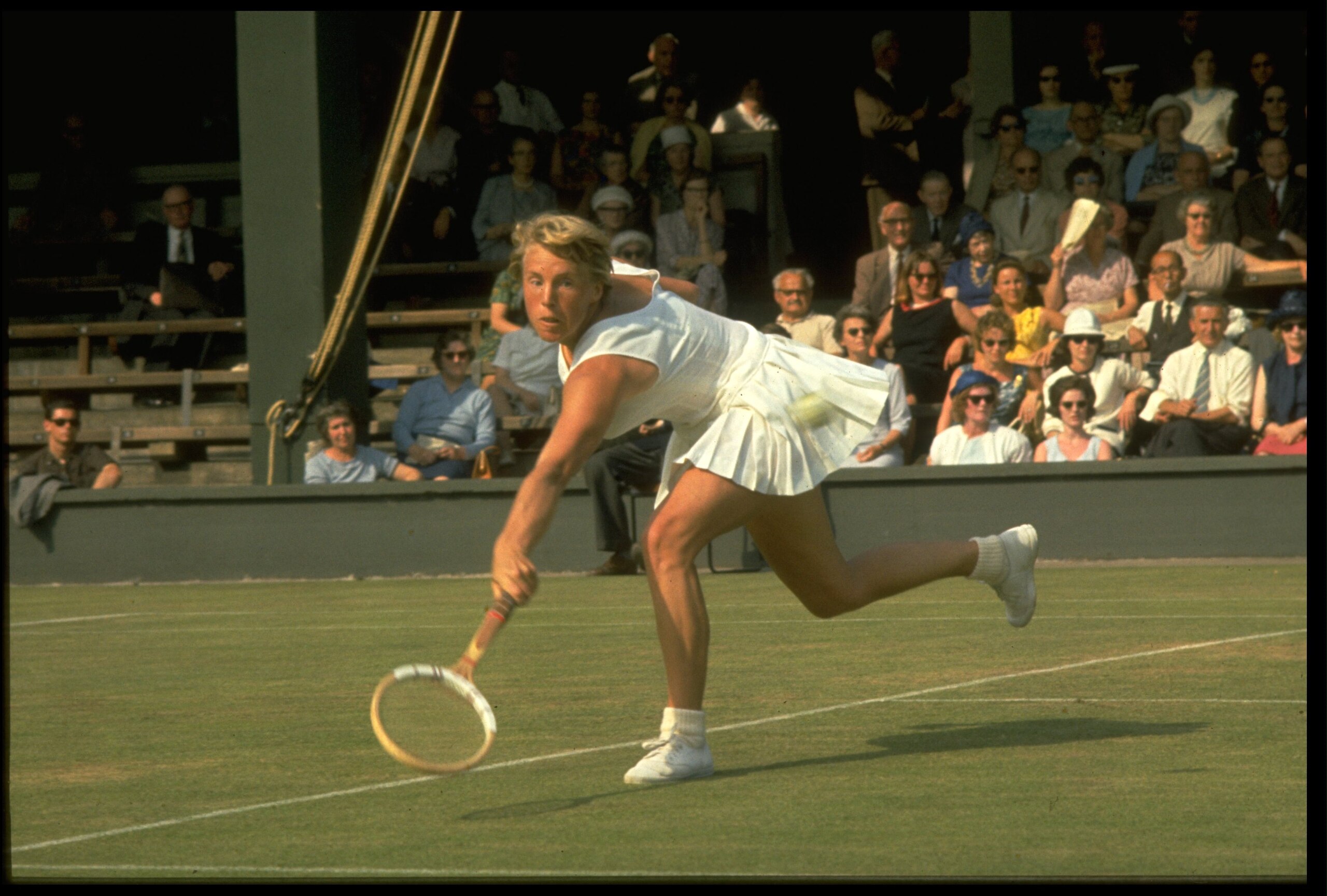
Billie Jean King was a three-time Wimbledon champion when she faced Anne Jones in the 1969 women's final. King was expected to breeze through the clash, but she was facing a majority British crowd cheering on the home girl Jones.
Jones, who had never won at Wimbledon, stunned everyone including King as she fought back from a set down to win 3-6, 6-3, 6-2.
This was Jones' only Wimbledon triumph, but she did win two French Open titles too.
Jones was also a table tennis international from 1953-59 and had a stint commentating for the BBC after retirement from the two sports.
Arthur Ashe in 1975
2 of 13
Arthur Ashe is known as the man who broke the shackles of race in the sport that was then associated with rich country clubs and upper-class whites.
Ashe reached his first ever Wimbledon final in 1975 and was up against top seed and favourite Jimmy Connors. Not a soul expected Ashe to win.
But the American proved his detractors wrong by fighting off a late comeback from Connors to win 6-1, 6-1, 5-7, 6-4 and shocked the entire world.
Ashe remains the last and only black man to win at Wimbledon and also one of only two men of African ancestry to win a Grand Slam—the other being Yannick Noah who won the French Open in 1983.
Virginia Wade in 1977
3 of 13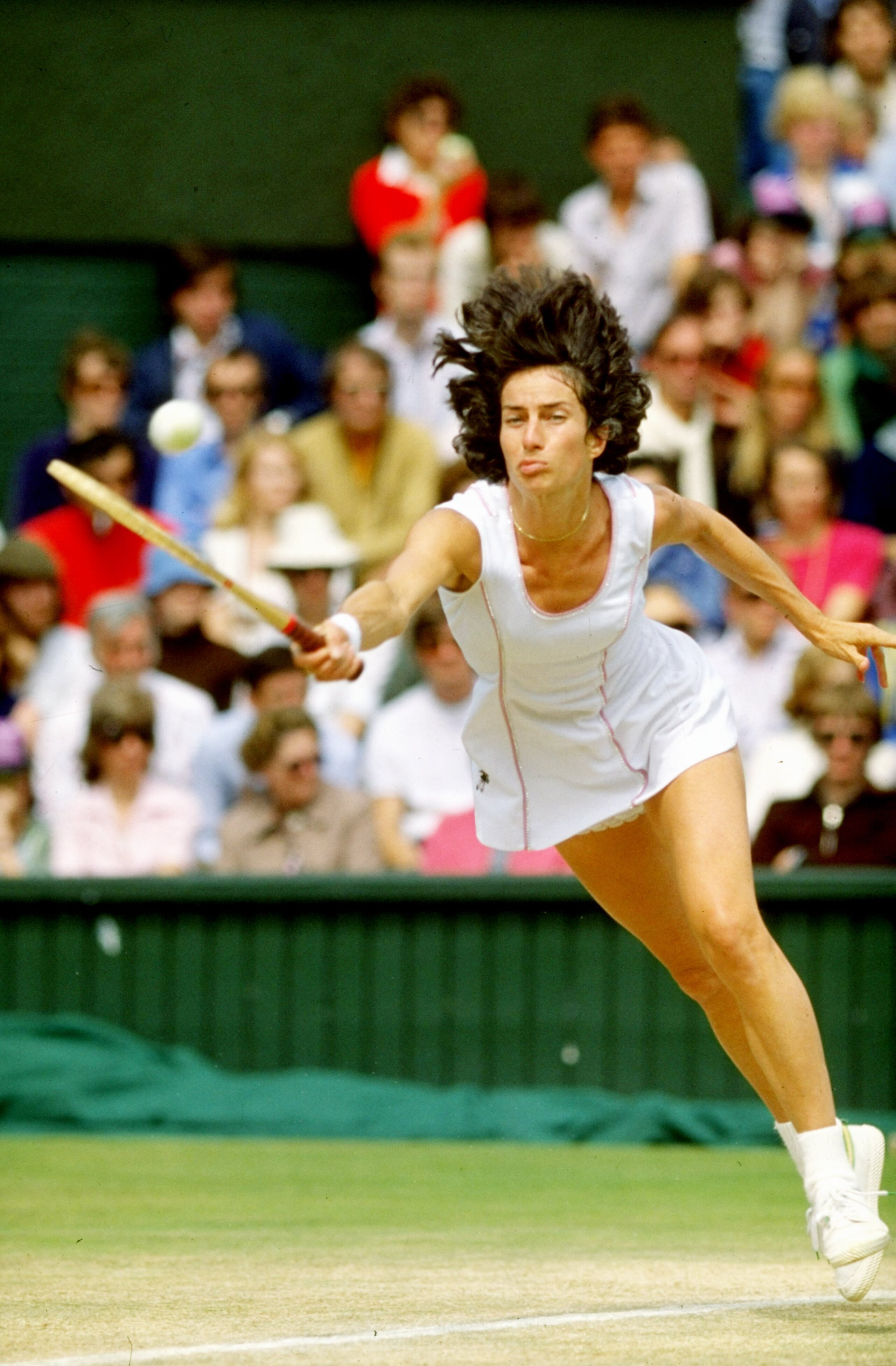
Virginia Wade, a Briton, won the Wimbledon singles title in 1977 after 15 previous attempts.
Wade had won the Australian and U.S. Opens but had never been in a Wimbledon final before.
Considered to be way past her prime at 31 years of age, Wade shocked Chris Evert in the semifinal 6-2, 4-6, 6-1 and was up against Dutchwoman Betty Stove in the final.
Wade delighted the British crowd by winning 4-6, 6-3, 6-1 and sparked off magnanimous celebrations all across the country.
It was a perfect fairytale ending to commemorate the centenary of the Championships and the Silver Jubilee of Queen Elizabeth II, who was present for the match.
Wade remains the last British player to win the Wimbledon title.

.jpg?w=2560 "Rams Raiders Football")

Boris Becker in 1985
4 of 13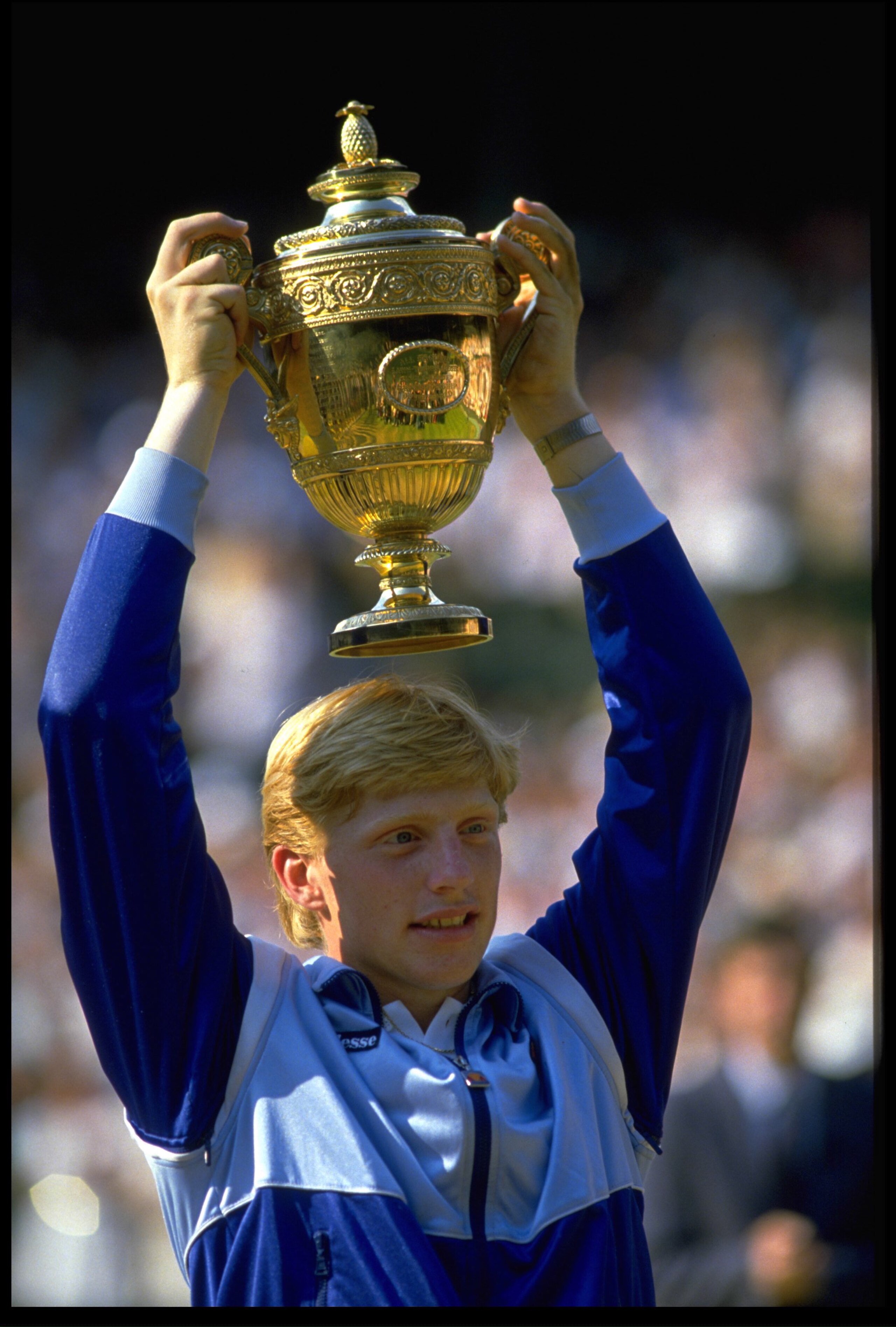
Boris Becker was a little-known 17-year-old when he entered the Wimbledon Championships in 1985 as an unseeded player. In fact, he had turned pro just a year ago.
Becker got through his opening two rounds with relative ease. But he had to encounter five hard-fought sets against Joakim Nystrom and Tim Mayotte, each, in the next two rounds.
Becker attracted a lot of attention because of his age and massive serve in the latter parts of the tournament and eventually reached the final where he faced eighth seed Kevin Curren.
Becker dominated the match from the start but still needed three hours and 18 minutes to overpower Curren 6-3, 6-7, 7-6, 6-4.
Becker became the youngest ever Grand Slam champion at the time and also the first German to win at Wimbledon. He even successfully defended his title the following year.
Becker's attacking style of tennis backed by a massive serve defined men's tennis for years and is constantly emulated even today.
Pat Cash in 1987
5 of 13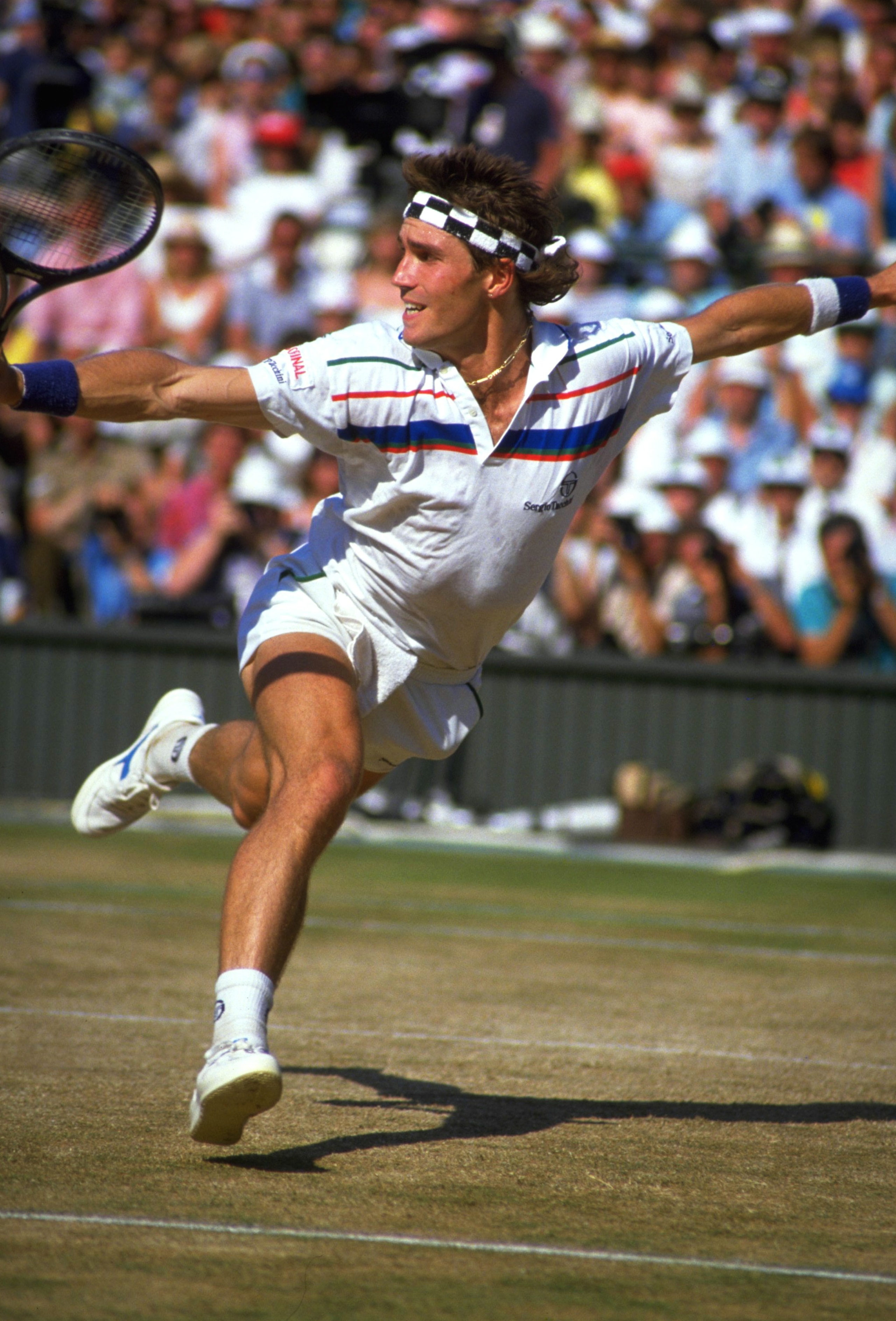
Pat Cash first made his mark in the world of tennis by winning the juniors titles in the 1982 Wimbledon and U.S. Open.
The Australian was a quick learner, and he reached the semifinals of the 1984 Wimbledon and U.S. Open where he lost to John McEnroe and Ivan Lendl, respectively.
Cash then reached the final of the Australian Open in 1987 where he lost to Stefan Edberg.
But the defining moment of his career came at the 1987 Wimbledon Championships. Cash, seeded 11th for the tournament, beat notable players such as Mats Wilander and Jimmy Connors to make the final where he faced second seed Ivan Lendl.
Cash displayed immense determination, skill and athleticism to trump Lendl 7-6(5), 6-2, 7-5 to send shockwaves across the world. Cash dropped just one set in the entire tournament.
Roger Federer in 2001
6 of 13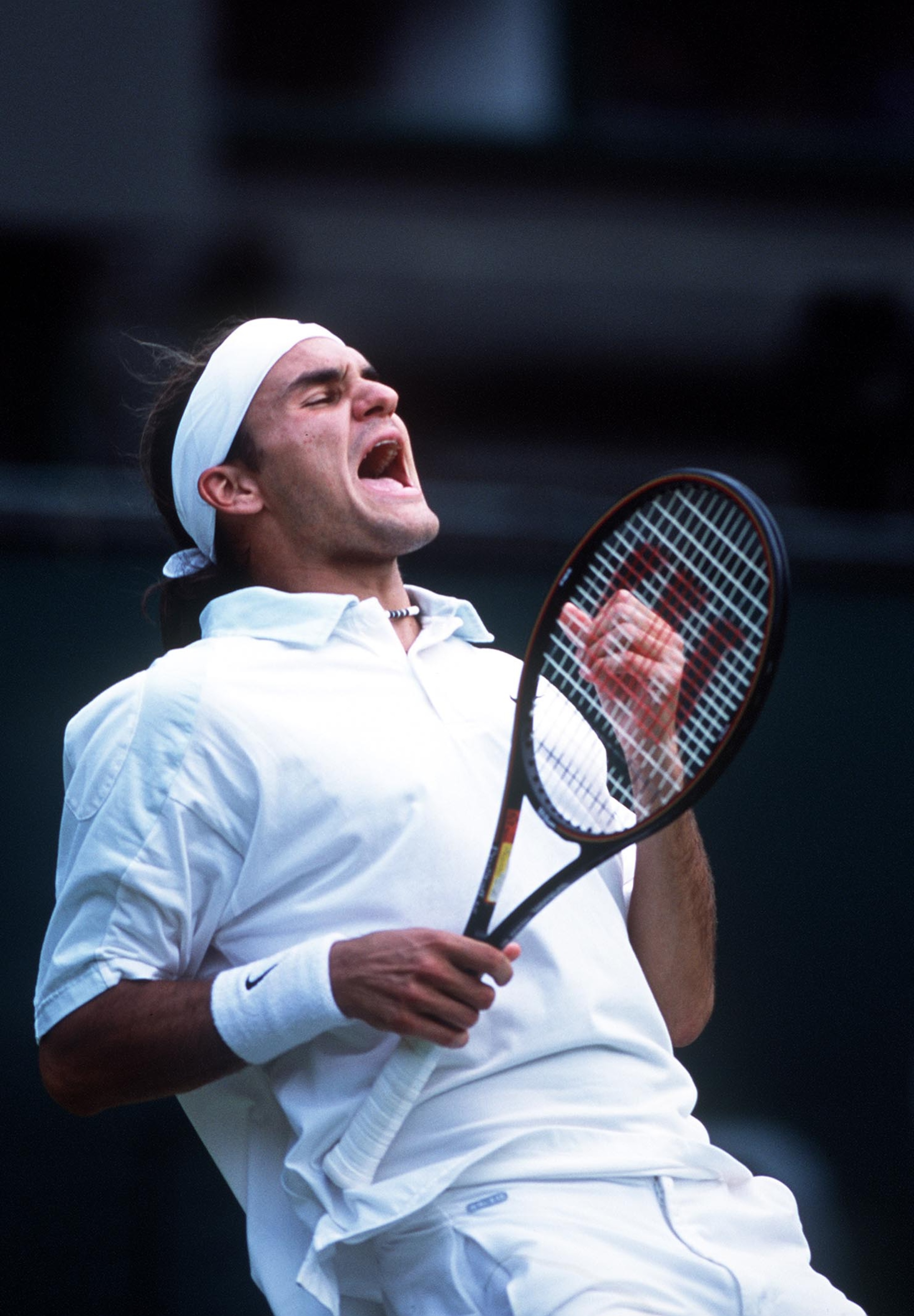
Roger Federer was nothing but an upcoming, 20-year-old, pony-tailed Swiss prodigy when he came up against Pete Sampras in the fourth round of the 2001 Wimbledon Championships.
Sampras was gunning for his fifth straight Wimbledon title which would equal the record set by Bjorn Borg and was on a 31-match unbeaten streak at Wimbledon, dating back to 1996.
Roger, on the other hand, was on the back of a first career singles title in Milan and had helped Switzerland beat the USA in the Davis Cup. He easily got through his first three rounds at Wimbledon.
Federer and Sampras engaged in a see-saw of an encounter before the Swiss finally came out on top to win 7-6(7), 5-7, 6-4, 6-7(2), 7-5.
In what was one of the most pulsating matches ever seen at the All England Club, it was the first time that Sampras had lost a five-set match at Wimbledon. This clash later went on to signal the changing of guard in men's tennis.
Roger lost in the quarterfinals to Tim Henman but eventually took his first Wimbledon title two years later. The rest, as they say, is history.
Goran Ivanisevic in 2001
7 of 13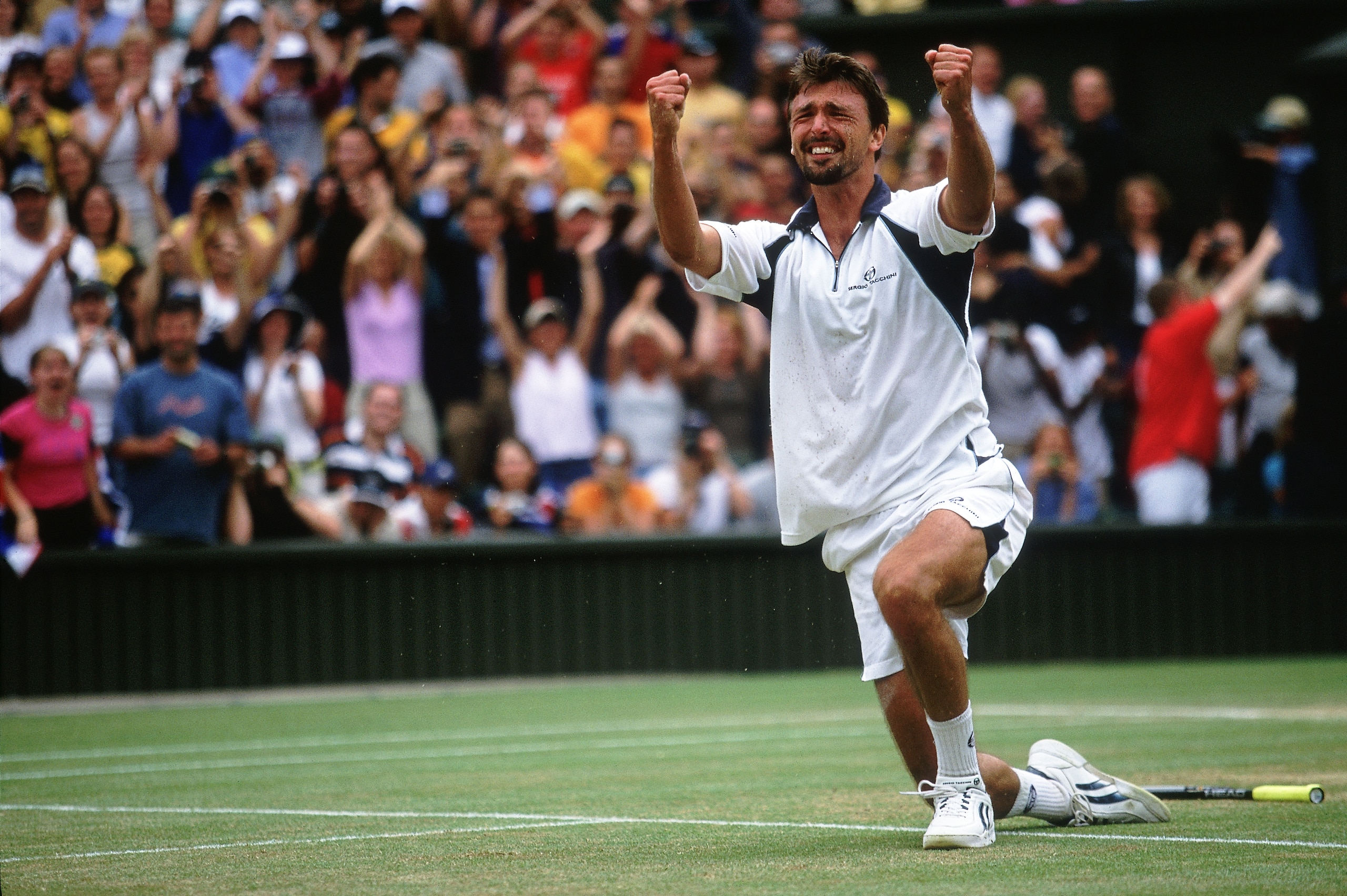
Croatian Goran Ivanisevic is remembered for being the only wild-card champion in Wimbledon history.
It wasn't a breakout performance per se because he had been a three-time finalist prior to his triumph in 2001, but Ivanisevic braved a lot of personal demons to finally win on his fourth attempt.
In his first Wimbledon final in 1992, Ivanisevic lost in five sets to Andre Agassi after defeating greats such as Ivan Lendl, Stefan Edberg and Pete Sampras in succession. His second attempt in 1994 saw him go down to Sampras in three sets, which earned him his personal highest ranking of World No. 2.
The 1998 final saw him go down to Sampras again, but not before pushing the American all the way to lose 6-7, 7-6, 6-4, 3-6, 2-6.
Ivanisevic then had a few injury-plagued seasons from 1999-2001 and was on a steady decline in the rankings. By the summer of 2001, he was ranked 125th in the world. But due to his three previous final appearances, he earned a wild-card entry for the 2001 Wimbledon tournament.
Ivanisevic defeated top-ranked players such as Carlos Moya, Andy Roddick, Marat Safin and Tim Henman to reach his fourth final where he was up against Pat Rafter.
In front of a majority Australian crowd, Rafter and Ivanisevic battled out an epic, stomach-churning match for three hours before Ivanisevic finally prevailed 6-3, 3-6, 6-3, 2-6, 9-7.
Their encounter remains one of the most memorable matches SW19 has ever played host to and Ivanisevic couldn't believe he had won, almost 10 years after first appearing in the final.
The win remains his only Grand Slam triumph.
David Nalbandian in 2002
8 of 13
Argentine David Nalbandian is regarded as one of the greatest players to never win a Grand Slam.
After turning pro in 2000, Nalbandian entered the 2002 Wimbledon tournament as nothing more than a dark horse.
Nalbandian had a relatively easy first few rounds and didn't face a top-30 opponent until the quarterfinals where he was up against Nicolas Lapentti. Five grueling sets later, he met Xavier Malisse in the semifinals.
The world watched in shock as Nalbandian relied on his clean strikes of the ball and astonishingly efficient grounstrokes to make the final.
Nalbandian was beaten convincingly by World No. 1 Lleyton Hewitt in the final, but his performance in the tournament signaled the rise of a potential star.
Nalbandian finished the year as the No. 1 South American in the world. He reached a career high ranking of World No. 3 in 2006, but he's never quite found the formula to win a Grand Slam to date.
Mark Philippoussis in 2003
9 of 13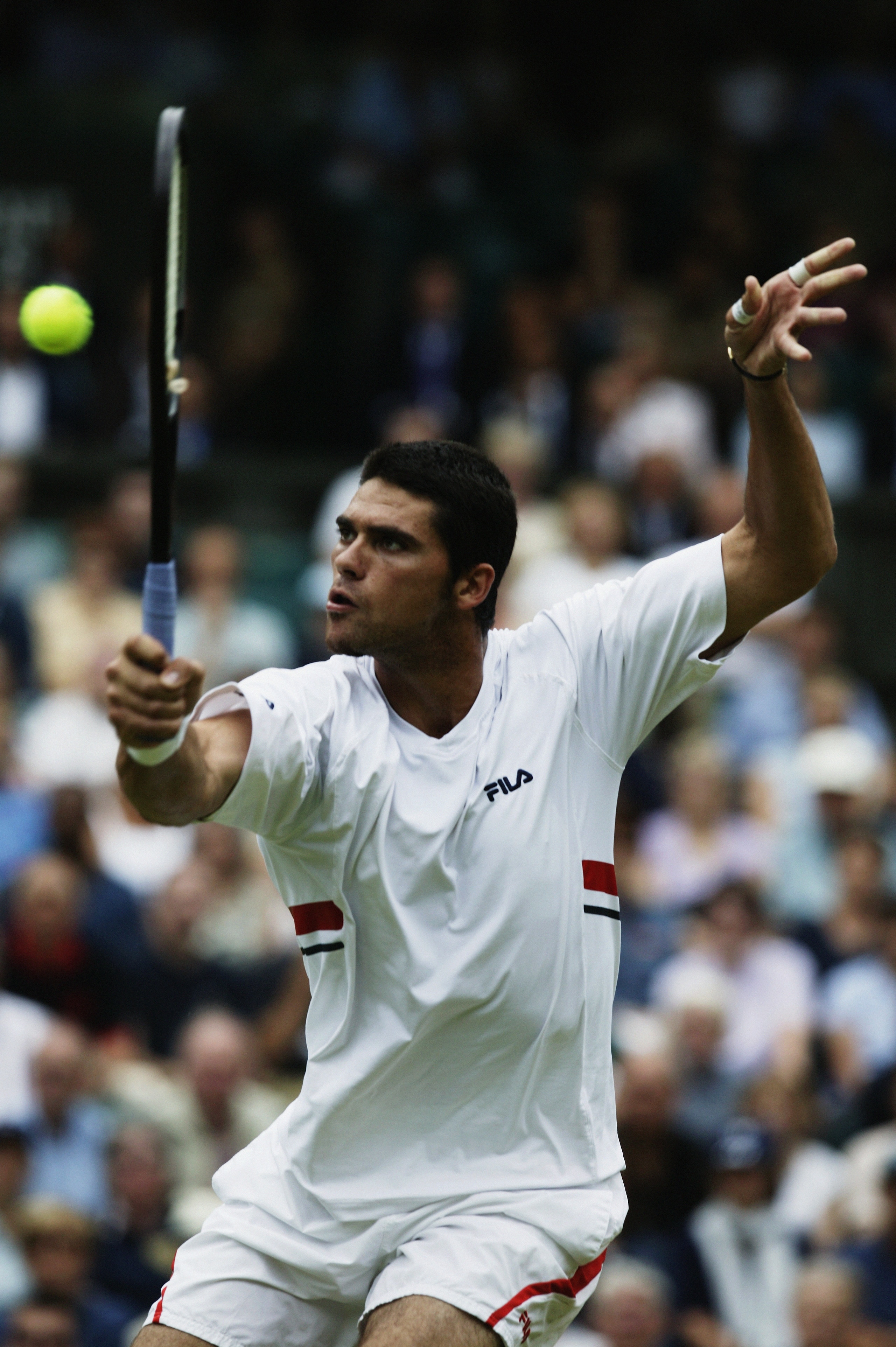
Mark Philippoussis reached his first Grand Slam final at the 1998 U.S. Open which he lost to Pat Rafter. He enjoyed a couple of top 20 seasons after that but could never really get past the quarterfinals of a Grand Slam.
The Australian's career then suffered due to consistent injuries and he missed the entire 2001 season. A couple of surgeries and a change of coach later, Philippoussis was back with a newly found vigour in 2003.
The 2003 Wimbledon fourth-round match between Philippoussis and Andre Agassi was a classic encounter. Agassi relied on his big serve whereas Philippoussis was a very good returner. The duo battled it out for well over three hours before the unseeded Australian tipped Agassi 6-3, 2-6, 6-7(4), 6-3, 6-4.
Philippoussis served a record 46 aces in the match and carried forward his momentum into the quarterfinals and semifinals where he dispatched Alexander Popp and Sebastien Grosjean, respectively.
Philippoussis finally met his match in the final against someone named Roger Federer.
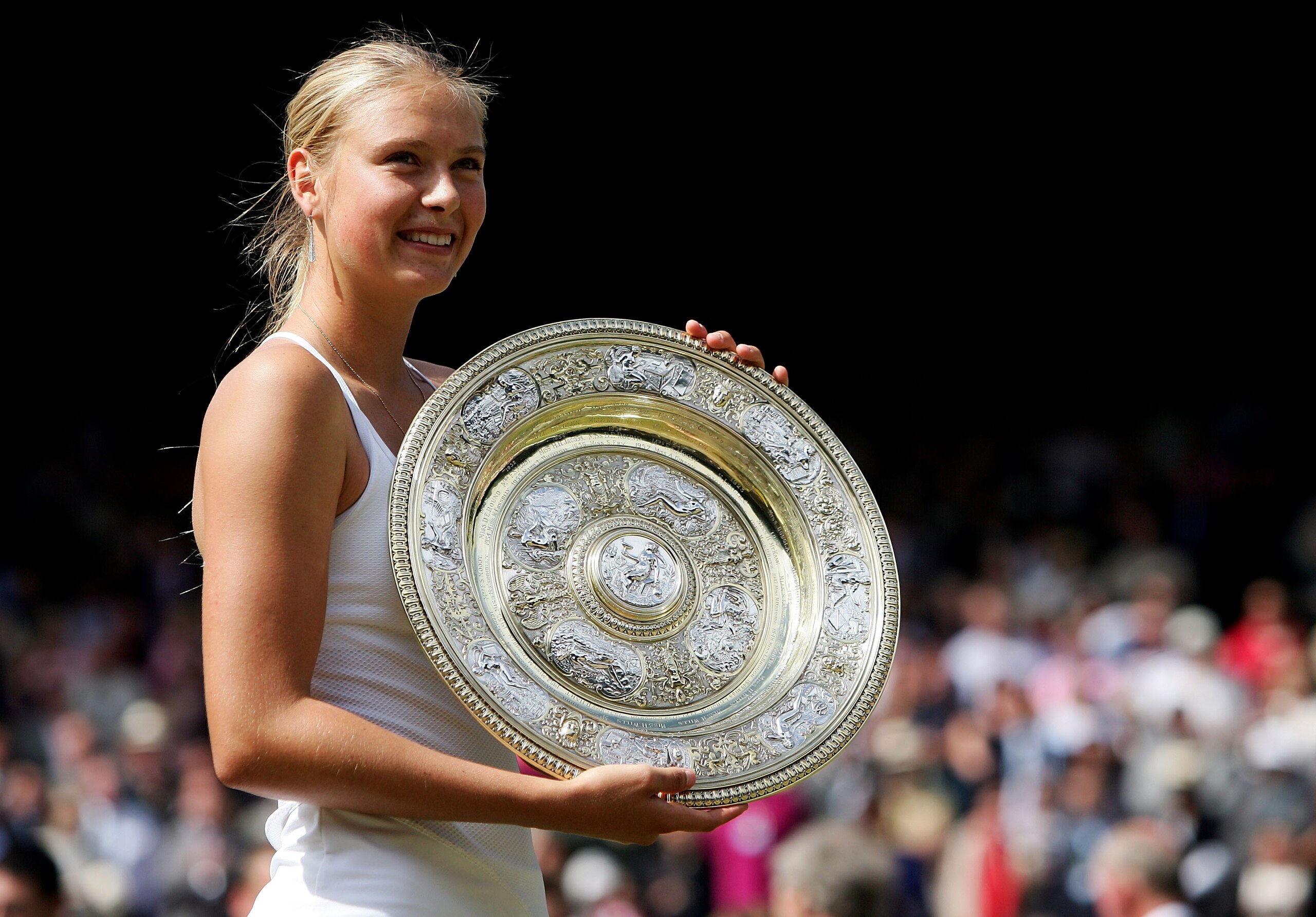
Maria Sharapova in 2004
10 of 13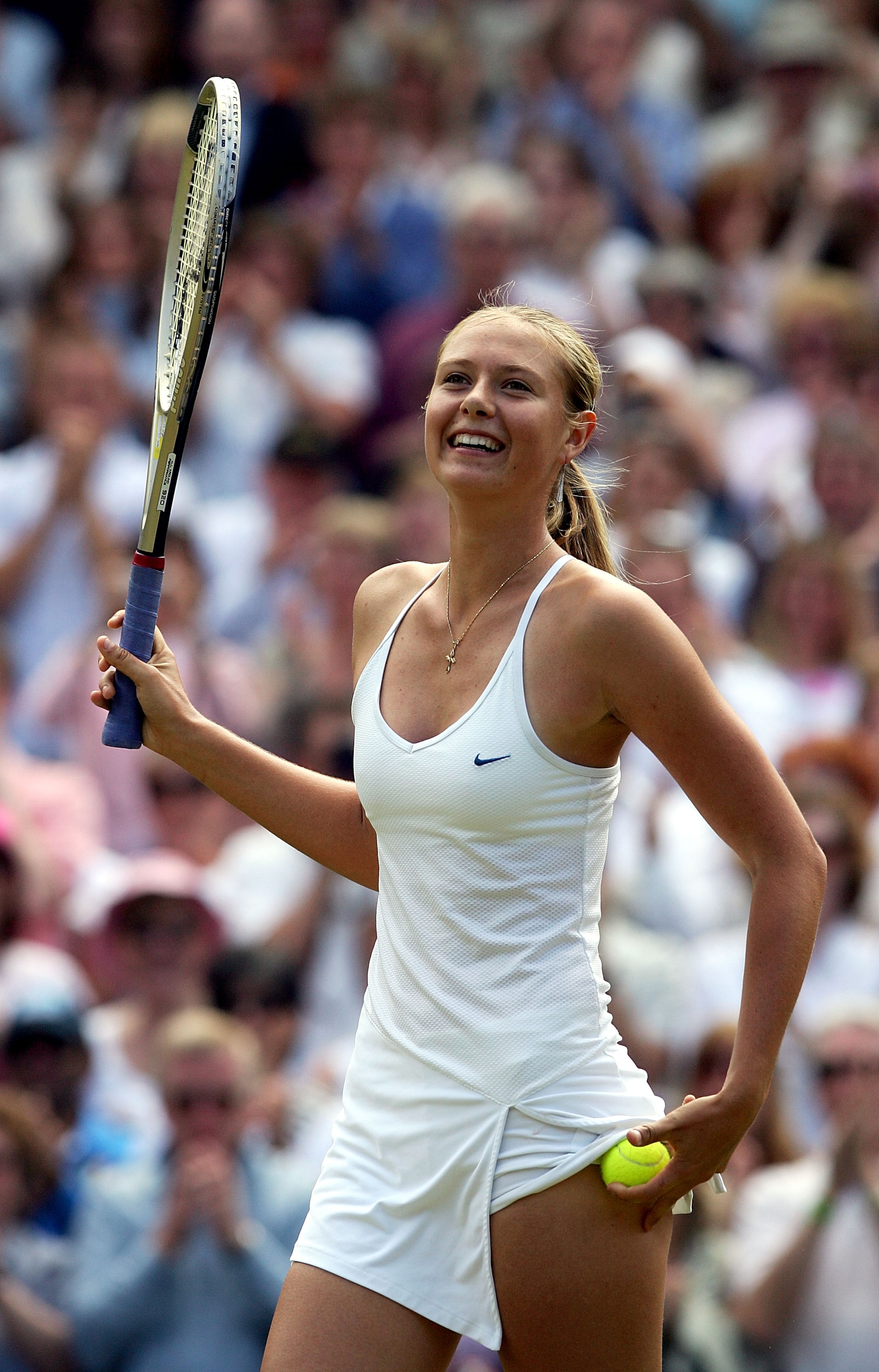
The 2004 Wimbledon tournament was a truly special one because it gave to the world one of the hottest champions the game has produced.
While Serena Williams was powering her way through to her third consecutive final, a little-known 17-year-old Russian named Maria Sharapova was doing the same in a more discreet manner.
Serena was gunning for a hat trick of Wimbledon titles, and there weren't many who bet against her when she came up against Sharapova in the final.
But the tall Russian displayed some remarkable power and composure to take the first set in a mere thirty minutes. A shocked Serena and centre court watched as Sharapova refused to let her guard down and took the match 6-1, 6-4 to cap one of the biggest shocks the tournament has produced.
The win led journalists across the world to declare the end of the Williams dominance at Wimbledon.
Rafael Nadal in 2006
11 of 13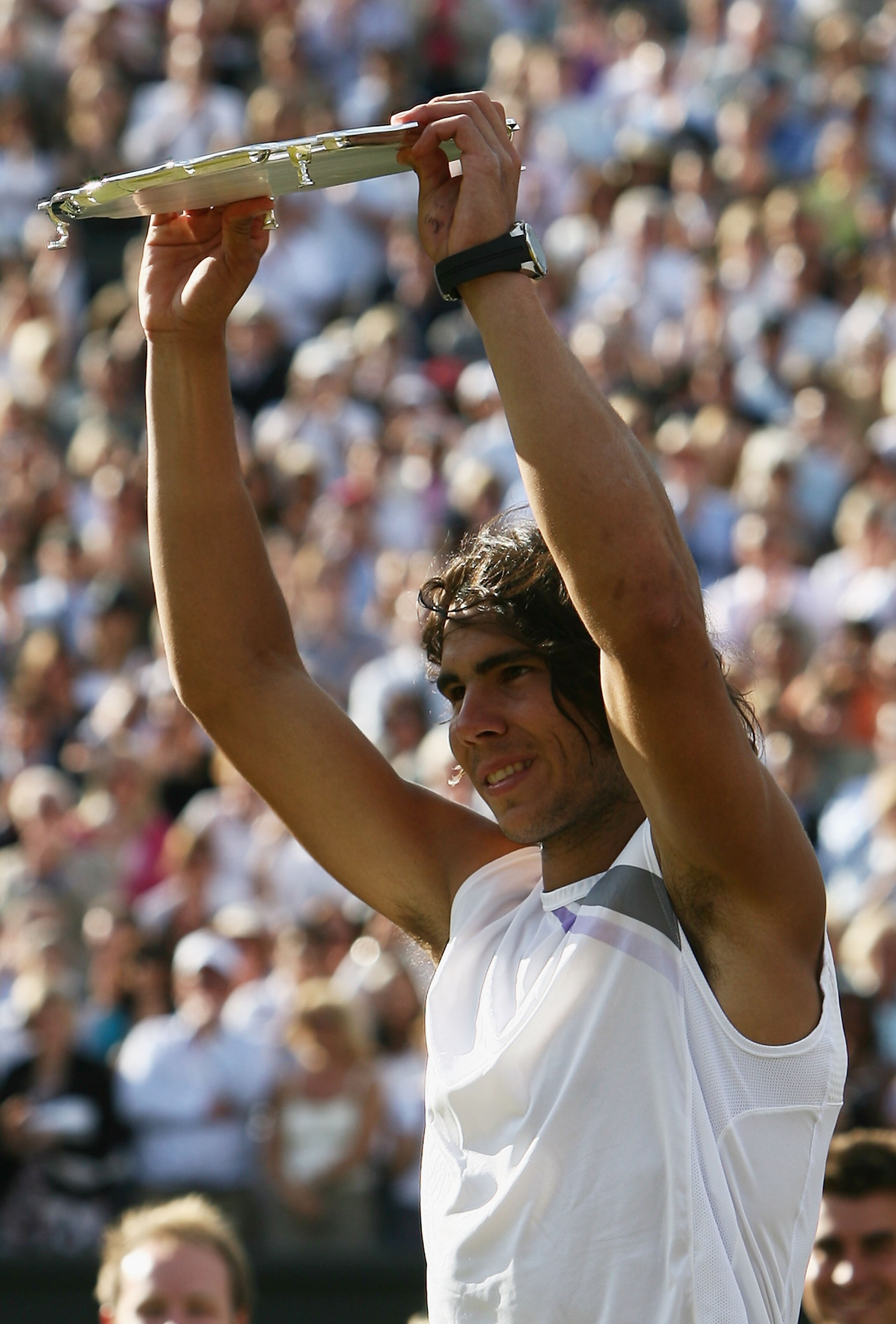
Rafael Nadal first burst onto the scene in 2005 when he upset Roger Federer on his way to a first French Open title.
Nadal pretty much won everything on clay after that, but his game was restricted to the red surface.
Nadal went on to win all the four clay tournaments he entered in the 2006 season—beating Federer thrice. But as the grass court season began, Federer was back as the favourite.
Nadal, having exited in the second round the previous year, entered the 2006 Wimbledon Championships with a resolve to diversify his CV past the red dirt.
After a nerve-wracking second round match, which saw him come back from just two points from defeat against Robert Kendrick, Nadal was up against Andre Agassi in the next round.
Agassi, at 36, wasn't the Agassi of yore. But, Nadal knew that a win here could just prove to be the right catalyst to change the tides for his grass court endeavours. Nadal showed no pity towards a former champion playing his last Wimbledon as he dispatched Agassi 7-6, 6-2, 6-4.
The Majorcan won his next three matches in straight sets and set up his first final on grass against Roger Federer.
Unfortunately for Nadal, he couldn't jump the last hurdle as Federer won in four sets—6-0, 7-6(5), 6-7(2), 6-3.
But his headway on grass showed that he would soon become a force to reckon with on more than one surface.
Nadal went one step closer the following year, losing in five grueling sets—7-6(7), 4-6, 7-6(3), 2-6, 6-2.
I trust that I don't have educate you of what happened in 2008.
Marion Bartoli in 2007
12 of 13
Prior to 2007, Marion Bartoli was just known as "that Frenchwoman who plays double-fisted like Monica Seles." Bartoli employs a two-handed backhand as well as forehand.
Bartoli turned pro back in 2000 but could never burst onto the scene in the early years of her professional career.
She beat her first top-10 player—Vera Zvonareva—in 2006 but failed to get past the third round of a Grand Slam.
Bartoli began the 2007 season with a second round exit at the Australian Open, losing to Victoria Azarenka. Her form picked up as the clay court season began. She reached the semifinals at Strasbourg where she lost to fellow Frenchwoman Amelie Mauresmo.
Bartoli made her first Grand Slam fourth round appearance at the French Open. There, she was knocked out by fourth seed Jelena Jankovic.
Taking her progress in her stride, Bartoli entered Wimbledon with a strong resolve to perform well. Bartoli exacted revenge on Jankovic in the fourth round, winning in three sets.
She wasn't done.
Bartoli went on to meet World No. 1 Justine Henin in the semifinals. Snowflake's chance in hell, right?
Wrong. Bartoli recorded one of the most stunning upsets in the tournament's history, beating Henin 1-6, 7-5, 6-1. She dedicated her breakout performance to none other than 007. Pierce Brosnan was among the spectators.
Bartoli eventually lost to Venus Williams in the final. But she cemented her tag as an upcoming force in women's tennis.
Tomas Berdych in 2010
13 of 13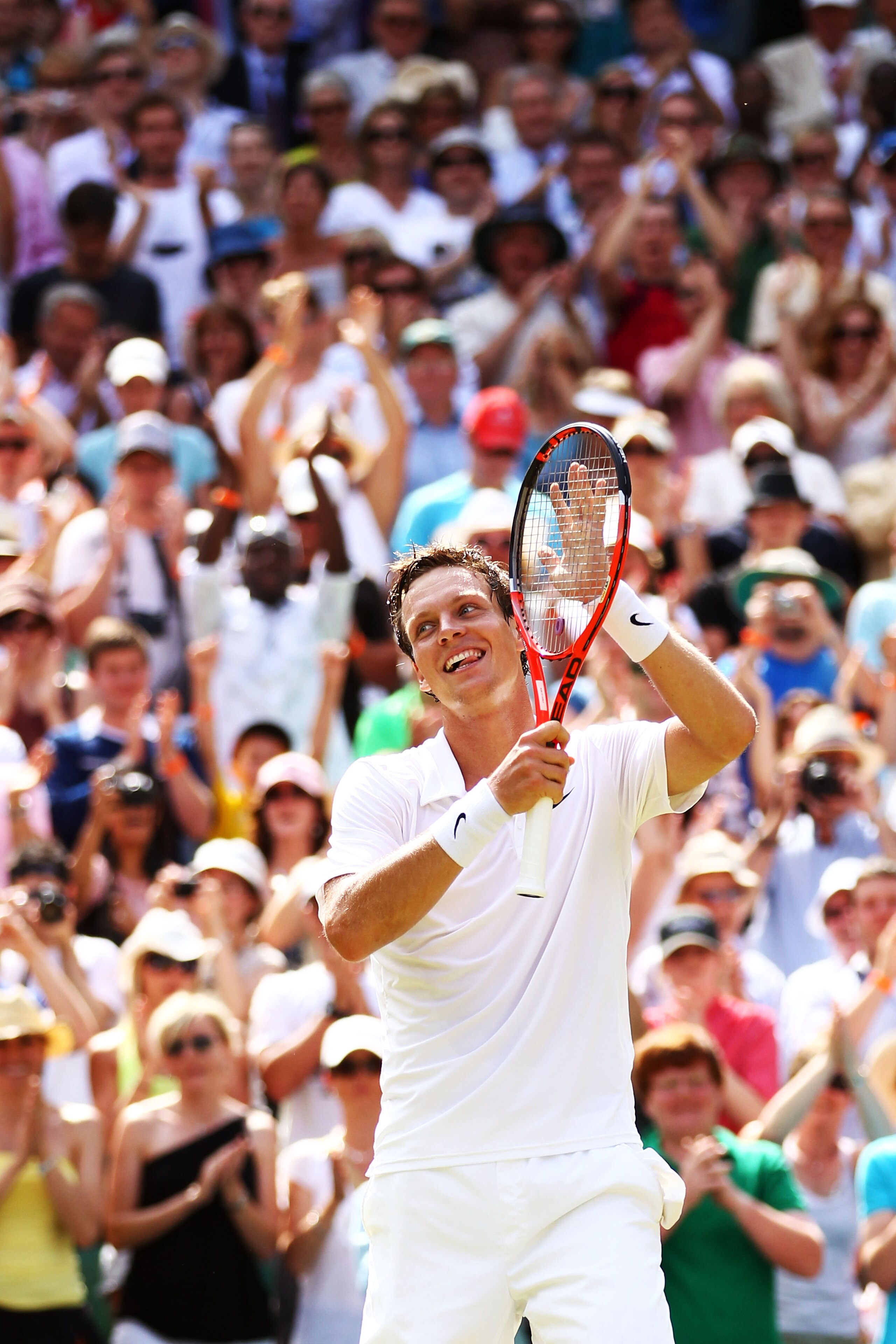
Tomas Berdych reached his first grass court final in the 2006 Gary Weber Open where he lost to Roger Federer 0-6, 7-6, 2-6. Federer got the better of the Czech again in Wimbledon that year, winning 6-3, 6-3, 6-4.
Fast forward four years.
In the second round of the 2010 Miami Open, Tomas Berdych stunned Roger Federer 6-4, 6-7(3), 7-6(6) to end an eight-match losing streak against the Swiss. Berdych went on to beat Fernando Verdasco and Robin Soderling later in the tournament, but lost to Andy Roddick in the final.
Berdych then put in his best performance on clay by reaching the semifinals of the French Open where he was beaten in five sets by Robin Soderling.
With his confidence flying high, Berdych started Wimbledon with a bang—breezing through his opening two rounds in straight sets. A couple of tough matches later, Berdych was up against Federer again.
The Swiss had lost just one match at SW19 in the past seven years—the 2008 final. He was gunning for a record-equaling seventh Wimbledon title.
Berdych couldn't give a hoot!
The Czech dispatched Federer in four sets to reach his first Wimbledon semifinal. For Berdych, revenge was a dish best served cold after four years.
He wasn't done, as yet. Berdych went on to beat Novak Djokovic in straight sets in the semifinal to reach his first ever Grand Slam final. Berdych eventually lost to Rafael Nadal in the final but not before capturing millions of hearts.



.jpg?w=2560 "Rodgers Iced Out on Plane 💎")
.jpg?w=2560 "🚨 Week 8 AP Top 25 Poll")
