
New England Patriots: Conflict of Interest in Defense and Offense Philosophies
 The New England Patriots are lauded for their systematic approach to football. The only problem is, their systems suffer a conflict of interest.
The defense, a "Fairbanks-Bullough" style of 3-4, attempts to maximize the opponent's time of possession by forcing them to systematically work their way up the field, increasing the possibility that they will make a mistake and turn the ball over, and maximizing the number of opportunities for the defense to make a stop. This is where the term "bend-don't-break" stems from.
Meanwhile the offense, a "Erhart-Perkins" style attack, attempts to maximize their own time of possession with short and intermediate throws, and runs out of spread formations. They systematically work their way up the field, focusing primarily on moving the chains.
TOP NEWS

New NFL Power Rankings 📊
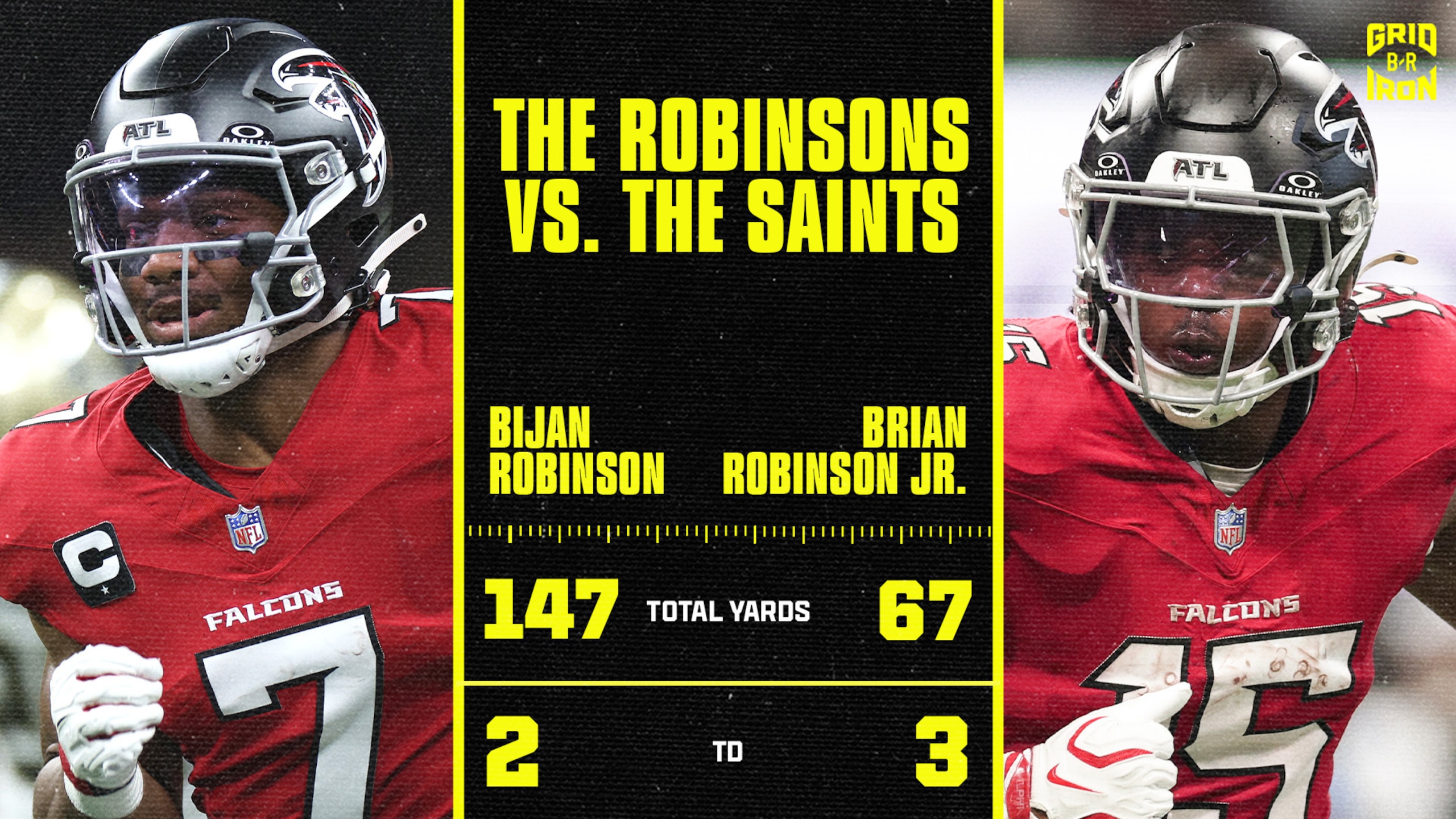
The Robinsons POUND the Rock 🪨
Takeaways from Falcons' dominant MNF win
So the goal on both offense and defense is to maximize time of possession. Something's gotta give, right?
The primary objective of both sides is to score and prevent the other team from scoring. The Patriots are content to do what's necessary on both sides of the ball to achieve those goals. They don't try to create big plays, they let the big plays come to them by capitalizing on opportunities.
Last year, the defense had its share of opportunities, and they capitalized on them. They totaled a league-leading 27 interceptions.
Likewise, it was the offense that capitalized on those opportunities in 2007. It was a little different, because the Patriots were trying to stretch the field, but most of it wasn't forced; the opportunities were there. They led the league in big plays offensively, and we all know of the record-setting campaigns for Tom Brady and Randy Moss.
Thus, the similar philosophies between the two leaves room for some give-and-take on both sides. We know of the Patriots as a team that loves to capitalize on opportunities, and this allows them to do it on both sides of the ball.
Perhaps the idea of the offense maximizing time of possession is faulty. Perhaps our concept of the offense is flawed, maybe even oversimplified. That seems to be what Mike Dussault of PatsPropaganda.com thinks.
"If there’s any part of this that is wrong, I’m guessing it’s offensive philosophy part of the equation. Perhaps it’s not really about maximizing time of possession, it’s about methodically keeping drives moving forward via whichever avenues the defense is susceptible to.
"
On the other hand, perhaps it's a testament to the ever-evolving philosophies of an NFL team, both on offense and defense. Every year, weaknesses are exposed in a team. Those weaknesses have to be addressed, or they will be exposed again the following year. Most fans think the best way to fix these weaknesses is with a new player, but that's not always the case.
Sometimes the changes don't come in the form of a player, but in some way that is so subtle it's difficult to see.
Capitalizing on an opponent's mistakes is one aspect of the scheme on both sides of the ball. Overall, perhaps it's less about "time of possession" and more about "mistake-free football". While that may be an age-old cliché, it perhaps applies more to Belichick's Patriots than most other teams.
It most certainly applies very heavily to the scheme's on both sides of the ball for a team and a head coach that preaches "doing your job."
The Patriots offensive and defensive systems both rely so heavily on execution, and neutralizing an opponent's strength to make them beat the Patriots with their left hand so to speak.
In conclusion, while it may seem like a conflict of interest, it's just another (and perhaps the biggest) facet of a team's scheme that is meant to make the team work as one unit instead of two.
Erik Frenz is the co-host of the PatsPropaganda and Frenz podcast. Follow Erik on Twitter @erikfrenz.

.jpg?w=2560 "Rams Eagles Football")
.jpg?w=2560 "Grading WWE Raw 🔠")


.jpg?w=2560 "2 NFL Officials Suspended")
