Conference Points Should Help Determine BCS Standings
This is going to potentially be a controversial thought but, hey, isn't that what message boards are for. I think that there should be some BCS standing points given or taken away for what conference a team is in.
First, I'm going to give the main reason why I believe this way. Then, I'll spend the rest of the article on what it would do to help the situation.
But before beginning either of these tasks, I would be remiss if I didn't once again say that the BS, I mean BCS, is bunk.


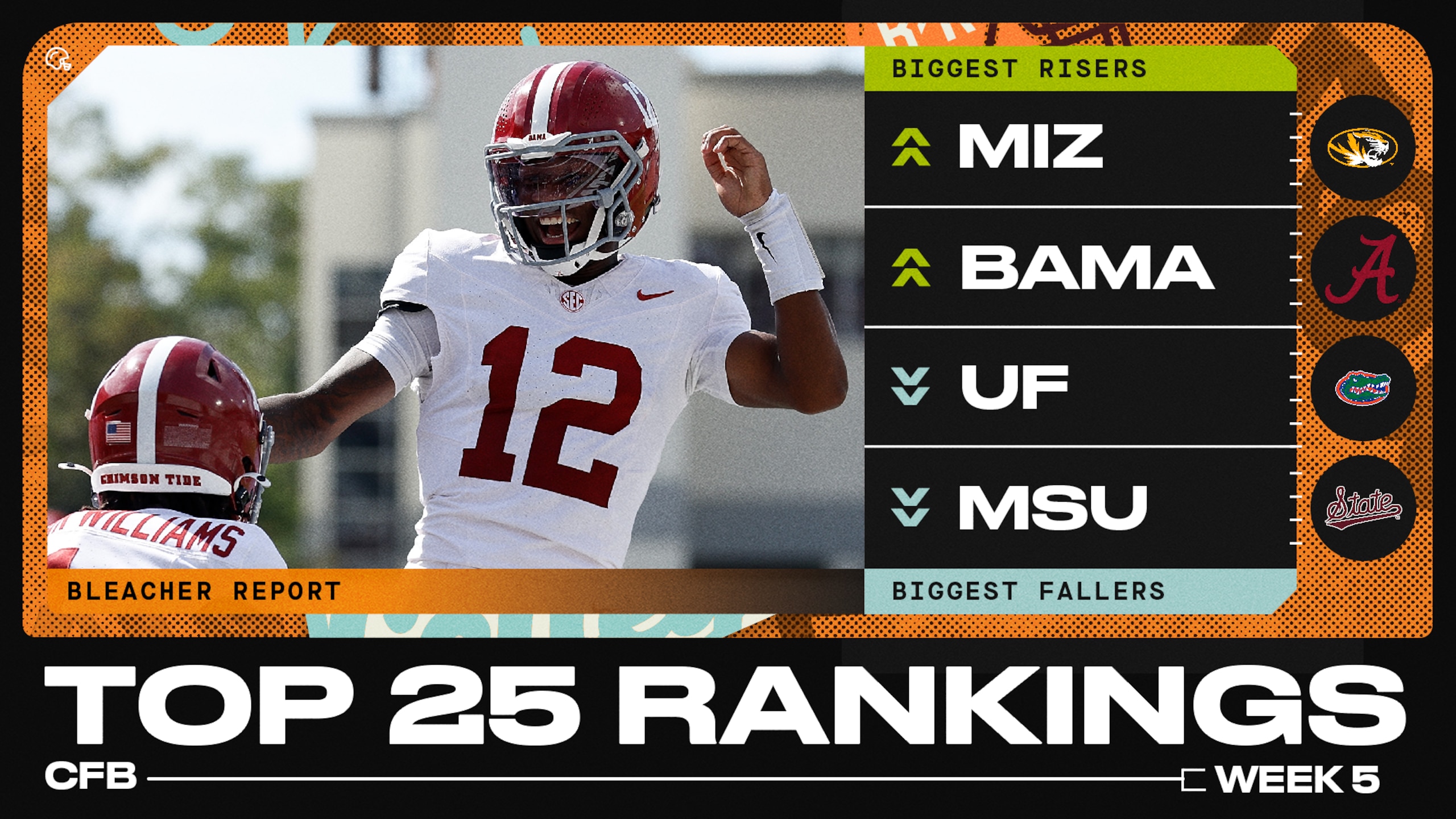
_0.png?w=2560)
OK, here's the rationale. First, in the spirit of "knowing is half the battle," we have to realize and call it for what it is and that is what we have now is an affirmative action college football postseason.
The non-BCS schools have had many accommodations made so that they can have a seat at the big boy table. First, there was the rule that says that if a non-BCS team makes the top 12, they can't be denied. This is how Hawaii got in last year. All you need to do is look at the final score to know whether or not they really deserved to be there.
Another "affirmative action" accommodation by the BCS for these schools is the rule that says that no more than two teams from a conference can go to a BCS bowl. The Big 12 probably deserves three spots this year. There have been years that the SEC has deserved three spots.
But since there are limitations on the BCS conferences and most will only qualify for one spot, so long as Notre Dame doesn't meet the requirements of their exclusive loophole to get in, it's highly likely that two non-BCS schools get in because these rules.
Finally, it's just plain harder to win in tougher conferences and that should count for something. Missouri has already lost two games in the Big 12 and they have only played three conference games. In the WAC, they wouldn't lose times times most years.
East Carolina was a darling for a while. Before their recent spate of injuries, they were on track to cruise through Conference USA and be a BCS bowl bound team. But does anyone doubt that Florida, which already has one conference loss, would absolutely crush Conference USA?
These examples are admittedly "low hanging fruit." The truth is that I could create examples for hours because it's that obvious. So why should a team be punished for playing in a tougher conference? Yet playing a tougher schedule which likely ends up in a loss or two will get you ranked behind Boise State or South Florida or East Carolina because they play much easier schedules.
So what I'm advocating here is that the BCS should have a component to factor in the conference a team plays in. This point system could be evaluated every year to include only the most recent history (say the last decade). If a conference proves its worth, it could be awarded a point or two which would be treated like an extra win. To give a real world example, here is what that would look like today.
- SEC +2
- Big 12 +2
- Big Ten +1
- Pac 10 +1
- Big East +1
- ACC +0
- All Others +0
Now, what would this accomplish? Well, for starters, let's go back to the 2003 season when Auburn was undefeated and left out. Back then, without Texas having won a title in 2005 and without the rise of Missouri and Kansas (albeit Kansas is questionable), the Big 12 would have probably been a +1 and the SEC a +2 which would have meant that, even if you didn't like the system, one would have been in place so that everyone knew ahead of time what to expect as for who would be left out.
A similar thing might happen this year. Let's say that Texas, Alabama, and Penn State all win out. Who plays Texas? Right now, it would be Alabama. Given that Bama would have to win a conference championship game as well to stay undefeated, they won't likely be leapfrogged either.
Is that fair to Penn State? There is nothing to determine what happens here. Penn State fans will have a legitimate complaint because they can rightly claim that Bama stayed higher mostly because they started the preseason higher and, therefore, Penn State could not have overtaken them.
But truth be told, if Bama goes undefeated, it is a much bigger achievement given who they play than if Penn State does. This system would not only recognize that but would also make things predictable and reliable rather than trying to impress (or politic) enough voters.
With this rule, no one would need to guess. In fact, the rule could be applied to one loss teams. The year Florida won it, there weren't two undefeated teams, but there were a few once defeated teams. Why did Florida get to go instead of another team?
That's not the only benefit. All summer long, as people were starting to tune into college football and analyze schedules, people kept harping on their perception that teams from the SEC teams don't play a lot of tough out of conference games.
Fans of those same SEC teams gave many examples to the contrary, but also made the following argument: an SEC team already has to play 5-6 of the best teams in the land as part of their regular season and two of those SEC teams will play another one in their conference championship game. Their schedules are tough enough without artificially making them even tougher with non-conference heavy hitters.
Many will say that's an excuse to not play someone who might beat them. And that may be right. Georgia, as an example, plays Florida, Alabama, LSU, Tennessee (good most years), and Auburn (good most years), and will most likely get a rematch with Bama or LSU if they make it to the conference championship game. If they happen to get through that schedule only having one loss, they're still be in the hunt most years.
So if they are good enough to get through that schedule with only one loss, why take a chance out of conference that your national championship hopes get ruined when you've already got enough tough teams on the schedule to have displayed your worth? This is especially when a team like Utah may go undefeated and everyone will be clamoring for the "fresh face" and to let the "little guy" have his turn. If you're Georgia, you just don't take that chance.
If you want teams who play in tough leagues to play more out of conference marquis matchups, you have to incent them. The SEC has won the national title three of the last five years without playing tough out of conference games (as many would argue).
That means that they haven't had to take those chances and will continue to not take them because there's no reason to play tough out of conference games when it can only hurt and hasn't been shown to be necessary to get into the national title game. With the only outcome being a downside, they must be incented to ever schedule those games. That is if we want to live in a college football world where these games truly happen.
I'm sure I'm leaving out either some good reasons for this system or some of the benefits that would be derived. Feel free to add those to the comments. It will help offset some of the onslaught I fear is coming from those who think this idea would be preposterous.

.jpg?w=2560 "NFL investigating 2 referees for separate viral exchanges")
.jpg?w=2560 "Report: Chiefs Contact Hill's Agent")
.jpg?w=2560 "OBJ Calls Out Giants 😳")
.jpg?w=2560 "Tyreek makes another cryptic post amid Chiefs rumors")