
NHL Playoffs 2011: Looking Back at the Best Eastern Conference Game 7's Ever
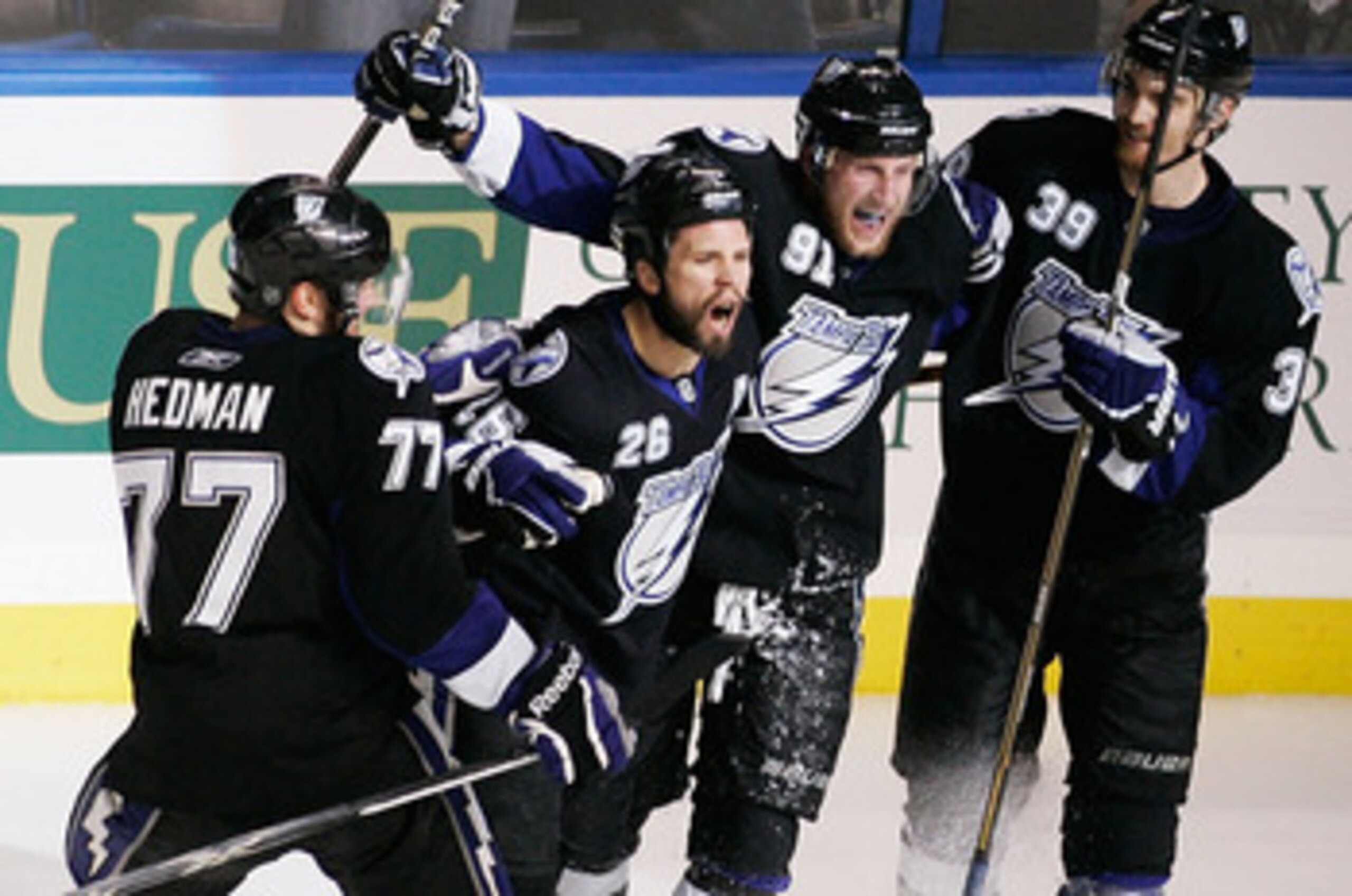
With the Boston Bruins and Tampa Bay Lightning headed for Game 7 of the Eastern Conference finals, I thought it would be fun to take a look back at five of the most thrilling Game 7's to be played in recent years.
The conference finals as they are now known began in 1982. The East was known as the Prince of Wales Conference and the West, the Clarence Campbell conference.
In 1993, the names of conferences and divisions were changed to reflect their geographic locations. Commissioner Gary Bettman thought the change would better help non-hockey fans understand the game.
Once again, real hockey fans were left out in the cold and the conferences simply became the East and West.
Since 1982, there have been six Game 7's played in the eastern Conference and five in the Western Conference. Of the 11 times the conference finals have reached a seventh game, the eventual Stanley Cup Champion prevailed seven times.
Both the Boston Bruins and Tampa Bay Lightning have participated in a Game 7 in the conference finals.
In order to see how each did, click through the slides and enjoy a walk down memory lane as I visit five of those Game 7’s from the Eastern Conference.
1988 — New Jersey Devils vs. Boston Bruins
1 of 6The New Jersey Devils were the Cinderella team of the postseason. Like last year’s Philadelphia Flyers, the Devils did not qualify for the playoffs until the final day of the season.
As a franchise, the Devils had made just one previous trip to the postseason in franchise history.
In 1978 as the Colorado Rockies, they lost to the Flyers in two straight games in a then-best of three preliminary first round.
New Jersey would make the most of their first postseason appearance as the Devils.
Led by Captain Kirk Mueller, Aaron Broten and Pat Verbeek, the Devils dispatched the Islanders in six games and the Capitals in seven during the divisional round of the playoffs.
Led by Ray Bourque on defense and Reggie Lemelin in goal, the Bruins beat the Sabres in six games and cruised past their archrival, the Montreal Canadiens, in five games to reach the Prince of Wales finals.
Boston goal scorers dominated New Jersey's netminders. The Bruins lit the lamp 29 times in seven games.
Bob Suave started and lost Game 1 for the Devils as he allowed five goals on 30 shots. Sean Burke started and won Game 2. However, after surrendering three goals on just 11 shots in Game 3, Suave was back between the pipes.
It did not matter as the Bruins scored three more times to win 6-1 in New Jersey to take the series lead.
Rebounding with a win in Game 4, Burke, a then 21-year-old rookie netminder, allowed just one goal on 34 Boston shots. The Devils tied the series with a 3-1 win, and Burke would not see the bench again in the series.
If Burke had confidence coming out of Game 4, the Bruins destroyed it in Game 5.
Boston's Bob Joyce scored two goals and five other Bruins added markers to take a 3-2 series lead with a 7-1 win.
Reggie Lemelin would become the abused in Game 6, as New Jersey avoided elimination by beating Boston 6-3 to force a Game 7.
In Game 7, the Bruins offense would again prove to be too much for Burke as Craig Janney scored twice to lead Boston in a 6-2 rout.
Even though Boston won the Prince of Wales Conference (East), they would now have the dubious task of facing the Edmonton Oilers.
While the Bruins were making their 15th Stanley Cup Finals appearance in franchise history the Oilers, were looking to win their fourth Cup in five years.
Boston was no match and put up little resistance as the Oilers swept the Bruins in four and a half games.
Puzzled are you about "the half game.” While Wayne Gretzky's final Stanley Cup as an Oiler will never be forgotten, what the 1988 Stanley Cup is famous for is the blackout and fog that led Game 4 to be postponed.
16 minutes and 37 seconds into Game 4, with the score tied at three, a 4000-volt switch overloaded and the 59-year-old Boston Garden went black.
Game 4 was officially replayed in Edmonton two nights later. The Oilers completed the sweep with a 6-3 victory. The statistics recorded in the lost game were kept and made apart of the official stats for the series.
Now I know that this was not one of the best series or Game 7's to be played. However, it was the Bruins, and they are going to be playing tonight in a Game 7, so I included them.
2003 — New Jersey Devils vs. Ottawa Senators
2 of 6If you are not a New Jersey Devils fan, then you may want to turn away.
This one took place in 2003 against the Ottawa Senators.
The Senators looked to be on track to win the Stanley Cup.
Ottawa won the President’s Trophy with 113 points during the regular season and cruised over the Islanders and Flyers, losing only three games in the opening two rounds of the playoffs.
The Devils were still the Devils. Led by Vezina winner Martin Brodeur, the Devils were second in the East during the regular season with 108 points.
A middle of the pack team on offense, New Jersey's trapping defense had surrendered an NHL low 166 goals during the regular season.
The 2003 Eastern Conference finals was a classic battle of offense versus defense.
The Sens led the east with 263 goals during the regular season and were averaging almost four goals per win in the playoffs.
The Devils were also hot as Brodeur pitched three shutouts in the first two rounds with wins over the Bruins and Lightning. The Devils had lost only one time in each of their first two series.
Despite the fact that Senators regular season leading scorers, Marian Hossa and Daniel Afredsson failed to record a point, Ottawa managed a 3-2 overtime win.
Shaun Van Allen tipped in a pass from Martin Havlat 3:08 into overtime to give the Sens a 1-0 series lead.
Ottawa goalie Patrick Lalime had allowed more than two goals just once in the 2003 postseason prior to Game 2. The Devils lit the lamp four times against Lalime as they evened the series heading back to New Jersey.
In what was now a best of five series, Brodeur made 24 saves in Game 3 and shutout the Senators out in a tightly played 1-0 New Jersey win. A five goal offensive explosion by New Jersey in Game 4 put Ottawa on the brink of elimination.
Down three games to one, Ottawa would not go quietly.
Although the Devils allowed just 18 shots in Game 5, three of them found their way past Brodeur for a 3-1 win.
Many figured that Ottawa would fight to not be eliminated at home, but they figured to be done heading back to New Jersey for Game 6.
Ottawa did not mind playing in overtime, as they had just one loss all season beyond regulation.
They had already beat the Devils in Game 1 in overtime and did it again in Game 6 to force the pivotal Game 7 back in Ottawa.
Chris Phillips scored the game-winning goal 15:52 into overtime in the 2–1 Senators victory.
The pressure was now squarely on the shoulders of the Devils who had blown the two game series lead.
The Senators were hoping to do to the Devils what New Jersey did to Philadelphia in 2000. New Jersey came back to win the conference finals against the Flyers after trailing 3-1, winning the Stanley Cup that season.
It began well for Ottawa, as Magnus Arvedson scored just three minutes into the game. Patrick Lalime turned aside all 11 of the Devils first period shots, as the Sens led 1-0 after the opening stanza.
Then as he did in the first two rounds, scoring seven goals in 10 games, Jamie Langenbrunner took over for New Jersey, scoring two goals. The eighth and ninth of the postseason for Langenbrunner came just one minute and 54 seconds apart.
Ottawa controlled the play throughout much of the late second period and early third period. Radek Bonk scored the tying goal just 1:53 into the final frame setting the stage for a dramatic final five minutes.
The play that led to Bonk's tying goal was a turnover by Devils forward Jeff Friesen.
“I made a bad play at their blue line,” Friesen said. “I couldn’t believe it, there was a lot going on in my mind.” He would make amends.
Friesen would be credited with the game winning goals in the Devils' Game 2 and Game 4 victories. However, there was no drama attached with either, as the Devils would score two more times in each game following Friesen's GWG.
His third of the series would be filled with drama.
With just 2:14 left, this winner would put the Devils into the Stanley Cup finals for the third time in four years.
In an ironic twist, the Devils would go onto defeat the team that Friesen played on the year before in the Stanley Cup Finals.
Their second in just three seasons came against the Mighty Ducks of Anaheim.
In another seven game series, the New Jersey Devils won all four games at home in defeating the Mighty Ducks of Anaheim.
Their second cup win in just three seasons was their third in franchise history.
Despite the fact that Martin Brodeur pitched three shutouts in the finals, Anaheim's net minder Jean-Sebastien Giguere won the Conn Smythe trophy as playoff MVP.
J.S. Giguere became just the fifth player to win the Conn Smythe on the losing team and first since Philadelphia's Ron Hextall in 1987.
1996 — Florida Panthers vs. Pittsburgh Penguins
3 of 6Led by goalie John Vanbiesbrouck, who appeared in 57 regular season games, and veteran Scott Mellanby, the Panthers made their first trip the Stanley Cup playoffs in their brief three-year history in 1996.
Once in the postseason, Vanbiesbrouck continued his stellar played between the pipes but the Panthers would get contributions up and down the roster from other veterans.
Dave Lowry and Ray Sheppard, who combined to score 34 points in the regular season, were one and two for Florida in the postseason with 33 points.
Florida finished fourth in the East and drew the Bruins in round one.
After a five game series win over Boston, they dispatched the Eastern Conference's top dog in the second round, taking down the Philadelphia Flyers in six games.
The Pittsburgh Penguins were the usual high scoring offense during the regular season.
With a combined 429 regular season points, Mario Lemieux, Jaromir Jagr and Ron Francis led the Penguins to a second place finish in the East with 102 points, just two behind the Flyers.
The Pens cruised in the first two rounds with playoff wins over the Capitals and Rangers as the Eastern Conference Finals looked to be nothing more than merely a tune up for the Penguins on their way to Stanley Cup.
The Panthers had other plans and found themselves tied two games apiece after physically beating the Penguins around the ice in the first four games.
Lemieux and Jagr had just one goal each after the first four games and looked tired while Florida outskated and outhit Pittsburgh at every turn.
This was still the Penguins and they somehow managed to alternate wins and losses through the first four games.
After a tense 2-1 Game 4 victory, the Pens looked to win two in a row back home in Pittsburgh for Game 5 and that is exactly what they did.
Although the dynamic duo of Lemieux and Jagr did not score in the fifth game, each had two assists and behind the magnificent 28-save performance of Tom Barrasso, the Pens found themselves one win away from the Cup finals.
That is as close as they would get.
After trailing 2-1 in the second period, the Panthers would score three of the game's next four goals and win Game 6, 4-3, forcing Game 7 back in Pittsburgh.
The Panthers seemed destined to play for the Stanley Cup and if there was any doubt about that, then Game 7 removed it.
With two "fluky" goals and a listless performance by Pittsburgh, the Florida Panthers, behind a 60-foot blue line goal (see video above) off the stick of Tom Fitzgerald, were headed to the Stanley Cup finals.
A stunned Pittsburgh crowd watched as the Panthers celebrated their first-ever trip to the postseason with an Eastern Conference Championship on foreign ice.
The magical run ended there as Patrick Roy and the Colorado Avalanche held the Panthers to just four goals in 15 and a half periods.
The Game 4 clincher for Colorado will always be a Stanley Cup Finals classic. It required three overtimes as John Vanbiesbrouck and Patrick Roy combined for 119 saves.
Roy, who made 63 saves, cliched the Cup with a shutout.

2006 — Carolina Hurricanes vs. Buffalo Sabres
4 of 6This one was special to me, as I happened to be living in Charlotte, NC at this time of my life.
Always a Capitals fan first, this playoff run by the Hurricanes was enjoyable to watch and attend.
This was southern hospitality at its finest. Canes head coach Peter Laviolette must have known the dismay I felt during the playoffs as a Washington fan.
In fact, I felt for the Hurricanes as they lost in the Stanley Cup finals to the Detroit Red Wings the first year I arrived in the Carolinas just three years prior. My exact words of wisdom to my fellow Carolinians was, "been there done that, at least you won a game against them.”
This year was different for the Canes, with 112 points, they finished just one point behind Ottawa during the regular season and landed the No. 2 seed in the Eastern Conference.
Carolina had a great mix of youth and veteran leadership. On offense 21-year-old, Eric Staal led them. Staal finished the regular season with 100 points. Although he did not have 100 points, 24-year-old Justin Williams had 31 goals and 45 assists.
The veteran leadership proved to be invaluable for the Canes.
There was Rod Brind'Amour, Glen Wesley, Corey Stillman, Bret Hedican and Doug Weight. Stillman and Brind'Amour combined for 52 goals and 92 assists during the regular season.
The Hurricanes dropped the first two games of their opening round series against the Montreal Canadiens but then went on to win seven in a row to dispatch the Habs and then the Devils in round two.
Buffalo also had a stellar season finishing with the same amount of wins as Carolina but two less points due to overtime results.
Maxim Afinogenov led the Sabres on offense with rookie Ryan Miller in the net. Miller was outstanding during the season posting 30 wins with a .914 save percentage.
The Sabres, who were making their first playoff appearance in five seasons, dispatched the Flyers in six games and then quickly disposed of the No. 1-seeded Ottawa Senators in just five games.
This eastern conference showdown was a seven game thriller that nobody watched in the United States.
With coverage in the U.S. on the OLN network, the NHL was desperately trying to rebuild its image after canceling the entire season the year before.
Both teams were very much alike and many experts believed that scoring the first goal of the game would be huge in the series.
Each team had won 36 times during the regular season when doing so, as only the Senators had more wins (40) when scoring first. The Sabres scored first in Game 1 and won 3-2 behind a 29-save performance form Ryan Miller.
In Game 2, Carolina scored first and returned the favor in winning the game 4-3. The Canes' Eric Staal continued to stay hot in the postseason by extending his point scoring streak to 13 games. The Sabres could muster only 19 shots in the game but scored three times on the power play.
Game 3 saw a change in net for Carolina. After allowing three second period goals, Cane coach Peter Laviolette pulled his rookie in favor of the 32-year-old Swiss veteran, Martin Gerber.
Gerber stopped all seven shots he faced from Buffalo but the damage was done. The Sabres held onto win 4-3 and took a one game series lead.
Gerber would come back to start Game 4 and the decision by Laviolette paid immediate dividends. Behind Gerber's 22 saves the Canes shutout the Sabres 4-0 to even the series at two games each.
With the series now a best of three, the boys were just getting started. Games 5 and 6 would be overtime thrillers with each team winning one.
In Game 5, the Sabres scored early and often on Gerber who surrendered three goals on 11 shots. Pay attention Flyers fans, this should all sound eerily familiar.
At home in Game 5 and trailing the Sabres 3-1 in the contest, Laviolette went back to the 21-year-old Cam Ward. The Canes immediately responded and scored twice in a span of 10 minutes.
In overtime, Corey Stillman scored on a shot that deflected off the boards to give the Canes a 3-2 series lead. Back in Buffalo, Game 6 would be a goaltenders duel as the rookies bested each other holding the score at one goal apiece through three periods.
For the second consecutive game, overtime was needed to determine a winner. The Sabres received a gift from the Canes' Doug Weight. A justified boarding penalty was called after Weigh hit Jason Pominville early in overtime.
The Buffalo captain wasted no time with the extra man, beating Ward with a shot to his glove side and tying the series at three games apiece.
It is worthy to note that Eric Staal's 15-game playoff point scoring streak was stopped in the loss. Staal fell four games short of the postseason record of 19-games set by Bryan Trottier for the New York Islanders in 1981.
Game 7 was a very tight, hard checking affair, but one the Sabres would have to play without one of their top defenseman.
For the second time in his career and during the postseason, Jay McKee would miss time. He missed five games in the '01 playoffs and would miss Game 7 against Carolina with a severe infection in his leg. The injury was reportedly caused by a cut or bruise he sustained blocking a shot in an earlier round of the playoffs
The Sabres fought forward but Carolina scored fist. The Sabres scored the next two goals in the middle frame but the Canes would rally quickly. Just 1:34 into the final stanza, Doug Weight made up for his boarding call the game before by tying the game.
Desperate to finally win a Stanley Cup, Rod Brind'Amour scored a power play marker with 8:38 remaining in the game.
The lead stood, but the Sabres kept buzzing. Buffalo had scored 11 goals in the postseason during the final minute of the third period; Game 7 was far from over.
However, it would be Carolina that notched the final minute marker, sealing the game, the Conference Finals Championship and the Canes second trip to the Stanley Cup finals in three years. Justin Williams scored with 15 seconds to secure the 4-2 victory for the raucous RBC Centre crowd.
It was there that Carolina would run into some hot goalie named Dwayne Roloson, who just happened to be backstopping for the Edmonton Oilers.
When I say ran into, I mean that in a literal sense.
In Game 1 Roloson suffered a third-degree MCL sprain of his right knee when Hurricanes forward Andrew Ladd was pushed into Roloson by a back-checking Oilers defenseman and current Lightning teammate, Marc-André Bergeron.
Roloson never returned but the Oilers hung tough despite his loss. The Canes proved to be too much as Cam Ward became the third rookie goalie to lead his team a Stanley Cup win.
The Canes needed seven games again, but from personal experience, I am grateful, as it was the only game I was able to secure a ticket to attend.
2004 — Tampa Bay Lightning vs. Philadelphia Flyers
5 of 6"Don’t Think — Do" was the motto that Tampa Bay Lightning head coach John Tortorella preached to his team during the year and into the post season back in 2004.
Tampa certainly had followed their coach's order during the regular season, as they were the No. 1 seed from the East with 106 points.
This team was loaded, from top to bottom; with head coach John Tortorella leading the way, Tampa Bay was built to win a Stanley Cup.
Three players on tonight's roster in Game 7 against Boston skated with Tampa in the 2004 postseason. Two of them will be counted on now, just as they were then.
Martin St. Louis led the Bolts with 94 points during the regular season, and Vinny Lecavalier chipped in with 66. Tampa sported a roster of current NHL superstars: Brad Richards, Ruslan Fedotenko and Dan Boyle, just to name a few.
Also on the roster was hard luck Dave Andreychuk, who had spent 22 years in the NHL with no championship ring. In net, it was the Russian Nikolai Khabibulin, who at 31-years-old was in the prime of his career.
Tampa disposed of the Islanders and Canadiens with lightning quickness. The Isles were gone in five games, and the Habs were swept in four straight. Tampa looked unbeatable headed to their first conference finals.
The Flyers had some big names of their own in Mark Recchi, John LeClair, Tony Amonte, Jeremy Roenick and Keith Primeau.
The Flyers did not have as easy of a time in the first two rounds as the Bolts did, but they did manage to eliminate the Devils in five games and the Maple Leafs in six.
With Ken Hitchcock walking the bench, the Flyers were not going to beat themselves, and Tampa would have to be at their best to have a chance to play for their first Stanley Cup in franchise history.
Game 1 was a defensive affair as both teams combined for just 37 shots. Tampa's Nikolai Khabibulin just was not going to be beaten (most of the time, see Game 2), facing 20 shots as Tampa cruised to a 3-1 opening game victory.
The only thing that was cruising in Game 2 were pucks past Khabibulin, as the netminder allowed four Flyers goals on just 12 shots.
Backup goalie John Grahame was not much better, allowing two more. Behind six different goal scores, the Flyers defeated the Lightning 6-2 and tied the series heading back to the city of brotherly love.
The Flyers failed to capitalize on the momentum as Khabibulin returned and with a did so with a short memory.
He allowed just one Philadelphia goal on 25 shots as Cory Stillman, Brad Richards, Vinny Lecavalier and Fedotenko all scored for Tampa as the Bolts regained home ice with a 4-1 Game 3 victory.
The Flyers vets pulled it together in time for Game 4. Keith Primeau, John Leclair and Mark Recchi scored to help their team even the series with a 3-2 Game 4 win.
Tampa Bay headed back to the Gulf Coast of Florida for the pivotal Game 5. This is the edge game in every series, and the team that wins this crucial game wins 68 percent of the series they play.
23-year-old Brad Richards, who now has 62 career points in 63 career playoff games, notched two of those points in Game 5 with two goals for Tampa.
Richards became the first player to score more than one goal in a game during the series but he would not be last. The Bolts defeated the Flyers 4-2 and were now just one win away from their first ever trip to the Stanley Cup finals.
To accomplish the feat, the Bolts would have to win Game 6 in Philadelphia. The Flyers had lost just once there all postseason.
The Flyers were not about pick an elimination game to lose their second.
Current Bolts player, Simon Gagne scored two goals of his own in Game 6. Gagne's second of the game would come with just 1:42 remaining in the first overtime.
The Flyer faithful now believed that the Bolts could be had back in Tampa but the Bolts would not allow the Flyers to win again in Florida. Game 7 back in Tampa was a defensive struggle with Khabibulin and Flyers netminder, Robert Esche keeping their teams in the game and the other team off the scoreboard.
The Lightning struck first in Game 7 as Fedotenko opened the scoring for Tampa with a power play goal in the first period.
Freddy Modin added the game winner early in the second period. The Flyers would cut the lead to one goal but the Bolts, behind Khabibulin's fantastic goaltending, would hold on to win.
The 2-1 victory sent the St. Pete Times forum crowd into a frenzy as the Bolts moved on to play the Calgary Flames in the Stanley Cup Finals.
As he did against the Bruins in Boston two nights ago, Martin St. Louis came up big for Tampa in Game 6 of the cup finals.
With the Bolts facing elimination in Calgary, St. Louis scored the game-winner for the Tampa thirty-three seconds into double overtime, to force a sudden death Game 7 back in Tampa Bay.
Behind the same 2-1 score that they used to close out the Flyers in seven games during the conference finals, the Bolts closed out the Flames 2-1, to win the title.
After 20-plus seasons and several near misses, Dave Andrechuk finally hoisted Lord Stanley’s Cup.
You Did Not Think I Would Forget This One Did You?
6 of 6Everyone is entitled to an opinion, but in my lifetime, there has never been a better seven game playoff series in any sport than the 1994 Eastern Conference finals between the New Jersey Devils and the New York Rangers.
All too often in sports, fans and prognosticators use the word rivalry to define a game or series. Most of the time the anticipation and over-analyzing of the teams and contest turns out to be over-hyped.
This was not the case in 1994, the Rangers and Devils were as advertised.
This series had three double overtime games, hard hitting, great goaltending, great coaching, hall of fame players and much more in terms of what was at stake.
For the Rangers the chant from the opposition’s fans was "Niiiinnne-teeen forrrty.”
Simply put the Rangers were now in a 54-year Stanley Cup draught, as the year 1940 was a long time ago, and it was the last time the Rangers hoisted the Stanley Cup.
To say the natives inside MSG were getting restless, is an understatement.
The Rangers had gone out and bought the best team they could. They wanted to ensure the next time they heard a chant about the last time they won a cup, the year they would hear would be 1994.
You know the names. For starters, many of the Edmonton Oilers that were a part of five Stanley Cups now called Madison Ave. home.
Mark Messier, Esa Tikkanen, Kevin Lowe, Craig MacTavish and Glenn Anderson, to name a few, but that is not all of them. They were all brought to New York, recruited by "Mess" to do one thing: Win the Stanley Cup.
Anything less and it would be considered a failure.
The New Jersey Devils were onto something as they were beginning to build what would become a dominant multi-Cup winning franchise for the next decade.
The two teams battled all season in the newly formed Atlantic Division. The Rangers won both their division and the East with 112 points, and the Devils finished second in both with 106.
During the regular season, the Devils failed to beat the Rangers in six games.
I do not need to tell you what the New York faithful were calling the Devils. They had said that New Jersey was their — well, hopefully you know what I'm talking about when I say it rhymes with "itch."
The stage is set, so here we go.
Game 1 appeared to be headed into the win column for the Rangers, but the Devils' Claude Lemieux had other plans. Doing what he did best for years in the NHL, Lemieux scored a goal to send the game into overtime.The goal came as the final period was winding down.
As frustrating as the tying goal was for the Blueshirts, it paled in comparison when Stephane Richer scored for the Devils in the second overtime, giving New Jersey their first of the season against the Rangers and a 1-0 series lead.
Game 2 was not close, although the physical nature of the series ramped up with 72 penalty minutes, 24 of them by way of the Devils Game 1 hero, Claude Lemieux.
The Rangers prevailed 4-0 behind a blue line that allowed just 16 New Jersey shots.
Game 3 would cross the river to the Meadowlands in New Jersey and again require more than four periods to complete. Martin Brodeur stopped 47 of 49 shots until Stephane Matteau scored six minutes into the fifth frame.
The Rangers could not get going in Game 4, and the Devils skated past them winning 3-1, to tie the series at two games apiece. The big story of this game was Rangers head coach pulling Mike Richter after he surrendered two goals on 11 shots.
The move was more to rest Richter, who like Brodeur, had played in almost five games through the first four games of the series' games.
Game 5 would be the shocker of the series as the Devils would stun the Rangers faithful, and behind two goals from Bernie Nichols, blister the home team with a 4-1 win at Madison Square Garden.
This did not please team captain Mark Messier, as he followed in the footsteps of another famous New York athlete and guaranteed a Game 6 victory.
This is the famous Messier quote as printed in every paper in New York, “We’re going to go in there and win Game Six. We’ve responded all year."
Messier continued: “We’ve won games we’ve had to win. We know we’re going in there to win Game 6 and bringing it back for Game 7. We feel we can win it, and we feel we are going to win it.”
Like the other famous New York athlete, Messier would also have to take care of business himself. Trailing 2-1 and headed into the third period, Messier scored a hat trick for the Rangers and single handedly forced Game 7 back home at the Garden
Messier delivered one of the greatest moments in hockey history with his Game 6 performance and quite possibly, one of the greatest moments in all of sports history.
The Devils looked as stunned as their fans but they had to regroup and play Game 7. The Devils were happy to return the favor as the Rangers looked headed to the Stanley Cup finals, leading 1-0 with 10 seconds left in the third period.
This time, Devils forward Valeri Zelepukin did the damage late with the tying goal, as only 7.7 remained on the clock.
The two teams played into double overtime for the third time in the series, meaning that both teams were now playing in an unofficial Game 8.
Just as he did in Game 3, Matteau ended Game 7 in double overtime. This time 4:24 into period five with a wrap around goal, that Devils goalie Martin Brodeur never had a chance to stop.
Just like that, it was over, and the Rangers were off to beat the Vancouver Canucks in seven games to win their first Stanley Cup in 54 years.
.jpg?w=2560 "NHL Trade Grades Connor Hellebuyck")


.jpg?w=2560 "Chiefs, Steelers Eye WR Trades")



.jpg?w=2560 "Latest Peyton-Colts Rumors")