
7 Reasons Why MLB Playoff Expansion Is a Terrible Idea
The recent word on the street is that Major League Baseball is strongly considering expanding the playoffs from eight to ten teams starting as soon as 2012.
The owners supply a myriad of potential benefits that would result from such an arrangement, primarily adding excitement by allowing more teams into the tournament.
It could also allow competitive teams like the Boston Red Sox or San Diego Padres, the two fifth place teams in 2010, to get another chance in the playoffs.
However, adding another playoff team will do baseball no favors. Here are the top seven reasons why.
The Point of the Playoffs Is to Determine the Best Team
1 of 7
For years, baseball had no playoffs—the top two teams from each league would meet in the World Series immediately after the regular season.
When the leagues split into two, and then three divisions, a playoff system became necessary. Since teams play a higher percentage of games against divisional opponents, overall records can be skewed by how strong each division is.
The playoffs solved that problem by allowing each division champion to prove itself against the other two. The wild card spot was introduced primarily to make the tournament entries an even four.
Proponents of the wild card spot say that it is possible for the two best teams in a league to be in the same division, and as a result it is fair to give the best second place team a chance to enter the playoffs.
Remember though that the point of the playoffs is to get the best team from each league to play for the World Series. Even if the two best teams in all of baseball are in the same division, one of them is not the best in their league—against the same opponents (excluding a series against the arbitrary interleague rivals), the second place team fared worse than the first place team.
As a result, that team, or any team worse than them, doesn't truly deserve to play for the World Series. Their presence in the playoffs is mostly for the convenience of a four team tournament.
Adding a fifth team, which can be at best the third best in the league, is debasing the game by valuing the hype of an extra do-or-die scenario over the integrity of the game.
The fifth seed is clearly not the best team in the league, and giving them a playoff spot is unfair to the four higher seeds that played better than them all season.
Dilutes the Value of Winning the Division
2 of 7
Under the current system, reaching the playoffs is a real achievement. Adding a fifth team makes it easier to qualify for the postseason, thereby lessening the accomplishment and rendering September playoff pushes less exciting.
The NL West featured a thrilling finish as the Padres just missed the playoffs by losing to the World Champion Giants. The saga would have been much less compelling if the Padres had been assured a playoff birth all along.
Neither Format Is Any Good
3 of 7
The two options on the table for the expanded playoff are either a three-game series or a one-game playoff between the two lowest seeds.
It is very feasible that a three game series would take seven days to complete. Unless the three games are played in a neutral location, they would need to be played in a 1-1-1 format, with a travel day between each game. Add on a travel day before and after the series, and we're talking about a week of wasted time.
Plus a three-game series hardly is a fair test for two teams. First place teams lose best-of-three series to cellar dwellers all the time. Last year, the Major League worst 57-win Pirates took a series from three of the four NL playoff teams, including a three-game sweep of the Reds.
The one game alternative is simply an abomination of an idea. If a three-game series is insufficient to determine the better team, a one-game playoff is severely lacking.
Baseball's long season is structured to reward consistently and depth—a one game do-or-die playoff would be a disgrace to the game, and unfair to both the players and fans who could watch six months unravel on a single day.


Playoff Teams Do Not Want to Wait to Play
4 of 7
Division winners can enter the playoffs in one of two ways:
The first is by cruising to a division title in the final weeks of the season. The team has a secure lead over their division opponents, and spent anywhere from the final series to the last ten or fifteen games resting starters and preparing for the playoffs.
Alternatively, a team surges into the playoffs with a late season burst that pushes them over the top.
In either case, having more off-days only hurts. For the cruisers, the extra days can lead to further stagnation—building up rust before the first round can be catastrophic, since each game is critical in a five game set.
For the dramatic finishers, the days off will only slow momentum.
Baseball players do not need more than two or three days off to recover and prepare for the next series. Any more time off is superfluous.
The league should not introduce a format that could hurt the three division winners, who should be rewarded for the efforts.
Five Is an Odd Number
5 of 7
Having a five team playoff is frankly inconvenient. It forces an awkward three team bye situation for the first round.
The format is no fun for players, who have their season stretched out, or for fans, who have to wait longer to watch the LCS and World Series.
Further, I believe Bud Selig & Co. are very aware that five is not a practical number.
Back in 1978, the NFL expanded from eight to ten teams. 12 short years later, the consensus was that since there were already four rounds, it wouldn't hurt to add just two more teams.
Keep in mind that at a total of 10 teams, MLB would still sport the fewest post-season entries of the four major American sports. It wouldn't take long for rumblings for 12 teams to emerge.
A 10 team playoff is almost certainly a stepping stone to a 12 or (god forbid) 16 team circus.
Playoffs Are Long Enough as Is
6 of 7
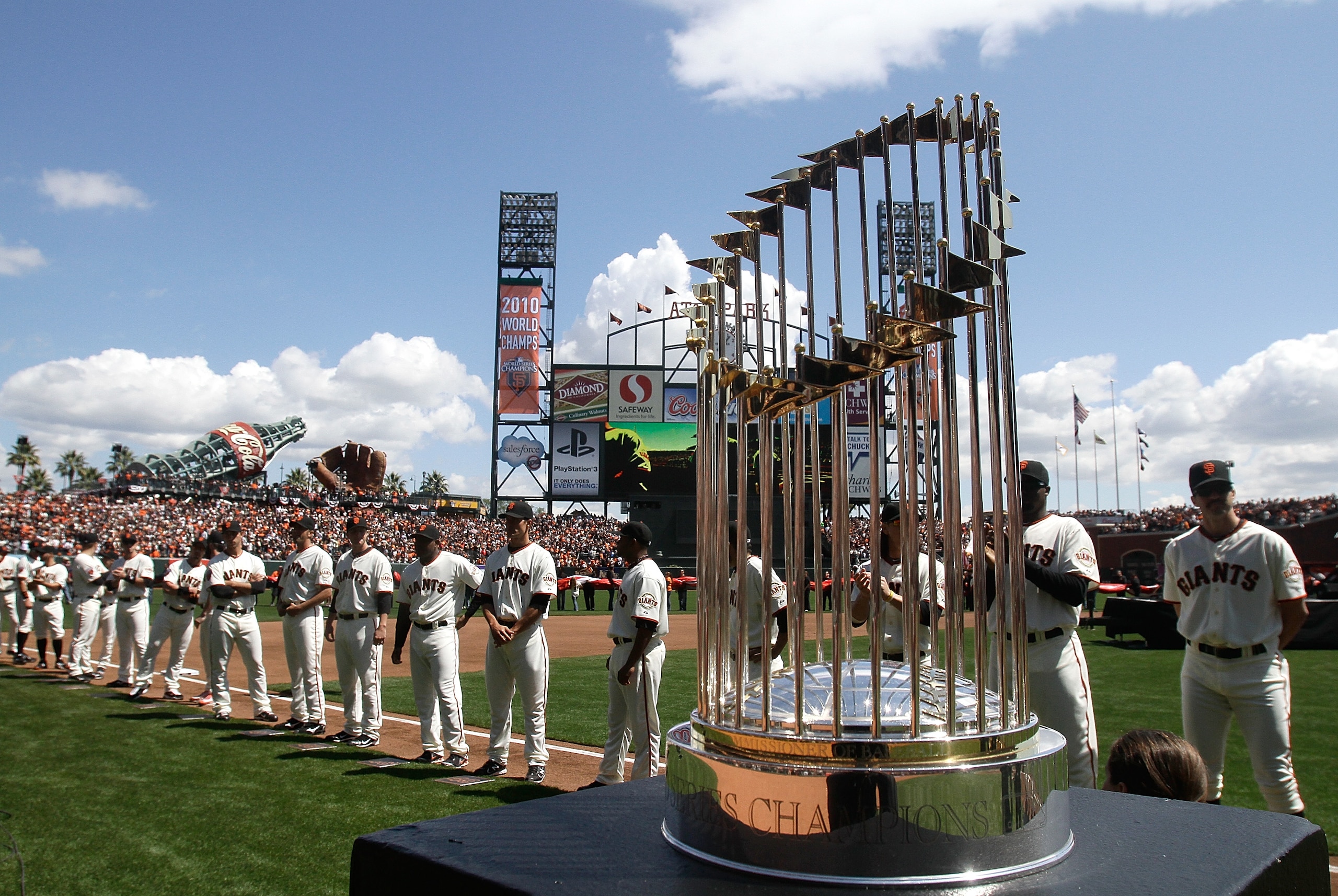
In recent years, the playoffs have been continuing through November. Last year, the Giants celebrated their victory on November first, but had the series gone to seven games, the finale would have been on November fourth.
In 2011, the league had to deliberately start the season earlier to prevent November baseball from occurring again.
Baseball has an incredibly long regular season and a blessedly short three rounds of postseason. A fourth round does the opposite of what baseball needs—drawing out the season more.
It's All About the Money
7 of 7
We all know what the real motivation is—money. More playoff games equals more revenue. We know this is the case in sports because there is no other reason to have 16 teams in the playoffs (I'm talking to you NBA and NHL).
Any system that allows teams with losing records into the playoffs, like the 37-45 Indiana Pacers, is clearly focused primarily on milking the sport for every last penny.
Honestly, who even cares about the first round of the NBA playoffs? They're going on right now and I couldn't care less. I'll tune in for the second round when we get some good matchups.
Baseball is often considered "America's Pastime." The sport is just starting to recover from the marring that steroids caused, and it would be a shame to see the league debauched further by so clearly compromising the game to make a quick buck.


.jpg?w=2560 "NFL investigating 2 referees for separate viral exchanges")
.jpg?w=2560 "OBJ Calls Out Giants After Release")
.jpg?w=2560 "Tyreek makes another cryptic post amid Chiefs rumors")
.jpg?w=2560 "Report: Chiefs Contact Hill's Agent")