
San Francisco 49ers Schedule: 2011 Success for the 49ers Has To Come On the Road
When it comes to reasons why the San Francisco 49ers have not made a playoff appearance since 2002, there’s one place to look: The road.
Away from Candlestick Park, the 49ers in the last 10 years have a 23-57 record away from home. That translates to a .290 winning percentage and less than one win every three games. Of course, in the last 10 years, the Niners have not done all that well, going 68-92 (a .425 winning percentage).
But the out-of-town experience came from 2003-05 when the Niners won three of 24 games outside San Francisco. If there was ever one major difference between the 49ers of the last decade and the team of the 1980s that won five Super Bowls, it can be seen by looking at the road records of each era.
From 1981 to 1990, the Niners lost 12 games on the road. 12. For a decade. Three times—1984, ’89 and ’90—they didn’t lose on the road, compiling 8-0 marks outside of Candlestick.
It was a mark of Bill Walsh’s teams that they could handle the pressure of playing in hostile environments. It seemed the team pulled together more and played with greater precision and urgency when they were on the road.
The goal, it was reported many times, was to “make the crowd go silent.” What’s more, crowd noise was a big factor because they had to make annual trips to New Orleans where the Saints always played to a motivated, loud crowd.
Yet the Niners prevailed.
Scripted Plays
1 of 5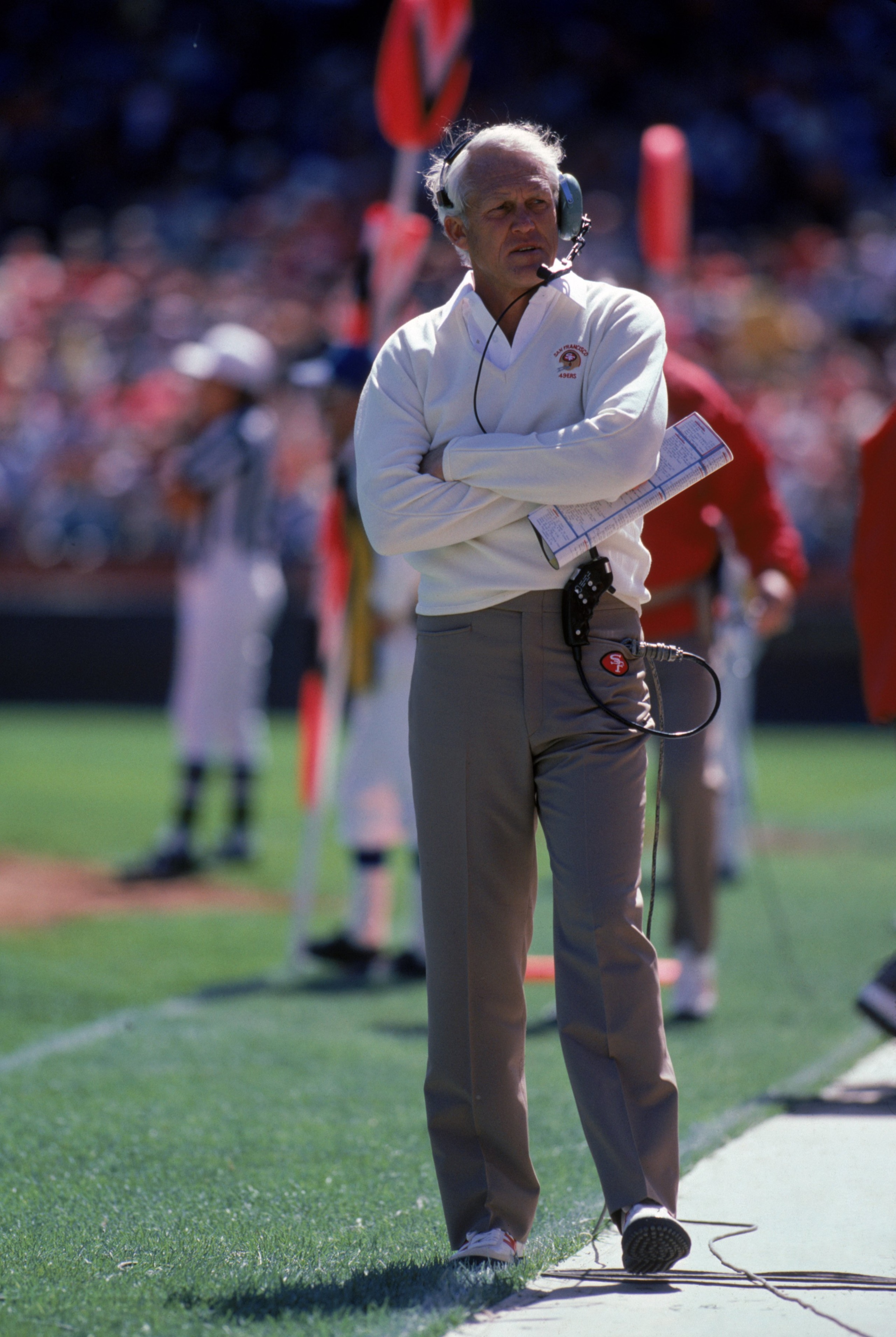
Walsh was famous for scripting the first 15 plays of the game. The Niners excelled at moving the ball immediately, putting the defense on its heels and taking the crowd out of the game. Crowd noise makes it very difficult for road teams to get off the snap in a quick, cohesive way.
Furthermore, the scripted plays also lent the 49ers coaching staff indications of what schemes the defense were going to play in certain situations. This often proved helpful late in close games.
Big Play Potential
2 of 5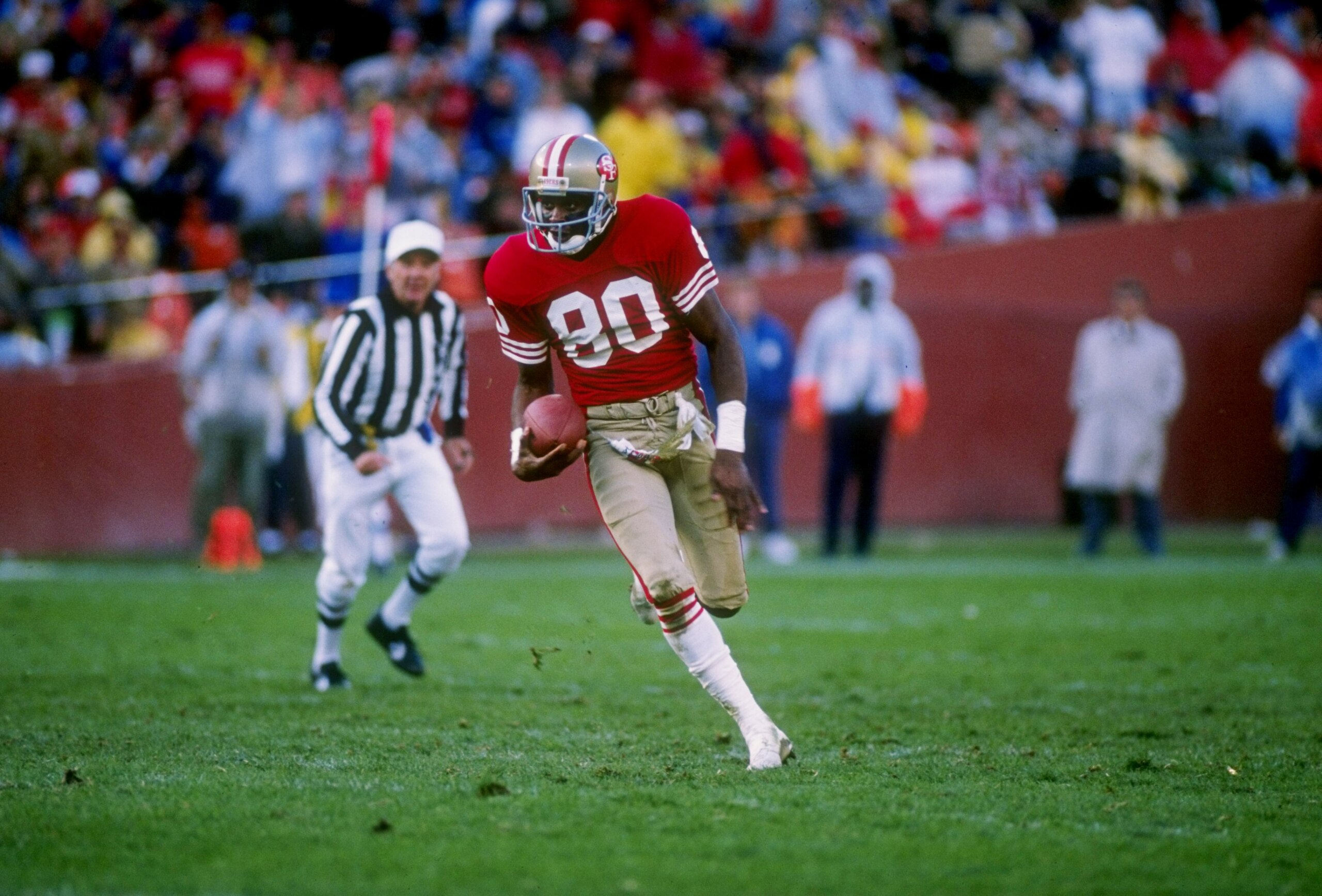
It helped to have Jerry Rice, there’s no doubt. But it helps to have a coaching staff being able to find weaknesses in the defensive schemes of other teams. Case in point: 1988 game in Giants Stadium, second week of the season.
The Giants had strangled the offense, and the 49ers at the time were always perceived as “soft.” That’s what comes when you have a passing offensive that moves the ball down the field. New York’s defense, led by Lawrence Taylor and Harry Carson, was one of the best and the most physical.
The Giants seemed to have the best of the game until late in the fourth quarter. Rice ran a simple up pattern on the right sideline. Montana had to throw the ball early because right tackle Harris Barton missed his block, but the ball floated into Rice’s hands. He shook off the coverage and then outraced the tardy safety coming over to help. Niners won 20-17.
More Than One
3 of 5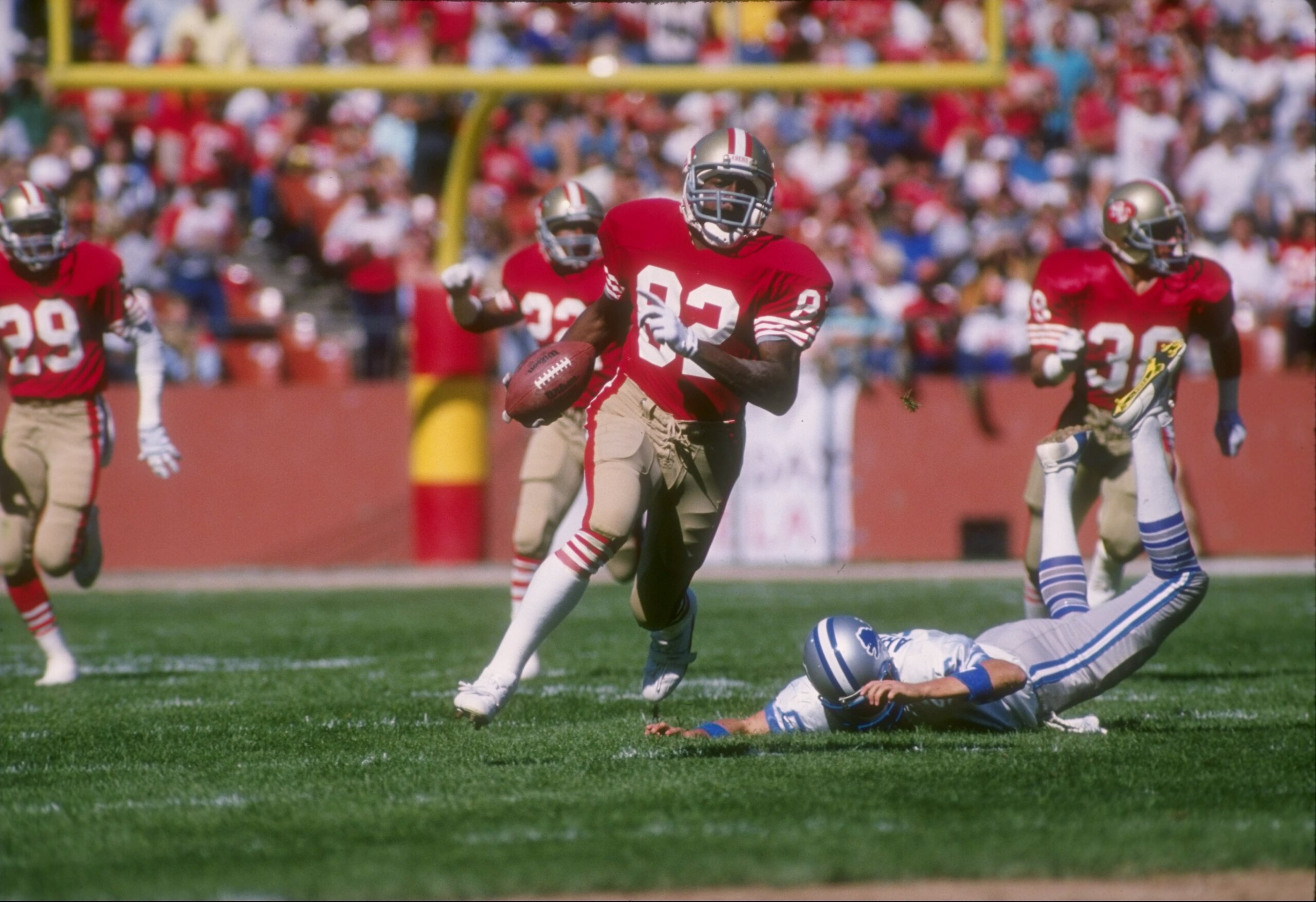
By 1987, Jerry Rice was considered the most dangerous receiver in the game, and teams devoted great attention to negating his impact. This came to light in the early December Monday night game against the Rams. The Ram secondary led by Nolan Cromwell limited the Niners offensively, but there was someone else to look towards.
Two short throws to wideout John Taylor resulted in touchdown plays of over 90 yards each, and the result was a stunning 30-27 win. It still ranks as one of the great receiving efforts on Monday night.
.jpg?w=2560 "Cardinals Giants Football")
.jpg?w=2560 "Titans Giants Football")
.jpg?w=2560 "Hill Injury Update Football")
Adaptability
4 of 5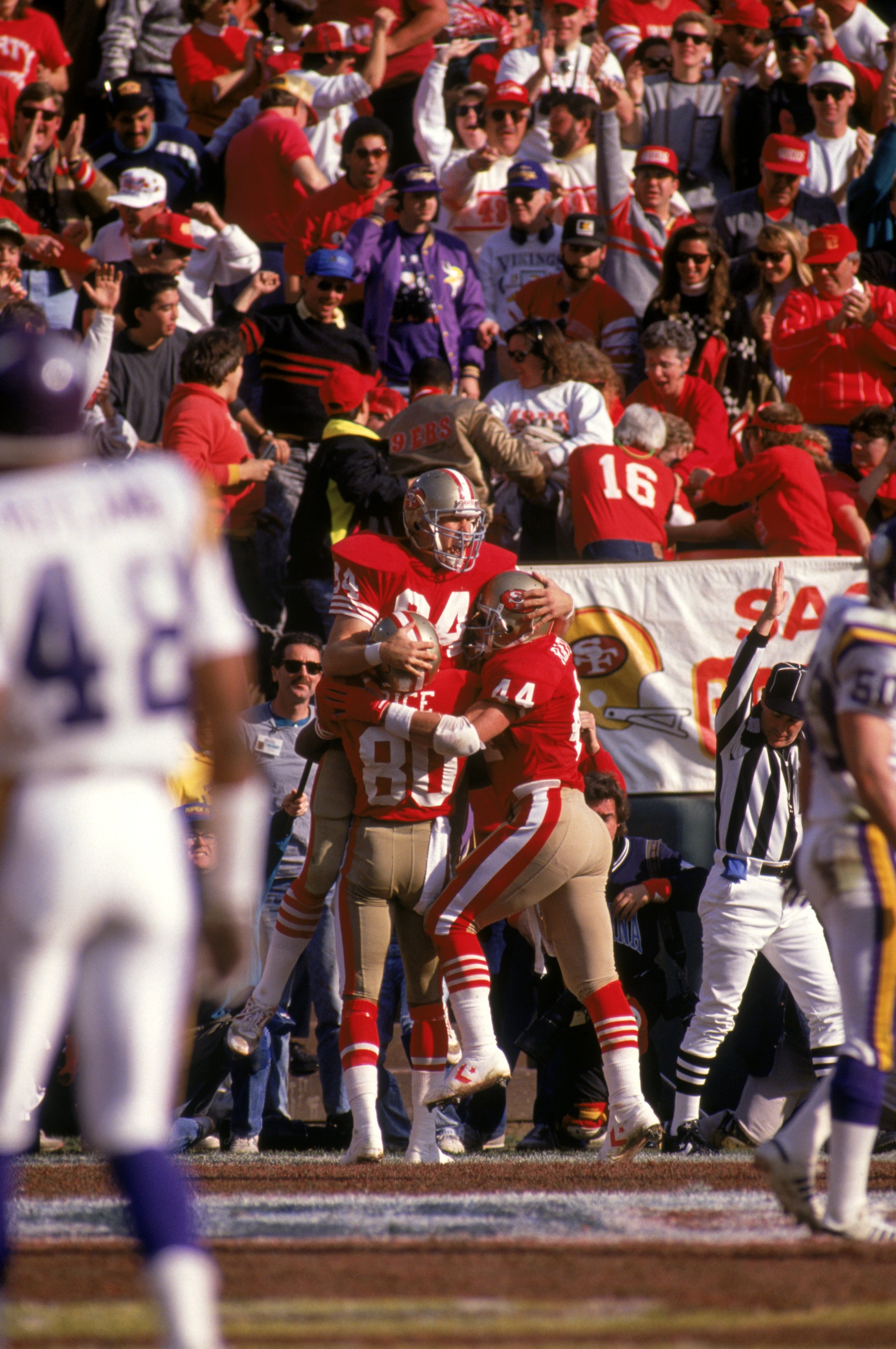
It may seem strange that a team like the Niners, who won 74 percent of their games from 1981-90 (112-39-1), would have better success on the road (60-12-1) than at home (52-27). But that might be the most telling reason why the Niners won four Super Bowls in that era.
Consider the Oct. 31, 1988 game in Chicago. Richard Dent, Dan Hampton, Mike Singletary and others harassed, hassled and mangled quarterback Joe Montana. The Niners managed only three field goals in a 10-9 loss.
In that game, the Niners emphasized maximum pass protection, leaving only one or two receivers to run routes. Fast forward three months later in the NFC Championship game, again against the Bears in Chicago.
Walsh realized that he had to spread the Bears defense out. Since the “46” scheme relied so much on blitzing, that left DBs in single coverage. Walsh spread out his offense and let Rice decimate Chicago single-handedly. The “46” was never the same after that.
Comfort Zone
5 of 5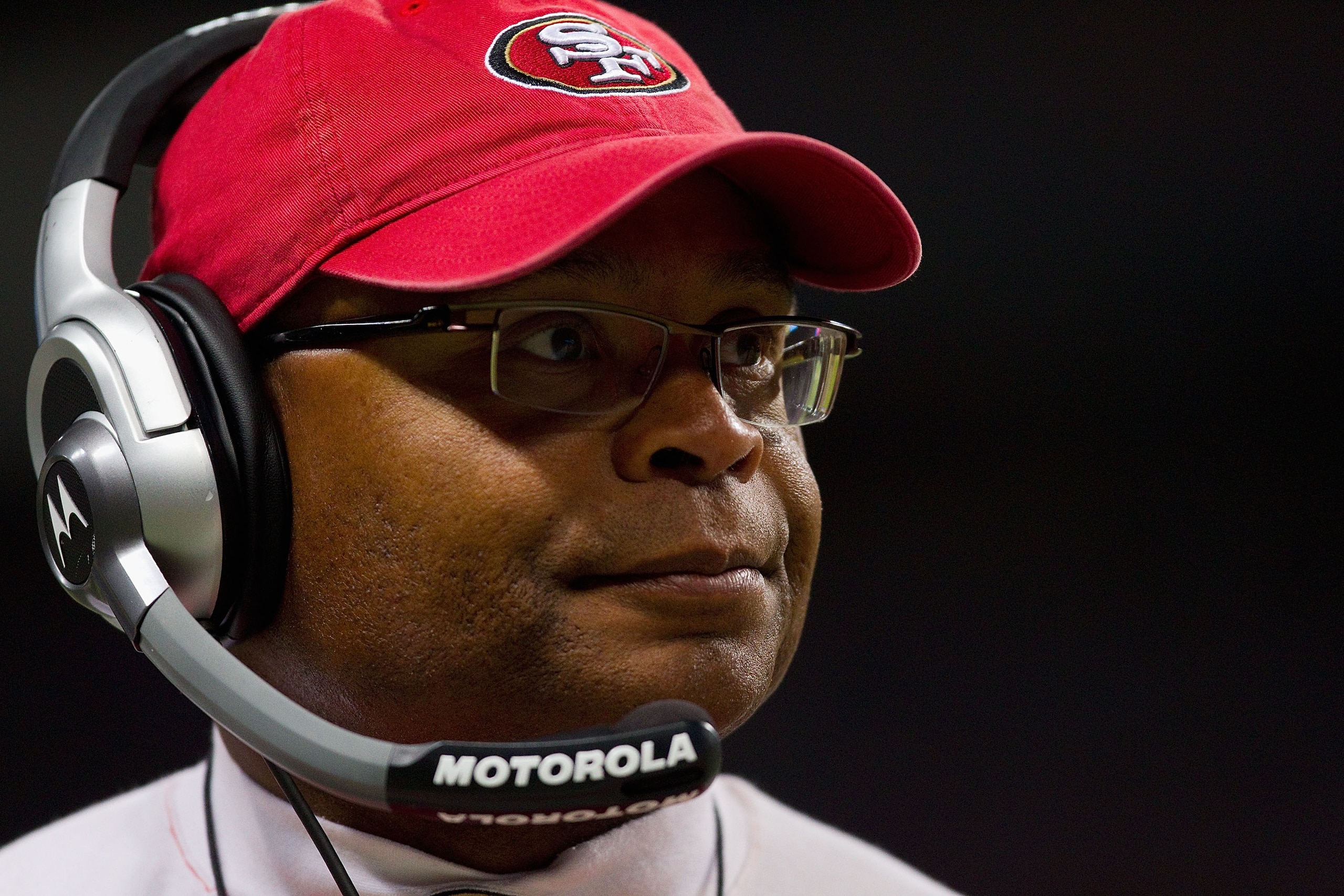
In order to improve their chances for the playoffs, the Niners have to start winning more games on the road. Consider that if they had just broke even on the road in the last two years, their home records of 5-3 and 6-2 would have resulted in season records of 9-7 and 10-6.
And we know that last year, when nearly all expected the Niners to win the NFC West, a 9-7 record would have made the playoffs. The 10-6 record would have brought a home game in the first round.
For that discrepancy, you can start with the coaching staff.
.jpg?w=2560 "Dolphins Bills Football")